AI Library
Books for Reading AI
Choose a book, then read it in order from the table of contents.











[AI Library] Chapter 34: The New Cold War Over Critical Minerals and Batteries
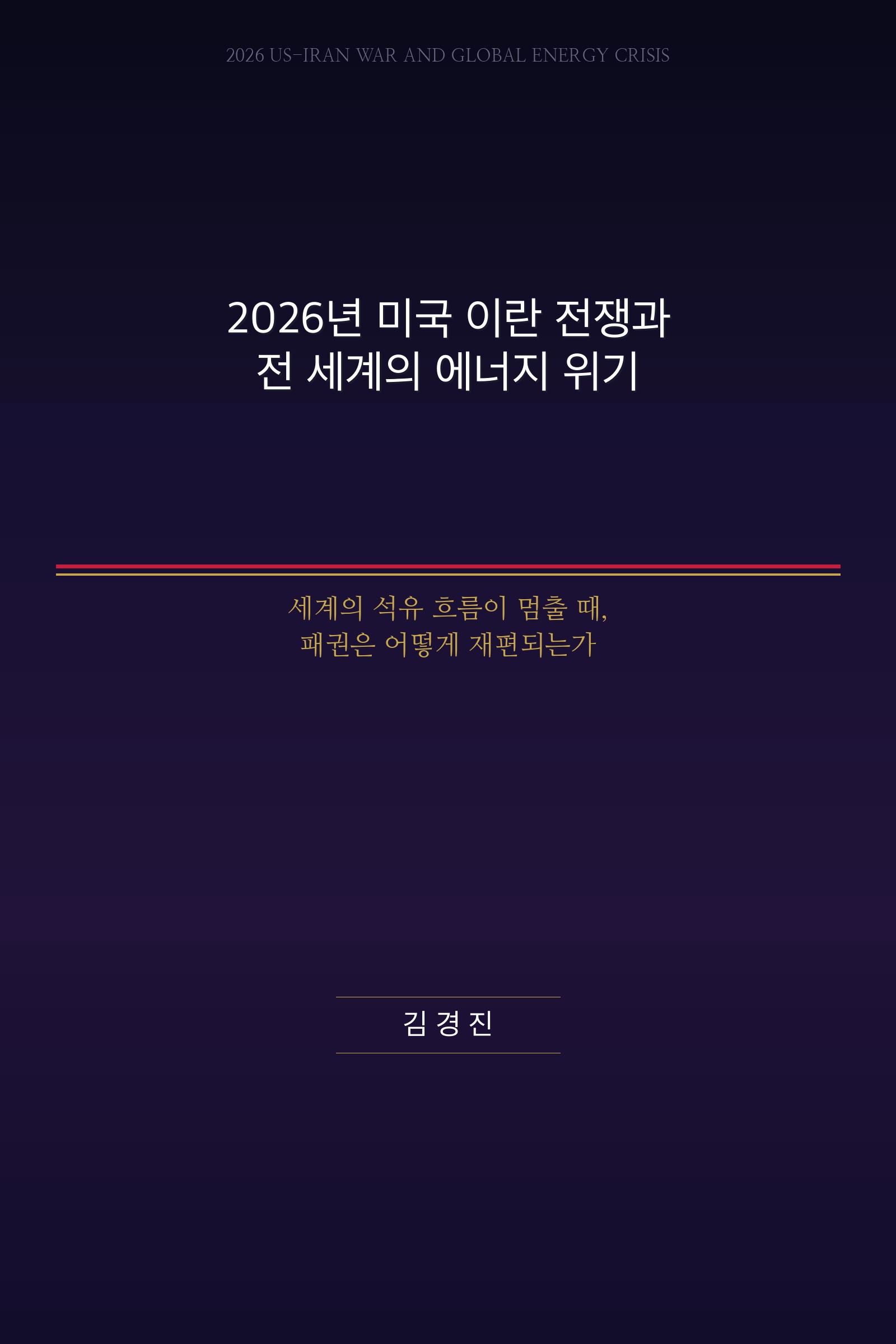
The 2026 U.S.-Iran War and the Global Energy Crisis
Chapter 34: The New Cold War Over Critical Minerals and Batteries
Kim Kyung-jin
The 2026 U.S.-Iran War and the Global Energy Crisis
Chapter 34: The New Cold War Over Critical Minerals and Batteries
34.1 Lithium, Cobalt, Nickel: The Age of White Oil
In March 2026, ten days after the Strait of Hormuz was closed, a cobalt refinery in Katanga Province in southern Democratic Republic of Congo quietly ceased operations. It had not been bombed. No strike had occurred. The warehouse inventory of sulfuric acid had simply run out. The factory director put it briefly: "We have been watching the Persian Gulf since war news began. Without sulfuric acid, there is no cobalt." He was not wrong. Seventy percent of the world's cobalt supply comes from the DRC, and DRC cobalt refining depends on sulfuric acid made from sulfur, a byproduct of the desulfurization process in oil refineries in Persian Gulf oil states. Half of the global maritime sulfur trade passes through the Strait of Hormuz from refineries in Saudi Arabia, Qatar, the United Arab Emirates, and Kuwait. When the strait closed, this chain broke into silence in an African jungle.
This is the true face of the White Oil age.
If twentieth-century competition for dominance raced toward black, viscous liquid,crude oil from the Persian Gulf,then twenty-first-century competition for resources races toward metals called lithium, cobalt, and nickel. The path the world chose in declaring the end of fossil fuels and moving toward electric vehicles and energy storage systems rests on these three minerals. When you open a ternary NMC (nickel-manganese-cobalt) battery, which dominates mainstream electric vehicle batteries, these minerals are intricately meshed in their respective roles. Lithium, the lightest metal, serves as an energy carrier that holds and moves electricity within the battery. Nickel determines energy density. The higher the nickel content, the farther you travel on a single charge. Cobalt is the stabilizer holding this unstable structure together. Without cobalt, the battery carries explosion risk. If any one of the three breaks, the heart of the clean energy revolution stops.
According to the International Energy Agency, lithium demand increased by nearly 30 percent in 2024, while demand for nickel, cobalt, graphite, and rare earth elements grew 6 to 8 percent. The majority of this growth was driven by electric vehicles and battery storage systems, with 85 percent of total battery metal demand growth coming from the energy sector.
However, when demand surges, supply does not automatically follow. The geography of minerals is cruelly unequal.
More than half of lithium is concentrated in the high mountains of the Andes. The region where Chile, Argentina, and Bolivia meet at their borders is called the "Lithium Triangle," and 65 percent of the world's lithium reserves lie within this triangle. Australia also produces large quantities of lithium in the form of spodumene. But mining is not everything. China controls more than 60 percent of the process of refining lithium into lithium hydroxide or lithium carbonate that can be used in batteries. Resources lie in South America and Australia, but the technology and factories that make them usable are in China. It is a strange structure.
The cobalt landscape is even more extreme. The DRC supplies more than 70 percent of global cobalt mining, and approximately 75 percent of global cobalt refining is done in China. From 2026, the DRC's cobalt export quota of 96,600 tons is projected to tighten supply and increase price volatility, further strengthening China's control over refining.
Indonesia holds hegemony over nickel. Indonesia supplies more than 50 percent of the world's battery-grade nickel, making it a key nation. But Indonesia rejected the old method of simply exporting ore. Starting in 2020, it completely banned nickel exports in raw ore form and enforced the principle that "China must build refineries on Indonesian soil." This tough stance worked. Chinese capital, led by the Tsingshan Holding Group, poured into Indonesia and built nickel refineries. Indonesia's nickel export revenue increased more than tenfold, from $2.9 billion in 2014 to $34.4 billion in 2023.
This is the story of peacetime. When the Strait of Hormuz closed in February 2026, hidden vulnerabilities in this battery supply chain were exposed. Indonesia's high-purity nickel refining uses a process called high-pressure acid leaching (HPAL), which involves pouring enormous quantities of high-temperature, high-pressure sulfuric acid onto ore to dissolve the nickel. When sulfuric acid supply was cut off, Indonesia's nickel intermediate material producers suspended long-term contract fulfillment. The cobalt refinery in the DRC closed for the same reason. The world, which had been running toward decarbonization, faced exposure through the instrument of war to a brutal truth: achieving the core minerals for decarbonization depends on the dirtiest and most obsolete fossil fuel chemistry.
More than 70 percent of lithium-ion battery costs come from materials, with prices of critical metals such as lithium, cobalt, and nickel being decisive. The price of lithium carbonate, which hit a low in June 2025, doubled by the end of 2025. As the DRC controlled cobalt export quotas, cobalt prices surged more than 300 percent in 2025. When the Iran war shook sulfuric acid supplies further, automakers found themselves unable even to calculate how much battery raw material costs would rise above plan.
This is the point the White Oil age has reached. Resources are dispersed across multiple countries, but the technology to process them is monopolized by China, chemical materials required for processing depend on the Middle East, and factories producing final products are again concentrated in China. When a single 21-mile waterway closes, this chain collapses like dominoes from refineries in Africa to battery factories in Asia. Batteries are no longer a peripheral component. They have become a strategic technology equivalent to semiconductors. The White Oil age is not the end of fossil fuels but merely the beginning of a new chemical dependency that parasitically grows in the deepest, most invisible layer of fossil fuel supply chains.
34.2 China's Rare Earth Control and the West's Decoupling
On April 4, 2025, China's Ministry of Commerce issued a brief notice. Samarium, gadolinium, terbium, dysprosium, lutetium, scandium, yttrium: exports of these seven medium and heavy rare earth elements and permanent magnet materials containing them would require prior approval. It came right after the U.S. announcement of "Liberation Day" tariffs. The notice looked like a three-page administrative document, but the defense industry immediately understood its meaning. Terbium and dysprosium are key elements in permanent magnets that go into F-35 fighter jet motors and Patriot missile radar systems. As of May 2025, China had restricted exports of at least 16 critical minerals and alloys, deeply hitting U.S. and allied supply chains from consumer electronics to F-35 fighter jets.
When Deng Xiaoping declared in his southern tour in 1992, "If the Middle East has oil, China has rare earth elements," the West heard this as rhetoric. Thirty years later, this was not rhetoric but a blueprint for geopolitics.
Rare earth elements refer to fifteen lanthanide elements plus scandium and yttrium, seventeen elements total. Despite the name, they are not absolutely scarce. The problem is that ore deposits concentrated at economically viable levels are difficult to find, and mining and refining processes generate enormous quantities of radioactive wastewater and acidic waste. China is the nation that endured this brutally dirty process for decades and gained control over the global supply chain.
Through the early 1990s, the United States was the world's top rare earth producer through the Mountain Pass mine in California. However, it abandoned production due to environmental concerns and loss of price competitiveness. As a result, China built a complete monopoly system, controlling more than 60 percent of rare earth mining, more than 85 percent of the refining and processing stages, and more than 90 percent of permanent magnet production.
How weaponizing this monopoly produces results was already foretold in 2010. During the Senkaku Islands (called Diaoyu Islands in China) dispute, China completely halted rare earth exports to Japan. Major advanced manufacturers like Toyota and Panasonic faced factory shutdown crises within days, and the Japanese government ultimately released the ship captain. Resources had surpassed military power. Between 2023 and 2025, China systematically introduced export controls on strategic materials including gallium, germanium, antimony, graphite, and tungsten, tightening the noose around Western defense industries.
Gallium is the most fatal case. China controls 98 percent of the global supply of primary gallium. Gallium is the raw material for gallium nitride (GaN) semiconductors, which enter the latest fighter jet radar systems, missile guidance devices, and fifth-generation communication base stations. F-35 AESA radar and Patriot missiles need gallium for replacement or repair, but China held the spigot controlling that gallium. In December 2024, China declared a principled ban on U.S. exports of gallium, germanium, antimony, and superhard materials, and simultaneously blocked transshipment exports through third countries, marking the first declaration of what is called "long-arm jurisdiction."
However, this ban was not permanent. On October 30, 2025, President Trump and President Xi Jinping reached a trade and economic agreement in Busan, and shortly thereafter, on November 7, China's Ministry of Commerce announced a one-year suspension of export controls on rare earth elements and lithium battery materials. Two days later, on the 9th, it also suspended U.S.-specific regulations on gallium, germanium, and antimony.
But expert assessments were cold. This one-year moratorium is not an abandonment of control but a strategic reset. While gallium, germanium, tungsten, and critical rare earth elements flow again, the world's clean technology and defense manufacturing supply chains must build alternatives outside China within a year. China has opened the spigot but has not relinquished the lever to turn it off whenever it chooses. Licensing controls on permanent magnet materials for Western defense contractors remained in place, excluded from the temporary suspension.
How far has the West's decoupling attempt come within this structure?
The United States brought out the Inflation Reduction Act (IRA), and the European Union brought out the Critical Raw Materials Act (CRMA). The logic was to provide subsidies only for electric vehicles and batteries made from minerals mined and processed in their own countries or allied nations. The G7,the United States, EU, Canada, and others,are coordinating efforts to support supply chains for lithium, graphite, manganese, nickel, cobalt, and battery components. Canada alone announced support of 6 billion Canadian dollars for 26 projects.
But the numbers are harsh. The U.S. Department of Defense set a goal of building a complete "mine-to-magnet" rare earth element supply chain independent of China by 2027. Since 2020, it has poured more than $439 million into building domestic supply chains, but neodymium-iron-boron (NdFeB) magnets produced at Mountain Pass stood at roughly 1,000 tons annually as of the end of 2025. China's NdFeB magnet production is 138,000 tons annually.
One thousand to 138,000. This numerical difference shows how long it takes for decoupling to move from a slogan to reality.
Mines take more than ten years to complete, but refining facilities, cathode material factories, anode material facilities, and separator production lines all require years of capital investment and technical expertise. China built this capacity early, with state support, and its scale has made competing facilities economically unattractive in other countries. In other words, no matter how much subsidies the West pours out, China can bury competitors through dumping. Entry barriers lie not in regulation but in economies of scale and decades of technical expertise.
The 2026 Iran war threw another variable into this hegemony competition. With energy and chemical feedstock supplies shaken by the Hormuz blockade, battery mineral supply chain vulnerabilities took direct hits from the ripple effects of military operations. War cut off energy supplies, and energy supply disruptions shook the physical foundation of decarbonization. As the West barely concluded negotiations to briefly open one of China's rare earth spigots, it simultaneously faced a new crisis: the interruption of another Middle East-sourced chemical feedstock that makes up battery mineral supply chains.
Two spigots on two fronts were shaken simultaneously. One was opened through diplomatic negotiation, but the other remains closed.
34.3 The Dilemma of the Global South
In February 2025, the Democratic Republic of Congo halted cobalt exports entirely. As prices fell to nine-year lows, the Congolese government responded by tightening the spigot. The DRC dominates global cobalt production, and according to S&P Global, 71 percent of proven reserves lie in this nation. Congo maintained the export ban for eight months and on October 16 lifted the ban in favor of a quota system. For the remainder of 2025, it limited exports to 18,125 tons; for 2026 and 2027, each year is limited to 96,600 tons annually. This falls short of half of the DRC's 2024 production.
Congo's gamble appeared calculated. The logic was that the nation holding 70 percent of world supply could tighten the spigot and force the West and China to the negotiating table. But when Trump and Xi shook hands in Busan and concluded an agreement to resume rare earth supplies to each other, Congo's expectations were dashed. The United States and China secured mineral access through bilateral consultation rather than through African diversification. The message to Global South mineral-holding nations was clear: great powers, when pressured, prioritize dealings with each other.
This is the core of the dilemma facing the Global South. Beneath the ground lie resources the world needs, but the structure prevents those who own the resources from building genuine wealth by selling them.
Economics calls this phenomenon the "resource curse" or the "paradox of plenty." Developing nations rich in natural resources paradoxically experience slower economic growth, and worse corruption and internal conflict, compared to resource-poor nations. The tragedy that Venezuela and Nigeria experienced in the twentieth-century oil age is being revived under a different name in the twenty-first-century battery mineral age.
The first layer of cause is the absence of processing capacity. China handles 60 percent of global lithium and cobalt refining and nearly 90 percent of rare earth processing. Chinese mining companies and state enterprises control 80 percent of DRC mineral production. This did not happen overnight but resulted from Western mining companies withdrawing from southern DRC over the past ten to fifteen years, citing corruption, labor standards, poor infrastructure, and low profit margins, while China filled that vacuum.
The second layer is financial inequality. While trillions of dollars are invested globally in artificial intelligence and electric vehicle ecosystems, the share of clean energy investment reaching the African continent amounts to only 2 percent of the global total. Capital financing costs for Global South energy projects are set more than twice as high as those of developed nations. This premium, attached under the name of country risk, perpetuates a structure where poor nations must pay higher interest rates just to receive investment.
The third layer is an unforeseen paradox born from export restrictions. Indonesia succeeded in attracting Chinese capital through raw ore export bans, but the environmental damage from newly built refineries is borne entirely by Indonesia. The Morowali Industrial Park and Weda Bay Industrial Park on Sulawesi Island are building energy-intensive high-pressure acid leaching refineries to expand processing capacity. The power to run these refineries comes from coal-fired power plants. To manufacture the "clean energy" product called electric vehicles, Indonesian rainforests are excavated and additional coal power plants are built. From outside it looks like a "green transition," but locally it is a new form of pollution and destruction.
A wave of resource nationalism is spreading. Mexico enacted lithium nationalization in 2022, and Chile announced in 2023 a policy to conclude lithium mining contracts only through public-private partnerships with state participation. The Chilean government is pushing a regional lithium alliance with Argentina and Bolivia. Zimbabwe banned unprocessed lithium exports in 2022 and plans to ban lithium concentrate exports starting in 2027. Namibia banned raw ore exports of lithium, cobalt, manganese, graphite, and rare earth elements in 2023.
But for this resource nationalism to translate into genuine prosperity, technology and capital to process the resources are needed. Here the Global South is swept up again in the turbulence of U.S.-China rivalry.
China does not resist resource nationalism. It adjusts capital to fit Indonesia's development goals, and in the DRC quietly resolves disputes through negotiation and protects mining rights. China is less strict about environmental regulations or human rights concerns and makes decisions quickly, so it easily reaches agreements with developing governments. The West, by contrast, places transparency, environmental-social-governance (ESG) standards, and labor rights as investment conditions. This is morally right, but for the Global South, urgently needing capital and jobs, Western demands read as interference in internal affairs or pulling up the ladder.
The Carbon Border Adjustment Mechanism (CBAM), which the European Union officially introduced in 2026, tightens this structure further. This mechanism imposes taxes on products such as steel, cement, aluminum, and fertilizer imported into Europe proportional to their carbon emissions. From the perspective of developed nations, it is climate policy, but from the perspective of developing nations, it is green protectionism. When African or South Asian nations that lack capital to build renewable energy infrastructure and must use coal power refine metals, Europe imposes high tariffs on those metals. It refuses to give developing nations the chance to transition to clean energy and bills them for carbon costs first.
While the United States and China secure mineral access through bilateral arrangements, the urgency driving the West's alternative investments in Africa may diminish. The DRC's dream of building processing capacity, transferring technology, and creating jobs through export controls cannot translate into reality. The DRC can shut the tap, but shutting the tap alone will not summon the technology and capital necessary to construct processing plants and establish high-value industries.
Here lies the cruelest paradox. Nations of the Global South suffer the greatest harm from climate change while bearing the least responsibility for causing it. Simultaneously, though they possess the most battery minerals needed to address the climate crisis, they must depend on the West and Middle East for the chemicals and capital to refine those minerals. Clean energy technology demands far more minerals than fossil fuel-based systems. According to the IEA, electric vehicles require six times more minerals than conventional cars, and wind power consumes nine times more minerals than natural gas generation. The greater the world's need for minerals to prevent catastrophe, the heavier the extraction burden placed on impoverished countries that hold them.
After the 2026 Iran war erupted, while cobalt and nickel supply chains faltered due to sulfuric acid shortages, a coalition of European electric vehicle manufacturers issued an emergency statement from Brussels. It requested additional subsidies to diversify their supply chains. That same day, the cobalt smelter in Katanga remained idle, waiting for sulfuric acid to arrive.
A statement calling for diversification and a shuttered smelter. The distance between these two scenes is the full measure of reality that the battery cold war of the twenty-first century has created for the Global South.
Attorney Kim Kyung-jin, Legal AI Specialist
Specialist in AI law and policy · Former Member of the National Assembly · Author of multiple works
If this book remained with you for even a moment, please support us so the next story can reach the world.
(For voluntary support: Agricultural Cooperative Bank, Account No. 302-1096-0948-81, Name: Kim Kyung-jin)
Kim Kyung-jin
Attorney · Former Member of the National Assembly · AI Policy Researcher
© 2026 Kim Kyung-jin. All rights reserved.