AI Library
Books for Reading AI
Choose a book, then read it in order from the table of contents.









[AI Library] Chapter 36: South Korea's Choice
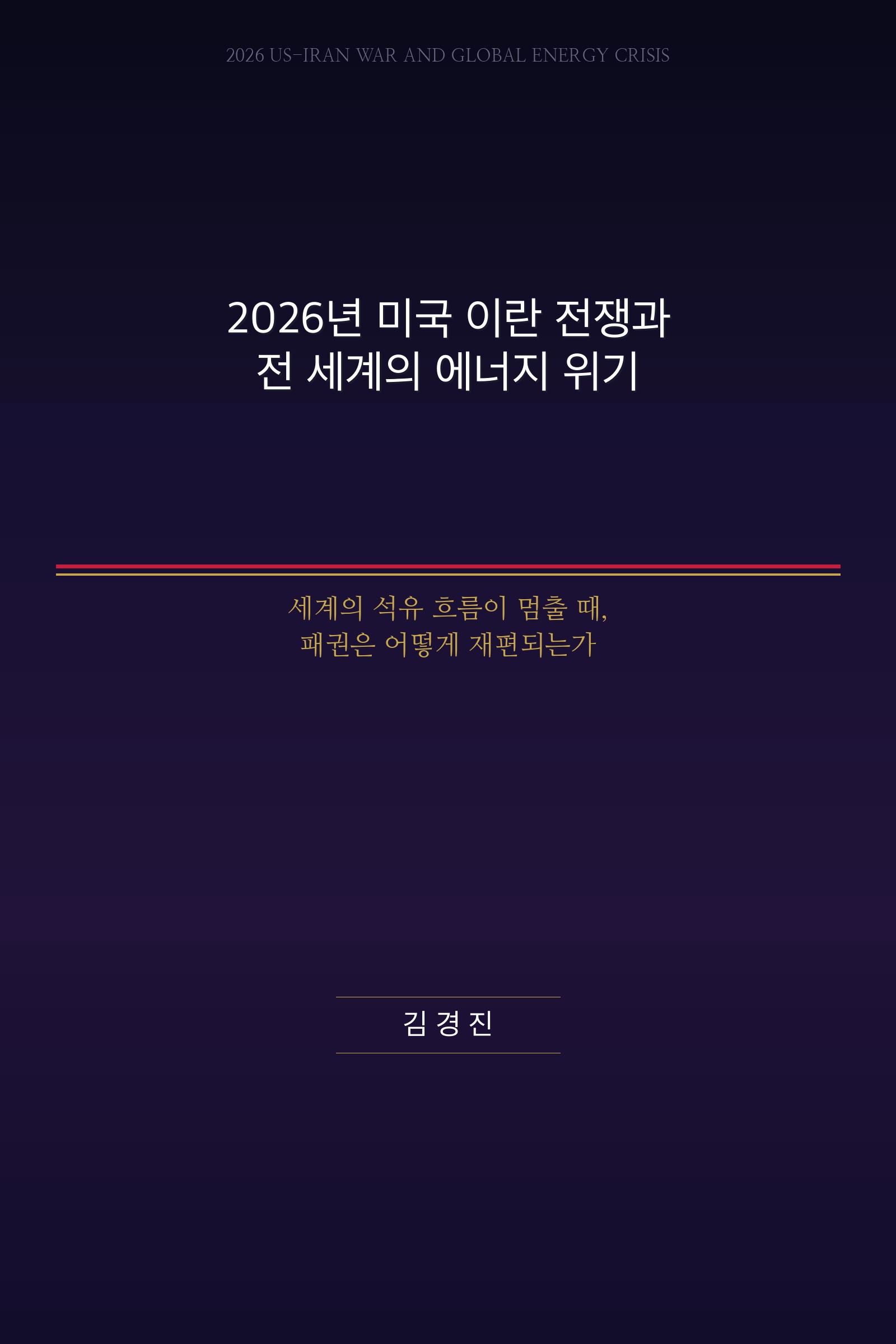
The 2026 U.S.-Iran War and the Global Energy Crisis
Chapter 36: South Korea's Choice
Kim Kyung-jin
The 2026 U.S.-Iran War and the Global Energy Crisis
Chapter 36: South Korea's Choice
36.1 Sea Lane Dependency and Electricity Demand
On March 8, 2026, President Lee Jae-myung said this single sentence in his address to the nation: "Quickly identify alternative supply routes that do not pass through the Strait of Hormuz." The address lasted thirty minutes, but this sentence spread across the airwaves in thirty seconds. A nation where the president had to speak directly to its people about "alternative supply routes." That was the Republic of Korea in March 2026.
On the ninth day of the Strait of Hormuz blockade, South Korea's energy situation could be summed up in numbers like this: 70.7 percent of imported crude oil came from the Middle East. More than 90 percent of that Middle Eastern crude passed through the Strait of Hormuz. The Middle East accounted for 20.4 percent of liquefied natural gas (LNG) imports. Daily petroleum consumption was 2.908 million barrels, placing the nation eighth in the world. Energy import dependence stood at 93.7 percent. These figures were barely different from those thirty years earlier.
Since the Korean War, South Korea had built a top-ten global economy from barren land. The engine of that miracle was processing trade. The structure was to purchase raw materials, process them precisely, and sell them at high prices. Silicon came in to make semiconductors. Iron ore was melted to make automobiles. Naphtha, a hydrocarbon mixture obtained during crude oil refining, was imported to produce petrochemical products. Throughout all these processes, there was one unchanging premise: raw materials had to flow in endlessly and cheaply.
On February 28, 2026, the Islamic Revolutionary Guard Corps (IRGC) issued a warning over VHF radio prohibiting passage to vessels crossing the Strait of Hormuz. That premise shattered.
There were signs before the strait closed. Shortly after the blockade, Reuters reported that at least 150 tankers were waiting on both sides of the strait. The New York Times, citing data from the ship-tracking platform MarineTraffic, reported that vessel traffic through the Strait of Hormuz had plummeted 70 percent. Tankers that normally numbered around 50 per day dropped to zero or one. The destinations for crude oil passing through the Strait of Hormuz, analyzed by Bloomberg Economics, were these: China 38 percent, India 15 percent, South Korea 12 percent, Japan 11 percent, rest of Asia 14 percent. The moment the blockade became real, all of Asia held its breath.
How long could South Korea hold out? Government-held petroleum reserves totaled roughly 100 million barrels, and including private reserves, this amounted to about 208 days of supply. There was also 24 million barrels that had been urgently secured from the UAE. Looking at numbers alone, it seemed like more than half a year. But James Kim, director of the Stimson Center, stated it plainly: even with reserves, prolonged denial of access to the strait would have considerable impact on power generation and production and export capacity in global supply chains. There were things numbers did not reveal.
One of these was semiconductors. This industry, South Korea's export champion and a concentration of world-class technology, was bound to the Middle East in invisible ways. Helium was the link. In semiconductor manufacturing, preventing wafers,thin silicon discs on which circuits are etched,from warping due to heat requires cryogenic cooling. Helium is the key to this coolant, and South Korea had relied on helium obtained as a byproduct during LNG production at the Ras Laffan industrial complex in Qatar for a substantial portion of its total helium imports. Bromine presented the same dependency. This element, used in semiconductor etching processes to remove unnecessary material for pattern creation, is produced mainly at the Dead Sea in Israel. As the 2026 war struck the industrial infrastructure of Israel and Qatar, Samsung Electronics and SK Hynix, though their production lines were not directly bombed, faced a quiet crisis of raw material depletion.
There was also fertilizer. Ammonia, urea, and potassium chloride. If these agricultural raw materials that Korea imported from the Middle East were cut off, the fertilizer to spread over fields in the following spring would disappear. This was how an energy crisis metastasizes into a food crisis. There was sulfur as well. Sulfur, the raw material for sulfuric acid production, comes from crude oil refining. A decrease in crude passing through the Strait of Hormuz would directly reduce sulfur supply, and if sulfuric acid dwindled, both battery manufacturing and fertilizer production would falter.
The Industrial Research Institute projected that if the Hormuz blockade lasted more than three months, average manufacturing production costs would rise 11.8 percent. More than 40 critical industrial items alone had import dependence on the Middle East exceeding 70 percent. The OECD forecast that this crisis would reduce South Korea's 2026 economic growth rate from the earlier projection of 2.1 percent to 1.7 percent, a drop of 0.4 percentage points. This decline was the steepest among major economies.
Overlaid on top of this was an explosion in electricity demand driven by the artificial intelligence industry. A single ChatGPT query consumes roughly ten times more power than a Google search. Data centers handling AI computing are massive facilities operating twenty-four hours a day consuming enormous amounts of electricity. The power consumption of a single Samsung Electronics foundry production line is equivalent to that of a small to medium-sized city. South Korea's key industries were arranged around sectors that consumed vast amounts of electricity: semiconductors, steel, petrochemicals, and automobiles. The LNG needed to generate that electricity was trapped at Hormuz.
Korea Electric Power Corporation faced astronomical losses. Memories of how the company's operating losses had surged more than fivefold during the Ukraine war resurfaced. As LNG to power the plants grew scarce, industrial electricity rates soared, and the price competitiveness of South Korean manufacturing, built upon cheap electricity, trembled at its foundation.
For decades, Korea in March 2026 had heard the phrase "a land where not a drop of oil flows." For the first time, it felt the aching reality of those words with every fiber of its being.
In terms of the electrical grid, the Korean peninsula is no different from an island. It shares no power transmission connections with Russia, China, or Japan. Population and industry are concentrated in the Seoul metropolitan area, while power plants cluster on the east and south coasts. Ultra-high-voltage transmission towers connect these distant points. A nation that cannot import energy from outside nor borrow from neighboring countries when supplies fall short. This was the fate imposed by Korea's geography.
There was only one way to change that fate. Reduce dependence on imported fossil fuels in the form of molecules and build an energy system centered on self-generated electrons. This was the bill that the 2026 crisis presented to South Korea. Before calculating the cost of that bill, one had to first see where South Korea currently stood.
Over thirty years, energy import dependence had barely changed. The same words had surfaced during the Ukraine war, and observers both inside and outside parliament pointed out that the same words would repeat if another conflict erupted. They were not wrong. Without change, nothing changes.
36.2 Energy Supply Problems in Times of Crisis
On March 2, 2026, the Korea Maritime Promotion Corporation released a special report: "Crisis of Physical Severance in Energy and Container Supply Chains." The phrasing, unusual for an official document, was remarkably direct. On the day the report came out, the location data for Korean-flagged LNG tankers and oil tankers that had been passing through the Strait of Hormuz were already disappearing one by one from domestic tracking maps.
The threat posed by the Hormuz blockade to South Korea was twofold. One was the inability of crude oil and gas to arrive, and the other was the question of how vulnerable the nation's existing energy infrastructure would be during a crisis. The 2026 crisis brought the second problem to light before the world.
Looking down at the waters off Ulsan, massive clusters of tanks appear. SK Innovation's refineries, S-Oil's aromatic complex, and Hyundai Oilbank's refining facilities line Ulsan Bay. Similar landscapes stretch across Yeosu in South Jeolla and Daesan in South Chungcheong. The world's largest refining and petrochemical complexes are concentrated on the coastline. In normal times, this dense clustering represents the height of efficiency. When tankers arrive at the port, pipelines can directly deliver raw materials for processing, and finished products can be loaded onto ships for export. Transportation costs are reduced, and inter-process connections are seamless.
Yet by the logic of war, this is a perfect target.
On September 14, 2019, the Abqaiq refinery in Saudi Arabia came under drone attack. The result was the disappearance of 5 percent of global crude oil supply overnight. During the 2022 Ukraine war, Russia and Ukraine repeatedly struck each other's refineries and power plants with low-cost drones. After Operation Epic Fury in 2026, when Israeli drones destroyed high-voltage transmission towers near Tehran, the capital region of Iran fell into a major blackout. When Ukrainian low-cost drones simultaneously struck more than twenty units of Russia's Kirishi refinery, air pollution alerts were issued across St. Petersburg.
All these examples convey one message. In modern warfare, the most efficient target of attack is not frontline soldiers but rear-area energy infrastructure.
How exposed South Korea's energy infrastructure was to drone threats had never been publicly discussed in depth until the 2026 crisis struck. Only after the crisis erupted did parliament propose related legislation. The Nuclear Power Plant Defense Enhancement Act was one such measure. Its content addressed installing drone defense systems for critical energy facilities including nuclear power plants and closing protection gaps. It was necessary legislation, but the timing was already behind the curve.
The vulnerability of refineries and LNG receiving terminals was at least a visible problem. A deeper threat was growing in the unseen realm. It was the electrical grid.
South Korea's power system is structured as a centralized radial network. Electricity generated at nuclear power plants on the east coast, large coal-fired plants on the west coast, and combined power complexes on the south coast flows into the Seoul metropolitan area through ultra-high-voltage transmission towers at 765 kilovolts. If a handful of critical substations and transmission towers at the chokepoints of this electrical pathway are destroyed, the entire Seoul region falls into darkness even if the generating stations remain intact. Custom-built 765 kilovolt ultra-large transformers take over two years to manufacture. Domestic production capacity is insufficient. Once destroyed, repairs can take a year or more.
The quieter threat comes from cyberspace. South Korea's energy infrastructure operates on SCADA (Supervisory Control and Data Acquisition) systems and industrial control systems (ICS). These systems are not directly connected to the internet, but neither are they completely isolated. It was reported across multiple media outlets that during the 2026 Iran war, Iranian-backed hacker groups attempted indiscriminate cyberattacks against Western energy infrastructure.
For South Korea, with North Korea as a variable, this threat is not someone else's story. North Korea is one of the nations operating the most sophisticated and active cyber warfare capabilities in the world. Hacking attempts on Korea Hydro and Nuclear Power, penetration of financial institution networks, theft of defense industry secrets. These are capabilities already demonstrated multiple times. With war raging in the Middle East and U.S. military forces concentrated there, security experts raised concerns that South Korea's energy control systems faced dual exposure to danger.
There was also the matter of ports. If the gateway ports of Pyeongtaek-Incheon and the LNG receiving facilities at Tongyeong-Gwangyang, critical for Korea's energy imports, all lost function simultaneously, there would be no way to retrieve reserves of crude oil and LNG sitting in storage. If tankers cannot enter port, reserves are merely a time-delay mechanism. Shipping rates had already surged 50 to 80 percent above normal levels, and war risk insurance was effectively in a state of non-acceptance. Taking the detour route around the Cape of Hope extended transit time from the usual twenty-five days to thirty-five to sixty days. Even when departing with crude oil loaded aboard, by the time a ship reached port, the math showed that reserves were being depleted faster.
The Korea Maritime Promotion Corporation projected that even after the blockade was lifted, it would take more than twice the blockade period to return to normalcy. In other words, if the passage was blocked for one month, disruptions would persist for two additional months.
The root of all these vulnerabilities lay in one structural choice. Concentration for the sake of efficiency. Refineries were clustered on the coast. Power plants were built far from major cities. Transmission grids were drawn simply in radial patterns. In normal times, these choices were optimal. But in crisis, concentration becomes synonymous with vulnerability.
The direction of solutions is dispersion. It is to divide the nodes,the connection points of the network,where energy is produced, stored, and distributed across multiple locations. By building microgrids equipped with small-scale natural gas generators and energy storage systems throughout industrial parks nationwide, even if the central grid is shaken, each region can sustain itself independently for days. Military bases, hospitals, and major government buildings must have emergency power-generation equipment and independent power supplies. Drone defense systems should be deployed at ports, and energy system network segregation and real-time intrusion detection systems for cybersecurity must be established. And above all, gaps in petroleum reserve calculations must be filled. LNG reserves amounted to only fifty-two days of supply. This is starkly short compared to the 208 days of crude oil. Expanding LNG storage tank capacity requires investment, but compared to the losses incurred when the strait closes, it is a small expense.
In March 2026, the Ministry of Trade, Industry and Energy announced that it was developing contingency plans for all scenarios. For these contingency plans to exist as more than documents, South Korea must bring forward the bill it has so far deferred in the name of efficiency.
A nation unable to protect its energy cannot protect its military or its economy. This was the dispatch sent by the 2026 Iran war.
36.3 Balancing Nuclear Power, Renewable Energy, and Gas
On March 31, 2026, Korea Hydro and Nuclear Power announced that four local governments had applied in a competitive bid for new nuclear power plant construction sites. Ulju-gun in Ulsan and Yeongdeok-gun in North Gyeongsang applied for large-scale nuclear plants, while Gyeongju in North Gyeongsang and Gijang-gun in Busan applied for small modular reactors (SMRs). On that day when the Middle East war was in full swing, four South Korean municipalities were competing to attract nuclear power plants.
It was a scene hard to imagine a decade earlier.
For a long time, debate in South Korean society surrounding nuclear power plants had been a collision of ideologies. Phase out or embrace nuclear power? Safety or economic viability? With each change of administration, policy reversed. When one government pushed to extend the lifespan of aging reactors, the next declared a plan to phase out nuclear power. When the subsequent government again announced plans to restore the nuclear ecosystem, energy industry investors hesitated, unsure which direction to invest.
Behind discussions of nuclear expansion lay issues of increasing electricity demand and energy security. Rapid growth in power demand driven by artificial intelligence data centers, the semiconductor industry, and electric vehicle proliferation, combined with instability in Middle East affairs driving home the risks to energy supply, accelerated momentum for expansion.
The 2026 Iran war set that ideological debate momentarily to the side. As Hormuz closed, people asked: How do power plants operate when LNG does not arrive? Where do alternative sources of electricity come from when crude oil does not? Few energy sources could properly answer those questions.
It was nuclear power. The fuel, uranium, comes from Kazakhstan, Canada, Australia, and other countries. It follows a path independent of the Strait of Hormuz. Once fueled, it can generate electricity for years without refueling. It operates reliably 24 hours a day, unaffected by climate or weather. It emits almost no carbon and poses little conflict with global environmental regulations such as RE100 (Renewable Energy 100%, an initiative for businesses using 100% renewable energy).
Nuclear power must continue to serve as a stable and cost-effective low-carbon source, handling around 30 percent of baseload power (the minimum electricity that must always be supplied regardless of demand fluctuations), thereby contributing to grid stability, energy security, industrial competitiveness, and energy welfare.
South Korea's nuclear technology stands among the world's best. In building the Barakah nuclear plant in the United Arab Emirates, Korea kept to the construction schedule, controlled costs within budget, and made itself known to the world. Korea Electric Power Corporation (KEPCO) is set to become a major company owning 30 nuclear reactors. It already ranks third globally in nuclear power generation.
The government has set plans to expand nuclear power to 35.2 percent by 2038 and construct new reactors including at least one SMR. The two large reactors being pursued will be Korea's 33rd and 34th reactors. The SMR aims to receive design approval by 2028, secure construction permits by 2030, and begin operation by 2035.
SMRs draw attention because they break through the constraints of large conventional reactors. As small reactors of 300 MWe (megawatt electric) or less, they require shorter construction periods and face fewer siting restrictions than large reactors. The greatest advantage of SMRs is that they can be transported and installed as modules, significantly shortening construction time and reducing costs. They can fill gaps precisely when solar and wind output drops at night or on cloudy days. In countries like Korea, where land is narrow and population density is high, making large-scale renewable energy farms difficult to site, SMRs hold value as distributed power sources.
However, SMRs are not a cure-all. The cancellation of NuScale Power's first commercial project in the United States, where construction costs more than doubled from initial projections, shows that securing SMR economics is not easy. Regulatory approval systems remain designed primarily for large reactors and require time to adjust for SMRs. The question of spent nuclear fuel disposal continues to test public acceptance. Korea must build at least one unit domestically before exports become possible, yet regional conflicts over where to build that first unit persist.
Nuclear power alone is not enough. It must go hand in hand with renewable energy.
Solar and offshore wind are Korea's only "domestic energy." They require no imports. As distributed power sources, they reduce vulnerability from transmission grid concentration. Meeting RE100 commitments is unavoidable for climate action and survival in global supply chains. Companies already demand that factories making semiconductors and cars use renewable energy.
However, Korea's geography disadvantages renewable energy expansion. Sunlight hours are less than Germany's, and wind resources cannot compare to the North Sea coast. Mountainous terrain and military restricted zones near coastlines make siting difficult. Community opposition to solar farms creates conflicts with local areas. As renewable energy's share grows, generation variability increases, raising additional costs to maintain grid stability.
We also need ways to address renewable energy's intermittency (the characteristic of generation fluctuating with weather and time). Energy storage systems (ESS) and demand response (technology for flexibly adjusting electricity demand) provide the answer. High-voltage direct current (HVDC) technology reduces transmission losses, and smart grids (intelligent power networks using digital technology) must be built to improve overall grid efficiency.
The government emphasized its commitment to setting renewable energy deployment targets at 100 GW by 2030 and focusing on grid expansion. The goal is ambitious. But the gap between target and execution is wide. If grid expansion cannot keep pace with renewable energy installation, generated electricity cannot connect to the system and is wasted. In fact, Jeju Island already experienced repeated curtailment from solar overproduction.
Where does natural gas fit? When nuclear power handles stable baseload power and renewables handle daytime peak demand, LNG plants function as "peaker plants," filling gaps quickly. The ability to operate within minutes when renewable generation drops unexpectedly or electricity demand spikes beyond forecasts is LNG's unique strength. This bridge is essential until energy transition is complete.
But the source of that LNG must change. On March 31, 2026, 27,000 tons of Russian naphtha arrived in Korea and was sent to the Daesan petrochemical complex. It signaled that Korean companies were seeking alternatives as Middle Eastern supplies blocked. Texas LNG export terminals, Australia's northwestern continental shelf, Tanzania and Mozambique in East Africa. These routes bypass the Strait of Hormuz. Korea had to move away from putting all eggs in the Middle Eastern basket.
That diversification carries costs. LNG from distant sources costs more to ship than supplies from nearby regions. Long-term contracts increase stability but reduce flexibility. Direct equity investments in overseas resource development (upstream) secure rights to redirect supplies to the home country in emergencies, but require large upfront capital. The roles of Korea National Oil Corporation (KNOC) and Korea Gas Corporation (KOGAS) become crucial here. It means the nation must conduct energy diplomacy directly.
Lee Jae-min, a professor at Seoul National University Law School, emphasized that "regardless of whether conflict ends, urgent structural solutions are needed to diversify import channels for crude oil and raw materials and secure alternative routes."
Nuclear, renewables, gas. There is no fixed answer for balancing these three energy sources. Every country must adjust its mix to fit its geography, technology capability, economic scale, and security environment. Korea's conditions are clear.
An electricity grid isolated like an island. 93.7 percent dependence on imported energy. Explosive electricity demand growth driven by AI and semiconductors. Limited land and renewable energy siting constraints. Yet Korea possesses world-class nuclear construction and operating technology, along with battery, shipbuilding, and energy equipment manufacturing capacity.
Given these conditions, which direction should Korea's energy mix take? Nuclear power should stably handle around 30 percent of baseload power, renewables should rapidly increase their share to sustain carbon-free supply amid variability, and LNG gas plants should flexibly fill the gaps. There is one more critical element: smart grids and energy storage systems connecting and managing these three sources need far greater investment than today. Without that investment, building ten more reactors and laying a million more solar panels will not save the grid.
And the foundation for all this is political consistency. Energy infrastructure is not built on a five-year administration timeline. Building one reactor takes at least ten years. Creating offshore wind farms requires years of environmental assessment and public persuasion. LNG terminals take even longer. If energy policy direction flips with each change of government, Korea's energy security will forever tread water.
March 2026, when the Strait of Hormuz was blocked, proved one thing: energy is not a matter of livelihood before it is a matter of life and death. And matters of life and death are not fodder for ideological debate.
Korea's major exporters have already begun investing in SMRs. Samsung C&T made a strategic equity investment in NuScale Power in the United States, while Doosan Enerbility is building SMR core component manufacturing capacity. The government has set plans to raise nuclear power to 35.2 percent by 2038. The goal of 100 GW renewable deployment by 2030 is also official. Public opinion polls on new large reactor construction show support exceeding 70 percent.
The numbers pointed in a direction. What remained was speed and execution.
The word "diversification" is easy. Implementation is hard. Changing supply chains, contracts, and infrastructure built over decades takes more than a declaration. But Korea in March 2026 lost the luxury of postponing that difficult work.
The Strait of Hormuz blockade starkly revealed opportunity costs. Thirty years of deferred energy diversification came due in a single month. OECD estimated Korea's growth rate dropped 0.4 percentage points. Manufacturing production costs rose 11.8 percent. The won plummeted. KOSPI futures fell 5.25 percent. A country where importing Russian naphtha becomes news as "unprecedented." These numbers were the result of thirty years standing still.
Now Korea must choose. When the strait opens again, will it return to the old way, or will it remember this shock and actually change its structure?
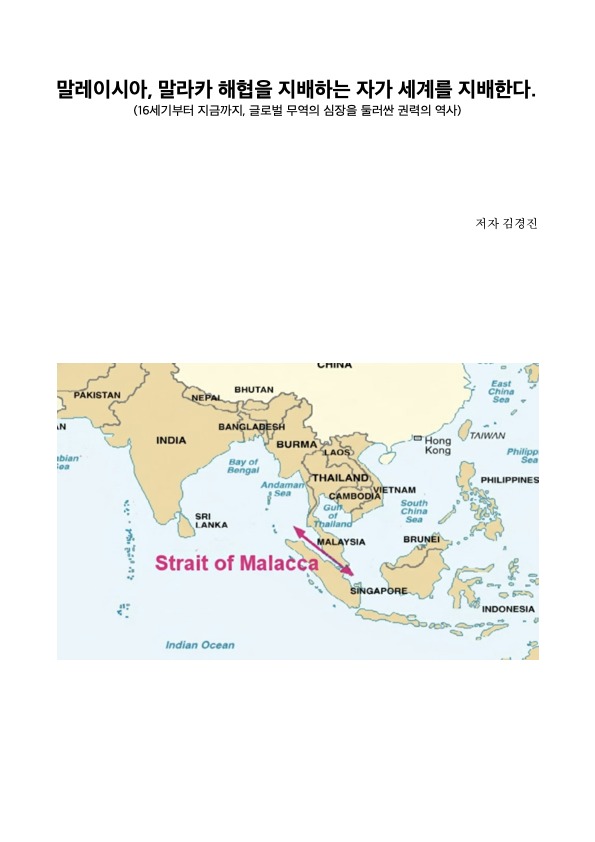
The answer lies in the question. The strait can close again. Next time it might be the Malacca Strait instead of Hormuz, the Bab el-Mandeb Strait, or the South China Sea. Chokepoints exist worldwide, and the geopolitical tensions surrounding them are not subsiding.
Korea's choice now determines whether the next generation stands before the same question thirty years from now.
Kim Kyung-jin, artificial intelligence expert and attorney
Specialist in AI law and policy, former member of National Assembly, author of numerous works
If this book has stayed with you even briefly, please support so the next story can reach the world.
(Voluntary support account: Nonghyup 302-1096-0948-81, Account holder: Kim Kyung-jin)
Kim Kyung-jin
Attorney · Former Member of the National Assembly · AI Policy Researcher
© 2026 Kim Kyung-jin. All rights reserved.