AI Library

AI Library

Books for Reading AI

Choose a book, then read it in order from the table of contents.
37 Concrete Codex Use Cases cover

Book-style reading

37 Concrete Codex Use Cases

Kim Kyung-jin

From morning briefings to agent swarms: 37 real-world workflow automations

This guide gathers 37 ways to connect Codex and AI agents to real work: personal routines, data processing, marketing, sales, documents, development, and browser control.

Share

2026 Beijing: The Dangerous Dance of Two Giants book cover

16 posts available

2026 Beijing: The Dangerous Dance of Two Giants

Kim Kyung-jin

Table of Contents, Introduction, 13 Chapters, Epilogue

This book reads the Beijing summit through Hormuz, rare earths, Taiwan, Boeing, soybeans, AI chips, and Korea’s exposure to the U.S.-China bargain.

Share

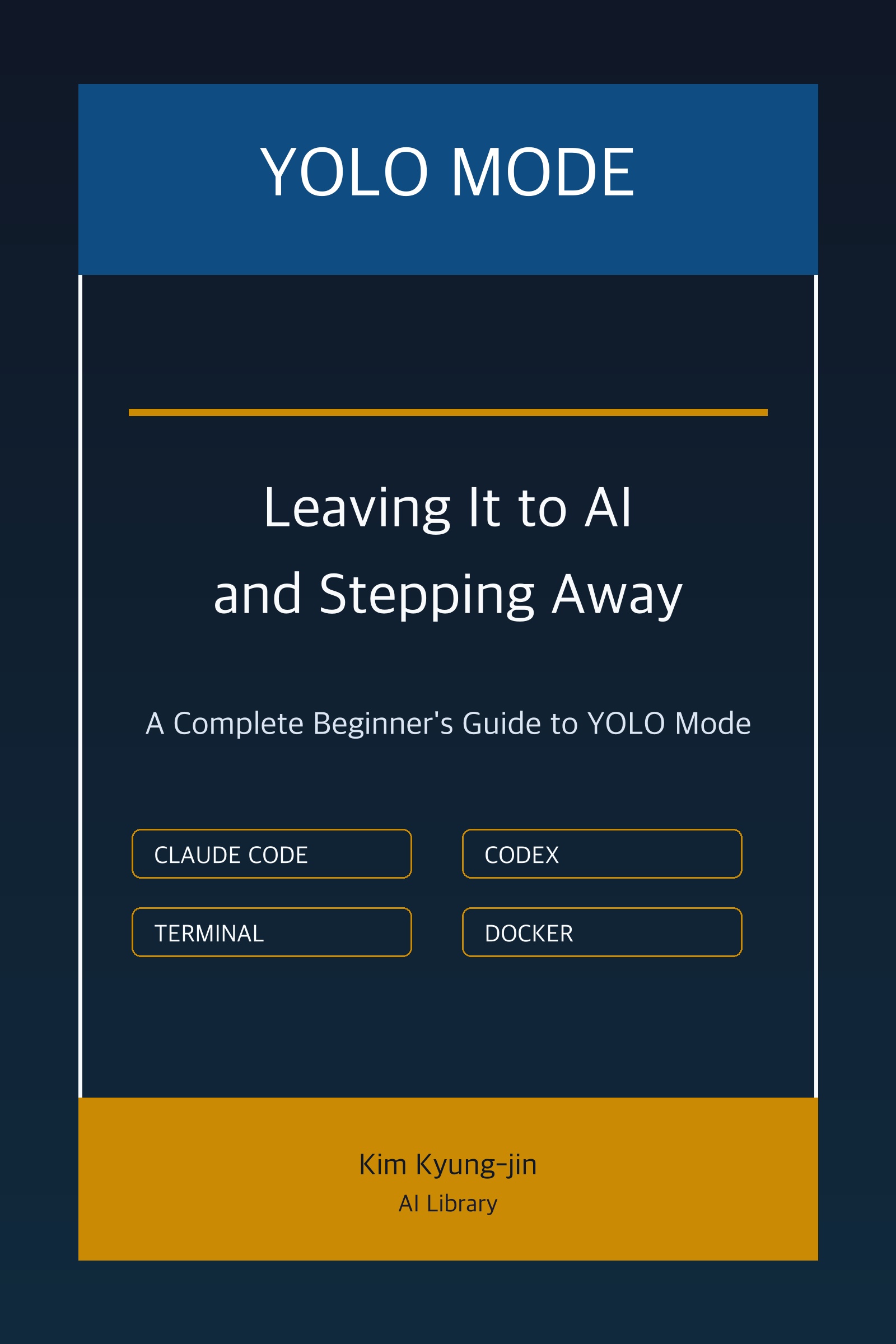
Leaving It to AI and Stepping Away cover

27 posts

Leaving It to AI and Stepping Away

Kim Kyung-jin

A Complete Beginner’s Guide to YOLO Mode. Table of contents and 26 chapters

A beginner-friendly online book on YOLO mode in Claude Code and Codex. It explains how to let AI read files, write code, run commands, and finish work while keeping rollback, Docker sandboxing, and safety checks close at hand.

Share

Artificial Intelligence Fighter, Artificial Intelligence Air Force book cover

43 posts available

Artificial Intelligence Fighter, Artificial Intelligence Air Force

Kim Kyung-jin

Table of Contents, Preface, 40 Chapters, Epilogue

Artificial Intelligence Fighter, Artificial Intelligence Air Force is an online AI Library book by Kim Kyung-jin. It covers AI fighters, autonomous air power, unmanned combat aircraft, CCA, MUM-T, sixth-generation fighters and is organized as Table of Contents, Preface, 40 Chapters, Epilogue.

Share

Artificial Intelligence on Trial book cover

26 posts available

Artificial Intelligence on Trial

Attorney Kyungjin Kim

Table of Contents, Preface, 21 Chapters, 3 Appendices

Artificial Intelligence on Trial is an online AI Library book by Attorney Kyungjin Kim. It covers artificial intelligence and law, AI liability, algorithmic judgment, courts and technology and is organized as Table of Contents, Preface, 21 Chapters, 3 Appendices.

Share

PALANTIR book cover

16 posts available

PALANTIR: War, Surveillance, Artificial Intelligence

Attorney Kyungjin Kim

Table of Contents, Preface, 14 Chapters

PALANTIR: War, Surveillance, Artificial Intelligence is an online AI Library book by Attorney Kyungjin Kim. It covers Palantir, war, surveillance, artificial intelligence, data analytics, national security and is organized as Table of Contents, Preface, 14 Chapters.

Share

Brain Readers: Neuralink and the Final Human Revolution book cover

21 posts available

Brain Readers: Neuralink and the Final Human Revolution

Kim Kyung-jin

Table of Contents, Prologue, 18 Chapters, Epilogue

Brain Readers: Neuralink and the Final Human Revolution is an online AI Library book by Kim Kyung-jin. It follows Neuralink, brain-computer interfaces, brain data, medicine, neurorights, and the future of human enhancement.

Share

Artificial Intelligence and the Reshaping of Society book cover

16 posts available

Artificial Intelligence and the Reshaping of Society

Kim Kyung-jin

Table of Contents, Preface, 13 Chapters, Epilogue

Artificial Intelligence and the Reshaping of Society is an online AI Library book by Kim Kyung-jin. It follows how artificial intelligence changes work, education, inequality, cities, democracy, and human relationships.

Share

The Jensen Huang Story book cover

16 posts available

The Jensen Huang Story

Kim Kyung-jin

Table of Contents, Preface, 13 Chapters, Epilogue

The Jensen Huang Story is an online AI Library book by Kim Kyung-jin. It covers Jensen Huang, NVIDIA, GPUs, AI chips, and the AI industry.

Share

Ten Questions AI Poses to Humanity book cover

12 posts available

Ten Questions AI Poses to Humanity

Kim Kyung-jin

Table of Contents, Preface, 10 Chapters

Ten Questions AI Poses to Humanity is an online AI Library book by Kim Kyung-jin. It asks how artificial intelligence changes truth, weapons, work, data, identity, and human control.

Share

Malaysia and the Malacca Strait book cover

23 posts available

Malaysia and the Malacca Strait: Whoever Controls It Controls the World

Kim Kyung-jin

Table of Contents, Preface, 20 Chapters, Epilogue

Malaysia and the Malacca Strait is an online AI Library book by Kim Kyung-jin. It covers Malaysia, the Malacca Strait, maritime logistics, geopolitics, global trade, and Southeast Asia’s strategic future.

Share

Georgia history and culture travel book cover

24 posts available

A Journey Through Georgia’s History and Culture

Kim Kyung-jin

Table of Contents, Preface, 17 Chapters, 4 Appendices, Epilogue

A Journey Through Georgia’s History and Culture is an online AI Library book by Kim Kyung-jin. It covers Georgia’s history, culture, religion, politics, travel, and the Caucasus crossroads between Europe and Asia.

Share

Reading Armenia book cover

13 posts available

Reading Armenia: A Thousand Prayers, One Mountain

Kim Kyung-jin

Table of Contents, Preface, 10 Chapters, Epilogue

Reading Armenia: A Thousand Prayers, One Mountain is an online AI Library book by Kim Kyung-jin. It covers Armenian history, faith, Mount Ararat, cultural memory, travel, and the endurance of a small nation.

Share

Mastering Claude Code book cover

41 posts available

Mastering Claude Code

Kim Kyung-jin

Table of Contents, Preface, Chapters, Appendices

Mastering Claude Code is an online AI Library book by Kim Kyung-jin. It covers Claude Code setup, commands, workflows, automation, agents, and practical methods for using Claude Code in real work.

Share

Claude Cowork and Agent manual book cover

11 posts available

Claude Cowork and Agent Utilization Manual

Kim Kyung-jin

Table of Contents, Preface, 8 Chapters, Closing Note

Claude Cowork and Agent Utilization Manual is an online AI Library book by Kim Kyung-jin. It covers Claude Code, AI agents, coding automation, work automation, and practical agent-based collaboration.

Share

2026 U.S.-Iran War and the Global Energy Crisis book cover

39 posts available

The 2026 U.S.-Iran War and the Global Energy Crisis

Kim Kyung-jin

Table of Contents, Preface, Chapters and Appendices

The 2026 U.S.-Iran War and the Global Energy Crisis is an online AI Library book by Kim Kyung-jin. It covers war, oil, the Strait of Hormuz, maritime security, energy markets, and the global consequences of conflict.

Share

The Traces Han Dong-hoon Left on South Korea book cover

13 posts available

The Traces Han Dong-hoon Left on South Korea

Kim Kyung-jin

Table of Contents, Prologue, Chapters, Epilogue

The Traces Han Dong-hoon Left on South Korea is an online AI Library book by Kim Kyung-jin. It examines his record in justice policy, immigration reform, public institutions, and the structural questions facing South Korea.

Share

The Han Dong-hoon Story book cover

39 posts available

The Han Dong-hoon Story

Kim Kyung-jin

Table of Contents, Prologue, Chapters, Epilogue

The Han Dong-hoon Story is an online AI Library book by Kim Kyung-jin. It traces Han Dong-hoon’s life, public career, political choices, and the changing landscape of South Korean conservative politics.

Share

Beyond the Glass Ceiling cover

39 entries

Beyond the Glass Ceiling

Kim Kyung-jin

Table of contents, prologue, 31 chapters, epilogue, 5 appendices

A political biography tracing Sanae Takaichi’s rise from Nara to Japan’s premiership, through party struggles, security policy, diplomacy, and the meaning of Japan’s first female prime minister.

Share

AI Hegemony War book cover

8 posts available

AI Hegemony War

Kim Kyung-jin

Table of Contents, 7 Chapters

An online AI Library book by Kim Kyung-jin on AI superintelligence, the U.S.-China technology race, Europe and Korea’s AI laws, and international AI governance.

Share

Sam Altman Biography: Pioneer of the AI Revolution cover

22 posts

Sam Altman Biography: Pioneer of the AI Revolution

Kim Kyung-jin, Kim Kyung-ran

Table of contents, preface, 7 parts, 20 chapters

An online biography following Sam Altman’s childhood, startups, Y Combinator, OpenAI, ChatGPT, the 2023 board crisis, and his sense of responsibility in the AI era.

Share

From Chaiwala to Prime Minister cover

13 entries

From Chaiwala to Prime Minister

Kim Kyung-jin

Table of contents, preface, 10 chapters, epilogue

A political biography tracing Narendra Modi from a chai-selling boy in Vadnagar to RSS organizer, Gujarat chief minister, and three-term prime minister, while reading modern India, Korea-India relations, and the risks of a rising power.

Share

AI Classroom: Your Grades Will Change book cover

26 posts available

AI Classroom: Your Grades Will Change

Kim Kyung-jin

Table of Contents, Preface, 24 Sections

An online AI Library book by Kim Kyung-jin on how AI can support elementary, middle, and high school learning, teaching, assessment, and educational equity.

Share

Military Artificial Intelligence cover

17 entries

Military Artificial Intelligence

Kim Kyung-jin and Kim Won-tae

Table of contents, preface, 14 chapters, epilogue

A full-length study of military artificial intelligence, from autonomous weapons, drones, command systems, logistics, and cyber defense to the strategies of the United States, China, Israel, Korea, and global defense AI companies.

Share

Global Case Studies in Introducing AI into Public Administration book cover

25 posts available

Global Case Studies in Introducing AI into Public Administration

Kim Kyung-jin

Table of Contents, 23 Chapters, Epilogue

An online AI Library book by Kim Kyung-jin on public-sector AI adoption, national strategies, administrative services, governance, and future policy tasks.

Share

Seven Misunderstandings About the Arctic Route book cover

10 posts available

Seven Misunderstandings About the Arctic Route

Kim Kyung-jin

Table of Contents, Preface, 7 Chapters, Epilogue

An online AI Library book by Kim Kyung-jin on seven common misunderstandings about the Arctic Route, including speed, liner service, insurance, safety rules, year-round access, carbon impact, and infrastructure.

Share

Artificial Intelligence Election cover

14 posts

Artificial Intelligence Election

Kim Kyung-jin

Table of contents, author preface, 11 chapters, closing essay

An online book on campaign messaging, publicity materials, digital campaigning, data analysis, campaign operations, disinformation defense, legal risk, and ready-to-use prompts.

Share

Demis Hassabis book cover

34 posts available

Demis Hassabis, Father of Google’s Artificial Intelligence

Kim Kyung-ran, Kim Kyung-jin

Table of Contents, Author’s Preface, 31 Chapters, Epilogue

Demis Hassabis, Father of Google’s Artificial Intelligence is an online AI Library book by Kim Kyung-ran, Kim Kyung-jin. It covers Demis Hassabis, Google DeepMind, artificial intelligence, AlphaGo, AI research and is organized as Table of Contents, Author’s Preface, 31 Chapters, Epilogue.

Share

The Dhammapada 423 Verses book cover

28 posts available

The Dhammapada: 423 Verses

Kim Kyung-jin

Table of Contents, Editor’s Note, 26 Chapters, 423 Verses

An online AI Library book by Kim Kyung-jin. This edition arranges all 423 verses of the Dhammapada into 26 chapters for slow, poetic reading.

Share

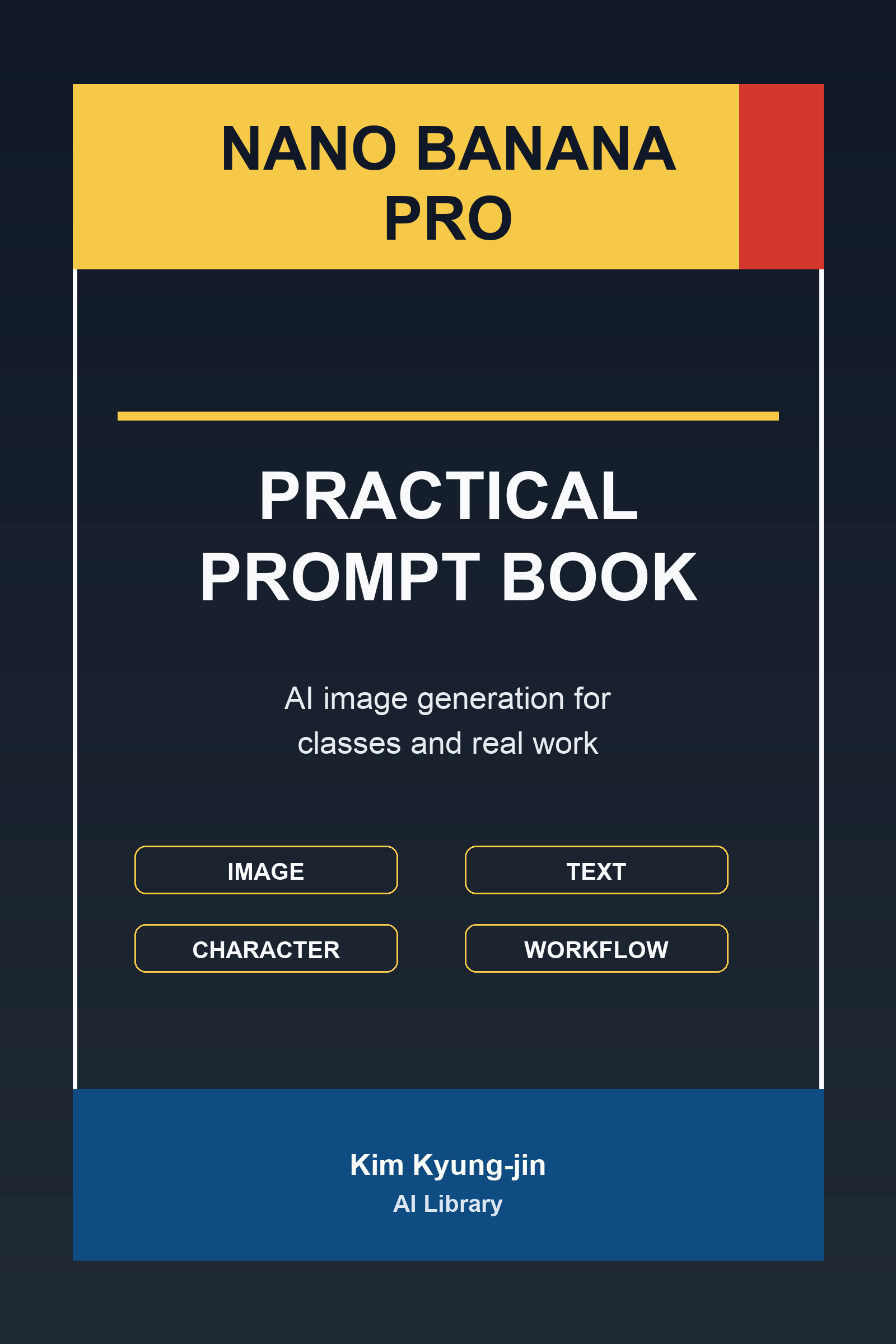
Nano Banana Pro Practical Prompt Book cover

24 posts

Nano Banana Pro Practical Prompt Book

Kim Kyung-jin

6 parts, 22 chapters, classroom prompt appendix

An online book for using Nano Banana Pro in classes and real work, covering image generation, editing, text rendering, character consistency, business use cases, and monetization.

Share

Liberal Arts AI for College Students book cover

16 posts available

Liberal Arts AI for College Students

Kim Kyung-jin

Table of Contents, Preface, 13 Chapters, Closing Essay

An online AI Library textbook for college students. It introduces AI history, daily use, document work, research, images, presentations, video, productivity, learning, careers, copyright, and governance.

Share

Legal Practice and Artificial Intelligence book cover

16 posts available

Legal Practice and Artificial Intelligence

Kim Kyung-jin

Table of Contents, Preface, 14 Parts

An online AI Library book by Kim Kyung-jin on legal research, drafting, evidence analysis, contract review, NotebookLM, and practical generative AI workflows for legal practice.

Share

Hello, I Am Kim Kyung-jin book cover

10 posts available

Hello, I Am Kim Kyung-jin

Kim Kyung-jin

Table of Contents, Preface, Recommendations, 6 Chapters, Closing

An online AI Library book on Kim Kyung-jin’s life, science and technology policy, parliamentary diplomacy, legislative battles, Dongdaemun vision, and proposals for Korea’s demographic future.

Share

Politics and People book cover

25 posts available

Politics and People

Kim Kyung-jin

Table of Contents, Prologue, 22 Chapters, Epilogue

An online AI Library book by Kim Kyung-jin on how politics begins with reading people, winning trust, keeping relationships, and enduring seasons of crisis.

Share

[AI Library] Chapter 3: Claude Code for Everyone

Mastering Claude Code
Author
Kim Kyung-jin
Date
2026-05-06 09:09
Views
427

Mastering Claude Code

Chapter 3: Claude Code for Everyone

Kim Kyung-jin

Mastering Claude Code

Introduction

There is a freelance consultant who opens his laptop at a cafe every morning. He has built email classification systems for clients using n8n, and operates dozens of workflows with Zapier syncing CRM data to Google Sheets. He knows automation well. But lately, his clients have started asking him questions.

"Isn't there anything we can do with agentic AI?" Each time he hears the word agentic, he feels a twinge of anxiety. Should he learn to code? Start with Python? But when he actually opened Claude Code, what he entered was not code but Korean sentences.

The Hidden Advantage of Those Experienced with n8n and Zapier

As agentic workflows gain attention, you might worry that experience with existing automation tools becomes useless. It's the opposite. Anyone who has built workflows with n8n or Zapier has a decisive advantage when working with agentic systems.

They know what webhooks are. They intuitively understand how APIs work. They can visualize in their minds how data flows from one node to another. When someone without this foundation jumps into agentic tools, they cannot tell whether the agent's output is good or bad. When the agent makes a wrong decision, they don't even notice that it was wrong.

Those who have mastered the principles of automation give precise instructions to agents. Instead of vague requests like "Scrape leads from this website," they say, "Collect job postings for sales positions from this URL, include fields for job type, location, and experience, organize them in an Excel file, and fetch only up to 200 records." Agents deliver far better results when given such specific instructions.

The Trap of Jumping in Without Foundations: Not Knowing Webhooks Means Missing Mistakes

As the agentic workflow market heats up, more people are jumping straight into Claude Code without any automation experience, drawn by the message that "you can build apps without coding." It's true that Claude Code is a powerful tool for non-developers. But skipping fundamental concepts entirely is risky.

Suppose you tell an agent, "Build me a lead scraper." The agent diligently writes code, creates tools, and structures the workflow. You get a result. But how can you tell if that result is actually good, whether there are security vulnerabilities, or if it's handling data correctly?

Someone who doesn't know what a webhook is won't notice if an agent misconfigures it. Someone who doesn't understand the basic structure of API calls won't realize when an agent wastes money by making unnecessary repeated API calls.

This book is written for readers with no coding experience. It's not saying you should learn a programming language. Rather, it emphasizes that understanding the fundamental concepts of automation, where data flows, what triggers are, and why API keys are needed, is essential to properly managing agentic workflows. We will build those foundations together in the early chapters of this book.

The Advent of the Age When You Can Use Coding Tools Without Knowing Code

Traditionally, building software required learning a programming language. You had to learn how to declare variables, use loops, and define functions. That process was a barrier to entry. n8n and Zapier lowered that barrier by one step. You could build workflows by dragging and dropping nodes together. Construction time dropped dramatically compared to manual coding.

Claude Code lowers that barrier by another step. You don't even need drag and drop. Describe what you want in natural language, and the agent writes code, generates files, and fixes errors. Users don't need to know how to read Python code. Tool files the agent creates carry a .py extension, but users rarely edit the code inside directly.

The user's role is closer to manager, overseer, or architect. You decide what to build, review the output, and adjust direction.

To feel the speed of this change, look at the timeline. Taking the time it took to build automation systems with manual coding as the baseline, the arrival of no-code tools significantly shortened construction time, and the arrival of agentic tools cut it again dramatically. This trend is accelerating.

The Power of Verbal Control That Claude Code Provides

Creating a workflow in Claude Code is a process where those who give good instructions receive good results. If you say "Analyze our competitors," the agent will produce something. But "Our company is an AI lead generation platform, our primary target is marketing agencies, and our monthly subscription fee ranges from 200 to 500 dollars.

Compare and analyze competitors' pricing strategies, core features, and target markets, and create a PDF report with our logo and brand colors applied",when you say this, the quality of the output changes entirely.

Communication with an agent hinges on two things: stating your goal specifically and clarifying the completion criteria. "Build me a prospect list" is worse than "Collect 500 sales job postings from the US and Europe through web research, save them in an Excel file with columns for job type, location, and salary." With the latter instruction, the agent clearly understands when to stop and what data to collect.

The work of setting node parameters one by one in n8n is replaced by a single paragraph of natural language in Claude Code. The agent reads API documentation, finds the correct endpoint, and structures JSON for you. What remains for the user is the ability to express clearly "what you want," and that is a more universal and trainable skill than coding.

The freelance consultant completes his first agentic workflow at the cafe. A workflow that took three hours in n8n took just 20 minutes in Claude Code. He didn't read a single line of the Python code the agent generated, but the result was accurate. He closes his laptop thinking: this tool's real power doesn't lie in writing code.

It lies in being able to clearly say what you want. And for someone who has been doing automation for years, that was already a familiar skill.

[Figure 3-01: Timeline showing the change in automation construction time. A chart showing how construction time shortened progressively as the field shifted from manual coding to no-code tools (n8n, Zapier) to agentic tools (Claude Code).]

Artificial Intelligence Specialist Attorney Kim Kyung-jin

Specialist in AI Legal Policy, Former Congressman, Author of Multiple Books

If this book stayed with you even for a moment, please support us so that the next story can come to light.

(Voluntary support requested. Account: Nonghyup 302-1096-0948-81 Account holder: Kim Kyung-jin)

Kim Kyung-jin

Attorney · Former Member of the National Assembly · AI Policy Researcher

kimkj.com

© 2026 Kim Kyung-jin. All rights reserved.

#KimKyungjin #AILibrary #MasteringClaudeCode
kimkj.com Home
Scroll to Top
kimkj.com Home