AI Library

AI Library

Books for Reading AI

Choose a book, then read it in order from the table of contents.

China's Robotics Industry 2026: The Age of Mass Production and Real-World Deployment cover

25 readings

China's Robotics Industry 2026: The Age of Mass Production and Real-World Deployment

Kim Kyung-jin

From the humanoid mass-production race to U.S.-China hegemony: the state of China's robotics industry in 2026. Table of Contents, Preface, 7 Parts / 23 Chapters, Epilogue

In a factory in Shenzhen, hundreds of humanoid robots repeat the same motion. This book traces the mass-production race between Unitree and UBTECH, the Optimus supply chain, real-world deployment sites, and where Korea stands amid the U.S.-China tech hegemony.

Crossing the Adolescence of Technology Cover

15 Parts in Total

Crossing the Adolescence of Technology

Kim Kyung-jin

Dario Amodei, Anthropic, and the Struggle Toward Controllable Intelligence. Table of Contents, Preface, Prologue, 12 Chapters, Epilogue

The struggle of a physicist who lost his father to create controllable artificial intelligence. The story of Dario Amodei and Anthropic clashing with the Pentagon and the White House, shaking the era with the scaling law and Constitutional AI.

37 Concrete Codex Use Cases cover

Book-style reading

37 Concrete Codex Use Cases

Kim Kyung-jin

From morning briefings to agent swarms: 37 real-world workflow automations

This guide gathers 37 ways to connect Codex and AI agents to real work: personal routines, data processing, marketing, sales, documents, development, and browser control.

Share

2026 Beijing: The Dangerous Dance of Two Giants book cover

16 posts available

2026 Beijing: The Dangerous Dance of Two Giants

Kim Kyung-jin

Table of Contents, Introduction, 13 Chapters, Epilogue

This book reads the Beijing summit through Hormuz, rare earths, Taiwan, Boeing, soybeans, AI chips, and Korea’s exposure to the U.S.-China bargain.

Share

Leaving It to AI and Stepping Away cover

27 posts

Leaving It to AI and Stepping Away

Kim Kyung-jin

A Complete Beginner’s Guide to YOLO Mode. Table of contents and 26 chapters

A beginner-friendly online book on YOLO mode in Claude Code and Codex. It explains how to let AI read files, write code, run commands, and finish work while keeping rollback, Docker sandboxing, and safety checks close at hand.

Share

Artificial Intelligence Fighter, Artificial Intelligence Air Force book cover

43 posts available

Artificial Intelligence Fighter, Artificial Intelligence Air Force

Kim Kyung-jin

Table of Contents, Preface, 40 Chapters, Epilogue

Artificial Intelligence Fighter, Artificial Intelligence Air Force is an online AI Library book by Kim Kyung-jin. It covers AI fighters, autonomous air power, unmanned combat aircraft, CCA, MUM-T, sixth-generation fighters and is organized as Table of Contents, Preface, 40 Chapters, Epilogue.

Share

Artificial Intelligence on Trial book cover

26 posts available

Artificial Intelligence on Trial

Attorney Kyungjin Kim

Table of Contents, Preface, 21 Chapters, 3 Appendices

Artificial Intelligence on Trial is an online AI Library book by Attorney Kyungjin Kim. It covers artificial intelligence and law, AI liability, algorithmic judgment, courts and technology and is organized as Table of Contents, Preface, 21 Chapters, 3 Appendices.

Share

PALANTIR book cover

16 posts available

PALANTIR: War, Surveillance, Artificial Intelligence

Attorney Kyungjin Kim

Table of Contents, Preface, 14 Chapters

PALANTIR: War, Surveillance, Artificial Intelligence is an online AI Library book by Attorney Kyungjin Kim. It covers Palantir, war, surveillance, artificial intelligence, data analytics, national security and is organized as Table of Contents, Preface, 14 Chapters.

Share

Brain Readers: Neuralink and the Final Human Revolution book cover

21 posts available

Brain Readers: Neuralink and the Final Human Revolution

Kim Kyung-jin

Table of Contents, Prologue, 18 Chapters, Epilogue

Brain Readers: Neuralink and the Final Human Revolution is an online AI Library book by Kim Kyung-jin. It follows Neuralink, brain-computer interfaces, brain data, medicine, neurorights, and the future of human enhancement.

Share

Artificial Intelligence and the Reshaping of Society book cover

16 posts available

Artificial Intelligence and the Reshaping of Society

Kim Kyung-jin

Table of Contents, Preface, 13 Chapters, Epilogue

Artificial Intelligence and the Reshaping of Society is an online AI Library book by Kim Kyung-jin. It follows how artificial intelligence changes work, education, inequality, cities, democracy, and human relationships.

Share

The Jensen Huang Story book cover

16 posts available

The Jensen Huang Story

Kim Kyung-jin

Table of Contents, Preface, 13 Chapters, Epilogue

The Jensen Huang Story is an online AI Library book by Kim Kyung-jin. It covers Jensen Huang, NVIDIA, GPUs, AI chips, and the AI industry.

Share

Ten Questions AI Poses to Humanity book cover

12 posts available

Ten Questions AI Poses to Humanity

Kim Kyung-jin

Table of Contents, Preface, 10 Chapters

Ten Questions AI Poses to Humanity is an online AI Library book by Kim Kyung-jin. It asks how artificial intelligence changes truth, weapons, work, data, identity, and human control.

Share

Malaysia and the Malacca Strait book cover

23 posts available

Malaysia and the Malacca Strait: Whoever Controls It Controls the World

Kim Kyung-jin

Table of Contents, Preface, 20 Chapters, Epilogue

Malaysia and the Malacca Strait is an online AI Library book by Kim Kyung-jin. It covers Malaysia, the Malacca Strait, maritime logistics, geopolitics, global trade, and Southeast Asia’s strategic future.

Share

Georgia history and culture travel book cover

24 posts available

A Journey Through Georgia’s History and Culture

Kim Kyung-jin

Table of Contents, Preface, 17 Chapters, 4 Appendices, Epilogue

A Journey Through Georgia’s History and Culture is an online AI Library book by Kim Kyung-jin. It covers Georgia’s history, culture, religion, politics, travel, and the Caucasus crossroads between Europe and Asia.

Share

Reading Armenia book cover

13 posts available

Reading Armenia: A Thousand Prayers, One Mountain

Kim Kyung-jin

Table of Contents, Preface, 10 Chapters, Epilogue

Reading Armenia: A Thousand Prayers, One Mountain is an online AI Library book by Kim Kyung-jin. It covers Armenian history, faith, Mount Ararat, cultural memory, travel, and the endurance of a small nation.

Share

Mastering Claude Code book cover

41 posts available

Mastering Claude Code

Kim Kyung-jin

Table of Contents, Preface, Chapters, Appendices

Mastering Claude Code is an online AI Library book by Kim Kyung-jin. It covers Claude Code setup, commands, workflows, automation, agents, and practical methods for using Claude Code in real work.

Share

Claude Cowork and Agent manual book cover

11 posts available

Claude Cowork and Agent Utilization Manual

Kim Kyung-jin

Table of Contents, Preface, 8 Chapters, Closing Note

Claude Cowork and Agent Utilization Manual is an online AI Library book by Kim Kyung-jin. It covers Claude Code, AI agents, coding automation, work automation, and practical agent-based collaboration.

Share

2026 U.S.-Iran War and the Global Energy Crisis book cover

39 posts available

The 2026 U.S.-Iran War and the Global Energy Crisis

Kim Kyung-jin

Table of Contents, Preface, Chapters and Appendices

The 2026 U.S.-Iran War and the Global Energy Crisis is an online AI Library book by Kim Kyung-jin. It covers war, oil, the Strait of Hormuz, maritime security, energy markets, and the global consequences of conflict.

Share

The Traces Han Dong-hoon Left on South Korea book cover

13 posts available

The Traces Han Dong-hoon Left on South Korea

Kim Kyung-jin

Table of Contents, Prologue, Chapters, Epilogue

The Traces Han Dong-hoon Left on South Korea is an online AI Library book by Kim Kyung-jin. It examines his record in justice policy, immigration reform, public institutions, and the structural questions facing South Korea.

Share

The Han Dong-hoon Story book cover

39 posts available

The Han Dong-hoon Story

Kim Kyung-jin

Table of Contents, Prologue, Chapters, Epilogue

The Han Dong-hoon Story is an online AI Library book by Kim Kyung-jin. It traces Han Dong-hoon’s life, public career, political choices, and the changing landscape of South Korean conservative politics.

Share

Beyond the Glass Ceiling cover

39 entries

Beyond the Glass Ceiling

Kim Kyung-jin

Table of contents, prologue, 31 chapters, epilogue, 5 appendices

A political biography tracing Sanae Takaichi’s rise from Nara to Japan’s premiership, through party struggles, security policy, diplomacy, and the meaning of Japan’s first female prime minister.

Share

AI Hegemony War book cover

8 posts available

AI Hegemony War

Kim Kyung-jin

Table of Contents, 7 Chapters

An online AI Library book by Kim Kyung-jin on AI superintelligence, the U.S.-China technology race, Europe and Korea’s AI laws, and international AI governance.

Share

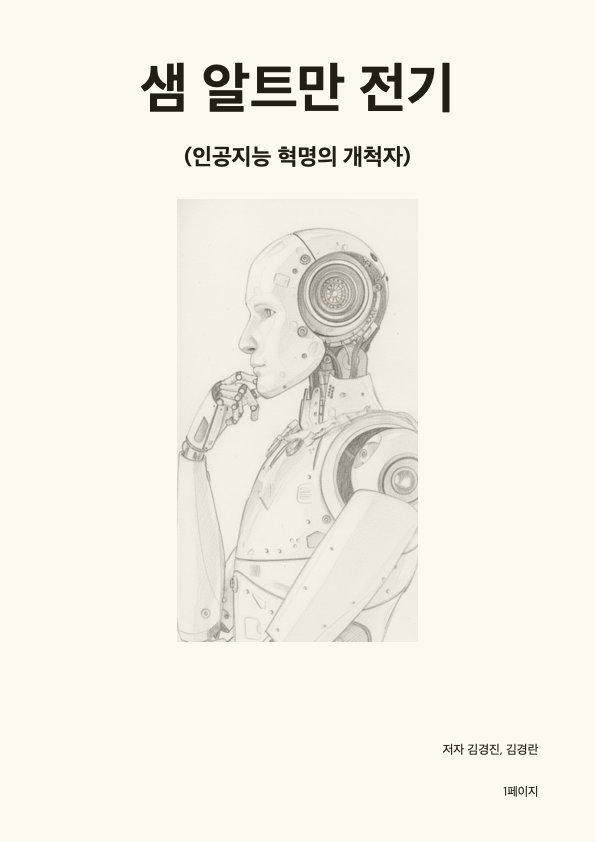
Sam Altman Biography: Pioneer of the AI Revolution cover

22 posts

Sam Altman Biography: Pioneer of the AI Revolution

Kim Kyung-jin, Kim Kyung-ran

Table of contents, preface, 7 parts, 20 chapters

An online biography following Sam Altman’s childhood, startups, Y Combinator, OpenAI, ChatGPT, the 2023 board crisis, and his sense of responsibility in the AI era.

Share

From Chaiwala to Prime Minister cover

13 entries

From Chaiwala to Prime Minister

Kim Kyung-jin

Table of contents, preface, 10 chapters, epilogue

A political biography tracing Narendra Modi from a chai-selling boy in Vadnagar to RSS organizer, Gujarat chief minister, and three-term prime minister, while reading modern India, Korea-India relations, and the risks of a rising power.

Share

AI Classroom: Your Grades Will Change book cover

26 posts available

AI Classroom: Your Grades Will Change

Kim Kyung-jin

Table of Contents, Preface, 24 Sections

An online AI Library book by Kim Kyung-jin on how AI can support elementary, middle, and high school learning, teaching, assessment, and educational equity.

Share

Military Artificial Intelligence cover

17 entries

Military Artificial Intelligence

Kim Kyung-jin and Kim Won-tae

Table of contents, preface, 14 chapters, epilogue

A full-length study of military artificial intelligence, from autonomous weapons, drones, command systems, logistics, and cyber defense to the strategies of the United States, China, Israel, Korea, and global defense AI companies.

Share

Global Case Studies in Introducing AI into Public Administration book cover

25 posts available

Global Case Studies in Introducing AI into Public Administration

Kim Kyung-jin

Table of Contents, 23 Chapters, Epilogue

An online AI Library book by Kim Kyung-jin on public-sector AI adoption, national strategies, administrative services, governance, and future policy tasks.

Share

Seven Misunderstandings About the Arctic Route book cover

10 posts available

Seven Misunderstandings About the Arctic Route

Kim Kyung-jin

Table of Contents, Preface, 7 Chapters, Epilogue

An online AI Library book by Kim Kyung-jin on seven common misunderstandings about the Arctic Route, including speed, liner service, insurance, safety rules, year-round access, carbon impact, and infrastructure.

Share

Artificial Intelligence Election cover

14 posts

Artificial Intelligence Election

Kim Kyung-jin

Table of contents, author preface, 11 chapters, closing essay

An online book on campaign messaging, publicity materials, digital campaigning, data analysis, campaign operations, disinformation defense, legal risk, and ready-to-use prompts.

Share

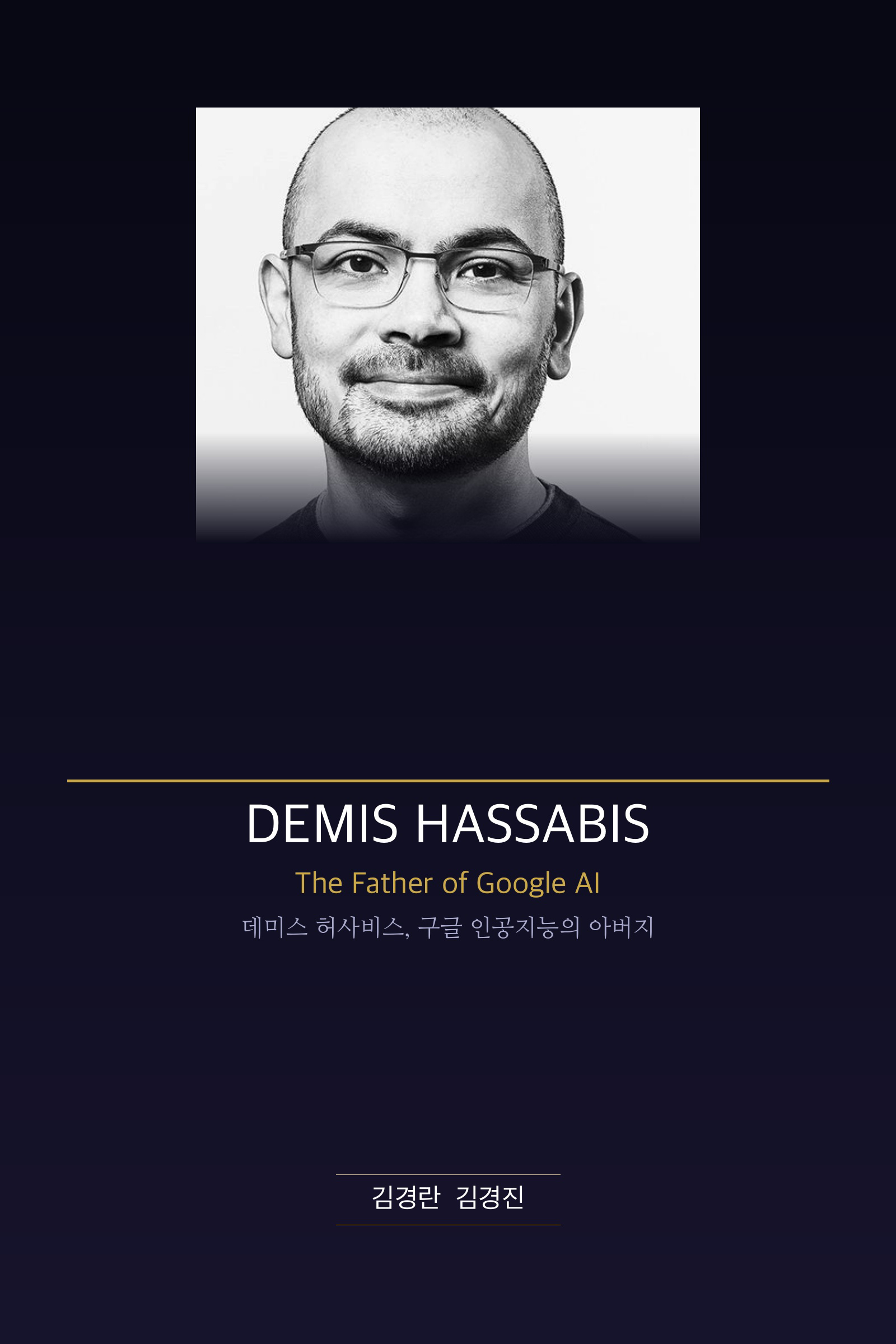
Demis Hassabis book cover

34 posts available

Demis Hassabis, Father of Google’s Artificial Intelligence

Kim Kyung-ran, Kim Kyung-jin

Table of Contents, Author’s Preface, 31 Chapters, Epilogue

Demis Hassabis, Father of Google’s Artificial Intelligence is an online AI Library book by Kim Kyung-ran, Kim Kyung-jin. It covers Demis Hassabis, Google DeepMind, artificial intelligence, AlphaGo, AI research and is organized as Table of Contents, Author’s Preface, 31 Chapters, Epilogue.

Share

The Dhammapada 423 Verses book cover

28 posts available

The Dhammapada: 423 Verses

Kim Kyung-jin

Table of Contents, Editor’s Note, 26 Chapters, 423 Verses

An online AI Library book by Kim Kyung-jin. This edition arranges all 423 verses of the Dhammapada into 26 chapters for slow, poetic reading.

Share

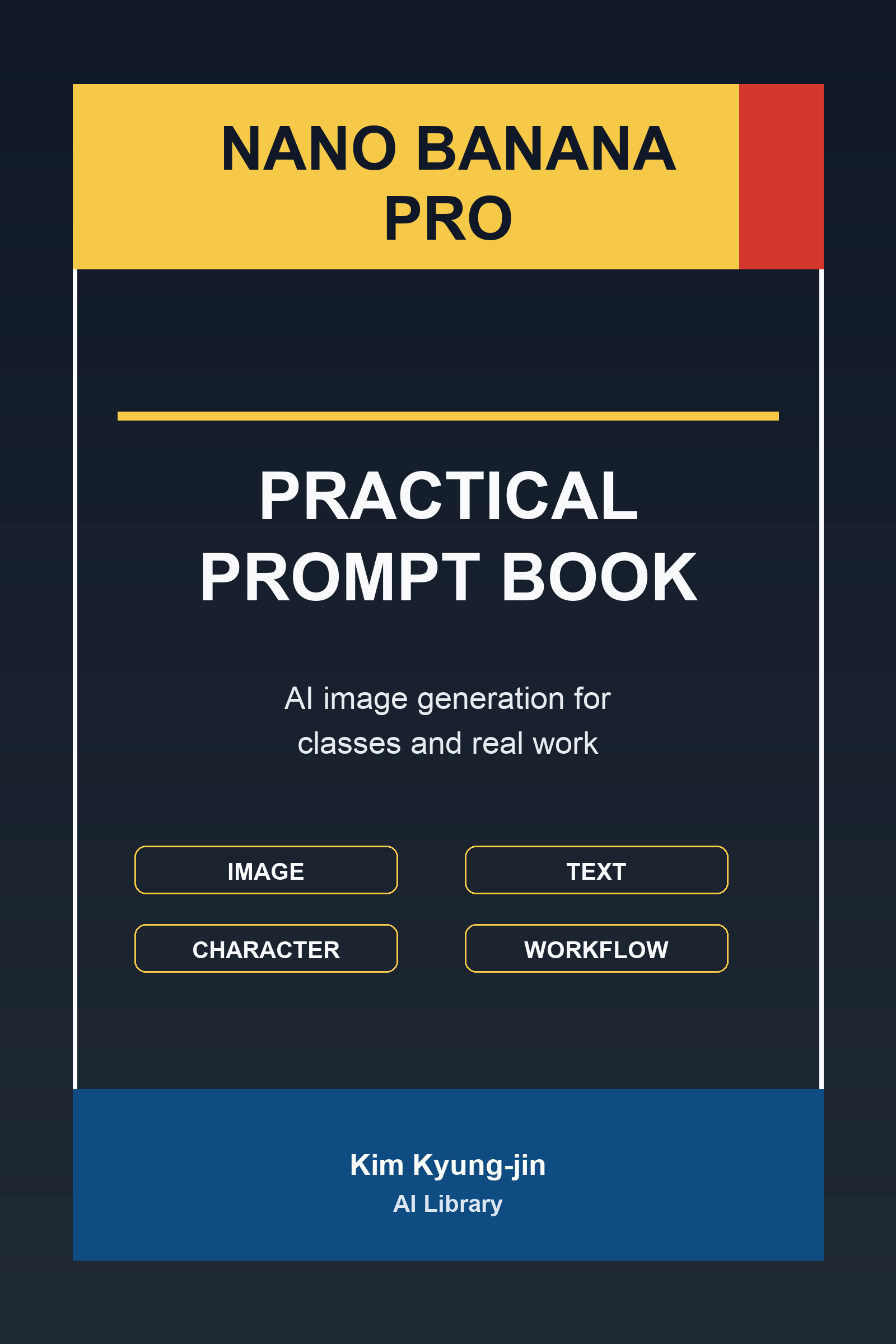
Nano Banana Pro Practical Prompt Book cover

24 posts

Nano Banana Pro Practical Prompt Book

Kim Kyung-jin

6 parts, 22 chapters, classroom prompt appendix

An online book for using Nano Banana Pro in classes and real work, covering image generation, editing, text rendering, character consistency, business use cases, and monetization.

Share

Liberal Arts AI for College Students book cover

16 posts available

Liberal Arts AI for College Students

Kim Kyung-jin

Table of Contents, Preface, 13 Chapters, Closing Essay

An online AI Library textbook for college students. It introduces AI history, daily use, document work, research, images, presentations, video, productivity, learning, careers, copyright, and governance.

Share

Legal Practice and Artificial Intelligence book cover

16 posts available

Legal Practice and Artificial Intelligence

Kim Kyung-jin

Table of Contents, Preface, 14 Parts

An online AI Library book by Kim Kyung-jin on legal research, drafting, evidence analysis, contract review, NotebookLM, and practical generative AI workflows for legal practice.

Share

Hello, I Am Kim Kyung-jin book cover

10 posts available

Hello, I Am Kim Kyung-jin

Kim Kyung-jin

Table of Contents, Preface, Recommendations, 6 Chapters, Closing

An online AI Library book on Kim Kyung-jin’s life, science and technology policy, parliamentary diplomacy, legislative battles, Dongdaemun vision, and proposals for Korea’s demographic future.

Share

Politics and People book cover

25 posts available

Politics and People

Kim Kyung-jin

Table of Contents, Prologue, 22 Chapters, Epilogue

An online AI Library book by Kim Kyung-jin on how politics begins with reading people, winning trust, keeping relationships, and enduring seasons of crisis.

Share

[AI Library] Chapter 3: Standing with 14 Million Retail Investors

Han Dong-hoon Traces
Author
Kim Kyung-jin
Date
2026-05-06 09:47
Views
504

The Traces Han Dong-hoon Left on South Korea

Chapter 3: Standing with 14 Million Retail Investors

Kim Kyung-jin

Traces Han Dong-hoon Has Left on South Korea

Abolishing the Financial Investment Income Tax

Standing with 14 Million Retail Investors: Han Dong-hoon and the Abolition of the Financial Investment Income Tax

1. What Was the Financial Investment Income Tax?

The Financial Investment Income Tax, or FIIT for short. It was a system that levied taxes on income earned from financial investments such as stocks, bonds, funds, and derivatives if annual income exceeded 50 million won. Following the principle that "where there is income, there is taxation," the bill was passed in December 2020 by bipartisan agreement during the Moon Jae-in administration. It was originally scheduled to take effect in 2023, and was later postponed to January 2025.

On the surface, it sounds reasonable. If you made a lot of money from stocks, shouldn't you pay taxes? But reality was far more complicated.

Starting in 2022, the securities transaction tax was being lowered in stages in preparation for implementing the FIIT. In other words, it was a trade-off: lower the transaction tax in exchange for collecting the new FIIT. However, as the FIIT implementation was repeatedly postponed, the transaction tax had been reduced while the FIIT was not being collected, creating a "tax revenue gap." Conversely, if the FIIT was implemented as scheduled, investment income would face double taxation on top of the already-reduced transaction tax, raising concerns about investor exodus.

Above all, what retail investors feared was market contraction. In a situation where profits from the Korean stock market would be taxed while overseas market investments would remain under the existing capital gains tax system, it was inevitable that the domestic stock market would lose its appeal. This was the common concern of 14 million retail investors.

2. From General Election Platform to Party Leader's Agenda

On January 2, 2024, President Yoon Suk-yeol announced at the stock market opening ceremony that he would push to abolish the FIIT. The People Power Party aligned with this and made the abolition of the FIIT a campaign pledge for the 22nd general election.

Han Dong-hoon was at the forefront of this pledge. As chairman of the People Power Party's emergency response committee at the time, Han Dong-hoon led the general election campaign and pushed the abolition of the FIIT as one of the key livelihood pledges.

However, the election results were a crushing defeat. With the People Power Party winning only 108 seats, the outlook for abolishing the FIIT became uncertain. The structure was such that without the approval of the major opposition party with 175 seats, the bill could not pass.

Han Dong-hoon did not give up. After being elected as chairman of the People Power Party on July 23, 2024, he declared from the very first supreme council meeting: "I will make realizing policies most urgent to people's livelihoods, including the abolition of the FIIT, our top priority."

3. Han Dong-hoon's Strategy: Public Opinion Campaign and Ground Pressure

For a minority opposition leader with 108 seats to change the position of the ruling party with 175 seats, the battle had to be fought outside Parliament, not inside it. Han Dong-hoon's strategy was to rally investor opinion and encircle the Democratic Party.

On August 27, Han Dong-hoon visited the Korea Exchange in Yeouido, Seoul. He chose the securities sector as the location for his first field meeting since taking office as party chairman. He met with the exchange president and industry practitioners and stressed the necessity of abolishing the FIIT. He also broadened the front by mentioning corporate inheritance tax issues and separate taxation of dividend income, going beyond the FIIT abolition.

"Let us reduce gaps in housing, assets, care, and education. Through value-up policies for the capital market, we must create more ladders for asset formation and make them more accessible. That is why the People Power Party is focusing on abolishing the FIIT."

He framed the FIIT not as a simple tax issue but as a matter of "reducing asset inequality" and "enabling young people to build assets." The logic was that this was not about cutting taxes for the wealthy, but about protecting young people and the middle class who were accumulating assets through stocks.

On September 1, Han Dong-hoon raised the FIIT as a key agenda item in his first inter-party meeting with Democratic Party Chairman Lee Jae-myung. Outside the meeting room, in front of the National Assembly's main gate, retail investors from the Korea Stock Investors Union were holding a rally urging the Democratic Party to abolish the FIIT.

On October 4, he attended an investor rally in front of the National Assembly and pressured the party, saying: "The Democratic Party will change its position anyway, but postponement and abolition are completely different. Since you're changing course, please choose the abolition that 14 million investors truly want."

The core of Han Dong-hoon's position was demanding "abolition" rather than "postponement." A postponement, with implementation two years later, would leave uncertainty. Investors knew that the same debate would repeat two years down the line. Han Dong-hoon consistently advocated for "complete abolition" from beginning to end.

4. The Democratic Party Reverses Its Position

The Democratic Party was internally divided. The leadership, centered on Policy Committee Chairman Jin Seong-jun, took the position that "it should be implemented as planned." They based their argument on the principle that "where there is income, there is taxation" and the logic that abolishing the FIIT would benefit only the top 1%.

However, the backlash from 14 million retail investors was fierce. Comments demanding the abolition of the FIIT flooded Policy Committee Chairman Jin Seong-jun's social media accounts. The Korea Stock Investors Union held rallies in front of Democratic Party headquarters. Protest messages poured in to Democratic Party members.


The decisive variable was Democratic Party Chairman Lee Jae-myung himself. As the backlash from individual investors grew, Lee directly stepped in and shifted his position, advocating caution. The Democratic Party also began reviewing its hardline party position internally.

Then, on November 4, 2024, the Democratic Party officially announced its agreement to abolish the FIIT.

Han Dong-hoon responded immediately: "While the Democratic Party is late, late as it is, I welcome its decision to join in the complete abolition of the FIIT. In the end, on livelihood matters like this, there are no ruling or opposition camps."

It is notable that he repeated "while late" twice. He subtly but clearly pointed out that this was the result of months of pressure he had applied.

5. The Final Hurdle: Voting Under Martial Law

Even after the Democratic Party agreed to abolition, a difficult path remained to pass the bill. In early December 2024, the ruling and opposition parties were in a state of extreme confrontation over the budget bill. As the FIIT abolition bill was pushed to the back burner, retail investors even sent protest messages to Democratic Party members calling them "traitors to South Korea."

On December 3, an unprecedented state of emergency martial law was declared. Even as the political world fell into chaos, the FIIT abolition faced an imminent January 1, 2025 implementation date and could not be delayed any further.

On December 10, 2024, an amendment to the Income Tax Act that included the abolition of the FIIT and a two-year postponement of cryptocurrency taxation was put to a vote in a plenary session of the National Assembly. It was passed with 204 votes in favor, 33 against, and 38 abstentions out of 275 members present.

204 votes in favor. An overwhelming number. Not only People Power Party members but also a significant number of Democratic Party members voted in favor. It was a complete reversal of the Democratic Party's position that, just three months earlier, had insisted on implementing it as planned.

6. What One Person Changed

The credit for abolishing the FIIT cannot be attributed to Han Dong-hoon alone. President Yoon Suk-yeol declared the abolition, FSC Chairman Lee Bok-hyun echoed him by calling forced implementation a "cowardly decision," 14 million retail investors took to the streets, and even within the Democratic Party, Chairman Lee Jae-myung shifted his position.

But in the midst of all these developments, it was Han Dong-hoon who consistently spoke only of "abolition," organized public opinion, visited the field, pressured the opposition, and placed the issue on the negotiation table.

As emergency response committee chairman, he sowed the seed as a general election campaign pledge. Though the election was lost, he did not give up. As soon as he became party leader, he made it his first agenda. He opened the front at the Korea Exchange field meeting. He directly demanded it at inter-party leadership talks. And he went to investor rallies and raised his voice alongside them.

Changing the party line of a party with 175 seats with only 108 seats is impossible by the logic of numbers alone. Han Dong-hoon used public opinion as his weapon instead. He proved that the voice of 14 million investors was stronger than the number of seats in Parliament.

"In the end, on livelihood matters like this, there are no ruling or opposition camps."

This was what Han Dong-hoon said right after the FIIT abolition. This single sentence summarizes the essence of this struggle. The abolition of the FIIT was neither a victory for the ruling party nor a defeat for the opposition. It was solving a problem directly connected to the daily lives of 14 million citizens by transcending factional boundaries. Han Dong-hoon was the person who wielded the hammer needed to break through that wall.

Kim Kyung-jin

Attorney · Former Member of the National Assembly · AI Policy Researcher

kimkj.com

© 2026 Kim Kyung-jin. All rights reserved.

#KimKyungjin #AILibrary #HanDonghoonTraces
kimkj.com Home
Scroll to Top
kimkj.com Home