AI Library
Books for Reading AI
Choose a book, then read it in order from the table of contents.

























[AI Library] 4 The Seventeen-Year-Old Game Developer
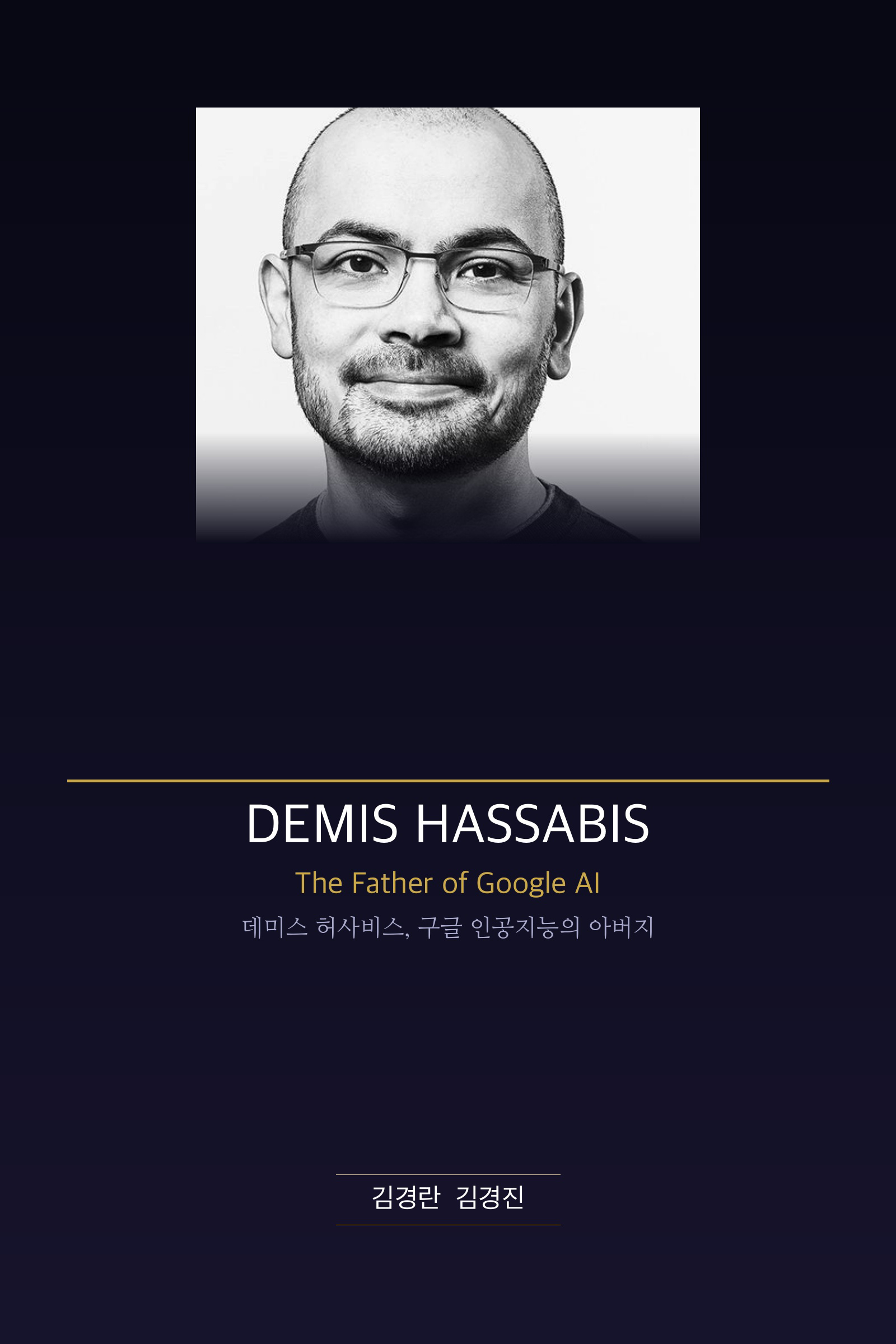
Demis Hassabis, Father of Google's Artificial Intelligence
Part 2. A Teenager Who Wrote Code and Designed Virtual Worlds
4 The Seventeen-Year-Old Game Developer
Kim Kyung-ran, Kim Kyung-jin
A Fateful Meeting In 1992, inside a house in north London, a sixteen-year-old boy was flipping through a gaming magazine. It was Demis Hassabis. He had finished his A-Levels two years ahead of his peers, and an acceptance letter from Cambridge University had arrived, but the university's response was unexpected.
"You're too young. Go out and get a year of real-world experience." In Britain, this kind of break is called a 'Gap Year.' Most students spend that time backpacking, but Demis decided to fill his in an entirely different way. The magazine in his hands was Amiga Power, the monthly publication that was then leading European gaming culture.
Tucked in one corner of that magazine was a small competition ad. "Win-a-job-at-Bullfrog!" Bullfrog Productions was a game development studio based in Guildford, Surrey, England.
Founded in 1982 by Peter Molyneux and Les Edgar, the company had already secured a unique position in European gaming with Populous and Powermonger. Demis submitted his code to the competition, and before long he received word to come to the Guildford office. The moment Peter Molyneux saw the boy who appeared for the interview, the memory stayed vivid even decades later.
He recalled it in a later interview with TIME magazine: "He was like an elf from The Lord of the Rings. A small, slight child you wouldn't notice if you passed him on the street, but there was a spark of intelligence blazing in his eyes."
What truly captivated Molyneux was not the boy's appearance but the conversation that followed. The decisive moment came on a bus heading to the company Christmas party. During the round trip from Guildford to the party venue, the sixteen-year-old and the European gaming legend talked without pause. In Molyneux's words, it was "the most intellectually stimulating conversation of my life."
They talked about the philosophy of games. Where does the human drive to win originate? Can that desire be implanted in a machine? What is intelligence, in the end? Molyneux said he kept repeating to himself throughout the conversation: "This is just a kid!"
Yet he sensed instinctively that this child was headed somewhere extraordinary. The two grew close quickly. During the summer Demis spent at Bullfrog before entering Cambridge, he and Molyneux played board games and computer games together at every opportunity.
Molyneux boasted that he beat Demis in most strategy games, but that advantage didn't last long. The two devised a card game called 'Dummy' to explore new game mechanics, and Demis beat Molyneux thirty-five times in a row. Against a boy who was fiercely competitive and exceptional at pattern recognition, even a legend of the gaming world was helpless.
But the real value of this meeting lay in how the two complemented each other. Molyneux was an intuitive, spontaneous visionary. He was the leader who had pioneered the 'God Game' genre, pushing forward the bold concept of granting the player a deity's perspective.
Demis was the coolheaded architect who could translate those dreams into precise code. From Molyneux, Demis learned how vision moves people's hearts. From Demis, Molyneux witnessed how rigorous logic untangles complex problems. This relationship would later be renewed at Lionhead Studios and became the starting point of a mentorship that ran through Demis's entire career.
This choice to fill a gap year with code and conversation instead of backpacking was the first turning point that transformed the chess prodigy into a designer of virtual worlds. Participation in 'Syndicate' Level Design The first assignment given to Demis Hassabis after joining Bullfrog was playtesting Syndicate. Released in 1993, the game was set in a dystopian future where corporations had replaced nations, and the player commanded a team of cyborg agents to dominate the world in real time.
The screen was filled with dark, decadent cityscapes reminiscent of Blade Runner, streets viewed from an isometric perspective, and the masses of armed agents and civilians moving across them.
For the sixteen-year-old newcomer, playtesting meant repeatedly playing the game to find bugs and check the balance of difficulty. For most people it would have been monotonous work, but for Demis the process was a chance to dissect the internal structure of a complex system called a game from the ground up. He did not stop at reporting errors.
He became deeply involved in the level design stage, analyzing the spatial layout of each mission, the movement paths of enemy agents, and the reaction patterns of civilians, then proposing improvements. Syndicate's mission structure was a natural fit for Demis's way of thinking. Each mission presented varied objectives such as assassination, agent recruitment, and informant abduction, and the player could carry them out stealthily or charge through head-on.
This open-ended design allowed not 'one correct answer' but 'multiple strategic paths,' and Demis focused on building levels that maximized this diversity. For him, level design was not the work of drawing pretty maps. It was solving an elaborate system of simultaneous equations where dozens of variables, enemy placement, terrain elevation, civilian traffic density, weapon accessibility, all interlocked and influenced one another.
The concept that fascinated Demis most deeply from this experience was the 'Agent.' In the game's cities, agents and civilians moved according to their own rules. Civilians fled when an agent fired a gun; police rushed to the scene when they detected a disturbance.
These reactions were not individually scripted by the developer but arose automatically from conditional rules (if-then logic) embedded in each character. The phenomenon of individual elements meshing together to produce unforeseen situations operates on the same principle that complexity theory would later call 'Emergence.' In the small dots of that virtual city reacting as if alive, Demis glimpsed the most primitive form of intelligence. Game development at the time was not yet the large-scale industry involving hundreds of people that it is today.
Bullfrog had around thirty-five employees, and it was an era when a handful of programmers and artists pulled all-nighters to finish a single game. In this dense environment, Demis naturally absorbed not just coding but the philosophy of game design, the flow of project management, and the patterns of team communication. Driven by a perfectionist streak, he pointed out inefficiencies in the game engine and proposed better coding approaches. There were moments when colleagues were taken aback by the fearless opinions of this young newcomer,
but when they saw the results he produced, they had no choice but to concede. Syndicate left Demis Hassabis with two things. One was technical capability.
He learned in his bones how to run multiple agents moving in real time on limited hardware, and how to balance the dozens of variables contained in a single level. The other was a question: These agents are clever only within the rules I've written for them.
What if they could learn on their own, without any rules? The question had no answer yet, but it was planted as a clear seed in the boy's mind. And that seed would send up its first shoot in the very next project, Theme Park. The Legendary Game 'Theme Park': Co-designing a Multi-Million Seller and the Birth of the Simulation Sandbox Genre Having proven his abilities, Demis Hassabis was entrusted by Peter Molyneux with a larger challenge.
It was the co-design and lead programming of Theme Park, a simulation game about building and running an amusement park. The fact that at seventeen he became the lead programmer driving the company's flagship project was itself exceptional. Development took roughly a year and a half.
Molyneux provided the overall vision and design direction, while Demis handled the core of the engine that translated it into code. Molyneux later explained the game's origins this way: he judged the management simulation genre had potential, and he wanted to create a game people could enjoy playing without repeating the mistakes of his earlier management game, The Entrepreneur. He wanted to give players the experience of building the amusement park of their dreams.
For Demis, this vision was the perfect challenge. Every element, placing rides on empty land, opening food stalls, laying paths, setting admission prices, had to mesh together as one vast system. Released in 1994, Theme Park was an explosive success. It sold over fifteen million copies worldwide.
In Japan the PlayStation version sold out 85,000 copies within weeks of release, and in Europe it sat at the top of bestseller charts. It won the Golden Joystick Award, and PC Gamer magazine named it Game of the Month in June 1994, comparing its addictiveness to SimCity 2000.
The Edge magazine reviewer acknowledged the game's complexity while praising its detail and sense of immersion. The game's true significance was that it created a genre.
Before Theme Park, most games had a linear structure centered on defeating enemies or following a predetermined story. Theme Park gave the player empty space and tools, leaving what to build entirely up to them. This 'sandbox' approach became the ancestor of later simulation games like RollerCoaster Tycoon, Theme Hospital, and The Sims.
In fact, a substantial portion of Theme Park's code was reused in the sequel Theme Hospital, and the game's animation editor was developed by Mark Webley into 'The Complex Engine.' While designing this game, Demis obsessed over the internal logic of the economic model. If you raised the salt content of the fries, visitors got thirsty and bought more drinks, but at the same time their nausea rating climbed and the park paths got dirtier. If you didn't hire janitors, satisfaction dropped, and eventually more people left the park. This chain of cause and effect was shockingly sophisticated for gamers at the time.
Molyneux himself admitted that the hardest part of the programming was visitor behavior. The person who actually solved that difficult problem in code was seventeen-year-old Demis. The commercial success taught Demis about the relationship between technology and the market. No matter how sophisticated an algorithm, it means nothing if people don't enjoy it, and technology is only complete when it earns the love of the public. He internalized these truths through this experience.
At the same time, he was looking beyond the flashy sales figures. His gaze lingered on the behavioral patterns of the thousands of virtual humans wandering through the park, and on the prototype of intelligence hidden within those patterns. A Simulation World That Responds to Users What made Theme Park legendary was not its flashy rides but the 'brains' of the visitors walking through the park.
As lead programmer, Demis Hassabis designed a system in which thousands of visitors each made independent judgments and acted autonomously, all within the hardware constraints of the era. Each NPC (Non-Player Character) was given an internal state where five core need values, hunger, thirst, fatigue, happiness, and nausea, were calculated in real time. The key to this design was a 'bottom-up approach.'
Instead of the developer dictating every action, basic desires and response rules were embedded in the characters, and the rest was left to emerge naturally from their interactions with the environment. A hungry visitor seeks out the nearest food stall. If the price is absurdly high, the visitor gets angry and leaves the park. If the queue for a ride is too long, the visitor gives up and heads somewhere else. Passing near a fountain improves mood; walking through a litter-strewn area raises discomfort. When these individual decisions accumulate across thousands of visitors, the macro-level phenomenon of the park's overall operational state arises automatically. In science, this phenomenon, where macro-level order emerges from the micro-level rules of individual entities, is called 'Emergence.' Through this process, Demis gained an important intuition about the nature of intelligence.
While writing the algorithm that determines whether a visitor waits in line or gives up, he was translating into equations the human process of making decisions to maximize reward under uncertainty. The question 'Which action yields the greatest reward?' is exactly the most fundamental question of 'Reinforcement Learning,' the methodology that would later become central to DeepMind's research. At seventeen, Demis did not yet know the term, but he was already experimenting with the principle inside a virtual world. Of course, this AI had clear limitations.
On game culture sites like TV Tropes, the 'Artificial Stupidity' of Theme Park's visitors is humorously documented. Visitors frequently got stuck in U-shaped terrain and couldn't escape, walked into ponds and froze in place, or janitors circled clean areas endlessly while ignoring dirty ones. Without designated patrol routes, janitors would sometimes patrol inside queue lines where no trash could possibly appear.
For Demis, these limitations were not failures but lessons. By observing the boundary between the moments these virtual beings looked clever and the moments they became absurdly stupid, he felt firsthand the fundamental constraints of rule-based AI.
"True intelligence should be able to make judgments on its own in situations I never taught it." This thought never left his mind from that point on. Theme Park's visitors could only 'pretend to be smart' within the bounds of rules the developer had set.
When presented with a new situation outside those rules, they were helpless. Demis began to carry the conviction that to overcome this limitation, he would need to go beyond game code and study the original hardware: the human brain. The seeds of his later journey, majoring in computer science at Cambridge and then returning to UCL for a PhD in cognitive neuroscience, were sown right there among the virtual humans of that amusement park.
Theme Park's NPCs were a mirror that simultaneously showed Hassabis both 'the possibilities of artificial intelligence' and 'the next goal: intelligence that learns on its own.' Funding University Tuition from Gap Year Earnings Demis Hassabis's gap year was not limited to intellectual growth. It produced remarkable results financially as well.
Theme Park was a mega-hit that sold over fifteen million copies worldwide, and the seventeen-year-old lead programmer received compensation commensurate with that success. His combined royalties and bonuses were on a scale that peers working part-time jobs could never have imagined. He used this money to pay his Cambridge University tuition in full, out of his own pocket.
One of the things Demis did when the money came in was to buy a sports car, the dream of boys his age at the time. He purchased a Porsche. When his gap year ended, he drove that car to Cambridge University's Fresher's Week.
While other students arrived on campus in their parents' cars or by train, Demis drove himself in a car bought with income earned from the virtual world he had created. This scene appears in every biography of Hassabis without fail. Behind this glamorous episode lay a cold self-awareness.
He had already confirmed that his intelligence was a form of capital capable of generating concrete value in the marketplace.
The title of chess prodigy attracted people's attention, but the success of Theme Park proved that attention could be converted into real economic returns. Even after buying the Porsche, he did not squander the remaining money.
He set it aside as funds for future research and ventures, and this habit later helped reduce his dependence on outside capital when founding Elixir Studios and establishing DeepMind. When the gap year ended, Demis Hassabis was already a person layered with multiple experiences: lead programmer on a worldwide hit, a business contributor to a project worth millions of pounds, and a self-reliant adult who had paid his own university tuition. He turned off the Porsche's engine and walked into the ancient library of Queens' College.
Now in his hands, instead of a game controller, were textbooks on algorithms, discrete mathematics, and the future of artificial intelligence. The boy who had built virtual worlds was stepping into the world of academia to unlock the secrets of the intelligence within them. Theme Park game screen, 1994
Kim Kyung-jin
Attorney · Former Member of the National Assembly · AI Policy Researcher
© 2026 Kim Kyung-jin. All rights reserved.