AI Library

AI Library

Books for Reading AI

Choose a book, then read it in order from the table of contents.

China's Robotics Industry 2026: The Age of Mass Production and Real-World Deployment cover

25 readings

China's Robotics Industry 2026: The Age of Mass Production and Real-World Deployment

Kim Kyung-jin

From the humanoid mass-production race to U.S.-China hegemony: the state of China's robotics industry in 2026. Table of Contents, Preface, 7 Parts / 23 Chapters, Epilogue

In a factory in Shenzhen, hundreds of humanoid robots repeat the same motion. This book traces the mass-production race between Unitree and UBTECH, the Optimus supply chain, real-world deployment sites, and where Korea stands amid the U.S.-China tech hegemony.

Crossing the Adolescence of Technology Cover

15 Parts in Total

Crossing the Adolescence of Technology

Kim Kyung-jin

Dario Amodei, Anthropic, and the Struggle Toward Controllable Intelligence. Table of Contents, Preface, Prologue, 12 Chapters, Epilogue

The struggle of a physicist who lost his father to create controllable artificial intelligence. The story of Dario Amodei and Anthropic clashing with the Pentagon and the White House, shaking the era with the scaling law and Constitutional AI.

37 Concrete Codex Use Cases cover

Book-style reading

37 Concrete Codex Use Cases

Kim Kyung-jin

From morning briefings to agent swarms: 37 real-world workflow automations

This guide gathers 37 ways to connect Codex and AI agents to real work: personal routines, data processing, marketing, sales, documents, development, and browser control.

Share

2026 Beijing: The Dangerous Dance of Two Giants book cover

16 posts available

2026 Beijing: The Dangerous Dance of Two Giants

Kim Kyung-jin

Table of Contents, Introduction, 13 Chapters, Epilogue

This book reads the Beijing summit through Hormuz, rare earths, Taiwan, Boeing, soybeans, AI chips, and Korea’s exposure to the U.S.-China bargain.

Share

Leaving It to AI and Stepping Away cover

27 posts

Leaving It to AI and Stepping Away

Kim Kyung-jin

A Complete Beginner’s Guide to YOLO Mode. Table of contents and 26 chapters

A beginner-friendly online book on YOLO mode in Claude Code and Codex. It explains how to let AI read files, write code, run commands, and finish work while keeping rollback, Docker sandboxing, and safety checks close at hand.

Share

Artificial Intelligence Fighter, Artificial Intelligence Air Force book cover

43 posts available

Artificial Intelligence Fighter, Artificial Intelligence Air Force

Kim Kyung-jin

Table of Contents, Preface, 40 Chapters, Epilogue

Artificial Intelligence Fighter, Artificial Intelligence Air Force is an online AI Library book by Kim Kyung-jin. It covers AI fighters, autonomous air power, unmanned combat aircraft, CCA, MUM-T, sixth-generation fighters and is organized as Table of Contents, Preface, 40 Chapters, Epilogue.

Share

Artificial Intelligence on Trial book cover

26 posts available

Artificial Intelligence on Trial

Attorney Kyungjin Kim

Table of Contents, Preface, 21 Chapters, 3 Appendices

Artificial Intelligence on Trial is an online AI Library book by Attorney Kyungjin Kim. It covers artificial intelligence and law, AI liability, algorithmic judgment, courts and technology and is organized as Table of Contents, Preface, 21 Chapters, 3 Appendices.

Share

PALANTIR book cover

16 posts available

PALANTIR: War, Surveillance, Artificial Intelligence

Attorney Kyungjin Kim

Table of Contents, Preface, 14 Chapters

PALANTIR: War, Surveillance, Artificial Intelligence is an online AI Library book by Attorney Kyungjin Kim. It covers Palantir, war, surveillance, artificial intelligence, data analytics, national security and is organized as Table of Contents, Preface, 14 Chapters.

Share

Brain Readers: Neuralink and the Final Human Revolution book cover

21 posts available

Brain Readers: Neuralink and the Final Human Revolution

Kim Kyung-jin

Table of Contents, Prologue, 18 Chapters, Epilogue

Brain Readers: Neuralink and the Final Human Revolution is an online AI Library book by Kim Kyung-jin. It follows Neuralink, brain-computer interfaces, brain data, medicine, neurorights, and the future of human enhancement.

Share

Artificial Intelligence and the Reshaping of Society book cover

16 posts available

Artificial Intelligence and the Reshaping of Society

Kim Kyung-jin

Table of Contents, Preface, 13 Chapters, Epilogue

Artificial Intelligence and the Reshaping of Society is an online AI Library book by Kim Kyung-jin. It follows how artificial intelligence changes work, education, inequality, cities, democracy, and human relationships.

Share

The Jensen Huang Story book cover

16 posts available

The Jensen Huang Story

Kim Kyung-jin

Table of Contents, Preface, 13 Chapters, Epilogue

The Jensen Huang Story is an online AI Library book by Kim Kyung-jin. It covers Jensen Huang, NVIDIA, GPUs, AI chips, and the AI industry.

Share

Ten Questions AI Poses to Humanity book cover

12 posts available

Ten Questions AI Poses to Humanity

Kim Kyung-jin

Table of Contents, Preface, 10 Chapters

Ten Questions AI Poses to Humanity is an online AI Library book by Kim Kyung-jin. It asks how artificial intelligence changes truth, weapons, work, data, identity, and human control.

Share

Malaysia and the Malacca Strait book cover

23 posts available

Malaysia and the Malacca Strait: Whoever Controls It Controls the World

Kim Kyung-jin

Table of Contents, Preface, 20 Chapters, Epilogue

Malaysia and the Malacca Strait is an online AI Library book by Kim Kyung-jin. It covers Malaysia, the Malacca Strait, maritime logistics, geopolitics, global trade, and Southeast Asia’s strategic future.

Share

Georgia history and culture travel book cover

24 posts available

A Journey Through Georgia’s History and Culture

Kim Kyung-jin

Table of Contents, Preface, 17 Chapters, 4 Appendices, Epilogue

A Journey Through Georgia’s History and Culture is an online AI Library book by Kim Kyung-jin. It covers Georgia’s history, culture, religion, politics, travel, and the Caucasus crossroads between Europe and Asia.

Share

Reading Armenia book cover

13 posts available

Reading Armenia: A Thousand Prayers, One Mountain

Kim Kyung-jin

Table of Contents, Preface, 10 Chapters, Epilogue

Reading Armenia: A Thousand Prayers, One Mountain is an online AI Library book by Kim Kyung-jin. It covers Armenian history, faith, Mount Ararat, cultural memory, travel, and the endurance of a small nation.

Share

Mastering Claude Code book cover

41 posts available

Mastering Claude Code

Kim Kyung-jin

Table of Contents, Preface, Chapters, Appendices

Mastering Claude Code is an online AI Library book by Kim Kyung-jin. It covers Claude Code setup, commands, workflows, automation, agents, and practical methods for using Claude Code in real work.

Share

Claude Cowork and Agent manual book cover

11 posts available

Claude Cowork and Agent Utilization Manual

Kim Kyung-jin

Table of Contents, Preface, 8 Chapters, Closing Note

Claude Cowork and Agent Utilization Manual is an online AI Library book by Kim Kyung-jin. It covers Claude Code, AI agents, coding automation, work automation, and practical agent-based collaboration.

Share

2026 U.S.-Iran War and the Global Energy Crisis book cover

39 posts available

The 2026 U.S.-Iran War and the Global Energy Crisis

Kim Kyung-jin

Table of Contents, Preface, Chapters and Appendices

The 2026 U.S.-Iran War and the Global Energy Crisis is an online AI Library book by Kim Kyung-jin. It covers war, oil, the Strait of Hormuz, maritime security, energy markets, and the global consequences of conflict.

Share

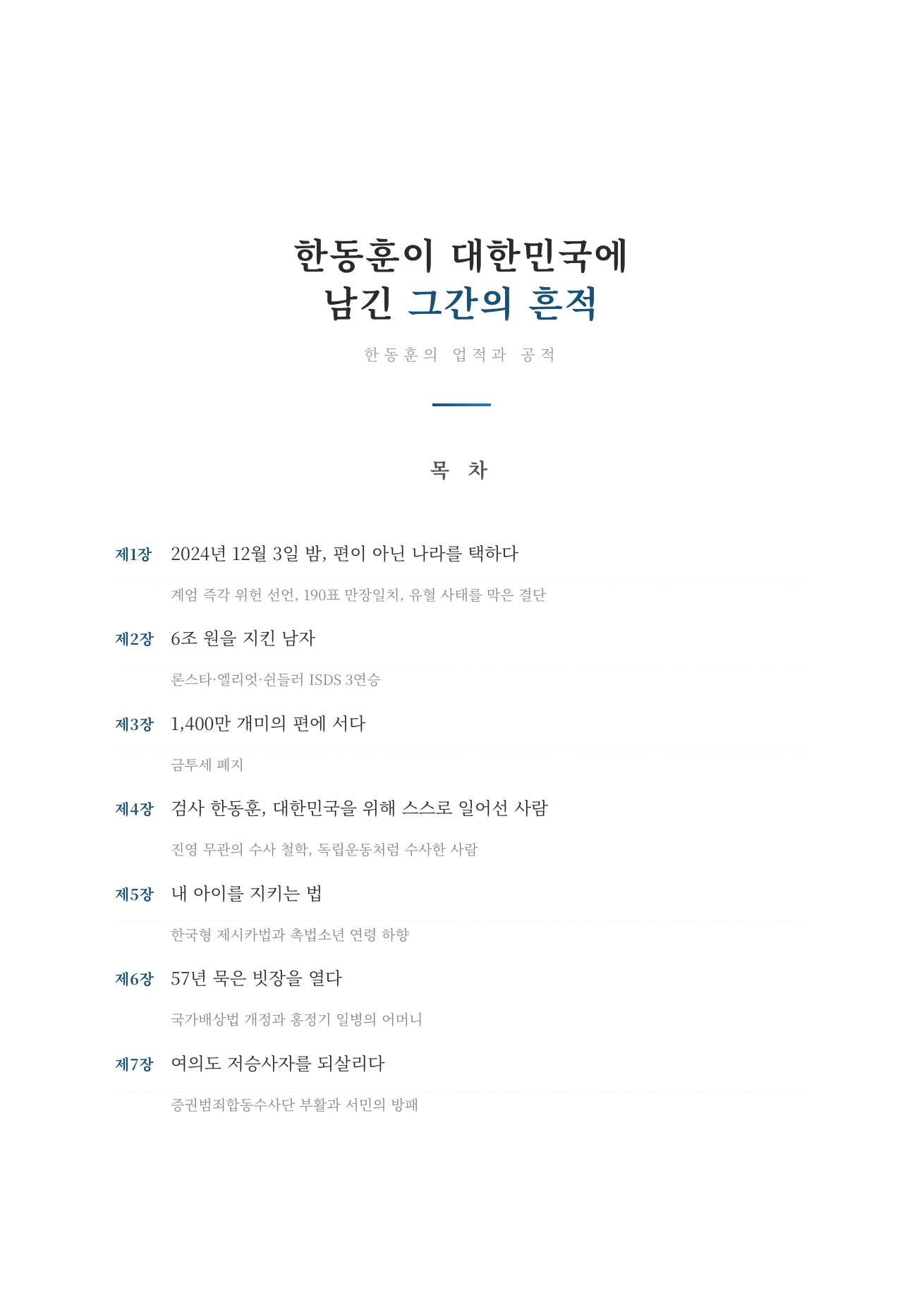
The Traces Han Dong-hoon Left on South Korea book cover

13 posts available

The Traces Han Dong-hoon Left on South Korea

Kim Kyung-jin

Table of Contents, Prologue, Chapters, Epilogue

The Traces Han Dong-hoon Left on South Korea is an online AI Library book by Kim Kyung-jin. It examines his record in justice policy, immigration reform, public institutions, and the structural questions facing South Korea.

Share

The Han Dong-hoon Story book cover

39 posts available

The Han Dong-hoon Story

Kim Kyung-jin

Table of Contents, Prologue, Chapters, Epilogue

The Han Dong-hoon Story is an online AI Library book by Kim Kyung-jin. It traces Han Dong-hoon’s life, public career, political choices, and the changing landscape of South Korean conservative politics.

Share

Beyond the Glass Ceiling cover

39 entries

Beyond the Glass Ceiling

Kim Kyung-jin

Table of contents, prologue, 31 chapters, epilogue, 5 appendices

A political biography tracing Sanae Takaichi’s rise from Nara to Japan’s premiership, through party struggles, security policy, diplomacy, and the meaning of Japan’s first female prime minister.

Share

AI Hegemony War book cover

8 posts available

AI Hegemony War

Kim Kyung-jin

Table of Contents, 7 Chapters

An online AI Library book by Kim Kyung-jin on AI superintelligence, the U.S.-China technology race, Europe and Korea’s AI laws, and international AI governance.

Share

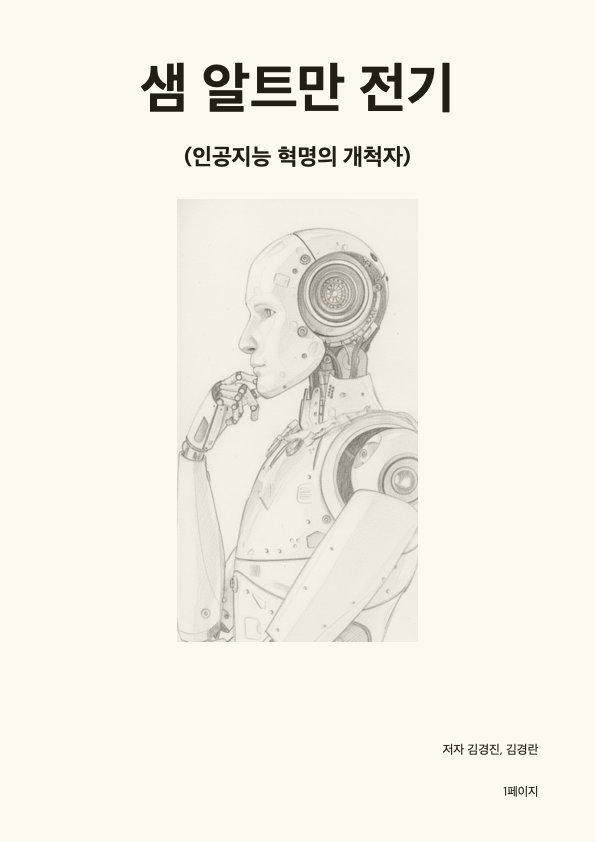
Sam Altman Biography: Pioneer of the AI Revolution cover

22 posts

Sam Altman Biography: Pioneer of the AI Revolution

Kim Kyung-jin, Kim Kyung-ran

Table of contents, preface, 7 parts, 20 chapters

An online biography following Sam Altman’s childhood, startups, Y Combinator, OpenAI, ChatGPT, the 2023 board crisis, and his sense of responsibility in the AI era.

Share

From Chaiwala to Prime Minister cover

13 entries

From Chaiwala to Prime Minister

Kim Kyung-jin

Table of contents, preface, 10 chapters, epilogue

A political biography tracing Narendra Modi from a chai-selling boy in Vadnagar to RSS organizer, Gujarat chief minister, and three-term prime minister, while reading modern India, Korea-India relations, and the risks of a rising power.

Share

AI Classroom: Your Grades Will Change book cover

26 posts available

AI Classroom: Your Grades Will Change

Kim Kyung-jin

Table of Contents, Preface, 24 Sections

An online AI Library book by Kim Kyung-jin on how AI can support elementary, middle, and high school learning, teaching, assessment, and educational equity.

Share

Military Artificial Intelligence cover

17 entries

Military Artificial Intelligence

Kim Kyung-jin and Kim Won-tae

Table of contents, preface, 14 chapters, epilogue

A full-length study of military artificial intelligence, from autonomous weapons, drones, command systems, logistics, and cyber defense to the strategies of the United States, China, Israel, Korea, and global defense AI companies.

Share

Global Case Studies in Introducing AI into Public Administration book cover

25 posts available

Global Case Studies in Introducing AI into Public Administration

Kim Kyung-jin

Table of Contents, 23 Chapters, Epilogue

An online AI Library book by Kim Kyung-jin on public-sector AI adoption, national strategies, administrative services, governance, and future policy tasks.

Share

Seven Misunderstandings About the Arctic Route book cover

10 posts available

Seven Misunderstandings About the Arctic Route

Kim Kyung-jin

Table of Contents, Preface, 7 Chapters, Epilogue

An online AI Library book by Kim Kyung-jin on seven common misunderstandings about the Arctic Route, including speed, liner service, insurance, safety rules, year-round access, carbon impact, and infrastructure.

Share

Artificial Intelligence Election cover

14 posts

Artificial Intelligence Election

Kim Kyung-jin

Table of contents, author preface, 11 chapters, closing essay

An online book on campaign messaging, publicity materials, digital campaigning, data analysis, campaign operations, disinformation defense, legal risk, and ready-to-use prompts.

Share

Demis Hassabis book cover

34 posts available

Demis Hassabis, Father of Google’s Artificial Intelligence

Kim Kyung-ran, Kim Kyung-jin

Table of Contents, Author’s Preface, 31 Chapters, Epilogue

Demis Hassabis, Father of Google’s Artificial Intelligence is an online AI Library book by Kim Kyung-ran, Kim Kyung-jin. It covers Demis Hassabis, Google DeepMind, artificial intelligence, AlphaGo, AI research and is organized as Table of Contents, Author’s Preface, 31 Chapters, Epilogue.

Share

The Dhammapada 423 Verses book cover

28 posts available

The Dhammapada: 423 Verses

Kim Kyung-jin

Table of Contents, Editor’s Note, 26 Chapters, 423 Verses

An online AI Library book by Kim Kyung-jin. This edition arranges all 423 verses of the Dhammapada into 26 chapters for slow, poetic reading.

Share

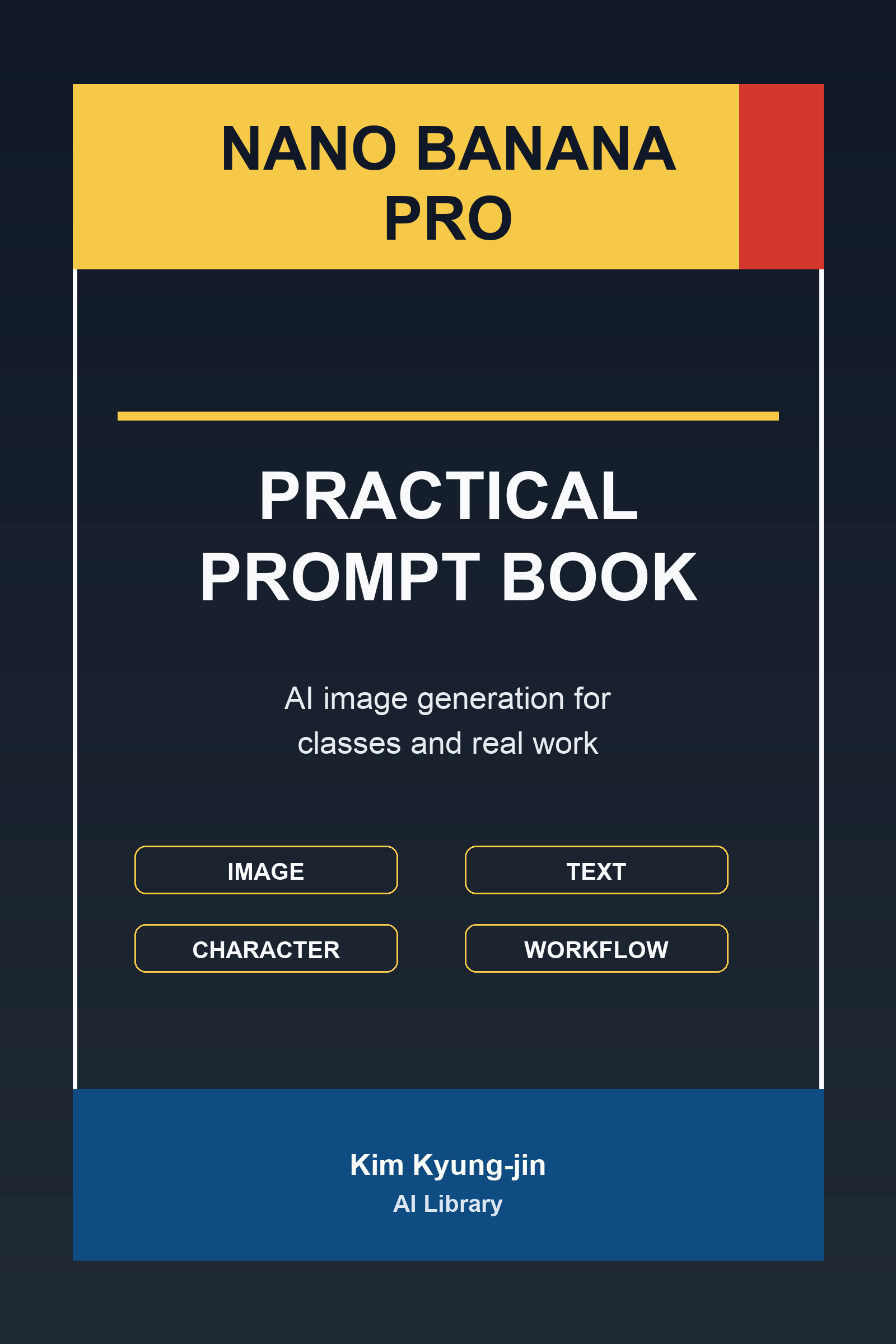
Nano Banana Pro Practical Prompt Book cover

24 posts

Nano Banana Pro Practical Prompt Book

Kim Kyung-jin

6 parts, 22 chapters, classroom prompt appendix

An online book for using Nano Banana Pro in classes and real work, covering image generation, editing, text rendering, character consistency, business use cases, and monetization.

Share

Liberal Arts AI for College Students book cover

16 posts available

Liberal Arts AI for College Students

Kim Kyung-jin

Table of Contents, Preface, 13 Chapters, Closing Essay

An online AI Library textbook for college students. It introduces AI history, daily use, document work, research, images, presentations, video, productivity, learning, careers, copyright, and governance.

Share

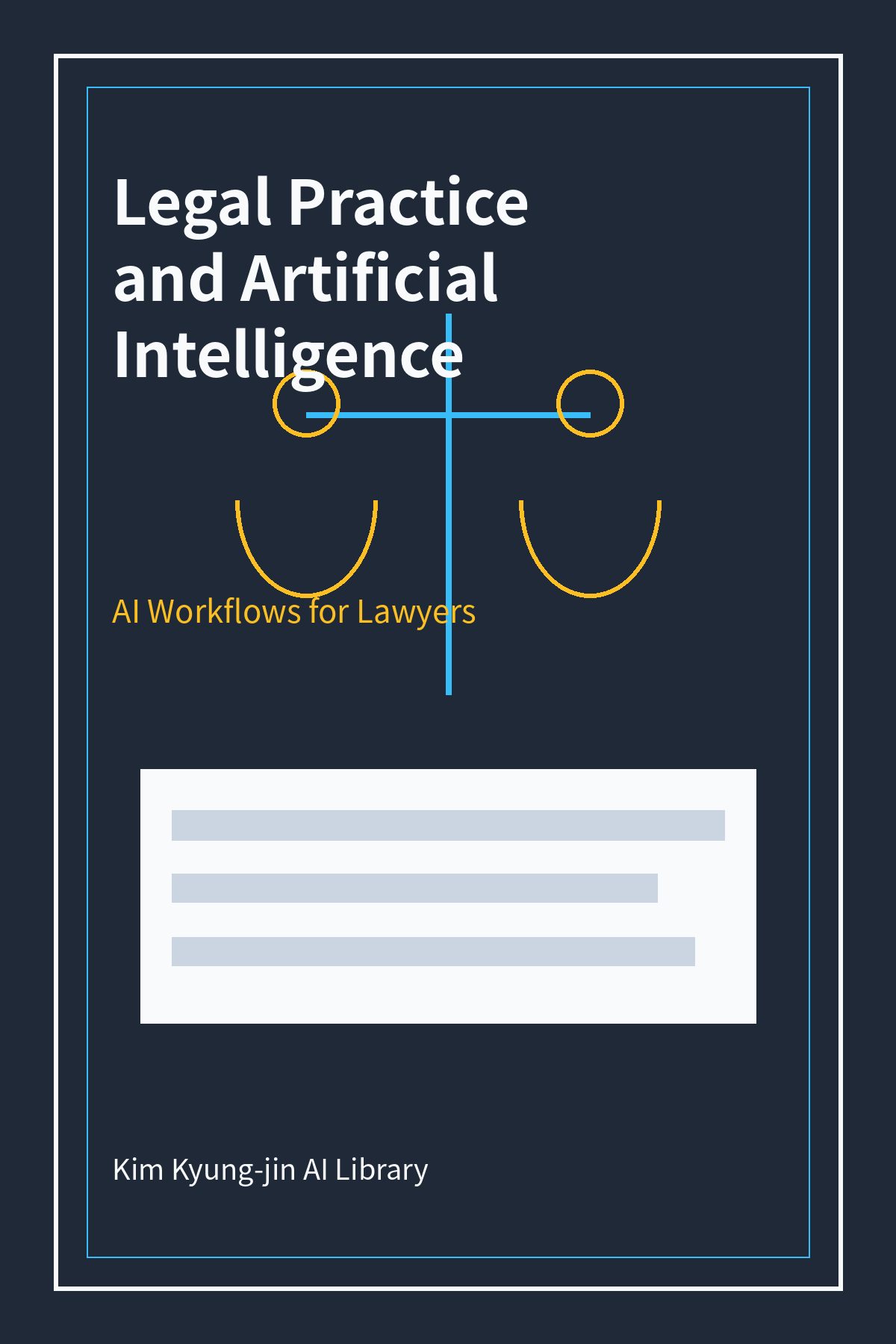
Legal Practice and Artificial Intelligence book cover

16 posts available

Legal Practice and Artificial Intelligence

Kim Kyung-jin

Table of Contents, Preface, 14 Parts

An online AI Library book by Kim Kyung-jin on legal research, drafting, evidence analysis, contract review, NotebookLM, and practical generative AI workflows for legal practice.

Share

Hello, I Am Kim Kyung-jin book cover

10 posts available

Hello, I Am Kim Kyung-jin

Kim Kyung-jin

Table of Contents, Preface, Recommendations, 6 Chapters, Closing

An online AI Library book on Kim Kyung-jin’s life, science and technology policy, parliamentary diplomacy, legislative battles, Dongdaemun vision, and proposals for Korea’s demographic future.

Share

Politics and People book cover

25 posts available

Politics and People

Kim Kyung-jin

Table of Contents, Prologue, 22 Chapters, Epilogue

An online AI Library book by Kim Kyung-jin on how politics begins with reading people, winning trust, keeping relationships, and enduring seasons of crisis.

Share

[AI Library] Chapter 27. Swarming: Drone Tactics That Attack Like a Hive

Artificial Intelligence Fighter Artificial Intelligence Air Force
Author
김 경진
Date
2026-05-05 22:00
Views
711

Chapter 27. Swarming: Drone Tactics That Attack Like a Hive

Swarm: A drone tactic that attacks like a swarm of bees. In the wild, it is not the tiger that takes down the lion. A swarm of thousands of bees. Lions can be killed with guns. But what about a swarm of bees? A few bullets aren't enough. When we destroyed an SA-3 missile site over Iraq, I was alone with one wingman. We trusted each other and entered at a precisely calculated angle. It was a lonely and risky gamble. But the sky of the future is different. Hundreds and thousands of drones move like one giant intelligence, choking the enemy. This is the fear of swarms and drone swarms.


In June 2025, China test-flighted a high-altitude, long-endurance 'drone carrier' called 'Jiu Tian'. With a wingspan of 25 meters, this massive drone can release 100 to 150 small loitering munition drones from two internal hangars in its fuselage. This is a drone factory floating in the sky. As soon as they are released, these drones form swarms and rush towards enemy radar sites, air defense batteries, and communications hubs. It's a nightmare for defenders. The core philosophy of swarm tactics is simple.


“I’ll throw more targets at you than you have missiles.” Enemy air defense systems, such as the Russian S-400 or the Chinese HQ-9, are powerful. But the number of interceptor missiles they have is limited. Hitting a small drone worth only a few million won with an interceptor missile costing billions of won per shot is an act of economic and tactical suicide. A 2025 report from the U.S. Department of Defense's Center for a New American Security (CNAS) soberly points out this point.


“In a war with China, the People’s Liberation Army will likely launch large-scale heterogeneous salvos of missiles and drones, as well as swarms of autonomous drones, against U.S. forces. AI-based combat management and high-power microwave (HPM) weapons will be needed to counter this.” Take the US Department of Defense's 'Replicator' initiative. The plan is to deploy thousands of low-cost autonomous unmanned systems on the battlefield by August 2025. $500 million has been allocated for fiscal year 2024, and additional funding has been requested for fiscal year 2025.


We focus on Autonomous Collaborative Teaming (ACT) and Opportunistic Resilient Network Topology (ORIENT) techniques. This is a declaration of war that will cover the enemy's radar screen in white. In December 2025, the U.S. Central Command (CENTCOM) officially established Task Force Scorpion Strike (TFSS), the Middle East's first dedicated kamikaze drone squadron. And the U.S. Navy successfully launched its Low Cost Unmanned Combat Attack System (LUCAS) from the flight deck of the USS Santa Barbara in the Arabian Gulf. LUCAS is a loitering ammunition reverse engineered from Iran's Shahed-136. Like the multi-million dollar MQ-9 Reaper.


Instead of expensive platforms, the strategy is to deploy large quantities of low-cost drones that can be justified in swarm-based combat where high attrition rates are expected. The US Department of Defense's 'Drone Dominance' program aims to secure 300,000 low-cost drones starting in early 2026. The goal is to reduce the cost per unit to $5,000. The roles of swarm drones are divided. Some become decoys. It sends radio signals disguised as fighter jets to fool enemy radars and waste expensive interceptor missiles. A representative example is the American ADM-160 MALD. Some conduct electronic warfare (Jammer).


It jams radio waves that render enemy communication networks and radars unusable. Some function as sensors. Scatter across the battlefield to collect data. Scattered drones become a huge distributed radar that can even detect hidden enemy stealth aircraft. And some are strikers. It is loaded with explosives and crashes directly into the target. In January 2025, the Swedish military unveiled a new drone swarm program developed by Saab. The software allows one soldier to control up to 100 unmanned aerial systems simultaneously. Tested during Arctic Strike exercise in March 2025.


It was planned to demonstrate its ability to adapt to complex environments in reconnaissance, defense and payload delivery missions. China's swarm tactics research is more systematic. The People's Liberation Army is developing three flock warfare approaches: 'Goose Flock Warfare', 'Bee Swarm Warfare', and 'Mothership Warfare'. The wild goose swarm concept involves a swarm of multi-functional drones sequentially performing reconnaissance, electronic warfare, and kinetic strike, with a cumulative effect on the enemy. The swarm concept is that small drones saturate air defense networks, paralyzing their ability to respond.


The mother ship concept is for a large unmanned aerial vehicle to transport multiple small drones to enemy territory and then release them. Jiuten is the embodiment of this concept. In August 2025, the People's Liberation Army tested 'drone swarms and robot wolves' as human-machine cooperative combat teams in an urban warfare confrontation training simulation. And on September 3rd, a number of new unmanned platforms were unveiled at a military parade commemorating the victory in World War II.


One of them is an unnamed fighter-sized drone that is believed to represent the latest development in China's Cooperative Combat Aircraft (CCA), or 'loyal wingman'. The technologies that enable swarming are not romantic. Distributed decision-making (distributed AI), formation geometry without collisions and interference (deconvolution), mission logic maintained even when communications are lost (offline autonomy), position and time synchronization under electronic warfare, sensor fusion that is not fooled by enemy deception.


If any one of these five things fails, the colony becomes a swarm of flies crashing into each other rather than a swarm of bees.


But there are also criticisms. An article published in War on the Rocks in August 2025 sharply points out: "True drone swarms do not exist yet. China's drone light show? Not a swarm. Leader-follower autonomous team? Not a swarm. One person controlling 100 drones? Not a swarm." The real cluster is singular, not plural. A distributed intelligence system that adapts to situations in real time without a central controller, designated leader drone, or even an internet connection. That's a true colony. The U.S. defense industry has yet to provide such a distributed system. Nonetheless, the strategic value of swarms is clear.


The enemy's air defense network has a bottleneck called 'target processing ability'. Radars are limited in the number of targets they can track simultaneously. The channels through which interceptor missiles can engage simultaneously are limited. The chain of command must set priorities, and the moment those decisions falter, the whole thing falters. The swarm rips that bottleneck. The combination of 6th generation fighters and swarms makes a real difference. An F-47 enters the battlefield accompanied by dozens of CCAs. Instead of shooting directly, pilots unleash swarms of these deadly mechanical bees upon the heads of their enemies.


When the drone breaks down the door, the human delivers the final blow from the safety of the back. The romance of war has disappeared. Instead, the efficiency of killing was maximized. Admiral Samuel Paparo, commander of the U.S. Indo-Pacific Command, mentioned the 'Hellscape' strategy in preparation for a Chinese invasion of Taiwan. The idea is to use thousands of aerial and underwater drones as an initial interdiction action, giving time for other warships and fighter jets to arrive in the area.


Kim Kyung-jin

Attorney · Former Member of the National Assembly · AI Policy Researcher

kimkj.com

© 2026 Kim Kyung-jin. All rights reserved.

kimkj.com Home
Scroll to Top
kimkj.com Home