AI Library
Books for Reading AI
Choose a book, then read it in order from the table of contents.


























[AI Library] Chapter 4. Thirty Days of Survival
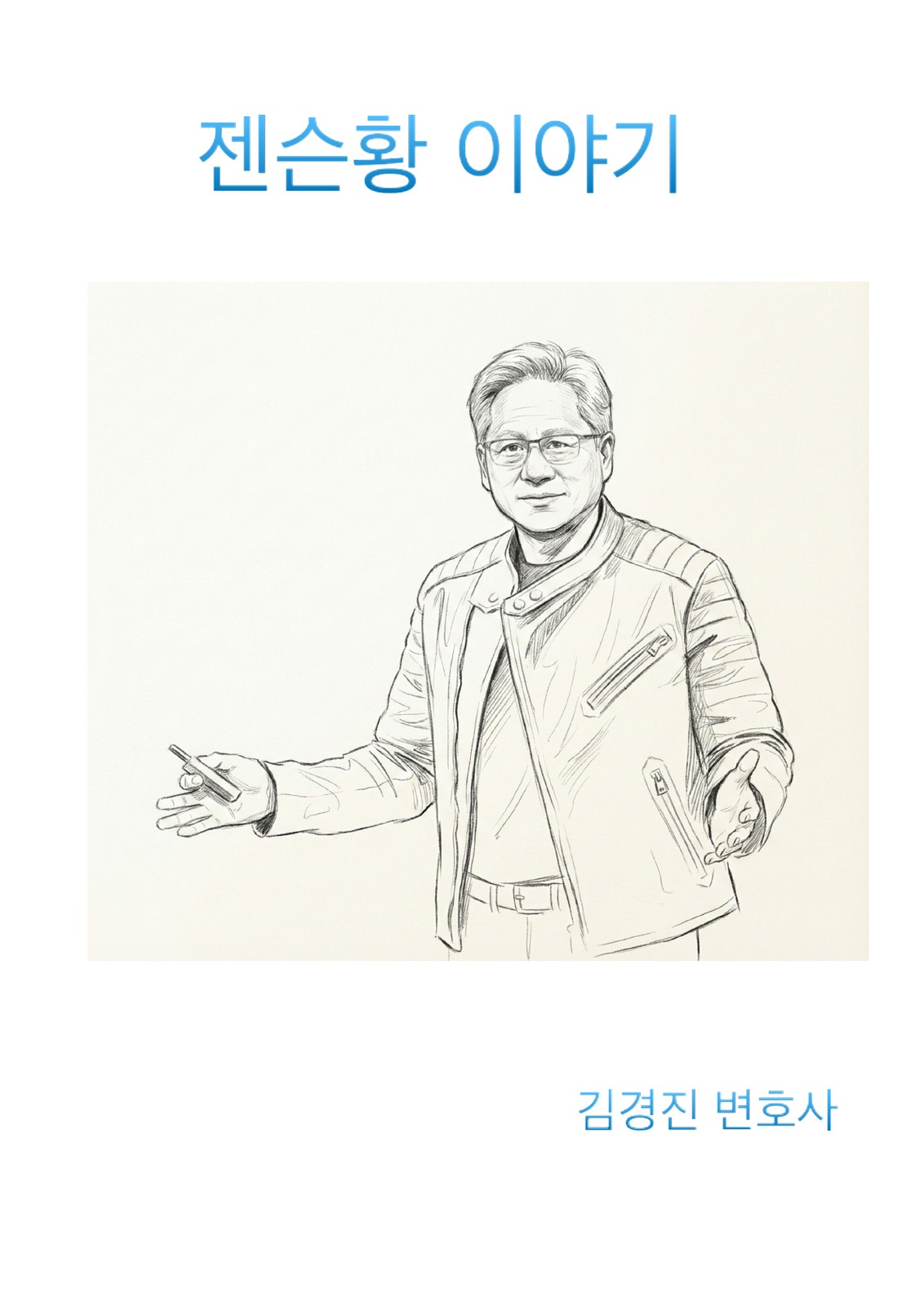
The Jensen Huang Story
Part 1. Building an Empire
Chapter 4. Thirty Days of Survival
Kim Kyung-jin
They say history is written by the victors. But true history is written in the moment of defeat. When Rome suffered a catastrophic loss to Hannibal at the Battle of Cannae, senators screamed that they should abandon the city and flee. A young man named Scipio drew his sword and declared: "Anyone who swears to abandon Rome is an enemy of Rome." Great empires are forged not in victory but in the moment they rise from defeat. The story of a company called NVIDIA is no different.
When three young men shared their dreams at a Denny's restaurant in 1993, they had no idea they would soon be pushed to the brink of death. Jensen Huang founded his company on his thirtieth birthday, and within just two years he faced the crisis of losing everything. This is not a story about technology. It is a story about how one person stands back up from the depths of despair.
The Disastrous Failure of the First Chip
NVIDIA's first creation was a graphics chip called NV1.
In May 1995, Jensen Huang and his colleagues unveiled the chip to the world. Their hearts were full of pride. NV1 was not just a graphics card. It was an ambitious chip that could handle 3D graphics, 2D graphics, and audio all at once. Plug it into a computer, and you didn't need to buy a separate graphics card and sound card. It could even connect to a controller for the Sega Saturn, a game console from the Japanese gaming company.
The problem lay in the technology they had chosen.
At the time, there were two main methods for drawing three-dimensional images on a computer screen.
One method stitched together countless tiny triangles to represent objects, building cars and people by assembling triangles much like stacking LEGO bricks. The other used quadrilaterals to render smooth curves.
Jensen Huang and his colleagues chose the quadrilateral approach. They believed quadrilaterals could draw curves more beautifully than triangles.
Technically speaking, they weren't wrong. When rendering a round ball or a human face, quadrilaterals could produce smoother results. But the world wanted convenience over beauty.
In 1995, Microsoft, the reigning emperor of the computing world, released Windows 95. Alongside it came something called DirectX. DirectX was a toolkit for game developers. The problem was that Microsoft built this toolkit around the triangle method. It did not support the quadrilateral approach.
Overnight, NVIDIA became a stranded island.
Game developers all rallied under Microsoft's banner. Games ran smoothly on Windows when built with triangles. Meanwhile, the number of games that supported NVIDIA's NV1 could be counted on one hand. Sega's Panzer Dragoon and Virtua Fighter were about all there was. It didn't matter how good your graphics card was if there were no games to run on it.
The chips didn't sell. Unsold inventory piled up in the warehouse. The company's coffers began running dry. NVIDIA had to let go of more than half its employees. A staff that had numbered in the dozens shrank to roughly thirty. Every morning when Jensen Huang opened the office door, one thought ran through his mind: Will I still be able to open this door tomorrow? Silicon Valley was not a place that readily gave second chances to those who had failed.
Do you know what happened to a Roman consul who lost a war? He was dragged before the Senate and humiliated, or he had to take his own life. Jensen Huang in 1995 must have felt something similar. The thirty-two-year-old CEO had to accept that the technology he had believed in so deeply was wrong.
Honesty Saved the Company
At the very end of despair, a single ray of light appeared.
Sega, the Japanese gaming company, extended a hand to NVIDIA. Sega was preparing a new game console called the Dreamcast. It needed a weapon to compete against Sony's PlayStation. Sega asked NVIDIA to build the graphics chip for the Dreamcast. The project was called NV2. A contract worth five million dollars was promised as an advance payment.
For NVIDIA, it was a lifeline.
But the goddess of fate tested Jensen Huang with terrible cruelty.
While developing NV2, Jensen Huang came to a dreadful realization. The approach Sega wanted was also based on quadrilateral technology. But the world had already shifted entirely to triangles. With Microsoft's DirectX becoming the standard, a game console built on the quadrilateral method would be incompatible with Windows games.
Jensen Huang saw the truth.
If he finished NV2 as contracted, Sega would release a game console out of step with the Microsoft era. And NVIDIA itself would be branded as a company clinging to an isolated technology, doomed to vanish for good.
He was trapped.
If he built the chip as agreed, the company would receive its payment right away.
But that chip would fail due to compatibility issues with Microsoft, and the company would collapse in the end.
If he stopped development, on the other hand, it would be a breach of contract. Without the money, the company would go bankrupt immediately. No matter which path he chose, death waited at the end.
Jensen Huang spent several sleepless nights wrestling with the decision. Then he made his choice.
He boarded a plane to Japan.
He was going to meet Shoichiro Irimajiri, the CEO of Sega.
Irimajiri was a legendary engineer who had originally worked at Honda Motor Company. He was the man who put Honda's motorcycles on the world stage. Now he had moved to Sega and was leading its gaming business.
The air in the conference room was heavy. Jensen Huang spoke in a voice that trembled but remained firm.
"The technology we promised you is wrong."
Irimajiri's eyebrows twitched. Jensen Huang continued.
"Microsoft's DirectX has become the standard. The chip we're building right now, even if we finish it, won't be compatible with that standard. If Sega builds a game console around this chip, that console will fail. I would recommend that Sega look for another company."
What would a typical executive have done? Hidden the problem, stalled for time, strung together excuses. But Jensen Huang chose honesty. He admitted his own failure and put his customer's interests first.
Up to this point, anyone might have said the same thing.
But then Jensen Huang added something almost unbelievable.
"However, Nvidia has no money. If we're going to redesign the chip with the right technology and succeed, we need the remaining $5 million you committed under our contract. Without that money, we go bankrupt. Give us that money, and we will start over in the right direction."
By any normal standard, the request made no sense.
Here was a subcontractor who had come to disclose problems with the deliverables, fully aware the contract might be terminated, and yet was asking for the full remaining payment. Most executives would have thrown him out in a rage. Jensen Huang himself expected to be refused.
In a later interview, he recalled the moment this way: "If we hadn't gotten that money, Nvidia would have evaporated on the spot. It would have vanished in an instant."
Irimajiri was silent for a long time. His eyes studied Jensen Huang's face. What did Jensen Huang see in that gaze?
Perhaps Irimajiri saw his own younger self. The days at Honda when he threw himself into motorcycle racing, when he refused to fear failure.
Irimajiri opened his mouth.
"We will do that."
Jensen Huang could not believe his own ears.
Irimajiri instructed his team to pay Nvidia the remaining contract balance, even though Nvidia would no longer be making the chip for the Dreamcast.
Sega had already decided to use another company's chip, and yet it helped Nvidia.
Years later, Jensen Huang recalled this moment on Joe Rogan's podcast: "I'm grateful for that man's kindness. And I surprised even myself."
Why did Irimajiri give money to a company that had failed?
It went beyond business logic. He saw honesty in the young man named Jensen Huang. He saw someone who admitted his own mistakes, who put his customer's interests first, and who still burned with a refusal to give up.
Irimajiri invested in the person, not the technology.
That $5 million became the last drop of blood that brought Nvidia back from the dead.
A Gamble at the Edge of the Cliff
With the money from Sega, Nvidia was back at the starting line. This time there was no room to repeat past mistakes. Jensen Huang set aside every last scrap of pride. He abandoned the quadrilateral method he had so stubbornly championed and fully embraced the triangle-based approach that Microsoft had established as the standard.
But there was a problem. They didn't have enough money.
When you make a semiconductor chip, you have to go through a process called tape-out. That means physically producing your designed chip and testing it. A single tape-out costs hundreds of thousands of dollars. If the chip has problems, you redesign it and produce it again. Each time, more money goes out the door. Normally, finishing one chip requires multiple tape-outs.
NVIDIA couldn't afford that. With $5 million, they could only produce the chip once. One failure and it was over.
Jensen Huang made a radical decision.
He spent half the remaining money on a piece of equipment called an emulator. An emulator is a device that lets you test a chip on a computer before actually manufacturing it. At the time, it was extremely expensive and unfamiliar technology.
The plan was to simulate the chip perfectly in software, then go straight into mass production without any physical test runs. This was unprecedented in the semiconductor industry. If the simulation missed any errors, they would be left with hundreds of thousands of useless chips.
Jensen Huang called TSMC, the foundry company in Taiwan. He commissioned chip production from TSMC's founder Morris Chang. They were launching mass production without being certain the chip would actually work.
NVIDIA's employees worked around the clock. They cut the design period from one year to seven months. Everyone worked until dawn. Jensen Huang stood before his team and said:
"We only have 30 days left."
In 1997, a new chip called the RIVA 128 finally came into the world.
It was a massive success.
The RIVA 128 was faster and cheaper than 3dfx's Voodoo chip, which dominated the market at the time. Most importantly, it fully supported Windows DirectX. Game companies cheered.
The chip sold like wildfire. One million units shipped within four months of launch.
A company that had been at death's door came back to life with a single, all-or-nothing bet.
When Sega later sold its NVIDIA shares, the payout came to about $15 million. Not a bad investment for Sega. But what if they had held those shares until today? As of 2024, NVIDIA's market capitalization exceeds $3 trillion. That $5 million investment would have been worth over $1 trillion.
"We are always 30 days from going out of business"
This experience left an indelible mark on Jensen Huang's mind.
He realized that a company's life is as fragile as a glass cup. No matter how brilliant your technology, a single wrong choice can erase everything. The moment you grow complacent from success, death comes knocking.
From that point on, one sentence was etched deep into Jensen Huang's mind.
"We are always 30 days from going out of business."
What does 30 days mean?
It means that once the company pays its employees one month's salary, the vault is empty. That's how urgent it is. You have to sell something before the money runs out. If you can't sell, the company shuts down.
This phrase became NVIDIA's unofficial motto. Jensen Huang never forgets it, even now that the company generates trillions of won in profit and the whole world watches its every move.
In 2023, appearing on Joe Rogan's podcast, Jensen Huang said: "I've been using this phrase for 33 years. But the feeling never changes. The feeling of vulnerability, uncertainty, anxiety. It doesn't go away."
He added: "Every morning I wake up with this feeling. 'We might be going under soon.' It's no different from what I felt waking up this morning."
This is not exaggeration or self-pity.
Jensen Huang wakes up at 4 a.m. every day to check his email. He reads thousands of emails a day. Seven days a week, on Thanksgiving, on Christmas. His two children, Madison and Spencer, also work at NVIDIA, and like their father, they work every day.
"It's exhausting work. You're always in a state of anxiety."
Why does he push himself this hard? He already owns the most valuable company on the planet.
It goes back to 1996. The memory of choosing the wrong technology and being driven to the edge of a cliff. The memory of bowing his head before Sega. The memory of nearly losing everything because of a single mistake. That memory became the whip that keeps him running forever.
There is a story about Roman generals during their triumphal processions. They would have a slave stand behind them and whisper in their ear.
"Memento mori. Remember that you will die." Even amid the cheers of victory, never forget that death comes for everyone. For Jensen Huang, the phrase "thirty days" is his memento mori. Even at the peak of success, he remembers what bankruptcy felt like.
During a 2024 lecture at Stanford University, Jensen Huang told the students something unexpected.
"I wish upon all of you enough pain and suffering."
The audience was stunned. Wishing pain on people in a graduation speech? But Jensen Huang was serious.
"People with high expectations have low resilience.
Low resilience makes you prone to unhappiness.
Unhappiness makes success difficult. People who have been through pain learn to lower their expectations. When your expectations are low, you become grateful for small things. Gratitude makes you happy. And happiness lets you succeed."
This was the lesson Jensen Huang learned at rock bottom in 1996.
The Weapon of Honesty
The Sega episode became a Silicon Valley legend.
An ordinary executive would have hidden the problem. He would have stalled for time, found excuses, dodged responsibility. But Jensen Huang chose honesty. He admitted his own ignorance and asked for help.
That honesty saved him.
NVIDIA has a core value called "intellectual honesty." When you know something is going wrong, you don't hide it to save face or protect your ego. You admit it immediately and correct course. Jensen Huang tells his employees:
"We survived as a company because we admitted we were wrong and asked for help."
At NVIDIA, no one hides failure. They talk about it openly. In meetings, employees present their own mistakes. They share why they failed and what they learned. It's embarrassing at first. But Jensen Huang believes it is the only path to growth.
One longtime employee put it this way: "When someone starts getting defensive, I know they won't last long here."
Admitting failure is not easy.
It stings your pride, it's humiliating, it's frightening. But Jensen Huang says it takes far more courage than dreaming of success. And he believes only those with that courage can truly succeed.
The Foundation of an Empire
The empire called NVIDIA was not built on glorious victories. It was built on devastating defeats.
The failure of the NV1 taught them humility. They learned that no matter how brilliant a technology might be, it cannot survive if it goes against the current of the world. The negotiation with Sega taught them the value of trust. They learned that honesty can sometimes be the key to survival. And the terror of being "thirty days from bankruptcy" turned them into wild horses that never stop running.
Now they had moved beyond survival. They were ready to change the world.
The RIVA 128 in 1997 was only the beginning.
Two years later, in 1999, NVIDIA coined a word the world had never heard before.
GPU.
Graphics Processing Unit. A device that processes images. Just as a computer has a CPU serving as its brain, the concept was that there could be another brain, one dedicated to handling graphics.
At the time, nobody truly understood what the term meant. Most people saw it as a fancy label slapped on a graphics card. But Jensen Huang knew. He knew the GPU would one day change the world. Not just by making game visuals look better, but by becoming the key that would reshape the future of humanity.
That story continues in the next chapter.
Kim Kyung-jin
Attorney · Former Member of the National Assembly · AI Policy Researcher
© 2026 Kim Kyung-jin. All rights reserved.