AI Library
Books for Reading AI
Choose a book, then read it in order from the table of contents.
















[AI Library] Chapter 6: Parliamentary System and Democracy
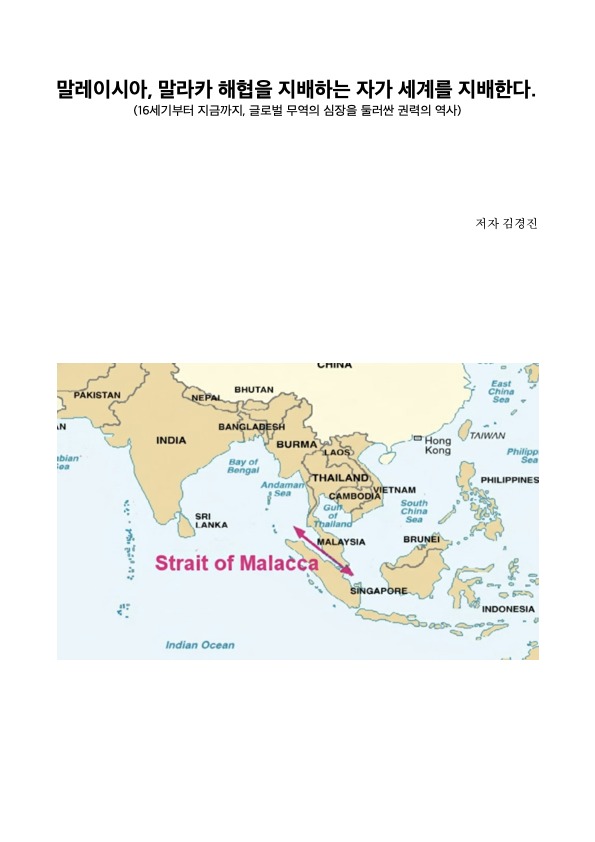
Malaysia and the Malacca Strait: Whoever Controls It Controls the World
Chapter 6: Parliamentary System and Democracy
Kim Kyung-jin
Part 2: Malaysia's Political System
Bicameral System: Upper House and Lower House
Malaysia's Parliament operates on a bicameral system, consisting of the upper house (Dewan Negara) and the lower house (Dewan Rakyat). This system is based on Britain's Westminster system, with the lower house holding substantial legislative power while the upper house plays a complementary role.
The lower house comprises 222 members, elected directly by citizens through the First-Past-the-Post (FPTP) electoral system. Members serve terms of up to five years, with general elections typically held every five years.
However, elections can be held before the term ends if the Prime Minister requests an early election and the King approves it. The lower house is the primary organ exercising legislative power, proposing and deliberating bills while monitoring government policy. The Prime Minister and cabinet members are drawn from the majority party or coalition in the lower house, and if they fail to secure majority support, the government can be dissolved or the Prime Minister replaced.
The upper house comprises 70 members selected not through direct election but through indirect election and royal appointment. Of these, 28 are elected by the legislatures of each state, while 42 are appointed by the King. Members appointed by the King are selected from diverse fields, including scholars, lawyers, economists, and religious leaders who can contribute nationally.
The upper house can review and amend bills passed by the lower house but cannot fully reject the lower house's decisions. If the lower house approves the same bill again, the upper house cannot block it. Budget bills and tax-related legislation must originate in the lower house.
Malaysia's Parliament performs legislation, checks on the executive branch, and deliberation of national policy, with authority to enact, amend, and repeal laws. It also monitors the Prime Minister and executive policies and holds power to conduct parliamentary inquiries. Parliament reviews and approves the national budget and oversees government finances. It also performs important functions including constitutional amendments related to the monarchy, approving declarations of national emergencies, and participating in the selection of the King.
As a constitutional monarchy, Malaysia's King plays an important role in the Parliament's legislative process. The King holds the power to give final approval to bills passed by both houses and officially appoints the Prime Minister. However, the King's role is constitutionally limited, with substantive political decisions made by Parliament and the government.
Malaysia's Parliament faces several limitations. When the Prime Minister controls a majority in the lower house, Parliament often assumes a role of merely ratifying executive decisions. Additionally, laws such as the Internal Security Act (ISA) may restrict opposition politicians' activities. When the government controls media, parliamentary discussions may not be adequately conveyed to the public.
The Development of Party Politics
Malaysian politics has long been led by the Barisan Nasional (BN) coalition. This coalition unites ethnically-based parties including the United Malays National Organization (UMNO), the Malaysian Chinese Association (MCA), and the Malaysian Indian Congress (MIC). From the 1990s, opposition forces began to strengthen, and in the 2018 general election, the opposition coalition Pakatan Harapan (PH) won, marking the first change of government since independence. Although a new coalition government was formed through political realignment in 2020, this change is regarded as evidence of Malaysia's democratic maturation.
Malaysia's political system reflects its multiethnic society, with diverse parties that have formed governments through coalitions or served as opposition. As of 2024, Malaysia's major parties include the United Malays National Organization (UMNO), Pakatan Harapan (PH), Bersatu Pribumi Bersatu Malaysia (PPBM), and the Malaysian Islamic Party (PAS).
The United Malays National Organization (UMNO) has long ruled Malaysia as the governing party after independence, leading the Barisan Nasional (BN) coalition in governing the nation. It has produced multiple Prime Ministers, including the first Prime Minister Tunku Abdul Rahman, as well as Abdul Razak Hussein, Hussein Onn, Mahathir Mohamad, Abdullah Ahmad Badawi, and Najib Razak. After losing the 2018 general election, it shifted to opposition status, and its influence declined amid political changes.
Pakatan Harapan (PH) comprises parties including the People's Justice Party (PKR), Democratic Action Party (DAP), and National Trust Party (Amanah). This coalition won the 2018 general election, achieving the first change of government, with Mahathir Mohamad taking office as Prime Minister again. After subsequent political changes, Anwar Ibrahim, the leader of the People's Justice Party (PKR), assumed office as Prime Minister in 2022 and has maintained the government.
Bersatu Pribumi Bersatu Malaysia (PPBM) was founded by defectors from UMNO including Mahathir Mohamad and Muhyiddin Yassin. It participated in the 2018 election as part of Pakatan Harapan. After subsequent political realignment, Muhyiddin Yassin became Prime Minister, but he resigned in 2021 and failed to retain the government.
The Malaysian Islamic Party (PAS) is a party based on Islamic fundamentalism that has exercised steady influence in Malaysian politics. However, it has yet to produce a Prime Minister and is established as a party that emphasizes religious character within coalition politics.
Malaysian political history saw the Barisan Nasional (BN) coalition led by UMNO govern for a long period, but the 2018 general election marked the first change of government when Pakatan Harapan (PH) won. Subsequently, coalitions and realignments among parties have continued, and currently Pakatan Harapan and several other parties form the government through coalition. These political changes are regarded as an important process for Malaysia's democratic development and harmony in its multiethnic society.
Kim Kyung-jin
Attorney · Former Member of the National Assembly · AI Policy Researcher
© 2026 Kim Kyung-jin. All rights reserved.