AI Library
Books for Reading AI
Choose a book, then read it in order from the table of contents.























[AI Library] Chapter 8: Malaysia's Legal System
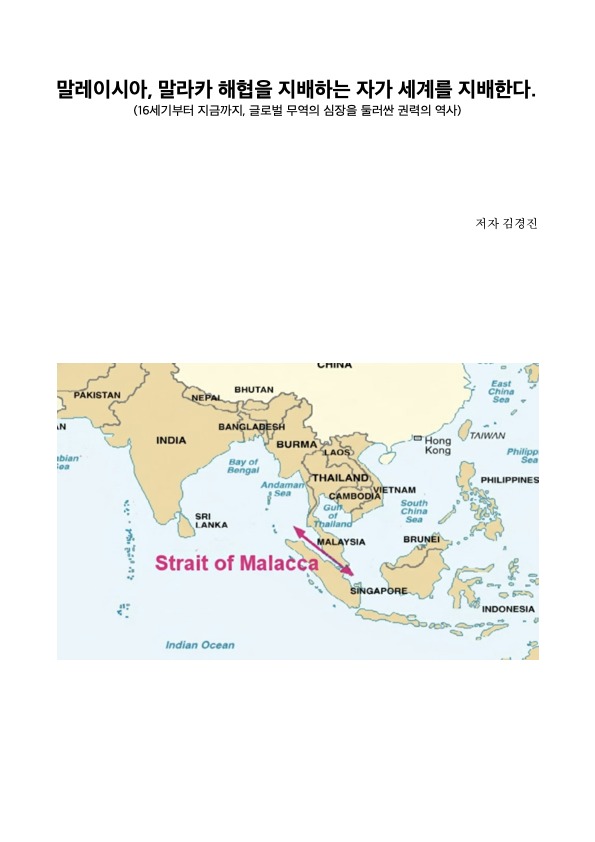
Malaysia and the Malacca Strait: Whoever Controls It Controls the World
Chapter 8: Malaysia's Legal System
Kim Kyung-jin
Part Two: Malaysia's Political System
The Coexistence of Islamic Law and Secular Law
Malaysia has a unique legal system in which Islamic law (Sharia) and secular law (based on English common law) coexist. Article 3 of the Federal Constitution designates Islam as the religion of the Federation while guaranteeing the peaceful practice of other religions.
Secular courts handle criminal and civil cases and apply to all citizens. The Sharia courts, by contrast, deal with Islamic law and have jurisdiction over Muslim family law, marriage, divorce, inheritance, and certain religious violations. Each state operates its own Sharia courts, and the scope and interpretation of Sharia law may vary from state to state.
Legal Challenges in a Multiethnic and Multireligious Society
Malaysia's multicultural character presents challenges to its legal system. The relationship between Islamic law and secular law, as well as issues related to religious freedom, are frequent subjects of debate.
For example, issues of apostasy (conversion from Islam to another religion), jurisdictional conflicts between the dual court systems, and disputes over the rights of non-Muslim spouses and children have created complex legal problems. One prominent case illustrating Malaysia's multicultural character manifesting as legal conflict is the Lina Joy case. Lina Joy was born Muslim but converted to Christianity as an adult. In Malaysia's legal system, formally renouncing Islam requires permission from the Sharia courts. However, Lina Joy filed suit in secular court to change her religion and requested that her identity card be amended to reflect a change from Islam to Christianity. The case eventually reached the Federal Court, but the court ruled that it fell under the jurisdiction of the Sharia courts (Islamic courts) rather than the secular courts, dismissing Lina Joy's petition. This case represents a clear example of jurisdictional conflict between Islamic law and secular law and became the subject of significant international controversy by revealing the limits of religious freedom in Malaysia.
Another frequently cited problem is child custody disputes that arise when a spouse or parent converts to Islam. For example, the Indira Gandhi case, which occurred in 2009, involved a husband who converted to Islam without his wife's knowledge and unilaterally converted their children to Islam. This case triggered a jurisdictional conflict between the civil courts and the Islamic courts, and as each court issued different rulings, it sparked legal confusion and social controversy. Ultimately, Malaysia's Federal Court determined that the unilateral conversion of the children was illegal and sided with the civil court's decision. This case is considered a prime example demonstrating the severity of legal ambiguity and jurisdictional conflict. In this way, Malaysia's legal system continues to experience complex and sensitive disputes in matters of religious freedom and family law due to the coexistence of Islamic law and secular law.
Major Features of the Constitution
The Malaysian Federal Constitution, enacted at the time of independence from Britain in 1957, is the supreme law of the nation and defines the fundamental structure and principles that form the basis of Malaysia's political, social, and legal order. The Constitution has the character of supreme law superior to all other laws, and any law or regulation that violates it can be declared null and void.
The Malaysian Constitution explicitly protects the fundamental rights and freedoms of its citizens. These include the right to life and personal liberty, equality before the law for all persons, freedom of expression, and freedom of religion. In practice, religious freedom is subject to certain restrictions, and Muslims in particular are regulated by Islamic law.
One important feature of the Malaysian Constitution is the special status granted to Malays and the indigenous peoples of Sabah and Sarawak, known as "Bumiputra" (literally, "sons of the soil"). Article 153 of the Constitution specifies that affirmative action policies are to be implemented across various sectors, including education and public services, to protect the social and economic interests of Malay and Bumiputra communities.
As a federal nation, the Malaysian Constitution clearly distinguishes the powers and responsibilities between the federal and state governments. The federal government oversees major national matters such as defense, foreign affairs, and economic policy, while the state governments hold regional and limited authority over land, forests, natural resources, and Islamic-related affairs. The Constitution maintains the federal structure through clear delineation of roles and division of authority between the two levels of government.
Regarding citizenship, the Constitution also prescribes the conditions and procedures for becoming a Malaysian citizen and details the rights and duties of citizens. Since debates over citizenship had existed since independence, the Constitution sought to clearly codify these matters to contribute to national unity and social stability.
The Constitution has been amended several times in response to historical and political changes. Following the outbreak of the 1969 racial riots (known as the May 13 Incident), provisions were added to the Constitution restricting public discussion of sensitive matters. These include legally regulating open debate on issues such as the special status of Malays, the status of Malay as the national language, and the authority of the sultans,matters that could provoke social tension. Though intended to prevent ethnic conflict and foster social harmony, these restrictions simultaneously produced the side effect of limiting freedom of expression and the development of democracy.
Kim Kyung-jin
Attorney · Former Member of the National Assembly · AI Policy Researcher
© 2026 Kim Kyung-jin. All rights reserved.