AI Library
Books for Reading AI
Choose a book, then read it in order from the table of contents.
























[AI Library] Chapter 1: Opening the Gate to the Caucasus
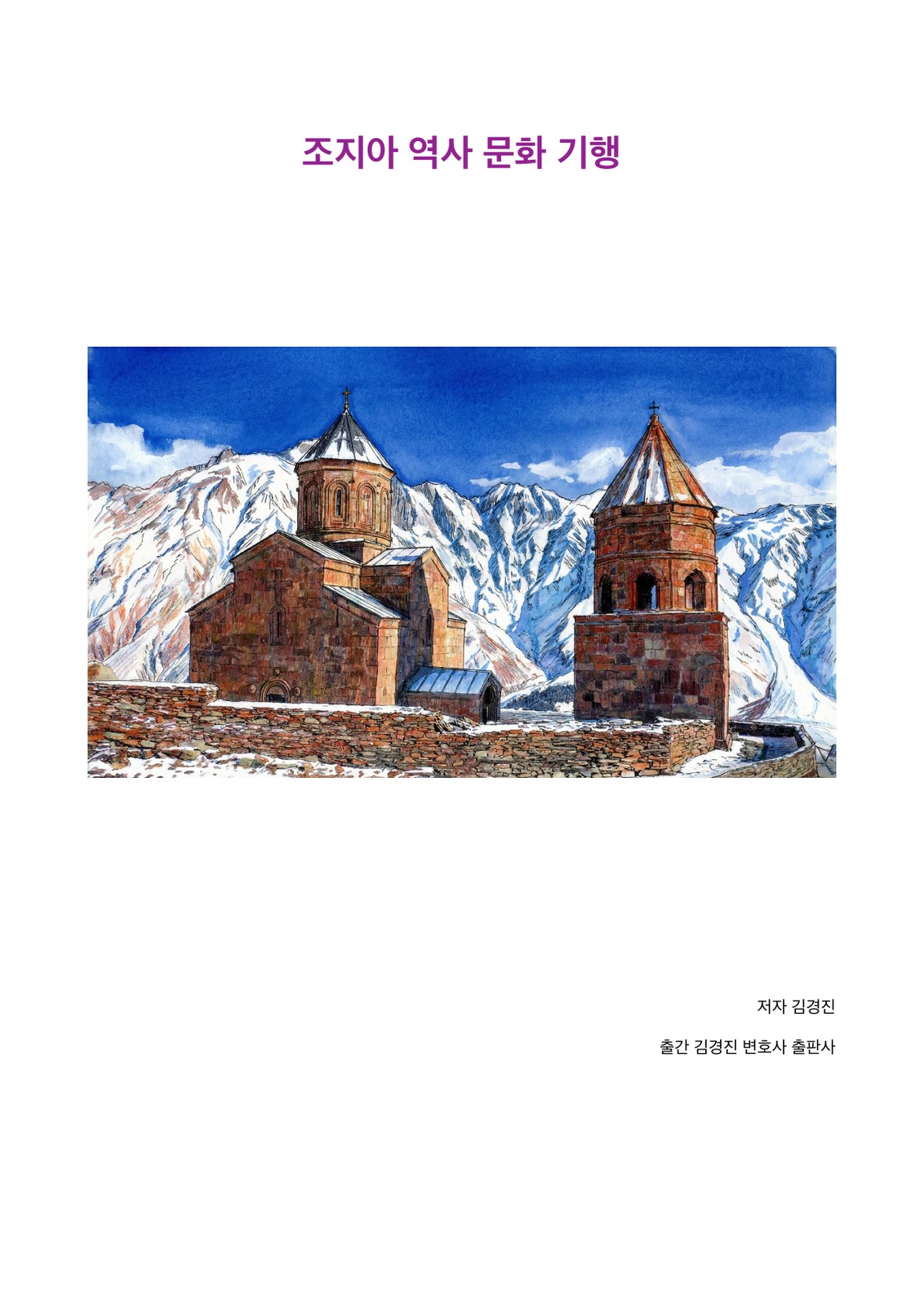
A Journey Through Georgia's History and Culture
Chapter 1: Opening the Gate to the Caucasus
Kim Kyung-jin
Part 1: A Journey Through Georgia
A. The Privilege of One Year Visa-Free Entry for Koreans and Entry Procedures
When you land at Tbilisi International Airport, the first thing you notice is the smell of the air. Dry yet carrying a hint of soil, the fragrance of the deep Eurasian continent tickles your nostrils.
When you line up at the immigration desk, your turn comes surprisingly quickly. From the moment you present your Korean passport until the officer nods and stamps it, less than a minute passes. From that moment on, you are granted 365 days, exactly one year, as a traveler.
Georgia is one of the world's most generous countries when it comes to visa policy for Koreans. Citizens of South Korea can stay freely for one year with just a passport, without filing a separate visa application or visiting an embassy.
This generous benefit has been in effect since 2015 and applies equally to citizens of 98 countries, including Korea. In a world where 90-day visa-free travel is the norm, the number 365 opens the possibility of something beyond mere tourism, changing the way one lives itself.
Documents required for entry are minimal. A passport with at least six months of validity remaining is sufficient.
Immigration officers may ask about your travel purpose or accommodation, but they rarely check thoroughly. Having round-trip flight confirmations or hotel vouchers ready puts your mind at ease, but most travelers pass through without further questions. Since visas are not issued at the border, travelers from non-visa-exempt countries must apply for an electronic visa (e-Visa) in advance. This does not apply to Koreans.
Once you leave the airport and catch a taxi, the driver speaks first. "Where are you from? Korea?" You nod, and he gives you a thumbs up. "Samsung! Hyundai! Good country!" During the forty-minute drive to Tbilisi, the driver tells you about his nephew who loves Korean dramas, about Georgi
an wine being the world's finest and how hospitality is the duty of every Georgian. And thus begins your Georgia journey. A country where stories start the moment you step outside the airport.
One year gives travelers a gift of leisure. There is no need to hurry.
You can spend a month in Tbilisi or fully witness the season of ripening grapes at a Kakheti winery. When winter comes, you can learn to ski on the snowy peaks of Gudauri, and when spring returns, you can walk among the wildflowers of Svaneti.
This is why digital nomads regard Georgia as a promised land. There are few countries on Earth where you can legally spend a year with just a laptop, without a work visa or residence permit.
What if you filled the entire year and still wanted to stay? The answer is simple. You can make a short trip to a neighboring country and come back. Yerevan, Armenia is five hours by car, and Trabzon, Turkey is a day's journey along the Black Sea coast. Spend one night across the border and return to Georgia, and a new year begins.
Of course, there are limits to continuous stays in this manner, and immigration authorities may deny entry at their discretion. However, for most travelers, this system operates flexibly.
Travel insurance is absolutely essential. Beginning January 2026, the Georgian government will require all entrants to have health and accident insurance. It is safer to print your insurance certificate in English, and a minimum coverage of 30,000 lari (approximately 16 million won) is recommended. While you can purchase insurance locally, it is better to arrange it before departure for peace of mind.
Besides Tbilisi Airport, there are international airports in Kutaisi and Batumi. Kutaisi Airport serves as a gateway for budget airlines like Wizz Air to offer affordable access from various parts of Europe.
Batumi Airport is convenient for travelers seeking Black Sea relaxation. Regardless of which airport you use, the procedures are identical, and the power of a Korean passport works equally everywhere.
Land entry is also possible. Many travelers cross the Sarpi border from Turkey or enter through Bagratashen from Armenia.
Border crossing is generally smooth, but relations with Azerbaijan are complicated. Due to the aftermath of the Nagorno-Karabakh conflict, land borders may be closed or restricted, so you must check the latest information before traveling. Routes through South Ossetia and Abkhazia into Russia are considered illegal border crossing not recognized by the Georgian government, so they must never be attempted.
Open the window of your first night's lodging after leaving the airport, and Tbilisi's night air floods in. Far off, the bells of an Orthodox church ring out. The year stretches before your eyes. Where to begin is entirely up to you.
B. A Small Country with Twelve Climate Zones: Seasonal Travel Strategies
Georgia's area is approximately 69,700 square kilometers.
Twelve distinct climate zones coexist on this small patch of land, about seventy percent the size of South Korea.
On the western Black Sea coast, palm trees sway in the wind, while on the eastern Kakheti vineyards, grape clusters ripen under the dry sun. Turn north, and snow-capped peaks over five thousand meters gleam with eternal snow. The saying that you can ski in the morning and swim in the sea at evening is not an exaggeration.
The secret to this climate diversity lies in geography. The Greater Caucasus Mountains to the north block cold air descending from Siberia, while the Black Sea to the west brings warm, humid winds. Moving eastward, the sea's influence diminishes and continental climate appears; the Lesser Caucasus to the south creates yet another climate boundary. All these elements interweave within this small nation to create twelve distinct climate zones.
Spring (April to June) is the finest season to explore Tbilisi and the lowlands. By April, winter's gray veil lifts, and flowers bloom throughout the city. Walking through the narrow lanes of the Old Town, you see flower pots on nearly every balcony as residents fling open their windows to greet the sun. Temperatures range between twelve and twenty-four degrees Celsius; short sleeves suit the days, while a light jacket is needed for evenings.
May in Kakheti is entirely green. New leaves sprout on the vines, and the wind crossing the Alazani Valley carries the scent of grass. From the hills of Sighnaghi, looking toward the Caucasus, you see unmelted snow glinting in the sunlight. When you visit a winery during this time, you can taste wine made the previous year in the cool darkness of the cellar. Nikoloz, a vineyard owner, told me: "Come in spring and you understand why wine is born from this land. Earth, wind, and sunlight, everything is prepared for the grapes."
However, mountain regions require caution. Kazbegi and Svaneti still have snow lingering until late May, and trekking routes often remain closed. Spring rains are frequent, so an umbrella or waterproof jacket is essential.
Summer (July to August) in Tbilisi is scorching. Temperatures hover above thirty-five degrees Celsius, and dry heat engulfs the entire city. Locals disappear into the shade during lunch hours, only venturing out again as dusk approaches. Staying only in Tbilisi during this season is unwise.
Summer is the time to go to the mountains. Ascend to Kazbegi, Svaneti, or Tusheti at two thousand meters altitude or above, and the world transforms.
Days are cool, and nights are so chilly you need blankets. One July day while trekking in the Juta Valley, sitting in the meadow eating lunch, a young man from Svaneti riding past on horseback handed me a cup of water. "If you don't come to these mountains in summer, you miss half of Georgia," he said. True to his words, summer high-altitude trekking is the crown jewel of Georgia travel.
Batumi to the west is a Black Sea beach resort that thrives most in summer.
Family tourists from Russia, Armenia, and Azerbaijan fill the beaches. Thanks to the subtropical climate, humidity is high and the botanical garden with its lush tropical vegetation is well-known. After a swim, it is pleasant to watch the Ali and Nino statues move toward each other on the seaside promenade in the evening.
Autumn (September to October) is the most perfect season to travel Georgia. In this period, known as the "velvet season," the heat retreats and mountains and valleys bathe in golden light. Daytime temperatures hover pleasantly between fifteen and twenty-five degrees Celsius, and rain is rare.
From mid-September through early October, Kakheti celebrates "Rtveli," the grape harvest festival. Entire families head to the vineyards to pick grapes, barefoot treading the fruit to extract the juice, tasting freshly pressed grape must. Wineries open their doors wide to welcome visitors, and supra (traditional feasts) continue late into the night. Visit Kakheti during this time, and you become not merely a tourist but a guest sharing in the joy of harvest.
Trekking is possible through early October. The autumn foliage visible from the path ascending to the Gergeti Trinity Church in Kazbegi is an unforgettable sight. However, high-altitude areas see temperatures plummet from mid-October, and some roads begin to close with snow, so weather monitoring is essential.
Winter (December to February) is the skier's season. Gudauri, a ski resort two hours by car from Tbilisi, offers snow quality comparable to the Alps at a fraction of the cost. Even combining lift tickets and equipment rental costs less than 100,000 won per day. Bakuriani is popular with family skiers, while Hatsvali in Svaneti offers seclusion with stunning views.
Winter mountain regions can be dangerous. The road to Tusheti is completely closed from November through May, and some sections of Svaneti are restricted during heavy snowfall. However, Tbilisi and the lowlands remain relatively mild. Average temperatures hover around five to seven degrees above zero Celsius, and snow melts quickly when it falls. Soaking in a sulfur spring while sipping hot tea is a uniquely Georgian way to pass the winter.
January seventh is Christmas for the Georgian Orthodox Church. Following the Julian calendar, it comes two weeks after Western Christmas. The midnight service held that day at Tbilisi's Sameba Cathedral is solemn and beautiful. Candlelit worshippers fill the cathedral, and polyphonic chanting echoes through the domed ceiling.
C. From Marshrutka to Rental Car: Complete Transportation Guide
Georgia's transportation can be summed up in one word: adventure. Modern systems mix with the legacy of the Soviet era and the uninhibited driving style unique to Georgians. At first it is disconcerting, but after a few days, it all becomes part of the travel experience.
The marshrutka is Georgia's primary mode of transportation. These fifteen-seater minibuses connect cities to cities and villages to villages. They depart from designated terminals, but will pick you up if you wave from the roadside and will stop wherever you ask the driver. The fares are surprisingly cheap. The three-hour journey from Tbilisi to Kazbegi costs 15 lari (about 8,000 won).
Tbilisi's main marshrutka terminals are Didube and Ortachala. From Didube, routes depart to the north (Kazbegi, Gudauri) and west (Kutaisi, Batumi), while from Ortachala, routes go south (to the Armenian border) and east (to Kakheti). When you arrive at the terminal, touts calling out destination names rush toward you. Do not worry if you do not speak Georgian. Simply ask "Kazbegi?" or "Batumi?" and they will point to your bus with a gesture.
The marshrutka has clear drawbacks. The seats are cramped, air conditioning is often absent, and the bus departs only once it is full. Storage space is limited, so a large backpack may need to be cradled on your lap. The driving is typically rough. Overtaking, sudden braking, and honking are everyday occurrences. Yet as you watch the landscape blur past your window, accept an apple offered by the grandmother next to you, and listen to Georgian folk songs flowing from the driver's radio, you begin to think this is what real travel feels like.
Trains are a more comfortable and safer alternative to marshrutkas. Major cities including Tbilisi, Batumi, Kutaisi, and Zugdidi are connected by rail. The two-story express train (Stadler) running between Tbilisi and Batumi features modern amenities. Spacious seats, air conditioning, WiFi, and a dining car ensure that the roughly five-hour journey is never boring. Fares range from about 25 to 50 lari depending on seat class.
Night trains also operate. These services depart Tbilisi in the evening and arrive in Batumi in the morning, and using a sleeper car has the added benefit of saving on accommodation costs. However, not all routes are modern. Some routes to cities like Kutaisi are served by aging trains built during the Soviet era. During the summer peak season, tickets for popular routes sell out quickly, so it is advisable to book in advance through the Georgian Railways website (railway.ge) or the booking site (tre.ge).
Regarding urban transportation, I will explain with reference to Tbilisi. Tbilisi has two metro lines. Built during the Soviet era, they have a deep history, and the escalators move at a surprisingly fast pace. Both the metro and city buses are accessed with a transit card (MetroMoney), and a single journey costs only 1 lari (about 500 won). Recently, it has also become possible to pay directly by holding a Visa or Mastercard to the terminal.
It is wise to use taxi apps like Bolt or Yandex Go. When you summon a taxi through the app, the fare is set in advance, allowing you to avoid overcharging, and you can reach most places in the city for 10 lari or less. Taxis hailed from the street usually lack meters, so you must always negotiate the price before getting in. Be cautious, as drivers sometimes charge foreigners inflated fares.
Car rental is the best choice for those who want complete travel freedom. If you have an international driving permit, you can rent a vehicle at around 30 to 50 dollars per day. Several companies including Hertz and Localrent operate at Tbilisi Airport and in the city center.
However, driving in Georgia requires determination. Local drivers are aggressive, lane discipline is weak, and cattle, horses, and sheep herds regularly appear on the roads. Mountain roads have many unpaved sections, and some stretches run along cliffs without guardrails. When traveling to remote areas like Tusheti or Ushguli, you must choose a four-wheel-drive vehicle, and if you lack confidence in your driving, hiring a car with a driver is the safer option.
A taxi driver named Giorgi, whom I met on the road to Mestia in Svaneti, said this: "This road requires courage, not driving skill. But do not worry. Georgians are born on this road." His words, tinged with pride and humor, explain everything about Georgian transportation.
d. Prices, Exchange Rates, and Smart Budget Planning
Georgia is called 'affordable Europe.' You can enjoy European atmosphere while spending at a level similar to Southeast Asia. However, with the recent surge in tourists and influx of foreigners, prices are rising, so smart budget planning is necessary.
Georgia's currency is the lari (GEL). The subunit is the tetri, with 100 tetri equal to 1 lari. As of 2025, 1 dollar equals about 2.7 to 2.8 lari, and 1 euro equals about 3.0 to 3.1 lari. Converting to Korean won, 1 lari is roughly 400 to 450 won. For calculation convenience, approximating 1 lari as 500 won is reasonably accurate.
It is difficult to exchange directly into lari from Korea. The common method is to bring US dollars or euros and exchange them locally. Exchange booths are scattered throughout Tbilisi, with large rate signs making comparison easy. Many people also use ATMs to withdraw lari directly with an international debit card, as the fees are low.
The payment environment is quite modern. Credit cards (Visa, Mastercard) are accepted in most hotels, restaurants, and supermarkets in Tbilisi and Batumi. However, rural guesthouses, traditional markets, marshrutkas, and small shops often accept only cash. It is good to prepare a mix of cash and cards.
Accommodation costs vary greatly depending on travel style. Hostel dormitories run 15 to 30 lari per night (about 7,000 to 15,000 won), and guesthouses range from 40 to 80 lari for a private room (about 20,000 to 40,000 won). Renting an entire apartment through Airbnb costs around 60 to 120 lari per day and includes kitchen facilities. Mid-range hotels cost 100 to 200 lari, and five-star hotels cost 300 lari or more. Central Tbilisi is somewhat expensive, but prices drop to half or less in provincial towns.
Food is one of the greatest pleasures of traveling in Georgia. At a local restaurant, you can eat your fill of khachapuri (cheese bread) and khinkali (dumplings) with a glass of beer for 20 to 35 lari (about 10,000 to 18,000 won). Even at an upscale restaurant, a multi-course dinner with a bottle of wine rarely exceeds 100 lari. In Western Europe, you would pay three times as much.
You can save even more on food by buying fresh fruit, vegetables, bread, and cheese at traditional markets and cooking yourself. At Tbilisi's Deserter's Bazaar, you can buy a kilogram of tomatoes for 3 to 4 lari, a whole watermelon for 10 lari, and freshly baked bread for 2 lari. Churchkhela (a traditional snack of walnuts preserved in grape juice), sold at one corner of the market, costs 3 to 5 lari each.
Transportation costs are very low, as mentioned earlier. City buses and metro rides cost 1 lari, Bolt taxi rides within the city run 5 to 10 lari, and intercity marshrutkas cost about 10 to 30 lari. Car rental runs about 80 to 140 lari per day (about 40,000 to 70,000 won), and petrol costs roughly 2.8 to 3 lari per liter.
Attractions and other expenses are also manageable. Most museum admission fees range from 5 to 15 lari, and many places are free. Winery tours cost around 50 to 100 lari and include tastings. Sulfur baths (Abanotubani) cost 80 to 150 lari for a private bath, and the per-person cost drops when shared among several people.
Tipping is not mandatory but is becoming increasingly common. At restaurants, you can leave about 10 percent of the total on the table or check whether a service charge is included in the bill. It is not impolite to skip tipping at taxis or hotels.
To summarize daily budgets: a budget backpacker can cover accommodation, meals, transportation, and attractions for 60 to 80 lari per day (about 30,000 to 40,000 won). If you prefer to travel more comfortably, plan for 120 to 200 lari per day (about 60,000 to 100,000 won). With this budget, you can stay at a clean hotel, dine at good restaurants, and visit wineries.
A French couple with whom I shared breakfast at a guestthouse in Sighnaghi said this: "With the money we would spend on lunch in Paris, we could live here for a day. But what is more surprising is that the food here tastes better." I nodded at their words while gazing out the window at the Alazani Valley spread below. Georgia's value for money does not simply mean 'cheap.' It means you can enjoy a rich experience on a modest budget.
Kim Kyung-jin
Attorney · Former Member of the National Assembly · AI Policy Researcher
© 2026 Kim Kyung-jin. All rights reserved.