AI Library
Books for Reading AI
Choose a book, then read it in order from the table of contents.










[AI Library] Chapter 11: The 2008 War and Divided Territories
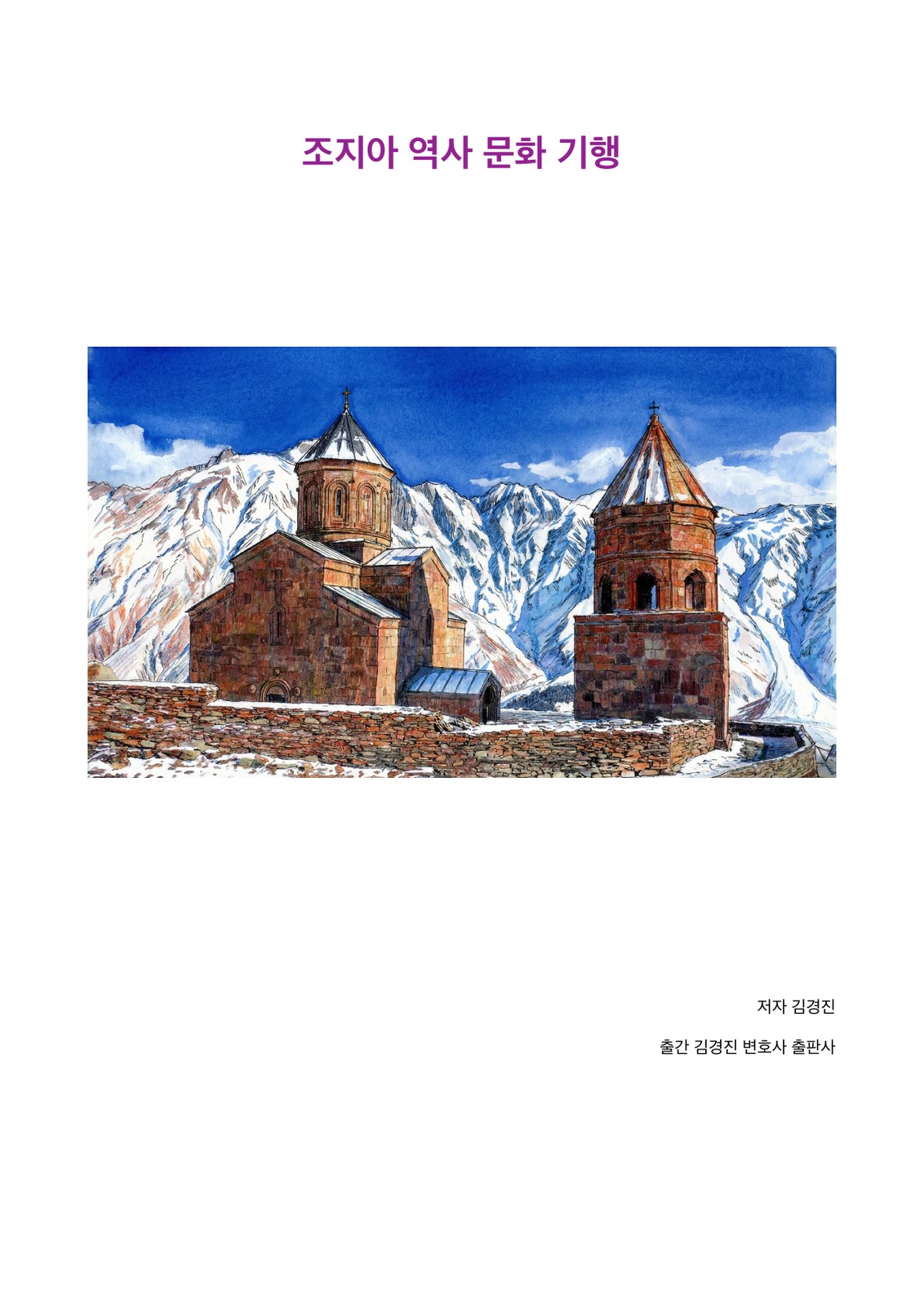
A Journey Through Georgia's History and Culture
Chapter 11: The 2008 War and Divided Territories
Kim Kyung-jin
A. The Origins of the South Ossetia and Abkhazia Conflict
Unfold a map of Georgia and you see Abkhazia on the northwestern Black Sea coast and South Ossetia in the north-central mountain region marked with dotted lines. These two regions occupy roughly 20 percent of Georgia's entire territory. The Georgian government calls them "Occupied Territories," while Russia claims they are independent nations. Most of the international community recognizes them as Georgian territory, but in reality, these lands are de facto separatist regions with Russian military forces stationed there. This conflict did not begin suddenly in 2008. It was the eruption of accumulated fissures that formed each time the political system shifted from empire to federation to nation-state.
(1) Ethnic Composition and Historical Background
The Abkhazians are a people of the northwestern Caucasus with their own distinct language and culture. They speak Abkhazian, which is unrelated to the Georgian language, and have maintained a distinct identity along the Black Sea coast throughout history. In medieval times, the Kingdom of Abkhazia was once unified with the Georgian Kingdom and experienced a period of strength. Later, under the influence of the Ottoman Empire, many residents accepted Islam. In the nineteenth century, as the Russian Empire conquered the Caucasus, Abkhazia became a direct Russian
possession. In this process, many Abkhazians migrated to or were expelled to the Ottoman Empire. Georgians, Russians, Armenians, Greeks, and others filled their place.
The Ossetians are descendants of the Alans, an Iranian-speaking nomadic people. With the Caucasus Mountains between them, they came to live divided between the north (North Ossetia, now part of the Russian Federation) and the south (South Ossetia, within Georgian territory). From the seventeenth century onward, Ossetians who migrated from the northern Caucasus settled with the permission of the Kingdom of Kartli (eastern Georgia) at that time. For centuries, Georgians and Ossetians lived as neighbors, intermarried, and exchanged culture. However, when the Russian Empire took direct control of North Ossetia in the nineteenth century, a sense of solidarity with Russia began to form among Ossetians on both sides of the mountains.
(2) Soviet Divide-and-Rule Governance and the Establishment of Autonomous Units
When the Red Army occupied Georgia in 1921 and Sovietized it, the national question entered a new phase. The Bolshevik leadership, especially Stalin, who was Georgian-born, employed a divide-and-rule strategy. They established the "Abkhazian Autonomous Soviet Socialist Republic (ASSR)" and the "South Ossetian Autonomous Oblast" within the Georgian Soviet Socialist Republic. On the surface, the justification was to protect the rights of national minorities, but in practice, it was a measure to plant a countervailing force within Georgia so that Georgian nationalism could not challenge the central government in Moscow.
According to documents from 1922, territories in South Ossetia, Zakatala, and other areas were transferred to other republics or autonomous units. At that time, anti-Soviet resistance forces in Georgia criticized this territorial division as an attempt to reduce Georgia to a mere administrative division of Russia. A December 1921 report documents conflicts between pro-Georgia and pro-Russia factions within Abkhazia, and records that allied forces of Russians, Armenians, and Abkhazians oppressed Georgians, confiscated their property, or expelled them.
During the Soviet era, the autonomous republics and autonomous units were only nominally autonomous. All major decisions came from Moscow, and interethnic conflicts were suppressed under Communist Party control. Yet they did not disappear entirely. In 1978, protests erupted in Abkhazia demanding incorporation into the Russian Soviet Federative Socialist Republic (RSFSR), which Russia tacitly supported. Cultural and linguistic conflicts over the official use of Georgian also flared intermittently. A time bomb was accumulating, prepared to explode as the Soviet Union weakened.
(3) The Soviet Collapse and Armed Conflicts of the 1990s
In the late 1980s, Mikhail Gorbachev's reform policies (glasnost and perestroika) unleashed suppressed nationalism. In Georgia, the desire for independence surged, and in April 1989, Soviet troops fired on peaceful demonstrators in Tbilisi, resulting in the tragic death of about twenty people. This event
ignited Georgian nationalism. At the same time, nationalism also emerged in Abkhazia and South Ossetia. They began demanding separation and independence from Georgia.
When the Soviet Union collapsed in 1991 and Georgia declared independence, latent conflicts erupted into full-scale armed confrontation. A war took place in South Ossetia from 1991 to 1992. Georgian forces bombarded the autonomous region's capital, Tskhinvali, and Russia supported the separatist forces. Thousands were killed and about one hundred thousand became refugees. A ceasefire agreement (the Sochi Agreement) was signed in 1992, and the Commonwealth of Independent States (CIS) deployed a peacekeeping force. However, this ceasefire was not complete peace but the beginning of a "frozen conflict."
The Abkhazian War (1992-1993) was even more devastating. Abkhazian separatist forces, with Russia's tacit support and the help of mercenaries from the northern Caucasus (including Chechen armed groups), fought against Georgian forces. About fifteen thousand people died during the war, and roughly two hundred fifty thousand Georgians, who made up the majority of Abkhazia's population, were massacred or expelled in what became known as "ethnic cleansing." The Organization for Security and Cooperation in Europe (OSCE) recognized this as ethnic cleansing. The Georgian government forces were defeated and driven from Abkhazia, barely holding the upper reaches of the Kodori Gorge.
As a result of these wars, Abkhazia and South Ossetia effectively escaped the control of the Georgian central government. Their legal status became an ambiguous "gray zone," and they became havens for organized crime, smuggling, and drug trafficking. An illegal trade network connecting Russia, Turkey, and Georgia formed, providing the economic base for the separatist regimes. Russian peacekeeping forces were stationed in the region, managing the status quo, but for Georgians, this "peacekeeping" was simply another name for occupation.
(4) Rising Tensions After the Rose Revolution
After coming to power in the 2003 Rose Revolution, President Mikheil Saakashvili made territorial integration a top priority alongside a strong pro-Western policy. While pursuing domestic reforms including anti-corruption measures, police reform, and tax expansion, he attempted to recover control over the separatist regions. He gained confidence after successfully expelling the pro-Russia leader Aslan Abashidze from the Adjara Autonomous Republic in 2004.
However, South Ossetia and Abkhazia were different from Adjara. Russian military forces were stationed in these regions, and Russia actively supported the separatist regimes. From 2002 onward, Russia issued Russian passports on a massive scale to residents of these regions. This was a policy of "passportization." By the time the war began, 80 to 90 percent of the South Ossetian and Abkhazian populations had acquired Russian citizenship. This had created a pretext for Russia to intervene militarily in the name of "protecting its citizens."
Georgia's attempt to join NATO irritated Russia. At the NATO summit in Bucharest in April 2008, Georgia and Ukraine's accession was discussed. Despite opposition from Germany and France, the Membership Action Plan (MAP) was postponed, but a declaration stating that "Georgia and Ukraine will become NATO members" was adopted. Russia viewed this as a crossing of the "red line." From spring 2008 onward, provocations and clashes became frequent in the border regions of South Ossetia. The August war was inevitable.
B. The Truth of the Five-Day War and the Silence of the International Community
On August 8, 2008, while the world's attention was focused on the Beijing Olympic opening ceremony, the Caucasus erupted in the first interstate military conflict in twenty-first-century Europe. The Russia-Georgia War, commonly called the Five-Day War, lasted only five days, yet its aftermath continues to this day.
(1) The Outbreak of War and Debates Over Responsibility
The accounts of how the war began differ sharply between the two sides. Georgia claims that South Ossetian separatist forces had continuously bombarded Georgian villages, and that it launched military operations in response to restore constitutional order. Russia counters that Georgia launched a preemptive attack on Tskhinvali and massacred civilians, and that it intervened to "protect its citizens" and "punish attacks on its peacekeeping forces."
On the night of August 7, 2008, Georgian forces began a massive bombardment of Tskhinvali, South Ossetia's capital. President Saakashvili explained it as a response to provocations by separatist forces and an unavoidable measure to restore territorial integrity. However, Russian forces were already positioned at the Roki Tunnel, the only mountain pass connecting North and South Ossetia, and deployed massive forces within hours of Georgia's attack beginning.
The Independent International Fact-Finding Mission on the Conflict in Georgia (IIFFMCG), commonly known as the Tagliavini Commission, was supported by the European Union and published its report in September 2009. The report concluded that "Georgia initiated the large-scale attack on Tskhinvali first." However, it also noted that "Russia's response exceeded the scope and proportionality required, and both sides violated international humanitarian law." The report also presented evidence that Russian reconnaissance forces had already infiltrated South Ossetia before the war and that Russian air forces had been prepositioned in advance.
Georgia criticized the report for failing to adequately reflect Russia's premeditation and provocations. Russia argued that Georgia's "adventurism" triggered the war and that its response was justified. The truth likely lies somewhere between the two claims. What is clear is that the war was the eruption of tensions that had accumulated over a long period, and both sides were prepared for military conflict.
(2) Five Days of All-Out Warfare
On August 8, Russian forces poured into South Ossetia through the Roki Tunnel. Simultaneously, the Russian air force bombed military and infrastructure facilities on Georgian soil. Cities including Gori, Poti, and Senaki came under air attack. In the Black Sea, the Russian Navy sank Georgian naval vessels.
On August 9, the offensive also began on the Abkhazian front. Abkhazian and Russian forces attacked the upper Kodori Gorge, which Georgia had been the only force to control. Georgian forces and civilians had no choice but to withdraw. Georgia lost its last foothold in Abkhazia.
On August 10, Russian tanks advanced deep into Georgian territory beyond South Ossetia. Gori, Stalin's hometown, was occupied. The Russian forces advanced toward the capital, Tbilisi, but stopped about 45 kilometers outside the city. The Georgian government felt threatened with regime change. President Saakashvili appealed to the West for emergency assistance, but no military intervention came.
On August 12, a ceasefire agreement was reached through the mediation of French President Nicolas Sarkozy. The so-called "Sarkozy Six Principles" included the cessation of use of force, the cessation of hostilities, guarantees of humanitarian access, the return of Georgian forces to their positions, the withdrawal of Russian forces to their pre-conflict positions, and the beginning of international discussions on the status of Abkhazia and South Ossetia.
The five-day war resulted in approximately four hundred deaths among Georgian forces and civilians, with some seventeen hundred wounded. Russian military casualties were reported at sixty-seven, with one hundred sixty-two losses on the South Ossetian side. About one hundred ninety-two thousand refugees were displaced, most of them Georgians. Georgia claimed that Russian forces deliberately attacked civilians, and OSCE reports confirmed Russian air strikes on civilian areas.
(3) Russia's Recognition of Independence and Military Presence
Two weeks after the ceasefire agreement was signed, on August 26, Russia formally recognized South Ossetia and Abkhazia as independent nations. This move surprised the international community. Russia justified its decision by citing NATO's 1999 support for Kosovo's independence as a precedent.
However, most of the international community did not recognize Russia's decision. Of the 193 United Nations member states, only a tiny handful, including Russia, Venezuela, Nicaragua, Syria, and Nauru, have recognized South Ossetia and Abkhazia's independence. The United States, the European Union, and the United Nations still consider these regions Georgian territory. Since 2008, the United Nations General Assembly has adopted resolutions each year affirming the return rights of Georgian refugees and displaced persons.
Russia did not implement the ceasefire agreement's key provision calling for "withdrawal of forces to their pre-conflict positions." Instead, it constructed large military bases in South Ossetia and Abkhazia and stationed thousands of troops there. Currently, an estimated thirty-five hundred to four thousand Russian troops are deployed in South Ossetia, and about five thousand in Abkhazia. While officially stationed at the request of the two "independent nations," this military presence is effectively Russian occupation.
(4) The International Response and Its Limitations
During the war, Georgia appealed for strong military intervention from the international community. However, the response was disappointing. The Bush administration declared a "Russian threat" and promised humanitarian assistance, but provided no military support. The United States was tied down in wars in Iraq and Afghanistan at the time, and direct conflict with nuclear-armed Russia was unthinkable.
The European Union achieved a ceasefire through President Sarkozy's mediation but imposed no meaningful sanctions on Russia. European countries were dependent on Russian natural gas, and economic interests overwhelmed principled responses. NATO suspended Georgia's Membership Action Plan (MAP). The concern was that including Georgia in the alliance might create obligations for military confrontation with Russia.
Shortly after the war, the European Union deployed the European Union Monitoring Mission in Georgia (EUMM). Beginning operations in October 2008, EUMM continues to patrol near the conflict areas with the mission of preventing renewed conflict and facilitating the return to normal life. However, EUMM cannot access Abkhazia and South Ossetia's interior due to Russia's and the separatist authorities' refusal. It operates only in Georgian-controlled areas where monitoring is possible, a significant limitation.
In the United Nations Security Council, Russia exercised its veto, preventing the adoption of resolutions concerning Georgia. China, Iran, and others also supported Russia's position. Georgians received the international community's response as "silence." Tazo, a local guide and war refugee at that time, said this
says. "The world had enough time to fight against Russia's imperialism. However, Russia paid no price for its 2008 invasion."
Many experts analyze that the West's tepid response in 2008 sent a wrong signal to Russia's subsequent expansionism. Six years later, in 2014, Russia annexed Crimea, and in 2022, it launched a full-scale invasion of Ukraine. For Georgians, the 2008 war is not a forgotten past but an ongoing pattern that repeats itself in today's Ukraine war.
c. 'Creeping Border': An Occupation Line That Moves Every Day
The war ended in five days. Yet what horrifies Georgians more is the 'borderization' process that began after. Russian forces and separatist authorities are transforming the Administrative Boundary Line (ABL) between Georgian-controlled and occupied territories into a de facto international border. Barbed wire, trenches, and guard posts are erected, and this boundary line gradually shifts toward Georgian territory. Locals call this the 'Creeping Border.'
(1) Moving Barbed Wire
Starting in 2009, Russian border guards (FSB) and South Ossetian authorities began installing barbed wire, trenches, and green markers along the administrative boundary line. This barrier is not fixed. At night or during periods of sparse EUMM patrols, the barbed wire shifts toward Georgian territory by meters to hundreds of meters. Farmers woke to find barbed wire erected where their fields had been the day before, a common occurrence.
According to an EU report from 2013, a fence spanning approximately 200 kilometers along the South Ossetian administrative boundary line was completed. In this process, an estimated 10 to 20 percent of Georgian-controlled land was consumed. The barbed wire sometimes runs through the center of villages. Remarkably, one house had its bedroom on Georgian territory and its bathroom on 'South Ossetian' territory. Some families found that ancestral burial grounds fell inside occupied territory, making grave visits impossible.
Similar phenomena are occurring along the boundary line between Abkhazia and Georgian territory, including the Gali region. Reports indicate that in the early 2020s, the boundary line advanced as much as 5 kilometers toward Georgian areas in some sections. The Georgian government refrains from physical response to avoid armed conflict, instead relying on diplomatic protests and appeals to the international community.
(2) Abductions and Detention: Fear Made Routine
The most direct victims of the 'Creeping Border' are residents living near the boundary line. Routes freely traveled yesterday become 'illegal border crossings' today. Hundreds of incidents occur annually in which farmers herding cattle or cutting wood are arrested by Russian forces or South Ossetian border guards on charges of 'unauthorized border trespass.' Detained residents are held in detention facilities in Tskhinvali and released only after paying fines of 200 to 500 dollars. Some are held for weeks to months.
In 2023, a Georgian man named Tamaz Ginturi died after being shot by border guards while attempting to enter a church near the boundary line to pray. He was only trying to open a closed church door. Such tragic incidents have become routine sources of fear for residents near the boundary line.
These arrests and detentions are not simple 'border management.' They are strategic harassment designed to weaken the Georgian government's authority and psychologically force border residents into submission. Residents face situations where they are either driven from their own land or must risk their lives to defend it. Young people leave these unstable regions for Tbilisi or abroad, leaving behind only the elderly and empty houses.
(3) Economic Strangulation and Humanitarian Crisis
The barbed wire cuts across people's livelihoods. Farmers are blocked from orchards and pastures. An estimated 10,000 hectares or more of farmland is lost annually. Herders who tended cattle and sheep lose access to grazing routes. Roads to market are closed. The local economy slowly suffocates.
Access to medical care and education is also restricted. Residents of villages near the boundary line must take long detours if the nearest hospital or school is on the 'other side.' During the COVID-19 pandemic, reports indicated increased deaths due to restricted access to medical care. The EUMM and international humanitarian organizations urge humanitarian access, but Russia and separatist authorities refuse it.
The OSCE Assembly has noted that this situation 'weakens regional security and poses severe humanitarian challenges to residents,' adopting resolutions urging Russia's immediate withdrawal and the allowance of humanitarian access. Yet nothing changes on the ground. The barbed wire continues to shift, and residents' lives continue to be consumed.
(4) A Tool of Hybrid Warfare
The 'Creeping Border' can be understood as part of Russia's 'Hybrid Warfare' strategy, achieving objectives without large-scale combat. When tanks push forward, the international community responds. But the movement of barbed wire by 20 meters is treated as 'management,' not an 'incident.' It is strategy through the accumulation of small measures to yield major results.
Russia uses this moving border as a tool to pressure the Georgian government. A pattern is observed where boundary line advances intensify or civilian arrests increase whenever Georgia moves closer to NATO or the EU. This is also psychological warfare designed to instill in Georgians the sense that 'the government cannot protect us.'
Recently, Georgia's domestic politics has instrumentalized the occupied territories and war memory. The ruling party, Georgian Dream, propagates claims that the West and Ukraine seek to draw Georgia into war with Russia to open a 'second front.' Through the frame of 'peace or war,' they stoke voters' war trauma while claiming only they can prevent another war with Russia. Critics counter that the government cultivates fear for political gain rather than strengthening security.
In international law, this boundary line does not exist. The Helsinki Final Act prohibits changing European borders by force. Yet in reality, this 'fake border' is a lethal line where crossing risks arrest or death. The gap between law and reality is confirmed daily in Georgian life.
d. Daily Life in a Country That Has Lost 20 Percent of Its Territory
(1) The Lives of the Internally Displaced and Dreams of Return
Internally Displaced Persons (IDPs) resulting from the 1990s wars and the 2008 war number approximately 270,000 to 300,000. Most are Georgians expelled from Abkhazia and South Ossetia. Unable to return home, they live in settlements on the outskirts of Tbilisi or near Gori.
The Tserovani settlement, located about 30 minutes north of Tbilisi, was built for 2008 war refugees. Home to approximately 6,500 residents living in identical small houses arranged in rows, the settlement has water and electricity but lacks jobs. The poverty rate among the displaced exceeds 40 percent, and unemployment far exceeds the general population rate. Young people leave for Tbilisi or abroad seeking opportunity, while the elderly remain, waiting for the day they can return home.
Since 2008, the UN General Assembly has annually adopted resolutions on 'The Status of Internally Displaced Persons and Refugees from Georgia.' These resolutions affirm the right of return and call for humanitarian access. Yet Russia and separatist authorities do not permit large-scale Georgian returns. Return remains a political slogan, and as generations change, memories of home fade.
(2) Isolation and Economic Dependence in Occupied Territories
Russian-controlled Abkhazia and South Ossetia are internationally isolated. Since most countries do not recognize their independence, they are excluded from international trade, finance, and investment. These regions' economies are almost entirely dependent on Russian subsidies and military spending.
South Ossetia has an estimated population of about 50,000. Young people leave for mainland Russia seeking employment, leaving behind only the elderly and military personnel. Corruption is rampant and economic opportunity nearly nonexistent. Abkhazia has a population of approximately 240,000, of which Abkhazians comprise about 50 percent. The remainder includes Armenians, Russians, and Georgians, mainly in the Gali region. Tourism has developed somewhat in Abkhazia, but it depends primarily on Russian tourists.
Recently, Abkhazia has experienced a surge in cryptocurrency mining, worsening power shortages. Mining farms exploiting cheap electricity and regulatory absence have proliferated, straining residents' power
supply. Since the Russia-Ukraine war, reports indicate that some South Ossetian residents have been deployed to the Ukraine front as members of the Russian military. Occupied territory residents are being drawn into another tragedy.
(3) Divided Families and Economic Costs
Territorial division has torn families and communities apart. Children unable to attend the funeral of a parent across the river, relatives unable to attend a wedding, grandparents who have never seen a grandchild. Strict movement restrictions have made such tragedies routine. Tens of thousands of Georgians still live in Abkhazia's Gali region, but reaching relatives on Georgian territory requires complex procedures. Since 2019, separatist authorities have stopped issuing travel permits, making movement even more difficult.
Economic costs are substantial. Sokhumi in Abkhazia was a major Black Sea resort and trading port during the Soviet era. Now it is completely separated from Georgia's economic circulation. Investors factor in an 'instability premium' to prices, and insurance and logistics costs rise. Border regions experience population outflow and economic decline. Estimates indicate that Georgia's annual economic losses from territorial division reach a significant portion of GDP.
(4) The Coexistence of Trauma and Resilience
Every public institution and school in Georgia displays the phrase '20% of Georgia is Occupied.' This is not mere slogan but the daily reality Georgians face. Regardless of which government is in power, 'territorial recovery' remains the core election issue. Domestic political debate over responsibility for the 2008 war continues. On one side, 'we were invaded' becomes political language; on the other, 'we fired first.'
Throughout Tbilisi's streets, Georgian flags fly alongside Ukrainian ones. Walls bear graffiti proclaiming 'Russia is an occupier' and criticism of Putin. Georgians do not view Ukraine's war as someone else's affair. 'When we see Russian tanks in Ukraine, we remember the tanks that were in Gori,' they say.
Yet paradoxically, Georgia teems with Russian tourists and Russians fleeing conscription. Since the 2022 invasion of Ukraine, tens of thousands of Russians have migrated to Georgia. Russian is heard in Tbilisi and Batumi, and Russian cargo trucks travel Georgia's military roads. Georgians accept them for economic benefit and because of their distinctive hospitality culture. Yet beneath the surface, deep caution and complex emotions coexist.
Though 20 percent of its territory is occupied and war's threat looms, Georgians make wine, sing songs, and welcome guests. Standing on Tbilisi's Metekhi hill is 'Mother Georgia (Kartlis
Deda)' statue symbolizes this nation's spirit. In her left hand she holds a wine goblet for friends; in her right, a sword for enemies. Loss in gazing upon stolen land and resolute resilience to continue living coexist.
Divided territory is not forgotten past for Georgians. It is painful reality encountered each morning upon waking, and part of identity that must be reclaimed. Instead of military recovery, the Georgian government officially pursues a policy of 'peaceful integration,' aiming to build a 'better Georgia' through EU membership and economic development, encouraging occupied territory residents to return of their own volition. Whether that day comes is unknowable. Yet holding to that hope is the Georgian way.
Divided territory is not forgotten past for Georgians. It is painful reality encountered each morning upon waking, and part of identity that must be reclaimed. Instead of military recovery, the Georgian government officially pursues a policy of 'peaceful integration,' aiming to build a 'better Georgia' through EU membership and economic development, encouraging occupied territory residents to return of their own volition. Whether that day comes is unknowable. Yet holding to that hope is the Georgian way.
Kim Kyung-jin
Attorney · Former Member of the National Assembly · AI Policy Researcher
© 2026 Kim Kyung-jin. All rights reserved.