AI Library
Books for Reading AI
Choose a book, then read it in order from the table of contents.




[AI Library] Chapter 12: Longing for Europe and Disillusionment
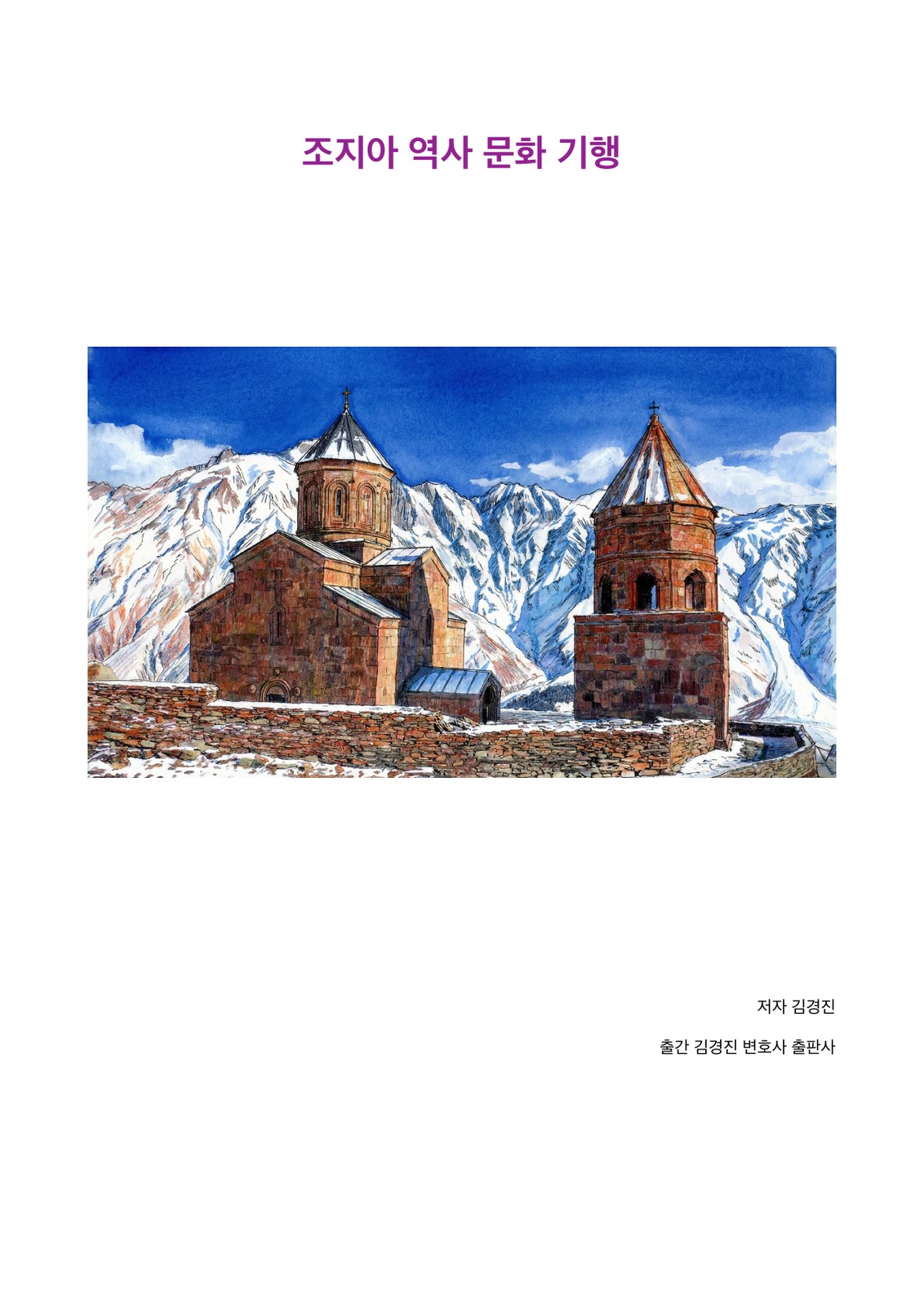
A Journey Through Georgia's History and Culture
Chapter 12: Longing for Europe and Disillusionment
Kim Kyung-jin
A. Acquisition of EU Candidate Status and its Abrupt Halt
On December 14, 2023, the European Council summit held in Brussels formally granted Georgia the status of EU candidate country. At the moment this decision was announced, a roar of cheers erupted in Freedom Square in Tbilisi. In a wave of intermingled EU flags and Georgian flags, people embraced one another. Since gaining independence from the Soviet Union in 1991, Georgians have regarded themselves as part of European civilization. Article 78 of the constitution even stipulated that 'all measures for European and Euro-Atlantic integration must be ensured.' Candidate status seemed like official recognition of that long-held aspiration.
Yet candidate status was a 'ticket of entry,' not 'crossing the finish line.' The European Commission presented Georgia with nine essential steps that must be implemented before advancing to the negotiation stage for membership. Strengthening judicial independence, establishing an anti-corruption system, improving electoral law, strengthening capacity to counter disinformation, and de-oligarchisation were among them. To put it plainly, the structure was 'congratulations, but now the real work begins.' The EU gave Georgia an opportunity while making its conditions clear.
The problem began in spring 2024. The ruling party 'Georgian Dream' reintroduced what was called the 'Law on Transparency of Foreign Influence.' The bill had been attempted once in 2023 but was withdrawn due to massive protests. The core of the bill was to require non-governmental organizations (NGOs) and media outlets receiving over 20 percent of funding from abroad to register as 'organizations pursuing the interests of foreign forces' and to subject them to strict surveillance.
Critics called this bill the 'Russian law.' Its structure was nearly identical to the 'Foreign Agent Law' that Russia introduced in 2012 to suppress civil society. Georgian civil society organizations, independent media, and human rights groups had long relied on support from Western foundations and international organizations. The moment you frame this connection as 'foreign agents,' you can brand all critical forces as 'anti-national.' Russia has done exactly that.
In May 2024, despite large-scale protests, the ruling party forced the bill through. The parliamentary vote was 84 to 11. President Salome Zourabichvili exercised her veto, but the parliamentary majority overrode it. The bill passed.
The EU response was immediate and firm. The European Commission declared that the law was 'incompatible with European core values.' The Venice Commission recommended repeal of the bill. In June 2024, the European Council concluded that Georgia's actions were 'jeopardizing the European accession path' and declared a de facto halt to the accession process. Budget assistance going directly to Georgia was frozen, and high-level political dialogue was suspended.
What is interesting here is the dual attitude of the Georgian government. The ruling party officially declared EU integration as the nation's top priority while simultaneously strengthening anti-Western rhetoric. Government officials circulated conspiracy theories about a 'Global War Party,' attacking the West. The claim was that the West was trying to drag Georgia into war with Russia. From the EU's perspective, this rhetoric created a fundamental trust problem that went beyond simple diplomatic friction.
Parliamentary elections were held on October 26, 2024. According to official results, 'Georgian Dream' won with 54 percent of the vote. However, opposition parties and international election observers reported widespread irregularities. The Organization for Security and Co-operation in Europe (OSCE) election monitoring mission cited issues including voter intimidation, bribery, and double voting. The European Parliament adopted a non-binding resolution on November 28 questioning the legitimacy of the election and calling for new elections.
By this point, candidate status had become essentially hollow. Of the nine conditions presented by the EU, Georgia had made progress on only three. The most critical challenges,anti-corruption, judicial independence, and improving the civil society environment,were assessed as having actually deteriorated. The hopeful mood of late 2023 had shifted to deep mistrust and crisis in less than a year.
The Georgian government framed the EU's conditional approach as 'violation of sovereignty' and 'interference in internal affairs.' Meanwhile, the EU maintained the position that candidate status itself is a conditional contract, and that democracy, rule of law, and fundamental rights are not optional courses but required subjects. As each side defined the other as 'political interference' or 'breach of commitment,' the conflict transcended a diplomatic issue and became an identity war within domestic politics.
The EU kept this position. As each side defined the other as 'political interference' or 'breach of commitment,' the conflict transcended a diplomatic issue and became an identity war within domestic politics.
This process feels cruel for a reason. The halt occurred in a situation where the vast majority of the Georgian people strongly supported European integration, that is, when 'public sentiment' and 'power's choice' diverged. According to polling, over 80 percent of Georgians supported EU membership. When politics breaks the people's compass, diplomacy becomes an identity crisis. Georgia found itself at the center of that crisis.
Meanwhile, questions were raised about the figure who effectively controls the ruling party 'Georgian Dream.' Bidzina Ivanishvili, a businessman who became a billionaire in Russia, founded the party in 2012 and has wielded influence over Georgian politics since. The view that he exercises real power without holding an official position is widely held. Critics argue that his Russian business background and connections influence Georgia's diplomatic course. The ruling party dismisses such claims as 'conspiracy theories.' Wherever the truth lies, this suspicion became a symbolic element representing the lack of transparency in Georgian politics.
As a result, acquiring candidate status was a symbolic achievement of Georgia's long-held European aspiration, but when the legal and institutional changes of 2024 and the ruling power's governance methods collided with the 'European standards' demanded by the EU, the euphoria of advancement was quickly cooled by the 'procedural freeze.' Georgia became a country that reached Europe's threshold and then stepped backward of its own volition.
B. The Shock of the 'EU Negotiation Freeze Until 2028' Declaration
On November 28, 2024, the statement made by Prime Minister Irakli Kobakhidze at a press conference is recorded as one of the most shocking diplomatic announcements in modern Georgian history. He stated 'Georgia will not place the beginning of EU membership negotiations on the agenda until the end of 2028.' He also added a message: 'We will reject all budget support from the EU.'
To understand why this statement was so shocking, you need to look at the context. 2028 is not a 'next quarter.' In political terms, it is enough time to skip through one full presidential term and one full parliamentary term. In a country like Georgia, where candidate status functions as a resource of legitimacy within domestic politics, a four-year freeze is closer to a choice of regime than a foreign policy.
The timing was also meaningful. This announcement came after the October 2024 parliamentary elections, which took place amid controversy, and right after the European Parliament adopted a resolution questioning the fairness of the election. It looked perfectly timed to serve as a counter-strike to EU criticism.
The government's logic went like this: The EU is 'blackmailing' Georgia by using 'negotiations' and 'aid' as leverage. Prime Minister Kobakhidze said 'we reject integration that treats us as a favor.' The claim that the West is pressuring Georgia to plunge into war with Russia was repeated. The so-called 'War Party' conspiracy theory.
From the EU perspective, this kind of framing was difficult to accept. Candidate status and membership negotiations are, after all, bundles of conditions. You cannot hold negotiations while ignoring democratic backsliding. On the November 28 announcement, the EU expressed 'deep regret' and made clear that Georgia's choice was a signal of deviation from the European path.
It was pointed out that this declaration also creates constitutional problems. Article 78 of the Georgian Constitution states 'constitutional bodies must take all measures to ensure full integration with the EU and NATO.' The government declaring that it would unilaterally freeze negotiations for four years could be interpreted as a direct violation of this constitutional obligation. The opposition and civil society called this a 'constitutional coup.'
Economic impacts followed. The EU suspended 123.3 million euros in direct financial support to the Georgian government. Support worth 30 million euros through the European Peace Facility was also halted. In 2025, no new EU support was provided to Georgia. The World Bank and the International Monetary Fund pointed out that geopolitical tensions and domestic political crisis are downside risk factors for Georgia's economy.
Downward pressure was placed on Georgia's currency, the lari (GEL). Investor and consumer confidence was shaken. Businesses and young people who had expected an economic leap through EU membership fell into despair. For many young people, EU membership was more than simple political integration; it was the only escape route to access the European labor market and gain opportunities for better lives.
The news of 'discussion halt until 2028' was like having the ladder of hope kicked away from beneath them.
In January 2025, the EU Council adopted additional measures. The decision to suspend visa exemption benefits for Georgian diplomats and holders of courtesy passports was one such move. This was interpreted as a direct sanction against the Georgian government's democratic backsliding. By September of the same year, nineteen EU member states had completed domestic procedures to implement this decision.
The United States also took action. Sanctions including visa restrictions on senior Georgian officials who had undermined democracy were reviewed. Concern grew in Washington that Georgia, a partner of the West for decades, was rapidly changing its geopolitical course.
Protests erupted across Georgia immediately after the announcement. Tens of thousands gathered in front of the parliament in the capital, Tbilisi. By mid-December, it had escalated to a crowd of 100,000. The protests were not simply 'pro-EU demonstrations.' They were politics rooted in a sense of betrayal: 'The government has betrayed the nation's long-term goal.' President Salome Zourabichvili condemned the government's decision as 'treason.'
At this point, a frame war unfolded between government and citizens. The government tried to shift the focus by turning it into an emotional dispute about 'who is bullying whom.' The language of substantive reform,judicial independence, anti-corruption, press freedom, and civil society environment,was replaced by moral stigmatization. Pro-West and anti-West, patriotism and betrayal, sovereignty and dependence. This kind of binary thinking is the easiest way to make policy debate impossible. Human society has always liked the easy path.
As the calendar moved into 2025, the freeze declaration transformed from 'talk' into a 'policy package.' When the Georgian parliament passed legislation seeking to place foreign grants under government approval, further restricting civil society space, this trend continued. This aligns exactly with the direction the EU has been criticizing,democratic backsliding. The 2028 freeze is not a one-time statement but becomes a symbol of a trajectory where the style of power operation itself diverges from EU standards.
On one hand, the Georgian government showed signs of trying to strengthen economic relations with China and Russia. Analysts pointed out that there is a risk of the country becoming a haven for evading Western sanctions. Some assessments called it a gamble that threatens the nation's long-term security and prosperity.
'Freeze until 2028' is not simply about delayed EU membership. It was a signal that Georgian politics had downgraded European integration from a 'national consensus' to a 'factional choice.' From that moment on, Europe becomes not a destination but a battlefield. The anger displayed by Georgian society was rooted not just in 'love for the EU.' It came from the sensation that 'the future of my country has been put on hold against my will.'
Concerns about long-term impacts grew. The constitution's EU-oriented provisions faced a threat of nullification. Some analyses suggested that Russia's de facto integration of South Ossetia and Abkhazia, territories Russia occupies, could accelerate. There were also interpretations that Georgia was signaling a complete return to Russia's sphere of influence by severing relations with the West.
This declaration is ultimately recorded in history as an 'elite coup' by the ruling faction, a symbolic event of European aspirations gone unfulfilled.
C. The Flag Revolution and Z-Generation Resistance
'Flag Revolution' is not a formal political science term. It is closer to a nickname that compresses scenes repeatedly witnessed on Georgian streets in 2024. EU flags appeared overwhelmingly at major protest sites, and the younger generation raised that symbol less as a 'diplomatic choice' and more as a 'way of life',so the flag was a message, not a decoration.
To understand this phenomenon, we must first examine what the Z-generation was responding to. What they responded to was not the EU itself. It was 'the way the path to Europe was being blocked.'
The direct spark for the spring 2024 protests was the foreign influence bill. The people who took to the streets, especially younger crowds, saw the law as operating through 'enforced silence' rather than 'transparency.' Civil society organizations, independent media, and human rights groups had long relied on support from Western foundations and international organizations. The moment this connection is framed as 'foreign agents,' all critical forces can be turned into 'non-nationals.' It is widely noted that this logic resembles Russian-style governance repertoire.
The Z-generation was born between 1997 and 2012. They did not experience the Soviet era and grew up enjoying a free internet environment and Western culture. For them, Europe was not a choice but a basic premise of life. Raising both the Georgian flag and the EU flag, rather than a party flag, was their way.
From April to May 2024, demonstrations continued for approximately fifty days on Rustaveli Avenue in Tbilisi. Protests persisted despite tear gas and rubber bullet suppression. They reignited after the October parliamentary elections and continued for seventeen consecutive days after the November 28 freeze announcement. There were days when up to 200,000 people gathered.
The Z-generation's protest methods revealed several characteristics.
First, the preemption of identity politics. Before the government could use 'pro-Western' as an attack frame, the Z-generation preemptively seized it with 'yes, we want Europe.' It was attack, not defense. The EU flag was redefined as a symbol of 'my chosen norms,that is, rule of law, freedom, freedom of movement, educational opportunity',not 'worship of foreign powers.'
Second, creative and persistent resistance. Through smartphones they shared protest situations in real time. TikTok and Instagram were the main mobilization tools. Even before police tear gas and water cannons, they continued dancing or singing in peaceful resistance. They adhered to the principle of nonviolence. Sit-ins, singing, and all-night vigils were the primary methods.
Third, fear management and persistence. Protests brought the risk of suppression and confrontation. Instances of violence and intimidation against journalists and protesters were documented by international organizations and human rights groups. Yet
younger people shared a sense of history that "if we step back, the country will revert." This is a psychological structure that tends to lead to sustained mobilization rather than one-time anger.
Fourth, the expression of distrust toward political elites. Gen Z's street politics appeared not as loyalty to a specific opposition leader but as a warning against "institutional politics in general." The message "what we want is not a specific party but direction" could make the opposition uncomfortable. Mobilization is easy; organization is hard. Yet it is simultaneously uncomfortable for those in power. A question about direction always demands responsibility.
The government deployed special forces to suppress the protests. Hundreds of students and activists were arrested. In June and July 2024, eight opposition leaders received prison sentences of seven to eight months and were barred from holding public office for the next two years. Criticism arose that the judicial system was being used as a tool for political retaliation.
According to reports from international organizations, beatings, torture, and harsh treatment of detained protesters were practiced widely. Police attacked not only protesters but also journalists covering the scene and damaged their equipment.
Yet as suppression intensified, even the parent generation joined the protests, and the flames of resistance grew larger. Cascading strikes and resignations by university professors, diplomats, and civil servants followed. Student strikes were organized at forty universities. Youth organizations like Da oni and Atinati came to the forefront.
Interesting phenomena also occurred. Some protesters held up the pirate flag from the Japanese manga "One Piece." Fan culture symbolizing freedom and anti-authoritarianism merged with political resistance. It was a scene displaying Gen Z's characteristic global sensibility.
The "flag revolution" spread into larger flames following the legitimacy crisis after the October 2024 general election and the declaration of a "2028 freeze" on November 28. In a situation where controversy and mistrust over the election results had already accumulated, the freeze declaration poured fuel on the feeling that "the authorities had abandoned the long-term goals of the majority of citizens." Subsequent protests became not merely opposition to a bill but resistance against the "forced alteration of the national path."
The ruling party tried to define the protests as "an attempt at revolution" or "manipulation by outside forces." Such framing easily becomes a tool to justify strengthening public authority and regulatory legislation. The protesters, meanwhile, visualized through flags the message that "we are not an outside force but the people." Ironically, the more flags appeared, the simpler the debate became. This is because the failure of complex institutional reform gets reduced to "Europe or not." When politics simplifies complex problems, what it gains is mobilization, and what it loses is resolution.
Global solidarity also formed. Messages of support came from Ukraine and Poland. Georgian protesters also waving Ukrainian flags was a symbol of solidarity in fighting against Russian invasion.
The meaning of Gen Z resistance can be read on two levels. One is the visualization of generational aspirations toward European integration. The other is an early warning system for signs of democratic backsliding. The EU flag is a diplomatic symbol, but what they are actually holding is a marker of the fear that "once we slip here, it will be hard to return."
Georgia's Gen Z did not demand a "political choice." They demanded "prohibition of political retreat." This is the more fundamental demand. Their resistance was recorded as the largest youth movement since the 2003 Rose Revolution and became evidence that Georgian democracy had not yet been completely extinguished.
The image of a young woman not releasing the EU flag even before tear gas and water cannons became the symbol of this "flag revolution." It was a scene that showed the whole world the firm resolve of the younger generation about where Georgia's future must lie.
D. President Salome Zourabichvili's Solitary Struggle
The position of President Salome Zourabichvili in 2024-2025 Georgian politics is unique. While at the center of power, she struggles to control the core decisions of power, and while being the face of the state, the state's steering wheel is held in another's hands. Thus her struggle is less a popular heroic narrative than a battle to endure within institutional limits using only "veto power, voice, and symbolic capital."
Zourabichvili was born in Paris in 1952. She is a descendant of an exiled Georgian noble family. She built a career as a French diplomat and later renounced French citizenship to return to Georgia. From 2004 to 2005 she served as minister of foreign affairs in the government of Mikhail Saakashvili. In the 2018 presidential election she was elected with 54 percent of the vote with the support of the "Georgian Dream."
However, around 2021 she broke with the ruling party. As the government pivoted increasingly toward authoritarianism and a pro-Russian direction, she began speaking out publicly against it.
Her "solitude" is not simply a matter of a lonely temperament. It is structural.
First, the constraint of constitutional role. Georgia has a system with strong parliamentary cabinet characteristics. The president's powers are limited. A parliamentary majority can override the president's veto. The foreign influence bill issue in spring 2024 is emblematic. Zourabichvili invoked her veto, characterizing the law as unconstitutional and an obstacle to Georgia's European path. But the ruling party had the power to overturn it. She could cry "Stop!" but not press the "pause" button.
Second, isolation in party politics. The more forcefully the president advocates the European line, the easier it is for the ruling party to cast her as being "with the opposition." After the freeze announcement at the end of 2024, the president strongly criticized the government's decision and appeared to align with street protesters. At this moment the president risks being framed not as a symbol of "national unity" but as one axis of "national division." Yet simultaneously, if she falls silent, criticism follows that "the president acquiesced to the nation's change of direction." No choice brings praise. That is politics.
Third, asymmetry in international relations. The EU and Western partners must negotiate with Georgia's official government. Yet they must simultaneously express concern about democratic backsliding. In this process the president can serve the West as evidence that "within Georgia there exists an institutional voice seeking to defend Europe." Some in Western political circles issued messages of support for the president. The EU also expressed regret at Georgia's government decisions and urged a return to course. Yet in state-to-state relations the key partners are the executive and the parliamentary majority. While the president's statements can create international sympathy, they cannot force immediate policy change. So she remains on the international stage in a position that is "strong symbolically but weak in enforcement capacity."
Still, the points at which Zourabichvili's struggle holds meaning are clear.
First, preservation of the "legitimacy" of the European line. When the government moves to freeze EU procedures and tighten civil society space, the president's open statement of opposition creates a record that "all of Georgia did not agree to go in that direction." In political struggle even an immediate loss leaves a record that becomes a weapon in the next struggle.
Second, a breakwater role for civil society. On matters like the foreign influence bill, the president's veto was ultimately overridden. Yet in that process it had the effect of internationally raising awareness of the law's dangers and domestically blocking "normalization." Even a negated veto at least shatters the narrative that "this is a harmless law passed through normal democratic procedure."
Third, the connection between the streets and institutions. Georgia's protests are both "anti-government" and "pro-European." When the president does not completely ignore the language of the streets, street rage can be drawn to some degree into institutional channels rather than rushing toward wholesale rejection of the system. Of course this connection is a double-edged sword. The ruling party can attack it as "presidential political interference," and the opposition can consume the president only as a "mobilization resource." Yet there are simply people who believe connection better than complete rupture. Humans generally come to understand the value of connection only when standing before a cliff.
Zourabichvili spearheaded a political agreement called the "Georgian Charter" to unite the fractured opposition and civil society. The charter contained the reform tasks pro-European opposition parties would need to carry out if they won the 2024 general election and a roadmap for returning to EU membership procedures. Through this charter she sought to guide opposition parties to cooperate under a single goal and to peacefully replace the government through elections, returning Georgia to the European path.
The president sought to use her limited authority to the fullest to prevent government unilateralism. She confronted judicial persecution by pardoning two opposition politicians imprisoned in connection with 2024 protests. She wielded veto power or maintained critical positions on bills or appointments that would compromise judicial independence.
The ruling party attempted impeachment, denouncing her as "an agent under foreign influence." An impeachment attempt occurred in October 2024 but failed. The government sought to obstruct the president's diplomatic activities or limit her powers through the constitutional court. Petty retaliation followed, including budget cuts.
With her term ending in December 2024, President Zourabichvili remained in the presidential palace continuing her resistance, saying "I will not transfer power to a successor chosen by an illegitimate parliament." She strongly criticized the government's decision as a "constitutional coup."
Through interviews with foreign media including CNN, she informed the international community about Georgia's situation, closely communicated with EU leaders, and appealed for support for Georgian citizens. She was invited to speak before the European Parliament in December 2024 and revealed that "Georgian Dream is an agent of Russia."
Each time protests intensified, she greeted citizens in the square before the palace, encouraging them that "your journey to Europe will not stop." The waves of flags from protesters visible from the presidential palace in Tbilisi gave her strength, yet simultaneously the weight of responsibility she bore before Europe's door closed until 2028 pressed more heavily upon her.
Even into 2025, assessments continued that Georgia's relationship with the EU had grown rougher rather than restored. Parliament showed moves to more stringently control foreign funding and civil society activities, and the EU warned that this direction would undermine Georgia's own EU aspirations.
Zourabichvili's struggle is not a narrative of victory. It remains evidence that even when a nation suddenly changes course, the voice of opposition does not completely vanish. In international politics, evidence sometimes endures longer than borders.
Despite being a president under a parliamentary cabinet system with limited real power, she transformed the presidential palace in Tbilisi into a fortress of democracy. Despite facing impeachment threats and political isolation by the ruling party, she became a spiritual pillar for street protesters.
Salome Zourabichvili's struggle was not the resistance of a president losing power. It was Georgian democracy's desperate thrashing to turn the nation's steering wheel westward again. Her solitary struggle was an ember of hope showing that Georgian democracy had not yet been completely extinguished.
As of 2025, even amid threats of renewed impeachment, she awaits historical judgment, throwing down her final stake in the struggle for Georgia's democratic recovery. For Gen Z protesters she became a symbol. It was the solitary struggle of one woman against a massive ruling party, yet for Georgian citizens it became a beacon symbolizing hope for a "European Georgia."
Kim Kyung-jin
Attorney · Former Member of the National Assembly · AI Policy Researcher
© 2026 Kim Kyung-jin. All rights reserved.