AI Library
Books for Reading AI
Choose a book, then read it in order from the table of contents.




























[AI Library] Appendix 1: Georgia History Timeline
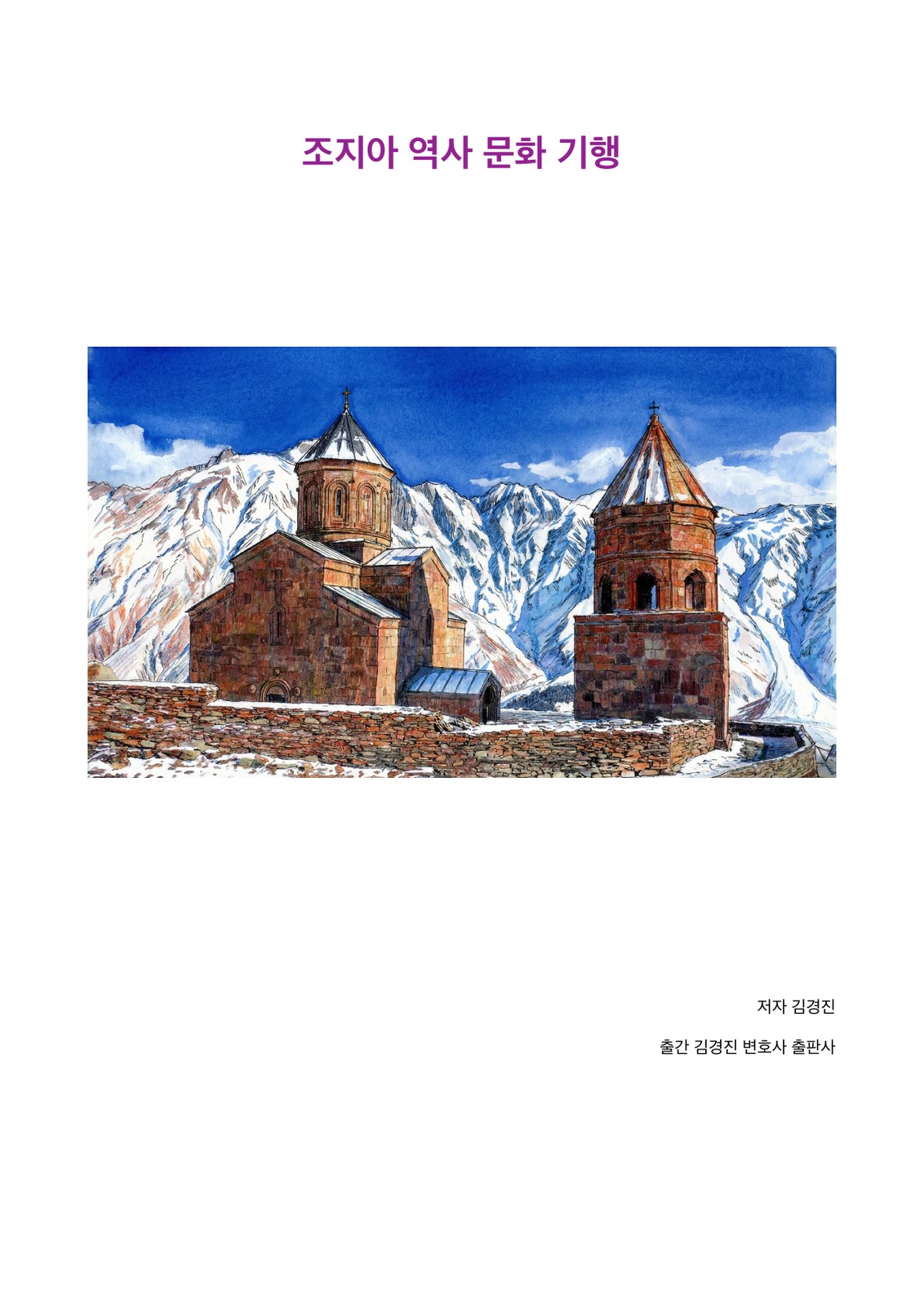
A Journey Through Georgia's History and Culture
Appendix 1: Georgia History Timeline
Kim Kyung-jin
Appendix
A. Prehistory and Antiquity: The Dawn of Human Civilization and the Land of the Golden Fleece
Human footprints first appeared on Georgian soil 1.8 million years ago. A skull fossil discovered in the village of Dmanisi, approximately 85 kilometers southwest of Tbilisi, confirms this finding. Among the oldest traces of early humans who departed Africa and walked into Eurasia, scholars named this fossil's subject 'Homo erectus georgicus.' This passage reveals that Georgia was not simply a travel destination but a crossroads of human migration.
Around 6000 BCE, traces of the world's earliest wine-making were discovered in the Kvemo Kartli region of southern Georgia. Archaeologists detected grape seeds and tartaric acid in pottery shards, earning Georgia the title 'Cradle of Wine.' Eight thousand years ago, when farmers in this land crushed grapes and sealed them in clay vessels, they could not have known what gift they were bestowing upon human civilization.
Around the 13th century BCE, the kingdom of Colchis took root in western Georgia along the Black Sea coast. In Greek mythology, this was the destination where the hero Jason and the Argonauts sailed in search of the Golden Fleece. Myth reflects historical fact. The Colchians of that time possessed the technology to soak fleece in river water and filter out gold dust, and this is believed to be the origin of the Golden Fleece legend. It is said that the royal palace of Colchis contained a fountain that spouted wine, which suggests the depth of this land's connection with the grape.
In eastern Georgia, the kingdom of Iberia flourished around the 4th century BCE. Though it shares a name with Spain's Iberian Peninsula, it was an entirely different region. In 302 BCE, when Pharnavaz I ascended to the throne, the Pharnavazid dynasty began, and according to tradition, the Georgian script was created at this time. The legacies of these two kingdoms,Colchis to the west and Iberia to the east,would later become the roots of a unified Georgian kingdom.
In 65 BCE, Rome's Pompey launched an expedition to the Caucasus. Iberia became subordinate to Rome, and Colchis was incorporated as the Roman province of Lazicum. For the following centuries, Georgia served as a buffer zone between Rome and the Persian Empire. Thus began the fate of having to survive wedged between great powers.
B. The Adoption of Christianity and the Medieval Golden Age: Identity Forged by Faith
In 337 CE (or thereabouts), a decisive turning point arrived in Georgian history. A woman named Nino from Cappadocia brought Christianity to the Iberian kingdom. When King Mirian III was baptized and proclaimed Christianity the state religion, Georgia became the second nation in the world to adopt Christianity, after Armenia. Saint Nino is said to have carried two grapevine branches woven in the shape of a cross, a symbol perfectly fitting for one who brought Christianity to the land of wine.
In the 5th century, King Vakhtang Gorgasali discovered hot springs while hunting pheasants. He decided to build a new capital there, and named it Tbilisi, taking the name from 'Tbili,' which means 'warm' in Georgian. Even today, hot waters rise in the sulfur springs district of Old Tbilisi, the same waters into which the king's pheasant is said to have fallen.
The 11th through early 13th centuries marked Georgia's golden age. David IV (r. 1089-1125) earned the epithet 'the Builder.' He freed Georgia from Seljuk Turkish rule, achieved a great victory at the Battle of Didgori in 1121, and reunified the realm. He founded the Gelati Academy to encourage learning, and at the Ikalto Academy, even wine-making was taught.
Queen Tamar, great-granddaughter of David IV (r. 1184-1213), presided over the apex of Georgian history. During her reign, the territory of the Georgian kingdom stretched from the Black Sea to the Caspian Sea, and literature and art flourished. It was during this period that the great poet Shota Rustaveli wrote 'The Knight in the Panther's Skin.' The cave city of Vardzia was also built during Queen Tamar's reign. That Georgians today call Tamar 'Queen' rather than 'King' is an expression of respect acknowledging that her rule was second to no male monarch while preserving her identity as a woman.
C. The Dark Ages and Division: A Procession of Invaders
In the 1220s, Mongol cavalry crossed the Caucasus. When Tbilisi fell in 1226, it is said that 100,000 Christians were martyred. The golden age came to an end, and Georgia became a tributary state of the Mongol Empire.
In the late 14th century, Tamerlane's army invaded Georgia seven times. His destruction was more thorough than the Mongols'. As the 15th century began, the Georgian kingdom fragmented into several smaller kingdoms and principalities. After the unified kingdom formally dissolved in 1490, the west and east fell under the influence of the Ottoman and Persian empires, respectively.
From the 16th to 18th centuries, Georgia walked a tightrope between two Islamic superpowers. The western region, under Ottoman influence, saw some nobles convert to Islam, while the east labored under Persian pressure. Yet most Georgians did not abandon the Orthodox faith. They fled to mountain regions or built churches like fortresses and endured. Today, the towers of Svaneti stand as a legacy of that era.
D. The Shadow of the Russian Empire and the Soviet Era
In 1783, King Erekle II of eastern Georgia signed the Treaty of Georgiyevsk with the Russian Empire. It was a choice made to gain protection from the Ottomans and Persians. But in 1801, Russia violated the treaty and forcibly annexed Georgia. The Bagrationi dynasty was deposed, and the Georgian Orthodox Church lost its autonomy.
Under Russian rule in the 19th century, Georgia experienced both the light and shadow of modernization. Roads and railways were built, and Tbilisi grew into an administrative center on the empire's frontier. European-style buildings rose, and theaters and opera houses opened. Yet Russian language use was imposed, and Georgian culture faced suppression. In response, intellectuals like Ilia Chavchavadze led a movement to recover national identity.
In 1918, amid the chaos of the Russian Revolution, Georgia briefly reclaimed independence. The Georgian Democratic Republic was declared, and a progressive constitution guaranteeing women's suffrage was enacted. But the dream lasted only three years. In 1921, the Red Army invaded, and Georgia was forcibly incorporated into the Soviet Union.
The Soviet era (1921-1991) left a complex legacy. On one hand, literacy campaigns, industrialization, and educational expansion took place. On the other hand, there were Stalinist purges, religious persecution, and restrictions on Georgian language use. Ironically, Stalin himself was from Gori, Georgia. This is why Georgians today harbor complicated feelings toward the dictator.
E. Independence and the Modern Era: From the Rose Revolution to Today
On April 9, 1991, with the Soviet collapse, Georgia declared independence once again. But the path after independence proved difficult. Separatist civil wars erupted in Abkhazia and South Ossetia, and the economy teetered on collapse. In the 1990s, Tbilisi had electricity only a few hours each day.
In November 2003, citizens protesting electoral fraud occupied parliament while holding roses. This event, in which power changed hands without a drop of blood being shed, is called the Rose Revolution. The new government implemented sweeping anti-corruption reforms and restructured the police force entirely. The reason Georgia is now perceived by travelers as a safe country stems from these changes.
In August 2008, a five-day war with Russia erupted. In this conflict over the South Ossetia issue, Georgia lost control of approximately 20% of its territory. Russian troops remain stationed in Abkhazia and South Ossetia, and the occupation line continues to shift in a 'creeping border' phenomenon.
In 2024, Georgia acquired the status of a European Union candidate country. Yet controversy surrounding the passage of a 'foreign agent law' and large-scale protests continue. Between aspiration toward Europe and the shadow of Russia, Georgia's choice remains in progress. The story of this small nation, which throughout 5,000 years of history has always sought survival between great powers, continues to be written even today.
Kim Kyung-jin
Attorney · Former Member of the National Assembly · AI Policy Researcher
© 2026 Kim Kyung-jin. All rights reserved.