Speaking & Consulting

1. Overview of AI Utilization Courses

It was in 1950 that Alan Turing posed the question of whether machines can think. Fast-forward more than 70 years, and college students are now writing reports, preparing for interviews, and structuring thesis outlines by conversing with machines. The question has changed. It is no longer about whether a machine can think, but how we will think together with this machine.

This course explores that very method. The target audience includes students who do not know how to code, students who find the term ‘Artificial Intelligence’ itself unfamiliar, and students who have tried ChatGPT but haven’t moved past simple copy-pasting.

The first step of the course lays the foundation. We trace the flow from the Turing Test through AlphaGo to generative AI, and examine the structure of how machine learning and deep learning turn data into intelligence. We also learn the differences in character among tools like ChatGPT, Claude, and Gemini. Rather than asking which tool is better, the judgment of which tool is right for which situation is more important.

The next step is practical application. We start by writing a single email and expand the scope to gathering materials for academic papers, creating presentation slides, editing YouTube videos, and automatically generating meeting minutes. We manually go through the process of organizing research materials with NotebookLM, making slides with Gamma, and adding subtitles to videos with Vrew. One principle permeates here: AI is just a hammer; building the house is up to the human.

After that, the course branches out by major. Law students bring AI into case reviews, business students into market analysis, medical students into data interpretation, and engineering students into design assistance. Job preparation is not left out either. We check one by one the areas where AI can intervene, from resume writing and cover letter strategies to mock interview practices.

The final step looks further ahead. We discuss the reality of AI changing jobs, causing copyright disputes, and shaking the very definition of humanity. We also examine the outlines of global regulations like the EU AI Act. The course concludes with students presenting the results of solving problems in their own fields using AI as their final project.

What remains with the students after this course is not the usage manual of a specific tool. It is the habit of boldly reaching out when a new tool emerges, and the attitude of not letting go of one’s own judgment in front of the outcome of that tool.

2. National Strategy and Governance

It is no exaggeration to say that AI is redesigning the state. The evidence that it is not an exaggeration is contained in these three books.

“The AI Administrative Revolution” looks into the fields of government in 16 countries. China has started managing AI used by private companies by creating an algorithm registration system, and the European Union has established a system to classify AI according to risk levels through a law called the AI Act. The United States continues decentralized experiments moving at different speeds from state to state while launching a federal-level AI initiative. What this book asks is clear: the fact that while the Korean government is still administrating on paper, the world has begun to run the state on data.

“The AI Hegemony War” raises the gaze higher. The essence of the technological competition between the US and China is not about semiconductor chips, but sovereignty. It tracks why the concept of Sovereign AI has emerged, why a basic law on AI is necessary, and why unfamiliar words like robot tax and AI dividend are rising to the policy agenda. This book has a unique axis just for Korea: ultra-low birth rates. In a country with a shrinking population, AI becomes not a choice but a condition for survival. When a society lacking labor forces tries to fill the void with technology, what kind of architecture is needed? This book attempts to answer that question head-on.

“The AI Election” touches the heart of democracy. Elections are a system that relies on the judgment of voters. But what if AI could sway that judgment? Analyzing voter tendencies, designing public opinion, and adjusting candidate images through algorithms are already happening. In an era where a single deepfake video can overturn an election, how can we protect the reliability of information? This book is closer to a warning than an answer.

The core of the lectures running through these three books is this: AI is not a corporate product but a foundational technology for running a country. The three pillars of the state—administration, legislation, and elections—are all intersecting with this technology, and the manner of that intersection differs by country. The course focuses on comparing these differences and making the students judge for themselves which path Korea should take. It is not a course that provides the right answers; it is a course that lays out the map.

3. Defense and Security

The grammar of war is changing. Fighter jets without humans in the cockpit fly in the sky, drone swarms form formations on their own, and AI that analyzes battlefield data in real-time hands the commander the ingredients for judgment. Three books cover this scene of change.

“AI Fighter Jet, AI Air Force” starts in the sky. The history of unmanned aerial vehicles is longer than expected. However, with the integration of AI, their nature has changed. Drones of the past were remotely controlled; humans looked at screens and pressed buttons. Today’s AI fighter jets make their own judgments. They predict enemy maneuvers, calculate evasion routes, and determine when to attack. Machines have entered an area that human reaction speeds cannot keep up with. Tracing the trajectory of this technology, the book deals with the future of the pilot profession and the restructuring of air force strategy.

“PALANTIR: War Surveillance AI” looks behind the battlefield, not above it. The name of the company Palantir comes from Tolkien’s novel—a crystal ball that sees far. It lives up to its name. The company’s technology gathers vast amounts of data in real-time to allow an entire battlefield to be viewed at a glance. AI handles the work of combining satellite imagery, communication records, social media, and drone footage onto a single screen. The problem is that this technology is not only used on the battlefield. When surveillance technology combines with power, what happens? This book does not avoid that question.

“The AI Defense Revolution” paints a picture of defense as a whole, including the skies and behind the scenes. It synthesizes the trend of AI seeping into all military domains: land, sea, air, cyber, and space.

This type of lecture does not stop at technical explanations. The core question is ethics. Can a machine make the decision to kill a human? Who bears the responsibility for that judgment? The international debate surrounding Lethal Autonomous Weapons Systems (LAWS) has yet to reach a conclusion. The course shows this unresolved state as it is, simultaneously highlighting the possibilities and limitations of the technology.

4. Faces of the Era

Technology is not an abstract force. It is born from someone’s decision, someone’s obsession, and someone’s failure. Two biographical books show those concrete faces.

“Sam Altman Biography” is the story of the man who brought ChatGPT into the world. Sam Altman, the founder and CEO of OpenAI, dropped out of Stanford, passed through the role of president at the startup accelerator Y Combinator, and stood at the center of AI. What is interesting about this book is not his success story. It is the commotion of 2023 when he was fired by the board and returned in five days, the conception of the $100 billion Stargate project, and his almost religious conviction toward the goal of Artificial General Intelligence (AGI). Following the trajectory of one human being, one can see where this technology is heading. Reading the figure of Altman is reading the inner workings of the AI industry.

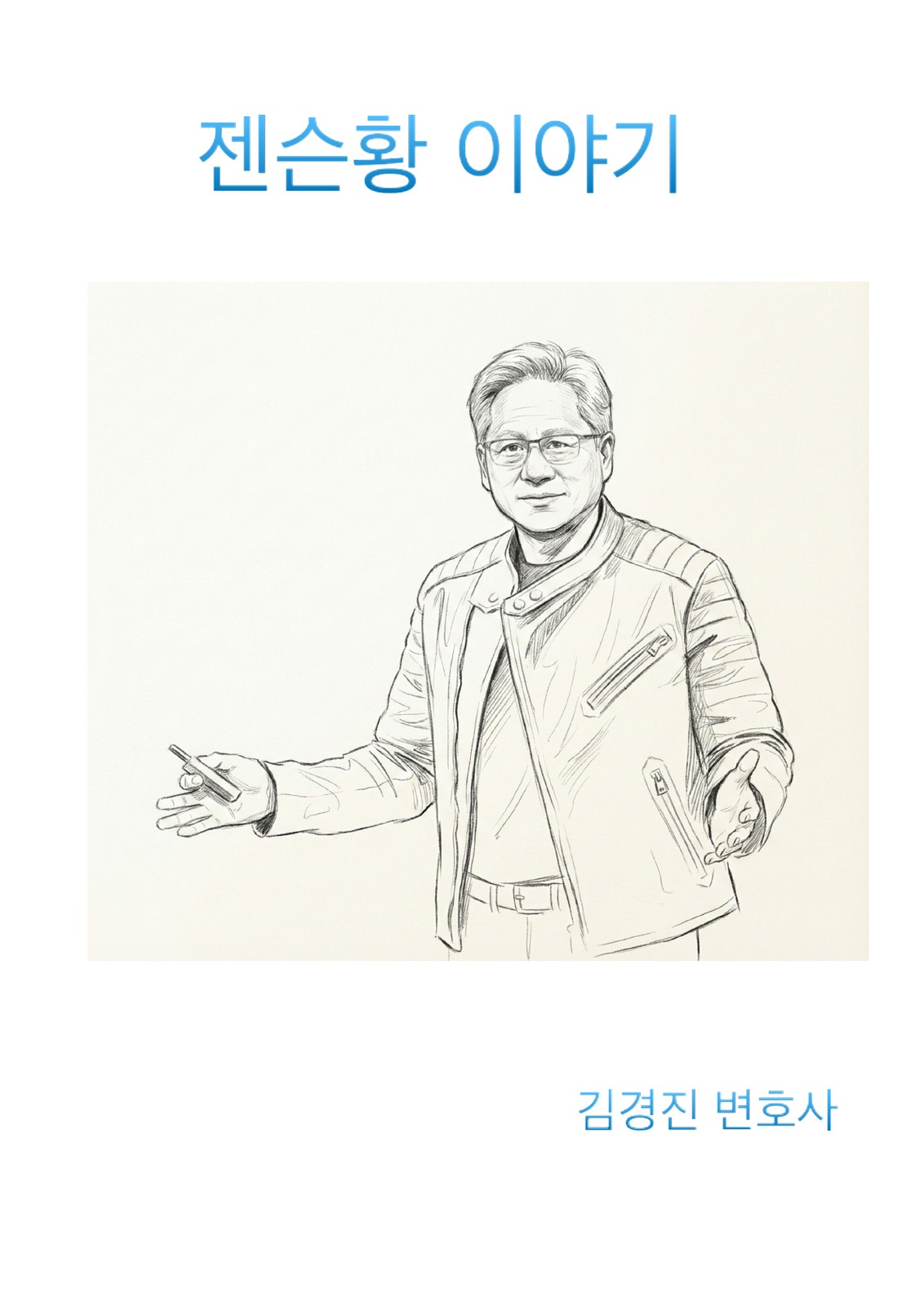
“The Story of Jensen Huang” is a figure of a different texture. A boy who was born in Taiwan and moved to the US at the age of nine built the world’s most valuable semiconductor company. This is Jensen Huang of NVIDIA. There is no glamorous beginning to his resume. It started with making a business plan with his co-founders at a Denny’s restaurant. How a company that made gaming graphics chips became the core infrastructure company of the AI era—this book pinpoints those moments of transition. He read the rise of deep learning earlier than others in 2012, and bet the future of the company on the judgment that GPUs would become the standard for AI computing. It was a gamble where the company would have disappeared if he had been wrong. He was right.

The purpose of the lectures covering these two figures is not to deliver heroic tales. It is to show how much of a change in direction an individual’s judgment can make within the massive flow of the technological revolution. Altman is the one who believed in the potential of AI and pushed forward, while Jensen Huang is the one who built the hardware to physically implement that potential. Software and hardware, vision and execution. The current AI era opened at the intersection of these two axes. The lecture focuses on cultivating an eye for reading that intersection.

5. Law, Ethics, and the Boundaries of Humanity

As AI spreads rapidly, there is something that follows slowly. It is the law. And there is something even slower than the law: the way we define our existence as human beings. Three books address these slow areas.

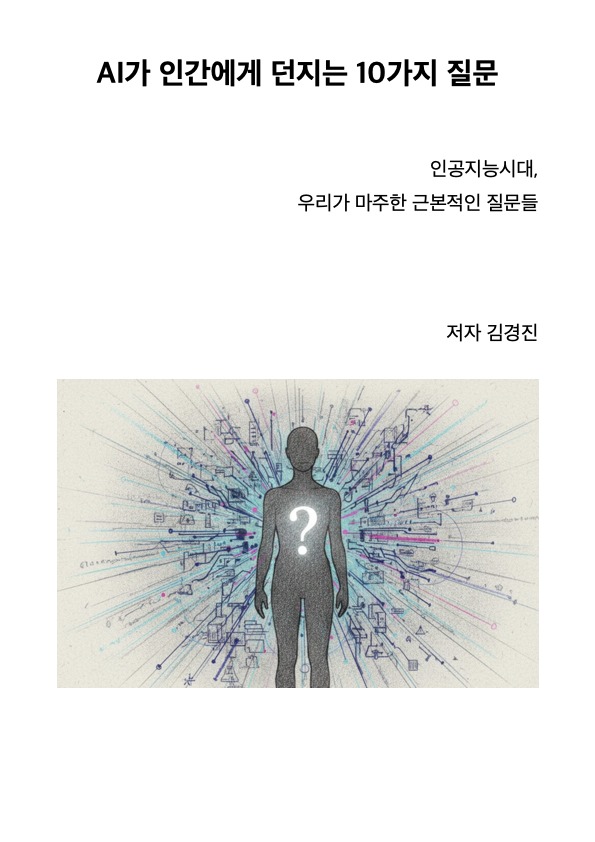
“10 Questions AI Thinks to Ask Humanity” is, as the title suggests, a book of questions. When a video created by a deepfake holds more persuasion than the truth, what is the truth? When AI makes a more accurate diagnosis than a doctor, what is trust? When an algorithm determines hiring, what is fairness? Each of the ten questions becomes a lecture topic. The choice of this book is impressive: it does not provide answers. It is structured to hold onto the questions that tech-optimists skip over, making the students wrestle with them themselves.

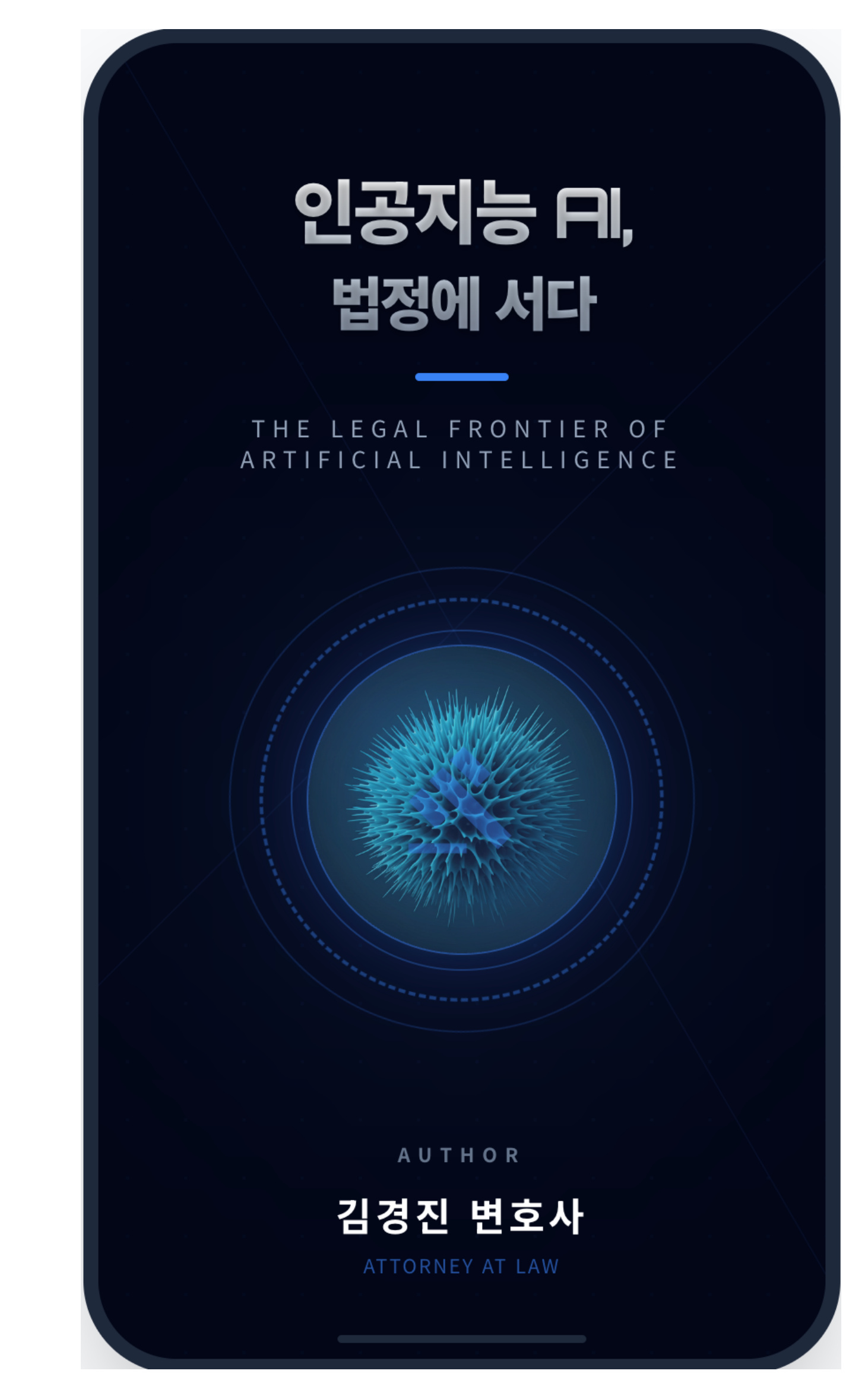
“Artificial Intelligence AI, Standing in Court” carries a weight determined by its author’s background. It is an AI legal book written by someone who worked as a prosecutor for 13 years. The era in which AI analyzes evidence, suggests sentencing, and writes draft judgments is coming. In some US courts, recidivism risk is already calculated by AI. The problem is who takes responsibility when the algorithm harbors bias. Does the defendant have the right to know the basis of the algorithm’s judgment? Can the defense attorney cross-examine the algorithm? Questions that existing legal systems cannot answer are surging into the courtroom. This book points out these points of collision one by one.

“The People Who Read the Brain” touches the boundary line itself. Brain-Computer Interface (BCI) technology makes it possible to control machines just by thinking. Elon Musk’s Neuralink has started clinical trials planting chips into human skulls. The scene of a paralyzed patient moving a cursor just by thinking is moving. But what if that technology entered the brain of a healthy person? When storing memories, controlling emotions, and augmenting intelligence become possible, is the person at that time still the same person? This book re-asks philosophy’s oldest question, “What is a human being?”, in the language of the latest technology.

This type of lecture is not about transferring information, but an exercise in thought. It is not about memorizing legal provisions, but cultivating an eye to capture the moments when technology exposes the empty spaces of the law. It practices the attitude of facing straight-on—without evading—the points where the definition of humanity is shaken.

6. Practice and Education

While the previous categories build frameworks of thought, this category makes you move your hands.

“Nano Banana Pro Introduction” is a practical guide dealing with image generation tools based on Google’s Gemini. The experience of creating an image with a single line of prompt is astonishing when encountered for the first time. When you manually experience the process of text becoming a picture, the term ‘generative AI’ finally resonates. This book guides you through using the tool while simultaneously showing the reality of the barrier to creation being lowered. Even without being a professional designer or having studied art, you can now project the scenes in your head onto a screen.

“AI Classroom: Grades Change” enters the educational scene. The ways AI intervenes in learning are manifold. It analyzes students’ weaknesses to create tailored questions, finds patterns in incorrect answers to steer repetitive learning, and serves as a foreign language conversation partner. What this book deals with is not a list of technologies, but changes in achievement. It shows through concrete examples that even with the same amount of study time, the results can be different, and what makes that difference is the way AI tools are utilized.

There is a commonality between the two books: the barrier to entry is low. You can start even if you don’t know coding and don’t understand the principles of AI. This type of lecture capitalizes on that point. In the first class, all students try generating an image. You write a prompt, look at the result, fix the prompt, and look at the result again. Through this repetition, a sense of conversing with AI emerges.

In the latter half of the course, we directly experiment with AI as an educational tool. We have the AI create exam questions for the students’ own majors, and students self-evaluate the quality of those questions. We utilize AI voice modes for foreign language learning and compare how it differs from existing learning methods. Experience comes first; analysis comes after.

What this type of lecture aims to convey is not the superiority of technology. It is the sensation of the hand holding the tool. Someone holding a hammer for the first time is clumsy at driving a nail. After driving ten nails, you get the hang of it. AI tools are no different. You only know by using them.

7. Lecture Cases

Since November 2024, I have conducted a total of 5 workshops at the Korea University Maritime Law Research Center and Korea University Business School, and handled two consecutive training sessions on the theme of generative AI and data analysis tools for the Incheon National University Maritime Logistics Course. I also delivered a special opening lecture for the Dongguk University Culture Course and a lecture at Kookmin University Law School. In the corporate sector, I gave a 2-hour lecture to Woomi Construction on AI integration for contract review, and trained the International Department of Newsis on using AI for overseas news monitoring and fact-checking. For the Korea Shipowners’ Association, I provided repetitive training 3 times, including a 6-hour intensive face-to-face education session, and also lectured on automating legal research for groups of judges, prosecutors, and lawyers. Over 15 months, I have handled a total of 56 sessions—15 for universities and research institutes, and 10 for companies and associations—increasing the re-request rate with practice-oriented education that can be applied immediately.

8. Education Inquiries and Fees

For education inquiries and fee information, please feel free to contact us below. Whoever, wherever, and whomever the audience may be, I will deliver the AI knowledge you need.

KakaoTalk ID: kimkj008

Telegram: @kimkj008

Email: kimkj008@gmail.com ✉ Send Email

Scroll to Top