
Table of Contents
Artificial Intelligence and Medicine
Kim Kyung-jin, Attorney at Law
AI in clinical care, hospitals, education, and research
AI in medical imaging, risk prediction, treatment planning, hospital operations, education, and research, with patient safety, privacy, and accountability.

















[AI Library] Chapter 7: The War Before the War
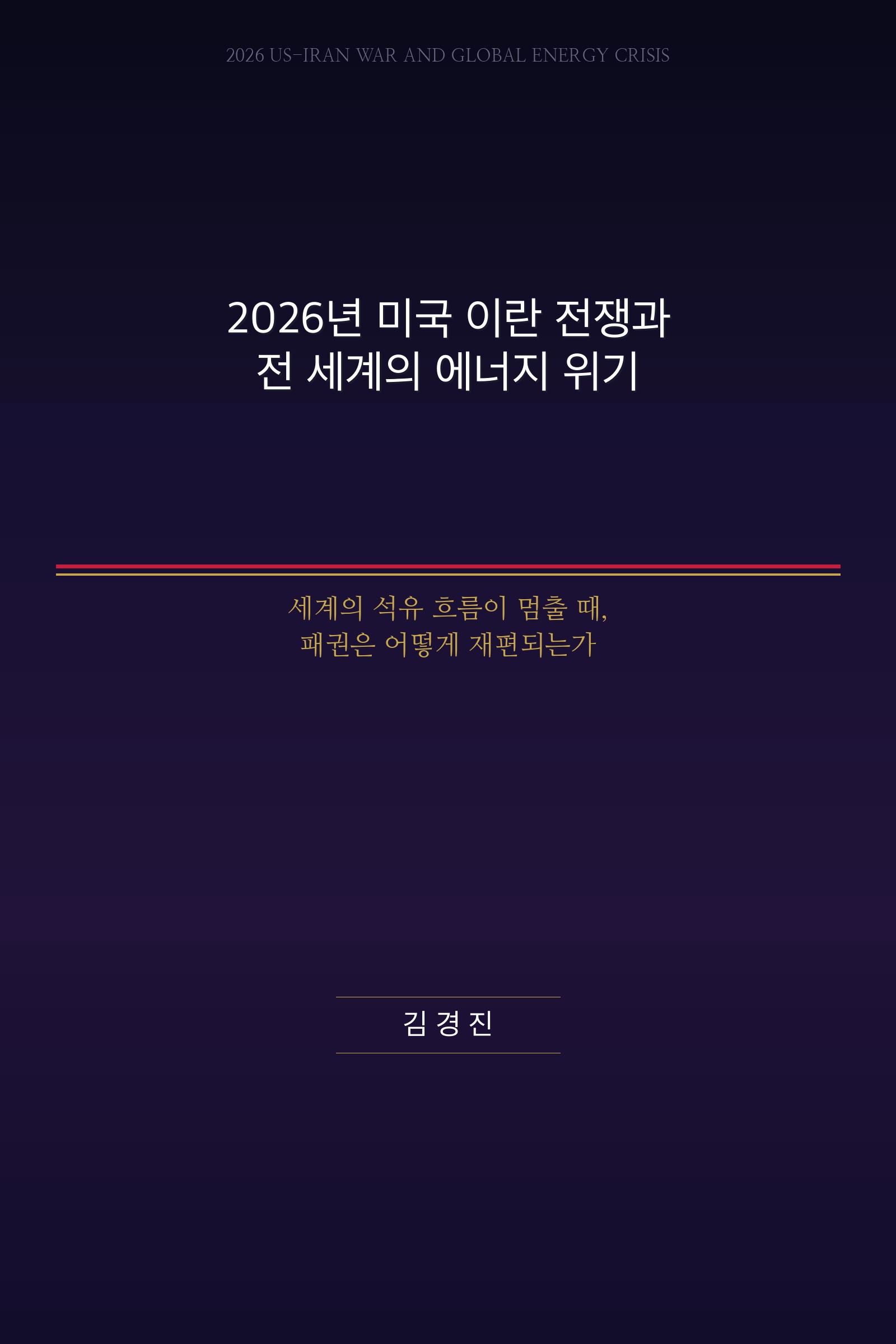
The 2026 U.S.-Iran War and the Global Energy Crisis
Chapter 7: The War Before the War
Kim Kyung-jin
The 2026 U.S.-Iran War and the Global Energy Crisis
Chapter 7: The War Before the War
7.1 The June 12, 2025 War
On June 12, 2025, the International Atomic Energy Agency (IAEA) board declared that Iran had violated the Nuclear Non-Proliferation Treaty (NPT) safeguards agreement. It was the first time in twenty years since 2005. Two days earlier, on June 10, President Trump said Iran had turned "much more aggressive" at the negotiating table. Iran's Defense Minister Amir Aziz Nassirzadeh warned that if conflict was forced upon them, they would strike U.S. military bases in the Middle East. Talks continued at one table, while operational orders were being prepared at another.
In the early morning of June 13, the Israeli Air Force deployed approximately two hundred fighter jets and began striking over one hundred targets inside Iran. The operation was named "Am Kalavi," which means "a lion rising" in Hebrew. The name carried a double meaning: the lion of the Jewish people and, at the same time, the lion that was the emblem of the Iranian monarchy before the Islamic Revolution. Israel summoned the Iran of the past to attack the Iran of the present.
The first strikes of the bombing campaign targeted the heart of Iran's nuclear program. The uranium enrichment facility at Natanz, southeast of Isfahan,the pilot fuel enrichment plant (PFEP) above ground was destroyed, and the underground fuel enrichment plant (FEP) suffered damage to its centrifuges when the power supply infrastructure was cut. Satellite images showed two or three blast craters on the surface above the underground facility. The Isfahan nuclear complex was struck three times: twice by Israel, once by the United States. The uranium conversion facility (UCF), the uranium metal production facility, the zirconium production plant, and the tunnel complex that stored nuclear material all sustained damage. High-resolution satellite imagery taken on June 14 showed extensive destruction across the entire Isfahan nuclear complex.
Attacks on personnel were more precise. Islamic Revolutionary Guard Corps (IRGC) Commander-in-Chief Hossein Salami, Joint Chiefs of Staff Chairman Mohammad Baqeri, and IRGC Aerospace Force Commander Amir Ali Hajizadeh were killed. At least fourteen nuclear scientists lost their lives in car bombs and precision strikes. The Ministry of Defense headquarters in downtown Tehran was also hit. A substantial portion of Iran's military leadership was eliminated on the first day of the war.
Iran's counterattack was immediate and large-scale. Hundreds of ballistic missiles were fired at Israel. Drones came first, followed quickly by missiles. Iran fired missiles at Israel nearly every night. On June 15, Iran and Yemen's Houthi forces launched ballistic missiles simultaneously, striking buildings in Bat Yam, Rehovot, and Tel Aviv. Nine were killed and about two hundred injured. Sixty-one buildings sustained damage in Bat Yam alone.
When the British Daily Telegraph analyzed radar data from Oregon State University, Iran's missiles hit major military targets including Tel Nof Air Base, Glilot Intelligence Base, and the Ziporit Weapons Manufacturing Facility with "remarkable accuracy." By the time the twelve-day war ended, twenty-eight Israelis had been killed, twenty-three hundred homes were destroyed, two universities and one hospital sustained damage. More than thirteen thousand Israeli citizens had to leave their homes, and as of June 24, at least fifteen thousand were left homeless. Over six hundred ten Iranians died in Israeli attacks. According to the Armed Conflict Location and Event Data Project (ACLED), Israel conducted at least five hundred eight airstrikes against Iran, and Iran carried out at least one hundred twenty missile and drone attacks against Israel.
The turning point came on June 22. The United States entered the war. President Trump initially took an ambiguous stance, saying "nobody knows what I will do." But as the war entered its tenth day, the United States deployed B-2 stealth bombers and submarine-launched Tomahawk cruise missiles to strike three nuclear facilities at Fordow, Natanz, and Isfahan. Fordow was a facility buried deep inside a mountain. Israeli Air Force weapons could not destroy it. Only American GBU-57 A/B bunker-buster bombs could reach that depth.
The United States stated that the strike was limited and one-time. Iran responded the next day by firing missiles at Al-Udeid U.S. Air Base in Qatar, but it had given advance warning to both Qatar and the United States. It was a symbolic retaliation. There were no casualties.
On June 24, President Trump announced a ceasefire on social media. The condition was that Iran cease hostilities for twelve hours, followed by both sides ceasing for another twelve hours. Iran's Supreme National Security Council immediately declared victory. Israel announced it had agreed to the ceasefire several hours later. The twelve-day war had stopped. Protests against the U.S. strikes on nuclear facilities erupted in Tehran, and Iranian President Masoud Pezeshkian personally attended the demonstration.
The most dangerous legacy left by this war was not destroyed buildings. It was missing uranium. According to an IAEA report dated May 31, 2025, Iran possessed more than four hundred eight kilograms of sixty-percent enriched uranium. If further enriched to weapons-grade ninety percent, it could have produced about ten nuclear warheads. Iran had previously informed the IAEA that it would take "special measures" to move nuclear material in case of military attack. On June 16, Iran announced it had actually implemented those measures. There was an eight-day interval between Israel's first strike and the U.S. strike on Fordow. Satellite imagery captured trucks moving from the Fordow facility.
Vice President JD Vance admitted in a Fox News interview that he did not know whether the United States had destroyed Iran's weapons-grade uranium stockpile. IAEA Director General Rafael Grossi told CBS News, "I do not know where that material is, or whether some of it was destroyed during the twelve days of attacks. Some of it may have been destroyed in the attacks, but some of it may have been moved." The IAEA's eye, which had been monitoring Iran's nuclear program transparently, was closed. On June 18, Iran's parliament passed legislation suspending cooperation with the IAEA. It took effect on July 1. Inspectors could no longer access Iran's nuclear facilities.
Analysis from Israel's Institute for National Security Studies (INSS) precisely identified the strategic achievements and limitations of this war: "It inflicted serious damage on Iran's nuclear program and long-range missile capabilities." But "regime change in Iran was not set as the war's objective." Military infrastructure was destroyed, but the regime survived. Four hundred eight kilograms of sixty-percent enriched uranium,neither the United States nor Israel knew where it was.
In September 2025, Iranian military authorities admitted that an earlier claim about shooting down two Israeli F-35 fighter jets during the war had been false. The same month, results from a survey conducted by GAMAAN of over thirty thousand Iranians were released. Forty-four percent answered that the Islamic Republic bore responsibility for starting the war. The proportion blaming Israel was thirty-three percent. Fifty-eight percent said the Islamic Republic had failed to protect its people. Fifty-eight percent gave negative evaluations of Khamenei's conduct during the war. These numbers revealed something: the war had weakened not just the regime's military power. It had undermined the regime's legitimacy from within.
In December, IAEA Director General Grossi assessed that Iran was not currently resuming uranium enrichment. Activity was detected at a newly constructed facility near Natanz, but no enrichment activity was confirmed. Iranian Foreign Minister Abbas Araghchi made similar statements. But it was clear what Iran held as a negotiating card: resuming cooperation with the IAEA, remaining in the NPT. These would be Iran's main leverage in future negotiations. The analysis from Israel's Institute for National Security Studies precisely summed up this impasse: "Iran finds itself in a deadlock with no exit in sight. In its relations with the IAEA. In its relations with the United States."
In October, former Defense Minister Avigdor Lieberman posted a warning on X: "Those who think the situation with Iran is over are wrong and are misleading people." "Iran is already actively moving to strengthen its military." The twelve-day war brought no peace. It was pregnant with a greater war.
7.2 Iran's Protests and Bloody Crackdown, 2025-2026
On December 28, 2025, merchants in Tehran's Grand Bazaar shut down their storefronts. Shops selling electronics and mobile phones closed first. The direct cause was the sharp spike in dollar prices and gold values, and the vertical collapse of the rial's value. That day, in the open market, the rial hit an all-time low of 1.44 million rials to the dollar. This is a currency that was seventy rials to the dollar at the time of the 1979 Islamic Revolution. Even at the time of the 2015 nuclear deal (JCPOA), it had been thirty-two thousand rials. Its fall to 1.44 million meant that Iranians' savings had become nothing but numbers on paper.
The rial's collapse was not an overnight event. It was the direct hit from the June 12, 2025 war. After the war, the rial lost an additional forty percent or more of its value. From roughly seven hundred thousand rials to the dollar in January 2025, it rose to nine hundred thousand rials in July, and by December to 1.44 million rials. The annual inflation rate exceeded fifty-two percent even by official figures, and food prices rose an average of seventy-two percent year over year. In September, the UN Security Council restored sanctions on Iran. In December, the Iranian government introduced a new tier to its world's cheapest gasoline subsidy system, effectively raising fuel prices. Household burdens grew heavier.
The bazaar merchants' store closures led to students joining them the next day. Merchants and students marched together toward Imam Khomeini Square in Tehran. Chants rang out: "Death to the dictator." "Not Gaza, not Lebanon,I will give my life to Iran." "Dismantle the Islamic Republic." Students from Amirkabir University, Beheshti University, Sharif University of Technology, Isfahan University of Technology, and Yazd University joined the gathering. The protests spread from Tehran to Mashhad, Isfahan, and Shiraz, then to over two hundred cities across all thirty-one provinces. It surpassed the scale of the "Woman, Life, Freedom" protests triggered by the death of Mahsa Amini in 2022.
Iranian President Masoud Pezeshkian initially acknowledged the protesters' grievances and proposed dialogue. State media rarely reported the protests as resulting from the economic crisis. But the firing of the central bank director and the announcement of household subsidies did not calm the crowd. The protesters' demands had already moved beyond economic improvement. Beheshti University students issued a statement: "This criminal regime has held our future hostage for forty-seven years. It will not change through reform or false promises."
On January 3, Supreme Leader Ali Khamenei spoke. He defined the protesters as "rioters" and said they must be "put back in their place." That same day, the IRGC Lorestan Corps declared that "the time for tolerance has ended," warning that it would deal "without mercy" with "rioters, organizers, and leaders of anti-security movements." On January 5, the head of the judiciary ordered prosecutors not to show "leniency" toward protest participants and to proceed quickly with trials.
On January 8, the internet was cut off. It was the most comprehensive internet shutdown in Iranian history. The internet had been shut down during protests in 2019 and 2022. On both occasions, widespread state violence followed after the shutdown. This time the sequence was the same. But the scale was incomparable.
According to videos verified by Amnesty International and eyewitness testimony, security forces were positioned on streets and building rooftops and repeatedly fired rifles and shotguns loaded with metal pellets at protesters. They aimed at heads and torsos. The forces deployed in suppression included the IRGC and its Basij battalions, Iran's police (FARAJA), and plainclothes agents. The massacre was concentrated on January 8 and 9. Over those two days, the death toll soared into the thousands.
One video analyzed by the BBC verification team showed inside a morgue. According to forensic examination, nearly two hundred bodies were laid out, with clear signs of trauma. The youngest victim was sixteen years old. In video from the Beheshte Zahra cemetery in Tehran transmitted to Amnesty, family members were seen wandering among black body bags searching for relatives. At least one hundred twenty body bags were confirmed. One family member testified that when she went to claim a body on January 9, she witnessed "a horrific sight of a morgue overflowing with corpses."
A healthcare worker in Fardis told Amnesty this: "Eighty-seven bodies arrived at Soleimani Hospital that night alone. Parisian Hospital had four hundred twenty-three wounded." A healthcare worker in Mashhad provided similar testimony. One witness said that in the Narmak area, "at least five or six people in front of us were shot and fell." Video footage from Bakilabad showed security forces firing at protesters from a high position like an overpass.
Amnesty also documented the authorities' treatment of family members: "The authorities demanded that families of slain protesters pay large sums of money or sign an affidavit falsely claiming the deceased was a Basij member, in order to receive the body." A message from relatives of a woman shot to death in Tehran Province was made public: "The security forces shot her, and she died from blood loss because she did not receive treatment. When someone dies, the security forces do not easily hand over the body to family members. For the family to receive the body, they must write that the person was a Basij member and was killed by protesters."
Estimates of the death toll showed extreme variation. This variation itself was evidence of the information blockade carried out by Iran's regime. The U.S.-based Human Rights Activists News Agency (HRANA) stated that as of February 5, 2026, it had confirmed and documented 7,015 deaths. Of these, at least 6,508 were protest participants, and an additional 11,744 cases were under investigation. The Norway-based Iran Human Rights NGO (IHRNGO) announced that at least 3,428 people were shot dead between January 8 and 12 alone. More than forty thousand were arrested.
However, other sources presented much higher figures. The Guardian reported in late January that deaths could exceed thirty thousand, noting that less than ten percent of deaths may have been officially registered. Time magazine, the Guardian, and Iran International cited local health officials as reporting that between thirty thousand and thirty-six thousand five hundred people were shot dead over those two days of January 8 and 9. The Iran International editorial board, after reviewing newly obtained classified documents, field reports, and testimony from medical staff, witnesses, and family members, confirmed that more than thirty-six thousand five hundred had been killed. They described this as "the largest and most brutal massacre of street protesters in history over a span of two days." The International Centre for Human Rights in Canada, through interviews with sources inside Iran's public health system, estimated forty-three thousand deaths.
Iran's official government announcement was three thousand one hundred seventeen deaths. It classified two thousand four hundred twenty-seven as "civilians and security personnel" and the rest as "terrorists." UN Special Rapporteur on Human Rights in Iran Mai Sato stated on January 16 that at least five thousand had died, while sources at healthcare facilities suggested it could reach twenty thousand.
From the confirmed minimum of seven thousand seven to the maximum estimate of roughly forty-three thousand. This enormous gap is the darkness created by internet shutdown, deliberate evidence destruction, forced secret burials of bodies, and intimidation and coercion of family members. An IRGC intelligence unit report obtained by Iran International reported at least twelve thousand deaths to the Supreme National Security Council and the Presidential Office on January 11. This figure came two days after the massacre. Yet Iran International wrote: Due to "the scale of the massacre, deliberate concealment, deliberate confusion in the registration and transportation of bodies, pressure on families, and clandestine burial of some victims," it appears that "even the security agencies themselves have not yet grasped the exact final death toll."
President Trump said in his 2026 State of the Union Address that "thirty-two thousand protesters were killed." The European Union and Ukraine designated the IRGC as a terrorist organization. Trump said those responsible for the massacre would "stand trial and be executed," and that regime change would occur, though "it may not be imminent."
Protests came under authorities' control around January 19. But they did not completely disappear. On February 21, students began a second round of protests at multiple universities. On February 24, Basij and security forces attacked students who had been protesting for four days. On March 13, the IRGC threatened that if protests resumed, it would conduct even larger suppressions than in January.
There was a university student named Raha Bohlouli Pour. She was shot to death by security forces near Fatemi Square in Tehran on January 8. Her name, "Raha," means "freedom" in Persian. She had interests in art and music. She was neither an organizer nor a public figure. She had not chanted slogans or belonged to any faction. Iran International wrote: "She did not die because she wielded power or made demands. She died because she embodied a way of existence that the state feared."
7.3 Trump's Military Mobilization
On January 2, 2026, President Trump issued a warning to Iran. If the Iranian government "violently killed peaceful protesters," the United States would "go rescue them," he said. On January 13, he expressed support for Iranian anti-government protesters and promised that "help is coming." That same day, he announced that a U.S. "armada" was heading to the Middle East. It included the aircraft carrier USS Abraham Lincoln and numerous Aegis guided-missile destroyers.
USS Abraham Lincoln departed the waters near the Philippines in the South China Sea around January 15 and redirected its course toward the Middle East. The 9th Air Wing (CVW-9) included F-35C Lightning II stealth fighters from Marine Fighter Attack Squadron 314 (VMFA-314). Approximately fifty-seven hundred personnel moved with this strike group. It arrived in the Arabian Sea near Oman around January 25-26. Until then, from January 5 to 25, there had been no aircraft carrier in the waters under U.S. Central Command (CENTCOM) jurisdiction. It was the first such gap since October 2023.
Air power augmentation began earlier. Between January 18 and 21, roughly thirty-five F-15E Strike Eagles were moved from RAF Lakenheath in Britain to Muwaffaq Al-Salti Air Base in Jordan. On January 21, a second contingent of twelve additional aircraft departed. CENTCOM publicly stated on social media that the F-15E deployment would "improve combat readiness." This rare public acknowledgment itself was part of the signal the Trump administration wanted to send. Analysts tracking aircraft noted that dozens of U.S. military transport planes were heading toward the Middle East. At Al-Udeid base, KC-135 air-refueling tankers increased to at least twenty. This number was well above the normal peacetime level.
On February 13th, President Trump ordered the USS Gerald R. Ford, the world's largest aircraft carrier, and its escort vessels to depart for the Middle East. This 13-billion-dollar supercarrier carried four squadrons of F/A-18 Hornet fighters, EA-18G Growler electronic warfare aircraft, E-2D early warning aircraft, and helicopters. Combined crew and air personnel numbered over 5,000. The Ford had been supporting operations off Venezuela (Southern Sphere Operations) in the Caribbean. On February 20th, the Ford was spotted near the Strait of Gibraltar. After resupply at Souda Bay Naval Base in Crete, Greece, it departed on February 27th toward the Israeli coast. Two aircraft carriers, the Abraham Lincoln and the Ford, were simultaneously deployed to the Middle East. This was the largest concentration since five carrier battle groups assembled during Operation Iraqi Freedom in 2003.
On February 24th, satellite imagery captured 11 F-22 Raptor fighters deployed at Ovda Air Base in southern Israel. Photos from Chinese satellite company Maxar Vision showed the aircraft clearly on the runway and taxiways. It was the first time the United States had stationed offensive weapons on Israeli soil. U.S. Air Force aerial refueling tankers at Ben Gurion International Airport increased to 14 total. This ensured the Ford carrier air group's aircraft could reach Iran.
Gulf allied nations including Saudi Arabia and the United Arab Emirates refused to allow their bases and airspace for attacks on Iran. They feared Iranian retaliation. This is why Muwaffaq al-Salti Base in Jordan became the Pentagon's key deployment hub. Israel emerged as an alternative. On February 26th, reports stated that U.S. Navy Command personnel in Bahrain had been reduced to fewer than 100 essential staff. Satellite imagery confirmed all U.S. military vessels previously moored in Bahrain's harbor had departed. Similar defensive measures had been taken in June 2025, just before the nuclear facility strike.
On February 28th, the United States and Israel attacked Iran. Operation Epic Fury had begun. However, the war did not end there. As Iran blockaded the Strait of Hormuz and struck Gulf energy infrastructure, the United States had to continue reinforcing its forces.
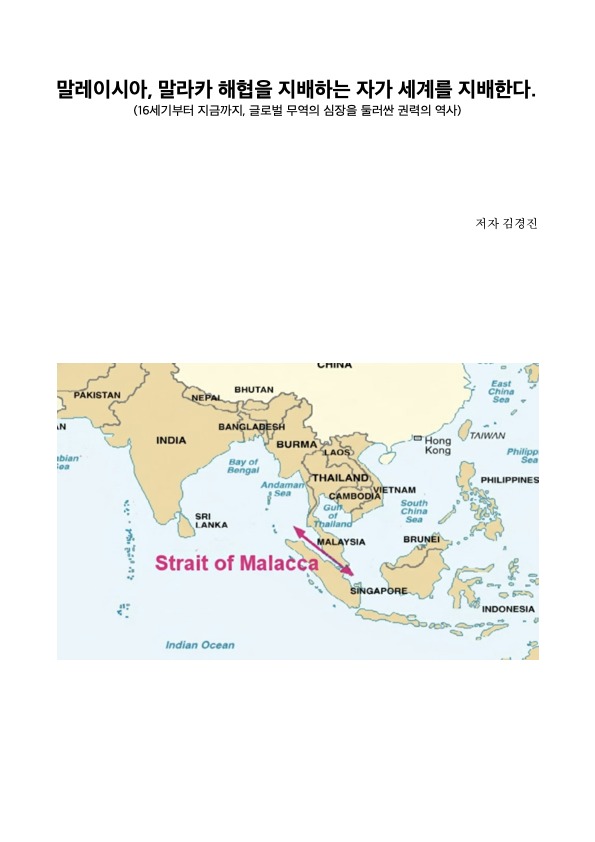
As the war entered its second month, ground forces began moving. The USS Tripoli, stationed in Sasebo, Japan, received deployment orders on March 13th with approximately 2,200 Marines of the 31st Marine Expeditionary Unit. It halted training near Taiwan and proceeded through the Malacca Strait, past Diego Garcia, toward the Middle East, arriving in the CENTCOM area around March 28th. The Tripoli is a 261-meter-long, 45,000-ton America-class amphibious assault ship capable of operating F-35B fighters while projecting Marines ashore and by air. The 31st MEU is the only forward-permanently-deployed expeditionary unit of the U.S. Marine Corps.
From San Diego, California, the USS Boxer departed on March 19-20th with approximately 2,500 Marines of the 11th Marine Expeditionary Unit. The Boxer amphibious combat group was accompanied by USS Comstock and USS Portland. The voyage required approximately 22,200 kilometers, reaching the combat zone only by mid-April. The 11th MEU consisted of approximately 2,200 Marines and sailors, with approximately 2,000 additional sailors across the entire task force. This unit had participated in a diversionary operation off Kuwait's coast during the 1990-91 Gulf War.
On March 25th, the 82nd Airborne Division at Fort Bragg, North Carolina, received Middle East deployment orders. Approximately 2,000 to 3,000 Immediate Response Force personnel were involved. Major General Brandon Tegtmeyer, the division commander, and division staff relocated as well. The 82nd Airborne Division is the U.S. Army's rapid response force, capable of deployment worldwide within 18 hours. Its mission is to parachute into hostile or conflict zones, secure airfields, and establish bases for subsequent operations. The 82nd Airborne had been deployed to the Middle East following Qasem Soleimani's death in 2020.
With the two Marine expeditionary units combined, approximately 4,500 Marines and sailors would arrive. Including 82nd Airborne personnel, approximately 7,000 additional troops deployed after war's start. Approximately 50,000 U.S. troops were already stationed in the Middle East.
Secretary of State Marco Rubio stated in congressional briefing that the United States might need to physically secure nuclear materials from inside Iran. "People have to go in and get it." He did not specify who would perform the mission. The New York Times reported that the Marines and 82nd Airborne could be deployed to forcibly regain control of the Strait of Hormuz or seize Kharg Island, handling 90 percent of Iran's oil exports. CNN reported that Iran deployed additional personnel and air defense systems to Kharg Island and began laying antipersonnel and antitank mines around the island.
White House spokesperson Anna Kelly stated, "President Trump always maintains all military options." President Trump himself continued leaving open the possibility of agreement with Iran. "We are right in the middle of real deal possibilities. If I were a gambler, I would bet on a deal." However, he warned: "If a deal is not reached, bad things will happen."
Mark Cancian of CSIS told Al Jazeera: "The United States is doing everything it would do for any kind of attack. It has moved aircraft to the region and deployed support assets like AWACS aboard two aircraft carriers." Michael O'Hanlon of the Brookings Institution noted that if the United States intended to strike only remaining facilities of Iran's nuclear program, long-range B-2 bombers alone would suffice. "The forces currently deployed are clearly designed to strike targets inside Iran and prepare for retaliation." Ali Baez of the International Crisis Group warned that Iran was unlikely to respond as limitedly as since June 2025. "Particularly if leadership feels targeted, Iran could respond in a much larger and more comprehensive manner."
In a letter to the UN Security Council chairman, Iran stated it "does not want tensions or war and will not start a war," but if the United States attacks, it will respond "resolutely and proportionally." "The United States will bear full and direct responsibility for all unpredictable and uncontrollable consequences."
Akhmad al-Hamidawi, leader of Iraq's Kataib Hezbollah, declared: "A warning to the enemies: a war against the Islamic Republic will not be a picnic. You will taste death in its most bitter form, and nothing of yours will remain in this region." Naim Kassem, leader of Lebanese Hezbollah, said: "Over the past two months, several parties have posed a clear question to me: If Israel and the United States wage war against Iran, will Hezbollah intervene or not?" He replied that Hezbollah was "preparing for a possible invasion and has resolved to defend it."
In the 2003 Iraq War, the United States deployed approximately 250,000 ground troops. In Operation Desert Storm in 1991, a coalition of 35 nations with over 700,000 personnel participated. By late March 2026, total U.S. military presence in the Middle East stood at approximately 57,000 personnel. By these numbers alone, a full-scale invasion of Iran seemed distant. However, the force composition was different. Assault landing ships, Marine expeditionary units, airborne divisions. These were units designed to occupy territory and seize specific positions. There was no room for Iranian authorities to misunderstand the deployment.
According to ABC News, before the war, U.S. intelligence agencies obtained information that "Iran intended to conduct surprise attacks using unmanned aerial vehicles against unspecified targets in California in the event of a U.S. attack." From Iranian soil to American soil. The war's range was crossing the ocean.
The 12-day war in June 2025 weakened Iran's military but did not topple the regime. The protests from December 2025 through January 2026 dragged the regime's legitimacy to rock bottom but did not deliver the killing blow. Operation Epic Fury in February 2026 eliminated the Supreme Leader but closed the strait. So in March, the United States had to send Marines and airborne troops. At each stage, there was a judgment that "this should be enough," and each time that judgment proved wrong.
Artificial intelligence expert Attorney Kim Kyung-jin
AI legal policy specialist • Former National Assembly member • Author of multiple works
If this book remained with you for even a moment, please support it so the next story can reach the world.
(Voluntary donation account: NH Bank 302-1096-0948-81, Account holder: Kim Kyung-jin)
Kim Kyung-jin
Attorney · Former Member of the National Assembly · AI Policy Researcher
© 2026 Kim Kyung-jin. All rights reserved.