Table of Contents
Artificial Intelligence and Medicine
Kim Kyung-jin, Attorney at Law
AI in clinical care, hospitals, education, and research
AI in medical imaging, risk prediction, treatment planning, hospital operations, education, and research, with patient safety, privacy, and accountability.































[AI Library] Chapter 33: Chokepoint Economics
The 2026 U.S.-Iran War and the Global Energy Crisis
Chapter 33: Chokepoint Economics
Kim Kyung-jin
The 2026 U.S.-Iran War and the Global Energy Crisis
Chapter 33: Chokepoint Economics
33.1 Hormuz, Suez, Malacca, Bab el-Mandeb
On March 7, 2026, only a single commercial vessel passed through the Strait of Hormuz in a single day. In normal times, 138 vessels transit this waterway.
That day's silence was not a mere number. The empty AIS (Automatic Identification System) screen was a mirror reflecting how narrowly the global economy rests on a handful of passages. We live in an age connected in real time across the globe through the internet, exchanging data borderlessly through the cloud. Yet the energy and raw materials that physically sustain that digital civilization travel as they did centuries ago, loaded onto massive steel vessels and passing through only a few narrow bottlenecks on Earth.
There are four such bottlenecks: Hormuz, Suez, Malacca, and Bab el-Mandeb. These four waterways represent the narrowest constrictions in the blood vessels of global commerce. Just as the narrowing of the aorta that emerges from the heart cuts oxygen to the entire body, the blockade of any one of these four passages triggers a seizure in the global economy. The 2026 Iran War proved this was no metaphor.
According to the IEA's 2025 annual data, 20 million barrels of crude oil and petroleum products passed through the Strait of Hormuz daily. This represented approximately 20 percent of global oil consumption and about 25 percent of global maritime oil trade. The IEA's February 2026 factsheet stated that crude oil transiting Hormuz in 2025 reached approximately 15 million barrels, accounting for 34 percent of global crude oil trade. LNG was no exception. Ninety-three percent of Qatar's and 96 percent of UAE's LNG exports passed through this strait, representing about 20 percent of global LNG trade.
The physical characteristics of Hormuz reveal how precarious this balance truly is. The strait's narrowest point measures only 21 nautical miles (34 kilometers), with two-way traffic lanes each spanning 2 nautical miles in width. Daily, 138 vessels transit this 4-nautical-mile navigable channel. Between 60 and 70 percent of them are tankers and LNG carriers. Hormuz is simultaneously the waterway through which more energy passes than any other on Earth, yet also the narrowest and most difficult to defend.
The final destination of oil and gas exiting Hormuz is overwhelmingly Asia. As of the first quarter of 2025, China received 37.7 percent of the total volume, followed by India at 14.7 percent, South Korea at 12.0 percent, and Japan at 10.9 percent. Combined, Asian nations received 89.2 percent of crude passing through Hormuz. The United States accounted for just 2.5 percent. Thanks to the shale revolution, the United States has achieved greater energy independence and faces no immediate survival threat if Hormuz closes. South Korea, Japan, India, and China, however, are different. For their factories to operate, their lights to shine, and their vehicles to run, Hormuz must remain open.
The second chokepoint is the Bab el-Mandeb Strait, the 'Gate of Tears.' Located between Yemen at the southern tip of the Arabian Peninsula and Djibouti in Africa, the strait measures approximately 30 kilometers in width. About 12 percent of global trade passes through this strait, with roughly 4.8 million barrels of crude transiting daily. This waterway is the sole passage from the Arabian Sea into the Red Sea. Oil transiting Hormuz cannot reach Europe without passing through this strait. Even if Saudi Arabia diverts crude through the East-West Pipeline to the Yanbu port, tankers carrying that oil to Europe or Asia cannot reach their destinations without transiting Bab el-Mandeb.
The third chokepoint is the Suez Canal. Passing through Bab el-Mandeb and ascending the Red Sea, this Egyptian-administered canal appears. The Suez, linking the Mediterranean and Red Seas, reduces sailing distances between Asia and Europe by thousands of kilometers. Approximately 12 percent of global container shipping transits here. When Suez closes, component factories in Europe stop and finished Asian goods cannot reach European consumers. In March 2026, Houthi attacks transformed the Red Sea into a danger zone, causing daily transit through the Suez Canal to drop below one-tenth of normal levels.
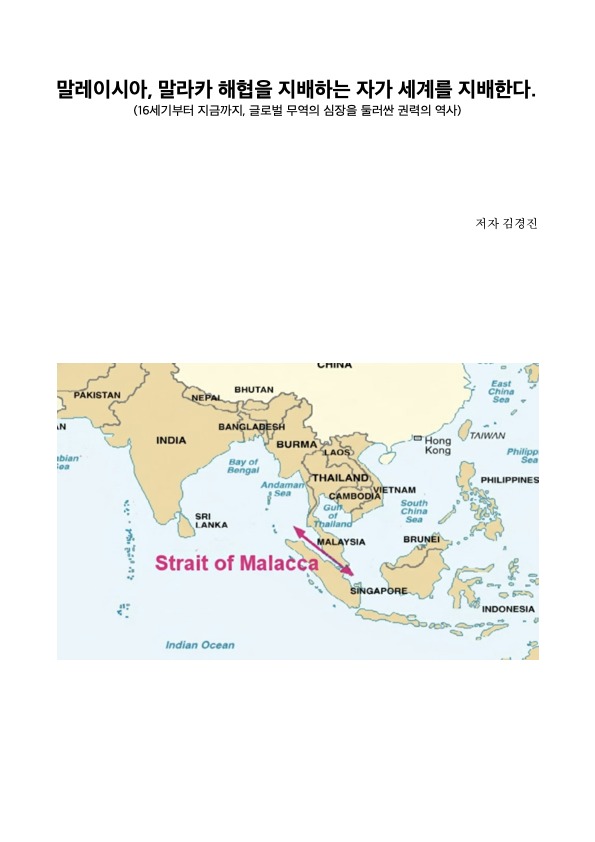
The fourth chokepoint is the Strait of Malacca. Stretching between the Malay Peninsula and Indonesia's Sumatra, this strait is Asia's energy lifeline. More than 60,000 vessels transit annually, handling about 25 percent of global maritime trade. Approximately 80 percent of oil imported into Northeast Asia passes through here. For China, Malacca is more than a simple trade route. In 2003, President Hu Jintao called this the 'Malacca Dilemma.' About 80 percent of China's imported crude passes through this strait, yet China cannot control it.
At its narrowest point, the Singapore Strait measures only 2.8 kilometers wide. Through this cramped waterway breathe the industries of China, Japan, South Korea, and Taiwan. The United States constantly emphasizes freedom of navigation in its Indo-Pacific strategy, just as China pours astronomical investment through the Belt and Road Initiative into Pakistan's Gwadar port and pipelines via Myanmar, both rooted in this Malacca Dilemma. According to the CSIS, 60 percent of China's maritime trade volume and 60 percent of China's total energy supply depend on this strait. Should China collide with the United States over Taiwan, the moment the U.S. Navy blockades Malacca, the Chinese economy could not withstand more than a few months.
These four chokepoints share a common essence. Humanity may launch rockets into space and create artificial intelligence, yet it cannot alter Earth's geography. Oil, gas, and goods still travel in ships through these narrow waterways. The fact that the twenty-first-century global economy actually rests on a nineteenth-century logistics structure absolutely dependent on a handful of narrow geographic bottlenecks was the first item on the bill the 2026 war presented to the world.
33.2 When One Closes, Another Closes Too
In early March 2026, Saudi Arabia played its trump card: the East-West Pipeline, a bypass route constructed over 40 years in preparation for the worst-case scenario of Hormuz closure.
This pipeline carries crude from petroleum fields along the Persian Gulf coast across the Arabian Peninsula to the Yanbu port on the Red Sea coast. According to Saudi Aramco's March 2025 announcement, the pipeline's capacity was 7 million barrels per day maximum, with estimated usable remaining capacity of approximately 3 to 5 million barrels per day as of early 2026. Saudi Arabia began running this pipeline at full capacity, diverting crude to Yanbu. Simultaneously, the United Arab Emirates diverted crude via the Habshan-Fujairah Pipeline to the Fujairah port outside Hormuz.
Yet the trap of geopolitics lay in wait.
The strait tankers loaded with crude from Yanbu must transit to reach Asia or Europe is Bab el-Mandeb. When Saudi Arabia began diverting millions of barrels daily through the East-West Pipeline to Bab el-Mandeb after Hormuz's closure, the strait's strategic importance immediately surfaced. The problem lay in the fact that the Houthi militia, backed by Iran, controlled the waters adjacent to this strait in Yemen.
The Houthis' weapons proved far more threatening than anticipated. As of March 2026, the Houthi anti-ship ballistic missile range reached 200 kilometers, enabling targeting of all vessels in the southern Red Sea and waters approaching Bab el-Mandeb. The Houthis, coordinating with Iran's war initiation, launched drone and missile attacks against merchant ships transiting the Red Sea. When video emerged of a Greek-flagged cargo vessel burning after an attack, tankers preparing to load and depart from Yanbu and maritime insurers instantly froze.
Saudi Arabia had spent 45 years and billions of dollars building an emergency exit from the trap of Hormuz. Yet opening that emergency exit meant walking directly into the middle of another battlefield. The danger flowing along the alternate route had not disappeared; it had merely relocated.
Should Hormuz and Bab el-Mandeb close simultaneously, approximately 30 percent of global container shipping and about 22 percent of global crude supply would lose their normal routes. This meant roughly $10 billion worth of daily trade faced disruption.
When Bab el-Mandeb closed, the Suez Canal became automatically neutralized. Vessels unable to enter the Red Sea cannot transit Suez; this is simple mathematics. When Houthi attacks intensified in early 2024, container ship traffic through the Suez Canal collapsed 90 percent. Egypt is a nation for which Suez Canal transit fees constitute a critical source of national fiscal revenue. As traffic vanished, the Egyptian economy plunged into foreign exchange crisis.
The only remaining option was Africa's southernmost point, the Cape of Good Hope. In March 2026, with three chokepoints simultaneously closed, shipping companies worldwide reverted to pre-nineteenth-century navigation.
The economic weight of the Cape route is far more than simply taking a longer path. It adds approximately 3,500 nautical miles compared to the Suez route, extending voyage time from Asia to Europe by 10 to 14 days. On a round-trip basis, fuel costs per voyage increased by roughly $1 million. When calculated across the global container fleet, this generated $7 to 9 billion in annual excess costs.
Yet more serious than the cost was the virtual evaporation of shipping capacity. When a vessel spends two additional weeks at sea, it takes two weeks longer to return to its departure port and load the next cargo. Not a single ship sank, yet the world's maritime logistics capacity effectively evaporated by 20 to 30 percent. Container freight rates from Shanghai to Rotterdam remained more than 80 percent higher than 2023 levels.
The cost of the Cape route ultimately came from consumers' wallets. The increased logistics costs were passed directly onto price tags for shoes, electronics, pharmaceuticals, plastic goods, and food. No matter how much central banks raised benchmark rates, there was no way to stop the fuel costs of tankers routing around Africa.
Major carriers including Hapag-Lloyd, MSC, CMA CGM, and Maersk ceased Red Sea operations entirely after late February 2026 and switched to the Cape route. Peter Sand, chief analyst at Xeneta, stated, "U.S. and Israeli military operations against Iran shattered all expectations for a 2026 return to Suez." Saudi's pipeline bypass had ultimately funneled oil into another war zone (the Red Sea), that Red Sea's exit (Bab el-Mandeb) was guarded by Yemeni drones, the sole alternative thereafter (Suez) became automatically paralyzed, and the final option (the Cape) simultaneously pulled global logistics costs up by billions of dollars while reducing supply chains themselves by 20 to 30 percent. The domino chain triggered by a single Hormuz mine ended at the Cape of Good Hope.
As Al Jazeera's analysis made clear, this was not merely supply disruption. It was cardiac arrest in commerce. After Hormuz's closure, European banks refused to issue letters of credit for Hormuz-dependent cargo, while commodity traders had to hastily cobble together $7 billion in emergency credit to prevent forced liquidations. The financial system seized before the physical waterways shut down.
33.3 The Age When the Military Vulnerability of Maritime Chokepoints Constitutes Structural Risk to the Global Economy
On March 26, 2026, the Iranian parliament debated unfamiliar legislation: legalization of transit fees for the Strait of Hormuz.
Iranian legislator Alaeddin Boroujerdi stated via British satellite television, 'War has costs. Naturally, we should collect transit fees from ships passing through Hormuz.' He revealed that some vessels had already paid $2 million per transit. Lloyd's List reported that at least two ships transiting the strait had paid in yuan renminbi. The transactions were brokered by a Chinese maritime services company, which also processed payment to Iranian authorities.
What stunned global policymakers was not the transit fee itself, but the payment mechanism. Not dollars but yuan. Transactions through CIPS, a settlement system outside U.S. sanctions reach. In 2025 alone, CIPS processed 24.5 trillion dollars' worth of yuan transactions, a 43 percent increase year-over-year. For that moment Iran had spent 40 years preparing, China had quietly assembled alternative financial infrastructure.
Why Hormuz's military vulnerability proves deadlier in this era can be explained through the mathematics of cost.
Within 48 hours of the U.S.-Israeli air strikes on Iran on February 28, 2026, Iran's Islamic Revolutionary Guard Corps (IRGC) virtually closed the strait through three combined tools: selective drone attacks, VHF radio warnings, and cascading insurance withdrawals for war risks. Neither ballistic missiles nor large-scale minelaying was required. Within four days, tanker traffic had dropped to near zero.
War risk insurance premiums quintupled in four days, and major maritime insurers cancelled existing policies while offering renewal terms at roughly 60 times the original rates. London's Lloyd's Joint War Committee immediately reclassified the entire Persian Gulf as a conflict zone. Insurance alone on a modern VLCC (very large crude carrier) transiting the strait once was charged at $6 million. Vessels associated with the United States or Israel were denied insurance coverage altogether.
Iran did not need to sink ships. The insurance market closed the strait first. This case is decisive evidence that private commercial infrastructure is not merely the backdrop to irregular warfare but the very mechanism through which it operates. The next chokepoint might close not through mines or missiles but through a single insurer's rate-adjustment notice.
The arithmetic of asymmetry does not end there. A single suicide drone used by Iran and the Houthis costs approximately $20,000 to $50,000. The VLCC it threatens is worth over $100 million. A single SM-6 interceptor missile fired by the U.S. Navy to defend that VLCC costs over $4 million. The mathematics of defense,expending $4 million missiles to counter $20,000 drones,proves unsustainable even for the strongest naval powers.
Iran spent decades preparing to threaten strait control. Equipped with an asymmetric force combining mines, missiles, fast attack craft, and drones, Iran maintains asymmetric advantage against the United States, which currently has no minesweepers in the region.
Geographic conditions further amplify this asymmetry. In the narrow 34-kilometer strait scattered with reefs and islands, Aegis destroyer radars struggle to detect small drones or coastal missile batteries early, their signals obscured by reflections off coastal terrain. According to expert simulations, safely escorting just three or four tankers through this narrow waters requires a minimum of seven to eight destroyers forming 360-degree air defense. The U.S. Navy escorting all 138 vessels transiting Hormuz daily is physically impossible.
The 2026 Hormuz crisis demonstrated that a sufficiently credible threat, requiring minimal actual military action, can achieve commercial blockade through rational risk-avoidance behavior in the insurance market. This model carries profound implications for the future of maritime coercion. Even nations inferior in conventional naval power, if they control territory adjacent to critical chokepoints and possess drone or missile threat capacity, can impose lethal costs on the global economic system.
Strategists have begun calculating possibilities in the Strait of Malacca as well. In a scenario where China confronts the United States over Taiwan's encirclement, a U.S. blockade of Malacca would paralyze the Chinese economy within months. Conversely, if China threatens the western waters of the South China Sea, energy supplies to Japan, South Korea, and Taiwan would be cut. According to analysis from the Lowy Institute, coastal nations surrounding the Malacca Strait, even if declaring neutrality, will struggle to maintain control of the strait during great power conflict without military deterrence backing them.
Iran did not need to implement a complete blockade to close the chokepoint. Maximizing the uncertainty of passage was enough. Uncertainty is as destructive to the energy market as an actual blockade.
The harshest lesson the 2026 Strait of Hormuz crisis left with the world is this: the vulnerability of maritime chokepoints has now become a structural risk that transcends regional security concerns and cuts through the entire global economy. For eighty years since the 1944 Bretton Woods system established the dollar as the global reserve currency, an implicit agreement had been in place. An agreement that the U.S. Navy would guard sea lanes around the world at no cost, and under that protection, the global economy had been maximizing efficiency. But a twenty-thousand-dollar drone and the fear in the insurance market effectively ended that agreement.
It may be no coincidence that ancient Persians named this strait after Ahura Mazda, the deity of wisdom and order. They did not establish a trade route here but consecrated it. Now the strait bearing that name has become the greatest vulnerability facing global order.
Only the name of the strait has changed; the law of geography remains. Whether Bab el-Mandeb, Malacca, or Suez, the next crisis will be called by a different name. And we do not yet know what that name will be.
AI Expert Attorney Kim Kyung-jin
Specializes in AI legal policy. Former member of the National Assembly. Author of numerous works.
If this book has been with you for even a moment, please support the next story coming into the world.
(Voluntary support appreciated. Bank: Nonghyup 302-1096-0948-81. Account holder: Kim Kyung-jin)
Kim Kyung-jin
Attorney · Former Member of the National Assembly · AI Policy Researcher
© 2026 Kim Kyung-jin. All rights reserved.