AI Library

AI Library

Books for Reading AI

Choose a book, then read it in order from the table of contents.

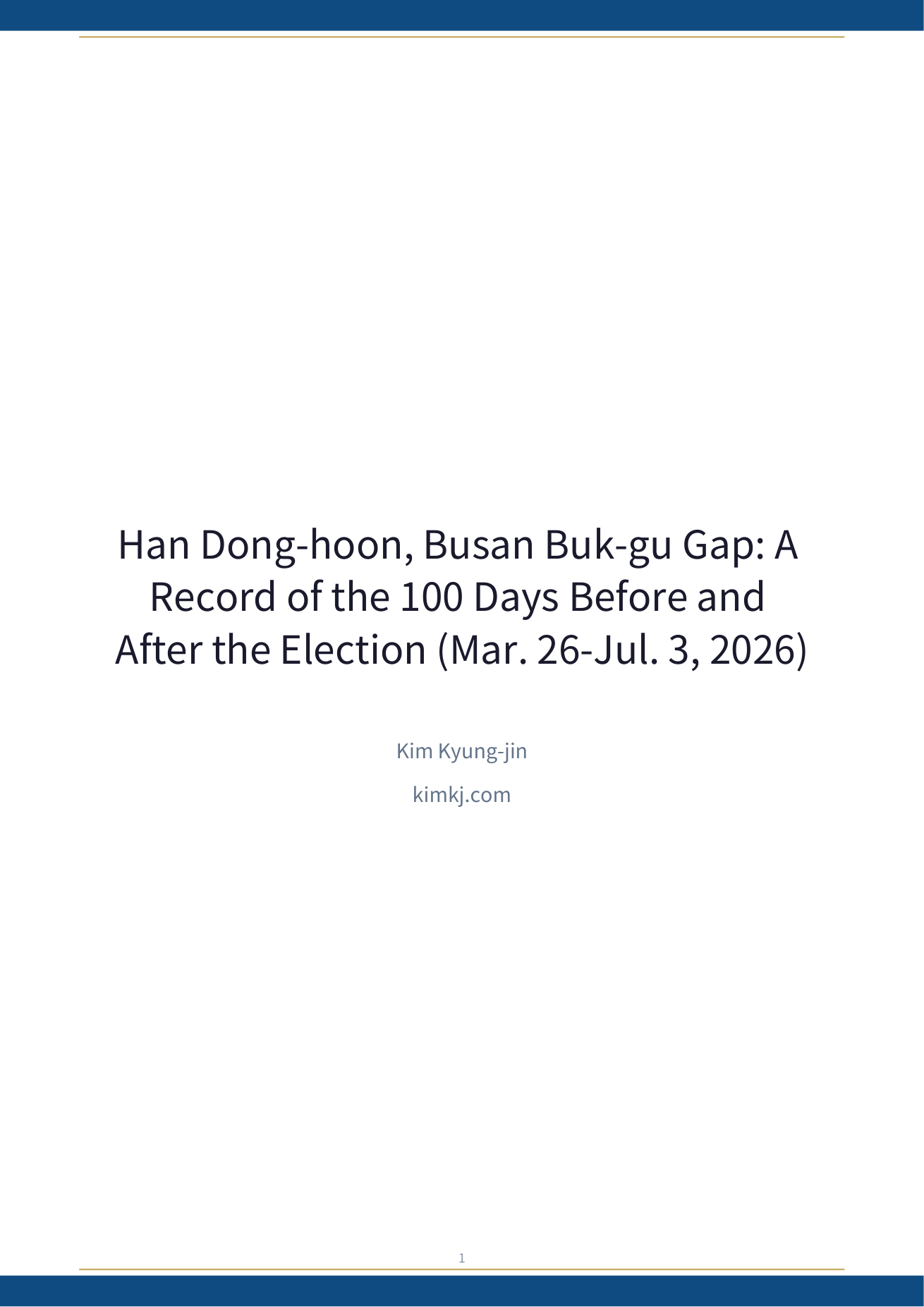
Han Dong-hoon, Busan Buk-gu Gap: A Record of the 100 Days Before and After the Election (Mar. 26-Jul. 3, 2026) cover

Table of Contents

Han Dong-hoon, Busan Buk-gu Gap: A Record of the 100 Days Before and After the Election (Mar. 26-Jul. 3, 2026)

Kim Kyung-jin

Table of Contents and 13 sections

From March 26 to July 3, 2026, this record follows the spring after expulsion, the Busan Buk-gu Gap by-election, victory as an independent, and the first bill submitted in the National Assembly.
Artificial Intelligence and Medicine cover

Table of Contents

Artificial Intelligence and Medicine

Kim Kyung-jin, Attorney at Law

AI in clinical care, hospitals, education, and research

AI in medical imaging, risk prediction, treatment planning, hospital operations, education, and research, with patient safety, privacy, and accountability.

The EU AI Act cover

Table of Contents

The EU AI Act

Kim Kyung-jin, Attorney at Law

A Practitioner’s Guide for Korean Companies

From August 2, 2026, a game company’s chatbot in Pangyo and a medical-device reading software in Busan fall under Article 50 of the EU AI Act, even without a single office in Europe. Rather than summarizing the provisions, this book reads them from the enforcement authority’s point of view: extraterritorial reach, transparency duties, general-purpose AI models, high-risk systems, and the double regulation that overlaps with Korea’s AI Framework Act. It is a field guide to what a Seoul-headquartered company must prepare, when, and how.

South Korea's AI Basic Act: A Practical Guide for Business Operators cover

Contents

South Korea’s AI Basic Act: A Practical Guide for Business Operators

Kim Kyung-jin, Attorney at Law

Compliance, Obligations, and Opportunities under Korea’s AI Regulation

On January 22, 2026, the AI Basic Act came into effect in the Republic of Korea. This book was written by an attorney for business operators. It answers questions such as “Is our service high-impact AI?”, “How should prior notification be conducted?”, and “What preparations are needed when expanding into the EU?”

Chinese Government AI Regulations cover

Contents

Chinese Government AI Regulations

Kim Kyung-jin, Attorney at Law

Chinese originals, translations, terms, issuing bodies, effective dates, administrative interpretations, and judicial materials

This edition orders Chinese AI-related laws, administrative regulations, military regulations, departmental rules, policy documents, and national standards by legal force. Each entry keeps the Chinese original text and adds an English translation or explanation, legal terms, issuing body, effective date, administrative interpretations, and judicial materials where available.

Fathers of Chinese AI cover

Table of Contents

Fathers of Chinese AI

Kim Kyung-jin, Attorney at Law

Ten lives behind China's AI ascent

This book follows Kai-Fu Lee, Robin Li, Jie Tang, Liang Wenfeng, Yang Zhilin, Yan Junjie, Wang Xiaochuan, Jingren Zhou, Shunyu Yao, and Yonghui Wu through the laboratories, companies, models, and policy environment that shaped Chinese AI.

How Far Has AI Entered Chinese Hospitals? cover

Table of Contents

How Far Has AI Entered Chinese Hospitals?

Kim Kyung-jin, Attorney at Law

A quiet shift in clinics, imaging rooms, and hospital administration

This book follows how artificial intelligence has entered Chinese hospitals, using Chinese and English materials together with original Chinese policy texts. It covers national policy, medical foundation models, clinical decision support, image reading, hospital information departments, traditional Chinese medicine, AI-native hospitals, the patient experience, hallucination and responsibility, regulation, and money. The final chapters collect major Chinese guidelines and the 84 health-sector AI application scenarios, with translated text and summaries.

Andrew Ng Biography cover

Table of Contents

Andrew Ng Biography

Kim Kyung-jin, Attorney at Law

A central figure in AI education and public learning

This book follows Andrew Ng from London, Hong Kong, Singapore, Carnegie Mellon, MIT, Berkeley, and Stanford to Google Brain, Coursera, Baidu, DeepLearning.AI, Landing AI, AI Fund, and Amazon. It reads his career through research, teaching, company building, and his practical view of AI.

Mykhailo Fedorov, Leading Figure of Ukraine's Drone War cover

Table of Contents

Mykhailo Fedorov, Leading Figure of Ukraine's Drone War

Kim Kyung-jin

From the State in a Smartphone to the Defense Ministry of the Drone War

This book follows Diia, IT Army, Starlink, UNITED24, Brave1, the Unmanned Systems Forces, drone procurement, and battlefield data to explain how Mykhailo Fedorov tied technology to state power in wartime Ukraine.

China’s Leading AI Firms and Government Agencies cover

Table of Contents

China’s Leading AI Firms and Government Agencies

Kim Kyung-jin

Policy, Companies, Data, and Hardware in China’s Intelligent Economy

This book follows China’s AI policy arc from the 2017 next-generation AI plan to AI+ and the 15th Five-Year Plan. It maps the roles of the State Council, NDRC, CAC, MIIT, and SAC, then reads DeepSeek, the AI Tigers, Alibaba, Tencent, Baidu, ByteDance, iFLYTEK, Huawei Ascend, East Data West Computing, manufacturing, education, consumption, and humanoid robotics as one connected system.

U.S. Department of War CDAO (Chief Digital and AI Officer) cover

Table of Contents

U.S. Department of War CDAO (Chief Digital and AI Officer)

Kim Kyung-jin, Attorney at Law

How the Military’s Brain Is Being Redesigned

From the moment in January 2026 when the U.S. Department of War declared data hoarding a national security threat, this book follows the birth of the CDAO (Chief Digital and Artificial Intelligence Office) and the five organizations it absorbed, Advana and the War Department Data Platform, the Open DAGIR procurement experiment, Project Maven and CJADC2 on the battlefield, and Responsible AI, allies, and critics — the story of how America is redesigning its military’s brain.

Science and Technology Commission of the CMC of the Communist Party of China cover

Table of Contents

Science and Technology Commission of the CMC of the Communist Party of China

Kim Kyung-jin

STC, Military-Civil Fusion, and China’s Military Technology Innovation

This English AI Library edition follows the CMC Science and Technology Commission, the Equipment Development Department, military-civil fusion, intelligentized warfare, emerging technology competition, and the institutional limits of China’s military innovation system.

The Chinese Communist Party School cover

Table of Contents

The Chinese Communist Party School

Kim Kyung-jin

Where Power Is Trained

This book follows the Chinese Communist Party school system from Ruijin and Yan'an to the Central Party School, the National Academy of Governance, provincial and county schools, young-official training classes, Cai Qi's leadership, and the Mwalimu Julius Nyerere Leadership School.

DARPA, America’s Defense Research Lab cover

Table of Contents

DARPA, America’s Defense Research Lab

Kim Kyung-jin

This book follows DARPA through its 2026 office reorganization, budget signals, AIxCC, AI Forge, RACER, LongShot, quantum computing, space robotics, battlefield medicine, and strategic-material programs, using official sources as the main trail.

AI and the Classroom cover

Table of Contents

AI and the Classroom

Kim Kyung-jin

The AI Teacher That Does Not Give Answers

From Estonia's AI Leap and Khanmigo to answer leakage, Korean AI digital textbooks, and teacher-in-the-loop classrooms, this book asks how AI can protect thinking instead of replacing it.

Spiderweb cover

Table of Contents

Spiderweb

Kim Kyung-jin

Ukraine's drone revolution that changed the map of war

A narrative account of Operation Spiderweb on June 1, 2025, and how Ukraine's drones reached deep inside Russia and changed military planning, intelligence work, and security assumptions.

A Map of the 2026 U.S.-China Collision cover

Table of Contents

A Map of the 2026 U.S.-China Collision

Kim Kyung-jin

The year tied in Busan and left unsolved in Beijing

A one-year map of tariffs, chips, rare earths, Taiwan, sea lanes, and Korea's choices between Washington and Beijing.

China's 2026 Power Map cover

Table of Contents

China's 2026 Power Map

Kim Kyung-jin

The completion of one-man rule, and the empty seat that follows

A map of Xi Jinping's power system, the military purge, the blocked succession path, and the economic-security dilemma.

The Architect of Contradictions cover

Table of Contents

The Architect of Contradictions

Kim Kyung-jin

Peter Thiel and the empire built by a man who hated competition

Peter Thiel, from a South African childhood to PayPal, Facebook, Palantir, politics, and the dream of defeating death.

Claude, GPT, Palantir, and the 2026 World War cover

8 readings

Claude, GPT, Palantir, and the 2026 World War

Kim Kyung-jin

How Artificial Intelligence Came to Pull the Trigger of War. Prologue, 3 Parts / 6 Chapters, Epilogue

A single name sits on the screen. An intelligence officer looks at it for twenty seconds, confirms only that it is a man, and moves on. Inside those twenty seconds a person dies, and the responsibility for deciding to kill him disappears. From Lavender over Gaza to Maven in Ukraine, Epic Furies over Iran, and target selection in the skies of Venezuela, this book follows the hand that chooses targets as it passes from human to machine in the wars of 2026.

China's Robotics Industry 2026: The Age of Mass Production and Real-World Deployment cover

25 readings

China's Robotics Industry 2026: The Age of Mass Production and Real-World Deployment

Kim Kyung-jin

From the humanoid mass-production race to U.S.-China hegemony: the state of China's robotics industry in 2026. Table of Contents, Preface, 7 Parts / 23 Chapters, Epilogue

In a factory in Shenzhen, hundreds of humanoid robots repeat the same motion. This book traces the mass-production race between Unitree and UBTECH, the Optimus supply chain, real-world deployment sites, and where Korea stands amid the U.S.-China tech hegemony.

Crossing the Adolescence of Technology Cover

15 Parts in Total

Crossing the Adolescence of Technology

Kim Kyung-jin

Dario Amodei, Anthropic, and the Struggle Toward Controllable Intelligence. Table of Contents, Preface, Prologue, 12 Chapters, Epilogue

The struggle of a physicist who lost his father to create controllable artificial intelligence. The story of Dario Amodei and Anthropic clashing with the Pentagon and the White House, shaking the era with the scaling law and Constitutional AI.

Boss, Give Yourself an AI Employee Now

Table of Contents, 43 Chapters, 11 Appendices, Epilogue

Boss, Give Yourself an AI Employee Now

Written by Kim Kyung-jin

Building an AI Automation System for Small Business Owners

37 Concrete Codex Use Cases cover

Book-style reading

37 Concrete Codex Use Cases

Kim Kyung-jin

From morning briefings to agent swarms: 37 real-world workflow automations

This guide gathers 37 ways to connect Codex and AI agents to real work: personal routines, data processing, marketing, sales, documents, development, and browser control.

2026 Beijing: The Dangerous Dance of Two Giants book cover

16 posts available

2026 Beijing: The Dangerous Dance of Two Giants

Kim Kyung-jin

Table of Contents, Introduction, 13 Chapters, Epilogue

This book reads the Beijing summit through Hormuz, rare earths, Taiwan, Boeing, soybeans, AI chips, and Korea’s exposure to the U.S.-China bargain.

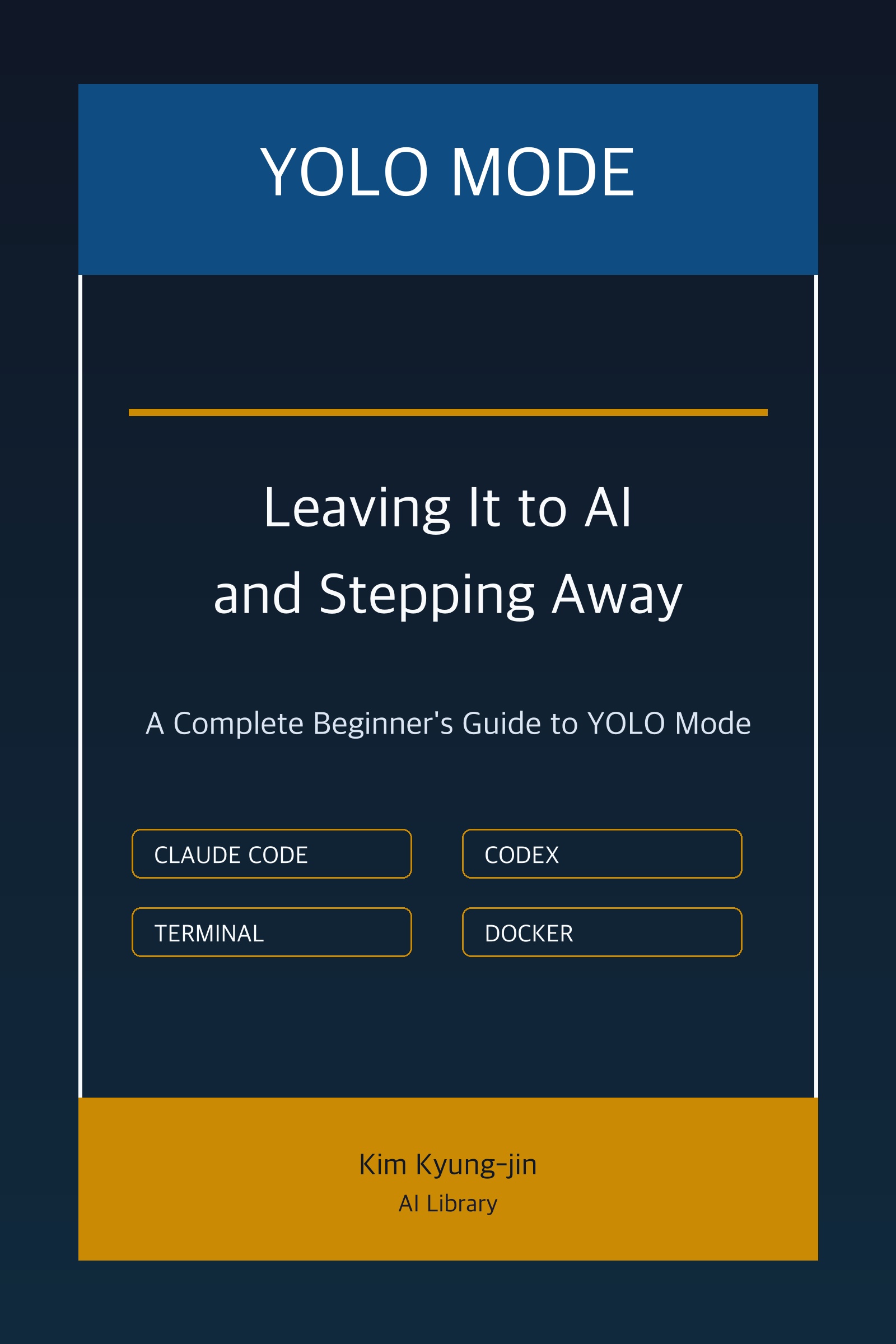
Leaving It to AI and Stepping Away cover

27 posts

Leaving It to AI and Stepping Away

Kim Kyung-jin

A Complete Beginner’s Guide to YOLO Mode. Table of contents and 26 chapters

A beginner-friendly online book on YOLO mode in Claude Code and Codex. It explains how to let AI read files, write code, run commands, and finish work while keeping rollback, Docker sandboxing, and safety checks close at hand.

Artificial Intelligence Fighter, Artificial Intelligence Air Force book cover

43 posts available

Artificial Intelligence Fighter, Artificial Intelligence Air Force

Kim Kyung-jin

Table of Contents, Preface, 40 Chapters, Epilogue

Artificial Intelligence Fighter, Artificial Intelligence Air Force is an online AI Library book by Kim Kyung-jin. It covers AI fighters, autonomous air power, unmanned combat aircraft, CCA, MUM-T, sixth-generation fighters and is organized as Table of Contents, Preface, 40 Chapters, Epilogue.

Artificial Intelligence on Trial book cover

26 posts available

Artificial Intelligence on Trial

Attorney Kyungjin Kim

Table of Contents, Preface, 21 Chapters, 3 Appendices

Artificial Intelligence on Trial is an online AI Library book by Attorney Kyungjin Kim. It covers artificial intelligence and law, AI liability, algorithmic judgment, courts and technology and is organized as Table of Contents, Preface, 21 Chapters, 3 Appendices.

PALANTIR book cover

16 posts available

PALANTIR: War, Surveillance, Artificial Intelligence

Attorney Kyungjin Kim

Table of Contents, Preface, 14 Chapters

PALANTIR: War, Surveillance, Artificial Intelligence is an online AI Library book by Attorney Kyungjin Kim. It covers Palantir, war, surveillance, artificial intelligence, data analytics, national security and is organized as Table of Contents, Preface, 14 Chapters.

Brain Readers: Neuralink and the Final Human Revolution book cover

21 posts available

Brain Readers: Neuralink and the Final Human Revolution

Kim Kyung-jin

Table of Contents, Prologue, 18 Chapters, Epilogue

Brain Readers: Neuralink and the Final Human Revolution is an online AI Library book by Kim Kyung-jin. It follows Neuralink, brain-computer interfaces, brain data, medicine, neurorights, and the future of human enhancement.

Artificial Intelligence and the Reshaping of Society book cover

16 posts available

Artificial Intelligence and the Reshaping of Society

Kim Kyung-jin

Table of Contents, Preface, 13 Chapters, Epilogue

Artificial Intelligence and the Reshaping of Society is an online AI Library book by Kim Kyung-jin. It follows how artificial intelligence changes work, education, inequality, cities, democracy, and human relationships.

The Jensen Huang Story book cover

16 posts available

The Jensen Huang Story

Kim Kyung-jin

Table of Contents, Preface, 13 Chapters, Epilogue

The Jensen Huang Story is an online AI Library book by Kim Kyung-jin. It covers Jensen Huang, NVIDIA, GPUs, AI chips, and the AI industry.

Ten Questions AI Poses to Humanity book cover

12 posts available

Ten Questions AI Poses to Humanity

Kim Kyung-jin

Table of Contents, Preface, 10 Chapters

Ten Questions AI Poses to Humanity is an online AI Library book by Kim Kyung-jin. It asks how artificial intelligence changes truth, weapons, work, data, identity, and human control.

Malaysia and the Malacca Strait book cover

23 posts available

Malaysia and the Malacca Strait: Whoever Controls It Controls the World

Kim Kyung-jin

Table of Contents, Preface, 20 Chapters, Epilogue

Malaysia and the Malacca Strait is an online AI Library book by Kim Kyung-jin. It covers Malaysia, the Malacca Strait, maritime logistics, geopolitics, global trade, and Southeast Asia’s strategic future.

Georgia history and culture travel book cover

24 posts available

A Journey Through Georgia’s History and Culture

Kim Kyung-jin

Table of Contents, Preface, 17 Chapters, 4 Appendices, Epilogue

A Journey Through Georgia’s History and Culture is an online AI Library book by Kim Kyung-jin. It covers Georgia’s history, culture, religion, politics, travel, and the Caucasus crossroads between Europe and Asia.

Reading Armenia book cover

13 posts available

Reading Armenia: A Thousand Prayers, One Mountain

Kim Kyung-jin

Table of Contents, Preface, 10 Chapters, Epilogue

Reading Armenia: A Thousand Prayers, One Mountain is an online AI Library book by Kim Kyung-jin. It covers Armenian history, faith, Mount Ararat, cultural memory, travel, and the endurance of a small nation.

Mastering Claude Code book cover

41 posts available

Mastering Claude Code

Kim Kyung-jin

Table of Contents, Preface, Chapters, Appendices

Mastering Claude Code is an online AI Library book by Kim Kyung-jin. It covers Claude Code setup, commands, workflows, automation, agents, and practical methods for using Claude Code in real work.

Claude Cowork and Agent manual book cover

11 posts available

Claude Cowork and Agent Utilization Manual

Kim Kyung-jin

Table of Contents, Preface, 8 Chapters, Closing Note

Claude Cowork and Agent Utilization Manual is an online AI Library book by Kim Kyung-jin. It covers Claude Code, AI agents, coding automation, work automation, and practical agent-based collaboration.

2026 U.S.-Iran War and the Global Energy Crisis book cover

39 posts available

The 2026 U.S.-Iran War and the Global Energy Crisis

Kim Kyung-jin

Table of Contents, Preface, Chapters and Appendices

The 2026 U.S.-Iran War and the Global Energy Crisis is an online AI Library book by Kim Kyung-jin. It covers war, oil, the Strait of Hormuz, maritime security, energy markets, and the global consequences of conflict.

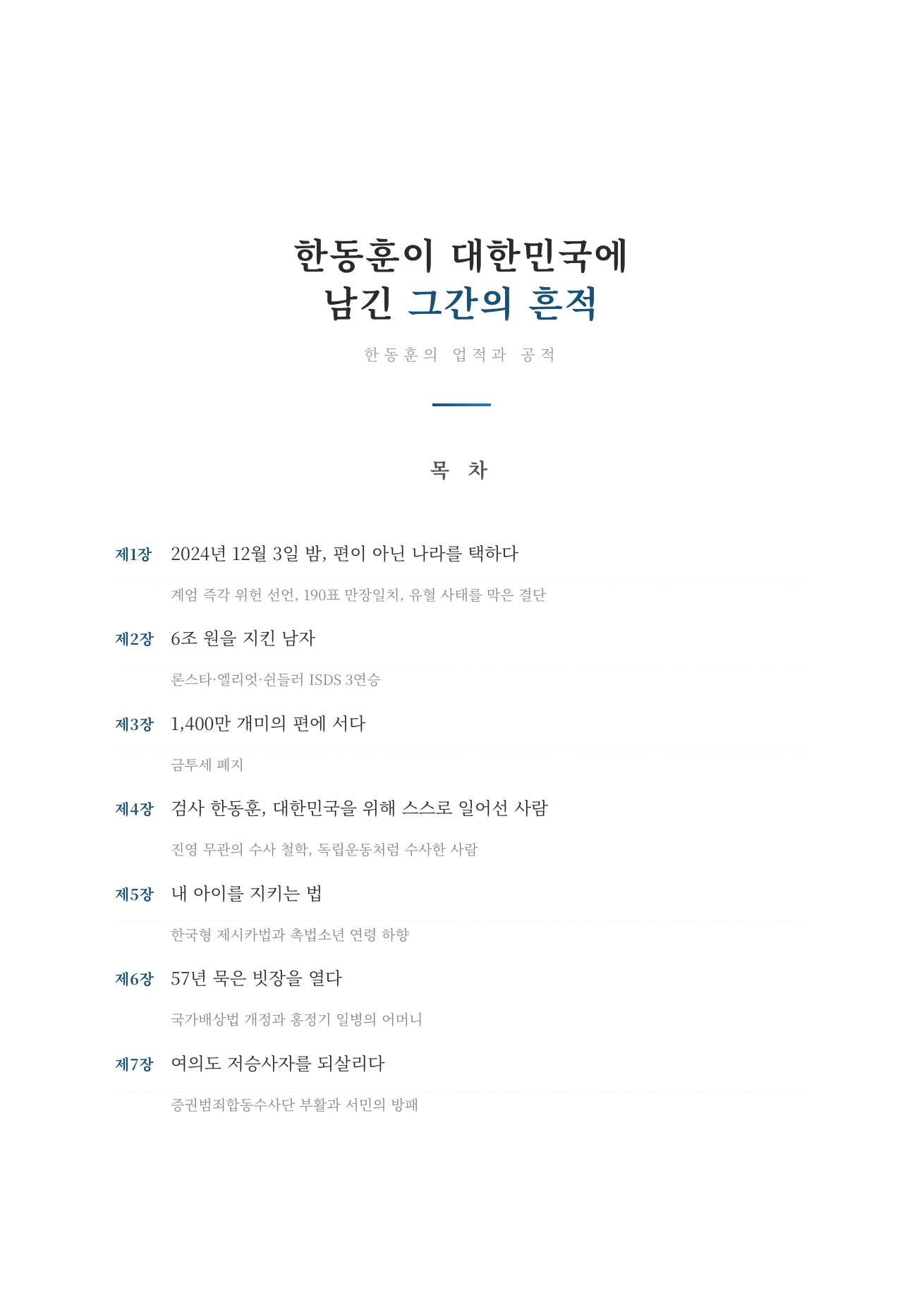
The Traces Han Dong-hoon Left on South Korea book cover

13 posts available

The Traces Han Dong-hoon Left on South Korea

Kim Kyung-jin

Table of Contents, Prologue, Chapters, Epilogue

The Traces Han Dong-hoon Left on South Korea is an online AI Library book by Kim Kyung-jin. It examines his record in justice policy, immigration reform, public institutions, and the structural questions facing South Korea.

The Han Dong-hoon Story book cover

39 posts available

The Han Dong-hoon Story

Kim Kyung-jin

Table of Contents, Prologue, Chapters, Epilogue

The Han Dong-hoon Story is an online AI Library book by Kim Kyung-jin. It traces Han Dong-hoon’s life, public career, political choices, and the changing landscape of South Korean conservative politics.

Beyond the Glass Ceiling cover

39 entries

Beyond the Glass Ceiling

Kim Kyung-jin

Table of contents, prologue, 31 chapters, epilogue, 5 appendices

A political biography tracing Sanae Takaichi’s rise from Nara to Japan’s premiership, through party struggles, security policy, diplomacy, and the meaning of Japan’s first female prime minister.

AI Hegemony War book cover

8 posts available

AI Hegemony War

Kim Kyung-jin

Table of Contents, 7 Chapters

An online AI Library book by Kim Kyung-jin on AI superintelligence, the U.S.-China technology race, Europe and Korea’s AI laws, and international AI governance.

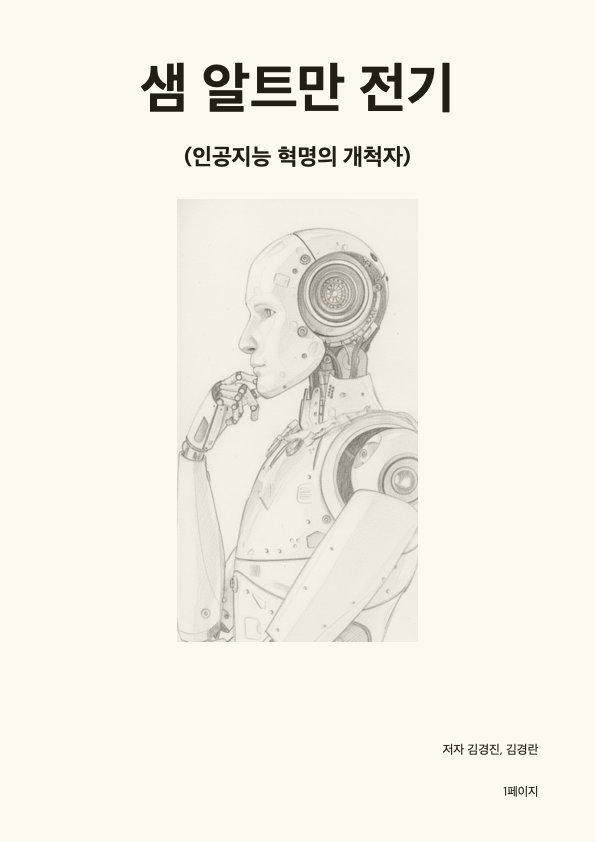
Sam Altman Biography: Pioneer of the AI Revolution cover

22 posts

Sam Altman Biography: Pioneer of the AI Revolution

Kim Kyung-jin, Kim Kyung-ran

Table of contents, preface, 7 parts, 20 chapters

An online biography following Sam Altman’s childhood, startups, Y Combinator, OpenAI, ChatGPT, the 2023 board crisis, and his sense of responsibility in the AI era.

From Chaiwala to Prime Minister cover

13 entries

From Chaiwala to Prime Minister

Kim Kyung-jin

Table of contents, preface, 10 chapters, epilogue

A political biography tracing Narendra Modi from a chai-selling boy in Vadnagar to RSS organizer, Gujarat chief minister, and three-term prime minister, while reading modern India, Korea-India relations, and the risks of a rising power.

AI Classroom: Your Grades Will Change book cover

26 posts available

AI Classroom: Your Grades Will Change

Kim Kyung-jin

Table of Contents, Preface, 24 Sections

An online AI Library book by Kim Kyung-jin on how AI can support elementary, middle, and high school learning, teaching, assessment, and educational equity.

Military Artificial Intelligence cover

17 entries

Military Artificial Intelligence

Kim Kyung-jin and Kim Won-tae

Table of contents, preface, 14 chapters, epilogue

A full-length study of military artificial intelligence, from autonomous weapons, drones, command systems, logistics, and cyber defense to the strategies of the United States, China, Israel, Korea, and global defense AI companies.

Global Case Studies in Introducing AI into Public Administration book cover

25 posts available

Global Case Studies in Introducing AI into Public Administration

Kim Kyung-jin

Table of Contents, 23 Chapters, Epilogue

An online AI Library book by Kim Kyung-jin on public-sector AI adoption, national strategies, administrative services, governance, and future policy tasks.

Seven Misunderstandings About the Arctic Route book cover

10 posts available

Seven Misunderstandings About the Arctic Route

Kim Kyung-jin

Table of Contents, Preface, 7 Chapters, Epilogue

An online AI Library book by Kim Kyung-jin on seven common misunderstandings about the Arctic Route, including speed, liner service, insurance, safety rules, year-round access, carbon impact, and infrastructure.

Artificial Intelligence Election cover

14 posts

Artificial Intelligence Election

Kim Kyung-jin

Table of contents, author preface, 11 chapters, closing essay

An online book on campaign messaging, publicity materials, digital campaigning, data analysis, campaign operations, disinformation defense, legal risk, and ready-to-use prompts.

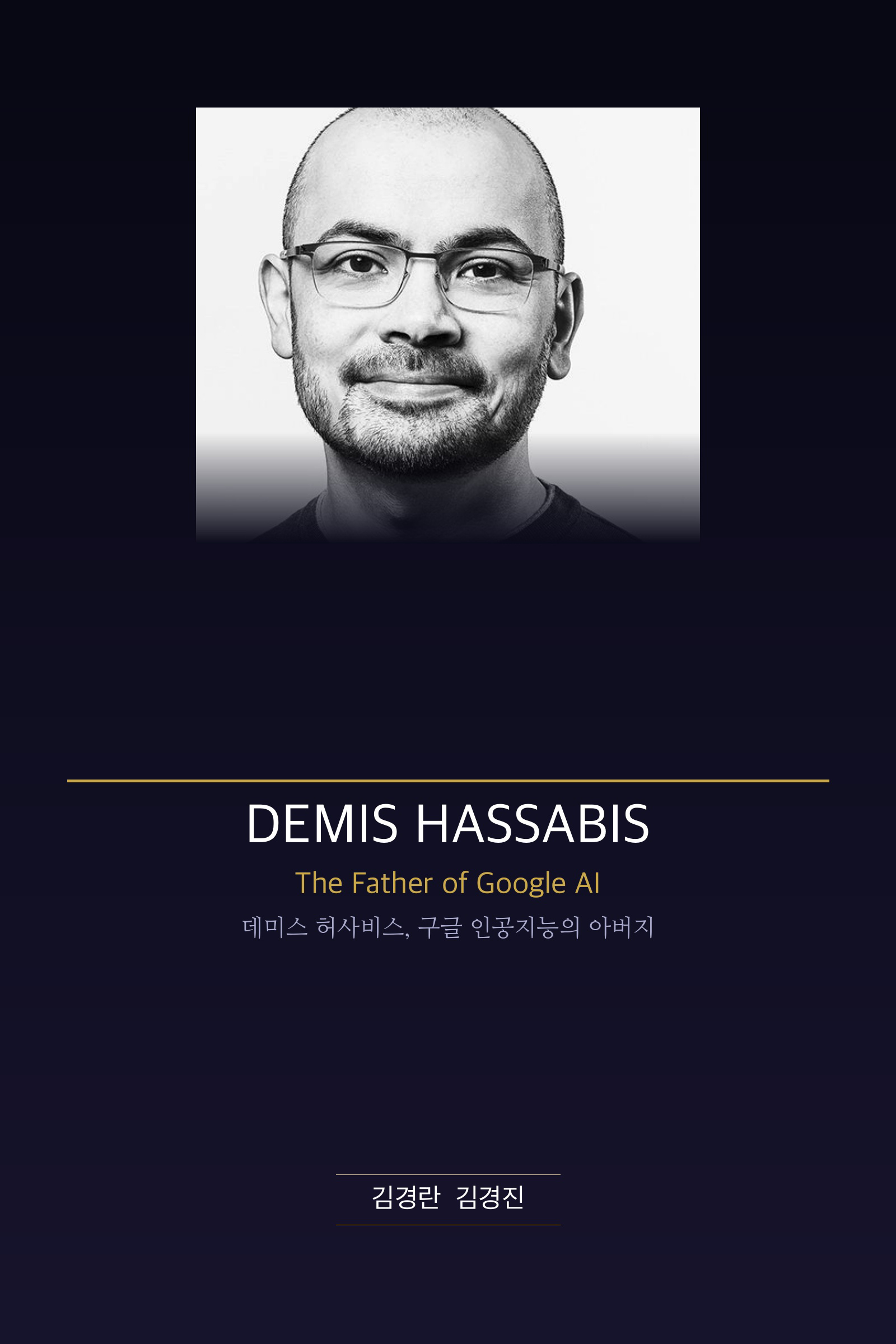
Demis Hassabis book cover

34 posts available

Demis Hassabis, Father of Google’s Artificial Intelligence

Kim Kyung-ran, Kim Kyung-jin

Table of Contents, Author’s Preface, 31 Chapters, Epilogue

Demis Hassabis, Father of Google’s Artificial Intelligence is an online AI Library book by Kim Kyung-ran, Kim Kyung-jin. It covers Demis Hassabis, Google DeepMind, artificial intelligence, AlphaGo, AI research and is organized as Table of Contents, Author’s Preface, 31 Chapters, Epilogue.

The Dhammapada 423 Verses book cover

28 posts available

The Dhammapada: 423 Verses

Kim Kyung-jin

Table of Contents, Editor’s Note, 26 Chapters, 423 Verses

An online AI Library book by Kim Kyung-jin. This edition arranges all 423 verses of the Dhammapada into 26 chapters for slow, poetic reading.

Nano Banana Pro Practical Prompt Book cover

24 posts

Nano Banana Pro Practical Prompt Book

Kim Kyung-jin

6 parts, 22 chapters, classroom prompt appendix

An online book for using Nano Banana Pro in classes and real work, covering image generation, editing, text rendering, character consistency, business use cases, and monetization.

Liberal Arts AI for College Students book cover

16 posts available

Liberal Arts AI for College Students

Kim Kyung-jin

Table of Contents, Preface, 13 Chapters, Closing Essay

An online AI Library textbook for college students. It introduces AI history, daily use, document work, research, images, presentations, video, productivity, learning, careers, copyright, and governance.

Legal Practice and Artificial Intelligence book cover

16 posts available

Legal Practice and Artificial Intelligence

Kim Kyung-jin

Table of Contents, Preface, 14 Parts

An online AI Library book by Kim Kyung-jin on legal research, drafting, evidence analysis, contract review, NotebookLM, and practical generative AI workflows for legal practice.

Hello, I Am Kim Kyung-jin book cover

10 posts available

Hello, I Am Kim Kyung-jin

Kim Kyung-jin

Table of Contents, Preface, Recommendations, 6 Chapters, Closing

An online AI Library book on Kim Kyung-jin’s life, science and technology policy, parliamentary diplomacy, legislative battles, Dongdaemun vision, and proposals for Korea’s demographic future.

Politics and People book cover

25 posts available

Politics and People

Kim Kyung-jin

Table of Contents, Prologue, 22 Chapters, Epilogue

An online AI Library book by Kim Kyung-jin on how politics begins with reading people, winning trust, keeping relationships, and enduring seasons of crisis.

[AI Library] Chapter 12: Skills: Reusable Workflow Recipes

Mastering Claude Code
Author
Kim Kyung-jin
Date
2026-05-06 09:09
Views
685

Mastering Claude Code

Chapter 12: Skills: Reusable Workflow Recipes

Kim Kyung-jin

Mastering Claude Code

Introduction

At 7 a.m., you type into Claude Code: "Run the morning coffee skill." The agent checks your calendar, pulls this week's tasks from your project management tool, checks your quarterly goal progress, and proposes a schedule for the day. At the same time, in another window you sent "Analyze recent YouTube comments," and in yet another window "Run a team pulse check."

Three agents work in parallel. Each is running a different skill. The time spent typing all this is just over one minute, and doing this manually would have taken at least 25 minutes.

Welcome to the world of Skills.

The Relationship Between Skills and Workflows

Earlier, the WAT framework covered Workflows,instructions written in Markdown that agents read and execute, like Standard Operating Procedures. Skills are essentially the same thing.

Only the name differs. The word workflow suggests a one-time task flow, while skill implies a technique you can use repeatedly with expertise. Workflows have Python scripts attached as tools, and so do skills. Workflows are Markdown files, and so are skills. The structure is identical.

One difference: skills include YAML Front Matter, a section at the top of the file enclosed by --- that records the skill's name and description. This front matter dramatically improves how agents discover skills. Rather than reading the entire content of every skill file, agents scan just the names and descriptions in the front matter.

They scan the front matter's name and description, select the appropriate skill for the current request, then read only the body of the chosen skill in detail. This is called Progressive Context Loading.

You can view a skill as an evolved form of a workflow, or simply as a different name for the same concept. What matters is that both are natural language instructions for agents, readable and editable by humans. You define agent behavior using everyday sentences, not programming languages.

Creating Skill Files in the .claude/skills Directory

Skill files live in your project's .claude/skills/ directory. Each skill is organized in its own subfolder, with skill.md as the core file.

[Figure 12-1: Example .claude/skills Directory Structure]

Alongside skill.md, a skill folder can contain supporting files: Python scripts in a scripts/ subfolder, reference documents in a references/ subfolder, and so on. Organizing everything inside the skill itself is called a Self-Contained structure.

Another approach exists. Scripts or reference files can be elsewhere in your project. For example, your YouTube analysis skill's skill.md can reference ../../references/youtube_channel.md, and the agent will follow the path to read that file even if it lives outside the skill folder. This is called an External Reference structure.

This is called an External Reference structure.

Either way, the core principle is simple: the correct path must be recorded inside skill.md.

Creating your first skill doesn't mean writing Markdown directly. You build it through conversation with an agent. In plan mode, ask: "Build me a research skill that uses the Perplexity API and sets up API key placeholders in .env." The agent designs the folder structure, writes skill.md, generates necessary scripts, and updates CLAUDE.md to register the new skill.

Why delegate this to an agent rather than do it manually? The agent already knows best practices: YAML front matter format, file path conventions, efficient structures that count tokens well. However, agents don't always create perfect structures. Sometimes they generate a skill as pure Markdown without the YAML front matter.

When this happens, you can add the front matter yourself, or give the agent Anthropic's official documentation URL and instruct: "Follow this document and build it to best practices."

The recommended length for skill.md is 500 lines or fewer. Keep detailed reference materials in separate files to save on token counts.

How to Write Effective Skill Descriptions

For a skill to work properly, the agent must be able to find it. When the agent analyzes the user's request and selects from dozens of available skills, the description plays a critical role.

In the first stage of Progressive Context Loading, agents read only the name and description of each skill. This scanning costs roughly 100 tokens per skill. If the description is vague, the agent may choose the wrong skill or miss an appropriate one entirely.

An effective description has three qualities.

State the trigger situation. Describe the specific moment when this skill should be invoked, such as: "Use when the user creates a daily plan or says morning coffee." This lets the agent match the user's natural language request against your description.

Specify the output. Describe what the skill produces, such as: "Synthesizes calendar, tasks, and goals to output a time-blocked daily schedule." This gives the agent a way to confirm the results match what the user expects.

Define the boundaries. State what the skill does not cover, such as: "This skill addresses scheduling only and excludes content creation or research." When multiple similar skills exist, clear boundaries prevent agent confusion.

[Figure 12-2: Three Stages of Progressive Context Loading: Front Matter Scan → Load Skill Body → Load Reference Files]

Skills can be invoked two ways. First, with a slash command: type /morning-coffee and the skill runs immediately. Second, with natural language: say "Set up my day" and the agent searches descriptions to find the morning coffee skill.

Slash commands are fast and precise,no interpretation needed, instant execution. Natural language is flexible,you don't need to know the skill name, just convey your intent. Both are typically enabled, but if a skill triggers too often unintentionally, you can set disable_model_invocation: true in the YAML front matter to allow only slash command activation.

When a skill isn't being called, the description is usually the culprit. A vague description like "useful skill" matches nothing. But a specific one,"Call the Perplexity API to generate a PNG infographic in your brand guidelines whenever the user requests one",matches much more accurately.

Committing to GitHub and Sharing with Your Team

As long as a skill exists in .claude/skills/, it works only in that project. When you push the project folder to GitHub, any team member can clone the repository and use the same skills.

Think about what this means. One person creates a research skill and runs it dozens of times, refining it. They adjust prompts, improve output formatting, and optimize to reduce unnecessary API calls. The moment they commit this to GitHub, the entire team gains access to research of the same quality. One person's learning curve becomes the team's competence.

The process is straightforward. Initialize a Git repository with git init, or ask an agent: "Upload this project to GitHub." The agent creates the repository, commits, and pushes. Each time you modify a skill, make a commit, and version control is automatic. You can compare which version of a skill performed better and roll back if problems arise.

[Figure 12-3: The Skill-Sharing Flow: Personal Creation → Git Commit → GitHub Push → Team Clone]

One more choice exists regarding where skills are stored: Project Skills versus Global Skills.

Project Skills live in .claude/skills/ and work only within that project. You can share them with team members. If a frontend design skill is needed only in a web development project, keep it as a project skill.

Global Skills live in ~/.claude/skills/ in your home directory and are available in every project you open. They aren't shared with team members. Personal skills you use alone, or skills common to all projects, belong here. If a frontend design skill is needed in any project, store it globally for convenience.

A skill's real value doesn't lie in any single finished skill. It lies in the feedback loop. You run the skill, watch how the agent works, give feedback like "That API call was unnecessary" or "I don't like the output format," and the agent updates skill.md.

Repeat this cycle ten times, twenty times, and the skill that felt awkward at first transforms into a tool perfectly suited to your workflow. Expecting a perfect skill from an agent from the start is unrealistic. Perfection comes from repetition.

There are patterns you discover while optimizing skills. If an agent wastes time searching the same data repeatedly, hardcode frequently referenced IDs or paths into skill.md. If an agent consumes too much of its reading window at once, add instructions to the skill directing it to delegate heavy work to a secondary agent.

If an agent queries external API documentation every time, collect that information from the web and save it as a reference Markdown file. Reading a Markdown file is far faster and cheaper than crawling API documentation.

All these optimizations share a single direction. Execute a skill, work on other things for ten minutes, then return to check the finished result. When you reach that point, the image of one person running four agents simultaneously and completing a full day's work by morning ceases to be fantasy and becomes daily routine.

And when these skills connect to each other, secondary agents call one another, and external services begin conversing with agents through MCP, something is created that transcends the level of a personal assistant.

Gyeong-jin Kim, Attorney and AI Expert

AI Legal Policy Specialist · Former National Assemblyman · Author of Multiple Works

If this book has remained beside you, even briefly, please support bringing the next story to the world.

(Voluntary support account: Nonghyup 302-1096-0948-81 Account holder: Gyeong-jin Kim)

Kim Kyung-jin

Attorney · Former Member of the National Assembly · AI Policy Researcher

kimkj.com

© 2026 Kim Kyung-jin. All rights reserved.

#KimKyungjin #AILibrary #MasteringClaudeCode
kimkj.com Home
Scroll to Top
kimkj.com Home