Table of Contents
Artificial Intelligence and Medicine
Kim Kyung-jin, Attorney at Law
AI in clinical care, hospitals, education, and research
AI in medical imaging, risk prediction, treatment planning, hospital operations, education, and research, with patient safety, privacy, and accountability.

































[AI Library] 5 Cambridge University and Lionhead Studios
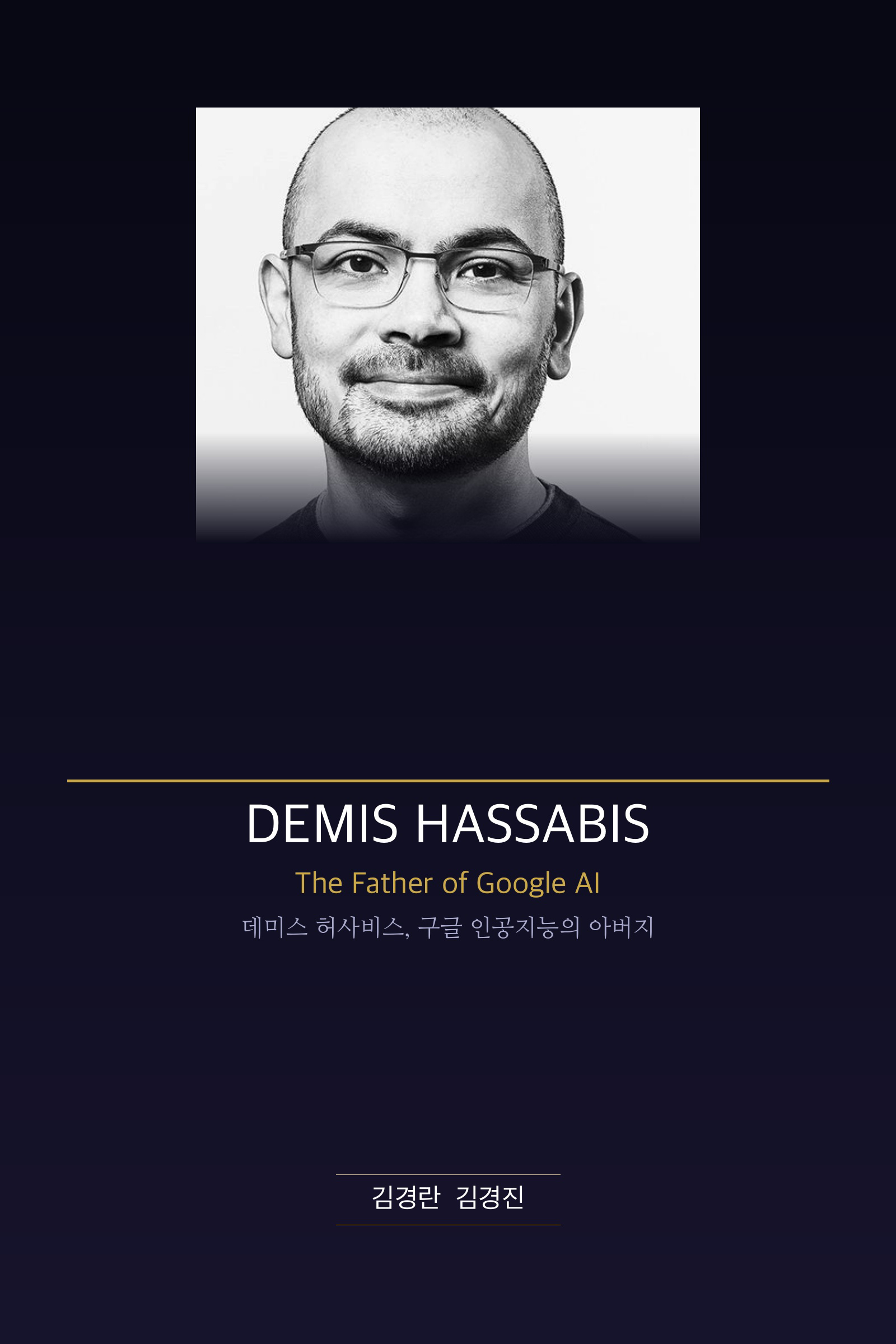
Demis Hassabis, Father of Google's Artificial Intelligence
Part 2. A Teenager Who Wrote Code and Designed Virtual Worlds
5 Cambridge University and Lionhead Studios
Kim Kyung-ran, Kim Kyung-jin
Competition (1995-1997) and Earning a Half Blue. Saturday, March 4, 1995. The Royal Automobile Club on Pall Mall, London. In the match room of this building, where the finest minds of Oxford and Cambridge had faced each other across chessboards for over a century, a cold stillness hung in the air. The 113th Varsity Match had begun. On the red carpet, spectators held their breath, following every movement of the pieces.
Nineteen-year-old Demis Hassabis, wearing the Cambridge team uniform, quietly studied Shashi Jayakumar of Oxford seated across from him. Hassabis was someone who had already reached second place in the world chess rankings for players under fourteen. He had captained the England Junior team and achieved Master rating (Elo 2300) at the age of thirteen.
He had been tempered by the pressure of competition through hundreds of tournaments, yet representing his university on this stage carried a different weight. The Oxbridge Varsity Match was not a simple chess tournament. Since its founding in 1873, it had been a contest where the pride of British academia was at stake, an annual ritual symbolizing the intellectual traditions of both universities.
Hassabis pressed Jayakumar with quick judgment and deep positional understanding, ultimately winning and contributing to Cambridge's dominant 6-2 victory. Cambridge University has a tradition of awarding students who achieve outstanding results representing the university in athletics and sports with the title of 'Blue.' Major sports like rowing, rugby, and cricket earn a 'Full Blue,' while sports like chess and fencing earn a 'Half Blue.' Hassabis was awarded a Half Blue in recognition of his outstanding play at the Varsity Match.
From his first year in 1995 through his final year in 1997, he competed in this event for three consecutive years, serving as a key player for Cambridge chess.
Among the Oxford team players Hassabis faced at the Varsity Match was Dharshan Kumaran. At the time, the two met as opponents across the chessboard. More than a decade later, Kumaran would join DeepMind, the company Hassabis founded, as a core researcher.
The fact that two men who once contested moves on a chessboard became colleagues working to unlock human intelligence reveals the seeds of connection planted without warning throughout Hassabis's life. Chess was more than a game for Hassabis. During matches, he constantly observed how his own brain operated. The moment intuition fired first when predicting the next move. The moment logical calculation verified it. The moment emotional judgment kicked in when trying to read an opponent's psychology. He was captivated not by winning or losing but by the process itself.
The grand stage of the Varsity Match left him with a question deeper than the thrill of victory: 'thinking about how we think.' The human intuition and calculation displayed on the chessboard, how could those be transplanted into a machine? This question merged with the computer science theory he studied in Cambridge lecture halls and began taking shape as a single project. The young man who had been reading hundreds of possible moves in the quiet match room of the Royal Automobile Club was already forming his identity as a future scientist and CEO.
He sensed that the formula for victory perfected within the closed system of chess would someday become the key to solving open problems in the real world. Background on Completing A-levels at Sixteen and Entering Cambridge. Demis Hassabis finished all of his A-level examinations, Britain's university entrance exams, at sixteen years old. Having attended Queen Elizabeth's School and Christ's College Finchley in North London, he realized early that the standard curriculum was insufficient to contain his intellectual appetite.
He taught himself ahead in mathematics and science, finishing material his classmates had not yet started. He put a period on his secondary education two years earlier than the typical student. Queens' College at Cambridge University offered this sixteen-year-old boy admission.
But the university attached one condition. He was too young. The university recommended he take a gap year,
a one-year deferral period. An ordinary student might have spent that time traveling or volunteering. For Hassabis, this year meant something entirely different.
He plunged into the world of game development, something he had dreamed of since childhood. Bullfrog Productions, led by legendary game designer Peter Molyneux, took him in. Seventeen years old. At that age, Hassabis joined as lead programmer and co-designer on the worldwide hit 'Theme Park.'
Under the concept of an amusement park simulation where players designed roller coasters, hired staff, and managed visitor satisfaction, the game sold millions of copies worldwide. A teenager in his late teens had seized both commercial success and industry recognition at once. Success brought temptation with it.
Peter Molyneux was so deeply impressed by Hassabis's abilities that he made an extraordinary offer. 'Don't go to university. Stay and work with us, and we'll pay you one million pounds.' In the early 1990s, for a teenage boy raised in a multicultural household that was not financially comfortable, one million pounds was an unimaginable sum.
His father, Kostas, ran a toy shop and wrote songs. His mother, Angela, held the household together through frugality. With that kind of money, the lives of his entire family could change. Hassabis deliberated.
It could not have been a short deliberation. But his conclusion was clear. He refused. What he wanted was not an immediate reward but the academic foundation to unlock the secrets of intelligence.
He had tasted the possibilities of intelligence in the game development trenches, but he had an instinct that coding skills alone would not solve it. He needed to understand the mathematical principles of computer science, and he needed a systematic approach to how the human brain works. The place to build that foundation was not a game studio but a university.
In the autumn of 1994, Hassabis enrolled at Queens' College. There is an anecdote that he arrived on the Cambridge grounds driving a Porsche purchased with his game royalties. The fact that a freshly enrolled eighteen-year-old student drove a sports car to campus was quite a shock to his peers. But it was not vanity. It was proof. Proof that this student had already validated his abilities in the real world.
The subject Hassabis chose was the Computer Science Tripos. Cambridge's computer science program was the place where Alan Turing had laid the intellectual foundations. Maurice Wilkes, who researched the world's first programmable electronic computer, was also from this department.
Hassabis built his knowledge on top of that history. He was not a student who studied merely for grades. He threw himself into finding the theoretical weapons to solve problems he had encountered at Bullfrog: what algorithms were needed to make NPCs behave more intelligently in games, what mathematical structures were suitable for efficiently handling the complexity of simulated worlds.
In 1997, Hassabis graduated at the top of his class with a 'Double First' in computer science. A Double First means receiving First Class Honours in both Part I and Part II of Cambridge's Tripos examinations, an achievement only a tiny fraction of students in the department ever attain. It was the moment that proved his judgment had not been wrong: finishing A-levels at sixteen, rejecting a million-pound temptation, choosing knowledge over the Porsche. The three years at Cambridge were Hassabis's base camp for climbing the enormous mountain called artificial intelligence.
He was mapping the route from that base camp to the summit in his mind. AI Programming for 'Black & White' at Lionhead Studios. Reunion with Peter Molyneux and Designing the AI for a God Game. In the summer of 1997, having graduated from Cambridge at the top of his class, Hassabis headed back to the game industry. This time the terrain was different. He was no longer a student on a gap year, nor was he simply a hired programmer.
The place he joined was Lionhead Studios, newly founded by Peter Molyneux, his former mentor and colleague. Starting from a small office in Guildford, Surrey, the company was attracting the highest expectations in the game industry at the time. The name Molyneux itself was a guarantee of innovation.
Molyneux was the man who had created the God Game genre with 'Populous.' In this genre the player looked down on the world from a god's perspective, sculpted the terrain, led people, and determined the rise and fall of civilizations, delivering an experience unprecedented in gaming history. Molyneux was planning an ambitious title meant to be the pinnacle of that genre.
'Black & White.' A game where the player became a god, raised a giant creature, governed villagers, and had to choose whether to be a merciful god or a destructive one.
The person Molyneux chose to realize the core of this vision was Hassabis. Hassabis received the title of Lead AI Programmer.
What that title meant was clear. He was responsible for designing and implementing every intelligent system that would make the world of 'Black & White' feel alive, the soul of the game. At the time, most game AI operated according to pre-written rules.
Attack when an enemy appears; flee when health is low. That was the extent of the if-then conditional logic. But the system Hassabis needed to design was on an entirely different level. In 'Black & White,' the player's moral choices had to be reflected across the entire game world in real time.
Show mercy and the sky cleared, flowers bloomed. Act cruelly and clouds gathered, the ground cracked. Designing the logical structure that naturally connected all these changes was Hassabis's task.
He stayed up through the night debating with Molyneux. When Molyneux posed a question like 'What happens if the player throws a villager into the sea?', Hassabis calculated how that would register on the world's morality metrics, what ripple effects it would have on the behavior of surrounding villagers, and how it would ultimately alter the visual atmosphere of the world. Hassabis insisted that artificial intelligence must not stop at executing the player's commands. It had to perceive the player's intent and form its own personality accordingly. That was his conviction.
This was a bold idea for the technological standards of the time. But he had three years of theoretical grounding from Cambridge behind him. He fed search algorithms, probability theory, and early forms of machine learning concepts learned in computer science into the laboratory of games.
The fusion of theory and practice. That was what he had pursued at Cambridge, and what he began to realize at Lionhead. Lionhead's early team numbered only eight people. Hassabis was among the youngest, yet in the domain of AI he held stronger authority than anyone. When Molyneux threw out a creative inspiration, Hassabis translated it into a logical system.
The relationship between the two was close to a collaboration between an architect who dreamed visions and an engineer who realized them structurally. During this period, Hassabis did not view games as entertainment. He was convinced that games were the optimal testbed for compressing and experimenting with the complex problems of the real world.
The God Game genre was an ideal environment for intelligence to process vast amounts of data, form long-term plans, and learn how to interact with humans. The early ideas of 'Reinforcement Learning,' which later became central to DeepMind, began to sprout during this period, in the cramped office in Guildford. The Innovation of the Creature AI That Learns from Player Behavior. The heart of 'Black & White' was the 'Creature' that appeared in the game.
The player chose from a monkey, lion, cow, or tiger, and that being became the player's avatar and disciple. The Creature grew into an entirely different entity depending on how the player taught it. If raised with mercy, it became a guardian that cared for the villagers. If trained with violence, it became a monster that trampled villages.
The learning system that Hassabis, as Lead AI Programmer, embedded into this Creature is regarded as one of the most sophisticated artificial intelligences in the entire history of gaming. The Creature's brain was composed of multiple layers of learning mechanisms. At the most basic layer was a Desire System.
Hunger, fatigue, curiosity, fear. The Creature held these internal states as numerical values and searched for the best action to satisfy them. When hungry, it picked fruit from trees. When curiosity was high, it explored unfamiliar regions. Up to this point, previous game AIs had attempted similar approaches. What made Hassabis's system fundamentally different was the Observational Learning and reinforcement learning structure he layered on top. The Creature constantly observed the player's behavior.
When the player distributed food to villagers, the Creature witnessed the act and internally recorded the signal that 'this is good behavior.' The key was the feedback system. The player could stroke or slap the Creature with a hand-shaped cursor. Stroking the Creature when it helped a villager functioned as positive reinforcement.
Slapping it when it uprooted and threw a tree functioned as a negative signal. Hassabis combined this reward-and-punishment mechanism with an early form of neural networks, designing the Creature to form its own behavioral patterns over time. Until then, game characters had only reacted to scenarios pre-programmed by developers.
Hassabis's Creature was different. Unexpected behaviors emerged. Some Creatures went beyond helping villagers and began farming on their own.
Some Creatures threw rocks as a prank to get the player's attention. A Creature raised cruelly might attack another village's Creature, while a Creature raised with kindness would approach an injured villager and offer food. This 'unpredictable intelligent behavior' gave players both astonishment and immersion at once.
While designing the Creature's learning process, Hassabis referenced the developmental stages of human infants. A child starting from a blank slate, a tabula rasa, imitating parental behavior, and learning social norms through reward and punishment. He believed that artificial intelligence could achieve its most powerful form of cognition when it learned in exactly this way. This idea would later be realized dramatically in DeepMind's AlphaGo Zero.
The intellectual roots of that system, which reached superhuman skill through millions of self-play games given only the rules of Go, lay right here, in Lionhead's Creature. The technical sophistication differed, but the core philosophy, 'acquiring intelligence through experience,' was identical. Gamers were amazed to see how the Creature they raised gradually came to resemble their own tendencies.
An aggressive player's Creature grew aggressive. A peaceful player's Creature grew docile.
This phenomenon left a deep impression on Hassabis. Artificial intelligence was a mirror. The fact that the creator's values were reflected wholesale in the creation showed a truth: the technology itself may be neutral, but the data and environment used to teach it are not.
In the background of Hassabis's later emphasis on the importance of 'Alignment' and his serious investment in AI safety research lies this experience from the game development floor. When 'Black & White' was released to the world in 2001, critics everywhere praised the game's artificial intelligence. Hassabis stood at the pinnacle of his career as a game developer.
But he did not stop there. If a character in a virtual world could behave this intelligently, what mechanism governed real human intelligence? This question guided him back to academia, and onto the path of neuroscience, studying the human brain directly. The development of the Creature AI planted one decisive conviction in Hassabis.
The most powerful tool for understanding intelligence was not programming skill but the principle of 'learning' itself. Queens' College, Cambridge University.
Kim Kyung-jin
Attorney · Former Member of the National Assembly · AI Policy Researcher
© 2026 Kim Kyung-jin. All rights reserved.