Table of Contents
Artificial Intelligence and Medicine
Kim Kyung-jin, Attorney at Law
AI in clinical care, hospitals, education, and research
AI in medical imaging, risk prediction, treatment planning, hospital operations, education, and research, with patient safety, privacy, and accountability.





























[AI Library] 27 The Age of Radical Abundance
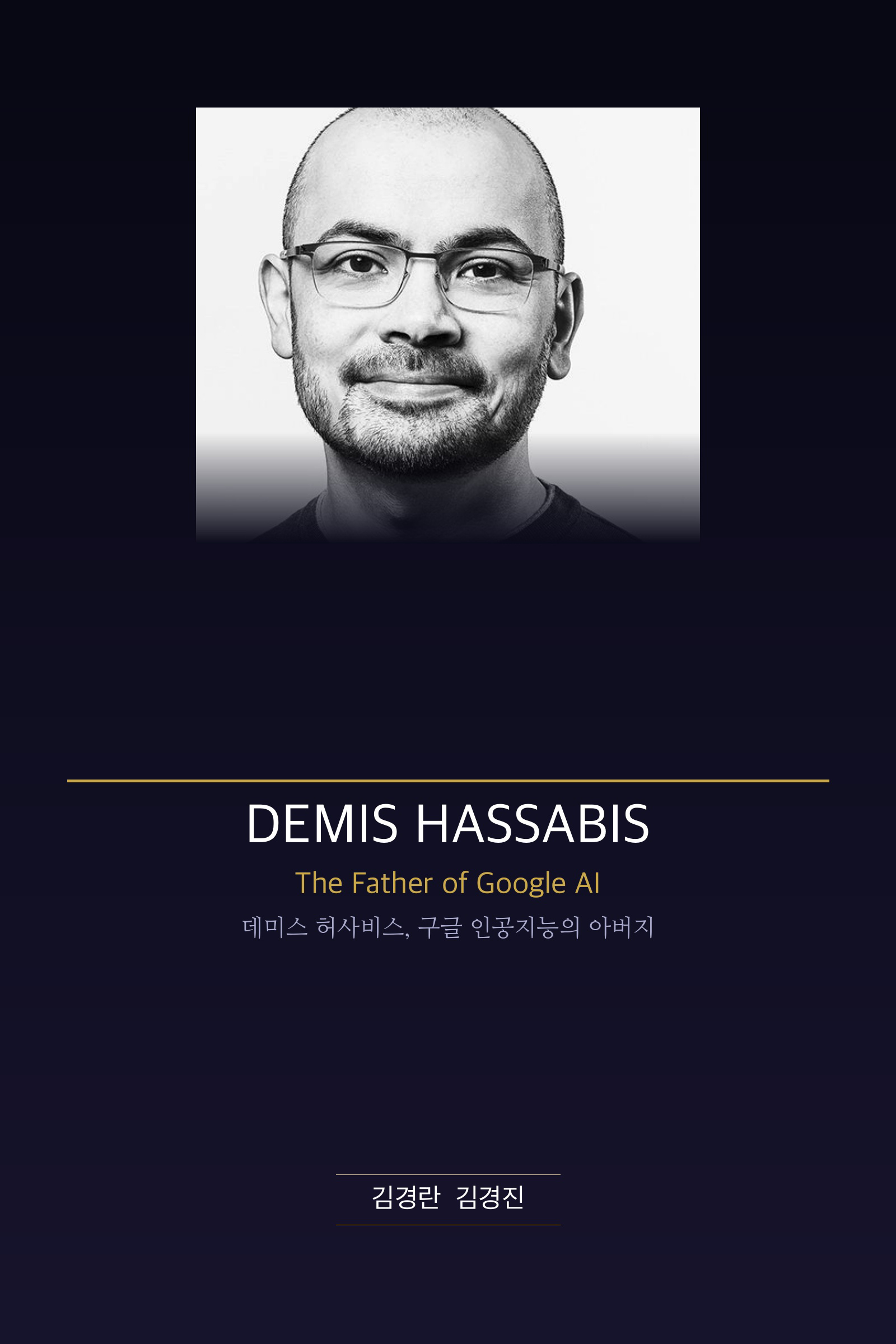
Demis Hassabis, Father of Google's Artificial Intelligence
Part 10. Humanity's Future and AI's Responsibility
27 The Age of Radical Abundance
Kim Kyung-ran, Kim Kyung-jin
In an interview for TIME's '100 Most Influential People in the World,' Hassabis said this: "Once this technology is complete, every human disease will become a thing of the past." This sentence, thrown by a Nobel laureate to readers worldwide, was not bluster.
Behind it stood an enormous machine already in motion. The door that AlphaFold had flung open was wider than anyone imagined. After achieving atomic-level accuracy at CASP14 in 2020, AlphaFold2 succeeded in predicting the three-dimensional structures of more than 200 million known proteins on Earth.
Considering that a single doctoral student takes an average of five years to determine one protein structure, completing this work by traditional methods would have required one billion years of doctoral research time. AlphaFold compressed that time into a few months. As of 2025, more than three million researchers worldwide are using the AlphaFold database.
This means humanity has obtained the blueprint of its own body for the first time. Hassabis did not stop there. In 2021, he established a separate company called Isomorphic Labs under Alphabet, Google's parent company.
The name itself is telling. 'Isomorphic' means 'having the same structure' in mathematics. It was Hassabis's long-held intuition, inscribed in the company name, that the problems of biology and information science share a fundamentally identical structure.
The mission of Isomorphic Labs is clear: "Conquer all diseases with the power of AI." The traditional drug development process is brutally inefficient.
Getting a single drug to market takes an average of ten to fifteen years, costs exceed two billion dollars, and the failure rate at the clinical trial stage reaches 90 percent. Miles Congreve, chief scientific officer of Isomorphic Labs, compared this process to "Whac-a-Mole." Chemists would synthesize thousands of compounds, test them one by one, fail on most, and start over from the beginning, repeating the cycle.
The alternative Hassabis envisioned was to move this entire process from the wet lab into in silico, that is, inside computer simulations. AlphaFold3 evolved beyond predicting static protein structures to predicting interactions between proteins and proteins, proteins and small molecules (drugs), and proteins and DNA/RNA. Hassabis said this technology could increase drug development efficiency "a thousand-fold."
In March 2025, Isomorphic Labs secured a $600 million Series A investment led by Thrive Capital. It also signed partnerships totaling $3 billion with pharmaceutical giants like Novartis and Eli Lilly. Then, in January 2026, at the World Economic Forum in Davos, Hassabis made a decisive announcement.
The first AI-designed anticancer drug would enter Phase 1 clinical trials in early 2026. Isomorphic Labs is simultaneously running seventeen drug development programs spanning oncology, immunology, and cardiovascular disease. Hassabis's ultimate dream is to create a "virtual cell."
If all the chemical and biological dynamics occurring inside a single cell can be simulated, the effects of a drug on the human body can be verified inside a computer before administering it to a patient. Going further, it becomes possible to design a personalized drug overnight, tailored to an individual's metabolic profile. At Davos in 2025, Hassabis said: "Eventually you can imagine personalized medicine.
A world where an AI system designs a drug optimized for your personal metabolism overnight." If this vision is realized, the landscape of medicine changes fundamentally. As Hassabis predicted in an interview with Fortune, "Medicine in ten, fifteen years will look nothing like medicine today." Disease becomes something to predict and prevent before it occurs, not to treat after it strikes.
Cancer becomes a manageable condition rather than a death sentence, and patients with rare diseases no longer hear that no treatment exists. Of course, behind the rosy outlook hides the weight of reality. Fiona Marshall, head of biomedical research at Novartis, pointed out: "AI might shave five years off the discovery process, but you cannot bypass human safety trials with an algorithm."
Max Jaderberg, president of Isomorphic Labs, also acknowledged: "When software meets real-world scientific processes, you cannot help but become humble." Hassabis himself had originally said clinical trials would begin by the end of 2025, but the timeline was pushed to 2026. In matters involving human life, even the most ambitious optimist in the field had to
concede that haste is unacceptable. Still, the direction is clear. The medical revolution that began with AlphaFold has already crossed a river of no return.
As Hassabis told TIME: "Once this technology is complete, all diseases will become things of the past." Whether that sentence becomes prophecy or remains mere hope is still unknown. What is certain is that the man who conquered the protein folding problem, unsolved for fifty years, has declared his next target to be the conquest of all disease. And behind that declaration, $600 million in investment, $3 billion in partnerships, and seventeen drug programs are already in motion.
Clean Energy (Nuclear Fusion) and Solving Climate Change. In the world of radical abundance that Hassabis envisions, what comes after defeating disease is energy. "If energy becomes zero-carbon and free, we can transcend the climate crisis and begin to restore Earth's ecosystems." This statement from Hassabis in a 2025 TIME interview was not empty rhetoric.
DeepMind had already been applying AI to the core challenges of fusion research for several years. Nuclear fusion is the principle by which the sun shines. When hydrogen nuclei collide under extreme heat and pressure and merge into one, a portion of their mass converts into energy.
It is the moment Einstein's E=mc squared becomes reality. If this reaction can be replicated on Earth, humanity gains virtually limitless clean energy. The fuel is hydrogen extracted from seawater, and the byproduct, unlike nuclear fission, is not long-lived radioactive waste. Theoretically, it is a perfect energy source.
The problem is the distance between theory and reality. To trigger fusion, hydrogen must be heated to over 100 million degrees to create a plasma state. The device that confines this ultra-hot plasma is the tokamak.
A donut-shaped vacuum vessel is surrounded by powerful magnetic coils that use magnetic fields to keep the plasma from touching the vessel walls. But plasma is inherently unstable. Magnetic coil voltages must be adjusted thousands of times per second to maintain the plasma's shape.
If the plasma touches the wall even slightly, heat is lost and the device is damaged. This control problem was one of the greatest technical barriers preventing the commercialization of fusion.
In February 2022, DeepMind published a groundbreaking paper in Nature. In collaboration with the Swiss Plasma Center at EPFL (Ecole Polytechnique Federale de Lausanne), they succeeded in autonomously controlling plasma inside a tokamak using deep reinforcement learning. In the TCV (Tokamak a Configuration Variable), an experimental device, the AI simultaneously coordinated multiple magnetic coils to shape the plasma into desired configurations.
Elongated shapes, triangular shapes, even a 'snowflake' shape. What was more remarkable was the success in simultaneously maintaining two separate plasmas inside a single vessel. This was recognized as the most complex real-world system to which reinforcement learning had been applied. This achievement was only the beginning.
In May 2024, DeepMind released TORAX, an open-source plasma simulator. Built on Google's high-performance numerical computation framework JAX, TORAX simulates heat, current, and material flow inside plasma quickly and precisely. It runs on both CPUs and GPUs and integrates seamlessly with AI models.
Then in December 2025, a decisive partnership was announced: a research collaboration between DeepMind and Commonwealth Fusion Systems (CFS). CFS is a fusion startup spun out of MIT in 2018, developing SPARC, a compact tokamak using high-temperature superconducting magnets.
SPARC's goal is clear: to achieve, for the first time in history, net energy production, meaning generating more fusion energy than the energy put in. If SPARC, being built in Devens, Massachusetts, succeeds, it will be followed by ARC, a 400-megawatt commercial power plant in Virginia, planned to connect to the grid in the early 2030s.
The DeepMind-CFS collaboration proceeds along three axes. First, using TORAX to achieve fast and accurate plasma simulations. Even before SPARC becomes operational, millions of virtual experiments will be run to identify optimal operating conditions in advance.
Second, combining reinforcement learning with evolutionary search techniques like AlphaEvolve to explore the most efficient and resilient path to maximizing net energy production. Third, developing an AI pilot to optimize magnetic field configurations, maximize fusion output, and manage heat loads through real-time control strategies. Devon Battaglia, senior manager of physics operations at CFS, said: "TORAX is a professional open-source plasma simulator that has saved us
countless hours in building and running simulation environments for SPARC." TORAX has already become a core tool in CFS's daily workflow. Google has also increased its investment in CFS and signed a contract to purchase 200 megawatts of fusion power from the first ARC plant, expected to operate in the early 2030s.
According to the World Economic Forum's December 2025 report, MIT modeling research projects that fusion power generation will surge from 2 terawatt-hours in 2035 to 375 terawatt-hours by 2050. The U.S. Department of Energy released a fusion roadmap in October 2025, stating that fusion energy can be integrated into the national energy system by the early 2030s. The declaration by Jean-Paul Allain, deputy director of the DOE's Office of Fusion Energy Sciences, that "fusion is real, it is close, and it is ready for coordinated action," shows that fusion, which for decades was always deferred as '30 years away,' has finally begun to be spoken of in the present tense. For Hassabis, fusion is more than solving the energy problem.
When energy becomes abundant and cheap, the changes that build upon it cascade. Desalination costs plummet, resolving water scarcity. Carbon capture and recycling become economically viable. Energy-intensive food production processes decarbonize. The geopolitical conflicts caused by resource competition lose their reason to exist. What Hassabis calls 'radical abundance' is a world where untying the single knot of energy unravels dozens of connected problems beneath it.
Within a circular structure where AI helps solve fusion's control problem and fusion supplies the energy to power AI, the foundation for abundance is built. Space Exploration and the Expansion of Intelligence. In June 2025, in an interview with Wired magazine, Hassabis offered a single sentence: "If all of that is realized, an era of maximum flourishing will come, where humanity travels to the stars and pioneers galaxies. I think the beginning will be 2030."
The moment the word 'pioneering galaxies' came from the mouth of a Nobel laureate, the world's reaction split in two. Some marveled; others scoffed. If you read Hassabis's talk of 'traveling to the stars' purely as literal interstellar flight, you miss the point. His statement must be placed within its full context.
Hassabis's space exploration vision has three layers. The first layer is energy. If fusion is commercialized as discussed earlier, the landscape of space propulsion technology shifts entirely. Current chemical rockets have extremely low thrust-to-fuel efficiency, taking over seven months just to reach Mars.
If fusion propulsion engines are developed, that travel time shrinks dramatically. AI can handle not only plasma control for fusion engines but also navigation route optimization, mission planning automation, and autonomous management of spacecraft systems. By processing levels of complexity beyond what human astronauts can handle, AI opens the possibility of traveling farther and more safely. The second layer is materials science.
DeepMind's GNoME (Graph Networks for Materials Exploration) project has discovered over 2.2 million new crystal structures. Among these may be superconductor candidates, ultra-light alloys that can withstand extreme environments, and new materials capable of blocking space radiation. Nearly every physical component needed for space exploration, from structural materials to thermal insulation to energy storage, depends on the discovery of new materials.
The fact that AI has expanded the search space of materials science to millions of times what humans could attempt in a lifetime is something that fundamentally changes the physical foundation of space exploration. The third layer, and the one with the deepest meaning for Hassabis, is the expansion of intelligence itself. In July 2025, in a conversation with Lex Fridman's podcast that spanned nearly three hours, Hassabis revealed his most fundamental motivation. He said he had been fascinated since childhood by "what is actually happening in the universe, what is the nature of consciousness, and what is the nature of reality itself."
For him, building AI was never about making a product. It was about building "the ultimate tool for advancing human knowledge." Hassabis offers an intriguing perspective. As physicist John Archibald Wheeler expressed with the famous phrase "It from Bit," information may be a more fundamental reality than energy or matter.
Within this framework, the universe itself becomes a vast information processing system running on physical 'hardware.' AI is the tool for reverse-engineering this universe's 'software.' Just as AlphaFold decoded the code of life called proteins, just as Veo learns the rules of the physical world by predicting video frames, AI can ultimately be used to discover the fundamental laws governing the universe.
Within this vision, space exploration is not only about launching rockets. It is about understanding the universe. Hassabis revealed a dream he had harbored for 25 years: simulating all the chemical and biological dynamics
occurring inside a single cell. From there, simulating how life emerged from the 'primordial soup,' the origin of life. And ultimately, enabling AGI to independently propose scientific conjectures at the level Einstein conceived. He even presented his own criterion for judging whether AGI has been achieved: "Drop the system into 1900, give it only the physics knowledge of that time, and see if it independently invents the theory of relativity." Carl Sagan once said:
"Consciousness wakes the universe." Hassabis reinterprets this statement in his own way. If energy becomes abundant and cheap, humanity can become a species that travels the universe.
And in that process, AI as a tool is used simultaneously to explore the universe physically and to explore it intellectually. Understanding the fundamental laws of physics, asking what consciousness is, and investigating the nature of reality. For Hassabis, 'pioneering galaxies' means both stepping foot there and understanding it with the mind. Critics point to the unreality of this vision.
Considering the distance to the nearest star system, even with fusion propulsion it would take decades. AI can optimize trajectories or automate missions, but it cannot transcend the laws of physics themselves. A 2025 Apple research paper pointed out that the 'reasoning abilities' of many advanced AI models have been exaggerated. Hassabis's statement that 'galaxy pioneering begins in 2030' is closer to a compass pointing a direction than a literal prediction.
Hassabis himself likely knows this. If chess taught him anything, it is that you play moves toward the final objective while respecting the constraints of reality at each move. What he truly wants to say is probably this: if the tool called intelligence becomes powerful enough, the horizon humanity can gaze upon expands beyond Earth's boundaries. And the journey toward that horizon itself becomes a process through which humanity understands itself and its universe more deeply. It is the scene where DeepMind's founding mission, 'solve intelligence and the rest follows,' unfolds at its most grand scale.
Humanity's Flourishing Beyond Zero-Sum Games: The Problem of Distributing New Productivity and Wealth Created by AI. In a 2025 interview with The Guardian, Hassabis said: "I think for the first time in human history, we will live in a world of abundance where things are not zero-sum." This sentence contains enormous optimism. At the same time, it conceals enormous questions.
Zero-sum means a structure where one side's gain is another's loss. Most of human history unfolded on zero-sum logic. When one nation expanded its territory, another lost theirs.
When one company seized a market, another was pushed out. Resources were finite, and power was a struggle over the allocation of those finite resources. Wars, colonies, trade disputes, energy crises. All were conflicts born from scarcity.
Hassabis's claim is that AI can change this fundamental structure of scarcity. If intelligence becomes an unlimited resource, the cost of everything built upon it plummets. If drug development becomes ten times faster, healthcare costs drop. If fusion is commercialized, energy costs vanish. If AI transforms materials science, physical resource constraints ease.
At the end of this chain reaction lies a world where humanity no longer needs to fight over who gets how much. A world where the pie itself grows large enough. Yet as Wired's interviewer sharply noted, "The Western world already has enormous abundance, but we don't distribute it fairly."
Hassabis acknowledged this: "We, as a species, as a society, haven't been great at cooperation. Part of the reason natural habitats are being destroyed is because people don't want to make sacrifices."
At this point, Hassabis's vision faces its most serious challenge. Even if AI maximizes productivity, who receives the fruits of that productivity is a separate question. The fact that Google DeepMind posted a job listing for a 'Senior AI Economist' in 2025 was a symbolic event showing the gravity of this problem.
The core task of this role was to model the economic transformations that AGI and advanced AI systems would cause. The assignment was to simulate the transition from a scarcity-based economy to an abundance-based economy and to predict the inequality and disruption that would arise in the process. Anthropic CEO Dario Amodei warned that AI could automate 50 percent of entry-level jobs within five years, potentially pushing unemployment to 10 to 20 percent. Aneesh Raman, LinkedIn's head of economic opportunity, pointed out that technological disruption would break the lowest rung of the career ladder first.
This is a scenario that directly collides with the world of abundance Hassabis himself envisions. Because the pain of transition may arrive before abundance does.
Hassabis is conscious of this transition period. At the Axios AI Summit in December 2025, he said: "A change ten times bigger and ten times faster than the Industrial Revolution is coming."
The Industrial Revolution took a hundred years to unfold, and in the process countless jobs disappeared while countless new ones emerged. There was the Luddite movement, child labor, and the misery of urban slums. The pain of that transition was eventually alleviated by labor laws, social safety nets, and the spread of public education, but reaching that point required decades and the suffering of countless people.
If the change AI triggers is ten times larger and ten times faster, society's time to adapt shrinks to one-tenth. Hassabis acknowledges this candidly. "Society is not prepared for AGI," he warned. "It's a matter of probability distributions.
But it's coming anyway, and it's coming very fast." So how do we share the fruits of abundance? Hassabis is cautious about prescribing specific policies. He is a scientist, not a politician. But certain things can be read from his actions.
The decision to make the AlphaFold database freely available to the entire world reflects a philosophy that research achievements should become a shared commons for all humanity, not the monopoly of a few. DeepMind's hiring of an AI economist reflects an awareness that those who build technology must also take responsibility for its economic consequences. The inclusion of educational AI development in the comprehensive research collaboration signed with the UK government in 2025 reflects a judgment that the next generation must be equipped with tools to adapt to this change. Abundance does not arrive automatically.
Even if technology opens possibilities, turning those possibilities into reality is the work of institutions, politics, and social consensus. When Hassabis speaks of 'radical abundance,' what he is really saying is not a declaration that abundance has already arrived. It is an urgent call that, since the moment when abundance becomes technologically possible is approaching, humanity must seriously prepare for the problem of distribution before that moment arrives. "What percentage of people would go back to work if they won the lottery?"
In one interview, Hassabis posed this question: "If you won the lottery, what percentage of people would go back to work?" The question was posed lightly, but within it lies the deepest philosophical puzzle of the AI era.
Can humans be happy even after jobs disappear? Can humans find meaning in a life without labor?
Economists analyze AI-driven job displacement in numbers. What percentage of jobs will be automated, how high will unemployment climb, what is the impact on GDP. These numbers matter. But Hassabis's question aims beyond the numbers.
If the reason humans work is not solely to earn money, and if humans still need to do something even after the money problem is solved, then what is that 'something'? This question resonates in Hassabis's own life. At seventeen, as lead programmer of the game Theme Park, he had already earned substantial money. He used that money to pay his Cambridge University tuition.
When he sold Elixir Studios, he gained enough assets to never worry about finances again. Yet he did not stop. He earned a neuroscience PhD from University College London, founded DeepMind, created AlphaGo, created AlphaFold, and won the Nobel Prize.
He continued his 'night shift' until 3 a.m. Why did a man who had essentially won the lottery refuse to stop? The answer is clear. What drove Hassabis was not money but curiosity.
"What has always driven me is a passion for understanding the world around us." This statement from his 60 Minutes interview runs through Hassabis's entire life. When playing chess, he was curious about the nature of intelligence; when making games, about the rules of virtual worlds; when studying neuroscience, about how the brain remembers and imagines; when building AI, about whether the phenomenon of intelligence itself could be solved.
Curiosity cannot be bought and cannot be automated. But not everyone is Hassabis. If you look at actual statistics on lottery winners, a significant number become unhappier than before within a few years. Purposeless abundance breeds emptiness. If AI replaces most productive labor, what will billions of people fill their days with? Watching Netflix, playing games, scrolling social media, is that enough? Hassabis knows the weight of this question.
He describes it as "an existential question beyond economic distribution." The disappearance of jobs is simultaneously a matter of income and a matter of identity. When people say "I am a teacher," "I am a doctor," "I am an engineer," they define who they are through their profession. When that profession disappears, the basis for self-definition shakes with it.
Hassabis's optimism takes on a distinctive nuance at this point. He does not see AI as eliminating jobs. He sees it as transforming them.
"When new tools or technologies emerge, generally new jobs are created that use those tools, and actually those jobs are often better," he said. Using medicine as an example, he emphasized that AI would not replace doctors but become a tool that assists them. "Nobody is going to want a robot nurse.
The human empathy aspect of care is profoundly human." This answer contains part of the truth but not all of it. It is true that new jobs emerged from past technological revolutions, but it is also true that entire generations suffered through those transitions.
When the steam engine took away weavers' jobs, saying "Don't worry, later a new profession called automobile mechanic will exist" was no comfort to someone who needed to feed a family right then. Hassabis's true insight lies elsewhere. What he has demonstrated through his own life is the fact that humanity's deepest motivation is not economic reward but the pursuit of curiosity, creation, and meaning. Just as the teenage boy making games did not code for money, just as the 49-year-old scientist reading papers at 3 a.m. does not research for a paycheck, there exist motivations in humans that go beyond money.
The problem is creating an environment where everyone can discover that motivation. Education must become the cultivation of curiosity, not job training. Social safety nets must become something that guarantees time for exploration, not merely rescuing the unemployed.
Meaning must become something each person finds for themselves, not something handed down from above. "What percentage of people would go back to work if they won the lottery?" The right answer to this question is not a percentage. It depends on what those who don't go back to work end up doing. Lying on a couch staring at a screen, or finding their own chessboard to explore. Whether the age of radical abundance becomes utopia or dystopia depends not on the level of technology but on the maturity of human beings.
That is what Hassabis's question is really asking. AI Development: 'Bold and Responsible.' Accelerating Scientific Discovery: The Ultimate Tool for Humanity to Understand the Universe. At the World Economic Forum in Davos in January 2025, Hassabis said: "Applying AI to science is much richer than language models." His core philosophy is contained in this single sentence.
Chatbots conversing like humans represent only a tiny fraction of what AI can do. The essential value of AI, as Hassabis sees it, lies in fundamentally changing the speed of scientific discovery. The starting point of this thinking traces back to childhood. After playing a ten-hour match at a chess tournament in Liechtenstein at age twelve, the young Hassabis thought: "What if brilliant minds like these could be applied to curing cancer or solving climate problems?"
From there he broadened his interests from game development to neuroscience, then to AI, and then to science as a whole, but the question that guided him at every stage remained identical: "If we uncover the principles of intelligence, what can we accomplish with it?" The answers appeared as concrete achievements.
AlphaFold solved the protein structure prediction problem that had remained unsolved for fifty years. GNoME discovered 2.2 million new crystal structures. AlphaEvolve opened the stage where AI designs its own algorithms and even solved problems at the level of the International Mathematical Olympiad. WeatherNext significantly raised the accuracy and speed of weather forecasting.
AI Co-Scientist has multiple AI agents collaborating to serve as virtual research partners. In 2026, the first fully automated research laboratory is set to open in the UK. A single concept threads through all these achievements.
Hassabis describes AI as "the scientific method bottled." The scientific method is the iterative process of observing, hypothesizing, experimenting, and verifying. Humanity has explored nature this way for 400 years, but has always hit the limits of human capability.
The number of papers one scientist can read in a lifetime, the number of variables one can consider at once, the number of experiments one laboratory can run are all constraints. AI removes precisely these constraints. AlphaFold compressing billions of years of research time into mere months is the representative case. AI searches vast hypothesis spaces that humans cannot handle, detects patterns in data invisible to human eyes, and replaces physically impossible numbers of experiments with simulations.
Every stage of the scientific method is dramatically expanded through AI. Hassabis also presents a vision of where this current is heading. In a February 2026 Fortune interview, he said: "In ten to fifteen years we will enter a golden age of new discovery, a kind of new Renaissance."
In this new Renaissance, AI is not an entity that replaces scientists. It is the most powerful tool scientists can wield. Just as the microscope opened the microscopic world invisible to the naked eye, and the telescope showed a universe beyond what the bare eye could reach, AI opens doors to complex worlds that the human brain alone cannot solve. In the Lex Fridman podcast, Hassabis laid out this vision in its most candid language. Interviewer Fridman said that "listening to Hassabis gives you hope for humanity" and that it felt "like hearing von Neumann or Einstein or Tesla redesigning the future while articulating their dreams and visions in real time."
'Bold but responsible.' This is the motto Hassabis repeatedly puts forward as his principle for AI development. Boldness comes from the scale of scientific ambition: the challenge of predicting protein structures, the aspiration to control fusion, the plan to simulate the origin of life. Responsibility comes from the rigor of the scientific method itself: forming hypotheses, proving them through experiments, subjecting results to peer review, and publishing findings without exception. The publication of AlphaFold's research in Nature as a formal paper and the free global release of the database exemplify this principle in practice. What Hassabis emphasizes most when explaining the difference between OpenAI and himself is precisely this attitude toward the scientific method.
He defines DeepMind as a 'research-first organization.' Products are outcomes of research, not research's purpose. The numbers, over 2,000 academic papers, an h-index of 83, and more than 150,000 citations, support this philosophy.
For Hassabis, an achievement not verified in a scientific journal is an achievement not yet complete. This is not academic stubbornness but a strategic judgment. In an era of increasingly powerful AI, transparently showing "exactly what we have built" is the foundation for building social trust. In AlphaFold's case, because the paper and data were made public, three million researchers worldwide could independently verify the results and apply them in their own research.
Only achievements that anyone can verify are genuine achievements. This is the core of what Hassabis calls 'responsible boldness.' The Fundamental Laws of Physics and the Problem of Consciousness. Around the two-hour-and-five-minute mark of the Lex Fridman podcast, the conversation takes an unexpected turn. The subject: consciousness and quantum computing. The Nobel Prize
winner in Chemistry and head of the world's largest AI research lab begins to discuss the nature of human consciousness. It is at this point that the deepest intellectual concerns of the person named Hassabis are revealed. Hassabis was drawn to physics from a young age. His favorite books illustrate this well. David Deutsch's 'The Fabric of Reality' weaves quantum mechanics, epistemology, evolution, and computation theory into a unified worldview.
Greg Egan's science fiction novel 'Permutation City' explores whether consciousness can exist within digital simulations. Douglas Hofstadter's 'Godel, Escher, Bach' asks how consciousness arises from self-referencing systems. These books are not merely sitting on a shelf; they have seeped into the intellectual soil underlying his entire research direction.
Summarizing Hassabis's physics-based worldview: Information may be a more fundamental entity than energy or matter. The universe is essentially a vast information processing system. Physical laws are a kind of software that runs this system. AI can become a tool for reverse-engineering the operating principles of that software. From this perspective, AlphaFold, Veo, and GNoME are superficially different projects but are essentially different branches of the same inquiry. AlphaFold decoded the molecular code composing life. Veo learns the rules that the physical world follows.
GNoME explores possible arrangements that matter can take. All these endeavors ultimately converge on a single fundamental question: 'By what principles does reality operate?' At the end of this inquiry, a puzzle that science has not yet answered awaits.
What exactly is consciousness? How do the electrical signals of neurons in the brain become the subjective experience we actually feel? Where does the sensation of 'red' we perceive when seeing the color red actually come from? In philosophy, this is called the 'hard problem of consciousness.' Before this problem, Hassabis shows both humility and ambition simultaneously. He candidly admits that current science cannot explain the nature of consciousness. Yet he also sees AI as potentially opening an entirely new path to attack this problem.
As the working mechanisms of the brain can be simulated with greater precision, it may become possible to more accurately delineate the conditions under which consciousness emerges.
"Is consciousness a particular form of information processing, or can it only exist on the physical substrate of a biological brain?" AI simulations may offer experimental clues to this question.
That Hassabis earned a neuroscience PhD is understood in this context. His doctoral research focused on the role the hippocampus plays in memory and imagination. The finding that remembering the past and imagining the future occur in the same brain region was published in Nature and directly inspired the design of DeepMind's memory systems and planning algorithms.
For Hassabis, neuroscience, AI, and physics are not separate disciplines. They are merely different angles on a single question: 'What is intelligence, and what is reality?' His interest in the fundamental problems of physics exists in the same context. The P vs NP problem (the greatest unsolved problem in computer science, asking whether a problem that can be quickly verified can also be quickly solved), a theory unifying quantum mechanics and gravity, the nature of dark energy accelerating the expansion of the universe. These problems have been stuck for decades, blocked by the limits of human intelligence.
Hassabis expects that AGI can propose new approaches to these problems that humans have not conceived of. Just as Einstein discovered the theory of relativity through thought experiments alone, AGI may be able to generate hypotheses that humans never imagined and verify them through simulation. The project where this vision manifests most concretely is the 'virtual cell.'
Starting by perfectly recreating a single yeast cell digitally, then extending this to human cells, and ultimately simulating how the first self-replicating molecules appeared in the primordial oceans of ancient Earth. If this succeeds, it becomes possible to experimentally answer the age-old question: "Is life an inevitable result of physical laws, or is it an extremely rare accident?" Carl Sagan's famous words come to mind again: "Consciousness wakes the universe."
Hassabis is implementing this philosophical proposition as an actual technology program. Through AI, he is attempting to simulate the origin of life, experimentally explore the nature of consciousness, and uncover the fundamental principles of physical laws. This is the deepest interpretation of DeepMind's mission.
"Solving intelligence" is not a story about winning at chess, matching protein structures, or analyzing stock prices. Ultimately, it means understanding why the universe exists, where consciousness comes from, and what the nature of reality is. The posture Hassabis shows before these enormous questions combines a scientist's humility with an explorer's boldness. He does not claim to already have the answers.
He merely says he is currently building the most powerful tool to find those answers. The central question of this biography comes into focus here. In the AI era, does humanity truly need 'better AI models' or 'a more mature human society'? Hassabis's answer is probably both. Building better models is the task of scientists and engineers; building a more mature society is the task of all of us.
Only when both are accomplished together can the 'radical abundance' Hassabis envisions become reality rather than a slogan. The Future of Renewable Energy Opened by AI
Kim Kyung-jin
Attorney · Former Member of the National Assembly · AI Policy Researcher
© 2026 Kim Kyung-jin. All rights reserved.