AI Library

AI Library

Books for Reading AI

Choose a book, then read it in order from the table of contents.

Han Dong-hoon, Busan Buk-gu Gap: A Record of the 100 Days Before and After the Election (Mar. 26-Jul. 3, 2026) cover

Table of Contents

Han Dong-hoon, Busan Buk-gu Gap: A Record of the 100 Days Before and After the Election (Mar. 26-Jul. 3, 2026)

Kim Kyung-jin

Table of Contents and 13 sections

From March 26 to July 3, 2026, this record follows the spring after expulsion, the Busan Buk-gu Gap by-election, victory as an independent, and the first bill submitted in the National Assembly.
Artificial Intelligence and Medicine cover

Table of Contents

Artificial Intelligence and Medicine

Kim Kyung-jin, Attorney at Law

AI in clinical care, hospitals, education, and research

AI in medical imaging, risk prediction, treatment planning, hospital operations, education, and research, with patient safety, privacy, and accountability.

The EU AI Act cover

Table of Contents

The EU AI Act

Kim Kyung-jin, Attorney at Law

A Practitioner’s Guide for Korean Companies

From August 2, 2026, a game company’s chatbot in Pangyo and a medical-device reading software in Busan fall under Article 50 of the EU AI Act, even without a single office in Europe. Rather than summarizing the provisions, this book reads them from the enforcement authority’s point of view: extraterritorial reach, transparency duties, general-purpose AI models, high-risk systems, and the double regulation that overlaps with Korea’s AI Framework Act. It is a field guide to what a Seoul-headquartered company must prepare, when, and how.

South Korea's AI Basic Act: A Practical Guide for Business Operators cover

Contents

South Korea’s AI Basic Act: A Practical Guide for Business Operators

Kim Kyung-jin, Attorney at Law

Compliance, Obligations, and Opportunities under Korea’s AI Regulation

On January 22, 2026, the AI Basic Act came into effect in the Republic of Korea. This book was written by an attorney for business operators. It answers questions such as “Is our service high-impact AI?”, “How should prior notification be conducted?”, and “What preparations are needed when expanding into the EU?”

Chinese Government AI Regulations cover

Contents

Chinese Government AI Regulations

Kim Kyung-jin, Attorney at Law

Chinese originals, translations, terms, issuing bodies, effective dates, administrative interpretations, and judicial materials

This edition orders Chinese AI-related laws, administrative regulations, military regulations, departmental rules, policy documents, and national standards by legal force. Each entry keeps the Chinese original text and adds an English translation or explanation, legal terms, issuing body, effective date, administrative interpretations, and judicial materials where available.

Fathers of Chinese AI cover

Table of Contents

Fathers of Chinese AI

Kim Kyung-jin, Attorney at Law

Ten lives behind China's AI ascent

This book follows Kai-Fu Lee, Robin Li, Jie Tang, Liang Wenfeng, Yang Zhilin, Yan Junjie, Wang Xiaochuan, Jingren Zhou, Shunyu Yao, and Yonghui Wu through the laboratories, companies, models, and policy environment that shaped Chinese AI.

How Far Has AI Entered Chinese Hospitals? cover

Table of Contents

How Far Has AI Entered Chinese Hospitals?

Kim Kyung-jin, Attorney at Law

A quiet shift in clinics, imaging rooms, and hospital administration

This book follows how artificial intelligence has entered Chinese hospitals, using Chinese and English materials together with original Chinese policy texts. It covers national policy, medical foundation models, clinical decision support, image reading, hospital information departments, traditional Chinese medicine, AI-native hospitals, the patient experience, hallucination and responsibility, regulation, and money. The final chapters collect major Chinese guidelines and the 84 health-sector AI application scenarios, with translated text and summaries.

Andrew Ng Biography cover

Table of Contents

Andrew Ng Biography

Kim Kyung-jin, Attorney at Law

A central figure in AI education and public learning

This book follows Andrew Ng from London, Hong Kong, Singapore, Carnegie Mellon, MIT, Berkeley, and Stanford to Google Brain, Coursera, Baidu, DeepLearning.AI, Landing AI, AI Fund, and Amazon. It reads his career through research, teaching, company building, and his practical view of AI.

Mykhailo Fedorov, Leading Figure of Ukraine's Drone War cover

Table of Contents

Mykhailo Fedorov, Leading Figure of Ukraine's Drone War

Kim Kyung-jin

From the State in a Smartphone to the Defense Ministry of the Drone War

This book follows Diia, IT Army, Starlink, UNITED24, Brave1, the Unmanned Systems Forces, drone procurement, and battlefield data to explain how Mykhailo Fedorov tied technology to state power in wartime Ukraine.

China’s Leading AI Firms and Government Agencies cover

Table of Contents

China’s Leading AI Firms and Government Agencies

Kim Kyung-jin

Policy, Companies, Data, and Hardware in China’s Intelligent Economy

This book follows China’s AI policy arc from the 2017 next-generation AI plan to AI+ and the 15th Five-Year Plan. It maps the roles of the State Council, NDRC, CAC, MIIT, and SAC, then reads DeepSeek, the AI Tigers, Alibaba, Tencent, Baidu, ByteDance, iFLYTEK, Huawei Ascend, East Data West Computing, manufacturing, education, consumption, and humanoid robotics as one connected system.

U.S. Department of War CDAO (Chief Digital and AI Officer) cover

Table of Contents

U.S. Department of War CDAO (Chief Digital and AI Officer)

Kim Kyung-jin, Attorney at Law

How the Military’s Brain Is Being Redesigned

From the moment in January 2026 when the U.S. Department of War declared data hoarding a national security threat, this book follows the birth of the CDAO (Chief Digital and Artificial Intelligence Office) and the five organizations it absorbed, Advana and the War Department Data Platform, the Open DAGIR procurement experiment, Project Maven and CJADC2 on the battlefield, and Responsible AI, allies, and critics — the story of how America is redesigning its military’s brain.

Science and Technology Commission of the CMC of the Communist Party of China cover

Table of Contents

Science and Technology Commission of the CMC of the Communist Party of China

Kim Kyung-jin

STC, Military-Civil Fusion, and China’s Military Technology Innovation

This English AI Library edition follows the CMC Science and Technology Commission, the Equipment Development Department, military-civil fusion, intelligentized warfare, emerging technology competition, and the institutional limits of China’s military innovation system.

The Chinese Communist Party School cover

Table of Contents

The Chinese Communist Party School

Kim Kyung-jin

Where Power Is Trained

This book follows the Chinese Communist Party school system from Ruijin and Yan'an to the Central Party School, the National Academy of Governance, provincial and county schools, young-official training classes, Cai Qi's leadership, and the Mwalimu Julius Nyerere Leadership School.

DARPA, America’s Defense Research Lab cover

Table of Contents

DARPA, America’s Defense Research Lab

Kim Kyung-jin

This book follows DARPA through its 2026 office reorganization, budget signals, AIxCC, AI Forge, RACER, LongShot, quantum computing, space robotics, battlefield medicine, and strategic-material programs, using official sources as the main trail.

AI and the Classroom cover

Table of Contents

AI and the Classroom

Kim Kyung-jin

The AI Teacher That Does Not Give Answers

From Estonia's AI Leap and Khanmigo to answer leakage, Korean AI digital textbooks, and teacher-in-the-loop classrooms, this book asks how AI can protect thinking instead of replacing it.

Spiderweb cover

Table of Contents

Spiderweb

Kim Kyung-jin

Ukraine's drone revolution that changed the map of war

A narrative account of Operation Spiderweb on June 1, 2025, and how Ukraine's drones reached deep inside Russia and changed military planning, intelligence work, and security assumptions.

A Map of the 2026 U.S.-China Collision cover

Table of Contents

A Map of the 2026 U.S.-China Collision

Kim Kyung-jin

The year tied in Busan and left unsolved in Beijing

A one-year map of tariffs, chips, rare earths, Taiwan, sea lanes, and Korea's choices between Washington and Beijing.

China's 2026 Power Map cover

Table of Contents

China's 2026 Power Map

Kim Kyung-jin

The completion of one-man rule, and the empty seat that follows

A map of Xi Jinping's power system, the military purge, the blocked succession path, and the economic-security dilemma.

The Architect of Contradictions cover

Table of Contents

The Architect of Contradictions

Kim Kyung-jin

Peter Thiel and the empire built by a man who hated competition

Peter Thiel, from a South African childhood to PayPal, Facebook, Palantir, politics, and the dream of defeating death.

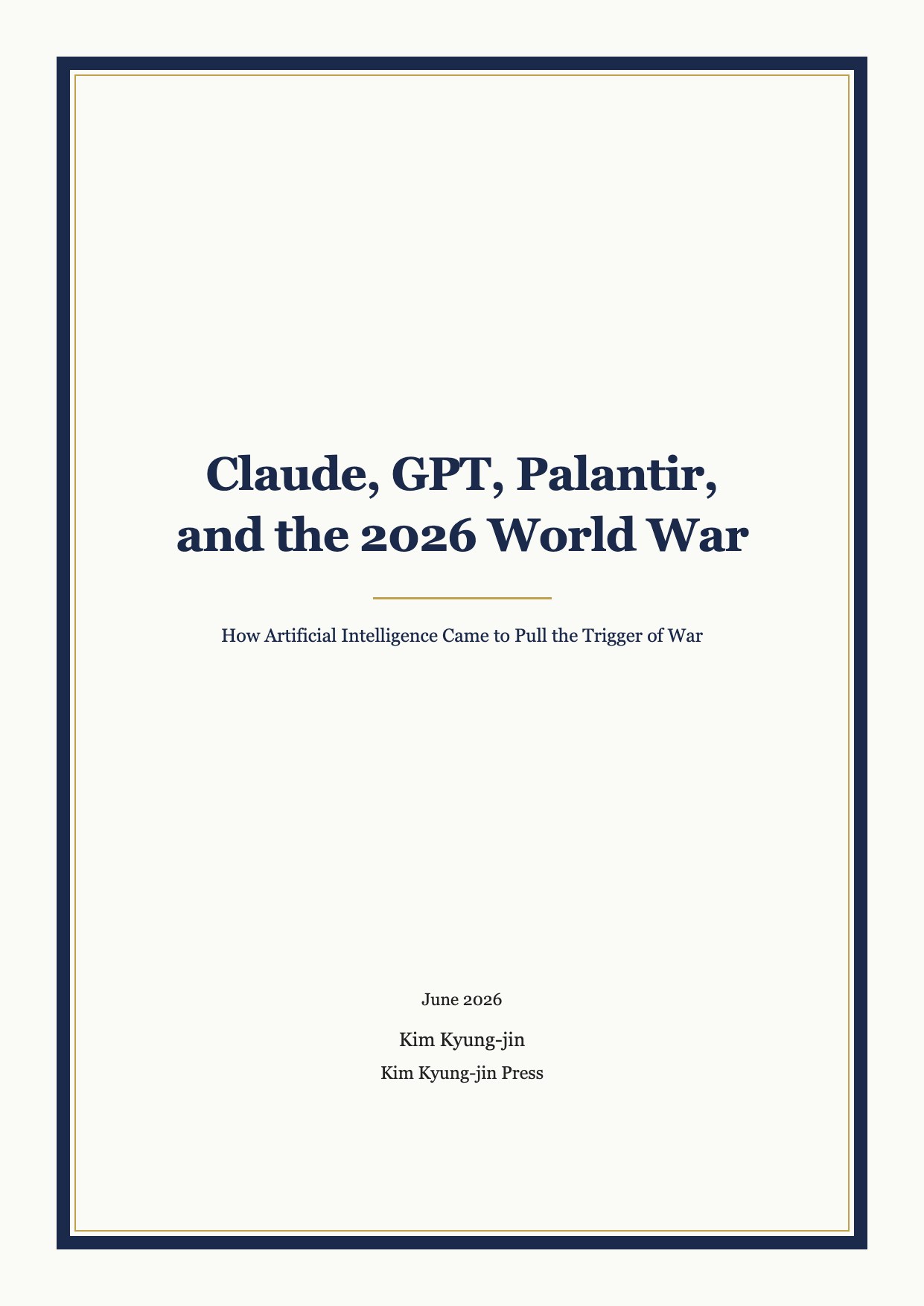
Claude, GPT, Palantir, and the 2026 World War cover

8 readings

Claude, GPT, Palantir, and the 2026 World War

Kim Kyung-jin

How Artificial Intelligence Came to Pull the Trigger of War. Prologue, 3 Parts / 6 Chapters, Epilogue

A single name sits on the screen. An intelligence officer looks at it for twenty seconds, confirms only that it is a man, and moves on. Inside those twenty seconds a person dies, and the responsibility for deciding to kill him disappears. From Lavender over Gaza to Maven in Ukraine, Epic Furies over Iran, and target selection in the skies of Venezuela, this book follows the hand that chooses targets as it passes from human to machine in the wars of 2026.

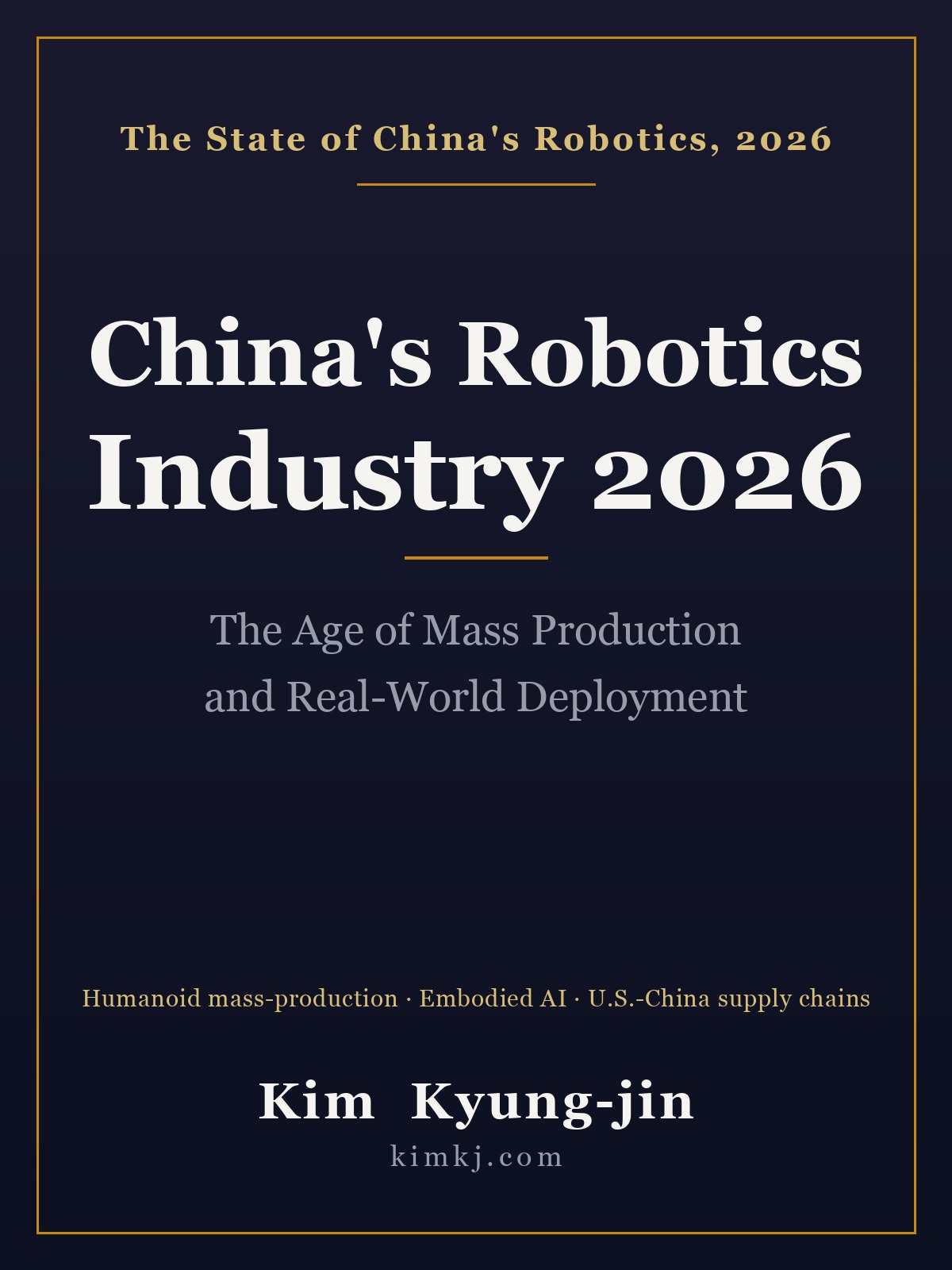
China's Robotics Industry 2026: The Age of Mass Production and Real-World Deployment cover

25 readings

China's Robotics Industry 2026: The Age of Mass Production and Real-World Deployment

Kim Kyung-jin

From the humanoid mass-production race to U.S.-China hegemony: the state of China's robotics industry in 2026. Table of Contents, Preface, 7 Parts / 23 Chapters, Epilogue

In a factory in Shenzhen, hundreds of humanoid robots repeat the same motion. This book traces the mass-production race between Unitree and UBTECH, the Optimus supply chain, real-world deployment sites, and where Korea stands amid the U.S.-China tech hegemony.

Crossing the Adolescence of Technology Cover

15 Parts in Total

Crossing the Adolescence of Technology

Kim Kyung-jin

Dario Amodei, Anthropic, and the Struggle Toward Controllable Intelligence. Table of Contents, Preface, Prologue, 12 Chapters, Epilogue

The struggle of a physicist who lost his father to create controllable artificial intelligence. The story of Dario Amodei and Anthropic clashing with the Pentagon and the White House, shaking the era with the scaling law and Constitutional AI.

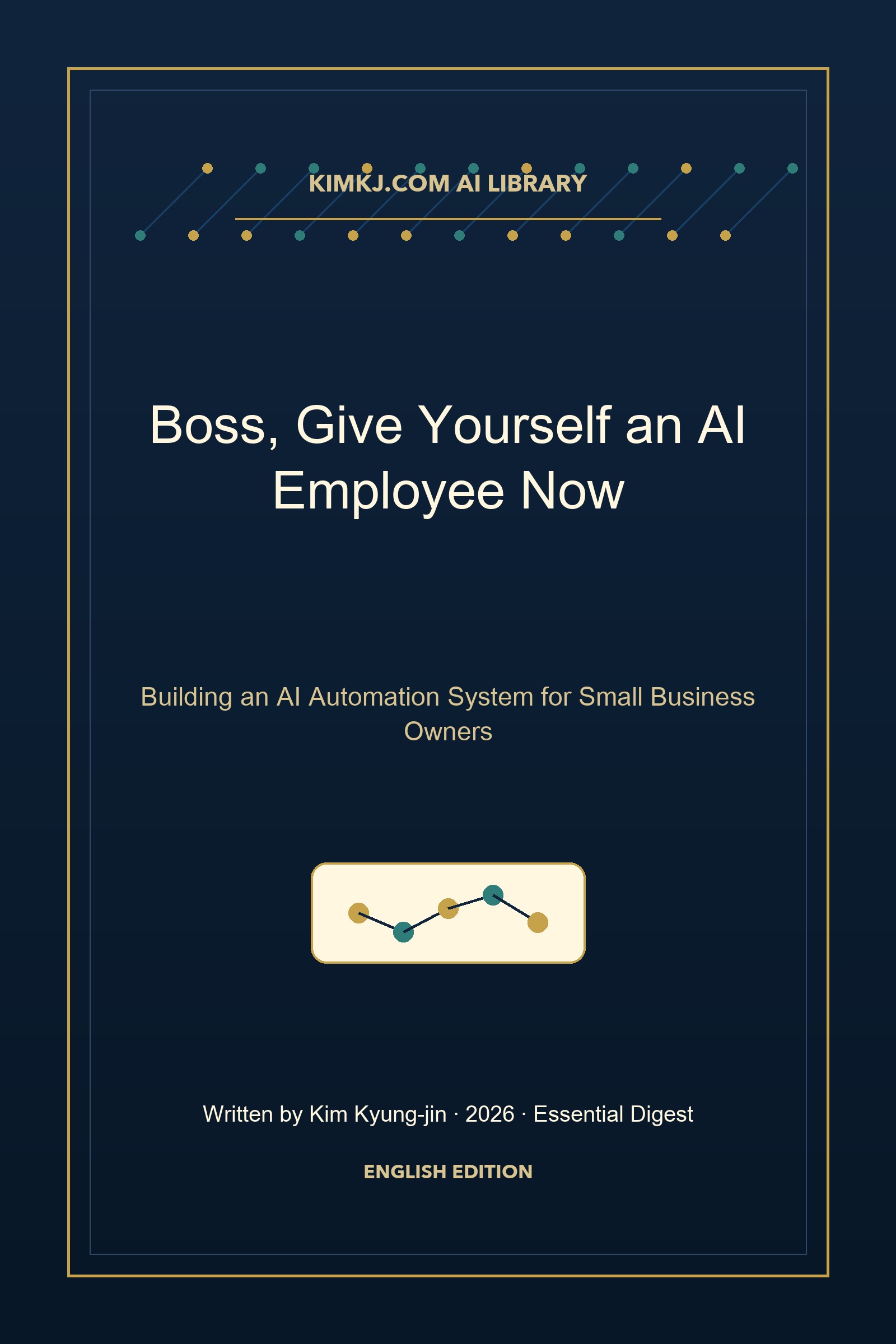
Boss, Give Yourself an AI Employee Now

Table of Contents, 43 Chapters, 11 Appendices, Epilogue

Boss, Give Yourself an AI Employee Now

Written by Kim Kyung-jin

Building an AI Automation System for Small Business Owners

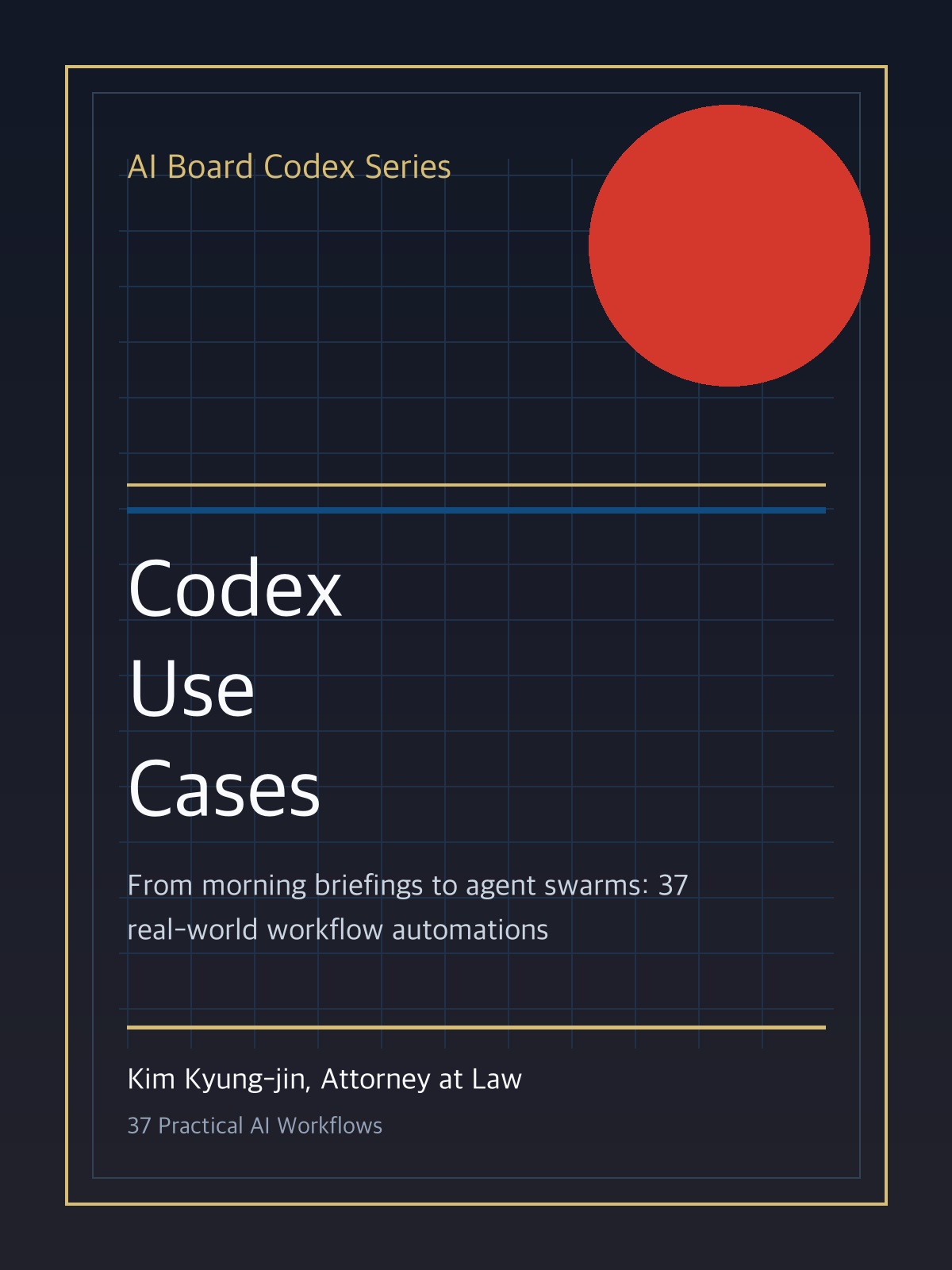
37 Concrete Codex Use Cases cover

Book-style reading

37 Concrete Codex Use Cases

Kim Kyung-jin

From morning briefings to agent swarms: 37 real-world workflow automations

This guide gathers 37 ways to connect Codex and AI agents to real work: personal routines, data processing, marketing, sales, documents, development, and browser control.

2026 Beijing: The Dangerous Dance of Two Giants book cover

16 posts available

2026 Beijing: The Dangerous Dance of Two Giants

Kim Kyung-jin

Table of Contents, Introduction, 13 Chapters, Epilogue

This book reads the Beijing summit through Hormuz, rare earths, Taiwan, Boeing, soybeans, AI chips, and Korea’s exposure to the U.S.-China bargain.

Leaving It to AI and Stepping Away cover

27 posts

Leaving It to AI and Stepping Away

Kim Kyung-jin

A Complete Beginner’s Guide to YOLO Mode. Table of contents and 26 chapters

A beginner-friendly online book on YOLO mode in Claude Code and Codex. It explains how to let AI read files, write code, run commands, and finish work while keeping rollback, Docker sandboxing, and safety checks close at hand.

Artificial Intelligence Fighter, Artificial Intelligence Air Force book cover

43 posts available

Artificial Intelligence Fighter, Artificial Intelligence Air Force

Kim Kyung-jin

Table of Contents, Preface, 40 Chapters, Epilogue

Artificial Intelligence Fighter, Artificial Intelligence Air Force is an online AI Library book by Kim Kyung-jin. It covers AI fighters, autonomous air power, unmanned combat aircraft, CCA, MUM-T, sixth-generation fighters and is organized as Table of Contents, Preface, 40 Chapters, Epilogue.

Artificial Intelligence on Trial book cover

26 posts available

Artificial Intelligence on Trial

Attorney Kyungjin Kim

Table of Contents, Preface, 21 Chapters, 3 Appendices

Artificial Intelligence on Trial is an online AI Library book by Attorney Kyungjin Kim. It covers artificial intelligence and law, AI liability, algorithmic judgment, courts and technology and is organized as Table of Contents, Preface, 21 Chapters, 3 Appendices.

PALANTIR book cover

16 posts available

PALANTIR: War, Surveillance, Artificial Intelligence

Attorney Kyungjin Kim

Table of Contents, Preface, 14 Chapters

PALANTIR: War, Surveillance, Artificial Intelligence is an online AI Library book by Attorney Kyungjin Kim. It covers Palantir, war, surveillance, artificial intelligence, data analytics, national security and is organized as Table of Contents, Preface, 14 Chapters.

Brain Readers: Neuralink and the Final Human Revolution book cover

21 posts available

Brain Readers: Neuralink and the Final Human Revolution

Kim Kyung-jin

Table of Contents, Prologue, 18 Chapters, Epilogue

Brain Readers: Neuralink and the Final Human Revolution is an online AI Library book by Kim Kyung-jin. It follows Neuralink, brain-computer interfaces, brain data, medicine, neurorights, and the future of human enhancement.

Artificial Intelligence and the Reshaping of Society book cover

16 posts available

Artificial Intelligence and the Reshaping of Society

Kim Kyung-jin

Table of Contents, Preface, 13 Chapters, Epilogue

Artificial Intelligence and the Reshaping of Society is an online AI Library book by Kim Kyung-jin. It follows how artificial intelligence changes work, education, inequality, cities, democracy, and human relationships.

The Jensen Huang Story book cover

16 posts available

The Jensen Huang Story

Kim Kyung-jin

Table of Contents, Preface, 13 Chapters, Epilogue

The Jensen Huang Story is an online AI Library book by Kim Kyung-jin. It covers Jensen Huang, NVIDIA, GPUs, AI chips, and the AI industry.

Ten Questions AI Poses to Humanity book cover

12 posts available

Ten Questions AI Poses to Humanity

Kim Kyung-jin

Table of Contents, Preface, 10 Chapters

Ten Questions AI Poses to Humanity is an online AI Library book by Kim Kyung-jin. It asks how artificial intelligence changes truth, weapons, work, data, identity, and human control.

Malaysia and the Malacca Strait book cover

23 posts available

Malaysia and the Malacca Strait: Whoever Controls It Controls the World

Kim Kyung-jin

Table of Contents, Preface, 20 Chapters, Epilogue

Malaysia and the Malacca Strait is an online AI Library book by Kim Kyung-jin. It covers Malaysia, the Malacca Strait, maritime logistics, geopolitics, global trade, and Southeast Asia’s strategic future.

Georgia history and culture travel book cover

24 posts available

A Journey Through Georgia’s History and Culture

Kim Kyung-jin

Table of Contents, Preface, 17 Chapters, 4 Appendices, Epilogue

A Journey Through Georgia’s History and Culture is an online AI Library book by Kim Kyung-jin. It covers Georgia’s history, culture, religion, politics, travel, and the Caucasus crossroads between Europe and Asia.

Reading Armenia book cover

13 posts available

Reading Armenia: A Thousand Prayers, One Mountain

Kim Kyung-jin

Table of Contents, Preface, 10 Chapters, Epilogue

Reading Armenia: A Thousand Prayers, One Mountain is an online AI Library book by Kim Kyung-jin. It covers Armenian history, faith, Mount Ararat, cultural memory, travel, and the endurance of a small nation.

Mastering Claude Code book cover

41 posts available

Mastering Claude Code

Kim Kyung-jin

Table of Contents, Preface, Chapters, Appendices

Mastering Claude Code is an online AI Library book by Kim Kyung-jin. It covers Claude Code setup, commands, workflows, automation, agents, and practical methods for using Claude Code in real work.

Claude Cowork and Agent manual book cover

11 posts available

Claude Cowork and Agent Utilization Manual

Kim Kyung-jin

Table of Contents, Preface, 8 Chapters, Closing Note

Claude Cowork and Agent Utilization Manual is an online AI Library book by Kim Kyung-jin. It covers Claude Code, AI agents, coding automation, work automation, and practical agent-based collaboration.

2026 U.S.-Iran War and the Global Energy Crisis book cover

39 posts available

The 2026 U.S.-Iran War and the Global Energy Crisis

Kim Kyung-jin

Table of Contents, Preface, Chapters and Appendices

The 2026 U.S.-Iran War and the Global Energy Crisis is an online AI Library book by Kim Kyung-jin. It covers war, oil, the Strait of Hormuz, maritime security, energy markets, and the global consequences of conflict.

The Traces Han Dong-hoon Left on South Korea book cover

13 posts available

The Traces Han Dong-hoon Left on South Korea

Kim Kyung-jin

Table of Contents, Prologue, Chapters, Epilogue

The Traces Han Dong-hoon Left on South Korea is an online AI Library book by Kim Kyung-jin. It examines his record in justice policy, immigration reform, public institutions, and the structural questions facing South Korea.

The Han Dong-hoon Story book cover

39 posts available

The Han Dong-hoon Story

Kim Kyung-jin

Table of Contents, Prologue, Chapters, Epilogue

The Han Dong-hoon Story is an online AI Library book by Kim Kyung-jin. It traces Han Dong-hoon’s life, public career, political choices, and the changing landscape of South Korean conservative politics.

Beyond the Glass Ceiling cover

39 entries

Beyond the Glass Ceiling

Kim Kyung-jin

Table of contents, prologue, 31 chapters, epilogue, 5 appendices

A political biography tracing Sanae Takaichi’s rise from Nara to Japan’s premiership, through party struggles, security policy, diplomacy, and the meaning of Japan’s first female prime minister.

AI Hegemony War book cover

8 posts available

AI Hegemony War

Kim Kyung-jin

Table of Contents, 7 Chapters

An online AI Library book by Kim Kyung-jin on AI superintelligence, the U.S.-China technology race, Europe and Korea’s AI laws, and international AI governance.

Sam Altman Biography: Pioneer of the AI Revolution cover

22 posts

Sam Altman Biography: Pioneer of the AI Revolution

Kim Kyung-jin, Kim Kyung-ran

Table of contents, preface, 7 parts, 20 chapters

An online biography following Sam Altman’s childhood, startups, Y Combinator, OpenAI, ChatGPT, the 2023 board crisis, and his sense of responsibility in the AI era.

From Chaiwala to Prime Minister cover

13 entries

From Chaiwala to Prime Minister

Kim Kyung-jin

Table of contents, preface, 10 chapters, epilogue

A political biography tracing Narendra Modi from a chai-selling boy in Vadnagar to RSS organizer, Gujarat chief minister, and three-term prime minister, while reading modern India, Korea-India relations, and the risks of a rising power.

AI Classroom: Your Grades Will Change book cover

26 posts available

AI Classroom: Your Grades Will Change

Kim Kyung-jin

Table of Contents, Preface, 24 Sections

An online AI Library book by Kim Kyung-jin on how AI can support elementary, middle, and high school learning, teaching, assessment, and educational equity.

Military Artificial Intelligence cover

17 entries

Military Artificial Intelligence

Kim Kyung-jin and Kim Won-tae

Table of contents, preface, 14 chapters, epilogue

A full-length study of military artificial intelligence, from autonomous weapons, drones, command systems, logistics, and cyber defense to the strategies of the United States, China, Israel, Korea, and global defense AI companies.

Global Case Studies in Introducing AI into Public Administration book cover

25 posts available

Global Case Studies in Introducing AI into Public Administration

Kim Kyung-jin

Table of Contents, 23 Chapters, Epilogue

An online AI Library book by Kim Kyung-jin on public-sector AI adoption, national strategies, administrative services, governance, and future policy tasks.

Seven Misunderstandings About the Arctic Route book cover

10 posts available

Seven Misunderstandings About the Arctic Route

Kim Kyung-jin

Table of Contents, Preface, 7 Chapters, Epilogue

An online AI Library book by Kim Kyung-jin on seven common misunderstandings about the Arctic Route, including speed, liner service, insurance, safety rules, year-round access, carbon impact, and infrastructure.

Artificial Intelligence Election cover

14 posts

Artificial Intelligence Election

Kim Kyung-jin

Table of contents, author preface, 11 chapters, closing essay

An online book on campaign messaging, publicity materials, digital campaigning, data analysis, campaign operations, disinformation defense, legal risk, and ready-to-use prompts.

Demis Hassabis book cover

34 posts available

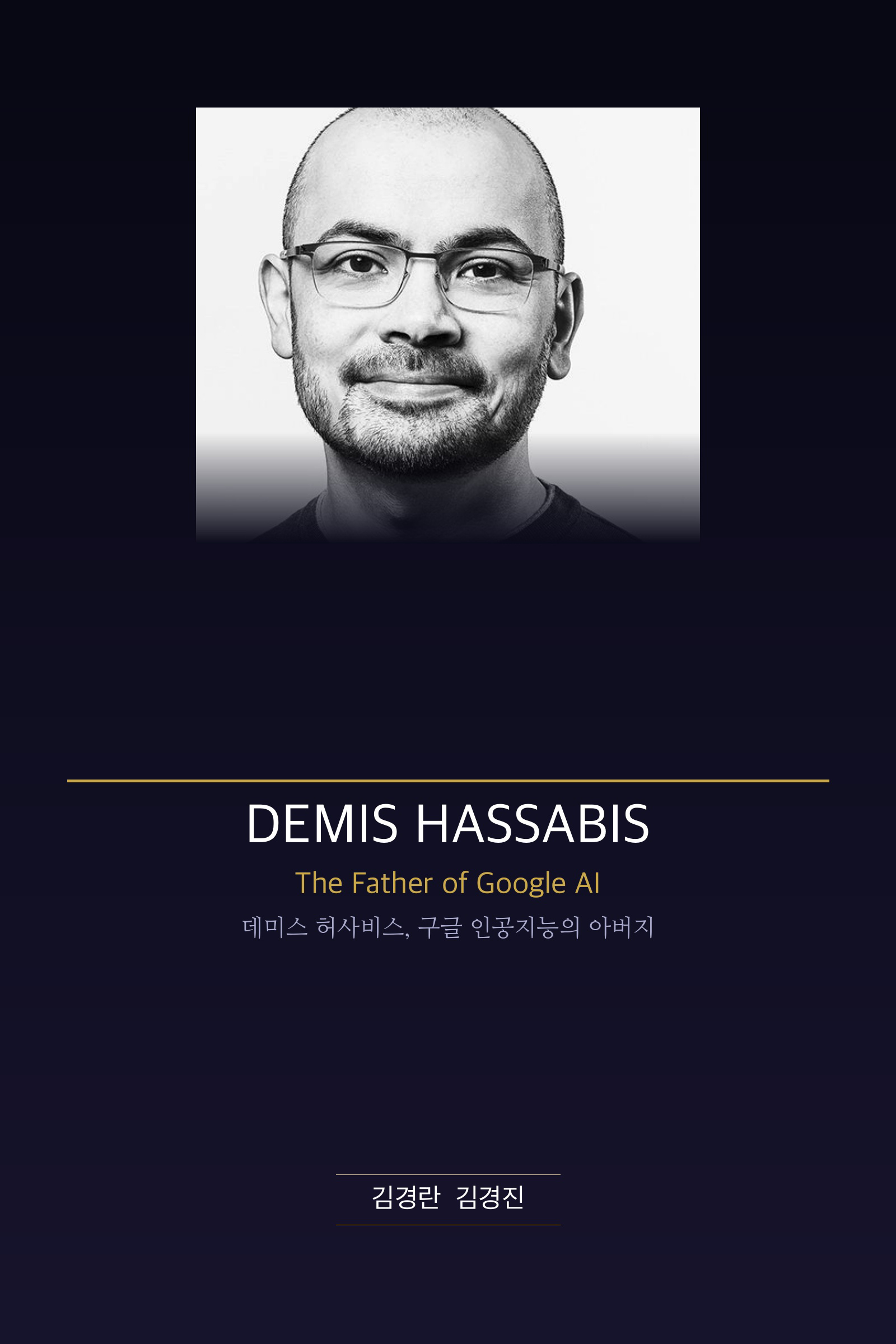
Demis Hassabis, Father of Google’s Artificial Intelligence

Kim Kyung-ran, Kim Kyung-jin

Table of Contents, Author’s Preface, 31 Chapters, Epilogue

Demis Hassabis, Father of Google’s Artificial Intelligence is an online AI Library book by Kim Kyung-ran, Kim Kyung-jin. It covers Demis Hassabis, Google DeepMind, artificial intelligence, AlphaGo, AI research and is organized as Table of Contents, Author’s Preface, 31 Chapters, Epilogue.

The Dhammapada 423 Verses book cover

28 posts available

The Dhammapada: 423 Verses

Kim Kyung-jin

Table of Contents, Editor’s Note, 26 Chapters, 423 Verses

An online AI Library book by Kim Kyung-jin. This edition arranges all 423 verses of the Dhammapada into 26 chapters for slow, poetic reading.

Nano Banana Pro Practical Prompt Book cover

24 posts

Nano Banana Pro Practical Prompt Book

Kim Kyung-jin

6 parts, 22 chapters, classroom prompt appendix

An online book for using Nano Banana Pro in classes and real work, covering image generation, editing, text rendering, character consistency, business use cases, and monetization.

Liberal Arts AI for College Students book cover

16 posts available

Liberal Arts AI for College Students

Kim Kyung-jin

Table of Contents, Preface, 13 Chapters, Closing Essay

An online AI Library textbook for college students. It introduces AI history, daily use, document work, research, images, presentations, video, productivity, learning, careers, copyright, and governance.

Legal Practice and Artificial Intelligence book cover

16 posts available

Legal Practice and Artificial Intelligence

Kim Kyung-jin

Table of Contents, Preface, 14 Parts

An online AI Library book by Kim Kyung-jin on legal research, drafting, evidence analysis, contract review, NotebookLM, and practical generative AI workflows for legal practice.

Hello, I Am Kim Kyung-jin book cover

10 posts available

Hello, I Am Kim Kyung-jin

Kim Kyung-jin

Table of Contents, Preface, Recommendations, 6 Chapters, Closing

An online AI Library book on Kim Kyung-jin’s life, science and technology policy, parliamentary diplomacy, legislative battles, Dongdaemun vision, and proposals for Korea’s demographic future.

Politics and People book cover

25 posts available

Politics and People

Kim Kyung-jin

Table of Contents, Prologue, 22 Chapters, Epilogue

An online AI Library book by Kim Kyung-jin on how politics begins with reading people, winning trust, keeping relationships, and enduring seasons of crisis.

[AI Library] 29 Is AI a Tool or a New Species?

Demis Hassabis
Author
Kim Kyung-jin
Date
2026-05-05 13:00
Views
253

Demis Hassabis, Father of Google's Artificial Intelligence

Part 10. Humanity's Future and AI's Responsibility

29 Is AI a Tool or a New Species?

Kim Kyung-ran, Kim Kyung-jin

Innovation and Ethical Tensions Inside a Giant Corporation: The AI Ethics Debate Within Google and Hassabis's Position. In January 2014, on a day when cold winter winds swept through London, Demis Hassabis was making the gamble of a lifetime. What lay on the negotiating table with Larry Page was not just an acquisition price. Hassabis demanded safeguards that would let Google, that vast empire, swallow DeepMind without being able to digest it.

That safeguard was the establishment of an Ethics Board. He was convinced this technology would wield the most powerful force in human history, and he did not want that force swung solely for shareholders' benefit. At the time, he stated flatly: "We are not doing this research just to build a smarter search engine." It was like David putting on Goliath's armor while still holding on to his sling.

But ten years later, in 2024, the situation had grown far more complicated and precarious than Hassabis had anticipated. The generative AI war sparked by ChatGPT would no longer allow Google DeepMind to remain in its ivory tower. At Google's Mountain View headquarters, a "Code Red" was issued, and DeepMind researchers in London could no longer devote themselves solely to writing papers.

They now had to become the "Engine Room" responsible for the survival of the great ship called Google. The ethical tensions that arose in this process shook DeepMind's identity to its core. The original Ethics Board remained shrouded behind a veil, its membership never disclosed to the public, and the friction between Google's internal Ethical AI Team and senior management exploded with the firing of Dr. Timnit Gebru.

Hassabis appeared to stay silent through this turmoil, but internally he was walking a tightrope between his ideals as a researcher and his reality as an executive. Instead of public criticism, he chose to strengthen internal "alignment" research. Inside DeepMind, a self-mocking voice asking "Are we building a monster?" clashed fiercely with the pragmatic argument that "If we don't build it, someone more dangerous will."

The Gemini model's image-generation error in 2024 was the defining incident where these tensions broke the surface. The error, caused by an aggressive attempt to diversify the races of historical figures, was less a technical defect than a "paradoxical failure" in which excessive ethical correction itself produced bias. Hassabis explained that "this was not what we intended," but this was not a problem that could be fixed by tweaking a few lines of code.

It was a symbolic scene showing what happens when DeepMind's ideal of building "universal, neutral intelligence" steps into the mud of Silicon Valley's Culture War. Hassabis's position has shifted in subtle ways. Early on, he insisted on "keeping AI as an independent research body, separate from Google," but he has now integrated DeepMind under Google's company-wide slogan of "Responsible AI."

Some critics say "the idealist Hassabis has knelt before capitalism." But those close to him tell a different story. Hassabis came to a bone-deep realization that without Google's massive infrastructure, reaching AGI (Artificial General Intelligence) would be impossible. At the 2025 Davos Forum, he said this:

"Safety is not a brake that slows you down. It is a steering wheel that lets you go farther." In other words, he began to accept the ethical debates inside Google not as a constraint but as an essential control system to keep AGI from running out of control. He is, in effect, piecing together the hardest puzzle only he can solve, caught between a giant corporation's profit motive and the safety guardrails humanity needs.

The Open vs. Closed, Competition vs. Cooperation Dilemma. In 2016, when AlphaGo defeated Lee Sedol 9-dan, DeepMind published the full paper explaining how it worked in Nature. Developers around the world cheered, and it became the catalyst for a chain of advances including AlphaGo Zero and AlphaZero. Hassabis's philosophy at the time was clear:

"Science advances when it is shared." Carrying on the tradition of the seventeenth-century Royal Society, he believed it was a scientist's duty to put discoveries before the world rather than hide them. AlphaFold, too, was released free to biologists worldwide and helped solve protein-structure problems that had resisted solution for decades. It was a triumph of scientific altruism.

Starting in 2023, the atmosphere turned cold. When OpenAI decided not to disclose the technical details of GPT-4, the age of "Open" faded and the age of "Closed," or rather "Secrecy," arrived. Google DeepMind could not resist this current either.

In a 2024 interview, Hassabis said: "Now, releasing dangerous information can itself be an irresponsible act." Where publishing a paper had once been a contribution to humanity, releasing the blueprint of a powerful model approaching AGI was now seen as no different from posting nuclear-weapon instructions on the internet. This dilemma cut Hassabis to the bone.

He was, by instinct, a scholar who gravitated toward openness and collaboration, but reality was forcing him to raise walls and dig moats. In early 2025, when Meta's Yann LeCun argued that "only open-sourcing AI makes democratic control possible" and released the Llama models, Hassabis fell into a deep silence. He worried that Meta's approach "could create irreversible risks," yet he also had to manage the backlash from researchers who resented Google DeepMind becoming an increasingly closed fortress. Watching many talented people leave, saying "We came here to share scientific discoveries, not to boost Google's stock price," and migrate to the open-source camp was a source of great pain for him. The dilemma of competition versus cooperation was tightening around him as well.

At the AI Safety Summit held at Bletchley Park, England, in 2023, Hassabis stood alongside Sam Altman and Dario Amodei and pledged "international cooperation for AI safety." On the surface, it was a beautiful picture of rival CEOs joining hands over humanity's future. But behind the stage, fierce battles over talent recruitment and chip procurement were raging.

At Davos in 2026, Hassabis sat down with Anthropic CEO Dario Amodei to discuss "self-improvement loops in which models teach each other and advance exponentially." The two agreed they must cooperate on safety, yet neither hid the competitive drive over who would complete that loop first and seize "the last invention." Hassabis has now revised his longtime belief in "open science" and established a new principle: "Staged Release."

He calls this not a scientific retreat but "strategic patience." He believes that when competitors recklessly accelerate, DeepMind, at least, must advance slowly but surely, maintaining scientific rigor and safety. But the market does not wait. Investors clamor, "Why isn't Google shipping faster?" The contradiction between the "open scientist" and the "closed entrepreneur" is the paradox of Goliath that Hassabis must face in the mirror every morning.

Balancing Technological Optimism with Caution: "Technology is neutral, but its use is not." In December 2024, the day he received the Nobel Prize in Chemistry at the Stockholm Concert Hall, the expression on Demis Hassabis's face was closer to solemnity than joy. In his acceptance speech, he captivated the audience by describing the medical revolution AlphaFold would bring. "If we solve intelligence, we can solve disease, the climate crisis, and the energy problem."


The world of "Radical Abundance" he described felt vivid enough to touch. It was the world he had dreamed of at age twelve, staring at a chessboard, where intelligence saves humanity. For Hassabis, AI was neither good nor evil.

It was a neutral energy, like fire or electricity, capable of propelling civilization to the next stage. But the reality he faced after stepping off the stage was not so simple. He knew better than anyone that even if the tool he built was neutral, the humans who held it never were.

In 2023, when he signed the "Statement on AI Risk" warning of extinction-level danger, many people were puzzled. Criticism poured in: "If you're warning that the technology you're building could drive humanity to extinction, why don't you stop developing it?" Hassabis answered: "Even if we stop, this technology will not disappear.

The responsible ones among us must stand at the front and point the way." Hassabis's technological optimism is not blind faith. It is a "conditional optimism" built on rigorous calculation and simulation. He sees the essence of technology as "the expansion of intelligence."

By supplementing the biological limits of the human brain with silicon-based intelligence, we can unlock the secrets of the universe faster, he argues. For example, DeepMind's AI solving plasma control, one of the key challenges in nuclear fusion, was powerful evidence for him. He says: "If we only fear AI, we are voluntarily giving up the chance to save patients suffering from cancer." In his view, halting AI development is itself the unethical act.

But at the same time, he remembers painful history. When Alfred Nobel invented dynamite, he believed it would end war. When Oppenheimer built the atomic bomb, he hoped it would bring peace.

Hassabis desperately hopes he will not become the Oppenheimer of the twenty-first century. That is why, even as he emphasizes technology's inherent neutrality, he takes an extremely cautious stance on the way that technology is deployed into society. He insists that "technology does not exist in a social vacuum" and that technologists, philosophers, sociologists, and policymakers must come together to write AI's user manual. His optimism is not the complacency of "technology will fix everything" but something closer to a willed hope: "If we use it wisely, technology can save us."

Preparing for Bad Actors. In February 2024, at a closed session of the Munich Security Conference, Hassabis was briefing intelligence chiefs from around the world on the worst-case scenarios AI could bring. What he put on the screen was not a robot army out of Terminator. It was a far quieter and more lethal set of threats: biological terrorism and cyber collapse.

Hassabis warned that a tool like AlphaFold, which in the hands of a well-meaning scientist becomes a key to drug development, could in the hands of a terrorist become a blueprint for engineering a deadly virus. He called this an "Asymmetric Threat": a situation where a small number of bad actors, aided by AI, gain the ability to hold the entire world hostage. This is the most concrete and imminent fear that keeps Hassabis awake at night.

To counter these threats, he proposes two strategies. The first is "Technical Containment." Before releasing a model, he puts it through thousands of simulated hacks and misuse scenarios via a Red Team.

The goal is to install strong guardrails from the training stage onward so the model will not reveal instructions for making toxic substances or write cyberattack code. Google's Secure AI Framework, announced in 2025, is the direct embodiment of Hassabis's philosophy on this front.

He has gone so far as to say "An unsafe AI is not AI at all," establishing a baseline that prioritizes safety over performance. The second strategy is "Institutional Oversight." Hassabis argues that a powerful international AI monitoring body, modeled on the International Atomic Energy Agency (IAEA), is necessary.

He believes that "no single company and no single nation can control this technology alone." The "Frontier AI Safety Pledge," in which he played a leading role at the 2023 UK AI Safety Summit, was a first step toward building such institutional mechanisms. He maintains hotlines and shares information on safety issues even with competitors like OpenAI and Anthropic.

Hassabis's greatest fear is that the speed of technological progress will outpace the speed at which defenses can be built. He calls this "the Pacing Problem." Run too fast and you crash; go too slow and you miss technology's benefits. He argues that before bad actors get their hands on AI, we must finish building a "Shield AI" capable of detecting and defending against them. In a 2024 podcast, he confessed: "We are racing against time right now. But the finish line of that race is not technological completion. It is humanity's safe survival."

Ultimately, the future Hassabis envisions is not a world where AI replaces humans but a world where humans, carrying the powerful shield of AI, defend themselves against disease, poverty, and malicious threats. Just as he reads his opponent's moves on a chessboard and prepares his defense, he continues, at this very moment, to play a strategic game against unseen bad actors.

Cooperation Between Humans and AI

Kim Kyung-jin

Attorney · Former Member of the National Assembly · AI Policy Researcher

kimkj.com

© 2026 Kim Kyung-jin. All rights reserved.

#KimKyungJin #DemisHassabis #DeepMind #GoogleDeepMind #AlphaGo #AlphaFold #ArtificialIntelligence #AIForScience #AILibrary
kimkj.com Home
Scroll to Top
kimkj.com Home