AI Library

AI Library

Books for Reading AI

Choose a book, then read it in order from the table of contents.

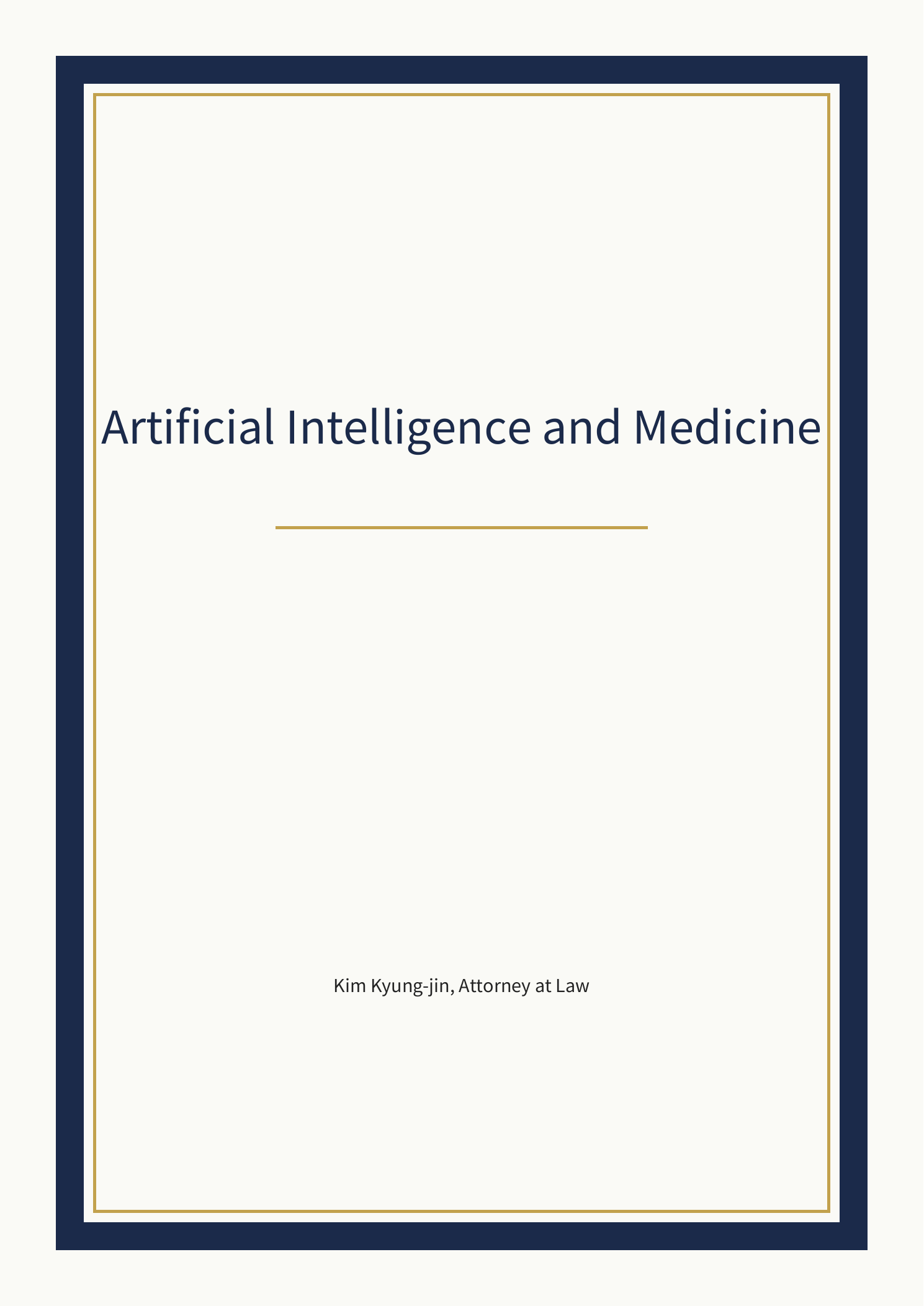
Artificial Intelligence and Medicine cover

Table of Contents

Artificial Intelligence and Medicine

Kim Kyung-jin, Attorney at Law

AI in clinical care, hospitals, education, and research

AI in medical imaging, risk prediction, treatment planning, hospital operations, education, and research, with patient safety, privacy, and accountability.

The EU AI Act cover

Table of Contents

The EU AI Act

Kim Kyung-jin, Attorney at Law

A Practitioner’s Guide for Korean Companies

From August 2, 2026, a game company’s chatbot in Pangyo and a medical-device reading software in Busan fall under Article 50 of the EU AI Act, even without a single office in Europe. Rather than summarizing the provisions, this book reads them from the enforcement authority’s point of view: extraterritorial reach, transparency duties, general-purpose AI models, high-risk systems, and the double regulation that overlaps with Korea’s AI Framework Act. It is a field guide to what a Seoul-headquartered company must prepare, when, and how.

South Korea's AI Basic Act: A Practical Guide for Business Operators cover

Contents

South Korea’s AI Basic Act: A Practical Guide for Business Operators

Kim Kyung-jin, Attorney at Law

Compliance, Obligations, and Opportunities under Korea’s AI Regulation

On January 22, 2026, the AI Basic Act came into effect in the Republic of Korea. This book was written by an attorney for business operators. It answers questions such as “Is our service high-impact AI?”, “How should prior notification be conducted?”, and “What preparations are needed when expanding into the EU?”

Chinese Government AI Regulations cover

Contents

Chinese Government AI Regulations

Kim Kyung-jin, Attorney at Law

Chinese originals, translations, terms, issuing bodies, effective dates, administrative interpretations, and judicial materials

This edition orders Chinese AI-related laws, administrative regulations, military regulations, departmental rules, policy documents, and national standards by legal force. Each entry keeps the Chinese original text and adds an English translation or explanation, legal terms, issuing body, effective date, administrative interpretations, and judicial materials where available.

Fathers of Chinese AI cover

Table of Contents

Fathers of Chinese AI

Kim Kyung-jin, Attorney at Law

Ten lives behind China's AI ascent

This book follows Kai-Fu Lee, Robin Li, Jie Tang, Liang Wenfeng, Yang Zhilin, Yan Junjie, Wang Xiaochuan, Jingren Zhou, Shunyu Yao, and Yonghui Wu through the laboratories, companies, models, and policy environment that shaped Chinese AI.

How Far Has AI Entered Chinese Hospitals? cover

Table of Contents

How Far Has AI Entered Chinese Hospitals?

Kim Kyung-jin, Attorney at Law

A quiet shift in clinics, imaging rooms, and hospital administration

This book follows how artificial intelligence has entered Chinese hospitals, using Chinese and English materials together with original Chinese policy texts. It covers national policy, medical foundation models, clinical decision support, image reading, hospital information departments, traditional Chinese medicine, AI-native hospitals, the patient experience, hallucination and responsibility, regulation, and money. The final chapters collect major Chinese guidelines and the 84 health-sector AI application scenarios, with translated text and summaries.

Andrew Ng Biography cover

Table of Contents

Andrew Ng Biography

Kim Kyung-jin, Attorney at Law

A central figure in AI education and public learning

This book follows Andrew Ng from London, Hong Kong, Singapore, Carnegie Mellon, MIT, Berkeley, and Stanford to Google Brain, Coursera, Baidu, DeepLearning.AI, Landing AI, AI Fund, and Amazon. It reads his career through research, teaching, company building, and his practical view of AI.

Mykhailo Fedorov, Leading Figure of Ukraine's Drone War cover

Table of Contents

Mykhailo Fedorov, Leading Figure of Ukraine's Drone War

Kim Kyung-jin

From the State in a Smartphone to the Defense Ministry of the Drone War

This book follows Diia, IT Army, Starlink, UNITED24, Brave1, the Unmanned Systems Forces, drone procurement, and battlefield data to explain how Mykhailo Fedorov tied technology to state power in wartime Ukraine.

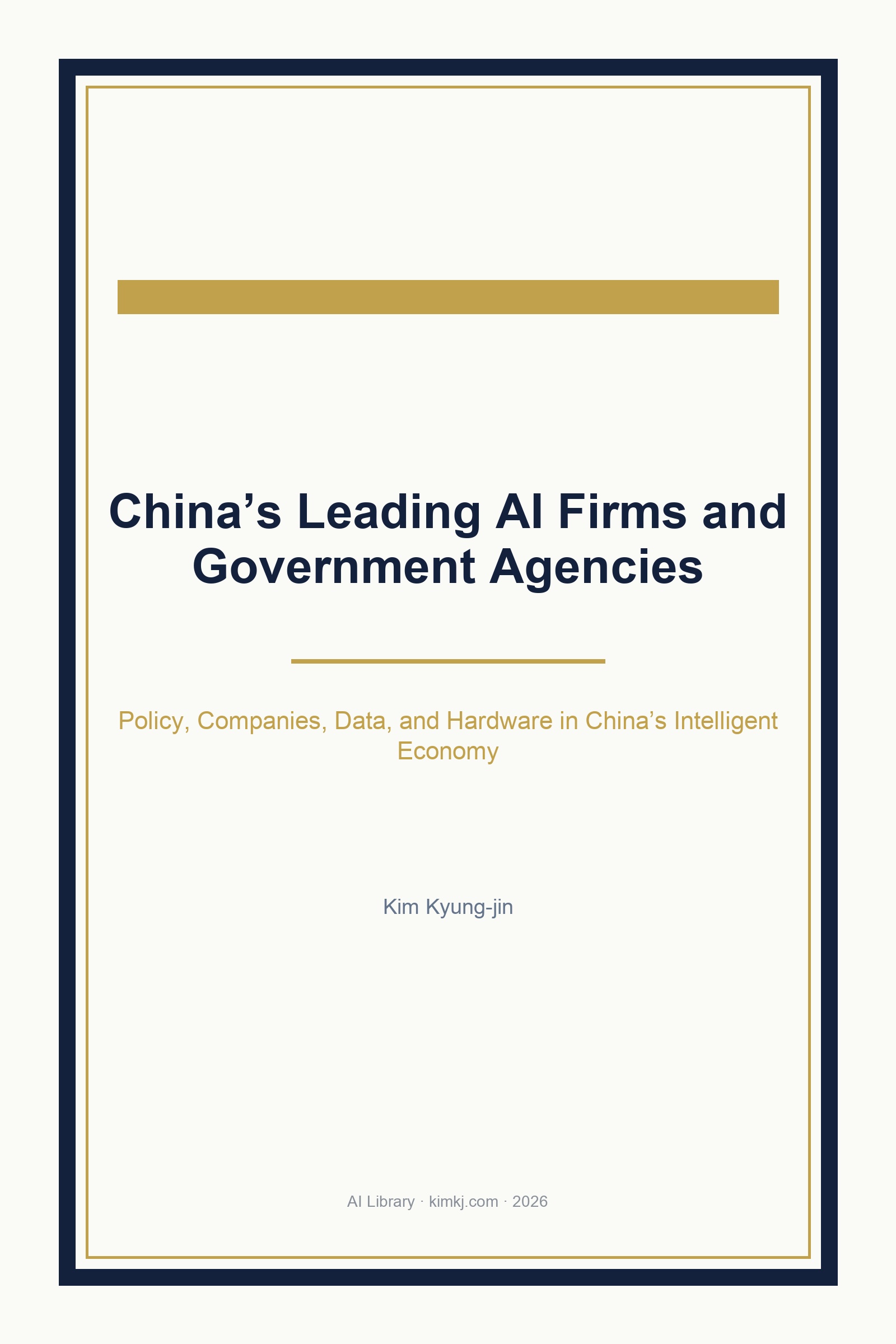
China’s Leading AI Firms and Government Agencies cover

Table of Contents

China’s Leading AI Firms and Government Agencies

Kim Kyung-jin

Policy, Companies, Data, and Hardware in China’s Intelligent Economy

This book follows China’s AI policy arc from the 2017 next-generation AI plan to AI+ and the 15th Five-Year Plan. It maps the roles of the State Council, NDRC, CAC, MIIT, and SAC, then reads DeepSeek, the AI Tigers, Alibaba, Tencent, Baidu, ByteDance, iFLYTEK, Huawei Ascend, East Data West Computing, manufacturing, education, consumption, and humanoid robotics as one connected system.

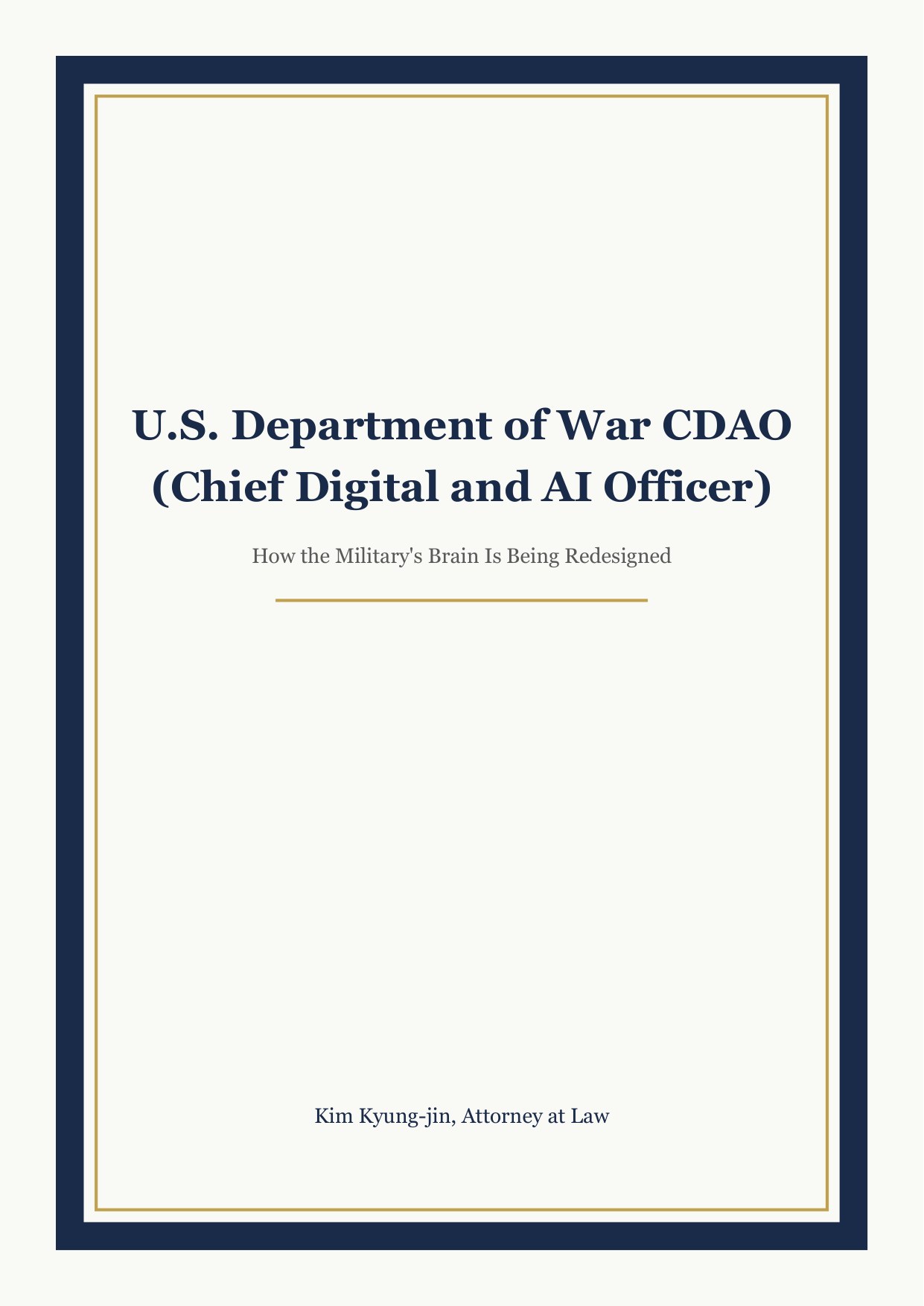
U.S. Department of War CDAO (Chief Digital and AI Officer) cover

Table of Contents

U.S. Department of War CDAO (Chief Digital and AI Officer)

Kim Kyung-jin, Attorney at Law

How the Military’s Brain Is Being Redesigned

From the moment in January 2026 when the U.S. Department of War declared data hoarding a national security threat, this book follows the birth of the CDAO (Chief Digital and Artificial Intelligence Office) and the five organizations it absorbed, Advana and the War Department Data Platform, the Open DAGIR procurement experiment, Project Maven and CJADC2 on the battlefield, and Responsible AI, allies, and critics — the story of how America is redesigning its military’s brain.

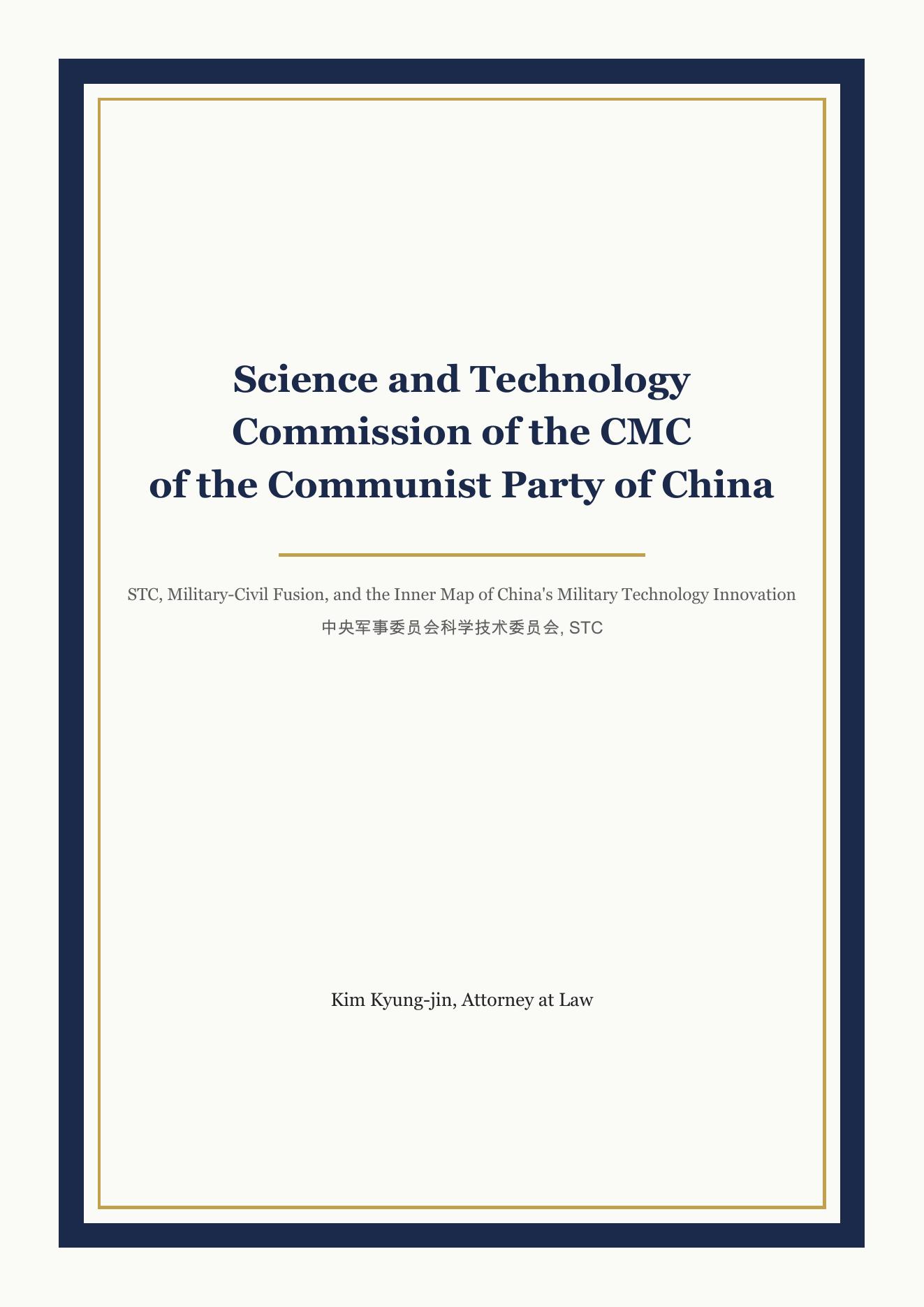
Science and Technology Commission of the CMC of the Communist Party of China cover

Table of Contents

Science and Technology Commission of the CMC of the Communist Party of China

Kim Kyung-jin

STC, Military-Civil Fusion, and China’s Military Technology Innovation

This English AI Library edition follows the CMC Science and Technology Commission, the Equipment Development Department, military-civil fusion, intelligentized warfare, emerging technology competition, and the institutional limits of China’s military innovation system.

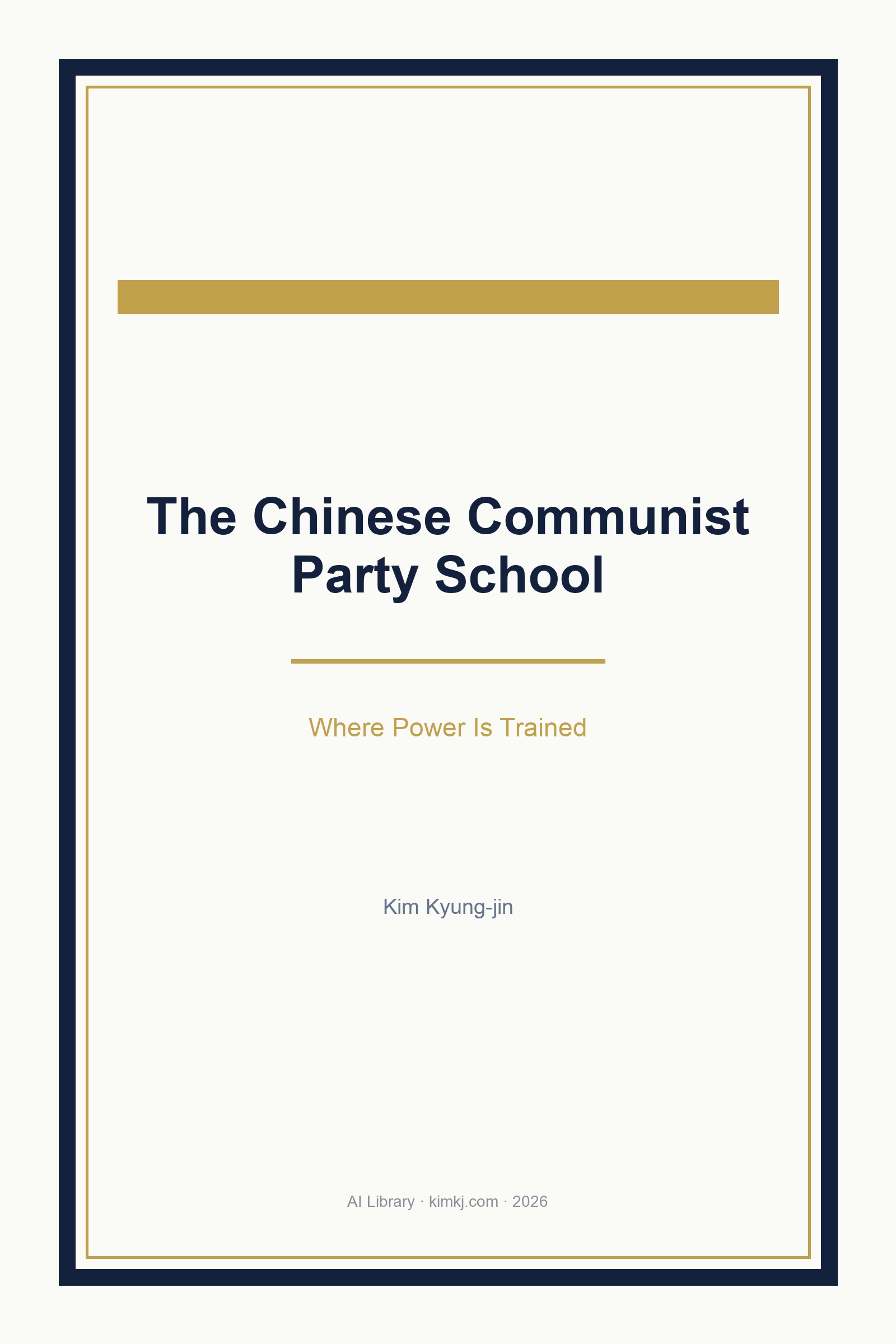
The Chinese Communist Party School cover

Table of Contents

The Chinese Communist Party School

Kim Kyung-jin

Where Power Is Trained

This book follows the Chinese Communist Party school system from Ruijin and Yan'an to the Central Party School, the National Academy of Governance, provincial and county schools, young-official training classes, Cai Qi's leadership, and the Mwalimu Julius Nyerere Leadership School.

DARPA, America’s Defense Research Lab cover

Table of Contents

DARPA, America’s Defense Research Lab

Kim Kyung-jin

This book follows DARPA through its 2026 office reorganization, budget signals, AIxCC, AI Forge, RACER, LongShot, quantum computing, space robotics, battlefield medicine, and strategic-material programs, using official sources as the main trail.

AI and the Classroom cover

Table of Contents

AI and the Classroom

Kim Kyung-jin

The AI Teacher That Does Not Give Answers

From Estonia's AI Leap and Khanmigo to answer leakage, Korean AI digital textbooks, and teacher-in-the-loop classrooms, this book asks how AI can protect thinking instead of replacing it.

Spiderweb cover

Table of Contents

Spiderweb

Kim Kyung-jin

Ukraine's drone revolution that changed the map of war

A narrative account of Operation Spiderweb on June 1, 2025, and how Ukraine's drones reached deep inside Russia and changed military planning, intelligence work, and security assumptions.

A Map of the 2026 U.S.-China Collision cover

Table of Contents

A Map of the 2026 U.S.-China Collision

Kim Kyung-jin

The year tied in Busan and left unsolved in Beijing

A one-year map of tariffs, chips, rare earths, Taiwan, sea lanes, and Korea's choices between Washington and Beijing.

China's 2026 Power Map cover

Table of Contents

China's 2026 Power Map

Kim Kyung-jin

The completion of one-man rule, and the empty seat that follows

A map of Xi Jinping's power system, the military purge, the blocked succession path, and the economic-security dilemma.

The Architect of Contradictions cover

Table of Contents

The Architect of Contradictions

Kim Kyung-jin

Peter Thiel and the empire built by a man who hated competition

Peter Thiel, from a South African childhood to PayPal, Facebook, Palantir, politics, and the dream of defeating death.

Claude, GPT, Palantir, and the 2026 World War cover

8 readings

Claude, GPT, Palantir, and the 2026 World War

Kim Kyung-jin

How Artificial Intelligence Came to Pull the Trigger of War. Prologue, 3 Parts / 6 Chapters, Epilogue

A single name sits on the screen. An intelligence officer looks at it for twenty seconds, confirms only that it is a man, and moves on. Inside those twenty seconds a person dies, and the responsibility for deciding to kill him disappears. From Lavender over Gaza to Maven in Ukraine, Epic Furies over Iran, and target selection in the skies of Venezuela, this book follows the hand that chooses targets as it passes from human to machine in the wars of 2026.

China's Robotics Industry 2026: The Age of Mass Production and Real-World Deployment cover

25 readings

China's Robotics Industry 2026: The Age of Mass Production and Real-World Deployment

Kim Kyung-jin

From the humanoid mass-production race to U.S.-China hegemony: the state of China's robotics industry in 2026. Table of Contents, Preface, 7 Parts / 23 Chapters, Epilogue

In a factory in Shenzhen, hundreds of humanoid robots repeat the same motion. This book traces the mass-production race between Unitree and UBTECH, the Optimus supply chain, real-world deployment sites, and where Korea stands amid the U.S.-China tech hegemony.

Crossing the Adolescence of Technology Cover

15 Parts in Total

Crossing the Adolescence of Technology

Kim Kyung-jin

Dario Amodei, Anthropic, and the Struggle Toward Controllable Intelligence. Table of Contents, Preface, Prologue, 12 Chapters, Epilogue

The struggle of a physicist who lost his father to create controllable artificial intelligence. The story of Dario Amodei and Anthropic clashing with the Pentagon and the White House, shaking the era with the scaling law and Constitutional AI.

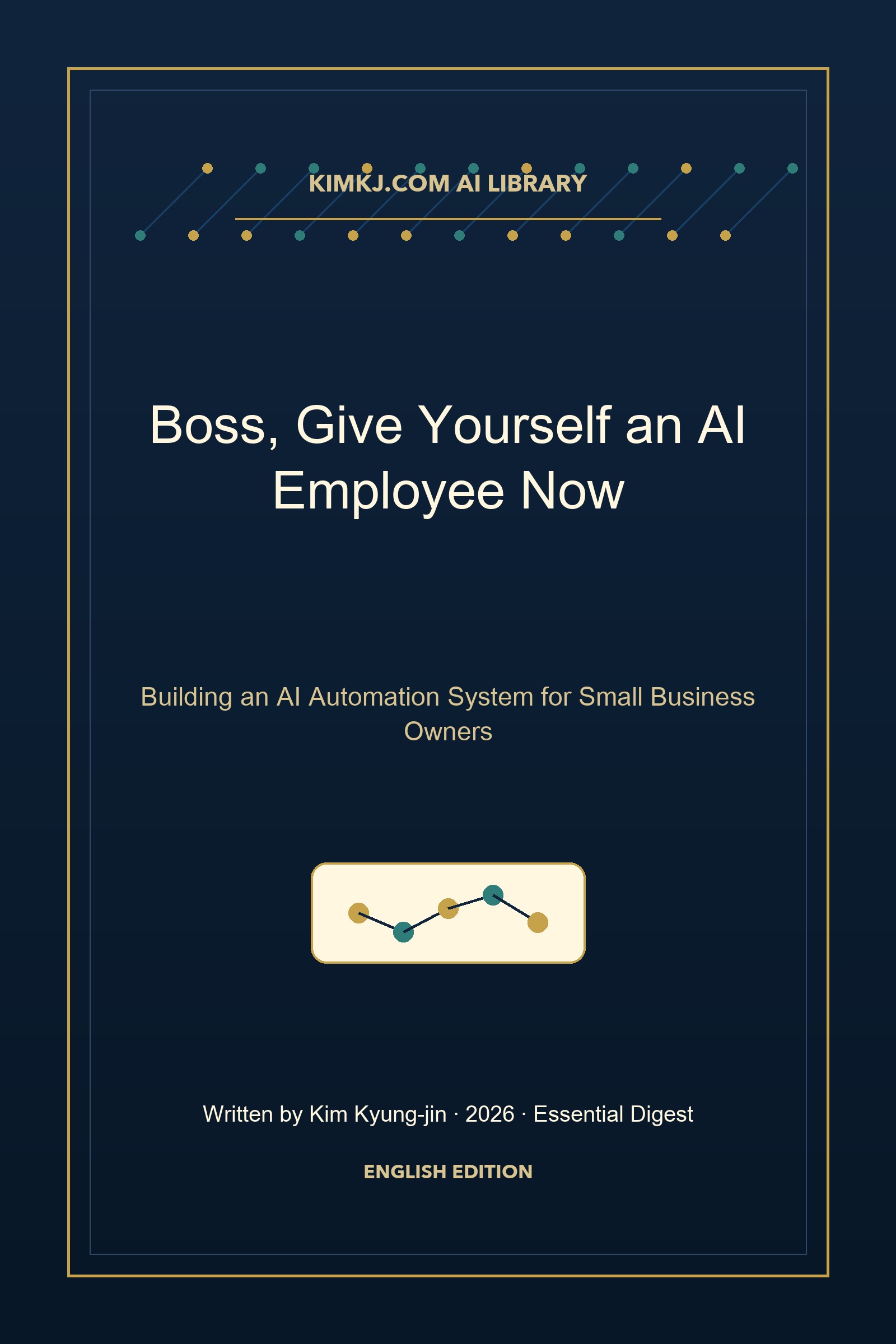
Boss, Give Yourself an AI Employee Now

Table of Contents, 43 Chapters, 11 Appendices, Epilogue

Boss, Give Yourself an AI Employee Now

Written by Kim Kyung-jin

Building an AI Automation System for Small Business Owners

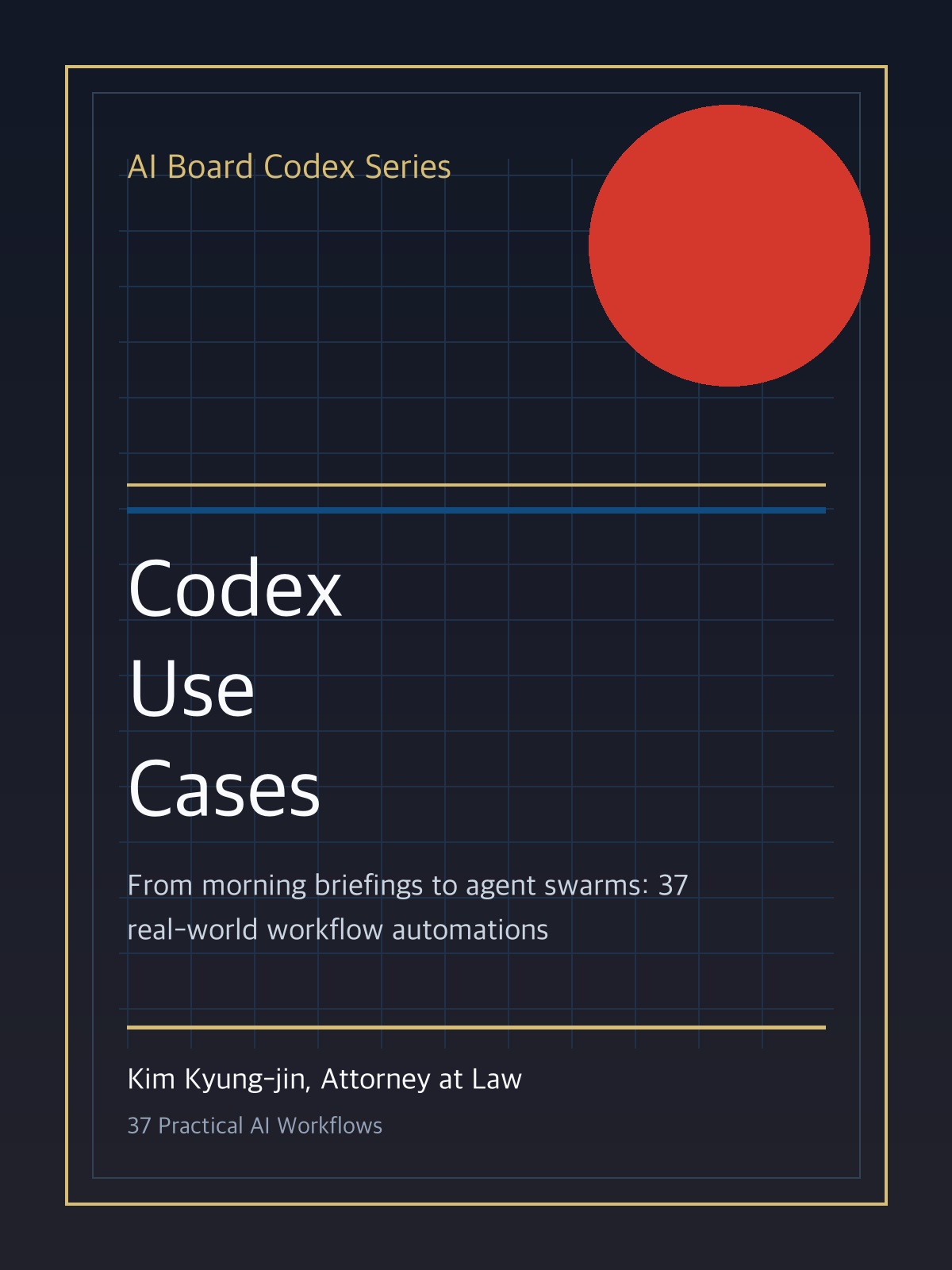
37 Concrete Codex Use Cases cover

Book-style reading

37 Concrete Codex Use Cases

Kim Kyung-jin

From morning briefings to agent swarms: 37 real-world workflow automations

This guide gathers 37 ways to connect Codex and AI agents to real work: personal routines, data processing, marketing, sales, documents, development, and browser control.

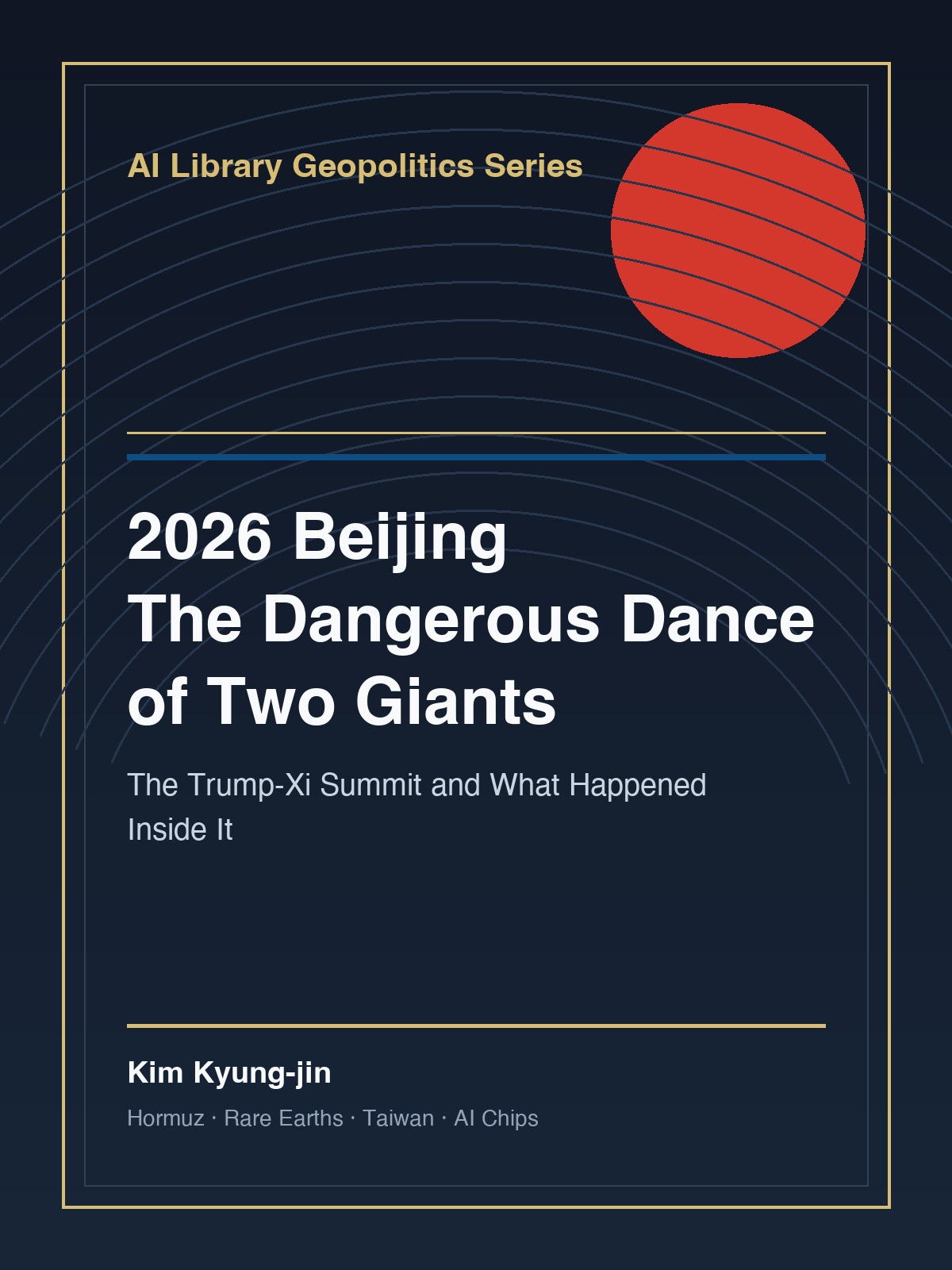
2026 Beijing: The Dangerous Dance of Two Giants book cover

16 posts available

2026 Beijing: The Dangerous Dance of Two Giants

Kim Kyung-jin

Table of Contents, Introduction, 13 Chapters, Epilogue

This book reads the Beijing summit through Hormuz, rare earths, Taiwan, Boeing, soybeans, AI chips, and Korea’s exposure to the U.S.-China bargain.

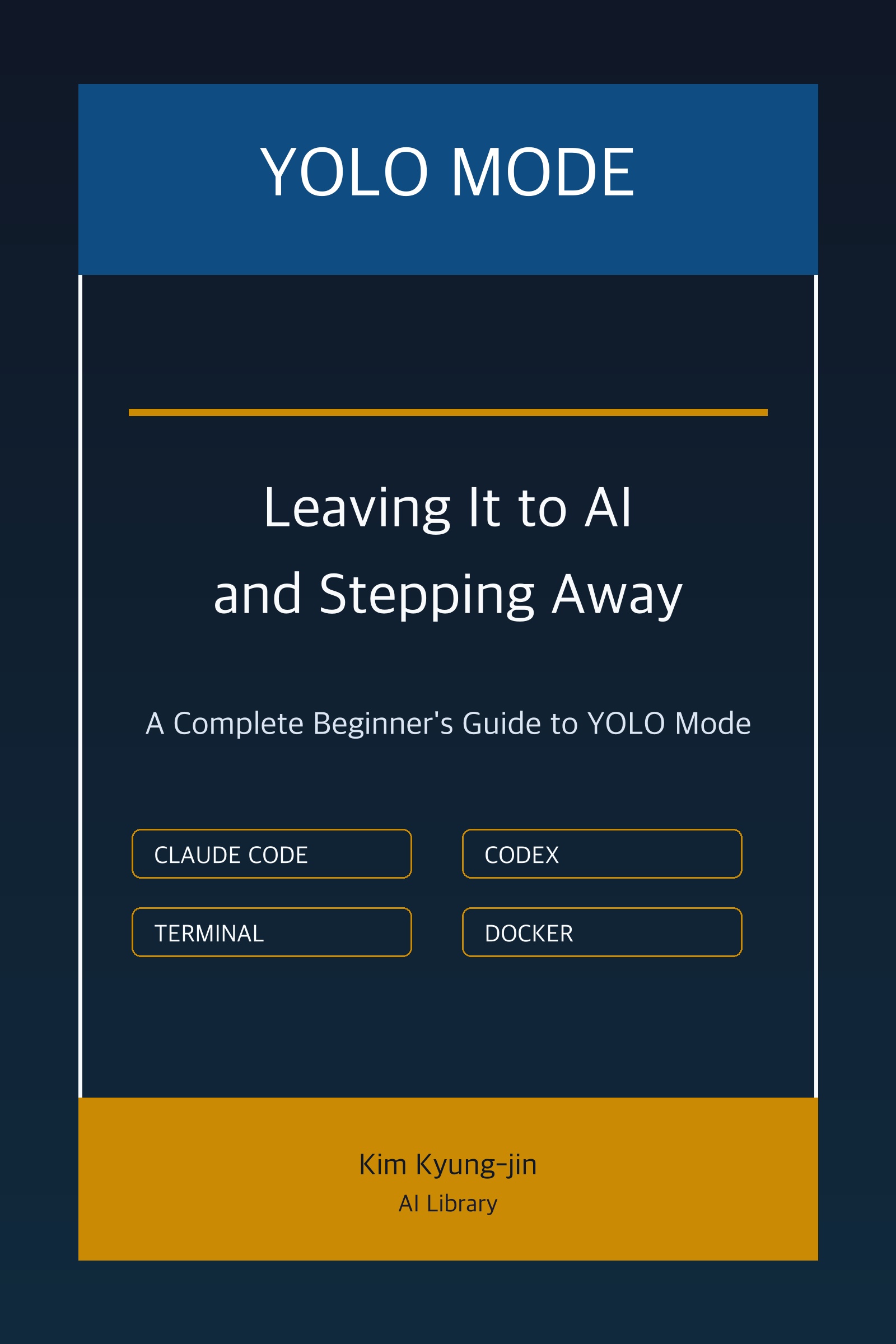
Leaving It to AI and Stepping Away cover

27 posts

Leaving It to AI and Stepping Away

Kim Kyung-jin

A Complete Beginner’s Guide to YOLO Mode. Table of contents and 26 chapters

A beginner-friendly online book on YOLO mode in Claude Code and Codex. It explains how to let AI read files, write code, run commands, and finish work while keeping rollback, Docker sandboxing, and safety checks close at hand.

Artificial Intelligence Fighter, Artificial Intelligence Air Force book cover

43 posts available

Artificial Intelligence Fighter, Artificial Intelligence Air Force

Kim Kyung-jin

Table of Contents, Preface, 40 Chapters, Epilogue

Artificial Intelligence Fighter, Artificial Intelligence Air Force is an online AI Library book by Kim Kyung-jin. It covers AI fighters, autonomous air power, unmanned combat aircraft, CCA, MUM-T, sixth-generation fighters and is organized as Table of Contents, Preface, 40 Chapters, Epilogue.

Artificial Intelligence on Trial book cover

26 posts available

Artificial Intelligence on Trial

Attorney Kyungjin Kim

Table of Contents, Preface, 21 Chapters, 3 Appendices

Artificial Intelligence on Trial is an online AI Library book by Attorney Kyungjin Kim. It covers artificial intelligence and law, AI liability, algorithmic judgment, courts and technology and is organized as Table of Contents, Preface, 21 Chapters, 3 Appendices.

PALANTIR book cover

16 posts available

PALANTIR: War, Surveillance, Artificial Intelligence

Attorney Kyungjin Kim

Table of Contents, Preface, 14 Chapters

PALANTIR: War, Surveillance, Artificial Intelligence is an online AI Library book by Attorney Kyungjin Kim. It covers Palantir, war, surveillance, artificial intelligence, data analytics, national security and is organized as Table of Contents, Preface, 14 Chapters.

Brain Readers: Neuralink and the Final Human Revolution book cover

21 posts available

Brain Readers: Neuralink and the Final Human Revolution

Kim Kyung-jin

Table of Contents, Prologue, 18 Chapters, Epilogue

Brain Readers: Neuralink and the Final Human Revolution is an online AI Library book by Kim Kyung-jin. It follows Neuralink, brain-computer interfaces, brain data, medicine, neurorights, and the future of human enhancement.

Artificial Intelligence and the Reshaping of Society book cover

16 posts available

Artificial Intelligence and the Reshaping of Society

Kim Kyung-jin

Table of Contents, Preface, 13 Chapters, Epilogue

Artificial Intelligence and the Reshaping of Society is an online AI Library book by Kim Kyung-jin. It follows how artificial intelligence changes work, education, inequality, cities, democracy, and human relationships.

The Jensen Huang Story book cover

16 posts available

The Jensen Huang Story

Kim Kyung-jin

Table of Contents, Preface, 13 Chapters, Epilogue

The Jensen Huang Story is an online AI Library book by Kim Kyung-jin. It covers Jensen Huang, NVIDIA, GPUs, AI chips, and the AI industry.

Ten Questions AI Poses to Humanity book cover

12 posts available

Ten Questions AI Poses to Humanity

Kim Kyung-jin

Table of Contents, Preface, 10 Chapters

Ten Questions AI Poses to Humanity is an online AI Library book by Kim Kyung-jin. It asks how artificial intelligence changes truth, weapons, work, data, identity, and human control.

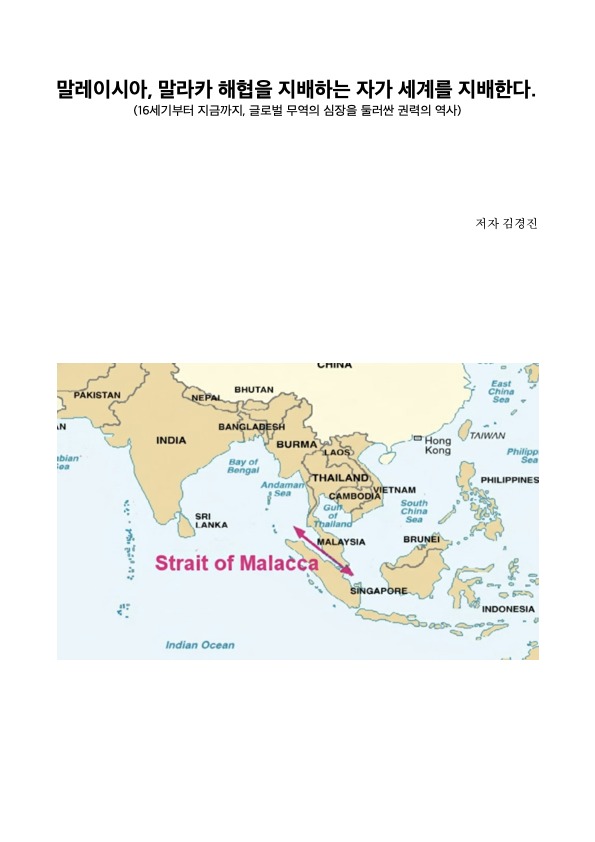
Malaysia and the Malacca Strait book cover

23 posts available

Malaysia and the Malacca Strait: Whoever Controls It Controls the World

Kim Kyung-jin

Table of Contents, Preface, 20 Chapters, Epilogue

Malaysia and the Malacca Strait is an online AI Library book by Kim Kyung-jin. It covers Malaysia, the Malacca Strait, maritime logistics, geopolitics, global trade, and Southeast Asia’s strategic future.

Georgia history and culture travel book cover

24 posts available

A Journey Through Georgia’s History and Culture

Kim Kyung-jin

Table of Contents, Preface, 17 Chapters, 4 Appendices, Epilogue

A Journey Through Georgia’s History and Culture is an online AI Library book by Kim Kyung-jin. It covers Georgia’s history, culture, religion, politics, travel, and the Caucasus crossroads between Europe and Asia.

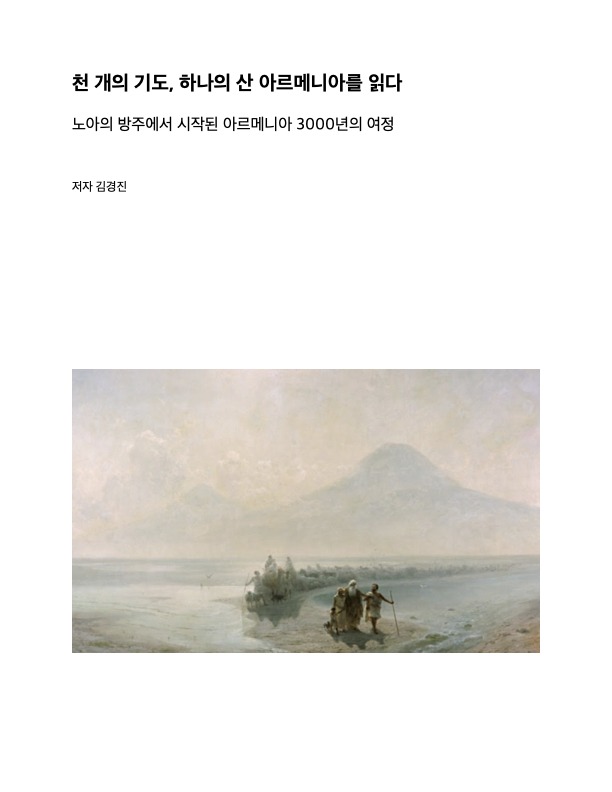
Reading Armenia book cover

13 posts available

Reading Armenia: A Thousand Prayers, One Mountain

Kim Kyung-jin

Table of Contents, Preface, 10 Chapters, Epilogue

Reading Armenia: A Thousand Prayers, One Mountain is an online AI Library book by Kim Kyung-jin. It covers Armenian history, faith, Mount Ararat, cultural memory, travel, and the endurance of a small nation.

Mastering Claude Code book cover

41 posts available

Mastering Claude Code

Kim Kyung-jin

Table of Contents, Preface, Chapters, Appendices

Mastering Claude Code is an online AI Library book by Kim Kyung-jin. It covers Claude Code setup, commands, workflows, automation, agents, and practical methods for using Claude Code in real work.

Claude Cowork and Agent manual book cover

11 posts available

Claude Cowork and Agent Utilization Manual

Kim Kyung-jin

Table of Contents, Preface, 8 Chapters, Closing Note

Claude Cowork and Agent Utilization Manual is an online AI Library book by Kim Kyung-jin. It covers Claude Code, AI agents, coding automation, work automation, and practical agent-based collaboration.

2026 U.S.-Iran War and the Global Energy Crisis book cover

39 posts available

The 2026 U.S.-Iran War and the Global Energy Crisis

Kim Kyung-jin

Table of Contents, Preface, Chapters and Appendices

The 2026 U.S.-Iran War and the Global Energy Crisis is an online AI Library book by Kim Kyung-jin. It covers war, oil, the Strait of Hormuz, maritime security, energy markets, and the global consequences of conflict.

The Traces Han Dong-hoon Left on South Korea book cover

13 posts available

The Traces Han Dong-hoon Left on South Korea

Kim Kyung-jin

Table of Contents, Prologue, Chapters, Epilogue

The Traces Han Dong-hoon Left on South Korea is an online AI Library book by Kim Kyung-jin. It examines his record in justice policy, immigration reform, public institutions, and the structural questions facing South Korea.

The Han Dong-hoon Story book cover

39 posts available

The Han Dong-hoon Story

Kim Kyung-jin

Table of Contents, Prologue, Chapters, Epilogue

The Han Dong-hoon Story is an online AI Library book by Kim Kyung-jin. It traces Han Dong-hoon’s life, public career, political choices, and the changing landscape of South Korean conservative politics.

Beyond the Glass Ceiling cover

39 entries

Beyond the Glass Ceiling

Kim Kyung-jin

Table of contents, prologue, 31 chapters, epilogue, 5 appendices

A political biography tracing Sanae Takaichi’s rise from Nara to Japan’s premiership, through party struggles, security policy, diplomacy, and the meaning of Japan’s first female prime minister.

AI Hegemony War book cover

8 posts available

AI Hegemony War

Kim Kyung-jin

Table of Contents, 7 Chapters

An online AI Library book by Kim Kyung-jin on AI superintelligence, the U.S.-China technology race, Europe and Korea’s AI laws, and international AI governance.

Sam Altman Biography: Pioneer of the AI Revolution cover

22 posts

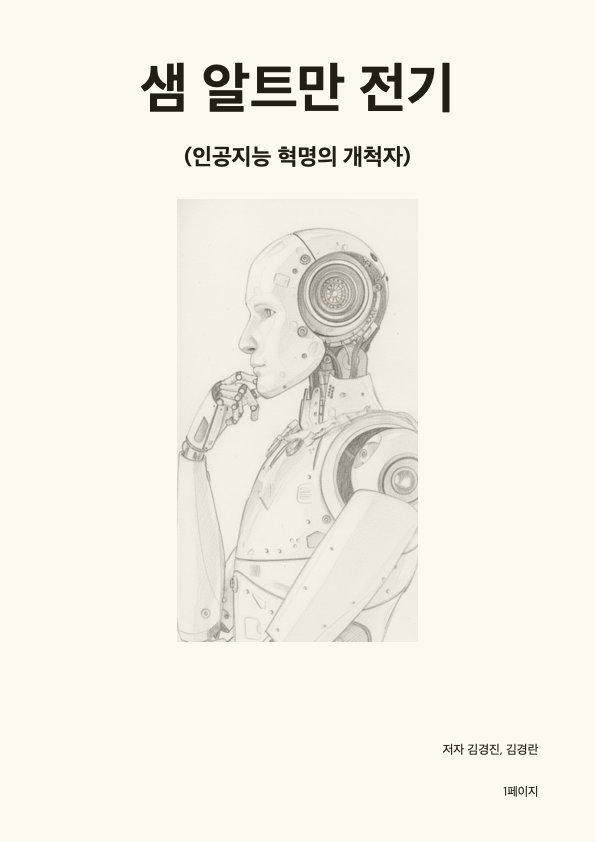
Sam Altman Biography: Pioneer of the AI Revolution

Kim Kyung-jin, Kim Kyung-ran

Table of contents, preface, 7 parts, 20 chapters

An online biography following Sam Altman’s childhood, startups, Y Combinator, OpenAI, ChatGPT, the 2023 board crisis, and his sense of responsibility in the AI era.

From Chaiwala to Prime Minister cover

13 entries

From Chaiwala to Prime Minister

Kim Kyung-jin

Table of contents, preface, 10 chapters, epilogue

A political biography tracing Narendra Modi from a chai-selling boy in Vadnagar to RSS organizer, Gujarat chief minister, and three-term prime minister, while reading modern India, Korea-India relations, and the risks of a rising power.

AI Classroom: Your Grades Will Change book cover

26 posts available

AI Classroom: Your Grades Will Change

Kim Kyung-jin

Table of Contents, Preface, 24 Sections

An online AI Library book by Kim Kyung-jin on how AI can support elementary, middle, and high school learning, teaching, assessment, and educational equity.

Military Artificial Intelligence cover

17 entries

Military Artificial Intelligence

Kim Kyung-jin and Kim Won-tae

Table of contents, preface, 14 chapters, epilogue

A full-length study of military artificial intelligence, from autonomous weapons, drones, command systems, logistics, and cyber defense to the strategies of the United States, China, Israel, Korea, and global defense AI companies.

Global Case Studies in Introducing AI into Public Administration book cover

25 posts available

Global Case Studies in Introducing AI into Public Administration

Kim Kyung-jin

Table of Contents, 23 Chapters, Epilogue

An online AI Library book by Kim Kyung-jin on public-sector AI adoption, national strategies, administrative services, governance, and future policy tasks.

Seven Misunderstandings About the Arctic Route book cover

10 posts available

Seven Misunderstandings About the Arctic Route

Kim Kyung-jin

Table of Contents, Preface, 7 Chapters, Epilogue

An online AI Library book by Kim Kyung-jin on seven common misunderstandings about the Arctic Route, including speed, liner service, insurance, safety rules, year-round access, carbon impact, and infrastructure.

Artificial Intelligence Election cover

14 posts

Artificial Intelligence Election

Kim Kyung-jin

Table of contents, author preface, 11 chapters, closing essay

An online book on campaign messaging, publicity materials, digital campaigning, data analysis, campaign operations, disinformation defense, legal risk, and ready-to-use prompts.

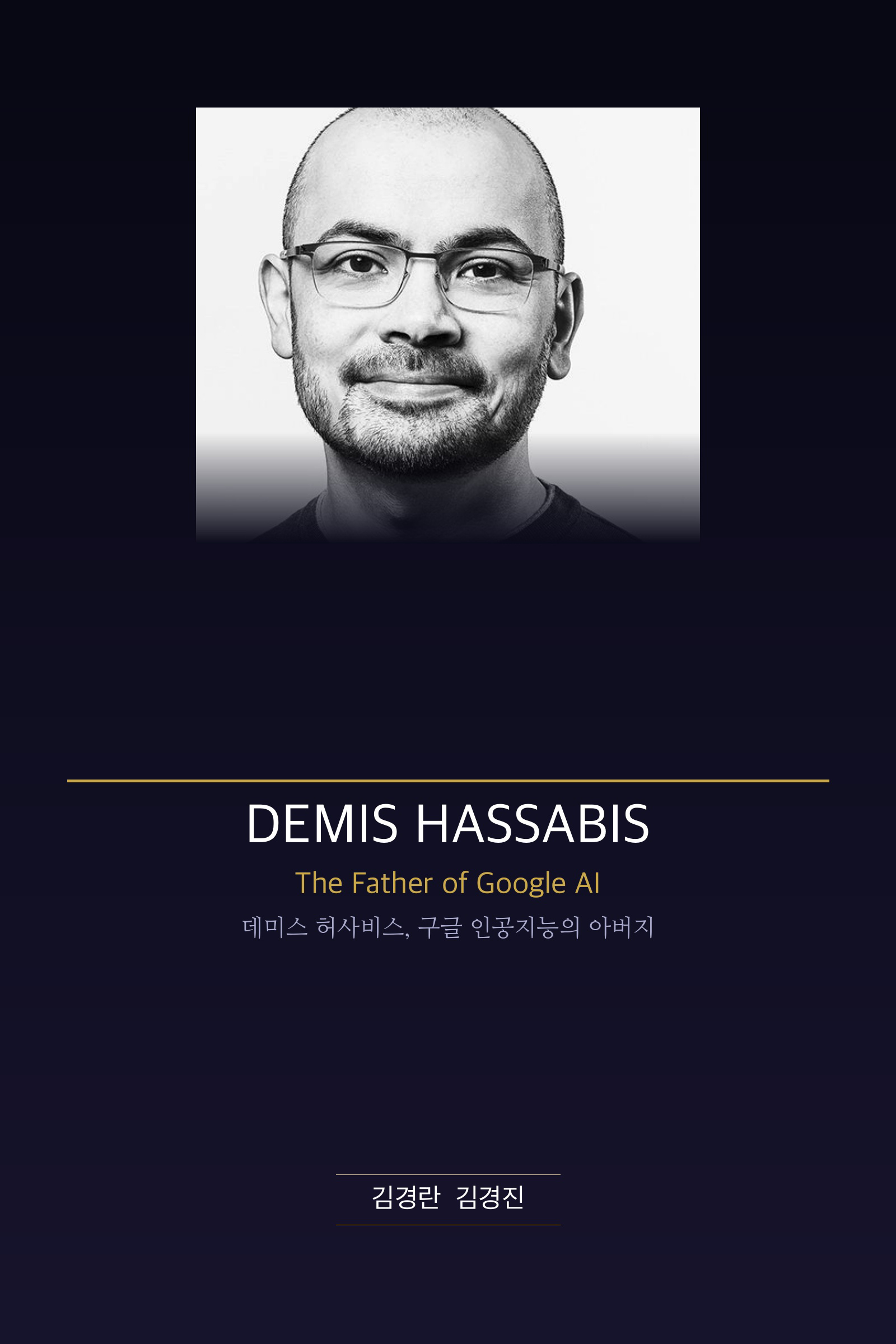
Demis Hassabis book cover

34 posts available

Demis Hassabis, Father of Google’s Artificial Intelligence

Kim Kyung-ran, Kim Kyung-jin

Table of Contents, Author’s Preface, 31 Chapters, Epilogue

Demis Hassabis, Father of Google’s Artificial Intelligence is an online AI Library book by Kim Kyung-ran, Kim Kyung-jin. It covers Demis Hassabis, Google DeepMind, artificial intelligence, AlphaGo, AI research and is organized as Table of Contents, Author’s Preface, 31 Chapters, Epilogue.

The Dhammapada 423 Verses book cover

28 posts available

The Dhammapada: 423 Verses

Kim Kyung-jin

Table of Contents, Editor’s Note, 26 Chapters, 423 Verses

An online AI Library book by Kim Kyung-jin. This edition arranges all 423 verses of the Dhammapada into 26 chapters for slow, poetic reading.

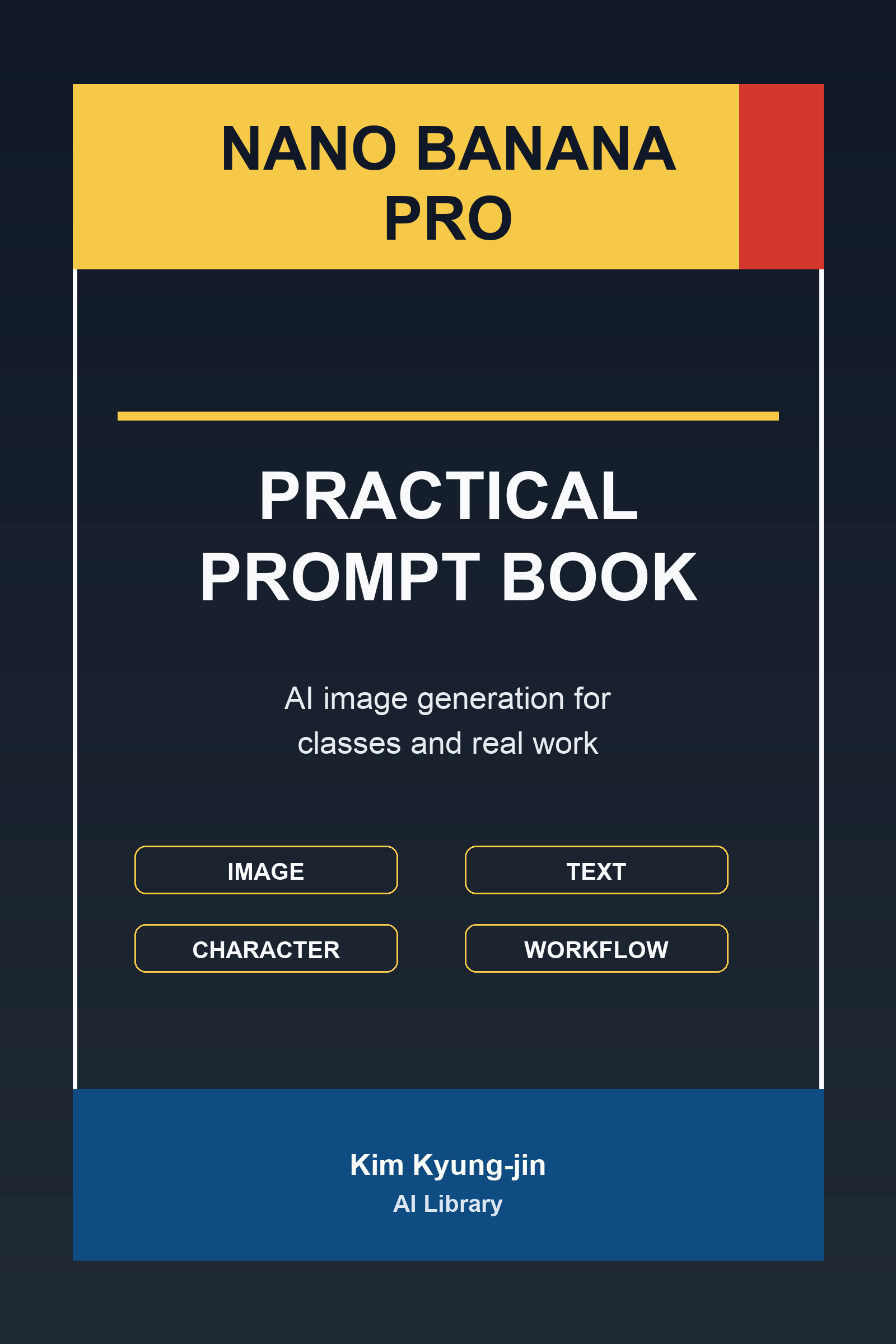
Nano Banana Pro Practical Prompt Book cover

24 posts

Nano Banana Pro Practical Prompt Book

Kim Kyung-jin

6 parts, 22 chapters, classroom prompt appendix

An online book for using Nano Banana Pro in classes and real work, covering image generation, editing, text rendering, character consistency, business use cases, and monetization.

Liberal Arts AI for College Students book cover

16 posts available

Liberal Arts AI for College Students

Kim Kyung-jin

Table of Contents, Preface, 13 Chapters, Closing Essay

An online AI Library textbook for college students. It introduces AI history, daily use, document work, research, images, presentations, video, productivity, learning, careers, copyright, and governance.

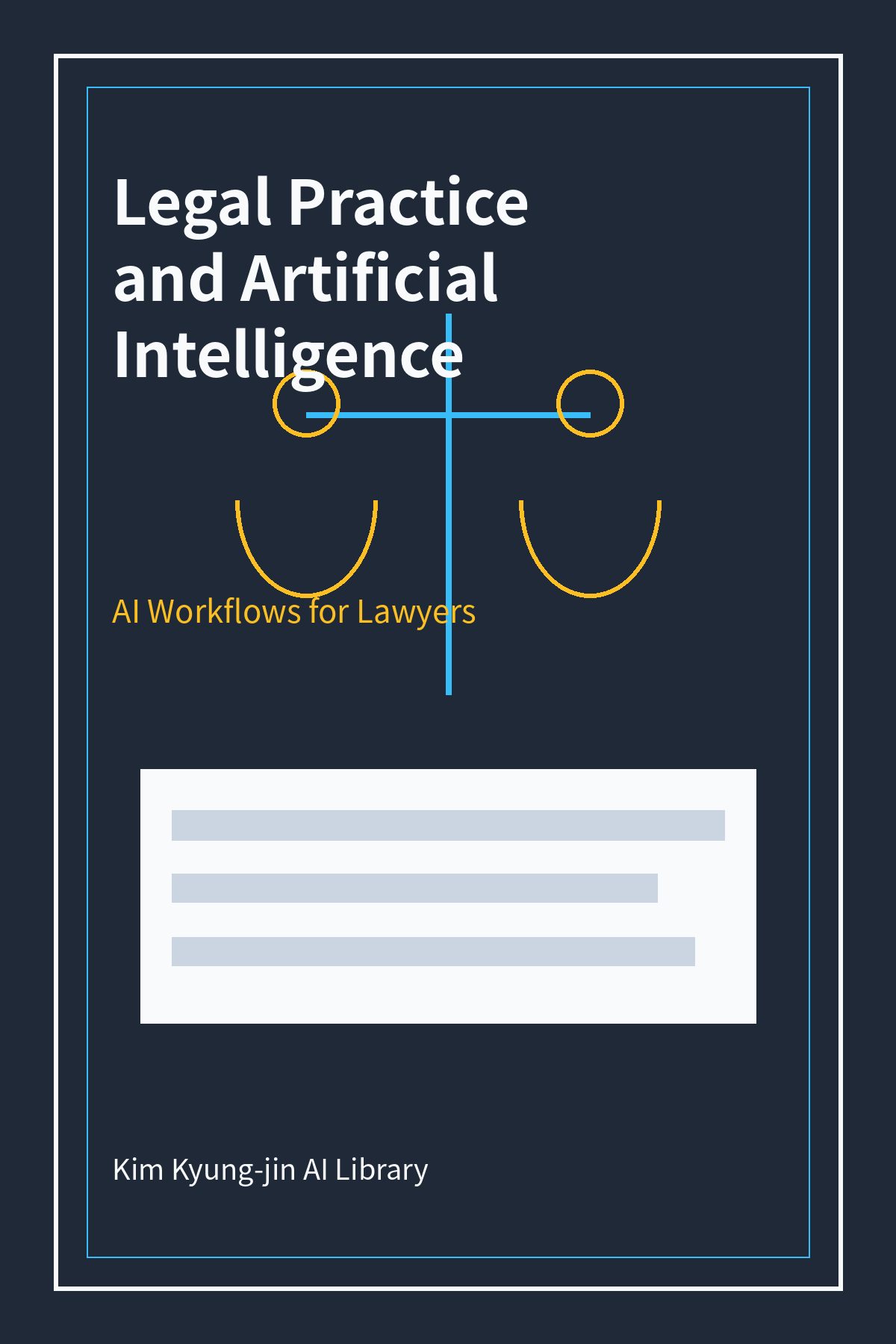
Legal Practice and Artificial Intelligence book cover

16 posts available

Legal Practice and Artificial Intelligence

Kim Kyung-jin

Table of Contents, Preface, 14 Parts

An online AI Library book by Kim Kyung-jin on legal research, drafting, evidence analysis, contract review, NotebookLM, and practical generative AI workflows for legal practice.

Hello, I Am Kim Kyung-jin book cover

10 posts available

Hello, I Am Kim Kyung-jin

Kim Kyung-jin

Table of Contents, Preface, Recommendations, 6 Chapters, Closing

An online AI Library book on Kim Kyung-jin’s life, science and technology policy, parliamentary diplomacy, legislative battles, Dongdaemun vision, and proposals for Korea’s demographic future.

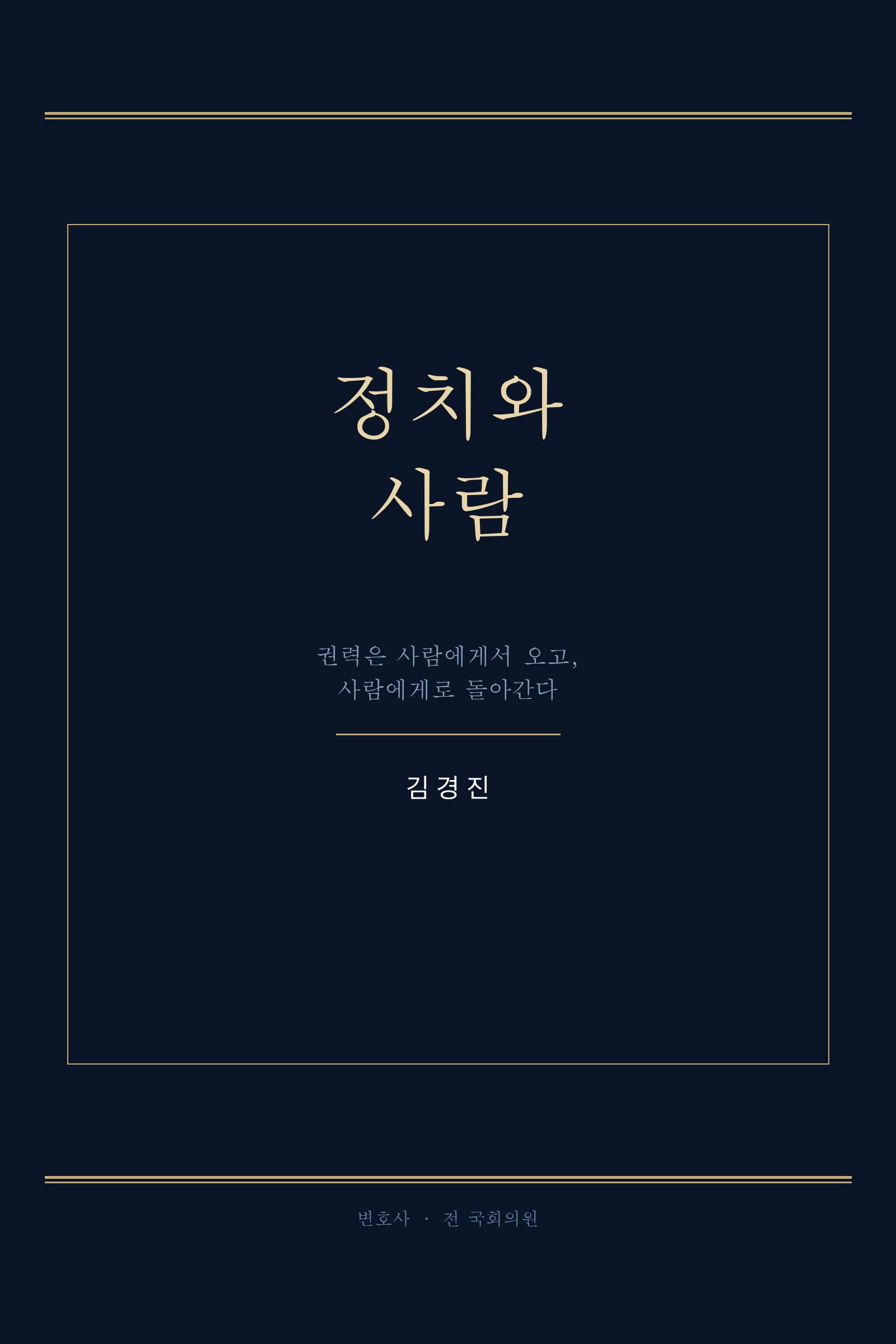
Politics and People book cover

25 posts available

Politics and People

Kim Kyung-jin

Table of Contents, Prologue, 22 Chapters, Epilogue

An online AI Library book by Kim Kyung-jin on how politics begins with reading people, winning trust, keeping relationships, and enduring seasons of crisis.

[AI Library] Appendix 1. Analysis of Major Decisions

Artificial Intelligence on Trial
Author
Attorney Kyungjin Kim
Date
2026-05-05 09:53
Views
900

Artificial Intelligence on Trial

Appendices

Appendix 1. Analysis of Major Decisions

Attorney Kyungjin Kim

A. Germany: GEMA v. OpenAI Ruling (Key Excerpts)

November 11, 2025, Munich. When Presiding Judge Elke Schwager began reading the ruling in the 42nd Civil Chamber, reporters in the gallery set down their pens. The key sentence of the 65-page decision was too clear to miss. "The reproduction of memorized content is copying."

This case begins with song lyrics. Helene Fischer's "Atemlos," Herbert Groenemeyer's "Maenner," Reinhard Mey's "Ueber den Wolken." Songs any German can hum along to. GEMA is the organization that manages the copyrights to these lyrics. When they posed a simple question to ChatGPT, something strange happened. The AI began reciting the lyrics in full. Almost without a single character wrong.

OpenAI's legal team deployed a familiar defense. "Our model stores nothing. It only learns statistical correlations between words." Think of a faucet. To determine whether it leaks, you don't need to look inside the plumbing. If there's a puddle under the sink, it's leaking. The Munich court applied exactly this logic.

The technical explanation in the ruling is lengthy. It may be the most technically detailed copyright decision ever written by a European court. The operating principles of large language models, the meaning of parameter weights, the tokenization process. But all that technical reasoning comes down to one sentence. "Copying is copying, and memorization is memorization."

The court rejected OpenAI's arguments point by point. First, it dismissed the logic that "the user entered the prompt, so the user is responsible." The entity that designed the model, selected the training data, and operates the service is OpenAI. The immunity logic once applied to simple intermediaries does not work here.

Second, it excluded the application of the Text and Data Mining (TDM) exception. The TDM exception is similar to a researcher reading books in a library and taking notes. Analyzing the contents of a book and extracting patterns is permitted. But photocopying an entire book and stacking it in a warehouse is a different matter. The Munich court found that OpenAI's conduct was closer to the latter. If lyrics are "imprinted" inside the model and can be reproduced under certain conditions, that is not mere analysis but storage.

Third, OpenAI's claim of nonprofit research institution immunity was also rejected. Judge Schwager's reasoning was concise. To qualify for immunity, you must reinvest 100% of revenue in research and development or demonstrate a government-recognized public interest purpose. OpenAI proved neither. The sharpest passage concerns "machine readability." OpenAI argued: "The rights holders did not indicate a prohibition on use in a machine-readable format." The court responded: "The defendant boasts that its AI can understand the nuances of Shakespeare and analyze complex legal contracts. Yet it claims it cannot understand the phrase 'unauthorized reproduction prohibited' written on a website?"

The practical effects of the ruling fall into three categories. Injunction: further training on and output of lyrics belonging to the GEMA repertoire is prohibited. Disclosure: OpenAI must submit documents regarding the scale of past use and revenues. This is like being ordered to hand over a stack of receipts. It forms the basis for calculating damages. Damages: liability has been established, so now the amount must be determined.

There is one more thing. The court ordered OpenAI to publish a summary of the ruling in a local newspaper. A symbolic but powerful remedy. It means: publicly acknowledge that you were in the wrong.

OpenAI announced it would appeal. The Munich Higher Regional Court's judgment remains pending, and referral to the Court of Justice of the European Union is also possible. But even this first-instance ruling sends a clear message. In Europe, something being publicly available on the internet does not mean anyone can take it freely. If data is the new oil, that oil lies beneath land that has an owner. To extract it, you must purchase mining rights.

When this ruling meets Article 53 of the EU AI Act, the impact grows larger. The AI Act requires providers of general-purpose AI models to conduct "training in compliance with EU copyright law." The GEMA ruling shows concretely what that obligation means. Secure a blanket license, or give up the European market. There are only two choices.

B. United States: Anthropic/Meta Fair Use Rulings

June 23, 2025, San Francisco federal court. Judge William Alsup finishes signing. Two days later, on June 25, in another courtroom of the same building, Judge Vince Chhabria signs yet another ruling. Both decisions answer the same question. "Is AI training fair use?" The answer is the same. "Yes." But the paths to that "yes" differ, and the blanks left unfilled differ even more.

"Fair Use" can be compared to borrowing someone else's ingredients to cook a new dish. A student quoting a book in a paper. A critic analyzing a scene from a film. These are acceptable without the original creator's permission. Section 107 of the U.S. Copyright Act opens this door. AI companies are trying to walk through it. "We read books and learned from them. It's the same as a human writer reading thousands of books and developing their own style."

The background of Bartz v. Anthropic is this. Andrea Bartz, Charles Graeber, and Kirk Wallace Johnson. Three writers sued Anthropic. Their claim: Anthropic used millions of books without permission to train its Claude model. There is something unusual. Anthropic legitimately purchased some books, but downloaded over 7 million from pirate sites like LibGen and Pirate Library Mirror for free.

Judge Alsup brought the blade down precisely. One edge cut Anthropic; the other spared it. "Copying for the purpose of training is quintessentially transformative and constitutes fair use." But in the same ruling, he adds: "Downloading pirated copies to build a permanent centralized library is not transformative."

The concept of "transformative" needs explanation here. If you don't serve the raw material as-is but transform it to create something new, the chance of being recognized as fair use increases. Judge Alsup found that AI training qualifies as such transformation. "Authors cannot prevent others from reading and learning from their works. For centuries, people have read and reread books. AI training is not trying to replace books; it is trying to make something different."

The pirated copies issue, however, is separate. Judge Alsup's logic is clear. "Downloading pirated copies to build a research library and keeping them around in case they might be useful for something later is a separate use in itself. It is not transformative."

After this ruling, the situation shifts rapidly. In August 2025, Judge Alsup certifies the case as a class action. The class represented by the three authors includes the rights holders of nearly 500,000 works contained in the LibGen and PiLiMi datasets. Under U.S. copyright law, statutory damages for willful infringement are up to $150,000 per work. Multiply that by 7 million titles, and potential damages could reach hundreds of billions of dollars.

Facing a December trial, both sides move toward settlement. The settlement amount announced in September 2025 is $1.5 billion. The largest AI copyright settlement in history. Approximately $3,000 is distributed per work.

Kadrey v. Meta reaches a different conclusion. Richard Kadrey, Sarah Silverman, Ta-Nehisi Coates, and ten other authors sued Meta. Their claim: Meta used pirated books to train its LLaMA model. Judge Chhabria ruled in Meta's favor.

There is a difference. Judge Chhabria was more cautious than Judge Alsup. He warns multiple times in his ruling. "This decision does not establish the proposition that Meta's use of the works was lawful. It establishes only the proposition that the plaintiffs made flawed arguments and failed to build a record supporting the correct ones."

The crux is "market harm." The fourth factor in fair use analysis. Did it damage the market value of the original work? The authors argued: "If AI mass-produces text similar to our books, our book market gets eaten away." Judge Chhabria found this claim too abstract and hypothetical. Just as "teaching a student to write does not automatically erode the market for existing authors."

Place the two rulings side by side and a pattern emerges. "Training" and "hoarding" are different. Training can be transformative. But downloading pirated copies and stacking them in a warehouse is not. If the output copies the original and harms its market, there is a problem. The burden of proof lies with the plaintiff.

In the Anthropic case, Judge Alsup separated the hoarding of pirated copies and imposed liability for it, while in the Meta case, Judge Chhabria viewed downloading and training as a single integrated process. The difference in perspective between the two judges will become a contested point in future litigation.

The conclusion is complicated. The United States leaves open "fair use for training" while preserving "operational illegality." Where the data came from, how it was stored, how closely the output resembles the original. These three questions will determine the coordinates of every AI copyright lawsuit going forward.

C. China: AIGC Platform Rulings

February 8, 2024, Guangzhou. Two images appear side by side on the Internet Court's screen. On the left is the Ultraman character submitted by the plaintiff. On the right is an image generated by the defendant's AI platform. The judge compares the two images. The silver and red body, the distinctive eye shape, the Color Timer on the chest. They look alike. No, they are nearly identical.

This ruling is the world's first final judgment recognizing copyright infringement liability of a generative AI platform. The time from filing to judgment: one month and three days. That is the speed of the Guangzhou Internet Court.

The plaintiff is Shanghai Xinchanghua Cultural Development Co., Ltd., a company that holds an exclusive license for the Ultraman series in China from Japan's Tsuburaya Productions. The defendant is an AI platform operator referred to by the pseudonym "Tab." When users entered Ultraman-related prompts on this platform, images substantially similar to Ultraman were generated.

Here we need to understand "platform liability." Think of a parking lot. Someone parked illegally. Is only the person who parked the car at fault, or is the manager who left the entrance open without any warning signs also at fault? Chinese courts ask the latter question. "Is the platform a mere conduit, or an active participant?"

The Guangzhou Internet Court's answer is clear. The platform is an active participant.

The court's reasoning proceeds in two stages. First, the question of infringement. Ultraman images have high recognition in China. They are easily accessible on major streaming platforms like iQiyi. The defendant's access to these images is sufficiently probable. The generated images substantially reproduce the original creative expression of Ultraman. Therefore, the reproduction right and adaptation right have been infringed.

Second, the attribution of liability. The defendant argues: "We only provided the tool. The user entered the prompt." The court does not accept this argument. Through its AI model, the defendant directly generates infringing images in response to the keyword "Ultraman." This is not mere intermediation but content creation.

The court cites the "Interim Measures for the Management of Generative Artificial Intelligence Services" implemented in August 2023. Under these regulations, generative AI service providers have three obligations. First, establish a mechanism for rights holders to file complaints. Second, explicitly warn users about the risk of copyright infringement. Third, label content as AI-generated. The defendant fulfilled none of these obligations. The damages awarded are 10,000 yuan (approximately $1,400). The amount is small. But the significance is large. The court ordered the defendant to implement "filtering measures for Ultraman-related keywords." Not a reactive measure, but a preventive one.

This ruling is only the beginning. A second lawsuit filed by the same plaintiff against a different AI platform was heard at the Hangzhou Internet Court in September 2024. This time it is a "LoRA model" case.

LoRA stands for "Low-Rank Adaptation." If you repeatedly paint the outline of a specific character onto a large canvas (the base model), a layer of paint forms that can reproduce that outline at any time. In the Hangzhou case, the defendant platform allowed users to upload Ultraman images to train LoRA models and share them.

The Hangzhou court's analysis differs from the Guangzhou court's. In this case, the platform did not directly generate the images, so there is no direct infringement. However, because the platform neglected its duty of care to monitor whether user-uploaded models infringed copyrights, it bears contributory infringement (indirect infringement) liability. Damages awarded: 30,000 yuan (approximately $4,200). On December 30, 2024, the appellate court affirmed this ruling.

Combining the two rulings reveals China's approach. It is a "tiered classification" liability framework. At the input and training stages, courts are relatively lenient. Space is left for technological innovation. But at the output and distribution stages, courts are strict. When you are making money, you must not infringe on others' rights.

The practical implications are clear. A platform's duty of care is proportional to its profitability. The higher the revenue from the service, the higher the standard applied. Keyword filtering, complaint mechanisms, AI-generated content labeling. These three items form the mandatory checklist. A platform lacking these is deemed to have "failed to exercise reasonable duty of care."
Chinese courts ask: "Who could have stopped it?" The answer to that question determines where liability falls.

D. Beijing Internet Court: AI Text-to-Image Ruling

November 27, 2023, Beijing. An image appears on the Internet Court's screen. A young Asian woman standing in twilight. Flawless skin, dreamlike dark eyes, auburn hair flowing over her shoulders. This woman does not exist. It is not a photograph. It is an image created by a man named Li Yunkai using AI software called Stable Diffusion.

There is a reason this ruling generated intense interest. At the same time the U.S. Copyright Office was declaring that "images not drawn by a human have no copyright," the Beijing court reached the opposite conclusion.

The background of this case is straightforward. On February 24, 2023, Li Yunkai used Stable Diffusion to generate images. He entered more than 150 prompts, set negative prompts, adjusted parameters, and changed seed values until he obtained the results he wanted. He then posted one of these images on Xiaohongshu, a social media platform, under the title "Spring Breeze Brings Tenderness."

On March 2, a blogger named Liu Yuchun used this image in her own poetry post. She had removed the original watermark. Li Yunkai filed a lawsuit, alleging infringement of his right of attribution and right of information network dissemination.

Three issues were in dispute. First, is an AI-generated image a copyrightable work? Second, who is the author? Third, did the defendant's actions constitute infringement?

The Beijing Internet Court applied four criteria to determine copyrightability. Does it belong to the field of literature, art, or science? Does it have a form of expression? Does it possess originality? Is it the product of human intellectual effort? The first two were easily satisfied. The image is a visual artwork similar to a photograph or painting. The difficulty lay in the latter two.
"Intellectual achievement" means the result of human intellectual activity. The court analyzed Li Yunkai's creative process in detail. He conceived the character's appearance. He selected an art type: "ultra photorealistic" and "color photo." He set the subject as "Japan idol" and described skin tone, eye color, and hair color in detail. He specified the environment with "golden hour" and "dynamic lighting." He determined the pose with "cool pose" and "viewing at camera." Then, examining the initial output, he added prompts and modified parameters until he obtained the image he envisioned.
The court's conclusion: "The plaintiff made a considerable degree of intellectual investment from conception to final selection. This image is the plaintiff's intellectual achievement." Originality was also recognized. Under Chinese copyright law, originality does not require absolute novelty; the question is whether the creator's individuality is reflected in the work. The court found that Li Yunkai's prompt design and parameter adjustments reflected his "aesthetic choices and individualized judgment." This image was not mechanically generated. It was a creative work carrying the individual expression of a human being.

Who is the author? Article 11 of China's Copyright Law limits authorship to natural persons, legal persons, and unincorporated organizations. An AI model cannot be an author. Nor can the AI developer. The developer's intellectual contribution lies in building the AI tool, not in creating this particular image. The author is Li Yunkai, who personally entered the prompts, adjusted the parameters, and selected the output.

Whether defendant Liu Yuchun's actions constituted infringement was easily determined. She used the plaintiff's image without consent and removed the watermark. She infringed both the right of attribution and the right of information network dissemination. The court ordered a public apology and damages of 500 yuan (approximately 70 US dollars).

The amount is small. But the door this ruling opens is enormous.

Compare the approach taken by the U.S. Copyright Office. In March 2023, the Office partially canceled the copyright registration of "Zarya of the Dawn," a graphic novel created by Kristina Kashtanova using Midjourney. The reason: "the human is not the mastermind of the final output." AI-generated images themselves are not eligible for copyright protection; only the text Kashtanova wrote and her arrangement of the images received copyright recognition.

The Beijing court chose a different path. AI is a tool. It is like a brush or a camera. When the camera was invented in the 19th century, people asked, "How can a photograph, taken by merely pressing a shutter, be art?" Today, photography is art. The Chinese court says AI is the same.

The policy implications of this ruling are clear. China encourages content creation with AI as a "creative activity." A person who lacks the skill to draw can now visually realize their ideas through AI. And the resulting work receives legal protection. This is a detonator for explosive growth in the AI tools market.

There is a caveat. The court emphasized "disclosure of AI use." It is a matter of good faith and public notice. One must not pass off an AI-made image as something personally hand-drawn. In September 2025, the Beijing Internet Court, in a follow-up case, tightened the standard: "To claim copyright in an AI-generated work, one must demonstrate creative effort."

Place the four rulings side by side and the world comes into view. Germany chose "regulation and protection." Training is copying, and reproduction is infringement. The United States is in the process of "re-examining fair use." Training is transformative, but it is not piracy. China chose "encouragement under control." Strict toward platforms, generous toward users.

AI companies must satisfy all three standards simultaneously. They must balance like acrobats. In the process, enormous legal fees and lobbying funds will be spent. Those who design the system, those who use the system, those who seek to regulate the system. Their war has only just begun.

Kim Kyung-jin

Attorney · Former Member of the National Assembly · AI Policy Researcher

kimkj.com

© 2026 Kim Kyung-jin. All rights reserved.

#KimKyungjin #AttorneyKyungjinKim #AILibrary #ArtificialIntelligence #AIOnTrial #AILitigation #Copyright #AIRegulation #GenerativeAI #AILaw
kimkj.com Home
Scroll to Top
kimkj.com Home