













































[AI Library] Chapter 2: The Birth and Prosperity of the Malacca Sultanate
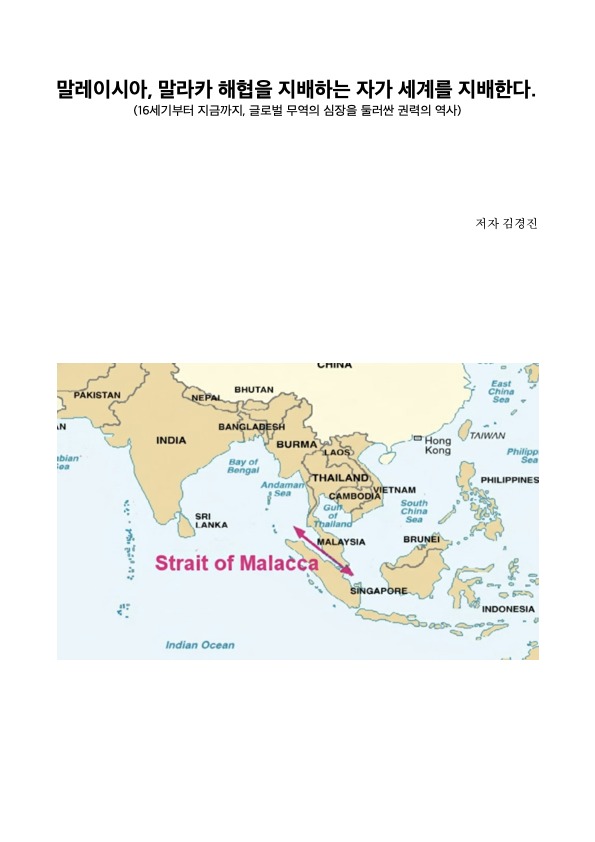
Malaysia and the Malacca Strait: Whoever Controls It Controls the World
Chapter 2: The Birth and Prosperity of the Malacca Sultanate
Kim Kyung-jin
Part 1: The Formation and History of Malaysia
The founding of the Malacca Sultanate is closely linked to a figure named Parameswara in the late 14th century. Parameswara was a prince of the Srivijaya Kingdom in Palembang, Sumatra, and he fled Sumatra following attacks by the Majapahit Kingdom of Java, taking refuge in Singapore (known at the time as Temasek). When he could not secure safety there, he moved around 1398 to Malacca, which was then a small fishing village on the Malay Peninsula.
Several legends are told about why Parameswara chose Malacca. According to one account, while Parameswara was resting by the Malacca River, he witnessed his hunting dog being attacked by a wild dog, and was impressed when the smaller wild dog defeated the larger hunting dog, leading him to decide to settle there. The legend holds that the tree where the small wild dog stood was called the "Malacca tree," and the settlement was named Malacca after it.
Parameswara was initially a Hindu, but after the 1409 visit of the Ming Dynasty admiral Zheng He, he sought the protection of the Ming emperor to strengthen relations with China. Later, he converted to Islam and adopted the Islamic name Iskandar Shah.
Growth as a Center of Maritime Trade in the 14th Century
Parameswara and his successors developed Malacca into a port city by taking advantage of its geographic position. The Malacca port was ideally situated for navigation using monsoon winds and provided a safe anchorage and fresh water. Parameswara pursued friendly policies toward Chinese, Indian, and Arab merchants, encouraging them to settle in Malacca.
True prosperity came during the reign of Parameswara's son Megat Iskandar Shah and his grandson Muzaffar Shah. They expanded port facilities and established a fair trading system, introducing a systematic tariff structure. By imposing equitable and transparent taxes on all goods, they gained the trust of merchants, and more trading vessels came to Malacca.
By the mid-15th century, Malacca had grown into the largest trading port in Southeast Asia. According to records by Tome Pires, a Portuguese apothecary and diplomat, at the height of its prosperity Malacca had around 2,000 ships anchoring daily, and merchants of diverse nationalities gathered there, with 84 languages spoken.
Malacca served as an intermediary hub connecting the Islamic world and China, with various goods traded including spices from Southeast Asia, silk and ceramics from China, cotton textiles from India, and perfumes and glassware from the Middle East.
Malacca's prosperity was not simply the result of geographic advantage, but stemmed from an efficient administrative system and multicultural coexistence policies. The Malacca Sultanate allowed merchants of various ethnicities and religions to live autonomously in their own quarters and established institutional mechanisms for resolving disputes.
The Spread of Islam and Cultural Transformation
One of the most significant turning points in the kingdom's history was the adoption of Islam. After Parameswara's conversion, Islam became the official religion of Malacca during the reign of Muzaffar Shah. The change went beyond mere religious transformation, profoundly affecting Malay society and culture.
The adoption of Islam further promoted trade with Arab, Persian, and Indian Muslim merchants, and by becoming part of the international Islamic network, it elevated Malacca's standing. The introduction of Sharia brought changes to Malacca's legal system and governance structure.
Cultural changes also took place. The Jawi script, based on the Arabic alphabet, was developed and began to be used in written records. Islamic literature flourished, with genres such as Hikayat (epic poetry) and Sejarah (chronicles) developing, and Islamic influence became evident in architectural arts.
The kingdom's Islamization was a gradual process rather than a coercive one. Many elements of Hindu-Buddhist tradition were fused with Islamic practices, and communities of merchants from other cultural regions, such as China and India, were able to maintain their own religions and cultures. This inclusiveness strengthened the multicultural character of the Malacca Sultanate and became the foundation of today's Malaysian culture.
The Malacca Sultanate prospered for approximately 100 years until its conquest by Portugal in 1511. Although the kingdom declined politically, its trading networks and cultural legacy profoundly influenced the entire Malay Peninsula and became important elements of Malay identity and culture. Islam, which spread through Malacca, remains today the official religion of Malaysia and a core element of Malay culture.
Kim Kyung-jin
Attorney · Former Member of the National Assembly · AI Policy Researcher
© 2026 Kim Kyung-jin. All rights reserved.