AI Library

AI Library

Books for Reading AI

Choose a book, then read it in order from the table of contents.

Artificial Intelligence and Medicine cover

Table of Contents

Artificial Intelligence and Medicine

Kim Kyung-jin, Attorney at Law

AI in clinical care, hospitals, education, and research

AI in medical imaging, risk prediction, treatment planning, hospital operations, education, and research, with patient safety, privacy, and accountability.

The EU AI Act cover

Table of Contents

The EU AI Act

Kim Kyung-jin, Attorney at Law

A Practitioner’s Guide for Korean Companies

From August 2, 2026, a game company’s chatbot in Pangyo and a medical-device reading software in Busan fall under Article 50 of the EU AI Act, even without a single office in Europe. Rather than summarizing the provisions, this book reads them from the enforcement authority’s point of view: extraterritorial reach, transparency duties, general-purpose AI models, high-risk systems, and the double regulation that overlaps with Korea’s AI Framework Act. It is a field guide to what a Seoul-headquartered company must prepare, when, and how.

South Korea's AI Basic Act: A Practical Guide for Business Operators cover

Contents

South Korea’s AI Basic Act: A Practical Guide for Business Operators

Kim Kyung-jin, Attorney at Law

Compliance, Obligations, and Opportunities under Korea’s AI Regulation

On January 22, 2026, the AI Basic Act came into effect in the Republic of Korea. This book was written by an attorney for business operators. It answers questions such as “Is our service high-impact AI?”, “How should prior notification be conducted?”, and “What preparations are needed when expanding into the EU?”

Chinese Government AI Regulations cover

Contents

Chinese Government AI Regulations

Kim Kyung-jin, Attorney at Law

Chinese originals, translations, terms, issuing bodies, effective dates, administrative interpretations, and judicial materials

This edition orders Chinese AI-related laws, administrative regulations, military regulations, departmental rules, policy documents, and national standards by legal force. Each entry keeps the Chinese original text and adds an English translation or explanation, legal terms, issuing body, effective date, administrative interpretations, and judicial materials where available.

Fathers of Chinese AI cover

Table of Contents

Fathers of Chinese AI

Kim Kyung-jin, Attorney at Law

Ten lives behind China's AI ascent

This book follows Kai-Fu Lee, Robin Li, Jie Tang, Liang Wenfeng, Yang Zhilin, Yan Junjie, Wang Xiaochuan, Jingren Zhou, Shunyu Yao, and Yonghui Wu through the laboratories, companies, models, and policy environment that shaped Chinese AI.

How Far Has AI Entered Chinese Hospitals? cover

Table of Contents

How Far Has AI Entered Chinese Hospitals?

Kim Kyung-jin, Attorney at Law

A quiet shift in clinics, imaging rooms, and hospital administration

This book follows how artificial intelligence has entered Chinese hospitals, using Chinese and English materials together with original Chinese policy texts. It covers national policy, medical foundation models, clinical decision support, image reading, hospital information departments, traditional Chinese medicine, AI-native hospitals, the patient experience, hallucination and responsibility, regulation, and money. The final chapters collect major Chinese guidelines and the 84 health-sector AI application scenarios, with translated text and summaries.

Andrew Ng Biography cover

Table of Contents

Andrew Ng Biography

Kim Kyung-jin, Attorney at Law

A central figure in AI education and public learning

This book follows Andrew Ng from London, Hong Kong, Singapore, Carnegie Mellon, MIT, Berkeley, and Stanford to Google Brain, Coursera, Baidu, DeepLearning.AI, Landing AI, AI Fund, and Amazon. It reads his career through research, teaching, company building, and his practical view of AI.

Mykhailo Fedorov, Leading Figure of Ukraine's Drone War cover

Table of Contents

Mykhailo Fedorov, Leading Figure of Ukraine's Drone War

Kim Kyung-jin

From the State in a Smartphone to the Defense Ministry of the Drone War

This book follows Diia, IT Army, Starlink, UNITED24, Brave1, the Unmanned Systems Forces, drone procurement, and battlefield data to explain how Mykhailo Fedorov tied technology to state power in wartime Ukraine.

China’s Leading AI Firms and Government Agencies cover

Table of Contents

China’s Leading AI Firms and Government Agencies

Kim Kyung-jin

Policy, Companies, Data, and Hardware in China’s Intelligent Economy

This book follows China’s AI policy arc from the 2017 next-generation AI plan to AI+ and the 15th Five-Year Plan. It maps the roles of the State Council, NDRC, CAC, MIIT, and SAC, then reads DeepSeek, the AI Tigers, Alibaba, Tencent, Baidu, ByteDance, iFLYTEK, Huawei Ascend, East Data West Computing, manufacturing, education, consumption, and humanoid robotics as one connected system.

U.S. Department of War CDAO (Chief Digital and AI Officer) cover

Table of Contents

U.S. Department of War CDAO (Chief Digital and AI Officer)

Kim Kyung-jin, Attorney at Law

How the Military’s Brain Is Being Redesigned

From the moment in January 2026 when the U.S. Department of War declared data hoarding a national security threat, this book follows the birth of the CDAO (Chief Digital and Artificial Intelligence Office) and the five organizations it absorbed, Advana and the War Department Data Platform, the Open DAGIR procurement experiment, Project Maven and CJADC2 on the battlefield, and Responsible AI, allies, and critics — the story of how America is redesigning its military’s brain.

Science and Technology Commission of the CMC of the Communist Party of China cover

Table of Contents

Science and Technology Commission of the CMC of the Communist Party of China

Kim Kyung-jin

STC, Military-Civil Fusion, and China’s Military Technology Innovation

This English AI Library edition follows the CMC Science and Technology Commission, the Equipment Development Department, military-civil fusion, intelligentized warfare, emerging technology competition, and the institutional limits of China’s military innovation system.

The Chinese Communist Party School cover

Table of Contents

The Chinese Communist Party School

Kim Kyung-jin

Where Power Is Trained

This book follows the Chinese Communist Party school system from Ruijin and Yan'an to the Central Party School, the National Academy of Governance, provincial and county schools, young-official training classes, Cai Qi's leadership, and the Mwalimu Julius Nyerere Leadership School.

DARPA, America’s Defense Research Lab cover

Table of Contents

DARPA, America’s Defense Research Lab

Kim Kyung-jin

This book follows DARPA through its 2026 office reorganization, budget signals, AIxCC, AI Forge, RACER, LongShot, quantum computing, space robotics, battlefield medicine, and strategic-material programs, using official sources as the main trail.

AI and the Classroom cover

Table of Contents

AI and the Classroom

Kim Kyung-jin

The AI Teacher That Does Not Give Answers

From Estonia's AI Leap and Khanmigo to answer leakage, Korean AI digital textbooks, and teacher-in-the-loop classrooms, this book asks how AI can protect thinking instead of replacing it.

Spiderweb cover

Table of Contents

Spiderweb

Kim Kyung-jin

Ukraine's drone revolution that changed the map of war

A narrative account of Operation Spiderweb on June 1, 2025, and how Ukraine's drones reached deep inside Russia and changed military planning, intelligence work, and security assumptions.

A Map of the 2026 U.S.-China Collision cover

Table of Contents

A Map of the 2026 U.S.-China Collision

Kim Kyung-jin

The year tied in Busan and left unsolved in Beijing

A one-year map of tariffs, chips, rare earths, Taiwan, sea lanes, and Korea's choices between Washington and Beijing.

China's 2026 Power Map cover

Table of Contents

China's 2026 Power Map

Kim Kyung-jin

The completion of one-man rule, and the empty seat that follows

A map of Xi Jinping's power system, the military purge, the blocked succession path, and the economic-security dilemma.

The Architect of Contradictions cover

Table of Contents

The Architect of Contradictions

Kim Kyung-jin

Peter Thiel and the empire built by a man who hated competition

Peter Thiel, from a South African childhood to PayPal, Facebook, Palantir, politics, and the dream of defeating death.

Claude, GPT, Palantir, and the 2026 World War cover

8 readings

Claude, GPT, Palantir, and the 2026 World War

Kim Kyung-jin

How Artificial Intelligence Came to Pull the Trigger of War. Prologue, 3 Parts / 6 Chapters, Epilogue

A single name sits on the screen. An intelligence officer looks at it for twenty seconds, confirms only that it is a man, and moves on. Inside those twenty seconds a person dies, and the responsibility for deciding to kill him disappears. From Lavender over Gaza to Maven in Ukraine, Epic Furies over Iran, and target selection in the skies of Venezuela, this book follows the hand that chooses targets as it passes from human to machine in the wars of 2026.

China's Robotics Industry 2026: The Age of Mass Production and Real-World Deployment cover

25 readings

China's Robotics Industry 2026: The Age of Mass Production and Real-World Deployment

Kim Kyung-jin

From the humanoid mass-production race to U.S.-China hegemony: the state of China's robotics industry in 2026. Table of Contents, Preface, 7 Parts / 23 Chapters, Epilogue

In a factory in Shenzhen, hundreds of humanoid robots repeat the same motion. This book traces the mass-production race between Unitree and UBTECH, the Optimus supply chain, real-world deployment sites, and where Korea stands amid the U.S.-China tech hegemony.

Crossing the Adolescence of Technology Cover

15 Parts in Total

Crossing the Adolescence of Technology

Kim Kyung-jin

Dario Amodei, Anthropic, and the Struggle Toward Controllable Intelligence. Table of Contents, Preface, Prologue, 12 Chapters, Epilogue

The struggle of a physicist who lost his father to create controllable artificial intelligence. The story of Dario Amodei and Anthropic clashing with the Pentagon and the White House, shaking the era with the scaling law and Constitutional AI.

Boss, Give Yourself an AI Employee Now

Table of Contents, 43 Chapters, 11 Appendices, Epilogue

Boss, Give Yourself an AI Employee Now

Written by Kim Kyung-jin

Building an AI Automation System for Small Business Owners

37 Concrete Codex Use Cases cover

Book-style reading

37 Concrete Codex Use Cases

Kim Kyung-jin

From morning briefings to agent swarms: 37 real-world workflow automations

This guide gathers 37 ways to connect Codex and AI agents to real work: personal routines, data processing, marketing, sales, documents, development, and browser control.

2026 Beijing: The Dangerous Dance of Two Giants book cover

16 posts available

2026 Beijing: The Dangerous Dance of Two Giants

Kim Kyung-jin

Table of Contents, Introduction, 13 Chapters, Epilogue

This book reads the Beijing summit through Hormuz, rare earths, Taiwan, Boeing, soybeans, AI chips, and Korea’s exposure to the U.S.-China bargain.

Leaving It to AI and Stepping Away cover

27 posts

Leaving It to AI and Stepping Away

Kim Kyung-jin

A Complete Beginner’s Guide to YOLO Mode. Table of contents and 26 chapters

A beginner-friendly online book on YOLO mode in Claude Code and Codex. It explains how to let AI read files, write code, run commands, and finish work while keeping rollback, Docker sandboxing, and safety checks close at hand.

Artificial Intelligence Fighter, Artificial Intelligence Air Force book cover

43 posts available

Artificial Intelligence Fighter, Artificial Intelligence Air Force

Kim Kyung-jin

Table of Contents, Preface, 40 Chapters, Epilogue

Artificial Intelligence Fighter, Artificial Intelligence Air Force is an online AI Library book by Kim Kyung-jin. It covers AI fighters, autonomous air power, unmanned combat aircraft, CCA, MUM-T, sixth-generation fighters and is organized as Table of Contents, Preface, 40 Chapters, Epilogue.

Artificial Intelligence on Trial book cover

26 posts available

Artificial Intelligence on Trial

Attorney Kyungjin Kim

Table of Contents, Preface, 21 Chapters, 3 Appendices

Artificial Intelligence on Trial is an online AI Library book by Attorney Kyungjin Kim. It covers artificial intelligence and law, AI liability, algorithmic judgment, courts and technology and is organized as Table of Contents, Preface, 21 Chapters, 3 Appendices.

PALANTIR book cover

16 posts available

PALANTIR: War, Surveillance, Artificial Intelligence

Attorney Kyungjin Kim

Table of Contents, Preface, 14 Chapters

PALANTIR: War, Surveillance, Artificial Intelligence is an online AI Library book by Attorney Kyungjin Kim. It covers Palantir, war, surveillance, artificial intelligence, data analytics, national security and is organized as Table of Contents, Preface, 14 Chapters.

Brain Readers: Neuralink and the Final Human Revolution book cover

21 posts available

Brain Readers: Neuralink and the Final Human Revolution

Kim Kyung-jin

Table of Contents, Prologue, 18 Chapters, Epilogue

Brain Readers: Neuralink and the Final Human Revolution is an online AI Library book by Kim Kyung-jin. It follows Neuralink, brain-computer interfaces, brain data, medicine, neurorights, and the future of human enhancement.

Artificial Intelligence and the Reshaping of Society book cover

16 posts available

Artificial Intelligence and the Reshaping of Society

Kim Kyung-jin

Table of Contents, Preface, 13 Chapters, Epilogue

Artificial Intelligence and the Reshaping of Society is an online AI Library book by Kim Kyung-jin. It follows how artificial intelligence changes work, education, inequality, cities, democracy, and human relationships.

The Jensen Huang Story book cover

16 posts available

The Jensen Huang Story

Kim Kyung-jin

Table of Contents, Preface, 13 Chapters, Epilogue

The Jensen Huang Story is an online AI Library book by Kim Kyung-jin. It covers Jensen Huang, NVIDIA, GPUs, AI chips, and the AI industry.

Ten Questions AI Poses to Humanity book cover

12 posts available

Ten Questions AI Poses to Humanity

Kim Kyung-jin

Table of Contents, Preface, 10 Chapters

Ten Questions AI Poses to Humanity is an online AI Library book by Kim Kyung-jin. It asks how artificial intelligence changes truth, weapons, work, data, identity, and human control.

Malaysia and the Malacca Strait book cover

23 posts available

Malaysia and the Malacca Strait: Whoever Controls It Controls the World

Kim Kyung-jin

Table of Contents, Preface, 20 Chapters, Epilogue

Malaysia and the Malacca Strait is an online AI Library book by Kim Kyung-jin. It covers Malaysia, the Malacca Strait, maritime logistics, geopolitics, global trade, and Southeast Asia’s strategic future.

Georgia history and culture travel book cover

24 posts available

A Journey Through Georgia’s History and Culture

Kim Kyung-jin

Table of Contents, Preface, 17 Chapters, 4 Appendices, Epilogue

A Journey Through Georgia’s History and Culture is an online AI Library book by Kim Kyung-jin. It covers Georgia’s history, culture, religion, politics, travel, and the Caucasus crossroads between Europe and Asia.

Reading Armenia book cover

13 posts available

Reading Armenia: A Thousand Prayers, One Mountain

Kim Kyung-jin

Table of Contents, Preface, 10 Chapters, Epilogue

Reading Armenia: A Thousand Prayers, One Mountain is an online AI Library book by Kim Kyung-jin. It covers Armenian history, faith, Mount Ararat, cultural memory, travel, and the endurance of a small nation.

Mastering Claude Code book cover

41 posts available

Mastering Claude Code

Kim Kyung-jin

Table of Contents, Preface, Chapters, Appendices

Mastering Claude Code is an online AI Library book by Kim Kyung-jin. It covers Claude Code setup, commands, workflows, automation, agents, and practical methods for using Claude Code in real work.

Claude Cowork and Agent manual book cover

11 posts available

Claude Cowork and Agent Utilization Manual

Kim Kyung-jin

Table of Contents, Preface, 8 Chapters, Closing Note

Claude Cowork and Agent Utilization Manual is an online AI Library book by Kim Kyung-jin. It covers Claude Code, AI agents, coding automation, work automation, and practical agent-based collaboration.

2026 U.S.-Iran War and the Global Energy Crisis book cover

39 posts available

The 2026 U.S.-Iran War and the Global Energy Crisis

Kim Kyung-jin

Table of Contents, Preface, Chapters and Appendices

The 2026 U.S.-Iran War and the Global Energy Crisis is an online AI Library book by Kim Kyung-jin. It covers war, oil, the Strait of Hormuz, maritime security, energy markets, and the global consequences of conflict.

The Traces Han Dong-hoon Left on South Korea book cover

13 posts available

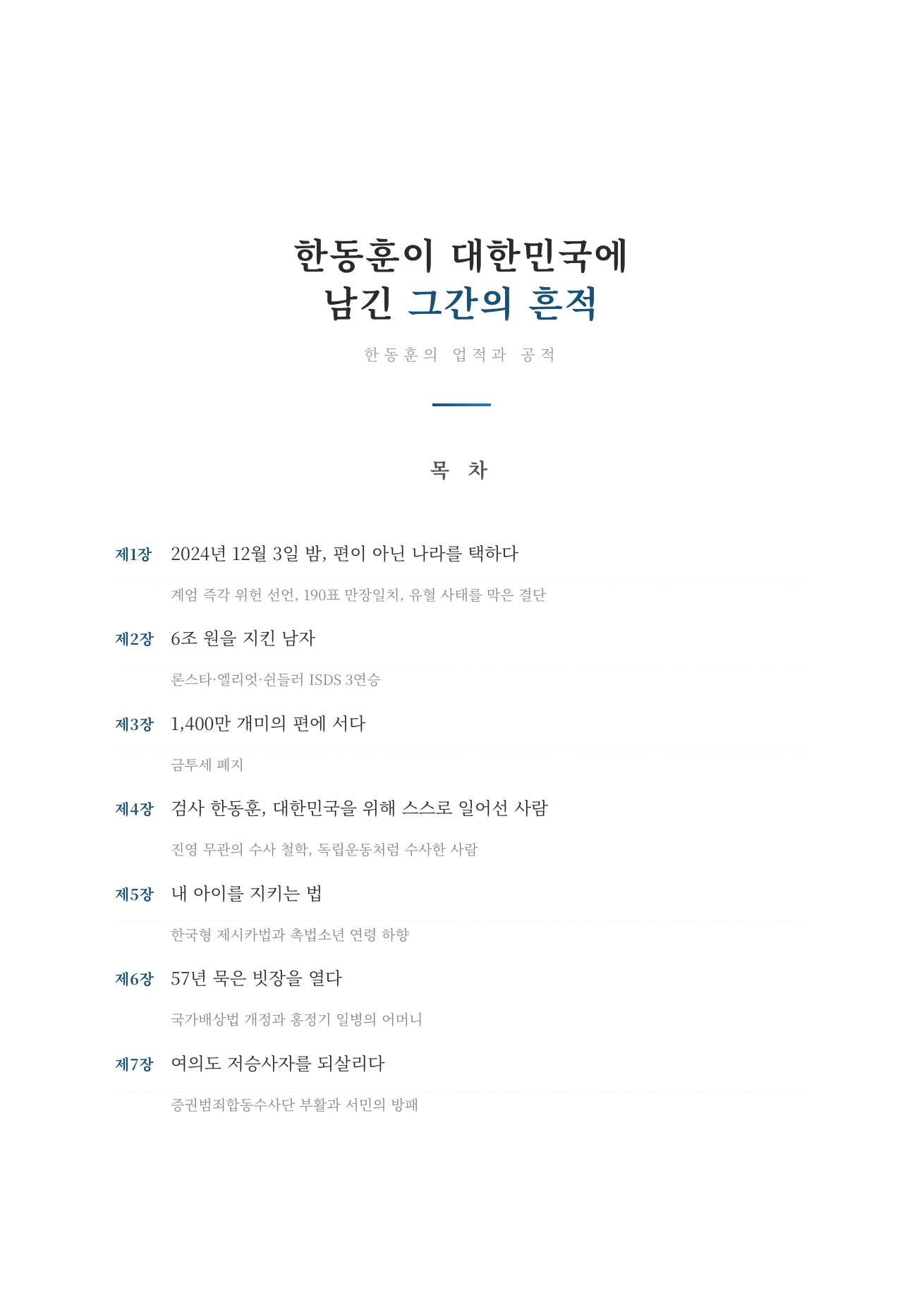
The Traces Han Dong-hoon Left on South Korea

Kim Kyung-jin

Table of Contents, Prologue, Chapters, Epilogue

The Traces Han Dong-hoon Left on South Korea is an online AI Library book by Kim Kyung-jin. It examines his record in justice policy, immigration reform, public institutions, and the structural questions facing South Korea.

The Han Dong-hoon Story book cover

39 posts available

The Han Dong-hoon Story

Kim Kyung-jin

Table of Contents, Prologue, Chapters, Epilogue

The Han Dong-hoon Story is an online AI Library book by Kim Kyung-jin. It traces Han Dong-hoon’s life, public career, political choices, and the changing landscape of South Korean conservative politics.

Beyond the Glass Ceiling cover

39 entries

Beyond the Glass Ceiling

Kim Kyung-jin

Table of contents, prologue, 31 chapters, epilogue, 5 appendices

A political biography tracing Sanae Takaichi’s rise from Nara to Japan’s premiership, through party struggles, security policy, diplomacy, and the meaning of Japan’s first female prime minister.

AI Hegemony War book cover

8 posts available

AI Hegemony War

Kim Kyung-jin

Table of Contents, 7 Chapters

An online AI Library book by Kim Kyung-jin on AI superintelligence, the U.S.-China technology race, Europe and Korea’s AI laws, and international AI governance.

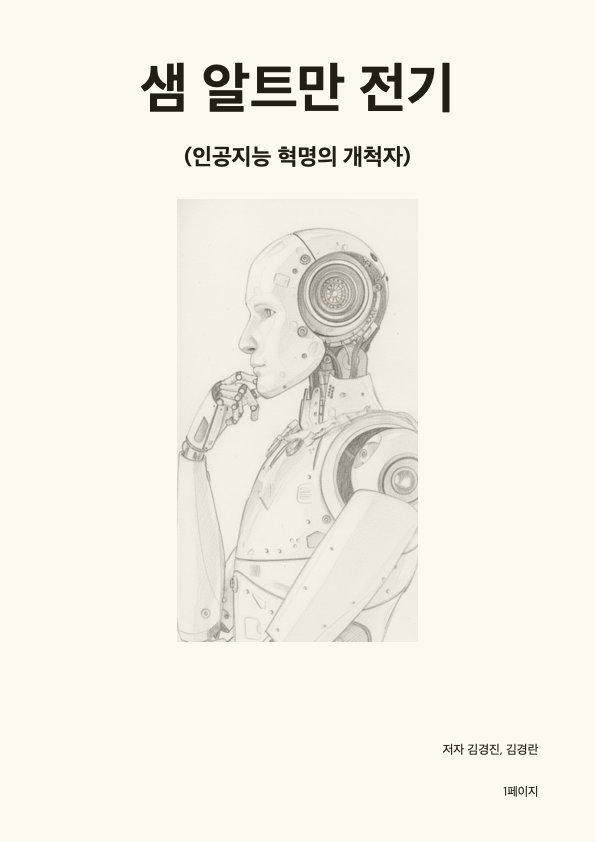
Sam Altman Biography: Pioneer of the AI Revolution cover

22 posts

Sam Altman Biography: Pioneer of the AI Revolution

Kim Kyung-jin, Kim Kyung-ran

Table of contents, preface, 7 parts, 20 chapters

An online biography following Sam Altman’s childhood, startups, Y Combinator, OpenAI, ChatGPT, the 2023 board crisis, and his sense of responsibility in the AI era.

From Chaiwala to Prime Minister cover

13 entries

From Chaiwala to Prime Minister

Kim Kyung-jin

Table of contents, preface, 10 chapters, epilogue

A political biography tracing Narendra Modi from a chai-selling boy in Vadnagar to RSS organizer, Gujarat chief minister, and three-term prime minister, while reading modern India, Korea-India relations, and the risks of a rising power.

AI Classroom: Your Grades Will Change book cover

26 posts available

AI Classroom: Your Grades Will Change

Kim Kyung-jin

Table of Contents, Preface, 24 Sections

An online AI Library book by Kim Kyung-jin on how AI can support elementary, middle, and high school learning, teaching, assessment, and educational equity.
Military Artificial Intelligence cover

17 entries

Military Artificial Intelligence

Kim Kyung-jin and Kim Won-tae

Table of contents, preface, 14 chapters, epilogue

A full-length study of military artificial intelligence, from autonomous weapons, drones, command systems, logistics, and cyber defense to the strategies of the United States, China, Israel, Korea, and global defense AI companies.

Global Case Studies in Introducing AI into Public Administration book cover

25 posts available

Global Case Studies in Introducing AI into Public Administration

Kim Kyung-jin

Table of Contents, 23 Chapters, Epilogue

An online AI Library book by Kim Kyung-jin on public-sector AI adoption, national strategies, administrative services, governance, and future policy tasks.

Seven Misunderstandings About the Arctic Route book cover

10 posts available

Seven Misunderstandings About the Arctic Route

Kim Kyung-jin

Table of Contents, Preface, 7 Chapters, Epilogue

An online AI Library book by Kim Kyung-jin on seven common misunderstandings about the Arctic Route, including speed, liner service, insurance, safety rules, year-round access, carbon impact, and infrastructure.

Artificial Intelligence Election cover

14 posts

Artificial Intelligence Election

Kim Kyung-jin

Table of contents, author preface, 11 chapters, closing essay

An online book on campaign messaging, publicity materials, digital campaigning, data analysis, campaign operations, disinformation defense, legal risk, and ready-to-use prompts.

Demis Hassabis book cover

34 posts available

Demis Hassabis, Father of Google’s Artificial Intelligence

Kim Kyung-ran, Kim Kyung-jin

Table of Contents, Author’s Preface, 31 Chapters, Epilogue

Demis Hassabis, Father of Google’s Artificial Intelligence is an online AI Library book by Kim Kyung-ran, Kim Kyung-jin. It covers Demis Hassabis, Google DeepMind, artificial intelligence, AlphaGo, AI research and is organized as Table of Contents, Author’s Preface, 31 Chapters, Epilogue.

The Dhammapada 423 Verses book cover

28 posts available

The Dhammapada: 423 Verses

Kim Kyung-jin

Table of Contents, Editor’s Note, 26 Chapters, 423 Verses

An online AI Library book by Kim Kyung-jin. This edition arranges all 423 verses of the Dhammapada into 26 chapters for slow, poetic reading.

Nano Banana Pro Practical Prompt Book cover

24 posts

Nano Banana Pro Practical Prompt Book

Kim Kyung-jin

6 parts, 22 chapters, classroom prompt appendix

An online book for using Nano Banana Pro in classes and real work, covering image generation, editing, text rendering, character consistency, business use cases, and monetization.

Liberal Arts AI for College Students book cover

16 posts available

Liberal Arts AI for College Students

Kim Kyung-jin

Table of Contents, Preface, 13 Chapters, Closing Essay

An online AI Library textbook for college students. It introduces AI history, daily use, document work, research, images, presentations, video, productivity, learning, careers, copyright, and governance.

Legal Practice and Artificial Intelligence book cover

16 posts available

Legal Practice and Artificial Intelligence

Kim Kyung-jin

Table of Contents, Preface, 14 Parts

An online AI Library book by Kim Kyung-jin on legal research, drafting, evidence analysis, contract review, NotebookLM, and practical generative AI workflows for legal practice.

Hello, I Am Kim Kyung-jin book cover

10 posts available

Hello, I Am Kim Kyung-jin

Kim Kyung-jin

Table of Contents, Preface, Recommendations, 6 Chapters, Closing

An online AI Library book on Kim Kyung-jin’s life, science and technology policy, parliamentary diplomacy, legislative battles, Dongdaemun vision, and proposals for Korea’s demographic future.

Politics and People book cover

25 posts available

Politics and People

Kim Kyung-jin

Table of Contents, Prologue, 22 Chapters, Epilogue

An online AI Library book by Kim Kyung-jin on how politics begins with reading people, winning trust, keeping relationships, and enduring seasons of crisis.

[AI Library] Chapter 10: The Contest for Malacca

Malaysia and the Malacca Strait
Author
Kim Kyung-jin
Date
2026-05-05 23:54
Views
750

Malaysia and the Malacca Strait: Whoever Controls It Controls the World

Chapter 10: The Contest for Malacca

Kim Kyung-jin

Part 3: The History and Significance of Malacca

The Background and Process of Portuguese Occupation of Malacca

In the late 15th century, Europe was gripped with a desire to pioneer new maritime routes. Portugal actively pursued maritime exploration to gain direct access to the spices of India and Southeast Asia. At that time, Arab merchants controlled the spice trade, and through them, Italian city-states such as Venice and Genoa supplied spices to Europe. Portugal sought to bypass these middlemen and conduct direct trade.

In 1498, Vasco da Gama's arrival in Calicut, India, after rounding the southern tip of Africa, marked a historic turning point. Thereafter, Portugal rapidly expanded its influence in the Indian Ocean. Afonso de Albuquerque, appointed as Portugal's viceroy in India, focused on securing strategic strongholds to establish Portuguese dominance in Asian trade.

Albuquerque recognized precisely the strategic importance of Malacca. He reportedly said, "Whoever controls Malacca controls the noose around the neck of Venice." This meant that by controlling Malacca, one could command the flow of trade between East and West.

In 1509, Portugal defeated the combined fleets of Egypt and Gujarat in the Battle of Diu, thereby establishing maritime dominance in the Indian Ocean. Based on this victory, Albuquerque led an expedition in July 1511, commanding 18 ships and approximately 1,200 troops, to attack Malacca.

At that time, Malacca was ruled by Sultan Mahmud Shah. He resisted the Portuguese expedition, but could not overcome the superior firepower and tactical advantages of the Portuguese forces. After more than a month of fighting, on August 24, Malacca fell into Portuguese hands. Sultan Mahmud Shah fled to Johor, where he subsequently established the Sultanate of Johor.

Portugal built a fortress named 'A Famosa' (meaning 'famous' or 'strong') in Malacca to defend the city. This fortress was constructed using stones from local buildings and became a symbol of Portuguese rule in Malacca. Portugal also established Catholic churches and began missionary activities.

The occupation of Malacca provided Portugal with the opportunity to control the center of Asian trade. However, Portugal's exclusive trade policies caused many Asian merchants, particularly Muslim merchants, to relocate to other ports. As a result, trading activities in Malacca declined compared to the pre-Portuguese occupation period.

The Dutch-Portuguese War

From the late 16th century onward, the Netherlands emerged as a new maritime power. The establishment of the Dutch East India Company (VOC: Vereenigde Oostindische Compagnie) in 1602 marked the beginning of the Netherlands' systematic expansion in Asian trade. The VOC sought to break Portuguese trade monopoly and enter the Asian market.

Initially, the Netherlands focused on the Indonesian archipelago and the spice-rich Molucca Islands (Maluku). In 1605, they occupied Ambon, and in 1619, they founded Batavia (present-day Jakarta) on Java as the headquarters of the VOC.

The Netherlands' interest in Malacca stemmed from geopolitical factors. By controlling the Malacca Strait, they could command the flow of Asian trade and weaken their rival Portugal. Moreover, Malacca was located at an important position connecting Batavia and other trading posts in Asia.

The Netherlands pursued alliances with local powers to attack Malacca. The Sultanate of Johor harbored hostile feelings toward Portugal and was willing to cooperate with the Netherlands. In 1636, the Netherlands and Johor concluded a treaty for an attack on Malacca.

In 1640, the Netherlands, with support from the Sultanate of Johor, besieged Malacca. After a five-month siege, on January 14, 1641, the Portuguese garrison in Malacca surrendered. This ended 130 years of Portuguese rule, and Malacca came under Dutch control.

The Dutch occupation of Malacca symbolized the decline of the Portuguese Empire and the strengthening of Dutch dominance in Asian trade. Subsequently, Britain temporarily occupied Malacca in 1795, but it was returned to the Netherlands in 1818.

Among Chinese writings, a work from the Qing Dynasty titled 'Haiwai Soushen Lu' (Records of Gods Overseas) contains detailed accounts of Malacca's trading conditions at that time. The author Chen Lunxiang wrote: 'After the Hongmao (Red-haired, meaning Dutch) took control of Malacca, they granted greater freedom to Chinese merchants, and as a result, many Chinese migrated to Malacca.' Furthermore, the record stating 'The Hongmao favor silver, and highly value Chinese ceramics and silk' illustrates the trading relationship between the Netherlands and China at that time.

The Anglo-Dutch Treaty of 1824 and Malacca's Fate

From the late 18th century onward, Britain began to expand its influence in Southeast Asia. In 1786, Francis Light of the British East India Company obtained Penang Island from Sultan Abdullah and named it 'Prince of Wales Island.' Penang became Britain's first Straits Settlement.

During the Napoleonic Wars (1803-1815), Britain temporarily seized the overseas colonies of the Netherlands. Malacca was under British control from 1795 to 1818 (with the exception of 1818-1824). After the war, Britain returned most colonies to the Netherlands, but competition between the two great powers for influence in Southeast Asia continued.

In 1819, Thomas Stamford Raffles obtained Singapore Island from the Sultan of Johor and established a British trading base. Singapore's strategic location and free trade policy rapidly developed the small island into an important port.

The fate of Malacca was determined by the Anglo-Dutch Treaty of 1824. This treaty formalized the division of influence in Southeast Asia between the two European great powers. The main provisions were as follows:

The Netherlands ceded Malacca and all its colonies on the Indian mainland to Britain.

Britain ceded Bencoolen in Sumatra and other colonies in the Indonesian archipelago to the Netherlands.

The Netherlands renounced all claims to Singapore.

Britain renounced all claims to Sumatra.

Through this arrangement, the Malay Peninsula became within the British sphere of influence, while the Indonesian archipelago became within the Dutch sphere.

Through this treaty, Malacca became part of the British Straits Settlements and, along with Penang and Singapore, became an important component of Britain's system of Southeast Asian colonies. However, due to Singapore's rapid development, the relative importance of Malacca declined.

In the early 19th century, Isabella Bird, a British traveler and renowned author, journeyed through several regions of Southeast Asia and recorded the landscapes and impressions she directly experienced, as well as history and culture. In her travel journal titled 'The Golden Chersonese and the Way Thither,' published in 1883, there appears a vivid description of Malacca, a historic city located in present-day Malaysia.

Isabella Bird recorded the appearance of Malacca at that time in the following terms:

"The glory of the past has faded, yet still the city retains attractive traces of history."

This brief sentence encapsulates the history of Malacca and the impression of the city she felt at that time. In other words, it once was a prosperous and magnificent trading port and strategic stronghold, but by the time of her visit, a considerable portion of its past grandeur and vitality had already disappeared, leaving only traces of the past. However, rather than portraying Malacca as a place of decline or unattractive character, Isabella Bird instead emphasizes the historical value and unique beauty of the city. The phrase 'attractive traces of history' in her expression suggests that although its era of prosperity had passed, the city still possessed abundant cultural and historical heritage, and through it could offer visitors a special emotional experience.

She recorded being deeply impressed by Malacca's distinctive urban landscape. This landscape is distinctive because Malacca, having undergone colonial rule by three European powers in succession throughout history (Portugal, the Netherlands, and Britain), each left architectural characteristics that combined harmoniously in one place. The distinct architectural styles of different cultures and eras existing together in Malacca's urban landscape clearly illustrate the uniqueness and special quality she felt during her travels. In other words, the city of Malacca was not merely an old remnant symbolizing past glory, but rather formed a distinctive landscape like a 'living museum' with different cultures and histories intricately interwoven and fused. Even today, Malacca has been designated a UNESCO World Heritage Site based on this historical background and maintains its reputation as a historic city. Isabella Bird's account not only conveys the landscape of Malacca in detail but also continues to greatly assist contemporary travelers in understanding and appreciating the charm of Malacca.

Changes in Malacca's Status During the Imperial Age

Under British rule, Malacca no longer maintained its status as a major trading center. Singapore rose to prominence as the center of British Southeast Asian trade, and Penang also developed into an important port. Malacca remained a secondary port, relying mainly on regional trade.

However, Malacca developed into a unique city where diverse cultures merged. Portuguese, Dutch, and British colonial rule each left cultural and architectural legacies in the city. Additionally, various Asian cultures including Malay, Chinese, Indian, and Arab coexisted.

Noteworthy is the development of Peranakan or Baba-Nyonya culture. This arose from cultural mixing between Chinese immigrant communities and the indigenous Malay population, developing a distinctive architecture, cuisine, language, and clothing style. Peranakan merchants played an important role in Malacca's economy, and their ornate mansions have become major tourist attractions in present-day Malacca.

During the British colonial period, Malacca was administered as part of the Straits Settlements. In 1867, the Straits Settlements came under direct control of the British government, separating from the British East India Company. After the Pangkor Treaty of 1874, Britain expanded its influence to other regions of the Malay Peninsula, which ultimately led to the formation of the Federated Malay States and the Unfederated Malay States.

In the early 20th century, Malacca experienced a degree of economic revival due to the development of rubber and tin industries. However, Malacca during this period was merely a small provincial town compared to its past glory.

From 1942 to 1945 during World War II, Malacca experienced Japanese occupation. The Japanese military referred to the city as 'Shin Malacca' (New Malacca), and during this period, the local population suffered greatly.

After the war, the Malay Peninsula began its path toward independence. The Federation of Malaya achieved independence in 1957, and in 1963, the Federation of Malaysia was formed. With this, Malacca became a state of Malaysia.

Today, Malacca is a historic city retaining traces of the imperial age. In 2008, together with Georgetown (Penang), it was designated as a UNESCO World Heritage Site. The historic center of Malacca preserves buildings from various colonial eras and multicultural heritage, which has become an important tourism resource for Malaysia.

Kim Kyung-jin

Attorney · Former Member of the National Assembly · AI Policy Researcher

kimkj.com

© 2026 Kim Kyung-jin. All rights reserved.

#KimKyungjin #AILibrary #MalaysiaandtheMalaccaStrait
kimkj.com Home
Scroll to Top
kimkj.com Home