
Table of Contents
Han Dong-hoon, Busan Buk-gu Gap: A Record of the 100 Days Before and After the Election (Mar. 26-Jul. 3, 2026)
Kim Kyung-jin
Table of Contents and 13 sections
From March 26 to July 3, 2026, this record follows the spring after expulsion, the Busan Buk-gu Gap by-election, victory as an independent, and the first bill submitted in the National Assembly.
Table of Contents
Artificial Intelligence and Medicine
Kim Kyung-jin, Attorney at Law
AI in clinical care, hospitals, education, and research
AI in medical imaging, risk prediction, treatment planning, hospital operations, education, and research, with patient safety, privacy, and accountability.

























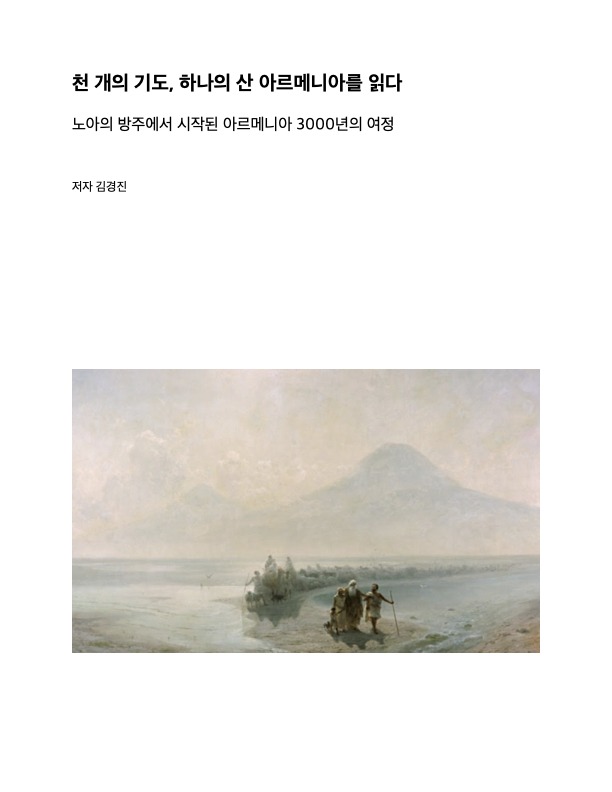


















[AI Library] Chapter 7: The Soul of Armenia and Its Cultural DNA
Reading Armenia: A Thousand Prayers, One Mountain
Chapter 7: The Soul of Armenia and Its Cultural DNA
Kim Kyung-jin
1. The Armenian Apostolic Church - A Treasury of Theology and Liturgy Spanning Two Thousand Years
The Apostolic Church is the oldest national church in the world. In the year 301, Armenia declared Christianity as its national religion before the Roman Empire did. It was not simply the acceptance of a religion but a transformative event that redefined the very identity of a nation. For more than 1,700 years, the church has been not merely a religious institution for Armenians but a bulwark protecting the survival and culture of the people.
The Armenian Church is called the 'Apostolic Church' because of the tradition that two of the twelve apostles of Jesus, Thaddeus and Bartholomew, came directly to Armenian lands and preached the gospel. The seed they sowed blossomed through Saint Gregory the Illuminator. Gregory converted King Tiridates III of Armenia at that time, and the entire nation of Armenia became Christian. Gregory earned the title 'Illuminator,' which means he brought light to a people in darkness.
Armenian Church theology follows the decisions of the early Christian councils while maintaining distinctive characteristics. It is distinguished from other Eastern Orthodox churches and Catholicism in that it did not accept the decision of the Council of Chalcedon in 451. The Council of Chalcedon declared that the divinity and humanity of Jesus Christ exist as two natures, but the Armenian Church took the position that these two natures are combined as one. This is called Miaphysitism, distinct from Monophysitism, though in fact this distinction arose from misunderstanding. The Armenian Church does not affirm only the divinity of Jesus but believes that his divinity and humanity are completely united as one.
This theological stance caused the Armenian Church to walk a separate path from Roman Catholicism and Byzantine Orthodoxy. Armenia was situated between the Byzantine Empire and the Persian Empire, and later had to survive between Islamic and Christian powers. In such circumstances, maintaining an independent theology and church system was a crucial means of preserving national identity.
The liturgy and worship practices of the Armenian Church are characterized by great antiquity and solemnity. Worship is conducted mainly in Classical Armenian, known as Grabar, similar to how Latin is used in Catholic Mass. The liturgy developed over many centuries and was influenced by Jerusalem, Syria, and Byzantium, but was reinterpreted through a distinctly Armenian character.
The most important act of worship is the Eucharist. This ceremony, called 'Patarag' in Armenian, reenacts Jesus's Last Supper. The liturgy is composed of three parts. The first is the preparatory service, in which clergy prepare the altar, sing hymns, and ready the congregation. The second is the Liturgy of the Word, in which scripture is read and a sermon is delivered. The third is the Liturgy of the Eucharist, in which bread and wine are consecrated and distributed to the faithful.
One distinctive feature of the liturgy is the extensive use of incense. During worship, priests carry censers and walk through the church, spreading incense. This symbolizes prayers rising to heaven and simultaneously sanctifies the space. The sacred chants sung in an ancient language amid rising incense create a mystical and spiritual atmosphere.
Another distinctive feature is the use of unleavened bread. While Catholics use unleavened bread and the Orthodox use leavened bread, the Armenian Church follows the Catholic method. The wine used is pure grape wine without water, symbolizing the pure divinity of Christ.
The clerical system is also distinctive. The highest leader is called the 'Catholicos,' a position similar to a Patriarch. The Armenian Church currently has two Catholici. One resides in Etchmiadzin in mainland Armenia, and the other in Cilicia in Lebanon. This reflects the historical dispersion of the Armenian people across various regions.
Priests may marry, but to become a bishop one must be celibate. This follows the tradition of Eastern Orthodoxy. Priests wear black monastic robes and a distinctive conical hat. This hat, called a 'Begal,' is said to symbolize either the crown of thorns worn by Christ or Mount Ararat, where Noah's ark came to rest.
The ecclesiastical calendar is also distinctive. The Armenian Church commemorates both the birth and baptism of Jesus on January 6. This follows the tradition of the early Church. This differs from most Christian churches, which observe Christmas on December 25 and Epiphany on January 6 as separate celebrations.
The Armenian Church venerates many saints. These include Saint Gregory the Illuminator, martyrs, monks, and theologians. In particular, the victims of genocide are remembered as martyrs. The 1.5 million Armenians murdered by the Ottoman Empire in 1915 were canonized as collective martyrs. This represents a distinctive example where national suffering and faith are united as one.
Icons, sacred images, play an important role. The icons of the Armenian Church were influenced by Byzantine style but convey a simpler and more restrained feeling.
Inside the church, icons of Jesus, the Virgin Mary, and saints hang on the walls, and the faithful pray before the icons and light candles before and after worship.
The theology and liturgy of the Armenian Church are inseparable from the nation's history. The preservation of this tradition through countless invasions and persecutions was motivated not solely by religious faith. It was a means of preserving Armenian identity. Even when language was forbidden, land was seized, and people were scattered, the church remained to unite Armenians as one people.
Today, for Armenians scattered throughout the world, the church is like a homeland. Whether in America, France, Russia, or the Middle East, where there is an Armenian Church, they form community by experiencing the same liturgy in the same language. This is why the Armenian Apostolic Church transcends mere religion to become the soul of the nation itself.
2. Monastic Architecture - Spirituality and Structural Beauty Carved in Stone
When traveling through the mountains and valleys of Armenia, one encounters remarkable sights. Centuries-old and sometimes thousand-year-old monasteries are nestled on mountainsides and in deep gorges. These monasteries are not merely religious buildings but crystallizations of Armenian culture and spirit. Each structure embodies faith, art, and history.
The most distinctive feature of Armenian monastic architecture is stone. Armenia is a land abundant in volcanic rock, particularly dark and red basalt and volcanic stone. Architects precisely carved this stone to construct buildings. Because they used cement and mortar minimally and stacked stone upon stone with exact precision, they created sturdy structures that have endured for centuries without collapse.
Monasteries typically consist of several buildings. At the center stands the church, with monks' cells, dining hall, library, and bell tower arranged around it. The entire complex is often enclosed by defensive walls, which served not merely for defense but to create a sacred space distinct from the secular world.
The floor plan of the church is mostly cross-shaped. Called a 'centralized plan,' it features a dome at the center with four arms extending in cardinal directions. While influenced by Byzantine architecture, Armenian interpretation added distinctive elements. Armenian churches are more vertical than Byzantine churches, and their external decoration is more restrained.
The most striking feature is the dome. The dome of an Armenian church rises conically into the sky. It symbolizes humanity's spiritual yearning toward heaven. Looking upward from within the dome, one often sees a cross or the image of Christ painted on the ceiling. When light enters through the dome's windows, the image glows mysteriously, appearing like divine light descending from heaven.
On the exterior, intricate carvings are carved into the walls. The most common motif is the cross. The Armenian cross is distinctive: not a simple cross but one with flared arms surrounded by patterns of vines, pomegranates, flowers, and other designs. This is called a 'Khachkar,' which is itself an art form. Khachkars are stone monuments with carved crosses, erected around monasteries, in cemeteries, and along pilgrimage routes.
Examining the patterns of a khachkar reveals astonishing intricacy. Geometric patterns unfold symmetrically around the central cross, with delicate plant motifs carved in the spaces between. No two khachkars are identical: each possesses a unique design. This testifies to the craftsmen's creativity and technical skill.
The symbolism of architecture is hidden throughout. Churches typically face east. This reflects the belief that Christ will return from the east. Thus the altar is positioned at the eastern end, and the entrance is on the west. The faithful enter from the west and worship facing east.
The location of monasteries is also symbolic. Many monasteries are situated on mountainsides or in remote places, reflecting the spiritual yearning of monks to leave the secular world and draw nearer to God. There was also a practical reason. Remote locations escaped the notice of invaders, and could thus serve as safe refuges during times of war and persecution. Indeed, many monasteries served as the final bulwarks for preserving Armenian culture.
Let us examine representative monasteries. First, Geghard Monastery. 'Geghard' means 'spear,' a name derived from the legend that the spear that pierced Jesus was preserved here. What is remarkable about this monastery is that part of it is carved directly into the bedrock. The builders expanded natural caves to create a chapel, carving delicate crosses and patterns into the ceiling and walls. The hymns that echo within the rock create distinctive acoustic effects.
Haghpat and Sanahin Monasteries are large monastic complexes built in the tenth century. These were not simply places of worship but centers of learning and culture. The library held thousands of manuscripts, and monks studied theology, philosophy, science, and medicine. Their architectural excellence earned them designation as UNESCO World Heritage Sites.
Khor Virap Monastery is situated where Mount Ararat is visible. This site contains the underground prison where Saint Gregory the Illuminator was confined for thirteen years, and is among the holiest places associated with the beginning of Armenian Christianity. Descending a narrow ladder into the underground prison reveals a small, dark chamber. Imagining how Gregory survived there fills one with reverence.
Tatev Monastery sits on the edge of a deep gorge. To reach it, one must ride what is reputed to be the world's longest reversible cable car. The monastery itself is impressive, but the surrounding landscape is overwhelming. Looking down from the monastery, deep gorges and valleys spread below, creating the feeling of standing at the world's end.
The use of light in monastic architecture is important. Small windows are strategically positioned to illuminate specific areas at particular times of day. When the sun rises early in the morning, light pours onto the altar through the eastern window. At noon, the interior brightens through the dome's windows. This movement of light allows visitors to experience the passage of time and God's presence visually.
Acoustics were also an important element of architectural design. The structure of the dome and walls amplifies sound, causing even a whisper to resound throughout the church. A priest saying quiet prayers at the altar can be heard by worshippers in the back. This superior acoustics resulted from the architects' deliberate calculations.
Monasteries also served social functions. During the medieval period, monasteries operated as hospitals, schools, orphanages, and lodgings for travelers. For surrounding villagers, the monastery was a spiritual center and also a place from which to receive practical assistance. During times of famine or war, monasteries distributed food and provided shelter.
Today these monasteries continue to function. Some have become tourist destinations, but in many places monks still live and conduct worship. Pilgrims visit to pray, and traditional liturgies continue. These ancient stone buildings are bridges connecting past and present, living spaces where the spiritual journey of the Armenian people continues.
3. Language and Script - National Linguistic Pride Embodied in Grabar
Language is the soul of a nation. For Armenians, the Armenian language, particularly Classical Armenian known as Grabar, is not merely a means of communication. It is a vessel for faith, a medium for transmitting culture, and the core of national identity. The history of Grabar is the history of Armenian Church and culture itself.
Armenian belongs to the Indo-European language family but forms its own distinct branch. While distantly related to Greek, Persian, and Latin, it is a unique language unlike any of these. Over thousands of years, as it developed in the Caucasus region, it absorbed influences from surrounding languages, yet maintained the independence of its essential structure and vocabulary.
However, until the fourth century, Armenian had no written script. It survived only through oral tradition, or by borrowing Greek or Syriac characters. This was a serious problem. The Bible could not be translated, meaning ordinary people could not read God's word in their own language. There were limits to education and cultural development.
Saint Mesrop Mashtots solved this problem. A theologian and linguist, he decided to create a unique alphabet that could perfectly represent the sounds of Armenian. This was not merely an academic project but a sacred mission for the nation's future.
After long study, Mashtots completed the Armenian script in 405. This writing system, composed of 36 letters, was scientific and systematic. Each letter precisely expressed a specific sound of Armenian and was easy to learn. The forms of the letters were beautiful as well. Elegant curves and straight lines created harmony, appearing as works of art.
According to tradition, Mashtots received divine revelation in creating the script. The first sentence he composed was a verse from the Book of Proverbs: 'To know wisdom and instruction.' This is symbolic. It shows that the purpose of the script was not merely everyday communication but transmitting and learning divine wisdom.
As soon as the script was created, work on translating the Bible began immediately. Mashtotz and his disciples translated the Greek and Syriac scriptures into Armenian. This translation was so exceptional that it won praise as the "Queen of Translations." This was because it conveyed the meaning of the original texts with precision while preserving the beauty of the Armenian language.
The fifth century became the golden age of Armenian culture. With the acquisition of a written script, literary works, histories, philosophical treatises, and scientific writings poured forth across every field. This period is called the "Golden Age." Theologians wrote doctrinal treatises, historians recorded the nation's history, and poets composed hymns.
Grabar, or Classical Armenian, is the written language that formed during this period. The word "grabar" means "written thing." It was a formal and elevated language distinct from everyday speech. Just as Latin served as the language of learning and religion in medieval Europe, Grabar played that role in Armenia for more than a thousand years.
The grammar of Grabar is complex and sophisticated. Nouns have seven cases, and verbs can express a variety of tenses and moods. This complexity proved advantageous in expressing subtle distinctions of meaning. Theological disputes and philosophical thought could be expressed with great precision.
The vocabulary was also rich. It could express everything from everyday terms to abstract concepts. While some words were borrowed from Greek and Syriac, most were formed from native Armenian roots. For example, the word for "theology" was not borrowed directly from Greek but created anew from Armenian roots.
The tradition of manuscripts was also important. Until the invention of the printing press, all books were copied by hand. In the scriptoriums of monasteries, monks copied scriptures, liturgical texts, and theological works onto parchment in Grabar. This work was not mere copying but a sacred practice. Scribes wrote each letter with meticulous care, and they drew beautiful ornaments in the margins of the books.
Armenian manuscripts are works of art. The opening pages feature elaborate decorative letters, and important sections include illustrations. In the case of gospels, portraits of the four evangelists are depicted, and images depicting the life of Jesus are included. The colors are vibrant yet harmonious, and gold leaf is used so that the page glimmers when light falls upon it.
The most famous manuscript is the Etchmiadzin Gospel. Produced in the sixth century, it is the oldest surviving Armenian manuscript. Its ivory covers are carved with the Virgin Mary and saints, and the entire gospel is inscribed within with meticulous care. This book is a national treasure of Armenia and is kept in the treasury of Etchmiadzin Cathedral.
Grabar's role as a liturgical language is also significant. To this day, worship in the Armenian Church is conducted in Grabar. Ordinary believers use modern Armenian in daily life, but when they attend the liturgy, they hear the language of a thousand years ago. This is a way of maintaining connection with the past. The fact that one's ancestors prayed in the same words and sentences creates a sense of community that transcends time.
Prayers and hymns written in Grabar excel in rhythmic quality and musicality. When spoken aloud, they sound like poetry. The prayers of Saint Nareq in particular represent the height of linguistic beauty. He drew on the full potential of Grabar to create sentences that are mysterious and deeply moving.
Language became even more important during times of oppression. When the Ottoman Empire forbade the use of Armenian and closed the churches, people secretly taught and learned Grabar. They buried manuscripts in the earth to hide them and dug them up again after wars ended. Preserving the language was an act of preserving the nation itself.
Grabar was also suppressed during the Soviet era. The Communist Party repressed religion and banned church worship. Yet Grabar was permitted academic study under the guise of it being a "classical language." Scholars preserved the tradition while ostensibly conducting research in linguistics.
Grabar is a living tradition. Seminaries continue to teach Grabar as a required subject. This is necessary because priests must be able to conduct the liturgy in Grabar. Regular universities also offer Grabar as part of their classical language programs. Students majoring in literature and history learn Grabar in order to read original texts.
The Armenian script itself is also a cultural symbol. The forms of the letters are used in sculpture, painting, and design. There is a monument to the Armenian alphabet in Yerevan, where thirty-six giant stone letters stand on a mountainside. People visit this place and walk among the letters to honor their language and culture.
Grabar is not merely an ancient language. It is a vessel of faith, the voice of ancestors, and a treasure that holds the identity of a nation. For more than a thousand years, countless prayers and hymns, tears and hopes have been expressed in this language. Even today, hymns in Grabar resound through Armenian churches, linking past, present, and future.
4. Music and Poetry, and Prayer: The Art in Which the Spirituality of Sharakan and Nareq Dwells
Spirituality takes many forms of expression, but one of them is surely sound. Sacred chants echoing between the stone walls of monasteries, prayers written as poetry, and the spiritual experiences they create,these constitute the deepest dimensions of Armenian culture. Among these, the hymnodic tradition of Sharakan and the devotional poetry of Saint Nareq hold a special place.
Sharakan is the heart of Armenian liturgical music. The word means "successive song" or "song sung in procession." Sharakan is not merely music but theology expressed in song. Each hymn addresses a specific doctrine, a biblical story, or the life of a saint. To sing Sharakan is therefore to learn theology and to confess one's faith.
The history of Sharakan reaches back to the fifth century. Soon after the Armenian script was created, theologians began translating Greek and Syriac hymns. They did not stop at mere translation but developed distinctive melodies and rhythms unique to Armenia. This was influenced by Armenian folk songs and traditional music.
The great composers of Sharakan were Saint Konstantin in the eighth century and Saint Gregory of Narek in the ninth and tenth centuries. They composed hundreds of hymns, and many are still sung today. The melodies are simple yet profound, carrying a contemplative atmosphere within their repeated phrases.
Sharakan uses modes different from the major and minor keys of Western music. These are called "church modes," and while they resemble Byzantine music, they have a distinctly Armenian character. The intervals are unique, sometimes sounding exotic and sometimes tinged with melancholy.
The rhythm is equally striking. Unlike Western music, which repeats a steady meter, it follows the natural flow of the text. The length of the musical notes is determined by the length of the syllables in Grabar. To sing Sharakan, one must therefore know the pronunciation and rhythm of Grabar with precision.
Sharakan is sung mostly unaccompanied. It is sung with only the human voice, without instruments. This follows the tradition of the early church. The voice was believed to be the purest instrument and the most appropriate vehicle for praise to God. When combined with the acoustics of stone church buildings, Sharakan sounds even more mysterious.
While sometimes sung by a choir, Armenian choral singing differs from Western harmony. Everyone sings the same melody, but each voice sings at a slightly different pitch and with a different timbre. The resulting sound is like a single vast voice yet possesses a rich texture.
The lyrics of Sharakan are poetic. They abound in metaphor and symbol, with biblical imagery beautifully interwoven. Easter Sharakan, for instance, sings of the passage from darkness to light, from death to life. Christmas Sharakan describes the love of God descending from heaven to earth.
Different Sharakan are sung according to the liturgical season. Advent, Christmas, Lent, Easter, and other seasons each have their own hymns. Saints' feast days also have special Sharakan commemorating those saints. Thus one experiences a variety of Sharakan throughout the year.
The music and poetry of Saint Nareq hold a special place. Gregory of Narek (951-1003) was a tenth-century Armenian monk, theologian, poet, and composer. He spent his entire life at the monastery of Narek, where he created great spiritual works.
Nareq's most famous work is the "Book of Lamentations." Known in Armenian as the "Matean Voghak," this book consists of ninety-five prayers. Each prayer contains confession of sin, repentance, and a plea for God's mercy. But this is not a simple penitential text. It is a poetic journey exploring the deepest reaches of the human soul. Nareq's language pushes the possibilities of Grabar to their limit. He invents new words, employs unique grammatical structures, and creates astonishing images. His sentences are long and complex, yet they have a strong rhythmic quality; when spoken aloud, they sound like music.
Let me give an example. In confessing his sins, Nareq writes, "I am a seed fallen to earth, dust scattered by the wind, sand swept away by waves." These images express human frailty while losing nothing of their beauty. He describes God's mercy this way: "Your mercy is broader than the sea, higher than the sky, and more numerous than the stars." This is an attempt to express infinite divine love in finite language. The effort itself is a spiritual practice.
The "Book of Lamentations" is both a personal prayer book and the voice of a community. Though Nareq speaks as "I," he speaks for all humanity. His confession of sins is both personal and universal. Thus every person who reads this book finds their own story within it. This book became the most important spiritual text for Armenians after the Bible itself. People found comfort reading it during difficult times. These prayers were recited at the bedside of the sick, on battlefields, in prisons, and in the ordinary course of daily life. It was beloved so widely that many people could recite passages from it from memory.
Nareq was proclaimed a "Doctor of the Church" by Pope Francis in 2015. This is a rare instance of the Roman Catholic Church formally recognizing a saint of the Armenian Church. Through this recognition, Nareq's spirituality was confirmed to be not merely an Armenian treasure but a treasure of the entire Christian world.
Music and poetry have seeped deeply into the daily life of Armenians. Sharakan is sung when families pray at home, when pilgrims depart on their journeys, when festivals are celebrated. Special hymns are sung at weddings and funerals. This shows that every moment of life carries spiritual meaning. This tradition continues today. Armenian choirs travel the world performing Sharakan. Famous ensembles like the Komitas Quartet introduce ancient hymns to modern audiences. Young musicians are also learning and continuing the tradition.
Many recordings can be found on YouTube and streaming platforms. But the experience of hearing it in an actual church is different. The holistic experience created by sound echoing between stone walls, the scent of incense, the light of candles, and the presence of a community praying together cannot be fully captured in any recording. For Armenians, the spirituality of Sharakan and Nareq is the source of identity. Whether they speak different languages, live in different countries, or belong to different generations, when they sing the same hymns and recite the same prayers, they are one. This is the power that has held together a nation dispersed for more than a thousand years.
Kim Kyung-jin
Attorney · Former Member of the National Assembly · AI Policy Researcher
© 2026 Kim Kyung-jin. All rights reserved.