
AI Library
The Age of Autonomous Scientific Discovery
Kim Kyung-jin, Attorney at Law
AI Scientists and Self-Driving Labs
This book follows how AI scientists and self-driving labs are changing the way science generates and verifies claims. It covers literature-based discovery, natural-language protocols translated into robot commands, multi-agent research systems, closed-loop laboratories, materials search, the verification gap, chains of evidence, research harnesses, journal ethics, and legal responsibility.
AI Library
A New Era of Life Sciences Opened by Artificial Intelligence
Structural Proteomics, Genomic Foundation Models, Autonomous Laboratories, and Global Governance
Kim Kyung-jin, Attorney at Law
This book is a research volume compiled with artificial intelligence. A human selected the materials and structured the work, while AI models drafted the sentences and cross-checked the facts.

AI Library
The Double Structure of Digital Sovereignty
Europe’s Departure from Palantir and the Chains of American Big Tech
Kim Kyung-jin, Attorney at Law
This is a record of 2026, when European intelligence agencies and defense ministries began removing analytics tools from America’s Palantir. It covers the replacement decisions made by France’s General Directorate for Internal Security (DGSI), Germany’s Federal Office for the Protection of the Constitution (BfV), and the Netherlands Ministry of Defense; the incident in which US export controls severed an ally’s ac…
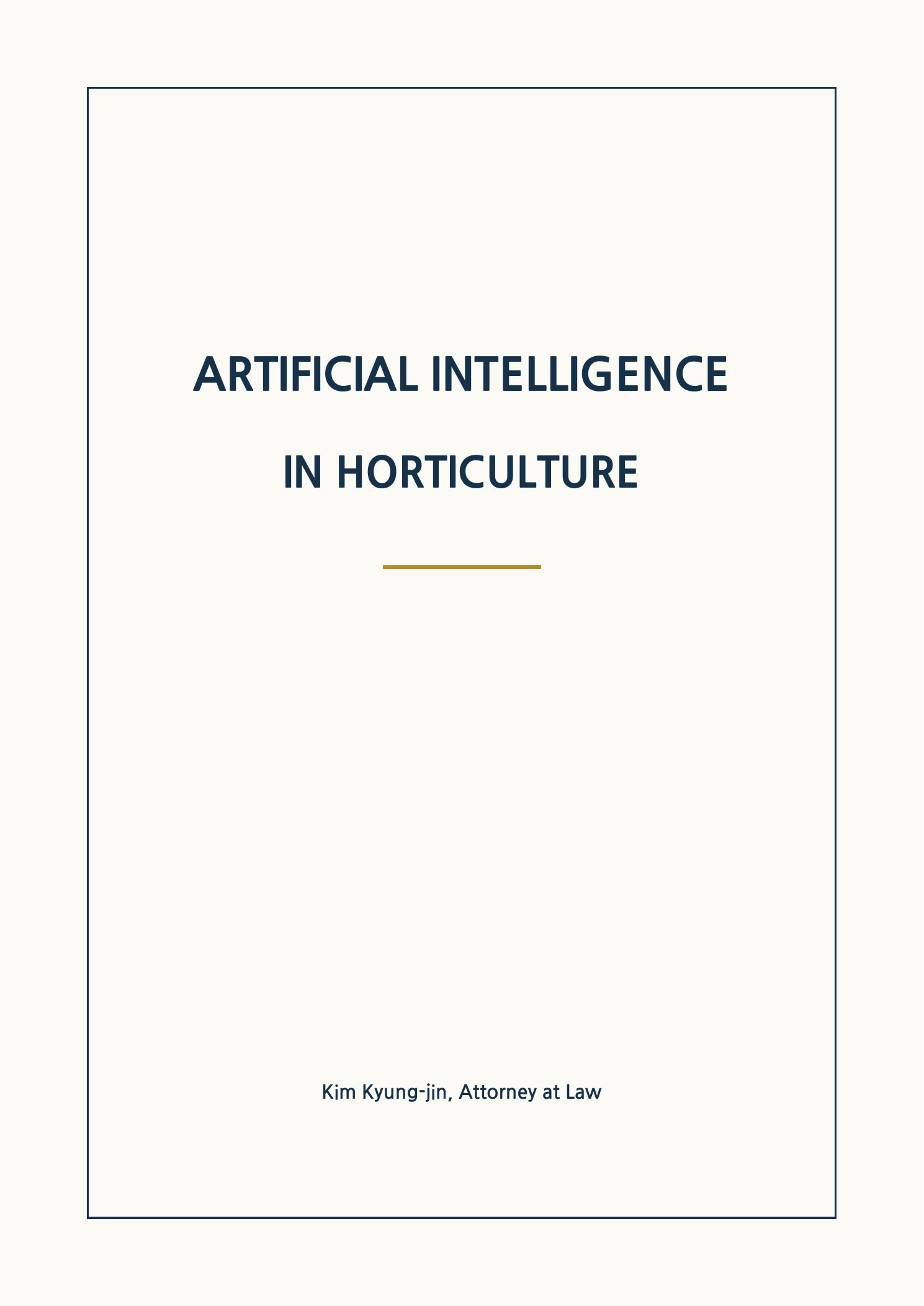
New English Edition
Artificial Intelligence in Horticulture
Kim Kyung-jin, Attorney at Law
Across five chapters and ten sections, this book examines computer vision for crop diagnosis, harvesting robots and autonomous field systems, smart greenhouses and digital twins, precision irrigation and supply-chain quality control, high-throughput phenotyping, and predictive breeding.
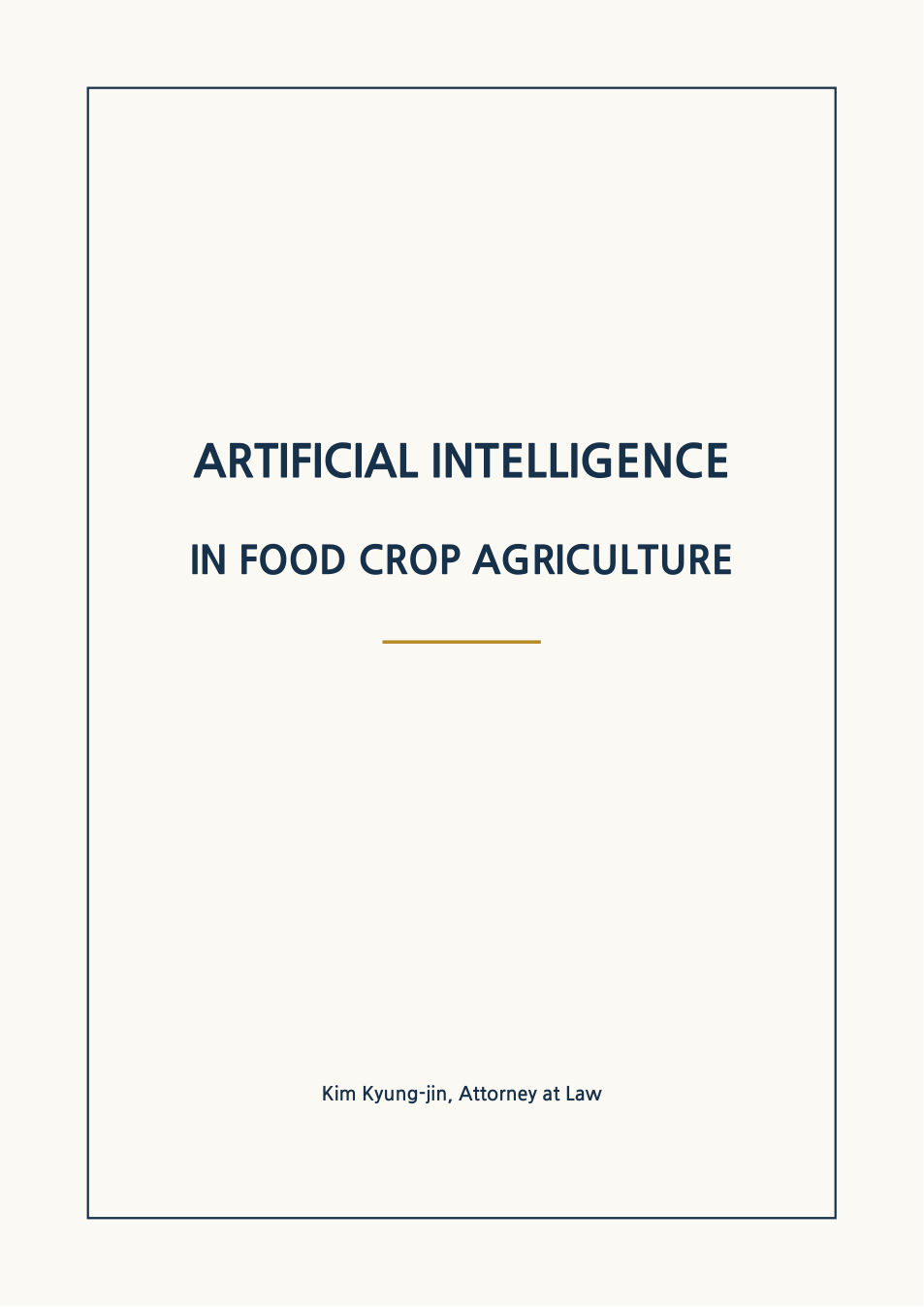
New English Edition
Artificial Intelligence in Food Crop Agriculture
Kim Kyung-jin, Attorney at Law
Across six chapters and eighteen sections, the book examines digital agricultural infrastructure, remote sensing, crop diagnosis, yield forecasting, precision irrigation, genomics, molecular breeding, agricultural robotics, climate-smart agriculture, and global food security.
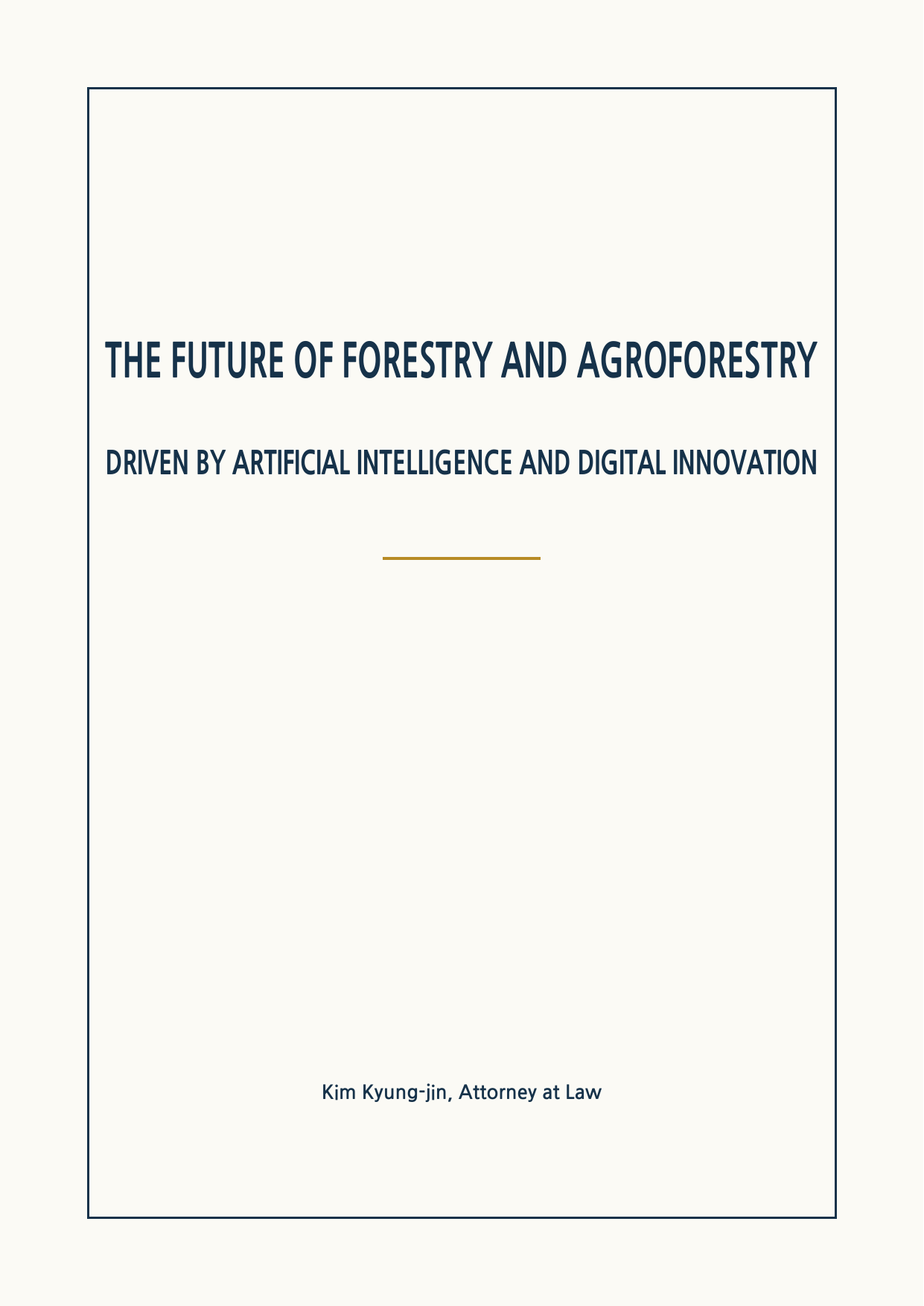
New English Edition
The Future of Forestry and Agroforestry
Kim Kyung-jin, Attorney at Law
Driven by Artificial Intelligence and Digital Innovation
Across five chapters and fifteen sections, the book follows satellites, drones, LiDAR, digital twins, forest-specific language models, wildfire and pest forecasting, forestry robotics, agroforestry, timber traceability, and forest carbon markets.

New English Edition
Smart Livestock Farming: AI Enters the Barn
Kim Kyung-jin, Attorney at Law
Sensors listen, cameras watch, and artificial intelligence helps farmers decide.
Across five chapters and fifteen sections, the book follows precision livestock farming from animal health and reproduction to robotic milking, virtual fencing, digital twins, methane reduction, welfare, and data ownership.
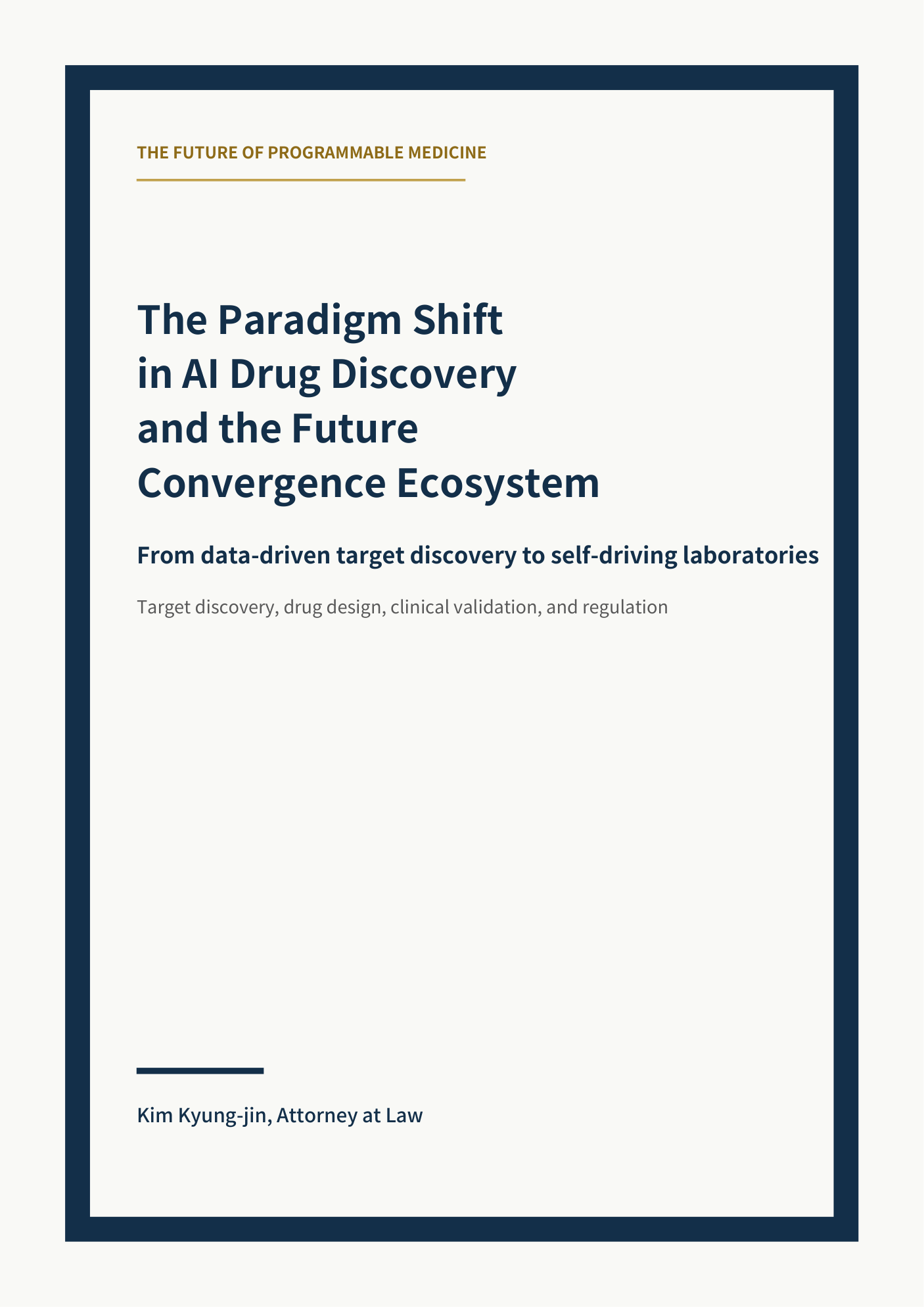
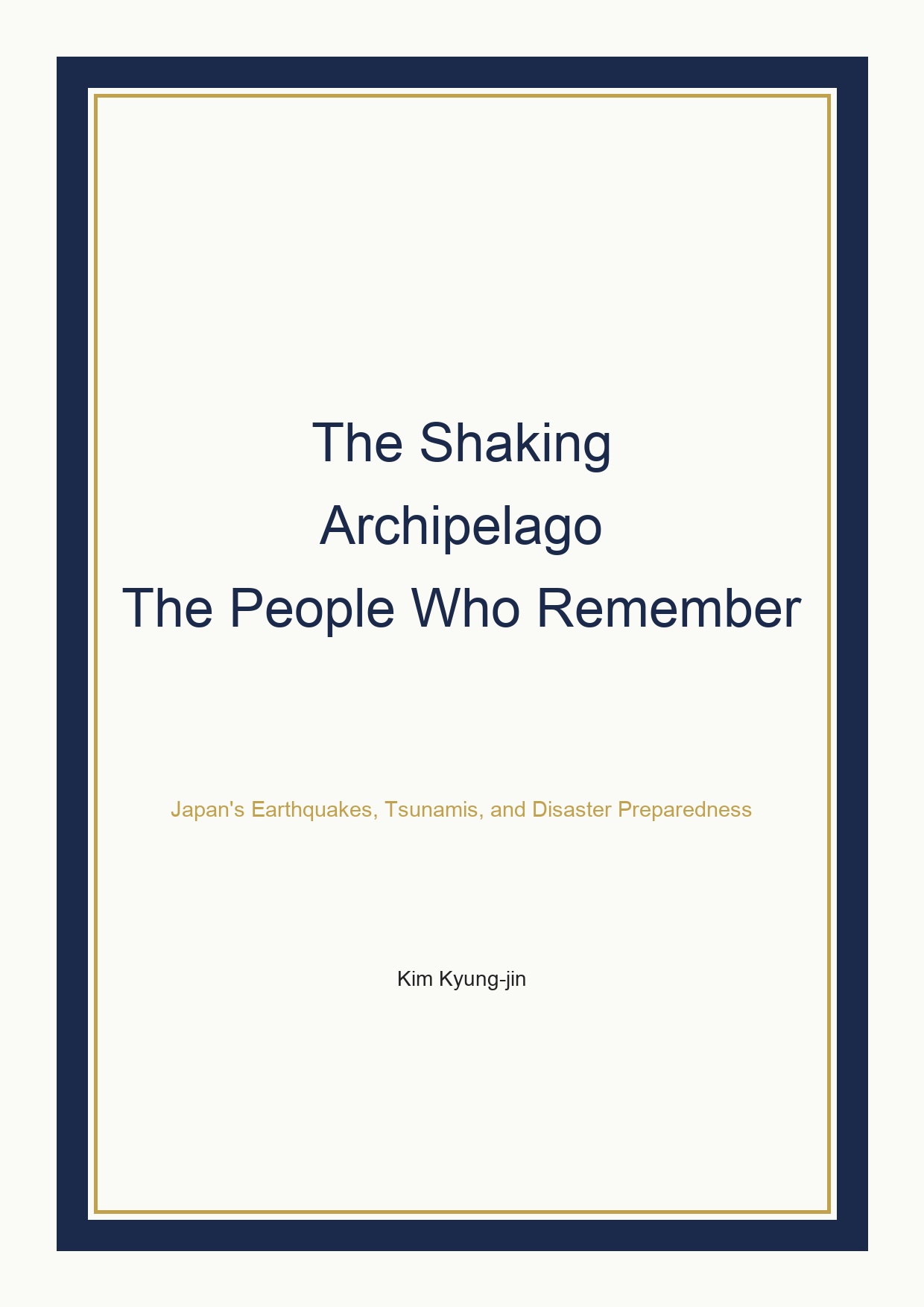
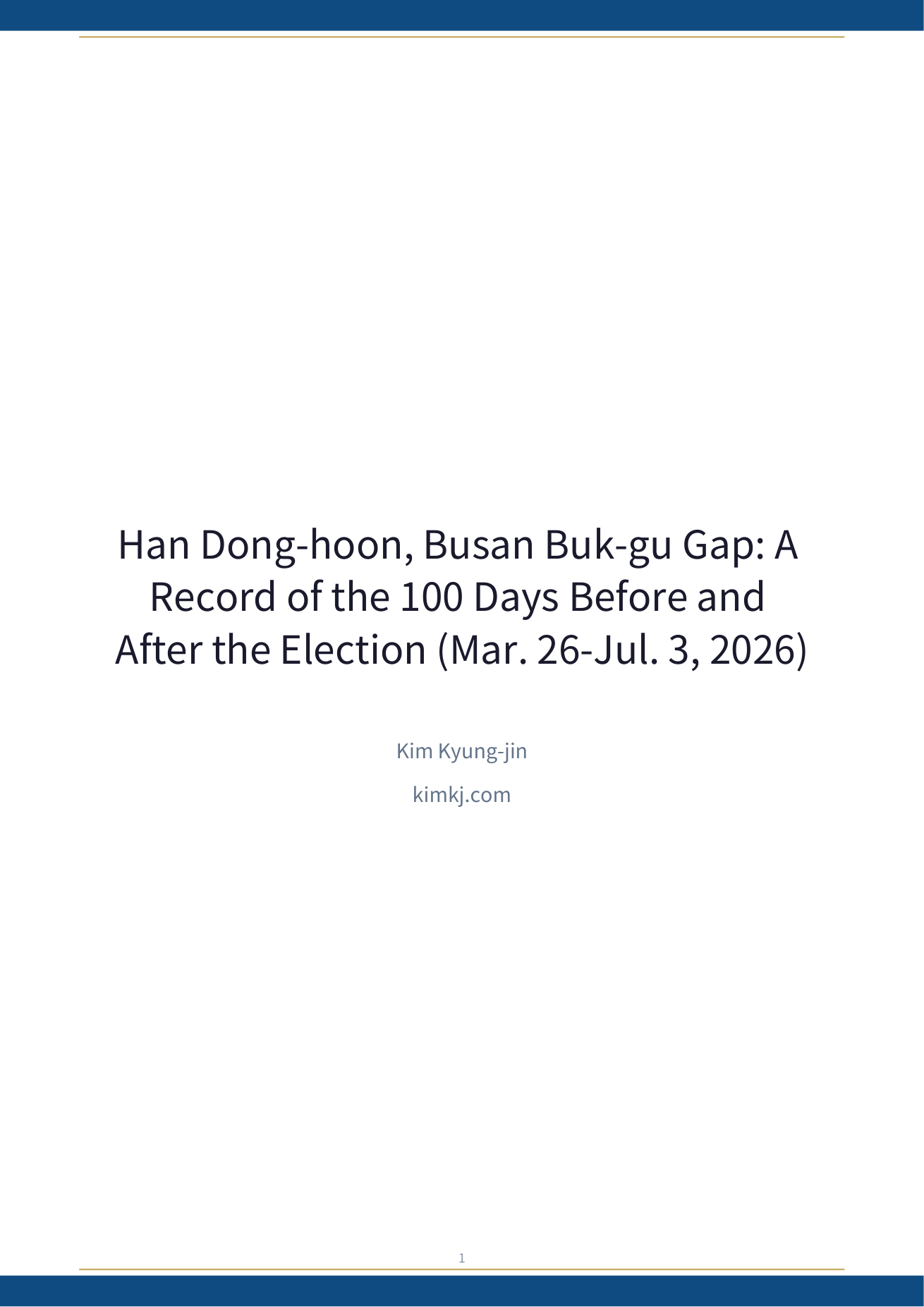
Table of Contents
Han Dong-hoon, Busan Buk-gu Gap: A Record of the 100 Days Before and After the Election (Mar. 26-Jul. 3, 2026)
Kim Kyung-jin
Table of Contents and 13 sections
From March 26 to July 3, 2026, this record follows the spring after expulsion, the Busan Buk-gu Gap by-election, victory as an independent, and the first bill submitted in the National Assembly.
Table of Contents
Artificial Intelligence and Medicine
Kim Kyung-jin, Attorney at Law
AI in clinical care, hospitals, education, and research
AI in medical imaging, risk prediction, treatment planning, hospital operations, education, and research, with patient safety, privacy, and accountability.












[AI Library] Chapter 35: Energy Security Redefined
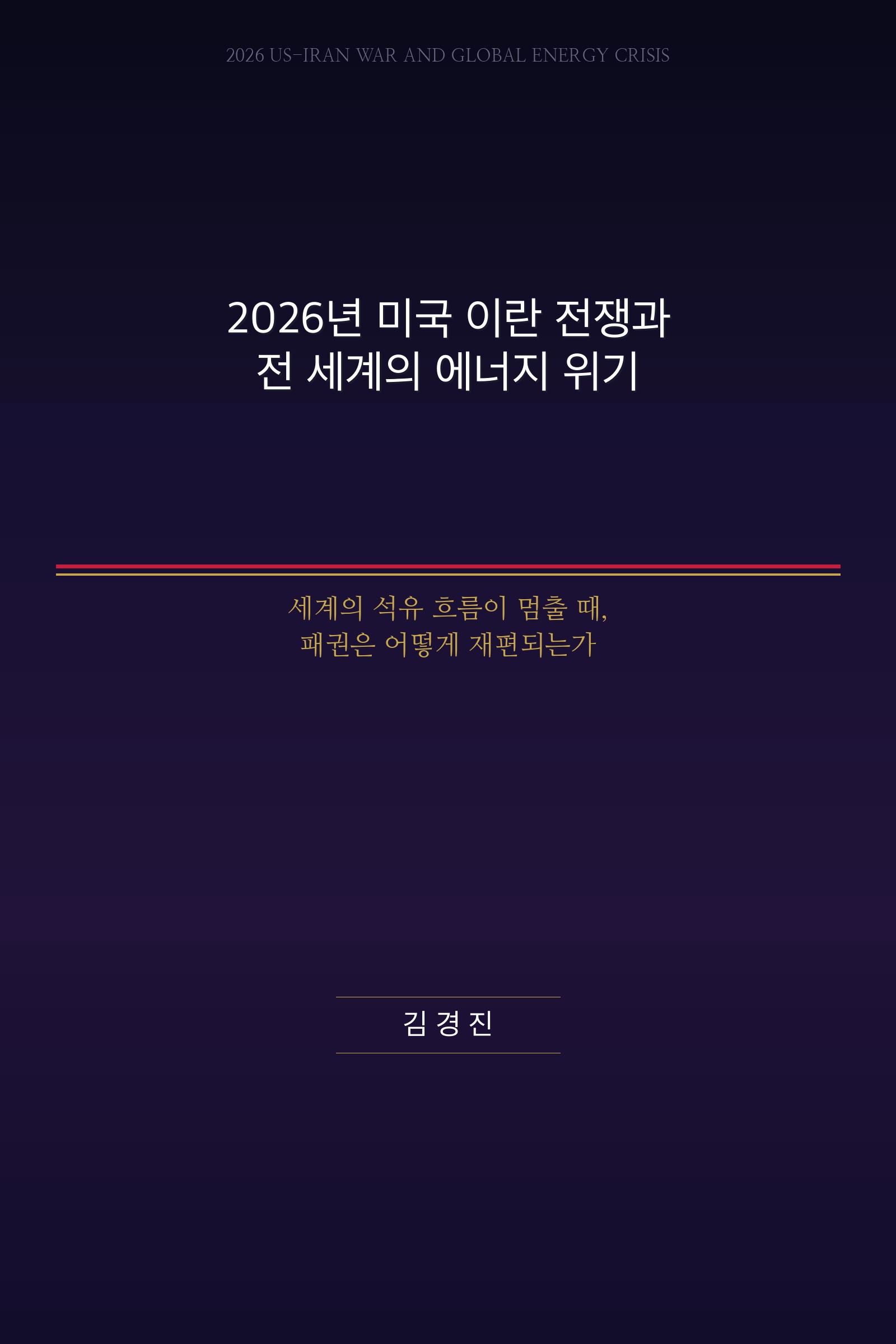
The 2026 U.S.-Iran War and the Global Energy Crisis
Chapter 35: Energy Security Redefined
Kim Kyung-jin
The 2026 U.S.-Iran War and the Global Energy Crisis
Chapter 35: Energy Security Redefined
35.1 What We Learn from the Philippines' 98% Import Dependence
On March 25, 2026, the plaza in front of Baclaran Church in Manila was quiet. The square that had been crowded with tens of thousands every Wednesday, filled with colorful flower vendors and the smell of barbecue and the honking of jeepneys, lay in an eerie silence one Wednesday afternoon as Holy Week began. Jeepney driver Ruben Santos went to the garage that morning at five, turned on the engine, then just shut it off. At over 150 pesos per liter, diesel had grown so expensive that driving all day would not cover fuel costs. A month earlier, he had pocketed 600 to 700 pesos a day. Now, after paying for fuel, he had less than 200 pesos remaining.
Philippine President Ferdinand Marcos Jr. declared a State of National Energy Emergency that same day, March 25. The 26-kilometer stretch from Manila to the airport usually took two hours, but on the day of the declaration, 45 minutes was enough. The empty roads recalled the time of the coronavirus lockdown.
Executive Order No. 110, signed by President Marcos, contained the language: "Conflict in the Middle East continues, and as a result, imminent danger has arisen to the availability and stability of the country's energy supply." The state of emergency was set for one year.
This was an event in which a nation not party to the conflict declared a state of national emergency without a single shot fired on its own territory, purely because fuel prices had risen. It was unprecedented in Philippine history, and in the records of no country in the world.
The Philippines imports 98 percent of its oil from the Middle East. Within a month of the war's start, domestic oil reserves plummeted, and inflation approached record highs. As of March 20, the Philippine Department of Energy announced that average domestic fuel inventory stood at 45 days' worth. This was a sharp decline from 55 to 57 days' worth just before the outbreak of war.
Forty-five days' worth sounds substantial. But this number is meaningful only on the assumption that the Strait of Hormuz opens again. With the strait continuing to be closed, 45 days is simply a countdown.
The Philippine Department of Energy's 2024 Energy Statistics handbook had already set out in numbers, a year earlier, the impact that a Strait of Hormuz blockade would have on the Philippines. The fact that over 95 percent of crude imports came from the Persian Gulf, the fact that Saudi Arabia accounted for more than half of that, and the fact that the transport sector fed nearly 400,000 people in the Philippine economy,all of this was there. Policymakers had documents. They had numbers. What they lacked was the urgency to translate those numbers into immediate action.
The warning slept inside a warehouse of official documents, and the crisis arrived without notice.
By March 24, diesel prices had surpassed 130 pesos per liter (about $2.64), and gasoline had shot up above 100 pesos ($2.03). The Philippine government entered emergency negotiations with nontraditional suppliers including China, India, and Russia. Petron took advantage of a U.S. 30-day sanctions waiver to order 700,000 barrels of Russian crude.
The peso fell to a record low of 60.30 per dollar. As the dollar became more expensive, the amount of pesos needed to buy crude oil doubled. When fuel prices rise and the exchange rate collapses at the same time, the impact operates not as simple addition but as multiplication.
The government discounted fares on the capital region's light rail (LRT, MRT) by 50 percent and distributed emergency subsidies of 5,000 pesos (about $83) per person to 1.4 million public transport workers. The Department of Energy set a goal of securing 2 million barrels in emergency reserves, but whether this would be realized was unclear.
The Department of Budget Management decided to release 20 billion pesos (about 4.06 billion won) from the Malampaya gas field fund in an emergency to secure fuel. Sorsogon province declared a state of disaster at the provincial level, citing economic paralysis caused by soaring fuel prices.
Transport groups, however, went on nationwide strike, saying this was insufficient. They directly criticized President Marcos for failing to control price increases.
Jeepney driver Emily Ruado, 59, a mother of four, told an Al Jazeera reporter: 'I used to earn ten dollars a day, but now, after fuel costs, I have less than five dollars left. I'm barely getting by.' For working people like Ruado who live hand to mouth, the energy crisis is not a number in statistics. It shows up as the number of dishes on the dinner table shrinking every evening.
The Philippines' transport sector is not simply the sector consuming the most oil. With 40 million people using it daily and nearly 2 million working in it, this sector is the circulation system of the Philippine economy itself. When jeepneys stop, goods don't move, and when goods don't move, markets die.
Laos introduced a three-day school week. Vietnam encouraged work from home and temporarily exempted some fuel taxes until April 15. The Thai Prime Minister appealed to citizens to conserve fuel and not hoard it. All of ASEAN was shifting to an emergency economic regime.
The Philippines is among Southeast Asian nations with the most evenly distributed solar resources. Yet as of 2026, solar accounts for only 3 percent of total electricity generation. The transport sector remains almost entirely dependent on oil.
This is the paradox the Philippines faces. In an archipelago where the sun pours down every day, people are going hungry for breakfast, weighed down by fuel prices. The technology and resources existed. What was lacking was the urgency to act.
What the Philippines case reveals is not a lack of information. It is a matter of political and institutional challenge. The gap between recognizing vulnerability in official data and treating that vulnerability with sufficient urgency had not narrowed, even though the mechanism of crisis had been well understood and geopolitical signals had appeared steadily.
Nations entirely dependent on external energy sources bleed first in the conflicts of great powers. Though not a direct party to war, the tables of ordinary people in an island nation thousands of kilometers from the Strait of Hormuz shake first. This is the essence of energy dependency, and it is the clearest warning the Philippines has sent to the world.
35.2 The Limits of Strategic Petroleum Reserve Policy
Paris, March 11, 2026. At the International Energy Agency headquarters, Executive Director Fatih Birol took the podium. In a quiet, firm voice, he declared:
"The challenges facing the global oil market are unprecedented in scale. For that reason, I am pleased that the IEA's 32 member nations have responded with an unprecedented collective emergency action."
The IEA's 32 member nations unanimously agreed to release 400 million barrels of emergency strategic reserves to the market. This was the largest collective release in the agency's history since its founding in 1974. It was more than twice the 182 million barrels released during Russia's invasion of Ukraine in 2022.
Shortly after the announcement, Brent crude slipped from $119 to the low $90s. The media reported extensively, and governments congratulated themselves on how Western solidarity had stabilized the market.
That relief did not last days.
Global oil consumption averages 105.17 million barrels per day. Four hundred million barrels amounts to only four days' worth of global demand. Compared to the 20 million barrels per day that flowed through the Strait of Hormuz, it was a 20-day supply. Energy strategist Naif Aldandeni called this measure 'a small bandage on a large wound.'
The United States committed to releasing 172 million barrels, 43 percent of the total, over 120 days. On a daily basis, that was 1.4 million barrels. It amounted to only 15 percent of the losses caused by the Strait blockade. From the time President Trump approved the release until the oil actually reached the market took 13 days, as it had to pass through pipelines, shipping networks, and refineries.
The U.S. Strategic Petroleum Reserve held 415.4 million barrels as of February 18, 2026. The 172 million barrels the U.S. agreed to release equaled 41 percent of its current holdings. If the IEA members released 400 million barrels from their combined 1.2 billion barrels in reserve, 33 percent would be depleted.
The meaning of these numbers is clear. Even if the world dumps one-third of the strategic reserves it has accumulated for emergencies over 50 years all at once, the market will fall into panic again in three weeks if the Strait of Hormuz remains closed.
The IEA's official report was candid. 'The joint release of strategic reserves provides a meaningful and welcome buffer. But unless the conflict is resolved quickly, this is only a temporary measure. The ultimate impact on oil and gas markets depends on the intensity of military attacks and the duration of the Strait of Hormuz shipping closure.'
The market already knew this. Even after the announcement of the 400 million barrel release, Brent crude broke back through $100. Traders were not reassured by the 400 million barrel figure. They knew without a calculator that it amounted to 20 days.
Tom Liles, research vice president at energy consulting firm Rystad Energy, said: 'Saudi Arabia, Iraq, Kuwait, and the UAE exported 14 million barrels per day before the war. Through bypass pipelines from Saudi Arabia and the UAE, we can extract 5 to 6 million barrels per day to the Red Sea and Gulf of Oman. The remaining 9 million barrels,about 10 percent of global supply,cannot go anywhere unless the Strait of Hormuz opens.'
Oil expert Nabil al-Marsoumi diagnosed the nature of the price surge this way: 'The Strait of Hormuz blockade added a $40 per barrel geopolitical risk premium that cannot be explained by market fundamentals alone. The release of strategic reserves is a tool for temporarily suppressing that premium, not a means of achieving a fundamental market rebalancing.'
There were other physical limits.
Strategic reserve releases had no effect on LNG. With 20 percent of global LNG exports passing through the Strait of Hormuz unable to reach the market, the IEA release was aimed at the crude oil market. The shortage of gas for electricity production and heating was unfolding as a separate crisis.
Strategic reserves are structurally a short-term shock absorber. This is why the West created the reserve system after the 1973 oil shock. It was a buffer to endure until Arab countries lifted their export ban. It was a bridge to fill a gap of weeks, at most a few months.
But the 2026 Strait of Hormuz blockade was different. Iran stated that it would not open the strait until negotiations began and military objectives were achieved. When those negotiations would end, what the conditions would be, remained opaque. A bridge had been built. No one knew when the land on the far side of the bridge would appear.
A strategic petroleum reserve analysis report laid out the dilemma coldly. 'The release of 400 million barrels is a calculated gamble on the speed of conflict resolution. If the war extends beyond 60 days, reserves will be rapidly depleted, and the development of alternative supplies will remain constrained by infrastructure limitations. As the 32 nations seek to maintain agreement on continued releases, domestic political pressure and individual concerns about strategic reserve adequacy will begin to collide.'
Bob McNally of Rapidan Energy Group expressed the market sentiment like this: "Traders have now done the math. IEA releases can at best offset only a portion of the 15 million barrels per day loss of crude oil and refined products due to the Strait of Hormuz shutdown."
Andy Lipow, head of Lipow Oil Associates, pointed to another implication of the IEA measures: "The fact that the IEA has taken action to this extent is being read by some market participants as a signal that the conflict could last weeks or longer."
A paradox unfolded: the world's largest emergency measure was injecting fear into the market.
Fifty years have passed since the emergency oil reserve policy was created. During those fifty years, the world allowed itself to remain dependent on imported energy, reassured by the belief that oil reserves would provide protection. South Korea built reserves to meet IEA standards, as did Japan, and the Philippines assured itself it had secured forty-five days' worth. That reserve is now depleting like a timer counting down. The fact that four days' worth of global emergency oil reserves cannot prevent a month-long crisis is common sense that has never needed to appear in any economics textbook.
35.3 Energy Diversification Is Not an Option, It Is Security
South Korea's President Lee Jae-myung had focused on three priorities before the Iran war: economic recovery, advancing an inclusive growth agenda, and securing the finances necessary for South Korea's energy transition. The Strait of Hormuz blockade transformed these three goals from mutually complementary into competing ones that clash with each other.
When energy prices rise, household purchasing power collapses. To prevent this, subsidy injections deplete social program funding. To increase energy transition investment, crisis response budgets shrink immediately. What the crisis brought was the disappearance of choices themselves.
South Korea depends on imports for 94 percent of its energy. Seventy percent of crude oil enters through ships passing the Strait of Hormuz. LNG accounts for 19 percent of total energy and 25 percent of electricity generation. When war broke out, the government immediately introduced a natural gas price cap for the first time in thirty years. It participated in strategic reserve releases, lifted coal-fired power generation limits, and decided to increase nuclear power plant capacity to 80 percent.
All these measures are short-term emergency treatments. The diagnosis had already been made, and the prescription was known. It simply had not been implemented.
More than 70 percent of South Korea's naphtha imports come from the Middle East. Before the Ukraine war, Russian sources accounted for 26 percent, but after joining sanctions, Middle Eastern dependency increased rapidly. Now that war has struck the Middle East, South Korean companies have begun asking the government to resume imports of Russian naphtha.
Naphtha prices surged 50 percent within a month, reaching $875 per ton. South Korea and Japan depend on imports for two-thirds of their naphtha consumption, and South Korea sources 60 percent of it from the Persian Gulf.
The naphtha supply shock is affecting everything from IV drip packaging to garbage bags. Pharmaceutical packaging inventory is down to only two to three months' supply. Weekly average jet fuel prices soared to $197 per barrel, a 105 percent jump in a single month.
The semiconductor problem is more severe.
Fitch analyzed in its report that South Korea is among the countries most vulnerable to helium shortage. South Korea imports 64.7 percent of its helium from Qatar. Taiwan also has high dependency on Qatar. Japan imports half from the United States and 28-33 percent from Qatar, with inventory distributed across both sources, making the impact relatively smaller.
Beyond helium, 97.5 percent of South Korea's bromine imports come from Israel. Bromine is an essential material in semiconductor etching processes. Sulfuric acid and aluminum come from non-Middle Eastern regions, but a significant portion of precision measurement equipment depends on Israeli production.
The Carnegie International Peace Foundation's analysis struck at the core: "The Iran war did not create South Korea's energy vulnerability. It merely exposed how dangerous that vulnerability had become."
The AI boom has driven chip prices to all-time highs, and major tech companies had already signed multi-year contracts for Samsung and SK Hynix's advanced memory chips. Before the Strait of Hormuz blockade disrupted supply chains, the market was already stretched thin. Now it has become clear that the world's most important memory chip producer depends on energy flowing through the most geopolitically unstable shipping route on Earth.
Japan's experience offers lessons. After the oil shock of the 1970s, Japan aggressively diversified its energy sources. It expanded nuclear power capacity and built strategic oil reserves. As a result, Japan today has far greater capacity to weather a Hormuz crisis than South Korea. The fact that the same shock produces different outcomes shows how political choices shape energy security differently.
South Koreans were advised to shorten shower times and charge smartphones during daylight. Japan assured its citizens there was no need to hoard toilet paper. The energy crisis had penetrated into consumer psychology and daily life.
Wood Mackenzie forecast that if the war persists, Brent crude could reach $150 per barrel. It also warned that if this year's average price hits $125, the global economy will slip into recession.
The Carnegie report presented two urgent tasks. First, expand reliable domestic energy resources to reduce dependence on imported fossil fuels. Second, institutionally link infrastructure and power grid expansion, following the model where the Gyeonggi Province government and Korea Electric Power Corporation agreed to construct new transmission lines to supply an additional 3 gigawatts to the semiconductor cluster.
Long-term measures such as shifting supply chains to import American energy via the Pacific route instead of the Middle East, expanding nuclear power capacity, and building alternative energy infrastructure have now begun to be discussed in the language of national security. This is transformation forced by crisis.
Energy diversification has long been discussed in the language of environmental activism, under the goal of reducing carbon and protecting the climate. That language is now changing. Energy diversification is security. So that semiconductor plants do not shut down from a single war on the opposite side of the globe, so that jeepney drivers' incomes do not get slashed in half, and so housewives do not resort to hoarding toilet paper, energy must not depend on a single shipping route.
President Trump churned out daily optimism that the war would end soon. Yet analysts indicated that even if a ceasefire is reached, economic suffering would persist for months, perhaps years.
The world after war ends is not the same as before. The Strait of Hormuz will reopen. Yet the structure of 98 percent dependence, emergency reserves amounting to only four days' supply, and the supply chain that sources two-thirds of helium from a single gas field are things no one will try to fix until the next crisis arrives. History knows it repeats this pattern.
The plaza in front of the Baclarang Cathedral will someday be noisy again. Ruben Santos' jeepney will run again. The question is whether, when the next crisis comes, he will face another morning turning off the engine in the garage.
AI specialist, Attorney Kim Kyung-jin
Expert in AI law and policy, former member of the National Assembly, author of numerous works
If this book remained with you for even a moment, please support the publication of the next story.
(Voluntary support account: NH Bank 302-1096-0948-81 Account holder: Kim Kyung-jin)
Kim Kyung-jin
Attorney · Former Member of the National Assembly · AI Policy Researcher
© 2026 Kim Kyung-jin. All rights reserved.