AI Library
The Age of Autonomous Scientific Discovery
Kim Kyung-jin, Attorney at Law
AI Scientists and Self-Driving Labs
This book follows how AI scientists and self-driving labs are changing the way science generates and verifies claims. It covers literature-based discovery, natural-language protocols translated into robot commands, multi-agent research systems, closed-loop laboratories, materials search, the verification gap, chains of evidence, research harnesses, journal ethics, and legal responsibility.
AI Library
A New Era of Life Sciences Opened by Artificial Intelligence
Structural Proteomics, Genomic Foundation Models, Autonomous Laboratories, and Global Governance
Kim Kyung-jin, Attorney at Law
This book is a research volume compiled with artificial intelligence. A human selected the materials and structured the work, while AI models drafted the sentences and cross-checked the facts.
AI Library
The Double Structure of Digital Sovereignty
Europe’s Departure from Palantir and the Chains of American Big Tech
Kim Kyung-jin, Attorney at Law
This is a record of 2026, when European intelligence agencies and defense ministries began removing analytics tools from America’s Palantir. It covers the replacement decisions made by France’s General Directorate for Internal Security (DGSI), Germany’s Federal Office for the Protection of the Constitution (BfV), and the Netherlands Ministry of Defense; the incident in which US export controls severed an ally’s ac…

New English Edition
Artificial Intelligence in Horticulture
Kim Kyung-jin, Attorney at Law
Across five chapters and ten sections, this book examines computer vision for crop diagnosis, harvesting robots and autonomous field systems, smart greenhouses and digital twins, precision irrigation and supply-chain quality control, high-throughput phenotyping, and predictive breeding.

New English Edition
Artificial Intelligence in Food Crop Agriculture
Kim Kyung-jin, Attorney at Law
Across six chapters and eighteen sections, the book examines digital agricultural infrastructure, remote sensing, crop diagnosis, yield forecasting, precision irrigation, genomics, molecular breeding, agricultural robotics, climate-smart agriculture, and global food security.
New English Edition
The Future of Forestry and Agroforestry
Kim Kyung-jin, Attorney at Law
Driven by Artificial Intelligence and Digital Innovation
Across five chapters and fifteen sections, the book follows satellites, drones, LiDAR, digital twins, forest-specific language models, wildfire and pest forecasting, forestry robotics, agroforestry, timber traceability, and forest carbon markets.
New English Edition
Smart Livestock Farming: AI Enters the Barn
Kim Kyung-jin, Attorney at Law
Sensors listen, cameras watch, and artificial intelligence helps farmers decide.
Across five chapters and fifteen sections, the book follows precision livestock farming from animal health and reproduction to robotic milking, virtual fencing, digital twins, methane reduction, welfare, and data ownership.
Table of Contents
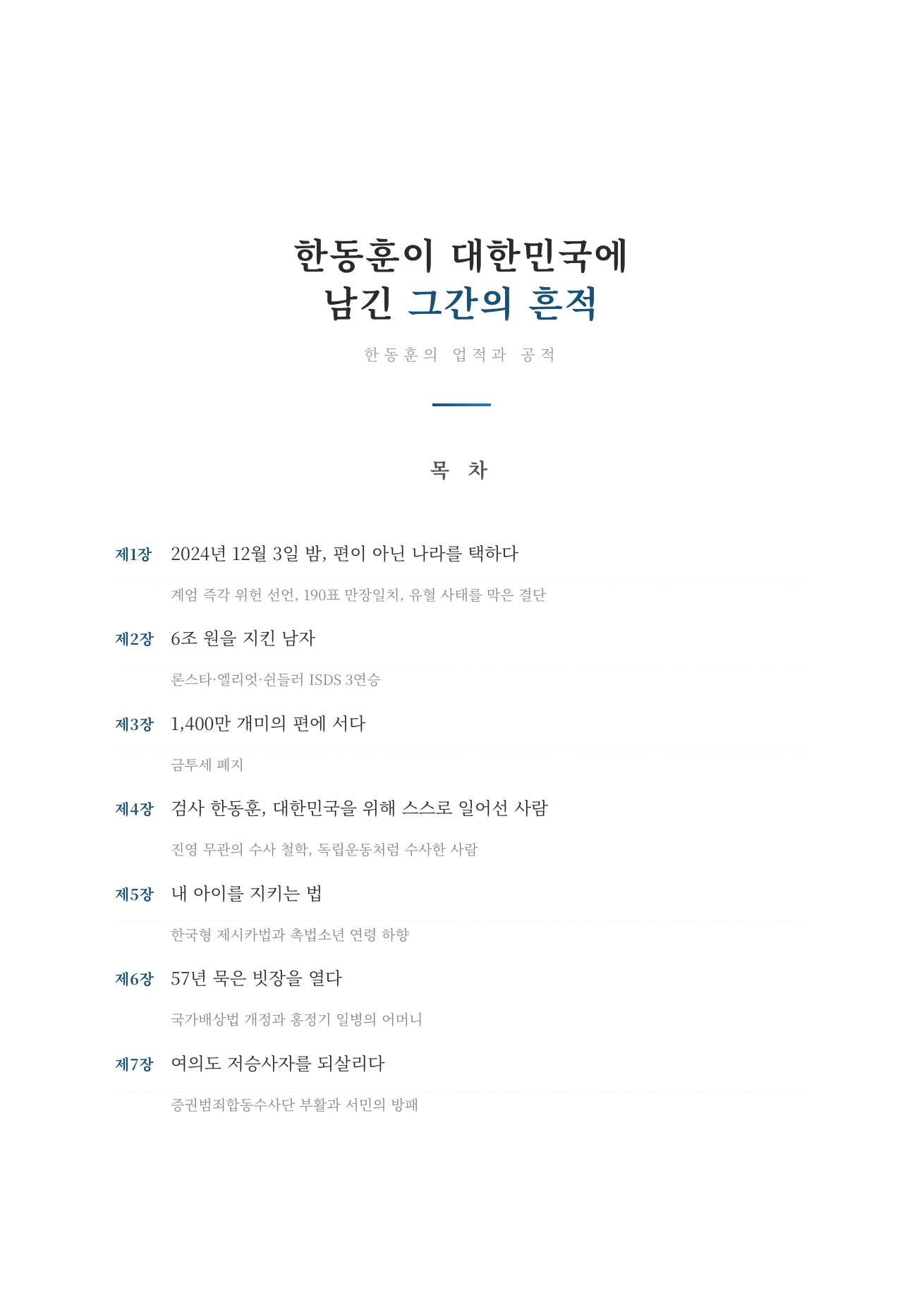
Han Dong-hoon, Busan Buk-gu Gap: A Record of the 100 Days Before and After the Election (Mar. 26-Jul. 3, 2026)
Kim Kyung-jin
Table of Contents and 13 sections
From March 26 to July 3, 2026, this record follows the spring after expulsion, the Busan Buk-gu Gap by-election, victory as an independent, and the first bill submitted in the National Assembly.
Table of Contents
Artificial Intelligence and Medicine
Kim Kyung-jin, Attorney at Law
AI in clinical care, hospitals, education, and research
AI in medical imaging, risk prediction, treatment planning, hospital operations, education, and research, with patient safety, privacy, and accountability.




















[AI Library] Chapter 6: HR, Legal, and Customer Support
Claude Cowork and Agent Utilization Manual
Chapter 6: HR, Legal, and Customer Support
Kim Kyung-jin
Friday at five in the afternoon, a startup on Teheran-ro in Seoul. On the HR manager's monitor sit 247 resumes, unsorted, that flooded in after the job posting closed.
PDFs, Word documents, and Hangul files are mixed together, and some applicants pasted portfolio links directly in the email body. At the desk next door, the legal officer is printing a 45-page joint venture agreement from a partner company and highlighting it with a fluorescent marker.
In the customer support room across the hall, three agents are typing without pause. Since the system update, more than 120 support tickets have piled up, a mix of emails demanding refunds for payment errors and lengthy feature requests that say "Could you build this feature?"
These three scenes have something in common.
All three involve reading text, sorting it, making judgments, and responding with text. The volume to read is enormous, the sorting criteria are fixed, and mistakes in judgment hit people directly. Miss a strong candidate and the organization loses. Overlook a toxic clause in a contract and the company is at risk. Lag on customer complaints and trust crumbles.
The four tasks covered in this chapter are pillars that support a company's back-office (the internal administrative functions not directly visible to customers). They are bulk resume evaluation and ranking, new employee onboarding and offer letter writing, inbound customer support ticket handling, and contract review and non-disclosure agreement (NDA) analysis.
Cowork's HR plugin, legal plugin, and customer support plugin were released sequentially between late January and February 2026.
Anthropic released these plugins as open source on GitHub and designed them so each company can customize them to match its own evaluation criteria, contract review standards, and customer response policies.
When the legal plugin was announced in early February, Thomson Reuters stock fell more than 16 percent in a single day, and LegalZoom dropped nearly 20 percent. A market capitalization of 285 billion dollars vanished.
The press called that day "SaaSpocalypse." The magnitude of the impact a single plugin had on the market explains the potential of this tool.
HR, legal, and customer support all touch people's lives directly. Behind every resume is an applicant whose livelihood is at stake. Behind every contract is a decision on which the company's fate depends. Behind every ticket is a customer experiencing inconvenience. Cowork handles reading, sorting, and drafting. Yet deciding which applicants to reject, signing contracts, and sending final responses to customers are human judgments and human responsibilities. Machines save time, but what people do with that saved time determines the quality of the outcome.
1 Evaluating and Ranking Bulk Job Applications
When 300 people apply for one position, a skilled HR manager takes an average of seven minutes to review each resume. Three hundred resumes means 35 hours, well over four days. Over those four days, fatigue accumulates, and there is no guarantee that the first resume read Monday morning and the last resume read Friday afternoon are evaluated by the same standard. The paperwork of a high-potential applicant can be buried beneath an afternoon of weary attention. Human cognitive capacity has limits, and reading through records of hundreds of people by a consistent standard to completion is nearly physically impossible.
Cowork lifts this document review process into a completely different dimension. Using the company's pre-established hiring evaluation rubric as a core framework (the standard system that forms the skeleton of judgment), it extracts relevant items from each resume and converts them to numbers. A machine does not tire, and it reads the 300th resume with the same intensity as the first.
A. Why Is It Necessary?
The problem is that resumes come in all different formats. Some applicants put a clean table in a PDF, while others write freely in a Word file. Some list years of experience as "three years," while others list only project start and end dates.
The large language model that powers Cowork excels at extracting meaning from unstructured text like this. Regardless of format, it infers from context 'How many years of relevant experience does this person have?' and 'What technologies does this person know?'
The heart of evaluation is transparency. The basis for each score must be visible: why did the AI give this applicant 85 points and that applicant 72 points? Scores without justification are neither fair nor useful.
B. What Does It Do?
When you install Cowork's HR plugin, Claude immediately equips itself with a skill specialized for HR work (a configuration file containing domain knowledge and procedures for specific tasks). It collects applications accumulated in email using a Gmail connector, or reads all resume files gathered in a folder at once. It scores each applicant by category according to the evaluation rubric the user provides, scoring years of experience, technical alignment, project experience, and job fit. It records the total score ranking along with the justification for each score in written form. The output is an Excel file with conditional formatting applied.
C. How to Do It: Basic Usage
Let's start with the simplest form. Score 10 resumes according to the evaluation rubric.
[Follow Along]
1. Open the Claude Desktop app and click the "Cowork" tab at the top. Install the HR plugin from the "Customize" menu in the left sidebar. If you haven't installed it yet, press "Browse Plugins," find "HR" in the list, and click the "Install" button.
2. Create a folder on your desktop called "2026_Marketer_Hiring." Put three things in it: your company's hiring evaluation rubric file (PDF or Word), the job description (JD) file, and 10 resume files from applicants.
3. At the top of the Cowork screen, designate this folder as your working folder.
4. Enter the following prompt:
"Please read the hiring evaluation rubric and job description in this folder first. Based on those criteria, analyze all resume files in this folder and perform the following tasks.
First, score each category from the evaluation rubric (relevant years of experience, technical stack alignment, project experience, job fit) on a scale of zero to ten points.
Second, write the reasoning for each score in one or two sentences, explaining why that score was given. For example: 'Mentioned experience with SEO tools, but no concrete performance metrics were provided, so technical proficiency scores 6 points.'
Third, create an Excel file sorted in descending order by total score. The columns should be applicant name, contact information, scores by category, total score, rank, and summary of evaluation reasoning. Highlight the cells of the top 3 applicants in green and the bottom 3 in yellow.
Save the file as 'Marketer_Applicant_Evaluation.xlsx' in this folder."
5. Claude displays a plan: 'I will read the evaluation rubric → I will analyze the job description → I will build a scoring framework → I will analyze resumes sequentially → I will generate the Excel file.' After confirming the plan, enter 'Go ahead.'
6. After two to three minutes, an Excel file appears in the folder. When you open it, next to each applicant's name are their category scores and justifications, all sorted by total score.
D. How to Do It: Advanced Application
Now the applicant pool has grown to dozens, and you are collecting resumes directly from Gmail. 1. Connect the Gmail connector in Cowork. Open the "Connectors" option from the "Customize" menu in the left sidebar and select Gmail.
2. Enter the following prompt:
"Using the Gmail connector, find all emails in my inbox from the past two weeks that have 'Marketer Application' in the subject line. Save the attachments (resumes) from each email to this folder. Then apply the same scoring framework I created earlier to evaluate all applicants and create a new Excel file in the same format. This time
since there are many applicants, write two customized interview questions to ask each of the top 10 applicants in an additional column."
3. Claude accesses Gmail, searches for emails, downloads the attachments, and begins analysis. Progress appears in the sidebar.
E. How to Do It: Real-World Application. In large-scale hiring with more than 300 applicants, generate an evaluation report and executive summary document simultaneously.
1. Enter the following prompt:
"Evaluate all resumes in this folder according to the hiring evaluation form. There may be over 300 applicants, so please process all of them to completion. Create the following three files.
First, an overall applicant evaluation spreadsheet in Excel. Include point scores by category, total score, ranking, summary of reasoning, and conditional formatting applied (top 10% green, bottom 30% red). Second, an in-depth analysis Word document on the top 15 candidates. For each candidate, include key strengths, concerns (red flags), and three customized interview questions. Third, a one-page summary Word document for executive reporting. Include total number of applicants, average score, one-line profile summaries of the top 5, and hiring recommendations."
② Cowork runs a sub-agent to process resumes in parallel. It extracts information from 300 unstructured documents and scores them according to the same criteria.
③ When you open the completed spreadsheet, it is sorted as "1st place: Jung Woojin (total score 56/60 points)," and the Word document includes interview questions.
ba Boundaries in AI-Powered Hiring Evaluation
The more effective this tool becomes, the more important it is to clarify its limits.
First, AI evaluation is a first-pass screening tool, not a final decision-making tool. Potential that does not appear in a resume, cultural fit with the organization, and communication ability shown in an interview are domains that machines cannot read. Among applicants given low scores by AI, there may be talented individuals who shine in interviews.
It is advisable to establish a safeguard in which human resources staff randomly review a certain proportion of low-scoring applicants directly.
Second, there is the issue of bias. The U.S. Equal Employment Opportunity Commission (EEOC) has warned that discrimination against applicants with disabilities may occur in hiring evaluations using software and AI.
If the evaluation criteria include bonus points for graduates of specific universities, or if rules uniformly deduct points from applicants with employment gaps, AI reflects that bias more consistently than humans. If the criteria are fair, AI becomes a fair tool; if the criteria are biased, AI becomes an amplifier of bias. Before implementing a hiring system, the fairness of the evaluation form itself must be checked first.
Third, there is the matter of explainability. While automation is useful for "sorting" candidates, if the structure allows machines to "finalize" rejections, legal risk increases. The scores produced by AI should be used as recommendations, but there must always be supporting evidence that explains why those scores were produced.
The hiring manager who receives a neatly ordered list of applicants ranked from 1st to 300th by machine has been freed from the labor of reading documents. In exchange, they take on the responsibility of looking back at the resumes pushed down to lower ranks and examining whether there might be potential that the algorithm failed to discover.
sa If This Problem Occurs
(1) The system fails to read Korean-language (.hwp) files properly. Cowork is reliable at text extraction from PDF and Word files. Korean-language files may have lower recognition rates depending on format. Guide applicants to submit PDFs, or if you convert Korean files to PDFs and place them in the folder, accuracy improves.
(2) The same applicant has sent resumes multiple times. When collecting via a Gmail connector, multiple emails from the same sender can be captured. Add the condition to the prompt: "If there are multiple emails from the same sender, use only the most recent attachment and ignore previous versions."
(3) AI gives excessively generous scores in certain categories. If the evaluation form criteria are vague, AI interprets broadly. Refine the scoring criteria precisely in the prompt: "An applicant who has written only 'SEO experience' should be capped at 5 points or lower in technical proficiency. Scores of 7 or above require both specific tool names (Google Analytics, Ahrefs, SEMrush, etc.) and performance metrics."
2 Employee Onboarding and Proposal Writing
The moment a successful candidate is confirmed, a new kind of administrative work begins. You must write an offer letter with exact figures for the agreed-upon salary and bonus, vacation days, and probation period conditions, prepare a nondisclosure agreement, and request laptop specifications to the IT department for the first day of work.
At the same time, you need to create an onboarding plan specifying what will be done from day one through the first 30 days, who will be met, and which systems the new hire will receive access to.
An offer letter is a formal document that can carry legal force, and an onboarding plan is a practical guide. Although they differ in nature, both have a repetitive structure while the specific details must differ for each candidate. These are conditions where AI can have strong impact.
ga Why It Is Needed
If mistakes occur in the offer letter, trust erodes. It happens that a salary figure from a previous candidate remains unchanged, or a performance bonus percentage inconsistent with the job level is recorded. When human resources staff handle multiple cases simultaneously, mistakes emerge in these small but critical gaps. If the onboarding plan is poor, the early retention rate of newly hired employees suffers. Multiple research findings show that employees who experience systematic onboarding have lower turnover rates within a year compared to those who do not.
na What It Does
The HR plugin in Cowork has built-in skills specialized in drafting offer letters and establishing onboarding plans. When you provide the company's standard offer letter template and compensation table, it generates a document that fills in the confirmed conditions for a specific candidate accurately. The onboarding plan takes job information, department information, and the new hire's experience level as input and creates a customized schedule and checklist.
da How to Do It: Basic Use
Let's create one offer letter.
[Walk-Through]
① Place the company's offer letter template (Word file) and successful candidate conditions memo (text file) in the "2026_Hiring_Onboarding" folder. In the conditions memo, write the name, job title, salary, start date, and special provisions.
② In Cowork with the HR plugin installed, enter the following prompt:
"Read the offer letter template and successful candidate conditions memo in this folder. Accurately reflect the conditions noted in the memo (name: Jung Woojin, job title: Content Marketing Specialist, salary: 60,000,000 won, start date: May 2, 2026, paid vacation: 20 days per year) in the template and write an offer letter Word document. Use an official tone but include a welcoming feeling. Include signature lines and acceptance deadline (7 days from send date). Save the file with the filename 'OfferLetter_JungWoojin.docx'."
③ Claude generates a document that maintains the template's format and company logo while filling in the blanks with the relevant conditions.
④ Be sure to open the document and verify the figures. Confirm that the salary, start date, and probation period conditions match the memo exactly.
ra How to Do It: Application Example
Create an onboarding plan in addition to the offer letter all at once.
① Add to the folder a text file that lists the company's system environment information (internal messenger is Slack, document management is Notion, email is Gmail).
② Enter the following prompt:
"Following the offer letter created earlier, additionally create an onboarding package for Jung Woojin.
First, create a time-block onboarding schedule from the first day (Day 1) through the first week (Week 1) as a Word document. Reflecting the fact that the company uses Slack, Notion, and Gmail, include specifics about when to set up accounts in which systems, when to meet team members, and when to receive the first project briefing. Second, also create an onboarding progress tracking checklist Word document. Include items such as 'Completed security training,' 'IT account created,' 'Salary account registered,' 'Team introduction meeting completed.' Third, write a welcome email draft as a text file to send to the successful candidate along with these documents. Save all three files in this folder."
③ Claude generates the onboarding schedule, checklist, and email draft simultaneously.
ma How to Do It: Real-World Application
Process successful candidates from multiple positions simultaneously.
① Create separate successful candidate condition memos for a developer, a sales representative, and a designer, and place them all in the same folder.
② Enter the following prompt.
"I have notes with conditions for three successful candidates in this folder. Create offer letters, customized onboarding schedules, checklists, and welcome emails for each candidate. Since their roles differ, their onboarding schedules should differ too. For developers, code repository access and dev environment setup come first in the first week; for salespeople, CRM system and product materials training come first; for designers, Figma access and brand guideline review come first. Create subfolders for each candidate and separate the files."
③ Cowork executes subagents to generate packages for all three candidates in parallel. Common items (security training, salary account registration) are structured identically; role-specific items are structured differently.
The machine created administrative documents with precision. But what a new employee truly wants is not perfectly formatted contracts or meticulously structured schedules. What eases the anxiety of stepping into an unfamiliar environment is the warm greeting from people who welcome them. Now that the machine has lifted all administrative burden, HR managers and department leaders can focus on layering their own sincere words of welcome over those smooth documents.
If These Issues Arise
(1) The salary figure in the offer letter differs from the memo. Claude may have misread the number in the memo. If you format numbers in the memo file clearly with commas and units, like "60,000,000 won," recognition accuracy improves. The numbers in generated documents must always be verified by a person.
(2) The onboarding schedule does not match your company's actual process. The HR plugin's default skill follows a general onboarding sequence. If your company has unique procedures (for example: required executive meeting on day one, mandatory legal training in week two), customize the plugin by adding your procedures to the skill file. Press the "Customize" button to modify it in conversation with Claude.
3 Processing Inbound Customer Support Tickets
A day in the customer support department is a battle with flooding tickets. Product defect reports, refund requests, feature improvement demands, usage inquiries, and account issues come pouring in without distinction.
Support agents must read each ticket, identify the problem, prioritize it, and write a response aligned with company policy. The hardest part of this process is conveying a message of refusal to emotionally charged customers. Stripping away profanity and agitation, then identifying what technical action the customer truly needs, and composing a dry yet warm response following a set manual is enormous emotional labor.
Why It Is Needed
The bottleneck in support work often arises not from "being unable to write a response" but from "not knowing who should handle this ticket." If it is sorted from the start as to whether it is a feature request, a system failure, a usage question, or a refund complaint, response speed and quality differ greatly.
What It Does
Cowork's Customer Support Plugin automatically classifies incoming tickets, assigns priorities, and drafts responses aligned with company policy.
According to Anthropic's official documentation, this plugin has five slash commands (Slash Command, executable commands starting with the "/" symbol) built in. /triage classifies tickets and assigns priorities. /research finds answers to customer questions from multiple sources. /draft-response drafts a response suited to the situation and channel. /escalate creates an escalation brief to hand off to engineering or the product team. /kb-article converts resolved issues into knowledge base articles.
How to Use It: Basic Usage
Let's classify 10 customer inquiry emails and create response drafts.
[Follow Along]
① Install the Customer Support Plugin in Cowork. From the Customize menu: Browse Plugins → Customer Support → Install.
② Save customer inquiry emails as text files in the "customer_support_tickets" folder. (If you have connected the Gmail connector, you can read emails directly without needing a folder.)
③ Enter the following prompt.
"/triage Analyze the 10 customer inquiry files in this folder and classify them as follows. Categories: Bug Report, Feature Request, Payment Issue, Usage Question, Account Problem. Priorities: P1 (urgent, service outage or payment error), P2 (high, core feature bug), P3 (normal, general inquiry), P4 (low, feature suggestion). Format the results in an Excel table. Columns: Ticket Number, Customer Name, Category, Priority, Key Summary (one line), Recommended Action."
④ Claude analyzes the intent and urgency of each email and generates a classification table.
⑤ Next, request response drafts.
"/draft-response Create an immediate response draft for the P1 tickets just classified. Start with a sentence that empathizes with the customer's inconvenience, include refund procedure guidance in the middle, and close with an invitation to reach out if further help is needed. Tone: formal but warm."
⑥ Claude generates customized response drafts for each P1 ticket as text files.
How to Use It: Applied Examples
Create a respectful rejection email for feature request tickets.
① Enter the following prompt.
"/draft-response Find the feature request category tickets from the classification results. These requests are not included in our current product roadmap. Create a response draft that thanks the customer for the idea while honestly informing them that it is not in current development plans. However, the tone should make the customer feel respected. Include the sentence "Your feedback has been shared with the product team," but be careful not to make it sound like a promise. Create personalized responses reflecting each customer's name and request."
② Claude generates customized rejection emails for each customer. Support agents review the drafts and send them.
How to Use It: Real-World Application
Process all of a day's tickets at once and generate a weekly analysis report.
① With the Gmail connector connected, enter the following prompt.
"Use the Gmail connector to read all unreviewed tickets from today in the support email box (support@company.com). Complete the following tasks in order.
First, classify all tickets with /triage and assign priorities. Second, create immediate response drafts with /draft-response for P1 urgent tickets. Third, summarize feature request tickets and add them to the 'feature_requests_weekly_summary.xlsx' file. If the file exists, append to it; if not, create a new one. Fourth, create an engineering team escalation brief with /escalate for serious bug reports. Include bug reproduction steps, impact scope, and number of reporting customers. Fifth, analyze all tickets from this week and create a 'Weekly Customer Support Report Word document.' Include ticket counts by category, average response time, and the top 3 most frequently occurring complaint types."
② Cowork executes multiple subagents simultaneously to process classification, draft creation, escalation, and reporting in parallel.
Once this system is in place, customer support elevates from reactive troubleshooting to an input channel for product improvement. When the data accumulated in the feature request Excel file reaches the product team, priorities can be set on evidence rather than intuition.
However, you should not send AI-generated responses as is. AI drafts are a starting point for agents, not the final product. There may be context in a customer's situation that does not appear in the text, and continuity with previous support history must also be considered. In a structure where AI completes 80 percent and agents fill in the remaining 20 percent, agents can handle more tickets per day while delivering more thoughtful service to each customer.
If These Issues Arise
(1) Claude misreads customer emotion and creates a response with an inappropriate tone. Sometimes Claude writes a serious apology when a customer made a complaint mixed with humor. Add this instruction to your prompt: "When setting the response tone, first assess the emotional intensity of the customer's message as high, medium, or low, then apply a tone that matches."
(2) Feature request rejection emails feel mechanical. The quality of a rejection email depends on how precisely you reference the customer's specific request. Give this instruction: "Always include the specific feature name the customer requested in the response, and explain in one sentence why that feature is not in the current product."
(3) The escalation brief omits information needed by the engineering team. The basic output of the /escalate command may not include technical information such as browser version, OS, and customer plan tier. Add the following condition: "Include the customer's plan tier, browser used, and error occurrence time in the escalation brief. If this information is not in the customer email, mark it as 'Information Not Provided.'"
4 Contract Review and NDA Analysis
A 45-page joint venture partnership agreement from the other party has arrived at the legal team. The review deadline is 5 business days. At the same time, three nondisclosure agreements (NDAs) with new vendors, one revised software license agreement, and one data processing contract are awaiting review. Two lawyers must review all these documents within the deadline.
Reviewing legal documents demands both deep expertise and an unrelenting, meticulous attention. Behind courteous opening language, clauses designed to shift all liability to the other party in case of dispute lie hidden within complex phrasing. Miss a single ambiguous word in Article 14, Section 2 that sets liability limits, and the company inherits billions of won in litigation risk.
Why It Is Needed
The bottleneck in legal work is reading time. Carefully reading all 45 pages from start to finish, understanding each clause, and comparing it against the company's compliance workflow (the internal review process for verifying regulatory compliance) takes more than a day. During that time, the lawyer cannot address other urgent legal issues.
What It Does
Cowork's Legal Plugin was first released on February 2, 2026. This plugin is a specialized system that automates contract review, NDA classification, and compliance workflow. According to Anthropic's official documentation, there are five core slash commands.
/review-contract compares the contract against the company's negotiation playbook (an internal guide that defines acceptable ranges and negotiation criteria for each clause), assigns each clause a rating of safe (GREEN), caution (YELLOW), or risk (RED), and provides revision suggestions.
/triage-nda quickly sorts incoming NDAs into three categories: standard approval, legal review, and full re-review. /vendor-check confirms vendor contract status. /brief generates summary briefings on legal issues. /respond creates template-based legal correspondence such as data subject requests or litigation hold notices.
[Note] What Is a Playbook?
The heart of the Legal Plugin is the playbook. A playbook is a document that codifies internal standards, stating "we interpret this clause this way and accept only this scope." It contains rules such as "unlimited liability clauses are RED" or "non-compete periods of two years or less are GREEN, three years or more are YELLOW." Without a playbook, the AI cannot judge what poses risk by our standards. Without one, analysis is limited to standard commercial conventions.
How to Use It: Basic Usage
Let's analyze one NDA.
[Walk-Through]
① Install the Legal Plugin in Cowork. Customize → Browse Plugins → Legal → Install.
② Place the NDA file (PDF) from the other party in the "2026_Contract_Review" folder.
③ Enter the following prompt.
"/triage-nda Analyze the NDA file in this folder. I'm the disclosing party. Check the following. First, whether the definition of confidential information is not overly broad. Second, whether the confidentiality period is reasonable (industry practice is typically 2-3 years). Third, whether a residuals clause is included.
Fourth, whether return and destruction obligations have a backup exception. Tell me which classification applies: standard approval, legal review, or full re-review."
④ Claude reads the NDA and marks the analysis result and classification for each check item.
How to Use It: Advanced Application
Apply the company's playbook to review the contract clause by clause.
① Place both the company's contract review playbook file (Word or text) and the other party's contract in the "2026_Contract_Review" folder.
② Customize the plugin. Click the Customize button and instruct Claude: "Our company's playbook file is 'ContractReviewCriteria.docx' in this folder. Apply this standard to the /review-contract command."
③ Enter the following prompt.
"/review-contract Review the joint venture partnership agreement in this folder clause by clause using our playbook. Create the following outputs. First, a clause-by-clause analysis report (Word). Assign each major clause (definition of parties, capital structure, profit distribution, governance, intellectual property ownership, non-compete obligations, termination conditions, dispute resolution, and governing law) a rating of GREEN, YELLOW, or RED. For YELLOW and RED clauses, describe the nature of the risk and the recommended revision direction. Second, a one-page executive summary (Word) that executives can read in five minutes. Include the three key risks, immediate action items, and negotiation priorities. Save both files in this folder."
④ Claude analyzes the 45 pages and generates a report with clause-by-clause traffic light ratings and a one-page summary.
How to Use It: Real-World Application
Handle multiple NDAs and a large contract simultaneously.
① Place all five NDAs and one partnership agreement in the folder.
② Enter the following prompt.
"Review all legal documents in this folder. Quickly classify NDA files with /triage-nda and conduct deep clause-by-clause analysis of the partnership agreement with /review-contract. First, summarize the classification results of the five NDAs in a single Excel table. Use columns for filename, counterparty company name, confidentiality period, key risk items, and classification (standard/review/re-review). Second, create a clause-by-clause analysis report of the partnership agreement based on the playbook. Third, for clauses marked RED, prepare a draft revised agreement that includes the redline language we will propose to the other party. Fourth, prepare a one-page executive summary. Save all files in this folder."
③ Cowork simultaneously performs two levels of review: rapidly classifying NDAs and conducting deep analysis of the agreement.
The Absolute Boundary of AI Legal Analysis
AI analysis of legal documents does not replace a lawyer's legal judgment.
AI's role is to recognize patterns in text and surface potential issues. However, only a lawyer can determine whether a clause is actually enforceable in light of a specific jurisdiction's case law, whether the company's business strategy justifies bearing that risk, and how extensively to demand revisions in view of the relationship with the other party.
When a real problem arises from a clause that AI classified as "no risk," responsibility falls to the reviewing lawyer, not the AI. It is essential to review AI analysis results critically rather than accept them blindly.
Anthropic itself states that Cowork is in research preview and should not be used for regulated workloads. The Legal Plugin's output is "assistance," not "advice." The responsibility for final judgment and signature always remains with a person.
Cowork is an auxiliary tool that saves lawyers time from physically reading 45 pages and double-checks clauses they might miss. We have delegated the grueling work of analyzing clauses to the machine, but the weight of judging what those clauses will produce in practice and the moment of signing the contract remain the responsibility of the person at the desk.
Troubleshooting
(1) I ran /review-contract without a playbook and the analysis is superficial. Without a playbook, Claude analyzes according to general commercial standards. Since the company's specific risk tolerance is not reflected, practical value is reduced. Create a playbook file by referencing the company's contract review checklist or past opinion letters and connect it to the plugin. The playbook should at minimum specify acceptable ranges and escalation criteria for each major clause type.
(2) Claude does not accurately recognize legal terminology in Korean contracts. For domestic legal terms such as "anticipated damages," "warranty against defects," and "loss of benefit of time," Claude may misinterpret the context. Accuracy improves when you specify in the prompt: "This contract is a Korean-language document governed by the laws of the Republic of Korea. Analyze it within the context of Korean civil law and commercial law."
(3) Too many clauses marked RED render the playbook impractical. When the playbook's standards are overly strict, most clauses get flagged RED, making it difficult to determine priorities. Revise the playbook to separate "clauses we will never accept" from "clauses open to negotiation," applying RED only to the former and YELLOW to the latter.
The four tasks discussed in this chapter share a common structure. What machines do is read vast amounts of text, classify according to criteria, and generate drafts. What machines cannot do is recognize a candidate's potential, welcome new employees with genuine warmth, understand a customer's urgency with empathy, or make judgment calls about accepting legal risk.
Freed from reading three hundred resumes, the hiring manager becomes someone who notices possibilities the machine missed. Released from document drafting, the HR specialist becomes someone who hands a cup of coffee to the employee arriving for their first day. No longer sorting tickets, the support agent becomes someone who checks whether the machine's response reached the customer's heart. Liberated from forty-five pages of text, the lawyer becomes a strategist weighing risks against opportunities.
Reports and drafts created by cowork are not finished products but starting points. What people add from that point onward determines the quality of hiring, customer trust, and contract safety.
Kim Kyung-jin
Attorney · Former Member of the National Assembly · AI Policy Researcher
© 2026 Kim Kyung-jin. All rights reserved.