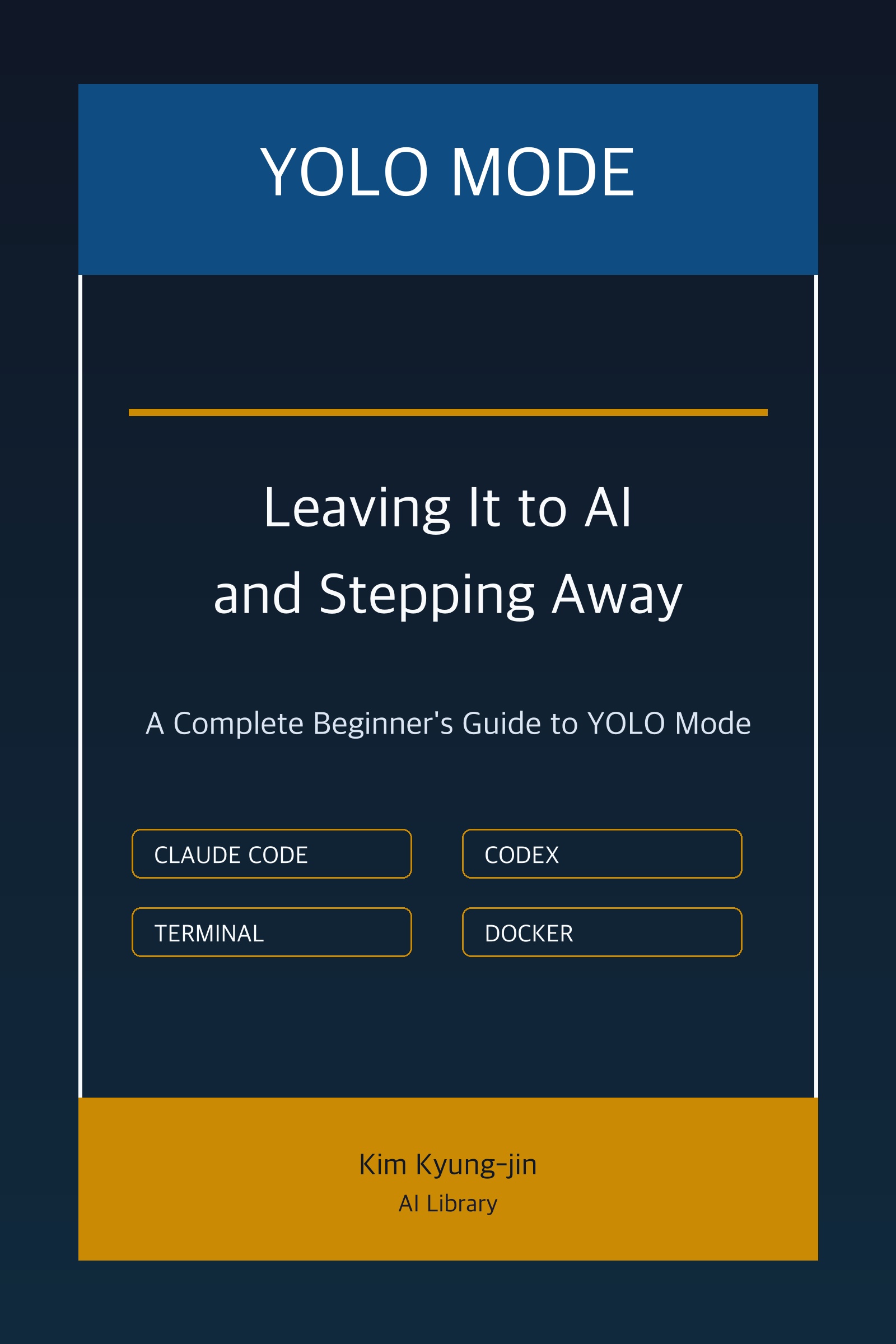
AI Library
The Age of Autonomous Scientific Discovery
Kim Kyung-jin, Attorney at Law
AI Scientists and Self-Driving Labs
This book follows how AI scientists and self-driving labs are changing the way science generates and verifies claims. It covers literature-based discovery, natural-language protocols translated into robot commands, multi-agent research systems, closed-loop laboratories, materials search, the verification gap, chains of evidence, research harnesses, journal ethics, and legal responsibility.
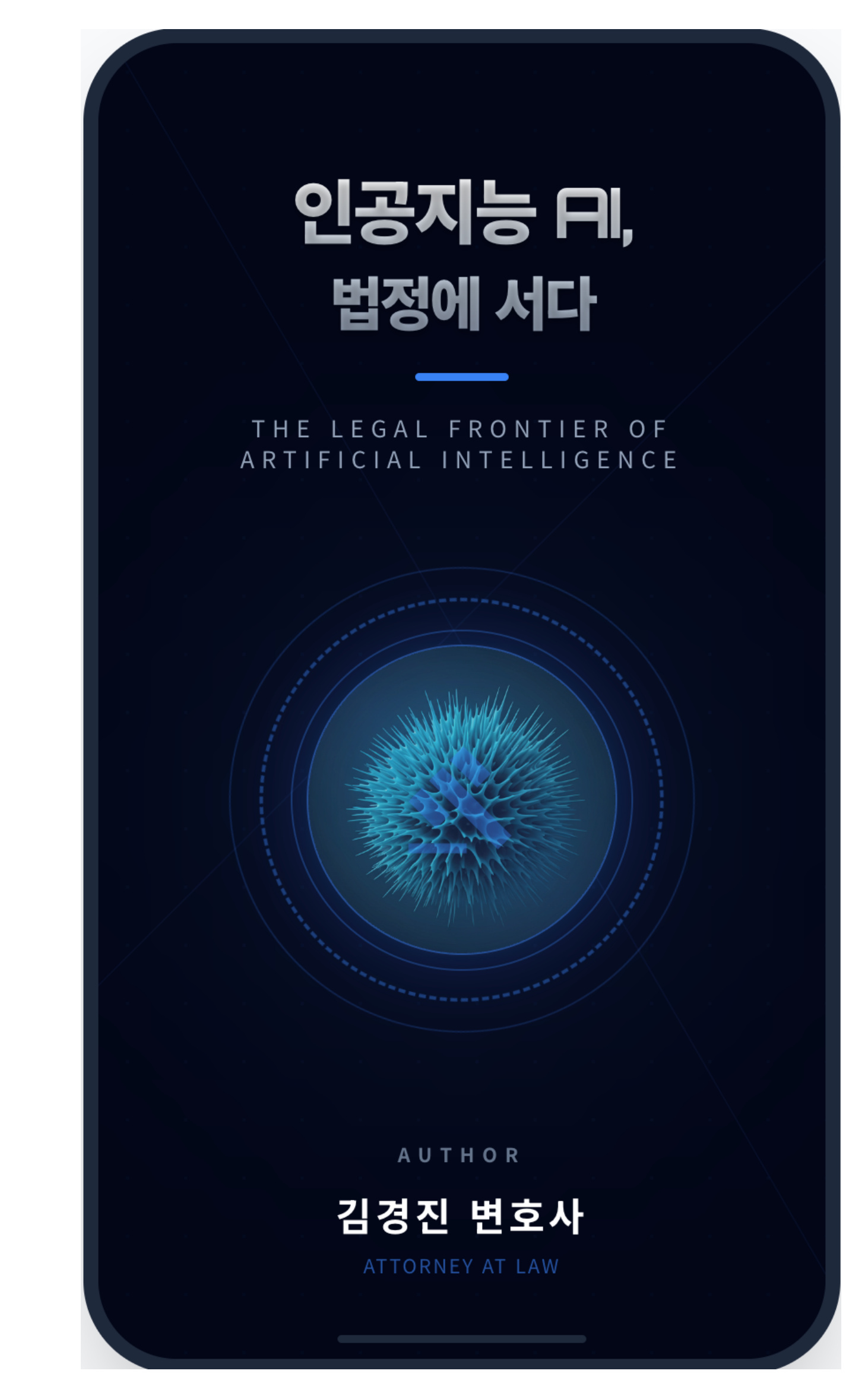
AI Library
A New Era of Life Sciences Opened by Artificial Intelligence
Structural Proteomics, Genomic Foundation Models, Autonomous Laboratories, and Global Governance
Kim Kyung-jin, Attorney at Law
This book is a research volume compiled with artificial intelligence. A human selected the materials and structured the work, while AI models drafted the sentences and cross-checked the facts.

AI Library
The Double Structure of Digital Sovereignty
Europe’s Departure from Palantir and the Chains of American Big Tech
Kim Kyung-jin, Attorney at Law
This is a record of 2026, when European intelligence agencies and defense ministries began removing analytics tools from America’s Palantir. It covers the replacement decisions made by France’s General Directorate for Internal Security (DGSI), Germany’s Federal Office for the Protection of the Constitution (BfV), and the Netherlands Ministry of Defense; the incident in which US export controls severed an ally’s ac…
New English Edition
Artificial Intelligence in Horticulture
Kim Kyung-jin, Attorney at Law
Across five chapters and ten sections, this book examines computer vision for crop diagnosis, harvesting robots and autonomous field systems, smart greenhouses and digital twins, precision irrigation and supply-chain quality control, high-throughput phenotyping, and predictive breeding.
New English Edition
Artificial Intelligence in Food Crop Agriculture
Kim Kyung-jin, Attorney at Law
Across six chapters and eighteen sections, the book examines digital agricultural infrastructure, remote sensing, crop diagnosis, yield forecasting, precision irrigation, genomics, molecular breeding, agricultural robotics, climate-smart agriculture, and global food security.
New English Edition
The Future of Forestry and Agroforestry
Kim Kyung-jin, Attorney at Law
Driven by Artificial Intelligence and Digital Innovation
Across five chapters and fifteen sections, the book follows satellites, drones, LiDAR, digital twins, forest-specific language models, wildfire and pest forecasting, forestry robotics, agroforestry, timber traceability, and forest carbon markets.
New English Edition
Smart Livestock Farming: AI Enters the Barn
Kim Kyung-jin, Attorney at Law
Sensors listen, cameras watch, and artificial intelligence helps farmers decide.
Across five chapters and fifteen sections, the book follows precision livestock farming from animal health and reproduction to robotic milking, virtual fencing, digital twins, methane reduction, welfare, and data ownership.

Table of Contents
Han Dong-hoon, Busan Buk-gu Gap: A Record of the 100 Days Before and After the Election (Mar. 26-Jul. 3, 2026)
Kim Kyung-jin
Table of Contents and 13 sections
From March 26 to July 3, 2026, this record follows the spring after expulsion, the Busan Buk-gu Gap by-election, victory as an independent, and the first bill submitted in the National Assembly.
Table of Contents
Artificial Intelligence and Medicine
Kim Kyung-jin, Attorney at Law
AI in clinical care, hospitals, education, and research
AI in medical imaging, risk prediction, treatment planning, hospital operations, education, and research, with patient safety, privacy, and accountability.















[AI Library] Chapter 9: Five Days as Party Chair: Putting Victims First
The Traces Han Dong-hoon Left on South Korea
Chapter 9: Five Days as Party Chair: Putting Victims First
Kim Kyung-jin
The Traces Han Dong-hoon Left Behind on South Korea
The Tmon-WeMakePrice Crisis and Han Dong-hoon's Swift Action
The Tmon-WeMakePrice Crisis and Han Dong-hoon's Swift Action
1 The Fifth Day as Party Chair
In July 2024, an unexpected bombshell exploded. Payment settlements for the online shopping platforms Tmon and WeMakePrice had stopped. At first, it seemed like mere discontent from some sellers. Yet within days, the crisis spiraled beyond control.
2 A One-Trillion-Won Domino Effect
The parent company of both platforms was Qoo10, headquartered in Singapore. Qoo10 was diverting funds for its logistics subsidiary's Nasdaq listing while delaying settlement payments owed to sellers. From October 2023 onwards, it gradually extended the settlement cycle, and by July 2024, the money flow had stopped entirely.
The Financial Supervisory Service found that unsettled payments ballooned from 213.4 billion won as of July 25 to 274.5 billion won by July 31, just six days later. Including transactions through June and July, projections suggested the total could reach one trillion won.
Damage spread like dominoes. Small artisans who supplied furniture, small travel agencies that listed travel packages, and small businesses that consigned gift cards all went unpaid. Consumers who had booked travel could neither obtain refunds nor depart. As payment processors and mobile payment companies withdrew from Tmon and WeMakePrice, refunds themselves became impossible. From July 24 onwards, victims began gathering outside the company offices.
In the lobby of WeMakePrice's headquarters in Seoul's Gangnam district, on a midsummer night, a young couple with a child in hand stood waiting. They had paid for a family vacation but could neither depart nor receive a refund. Beside them stood a prospective groom facing the loss of his honeymoon funds, and behind him was a small seller whose millions in supplier payments were frozen, unable to pay employees. Some wept. Others, exhausted, sat on the floor.
3 The First Message: "Victims Come First"
Han Dong-hoon chose the Tmon-WeMakePrice crisis as the subject of his first social media message after being elected party chair. He wrote: "I pledge that we will hold accountable those who bear responsibility and that the party and government will work together to find ways to minimize harm."
A politician's first message upon taking office usually thanks supporters or appeals for party unity. Han Dong-hoon placed victims' stories in that space instead. He looked first not to the party's circumstances but to the people's.
That order mattered. Among dozens of duties as party chair, the first issue he raised was people being deprived of their money. It was not calculation but constitution. From his days as a prosecutor, Han Dong-hoon's gaze had always turned toward victims. When he was Justice Minister, he resolved the "debt torture" suffered by victims of the Inmin Revolutionary Party case in a month; visiting a prison to verify directly the treatment of correctional officers came from the same source. Whenever someone was harmed, he would meet that person first and solve their problem first. That was Han Dong-hoon's way.
4 Government-Party Talks: Changing Structure Instead of Venting Anger
Words were not enough. Han Dong-hoon immediately activated the government-party consultation framework.
On August 6, the government and the People Power Party held a government-party coordination meeting in the National Assembly and announced institutional reform measures and victim relief plans related to the Tmon-WeMakePrice crisis. It had been only two weeks since taking office.
The core of the measures was threefold.
First, shortening settlement periods. E-commerce firms and electronic payment gateway operators agreed to drastically shorten settlement timelines from the current forty to sixty days. The intent was to change the structure itself that allowed platforms to hold sellers' money for dozens of days.
Second, adopting an escrow system. Rather than having the platform directly handle sale proceeds, a trusted third party such as a bank would hold payment funds and remit them to sellers only after goods were delivered. Rather than relying on the platform operator's conscience, the goal was to build a structure where no one could touch the funds in the first place.
Third, tightening regulation of payment gateway operators. The plan was to raise registration requirements and management standards for payment gateway operators and provide legal grounds for sanctions against those failing to comply.
Why Han Dong-hoon pushed these measures was clear. The young couple sitting in the WeMakePrice lobby in tears, the small business owner who had missed payday for employees, the engaged couple who had to abandon their honeymoon. The same thing could not happen again. Anyone can offer words of comfort to victims. Only those with power can tear apart and remake the system so the same harm is not repeated.
5 Gaps in Regulation and the Tears of the Vulnerable
This crisis revealed a shocking fact. Companies like Coupang that directly buy and sell goods are required by the Large Retail Trade Act to settle accounts within forty to sixty days, but open marketplaces like Tmon and WeMakePrice were classified as "telecommunications sales brokers" with no regulations whatsoever on settlement cycles.
The law had gaps. Those gaps poured out hundreds of billions of won in damages.
Han Dong-hoon followed the same pattern when he was Justice Minister. Creating a joint voice phishing task force, pushing to strengthen stalking prevention laws, promoting Jessica's Law,all were efforts to fill gaps in the system where the vulnerable were harmed but the law had not kept pace. Beyond catching perpetrators after crimes occurred, the goal was to build structures where the same crimes could not happen again. That was what Han Dong-hoon meant by "law for the vulnerable."
6 The Man Who Promised to Liquidate Assets, the Man Who Saw Victims First
Koo Young-bae, CEO of Qoo10, said he would "liquidate personal assets to resolve this." The next day, he filed for corporate rehabilitation. Ryu Hwa-hyun, CEO of WeMakePrice, said she would "focus first on customer refunds." Refunds never came. The words of platform operators scattered into thin air.
Han Dong-hoon made a different kind of promise. "I will hold accountable those who bear responsibility." Prosecutors raided CEO Koo Young-bae's residence and the headquarters of Tmon and WeMakePrice. "I will find ways to minimize harm." The government injected emergency management stabilization funds to small business owners, and comprehensive recurrence prevention measures emerged through government-party coordination.
Koo Young-bae saw himself first in the face of his company's crisis. Han Dong-hoon saw victims first in the face of others' crises. Five days into his role as party chair, at a moment when entrenching his political position could have come first, Han Dong-hoon stood with the people who sat weeping in the company lobby.
That is strong-strong weak-weak. Firm with the strong, warm with the weak. Holding platform operators accountable is strong-strong; filling systemic gaps for harmed consumers and struggling sellers is weak-weak. In his first test as party chair, Han Dong-hoon proved once again the principle he had upheld since his days as a prosecutor.
Kim Kyung-jin
Attorney · Former Member of the National Assembly · AI Policy Researcher
© 2026 Kim Kyung-jin. All rights reserved.