AI Library
The Age of Autonomous Scientific Discovery
Kim Kyung-jin, Attorney at Law
AI Scientists and Self-Driving Labs
This book follows how AI scientists and self-driving labs are changing the way science generates and verifies claims. It covers literature-based discovery, natural-language protocols translated into robot commands, multi-agent research systems, closed-loop laboratories, materials search, the verification gap, chains of evidence, research harnesses, journal ethics, and legal responsibility.
AI Library
A New Era of Life Sciences Opened by Artificial Intelligence
Structural Proteomics, Genomic Foundation Models, Autonomous Laboratories, and Global Governance
Kim Kyung-jin, Attorney at Law
This book is a research volume compiled with artificial intelligence. A human selected the materials and structured the work, while AI models drafted the sentences and cross-checked the facts.

AI Library
The Double Structure of Digital Sovereignty
Europe’s Departure from Palantir and the Chains of American Big Tech
Kim Kyung-jin, Attorney at Law
This is a record of 2026, when European intelligence agencies and defense ministries began removing analytics tools from America’s Palantir. It covers the replacement decisions made by France’s General Directorate for Internal Security (DGSI), Germany’s Federal Office for the Protection of the Constitution (BfV), and the Netherlands Ministry of Defense; the incident in which US export controls severed an ally’s ac…
New English Edition
Artificial Intelligence in Horticulture
Kim Kyung-jin, Attorney at Law
Across five chapters and ten sections, this book examines computer vision for crop diagnosis, harvesting robots and autonomous field systems, smart greenhouses and digital twins, precision irrigation and supply-chain quality control, high-throughput phenotyping, and predictive breeding.

New English Edition
Artificial Intelligence in Food Crop Agriculture
Kim Kyung-jin, Attorney at Law
Across six chapters and eighteen sections, the book examines digital agricultural infrastructure, remote sensing, crop diagnosis, yield forecasting, precision irrigation, genomics, molecular breeding, agricultural robotics, climate-smart agriculture, and global food security.
New English Edition
The Future of Forestry and Agroforestry
Kim Kyung-jin, Attorney at Law
Driven by Artificial Intelligence and Digital Innovation
Across five chapters and fifteen sections, the book follows satellites, drones, LiDAR, digital twins, forest-specific language models, wildfire and pest forecasting, forestry robotics, agroforestry, timber traceability, and forest carbon markets.

New English Edition
Smart Livestock Farming: AI Enters the Barn
Kim Kyung-jin, Attorney at Law
Sensors listen, cameras watch, and artificial intelligence helps farmers decide.
Across five chapters and fifteen sections, the book follows precision livestock farming from animal health and reproduction to robotic milking, virtual fencing, digital twins, methane reduction, welfare, and data ownership.
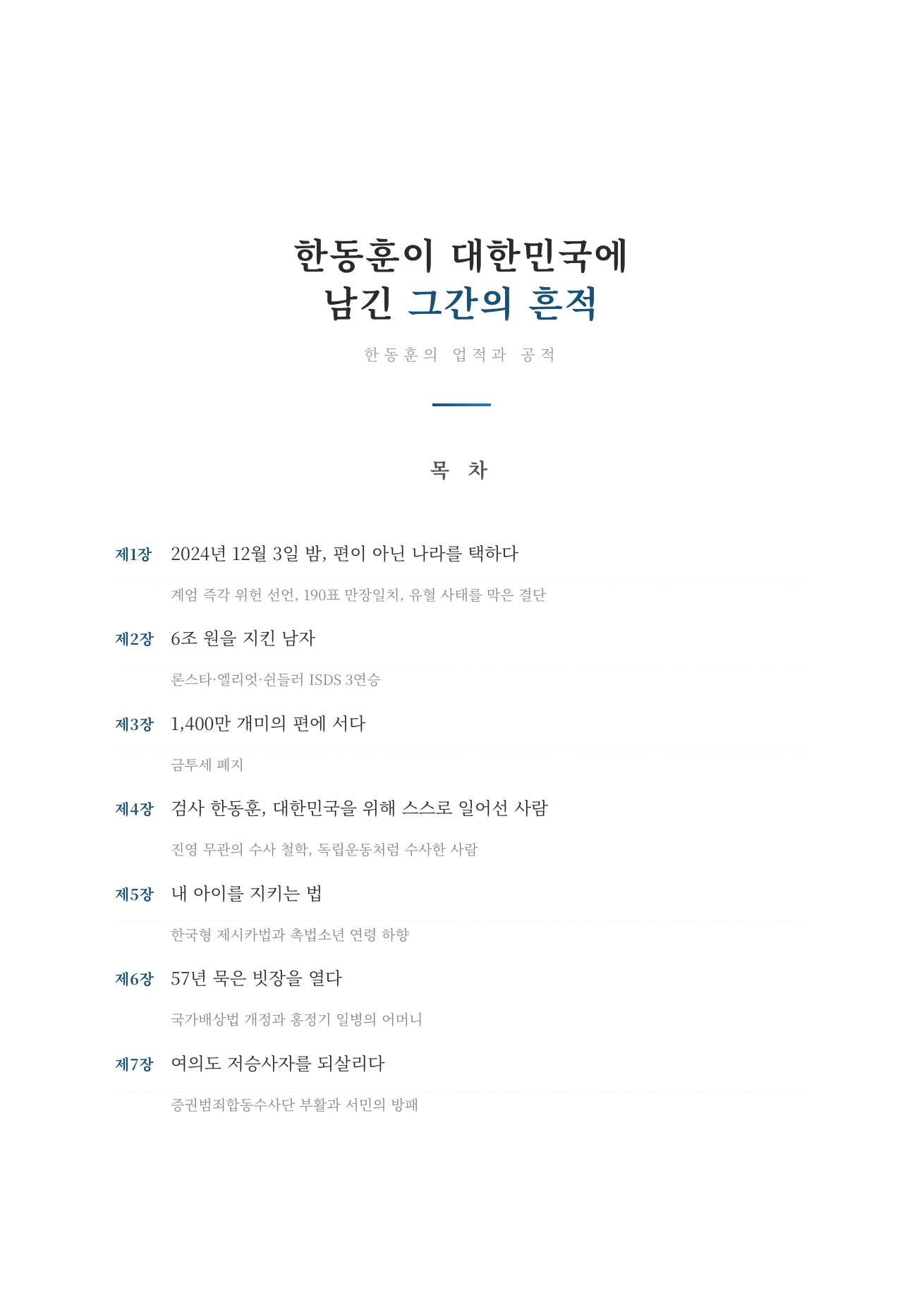
Table of Contents
Han Dong-hoon, Busan Buk-gu Gap: A Record of the 100 Days Before and After the Election (Mar. 26-Jul. 3, 2026)
Kim Kyung-jin
Table of Contents and 13 sections
From March 26 to July 3, 2026, this record follows the spring after expulsion, the Busan Buk-gu Gap by-election, victory as an independent, and the first bill submitted in the National Assembly.
Table of Contents
Artificial Intelligence and Medicine
Kim Kyung-jin, Attorney at Law
AI in clinical care, hospitals, education, and research
AI in medical imaging, risk prediction, treatment planning, hospital operations, education, and research, with patient safety, privacy, and accountability.





[AI Library] Chapter 21: Yasukuni and the Weight of History
Beyond the Glass Ceiling
Part 5: Power — Prime Minister Sanae Takaichi
Chapter 21: Yasukuni and the Weight of History
Kim Kyung-jin
In the heart of Tokyo, a twenty-minute walk north of the Imperial Palace, lies Yasukuni Shrine. In the spring, when the cherry blossoms are in full bloom, it is one of Japan’s most beautiful sights, but it is also where the nation’s darkest unresolved history rests. Tourists take photos in front of the grand torii gate. However, for those who understand its significance, Yasukuni is more than just a shrine. It is the crystallization of the questions Japan has asked itself for the past 150 years: What did we fight for? Was that struggle justified? And how should we remember the dead?
Yasukuni Shrine was founded in 1869 by Emperor Meiji. Its original name was Tokyo Shokonsha (招魂社). Its purpose was clear: to honor the spirits of soldiers who lost their lives in the process of overthrowing the Shogunate and establishing a new nation centered on the Emperor. In 1879, it was renamed Yasukuni. 'Yasu' (靖) means to make peaceful, and 'Kuni' (国) means country. A shrine to bring peace to the nation. While the name speaks of peace, the history enshrined here is anything but peaceful.
Currently, the spirits of approximately 2,466,000 souls are enshrined at Yasukuni. They range from soldiers who died in the civil wars of the Meiji Restoration to those who fell in the First Sino-Japanese War, the Russo-Japanese War, the Second Sino-Japanese War, and the Pacific War. Among them are Koreans and Taiwanese. During the colonial era, those who were conscripted or mobilized and lost their lives were enshrined here without their own consent or that of their families. This in itself is a complex historical wound. However, the core of the international controversy surrounding Yasukuni lies elsewhere.
October 17, 1978. On that day, a quiet but historic event took place at Yasukuni Shrine. Nagayoshi Matsudaira, the new Chief Priest (Guji) who had taken office in July of that year, secretly enshrined the tablets of 14 individuals convicted as Class A war criminals at the Tokyo Trials. These included seven who were executed, such as Hideki Tojo, Koki Hirota, and Iwane Matsui, and seven others who died of illness in prison or during the trials, such as Kiichiro Hiranuma. Matsudaira held a view of history that completely rejected the Tokyo Trials themselves, arguing that it was merely a case of the victors unilaterally judging the losers. The enshrinement was carried out in secret, and it only became officially known the following spring through a report in the Asahi Shimbun.
The repercussions were immediate. Most shockingly, the reaction came from Emperor Showa of Japan. Having visited Yasukuni every year from 1945 to 1975, Emperor Showa never set foot in the shrine again after the enshrinement of the Class A war criminals. The reason was revealed after the Emperor’s death in 2006, when a memo by Tomohiko Tomita, then the Grand Steward of the Imperial Household Agency, was made public. The memo contained the following: "I stopped visiting because Class A war criminals were enshrined. That is my heart." The Emperor of Japan himself had refused to visit because of the presence of the enshrined Class A war criminals. Emperor Akihito and the current Emperor Naruhito also do not visit Yasukuni.
However, successive Prime Ministers of Japan have acted differently. Prime Minister Yasuhiro Nakasone pushed through an official visit on August 15, the anniversary of the end of the war, in 1985. While a policy of restraint followed due to strong protests from China, Prime Minister Junichiro Koizumi visited Yasukuni six times between 2001 and 2006. Each visit drew strong protests from South Korea and China. After Koizumi, no sitting Prime Minister visited Yasukuni on August 15. Shinzo Abe visited as Prime Minister on December 26, 2013, but that was not the anniversary of the end of the war. Nineteen years have passed since then.
Sanae Takaichi is one of the politicians who has shown the most consistent attitude toward Yasukuni throughout her political career. She has visited Yasukuni almost without fail during the Spring and Autumn Rituals, as well as on August 15. Even after being appointed as a cabinet minister for the first time in the first Abe cabinet in 2006, her attitude did not change. While visiting Yasukuni as a cabinet minister was an act that heightened diplomatic sensitivity, she did not mind. On August 15, 2007, she was the only member of the Abe cabinet to visit Yasukuni. Prime Minister Abe himself did not visit that day.
During the LDP leadership election process, questions about visiting Yasukuni were repeated. When asked if she would continue to visit even after becoming Prime Minister, her answer was always the same: "It is only natural to pay respect to those who fought for their country. I will visit at an appropriate time even after becoming Prime Minister." It was an unyielding response.
After becoming Prime Minister in October 2025, external pressure regarding her Yasukuni visits intensified. During the Autumn Ritual in October of that year, Takaichi did not visit in person, instead only offering 'Tamagushi-ryo' (玉串料), a ritual offering fee. Once she became Prime Minister, she could not ignore the diplomatic repercussions. Relations with South Korea and China were important, and the United States had also quietly requested restraint. Advice from the Prime Minister's Office and the Ministry of Foreign Affairs played a role. However, she had not abandoned the resolve she held in her heart.
August 15, 2025. It was the 80th anniversary of the end of the war. On that day, Prime Minister Sanae Takaichi paid an official visit to Yasukuni Shrine. It was the first time in 19 years, since Prime Minister Koizumi, that a sitting Prime Minister had visited Yasukuni on August 15. In the morning, with a calm expression, she bowed twice in front of the main hall, clapped twice, and bowed once more. After the sound of reporters' camera shutters subsided, she spoke briefly: "I paid my respects to those who sacrificed their lives for the country and prayed with all my heart that the horrors of war would never be repeated."
The reaction was immediate. China’s Ministry of Foreign Affairs issued a strong statement of protest. Foreign Minister Wang Yi warned that she had "crossed a red line." State-run media defined the visit as "an act of rubbing salt into the wounds of the people of Asia." On the same day, the South Korean Ministry of Foreign Affairs summoned the Japanese Ambassador to Korea to express strong regret. "The Japanese Prime Minister’s visit to Yasukuni Shrine runs counter to efforts for genuine reflection on past colonial rule and aggression, and we express our deepest regret."
Takaichi remained unshaken. She repeated her position that the issue of Class A war criminals is "a matter concluded under domestic legal procedures" and that "for a foreign country to demand that one not visit a specific shrine is an interference in domestic affairs." While the status of war criminals determined at the Tokyo Trials is a judgment under international law, the Japanese government had already established a position in 1952—when Japan accepted the San Francisco Peace Treaty and recovered its independence—that Class A war criminals were no longer considered war criminals under domestic law. She stands on this logic. Her argument is that fighting on the battlefield was done according to the state’s orders at the time, and mourning those who gave their lives for the country is natural in any nation.
To South Korean readers, however, Yasukuni carries a far more complex meaning. First, the Class A war criminals enshrined here are, to Korea, war criminals who led the war of aggression. Hideki Tojo was the wartime Prime Minister who decided on the Pacific War, and under his orders, Koreans were dragged to battlefields and munitions factories. For a Japanese Prime Minister to visit a space that honors them as heroes is perceived by South Korea and China as an act of justifying that aggression.
Furthermore, Yasukuni enshrines Korean and Taiwanese victims without their own or their families' consent. The South Korean government and the bereaved families have been requesting for decades that their tablets be separated from Yasukuni, but the shrine side refuses, stating that "according to Shinto logic, once a divine spirit is enshrined, it cannot be separated." The Korean youths had no choice in life, and they have no choice in death.
To understand Takaichi’s logic, one must understand the view of history held by Japanese conservatives. To them, visiting Yasukuni is the final courtesy that the living show to the dead. They argue that mourning the dead cannot be wrong. They claim that the responsibility for the war should have been borne by the surviving leaders, and that the soldiers who died fighting under orders should be mourned regardless of the right or wrong of the war. This logic carries some weight. Dead soldiers are mourned in every country. South Korea has the Seoul National Cemetery, and the United States has Arlington National Cemetery.
However, there is a reason why Yasukuni differs from the national cemeteries of other countries. Within the grounds of Yasukuni Shrine, the war museum called Yushukan (遊就館) contains exhibits that depict the Pacific War as Japan’s legitimate war of self-defense. There are also descriptions of it being a holy war for the liberation of Asian nations from colonial rule. This museum is inseparable from Yasukuni Shrine. When a Prime Minister visits Yasukuni, they are paying respect in the name of the state to a space that contains this view of history. This is the structural reason why South Korea and China are enraged.
Voices calling for the separate enshrinement (bunshi) of Class A war criminals are also consistently raised within Japan. The logic is that the problem of visits would be resolved if only the Class A war criminals were moved elsewhere. Some moderates within the Liberal Democratic Party also support this. However, Yasukuni refuses. The shrine's position is that it is impossible to separate enshrined spirits according to Shinto doctrine. Ultimately, it is a matter for a politician to decide, but Takaichi has no intention of making that decision.
Does Sanae Takaichi know the weight of it? She likely does. However, she reads that weight differently. To her, visiting Yasukuni is not a matter of diplomatic consideration but a promise between the state and the individual. The final courtesy the state must keep to those who gave their lives under its orders. She believes that abandoning that courtesy because of foreign scrutiny would be a betrayal of the nation's own citizens by the state.
Understanding her does not mean agreeing with her. Her logic is consistent. It has not wavered once in over 30 years. However, the result of that consistency repeatedly leads to deep wounds in South Korea and China. In front of Yasukuni, the past and present of Japanese politics meet, and clashes over the interpretation of history repeat. The cherry blossoms bloom and fall every year. But the weight of history does not fall so easily.
A Prime Minister visits a shrine that even the Emperor refuses to visit. That paradox is the essence of the space called Yasukuni. Sanae Takaichi has chosen to plunge into that paradox. And that choice has once again built an invisible wall between Japan and its neighbors.
References
- Issue of Enshrinement of Class A War Criminals (Wikipedia): https://ja.wikipedia.org/wiki/A%E7%B4%9A%E6%88%A6%E7%8A%AF%E5%90%88%E7%A5%80%E5%95%8F%E9%A1%8C - Yasukuni Shrine Issue (Wikipedia): https://ja.wikipedia.org/wiki/%E9%9D%96%E5%9B%BD%E7%A5%9E%E7%A4%BE%E5%95%8F%E9%A1%8C - Reason for Emperor Showa's Refusal to Visit (Nikkei Shimbun): https://www.nikkei.com/article/DGXLASDG08H0S_Y4A900C1CR8000/ - The Path to Yasukuni and the Enshrinement of War Criminals (nippon.com): https://www.nippon.com/ja/in-depth/a02404/ - Report on China's Reaction (Record China): https://www.recordchina.co.jp/b967039-s12-c80-d0189.html - Prime Minister Takaichi Mentions Preparing the Environment for Yasukuni Visits (Nikkei Shimbun): https://www.nikkei.com/article/DGXZQOUA0841J0Y6A200C2000000/ - Tokyo Shimbun Discussion on Separate Enshrinement of Yasukuni: https://www.tokyo-np.co.jp/article/439996