

AI Library
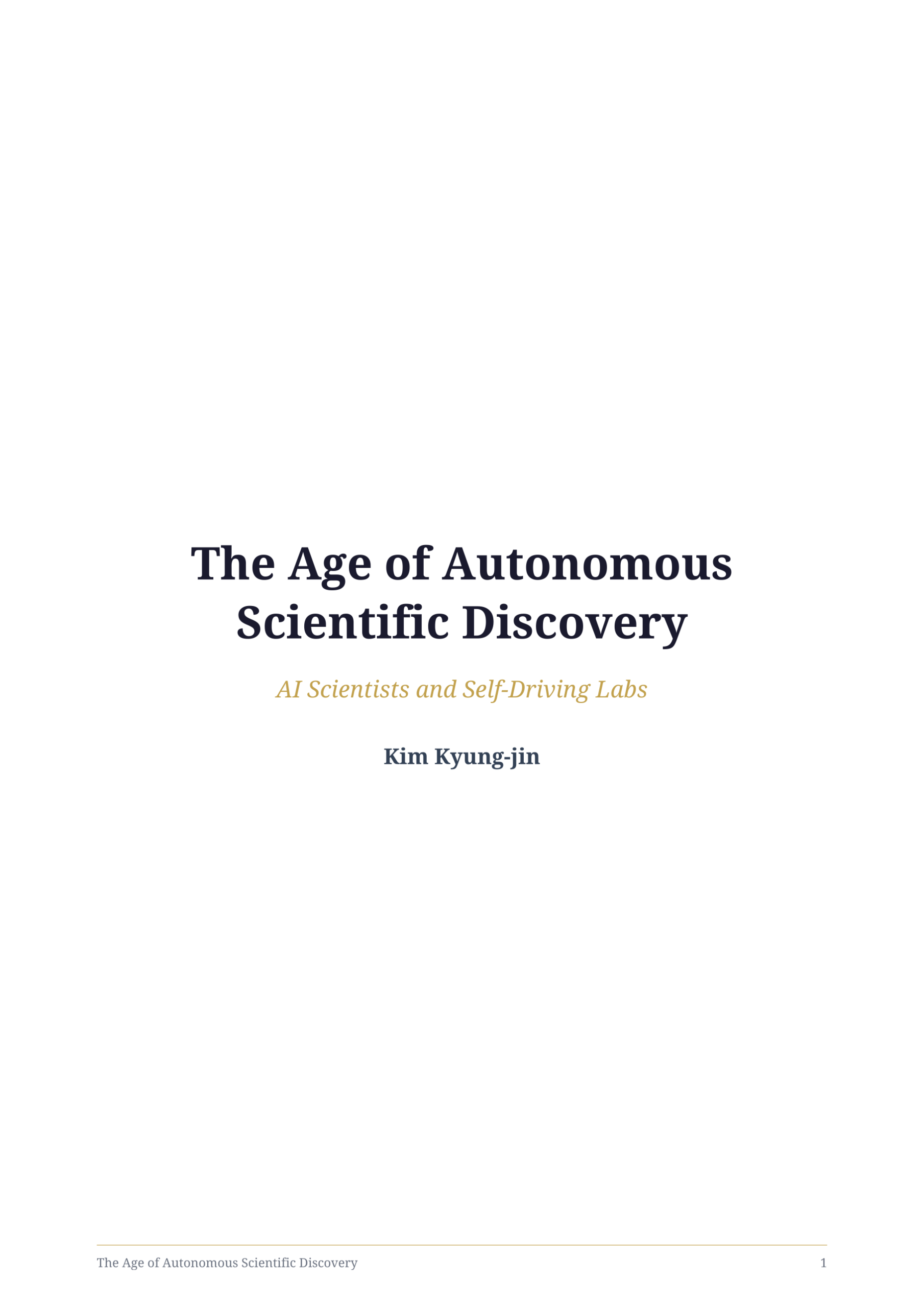
The Age of Autonomous Scientific Discovery
Kim Kyung-jin, Attorney at Law
AI Scientists and Self-Driving Labs
This book follows how AI scientists and self-driving labs are changing the way science generates and verifies claims. It covers literature-based discovery, natural-language protocols translated into robot commands, multi-agent research systems, closed-loop laboratories, materials search, the verification gap, chains of evidence, research harnesses, journal ethics, and legal responsibility.
AI Library
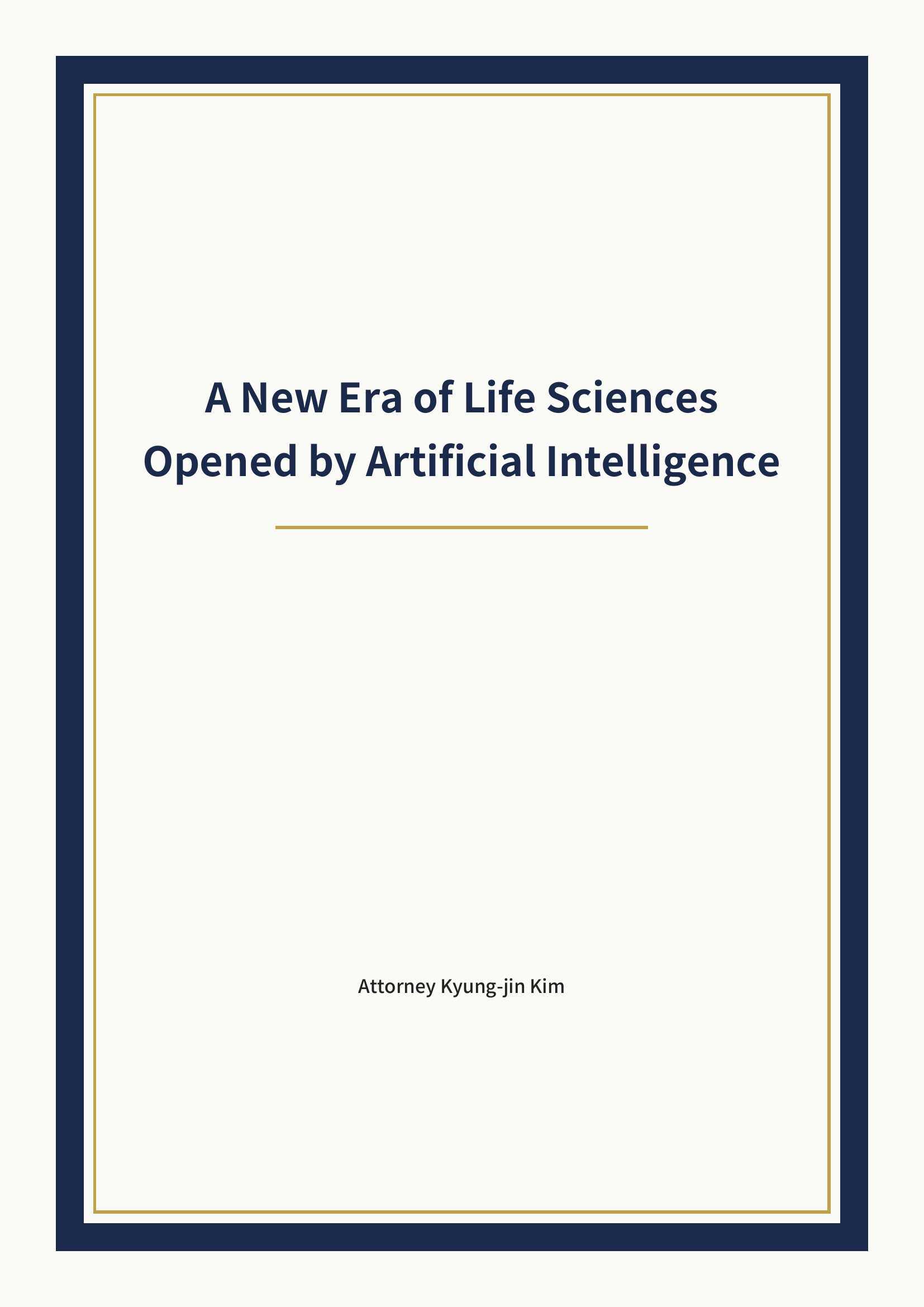
A New Era of Life Sciences Opened by Artificial Intelligence
Structural Proteomics, Genomic Foundation Models, Autonomous Laboratories, and Global Governance
Kim Kyung-jin, Attorney at Law
This book is a research volume compiled with artificial intelligence. A human selected the materials and structured the work, while AI models drafted the sentences and cross-checked the facts.

AI Library
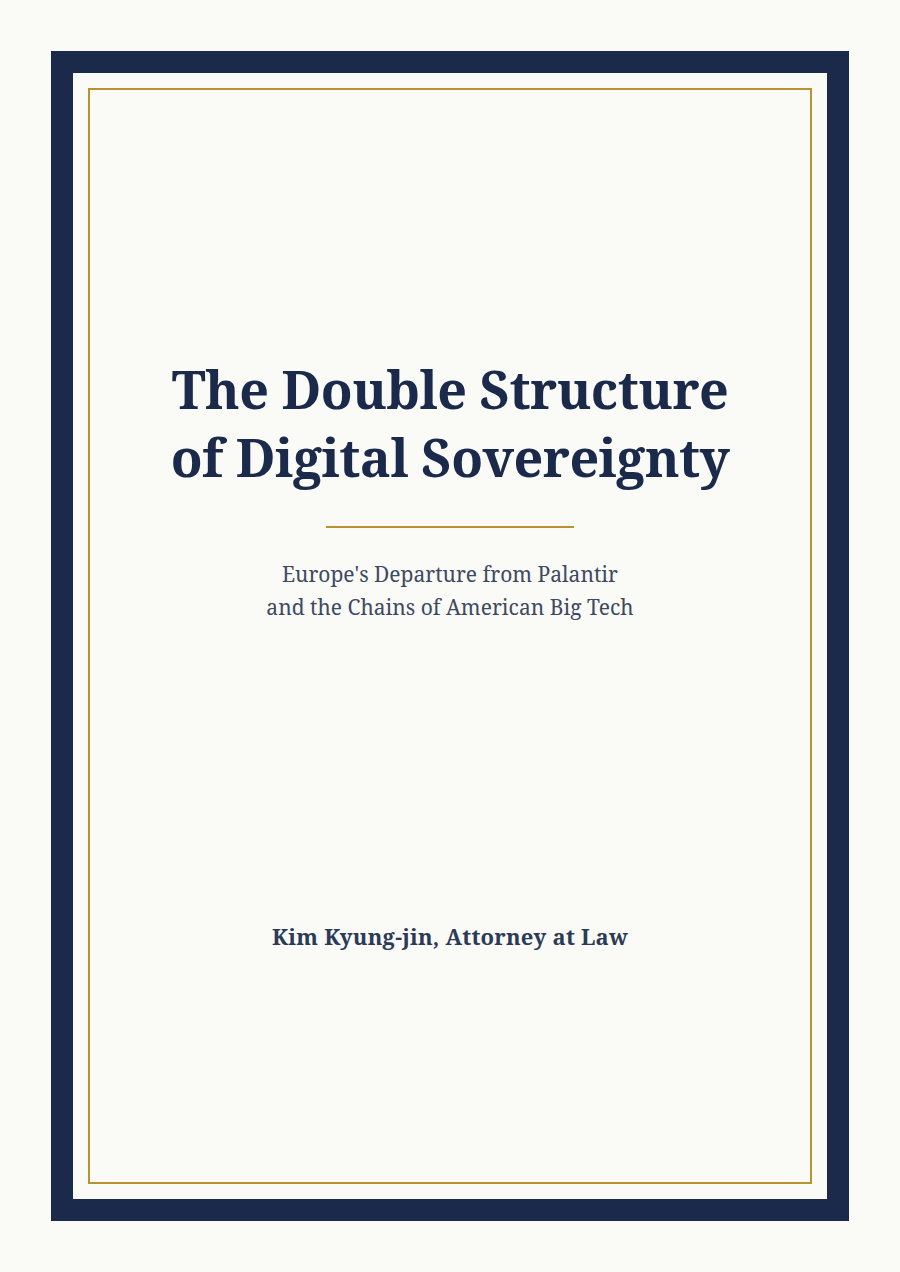
The Double Structure of Digital Sovereignty
Europe’s Departure from Palantir and the Chains of American Big Tech
Kim Kyung-jin, Attorney at Law
This is a record of 2026, when European intelligence agencies and defense ministries began removing analytics tools from America’s Palantir. It covers the replacement decisions made by France’s General Directorate for Internal Security (DGSI), Germany’s Federal Office for the Protection of the Constitution (BfV), and the Netherlands Ministry of Defense; the incident in which US export controls severed an ally’s ac…

New English Edition
Artificial Intelligence in Horticulture
Kim Kyung-jin, Attorney at Law
Across five chapters and ten sections, this book examines computer vision for crop diagnosis, harvesting robots and autonomous field systems, smart greenhouses and digital twins, precision irrigation and supply-chain quality control, high-throughput phenotyping, and predictive breeding.

New English Edition
Artificial Intelligence in Food Crop Agriculture
Kim Kyung-jin, Attorney at Law
Across six chapters and eighteen sections, the book examines digital agricultural infrastructure, remote sensing, crop diagnosis, yield forecasting, precision irrigation, genomics, molecular breeding, agricultural robotics, climate-smart agriculture, and global food security.
New English Edition
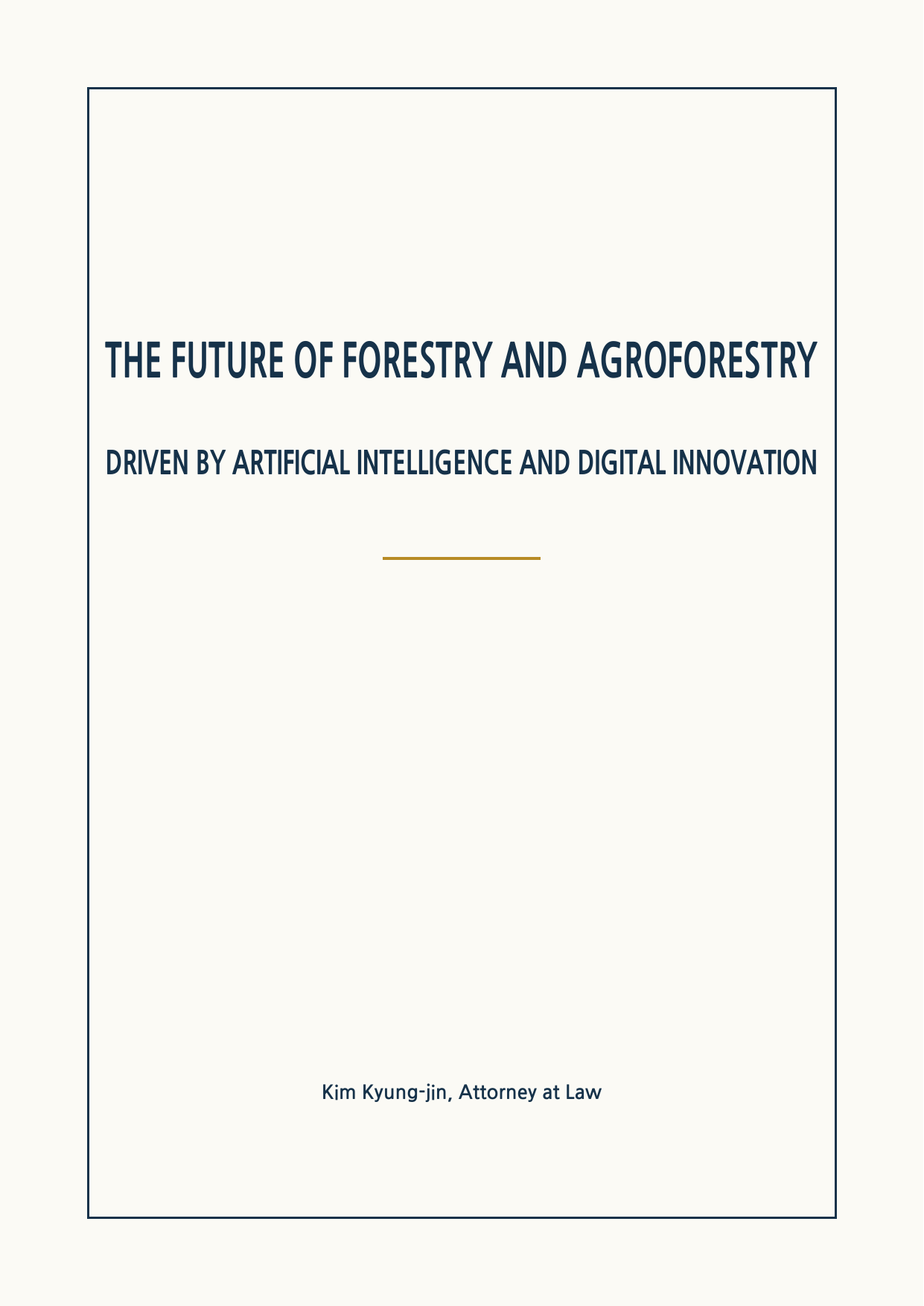
The Future of Forestry and Agroforestry
Kim Kyung-jin, Attorney at Law
Driven by Artificial Intelligence and Digital Innovation
Across five chapters and fifteen sections, the book follows satellites, drones, LiDAR, digital twins, forest-specific language models, wildfire and pest forecasting, forestry robotics, agroforestry, timber traceability, and forest carbon markets.

New English Edition
Smart Livestock Farming: AI Enters the Barn
Kim Kyung-jin, Attorney at Law
Sensors listen, cameras watch, and artificial intelligence helps farmers decide.
Across five chapters and fifteen sections, the book follows precision livestock farming from animal health and reproduction to robotic milking, virtual fencing, digital twins, methane reduction, welfare, and data ownership.

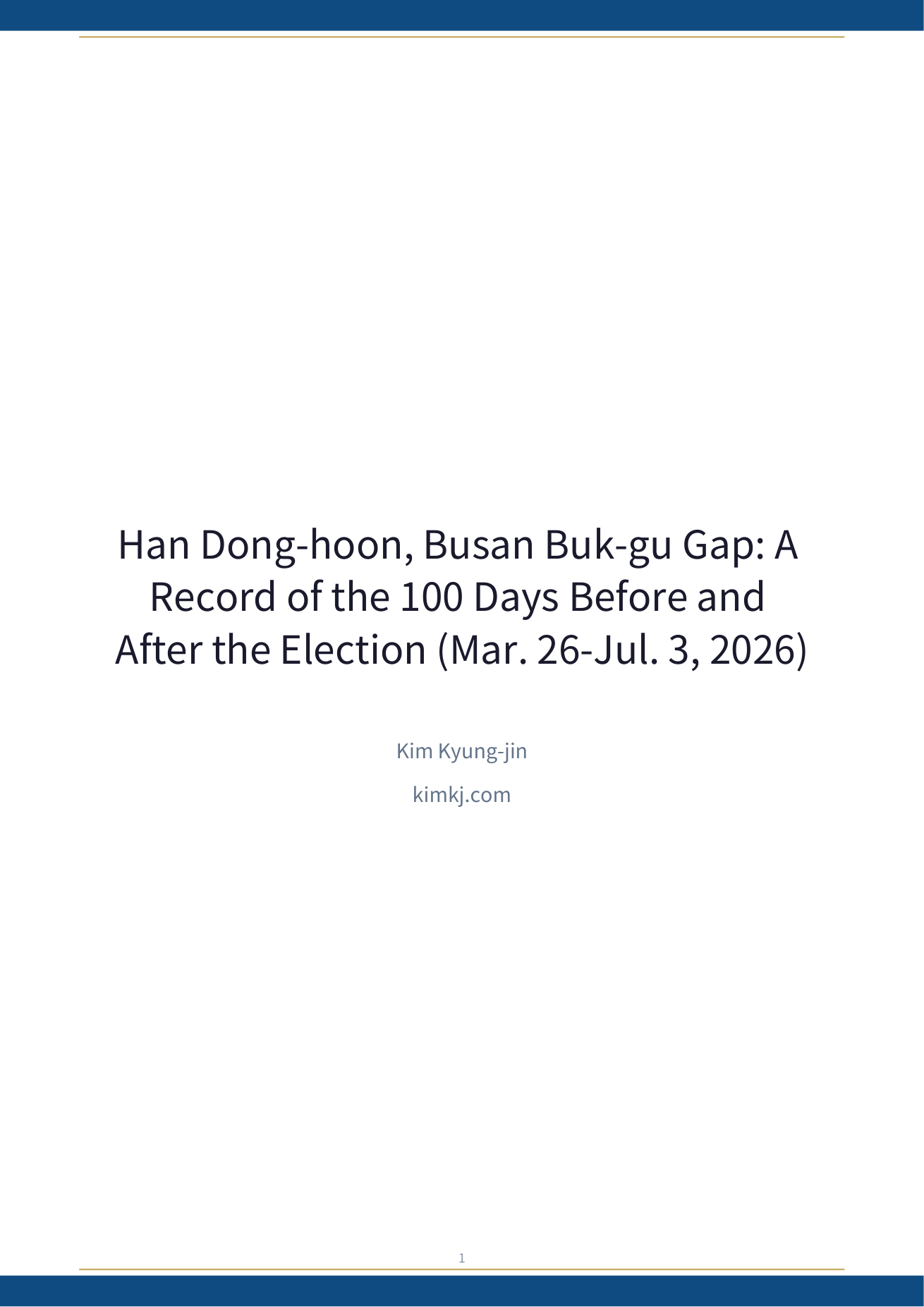
Table of Contents
Han Dong-hoon, Busan Buk-gu Gap: A Record of the 100 Days Before and After the Election (Mar. 26-Jul. 3, 2026)
Kim Kyung-jin
Table of Contents and 13 sections
From March 26 to July 3, 2026, this record follows the spring after expulsion, the Busan Buk-gu Gap by-election, victory as an independent, and the first bill submitted in the National Assembly.
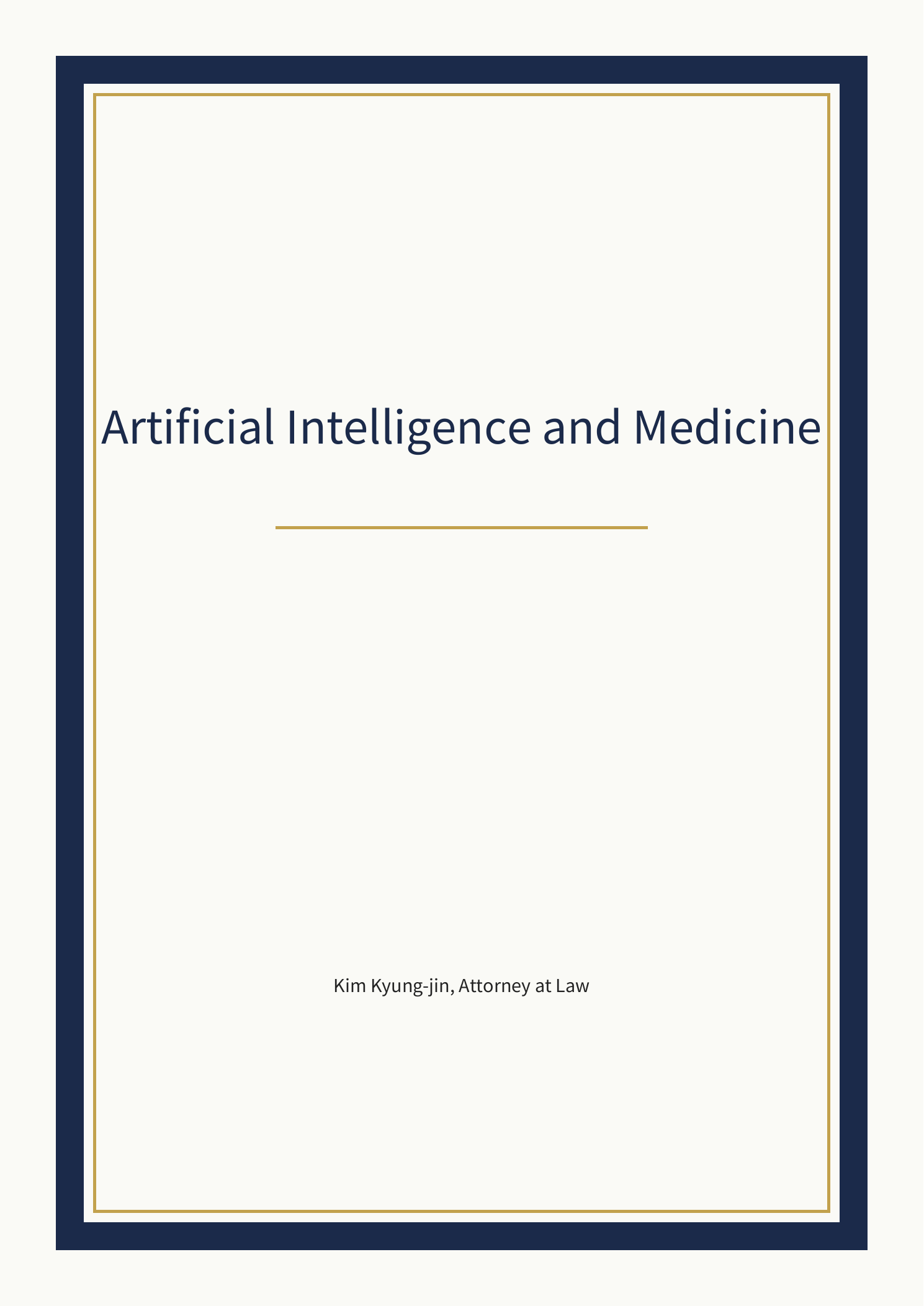
Table of Contents
Artificial Intelligence and Medicine
Kim Kyung-jin, Attorney at Law
AI in clinical care, hospitals, education, and research
AI in medical imaging, risk prediction, treatment planning, hospital operations, education, and research, with patient safety, privacy, and accountability.



































[AI Library] Appendix 1: Sanae Takaichi Timeline
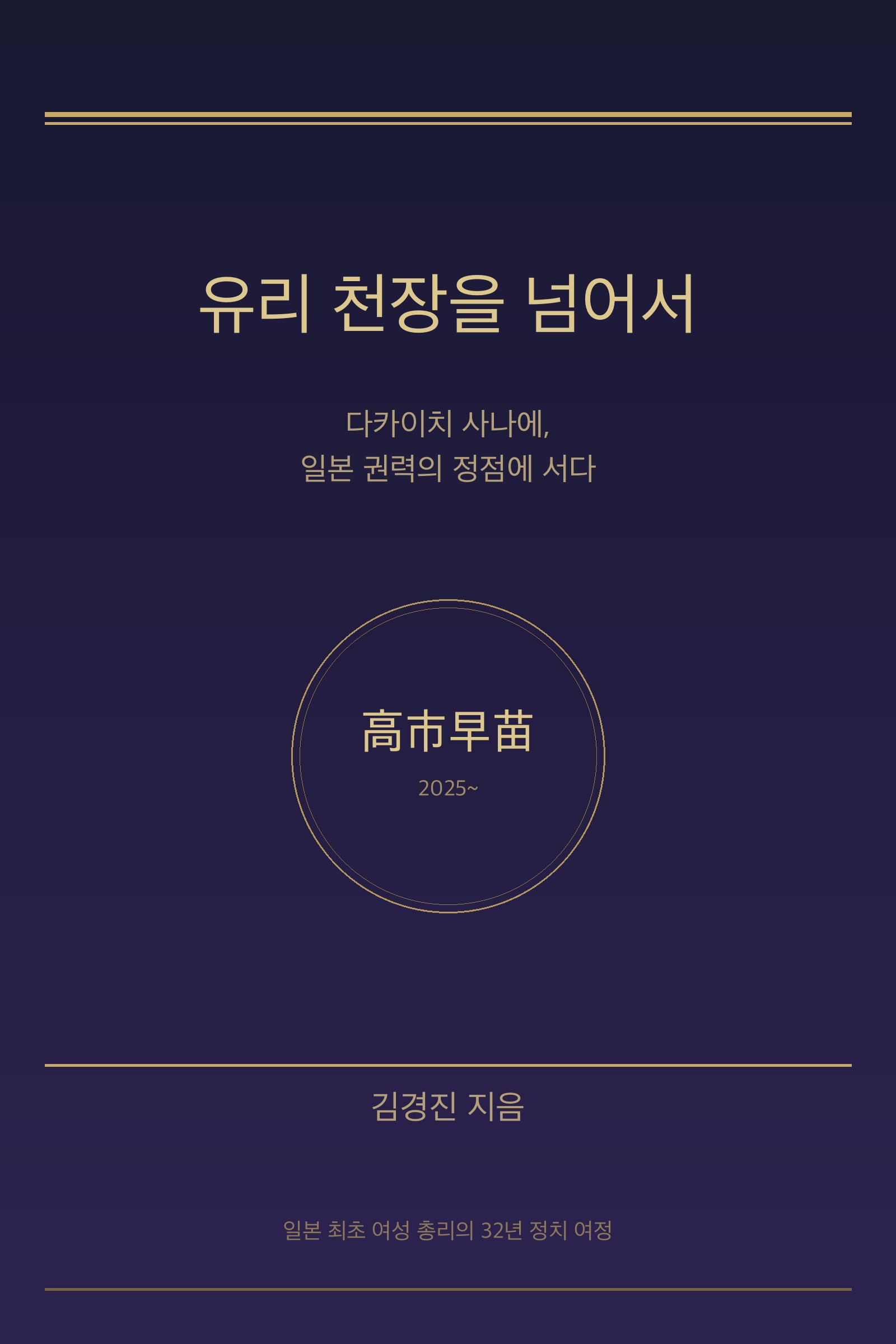
Beyond the Glass Ceiling
Appendix 1: Sanae Takaichi Timeline
Kim Kyung-jin
This timeline organizes the major events in the life of Sanae Takaichi (高市早苗) by year, from her birth to the present in 2026. It covers her upbringing prior to entering politics, her career as a member of the Diet, her ministerial roles, her challenges in the LDP presidential elections, and the process leading to her inauguration as Prime Minister, with brief notes on the background and significance of each event.
Before Entering Politics (1961–1992)
March 7, 1961 (Age 0): Born in Kashihara City (橿原市), Nara Prefecture (奈良県). Her father was a salesman for a machinery parts company under the Toyota umbrella, and her mother was a Nara Prefecture police officer. She was the eldest daughter with two younger brothers. During her childhood, she grew up moving to various regions within Nara Prefecture due to her father’s job transfers, an experience she recalls as having fostered her independence and adaptability.
1976 (Age 15): Entered Nara Prefectural Unebi High School (畝傍高等学校). A prestigious local school boasting a long history and tradition, she endured a long-distance commute for three years that took approximately three hours one way, totaling six hours round-trip. She later reflected in interviews that "the physical strength and perseverance of those days became the foundation for my political activities."
1979 (Age 18): Entered the Department of Business Mathematics in the Faculty of Business Administration at Kobe University (神戸大学). During her time there, she enjoyed heavy metal music and played the drums in the light music club. She also owned a motorcycle (Z400GP), leading a free-spirited student life. This image is often recalled in contrast to her later persona as a conservative politician.
1983 (Age 22): Graduated from the Department of Business Mathematics, Faculty of Business Administration, Kobe University. After consecutive failed attempts to join major corporations such as Nikkei Inc., she decided to take the entrance examination for the Matsushita Institute of Government and Management. This decision became the direct catalyst for her entry into politics.
April 1984 (Age 23): Entered the Matsushita Institute of Government and Management (松下政経塾) as a member of the 5th class. At this institution for training future leaders founded by Panasonic founder Konosuke Matsushita (松下幸之助), she studied politics, economics, history, and philosophy while receiving a research stipend. During her enrollment, she also concurrently served as an assistant at the Junior College of Japan Economics (日本経済短期大学).
1987 (Age 26): Dispatched to the U.S. Congress as a Congressional Fellow through a Matsushita Institute exchange program. Assigned to the office of Democratic Representative Patricia Schroeder, she gained direct experience in actual diplomatic fields, such as the U.S.-Japan Semiconductor Agreement and trade frictions. This experience became a key foundation for her later growth as an expert in trade and economic security.
1989 (Age 28): Completed her studies at the Matsushita Institute of Government and Management. She debuted as a TV caster for current affairs programs on TV Asahi, developing her communication skills by explaining politics and economics through the media. She also served as a full-time faculty member at the Junior College of Japan Economics.
1992 (Age 31): Published her first book, 『アメリカの「女性大国」神話を斥ける』 (Rejecting the Myth of America as a "Superpower for Women"). Based on her experience interviewing female politicians in the U.S. Congress, the work publicly presented her independent view of women in politics as early as her early 30s. In the same year, she ran as an independent in the Nara Prefecture constituency for the House of Councillors but was defeated.
Early Career as a Member of the Diet (1993–2005)
July 18, 1993 (Age 32): 40th House of Representatives General Election. Running as an independent in the Nara At-Large District (全県区), she was elected for the first time with the highest number of votes. She drew national attention as a rising star in a historic election that saw the collapse of the 1955 System and the end of 38 years of single-party rule by the LDP.
1994 (Age 33): Joined the Liberal Party (自由党) led by Hiroshi Kakizawa (柿澤弘治). She continued her political career in non-LDP circles, moving through the Liberal Reformed Alliance and the New Frontier Party (New Frontier Party (新進党)).
October 1996 (Age 35): 41st House of Representatives General Election. Running as an official candidate for the New Frontier Party in Nara's 1st District (奈良1区), she was re-elected. This was the first election held under the new parallel system of single-seat constituencies and proportional representation.
December 1996 (Age 35): Joined the Liberal Democratic Party (Liberal Democratic Party (自由民主党)) after leaving the New Frontier Party. She has remained a member of the LDP ever since.
1998 (Age 37): Appointed Parliamentary Vice-Minister for International Trade and Industry in the Obuchi Cabinet. This was a period where she began building significant policy expertise in trade and industrial sectors.
2000 (Age 39): 42nd House of Representatives General Election. Won a third term via the Kinki (近畿) proportional representation block.
2002 (Age 41): Appointed Senior Vice-Minister of Economy, Trade and Industry (経済産業副大臣) in the Koizumi Reshuffled Cabinet. A period for gaining deep practical experience in economic and trade policy.
2003 (Age 42): 43rd House of Representatives General Election. Lost to Sumio Mabuchi (馬淵澄夫) of the Democratic Party of Japan in Nara's 1st District and failed to secure a seat through proportional representation, leading to a complete defeat. She subsequently served as a professor in the Faculty of Economics at Kindai University (近畿大学), continuing her research and writing. She was known to have never lost her political will even during her time out of office.
2004 (Age 43): Married Taku Yamamoto (山本拓), an LDP member of the House of Representatives. Their marriage became a hot topic as a "zero-day dating marriage."
September 11, 2005 (Age 44): 44th House of Representatives General Election (Postal Dissolution, Koizumi Theater). Deployed as an LDP "assassin candidate" in Nara's 2nd District (奈良2区). She defeated Taku Minoru (滝実), who had left the LDP, and was elected for a 4th term, returning to national politics after three years. As a candidate selected through the strong trust of Koizumi, it was a race that drew nationwide attention.
Ministerial Career (2006–2024)
September 26, 2006 (Age 45): Inauguration of the first Shinzo Abe (安倍晋三) Cabinet. She entered the cabinet for the first time as Minister of State for Special Missions in the Cabinet Office (Okinawa and Northern Territories Affairs, Science and Technology Policy, Declining Birthrate and Gender Equality, Food Safety, and Innovation). It was a broad initial ministerial role covering multiple areas of responsibility.
August 15, 2007 (Age 46): Visited Yasukuni Shrine (靖国神社) in her capacity as a cabinet minister on the anniversary of the end of World War II. She was the only minister in the cabinet at the time to visit. She stated her conviction that "it is natural to pay respect to those who died fighting for their country," a stance she has consistently maintained to this day.
September 2007 (Age 46): Prime Minister Abe resigned due to deteriorating health, leading to the collapse of the first Abe Cabinet. Her first term in the cabinet ended.
2008 (Age 47): Served again as Senior Vice-Minister of Economy, Trade and Industry in the Taro Aso (麻生太郎) Cabinet.
June 2008 (Age 47): Enactment of the Act on Establishment of Enhanced Environment for Youth's Safe and Secure Internet Use (青少年インターネット環境整備法). Takaichi led this legislation as the chairperson of the LDP Special Committee on Youth.
August 30, 2009 (Age 48): 45th House of Representatives General Election. Lost in the Nara 2nd District single-seat constituency but was re-elected via the Kinki proportional block (5th term). This was the election where the LDP suffered a major defeat and the DPJ took power.
2011 (Age 50): Withdrew from the Seiwa Policy Research Group (清和政策研究会, the Abe faction) and declared herself non-partisan. Interpreted as a strategic decision to support Shinzo Abe, she subsequently built a unique position as a conservative politician who transcended factional lines.
September 2012 (Age 51): Fully supported Shinzo Abe in the LDP presidential election by serving as one of his recommenders.
December 16, 2012 (Age 51): Elected for a 6th term in Nara's 2nd District in the 46th House of Representatives General Election. The LDP won a landslide victory, returning to power from the DPJ.
Late December 2012 (Age 51): Appointed as the first female Chairperson of the LDP Policy Research Council (政務調査会長). This was the first instance in LDP history where a woman was appointed as the party's chief policy official.
September 3, 2014 (Age 53): Appointed as Minister of Internal Affairs and Communications (総務大臣) in the Second Abe Reshuffled Cabinet (18th Minister). She was the first woman to serve in this role. This marked the start of her first term as MIC Minister.
February 8, 2016 (Age 54): During a House of Representatives Budget Committee session, she gave a response indicating that she would not rule out the possibility of suspending broadcasting waves based on violations of Article 4 of the Broadcasting Act. This caused a major stir in media and legal circles over concerns regarding the infringement of freedom of expression, and the term "Takaichi Phobia" began to circulate in broadcasting circles. Takaichi herself explained that she was responding based on general legal theory.
July 19, 2017 (Age 56): Divorced Taku Yamamoto. The official reason was "differences in political positions."
August 2017 (Age 56): Stepped down as MIC Minister following a cabinet reshuffle. Her first term as MIC Minister lasted approximately 1,043 days.
September 11, 2019 (Age 58): Re-appointed as MIC Minister in the Fourth Abe Second Reshuffled Cabinet (start of 2nd term). Concurrently served as the minister in charge of the My Number system.
September 17, 2020 (Age 59): Prime Minister Abe resigned due to deteriorating health, and the Yoshihide Suga (菅義偉) Cabinet was launched. Her second term as MIC Minister ended. She set a record for the longest total tenure in that position with 1,066 days.
September 2021 (Age 60): First run for the LDP presidency. Slogan: "Making the Japanese Archipelago Strong and Prosperous." Running with the full support of former Prime Minister Shinzo Abe, she failed to reach the runoff after finishing third in the first round. Fumio Kishida was elected president. Following her defeat, she stated, "I take the results seriously. I will not stop my journey."
October 2021 (Age 60): Re-appointed as Chairperson of the LDP Policy Research Council.
December 2021 (Age 60): Remarried Taku Yamamoto. Yamamoto changed his surname to "Takaichi."
May 11, 2022 (Age 61): The Economic Security Promotion Act (経済安全保障推進法) passed the Diet. Takaichi played a leading role as a key legislator for this law. It consists of four main pillars: strengthening supply chains, protecting core infrastructure, supporting advanced technology development, and non-disclosure of patents.
July 8, 2022: Former Prime Minister Shinzo Abe died after being shot while delivering a campaign speech in front of Yamato-Saidaiji Station (大和西大寺駅) in Nara Prefecture. For Takaichi, this event was the loss of a political partner and a spiritual pillar.
August 10, 2022 (Age 61): Appointed as Minister of State for Economic Security in the Second Kishida Reshuffled Cabinet. Concurrently served in roles for Intellectual Property Strategy, Science and Technology Policy, and Space Policy.
December 2022 (Age 61): Cabinet decision (閣議) on 11 fields of specific critical materials, such as semiconductors. Economic security policy entered the full-scale implementation phase.
May 2024 (Age 63): Enactment of the Act on the Protection and Utilization of Critical Economic Security Information (Security Clearance Law). This established the legal foundation for a system that grants qualifications to corporations and researchers to handle government secret information.
August 30, 2024 (Age 63): Stepped down as Minister of Economic Security.
September 27, 2024 (Age 63): Second challenge for the LDP presidency. Among nine candidates, she placed first in the first round (181 votes total), advancing to the runoff for the first time. However, she was defeated in the runoff by Shigeru Ishiba (石破茂) with 194 votes to 215. Supporters were shocked by the reversal of the first-round result in the runoff, and Takaichi herself commented, "My own strength was insufficient."
Election as President and Inauguration as Prime Minister (2025–2026)
October 4, 2025 (Age 64): Third challenge for the LDP presidency. She recorded 183 votes in the first round to take first place, then defeated Shinjiro Koizumi (小泉進次郎) in the runoff by 185 votes to 156, a 29-vote margin. She was elected as the 29th President of the LDP, the first female president in the 70 years since the party's founding (1955). Her broad support was confirmed by her winning the most votes from party members and associates in 36 prefectures.
October 21, 2025 (Age 64): Designated as the 104th Prime Minister in the Diet's designation vote for Prime Minister. Inaugurated as the first female Prime Minister in Japanese constitutional history. She is also the first Prime Minister from Nara Prefecture and the first born in the 1960s. Upon forming her first cabinet, she appointed two female ministers. The administration began based on extra-cabinet cooperation with the Nippon Ishin no Kai, without a coalition with the Komeito party.
October 24, 2025: Policy speech in the 219th Diet. Under the banner of a "Strong and Prosperous Japan," she presented economic security, the submission of a constitutional amendment proposal to the Diet, a complete exit from deflation, and measures against the declining birthrate as core agenda items.
November 7, 2025: During a House of Representatives Budget Committee session, she responded, "If China uses warships to exercise force against Taiwan, it could become a situation that threatens Japan's survival (存立危機事態)." This triggered a diplomatic conflict between Japan and China due to China's strong protest, and her remarks were evaluated as unusual for a Japanese Prime Minister to speak on Taiwan at this level.
February 8, 2026: General election following the dissolution of the House of Representatives. The LDP won 316 seats, a landslide victory on a scale rarely seen in the post-war era. The Takaichi administration secured strong public support and established a stable foundation.
March 19, 2026: Japan-U.S. summit with President Trump in Washington. She presented a package of investments in the U.S. worth $550 billion from the Japanese side, seeking a breakthrough in mutual tariff negotiations. It was evaluated as the restoration of personal Japan-U.S. diplomacy comparable to the Abe-Trump relationship.
References
- Sanae Takaichi Official Website Profile: https://www.sanae.gr.jp/profile.html
- nippon.com Timeline leading up to Sanae Takaichi's inauguration as President: https://www.nippon.com/ja/japan-data/h02560/
- Prime Minister's Official Residence, Information on the 104th Cabinet: https://www.kantei.go.jp/jp/rekidainaikaku/104.html
- Sanae Takaichi - Wikipedia: https://ja.wikipedia.org/wiki/%E9%AB%98%E5%B8%82%E6%97%A9%E8%8B%97