AI Library
The Age of Autonomous Scientific Discovery
Kim Kyung-jin, Attorney at Law
AI Scientists and Self-Driving Labs
This book follows how AI scientists and self-driving labs are changing the way science generates and verifies claims. It covers literature-based discovery, natural-language protocols translated into robot commands, multi-agent research systems, closed-loop laboratories, materials search, the verification gap, chains of evidence, research harnesses, journal ethics, and legal responsibility.
AI Library
A New Era of Life Sciences Opened by Artificial Intelligence
Structural Proteomics, Genomic Foundation Models, Autonomous Laboratories, and Global Governance
Kim Kyung-jin, Attorney at Law
This book is a research volume compiled with artificial intelligence. A human selected the materials and structured the work, while AI models drafted the sentences and cross-checked the facts.

AI Library
The Double Structure of Digital Sovereignty
Europe’s Departure from Palantir and the Chains of American Big Tech
Kim Kyung-jin, Attorney at Law
This is a record of 2026, when European intelligence agencies and defense ministries began removing analytics tools from America’s Palantir. It covers the replacement decisions made by France’s General Directorate for Internal Security (DGSI), Germany’s Federal Office for the Protection of the Constitution (BfV), and the Netherlands Ministry of Defense; the incident in which US export controls severed an ally’s ac…
New English Edition
Artificial Intelligence in Horticulture
Kim Kyung-jin, Attorney at Law
Across five chapters and ten sections, this book examines computer vision for crop diagnosis, harvesting robots and autonomous field systems, smart greenhouses and digital twins, precision irrigation and supply-chain quality control, high-throughput phenotyping, and predictive breeding.
New English Edition
Artificial Intelligence in Food Crop Agriculture
Kim Kyung-jin, Attorney at Law
Across six chapters and eighteen sections, the book examines digital agricultural infrastructure, remote sensing, crop diagnosis, yield forecasting, precision irrigation, genomics, molecular breeding, agricultural robotics, climate-smart agriculture, and global food security.
New English Edition
The Future of Forestry and Agroforestry
Kim Kyung-jin, Attorney at Law
Driven by Artificial Intelligence and Digital Innovation
Across five chapters and fifteen sections, the book follows satellites, drones, LiDAR, digital twins, forest-specific language models, wildfire and pest forecasting, forestry robotics, agroforestry, timber traceability, and forest carbon markets.
New English Edition
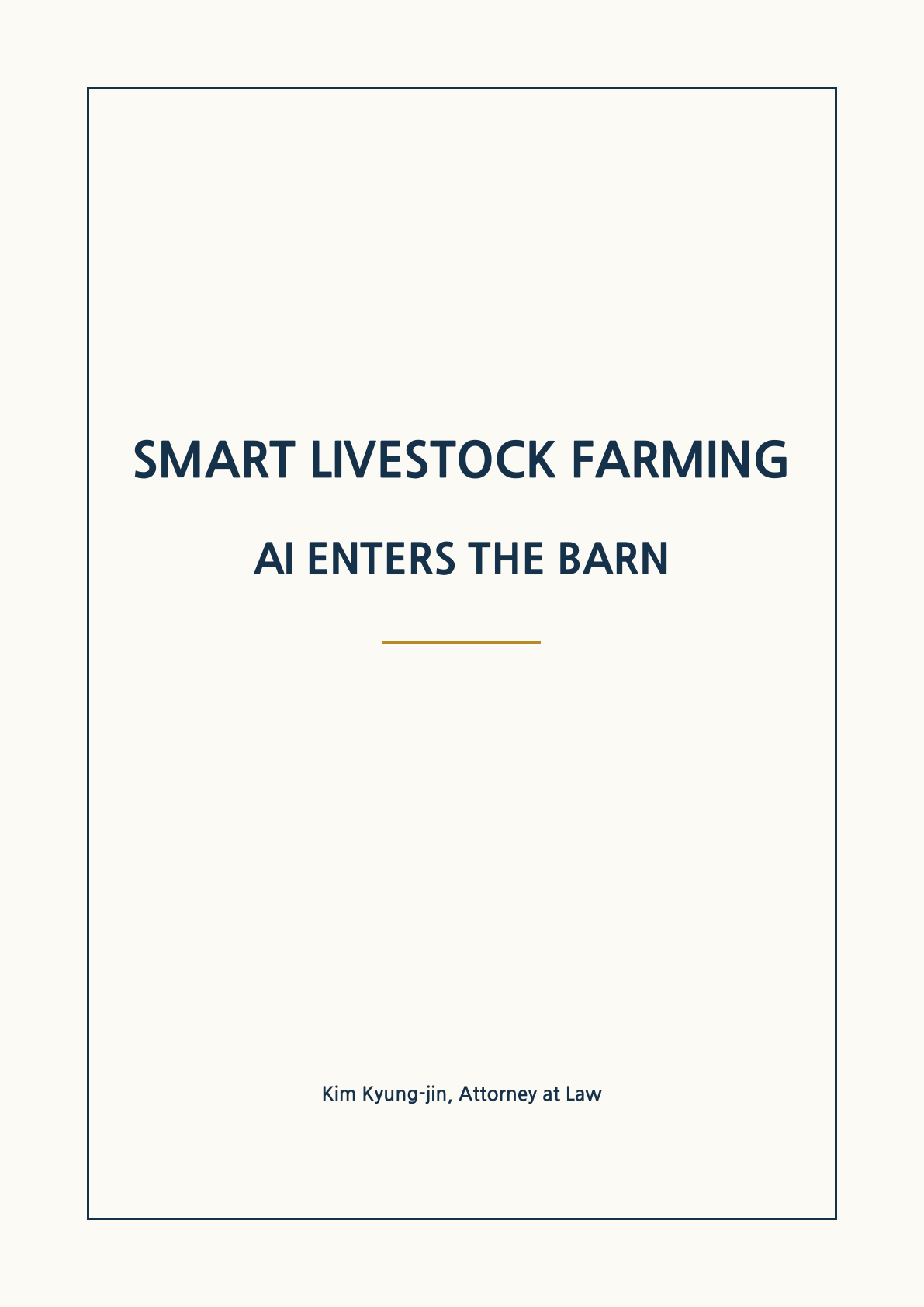
Smart Livestock Farming: AI Enters the Barn
Kim Kyung-jin, Attorney at Law
Sensors listen, cameras watch, and artificial intelligence helps farmers decide.
Across five chapters and fifteen sections, the book follows precision livestock farming from animal health and reproduction to robotic milking, virtual fencing, digital twins, methane reduction, welfare, and data ownership.
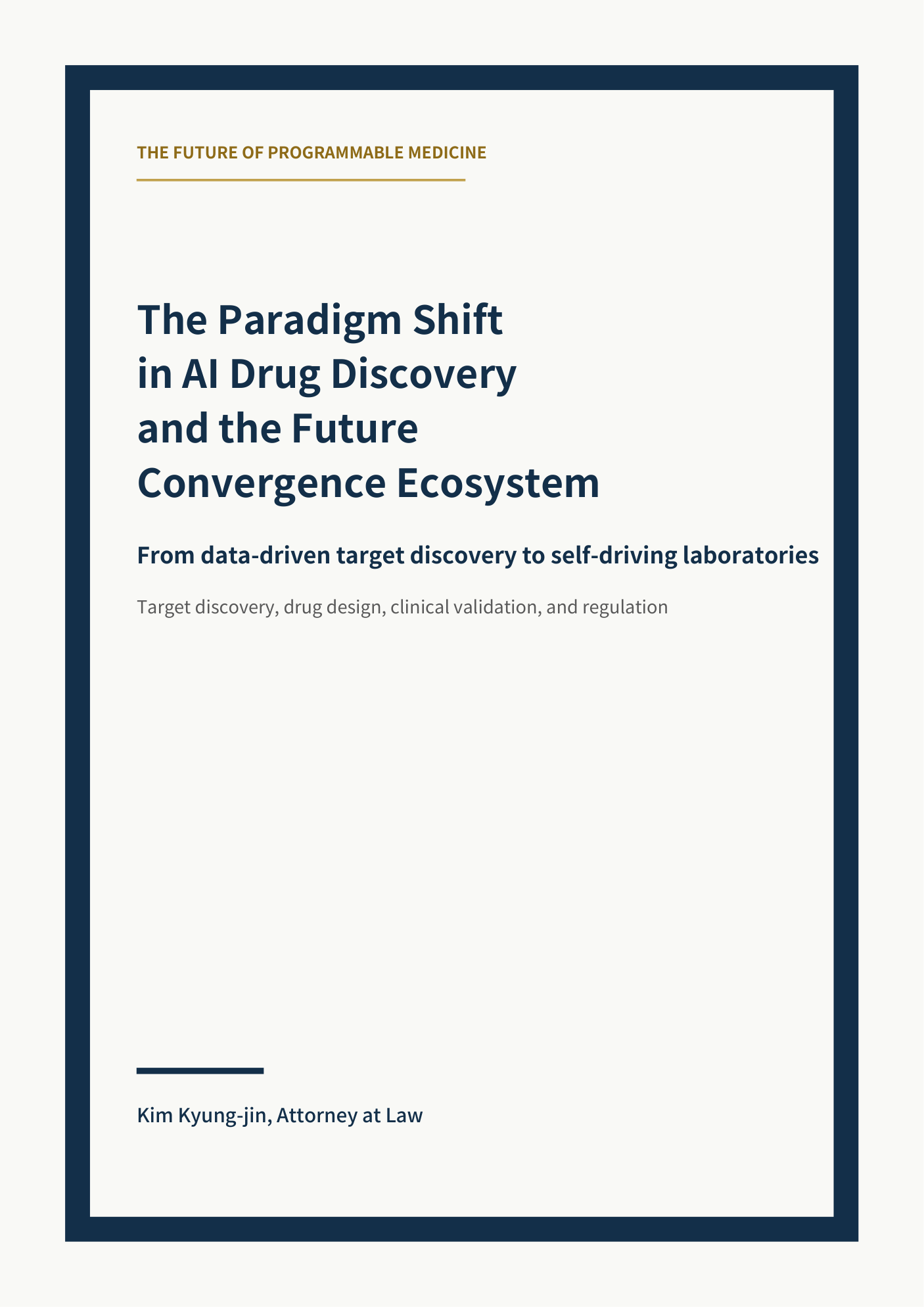

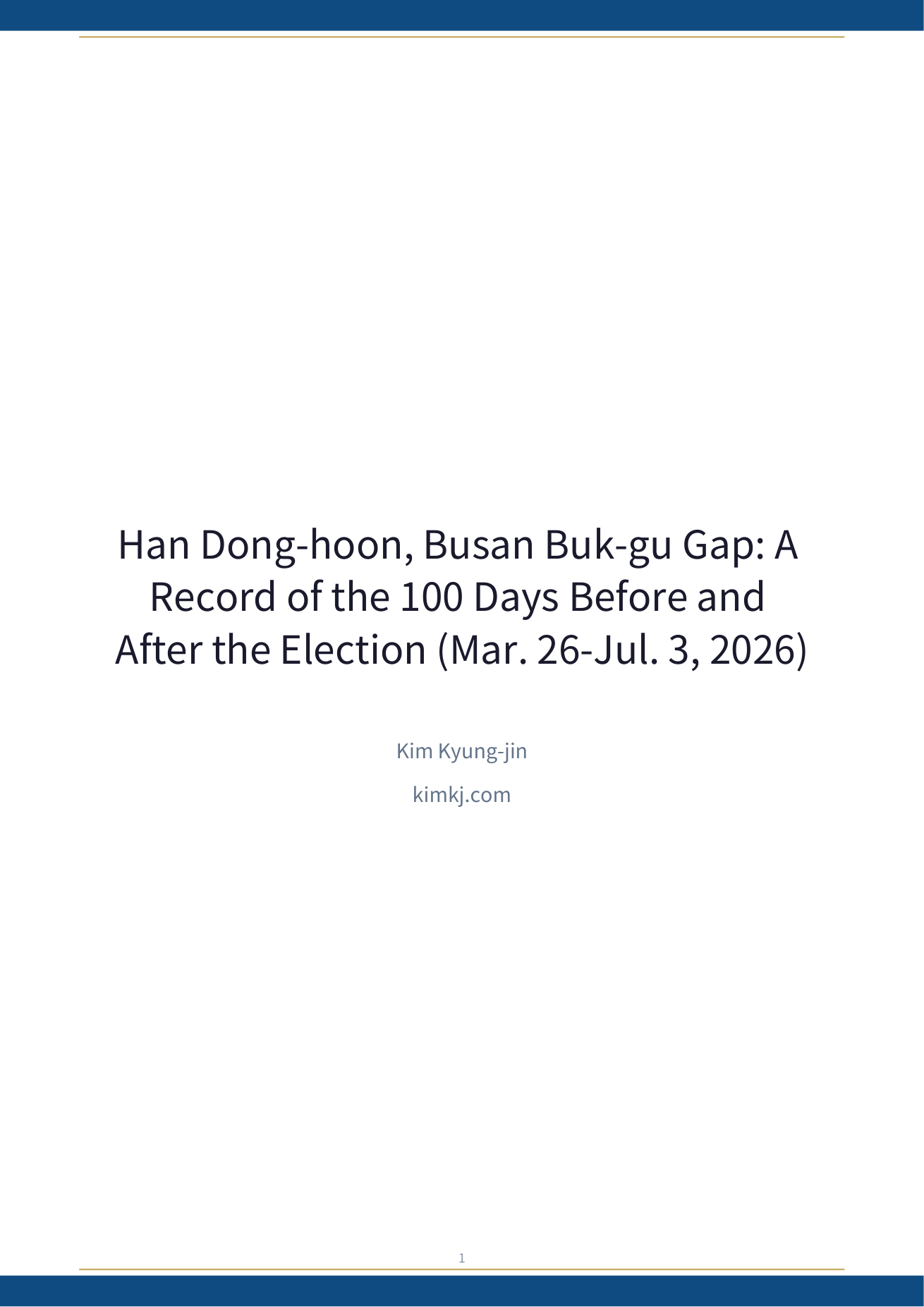
Table of Contents
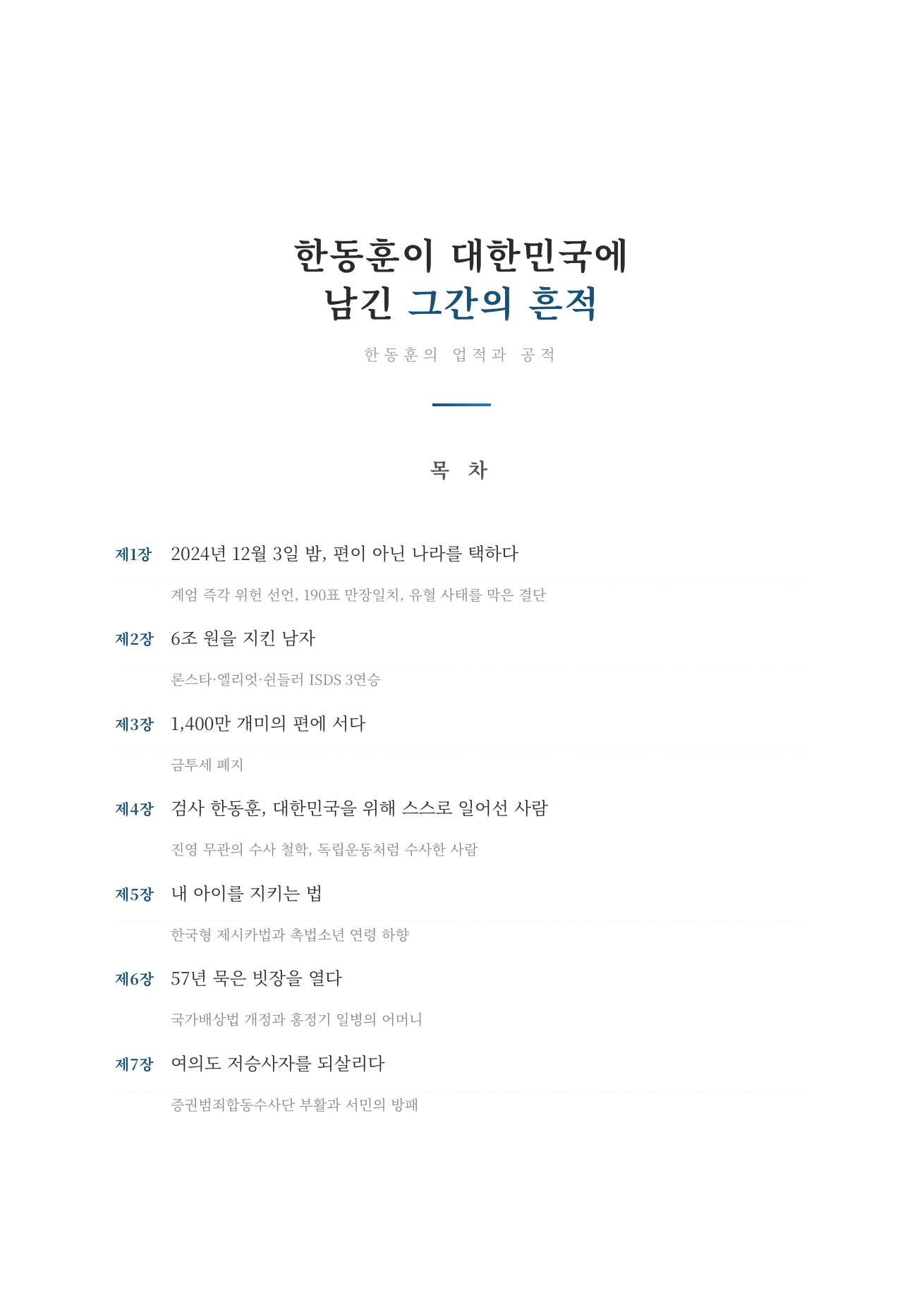
Han Dong-hoon, Busan Buk-gu Gap: A Record of the 100 Days Before and After the Election (Mar. 26-Jul. 3, 2026)
Kim Kyung-jin
Table of Contents and 13 sections
From March 26 to July 3, 2026, this record follows the spring after expulsion, the Busan Buk-gu Gap by-election, victory as an independent, and the first bill submitted in the National Assembly.
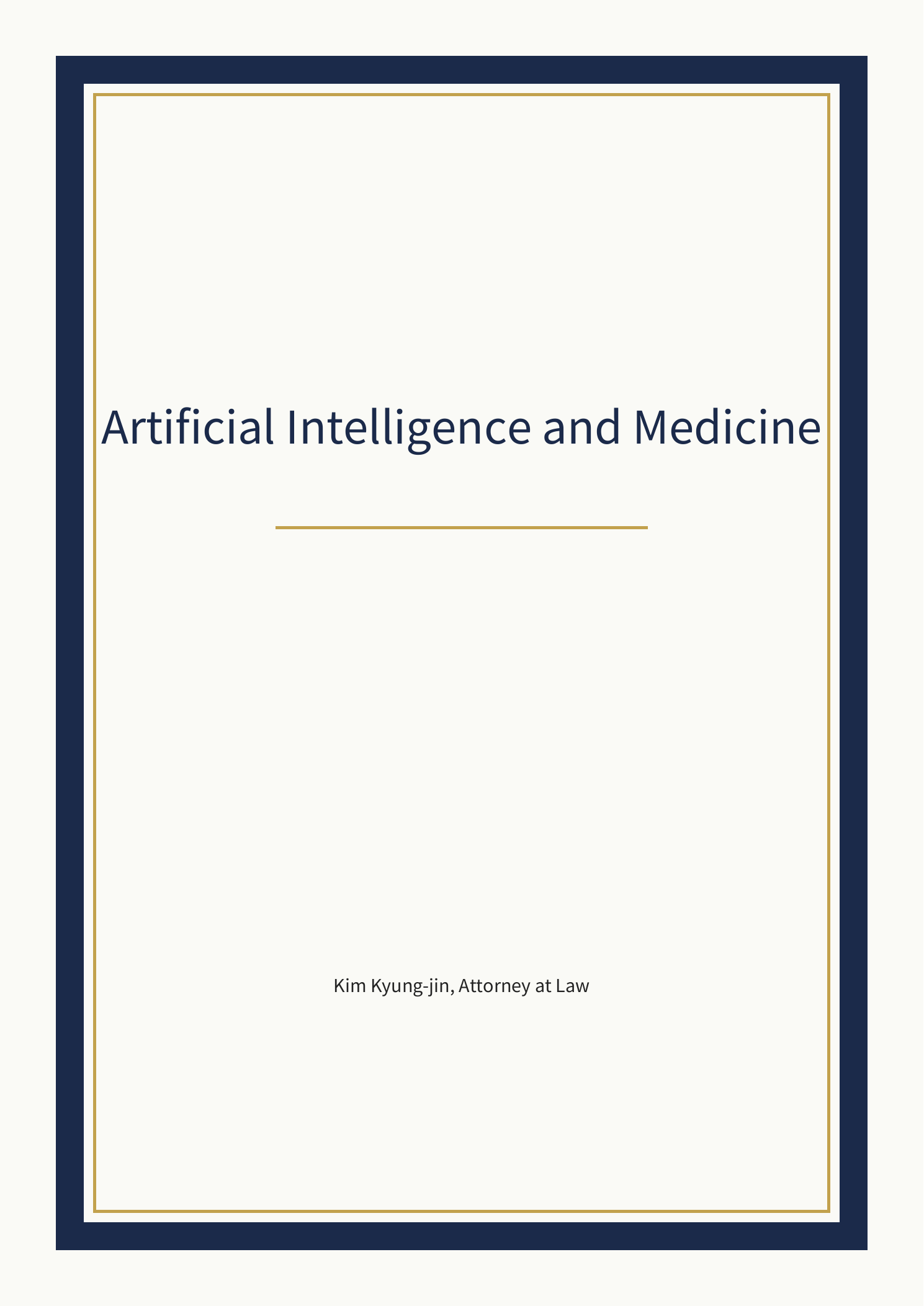
Table of Contents
Artificial Intelligence and Medicine
Kim Kyung-jin, Attorney at Law
AI in clinical care, hospitals, education, and research
AI in medical imaging, risk prediction, treatment planning, hospital operations, education, and research, with patient safety, privacy, and accountability.























[AI Library] Closing
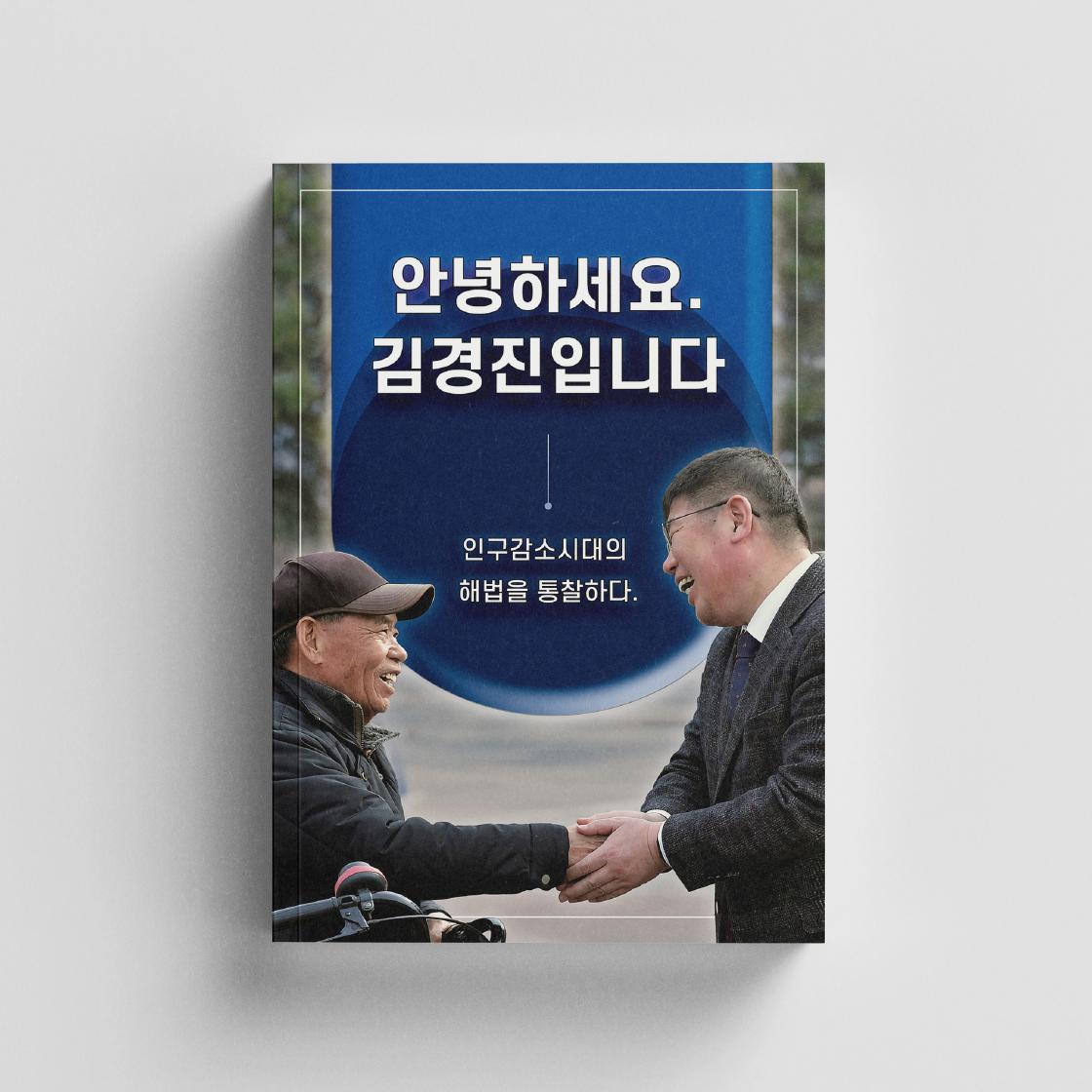
Hello, I Am Kim Kyung-jin
Closing
Kim Kyung-jin
Closing
Human beings are dignified. This is stated in the Preamble to the Constitution and is also a teaching of all religions in this world. It is often expressed as "One person is one universe."
However, the specific form and content of dignity are determined by the era and the nation. Your starting point in life will vary greatly depending on whether you were born in Norway, the United States, North Korea, China, or Libya. The historical timeframe in which an individual lived is also very important.
This is because science and technology have generally developed in chronological order. For an average young person in the Republic of Korea in 2023, a backpacking trip to Europe, which takes about 12 hours by plane, would have been impossible for King Sejong the Great of the Joseon Dynasty, no matter how much of a king he wa
s, it was impossible. King Sejong probably didn't even have a concept of Europe. Even those fast Mongol cavalrymen took over 100 days to ride from Karakorum to Hungary.
Although science and technology have developed tirelessly throughout history, most of the basic technologies of modern civilization began after the 1800s, especially information and computer technology after the 1970s. The average age of death in the Republic of Korea is now approaching 90. Just 50 years ago, in the 1970s, the average life expectancy was 58.
6 years for men and 65. 6 years for women. Due to the development of medical and health science and technology, the average life expectancy has increased by 30 years in just 40 years.
By pre-modern standards, it's like living another life. Whether a human life can be concretely dignified depends on the level of science and technology of the era in which they lived and the utility of the political and economic system of the country to which they belong.
What politics must do first is to strive for the development of science and technology, which is an essential factor in upgrading the quality of life for humanity as a whole.
The foundation of national defense also stems from science and technology. A confrontation between a matchlock gun that takes 10 seconds to load and fire a single shot and a six-shot rifle is a battle where the victory or defeat of the war is already decided in itself. The issue of mobility rights for people with disabilities is the same.
It is a problem that will be solved naturally if assistive devices such as precision robot joints are supplied at affordable prices through technological development, so that the term 'mobility disability' becomes meaningless.
In the past, people had to move here and there to find a good teacher, following the example of Mencius' mother moving three times, but now YouTube serves as a traveling teacher for all citizens of the Republic of Korea, allowing them to take whatever classes they want to their heart's content.
If you need to study more actively, you can go out into the sea of the internet. The internet has already become a huge library in itself. I believe that science and technology are the most important areas for the specific content of human dignity and the permanence of the community to which we belong.
During my time as a member of the 20th National Assembly, I worked for four years on the Science and Technology Committee to create a system where scientists and technicians can freely research and develop technology. By inducing the removal of the Korea-U. S.
Missile Guidelines, I also helped build the foundation for the development of the Republic of Kor
ea's defense industry. However, I also make it clear that I will strike a severe blow as a tribune for the protection of the common people against groups that are not innovative technologies like 'Tada,' but are hell-bent on making money by destroying the already well-established existing social safety nets.
Currently, the Republic of Korea boasts the world's highest standards in various fields.
Despite ups and downs such as a public healthcare system that even the United States cannot match, safe public order, information and communication technology, and the impeachment of the president, no civil war broke out and it was resolved within the framework of constitutional justice.
The Republic of Korea has achieved such civilizational accomplishments based on the world's highest passion for education. But can we continue this high level of achievement?
Population organizations and scholars around the world say that the Republic of Korea is the country that will disappear the fastest due to the problem of low birth rates and population decline. The most important problem facing the Republic of Korea is the rapid population decline. The low birth rate and aging population are too fast and severe.
The Republic of Kor
ea's birth rate, which was 1 million children born per year at its peak, has now dropped to 260,000 per year. On the other hand, the average life expectancy, which was 61, is now nearing 90. Young research personnel who should be dedicated to developing new products and technologies in research institutes are not entering at some point.
In the military, the number of resources for active-duty enlistment is steadily decreasing by 20,000 every year. Two army divisions must be reduced every year. While the number of elderly people who need support is increasing exponentially, the economically active population that will pay taxes and provide resources for support is rapidly decreasing.
Furthermore, due to China's technology theft, the technology gap has narrowed, making exports to China increasingly difficult. From the perspective of the Republic of Korea, it is a total structural crisis. If this problem is not solved, there will be no sustainability for the Republic of Korea.
I would like to suggest two solutions to this problem. In a situation where the absolute population being born is small, it is to raise all children into talents with the highest capabilities. In particular, the 'Immersion Learning Method' advocated by Professor Hwang Noh-moon of Seoul National University
is something we should pay attention to. I believe that if each and every citizen has high problem-solving skills and creative thinking through the immersion learning method, the shortage in absolute numbers can be filled. To do this, reform of education methods and reform of the entrance examination system must be accompanied.
This reform must be achieved. The second is to bring in excellent young talents from overseas to the Republic of Korea. The annual budget of the Republic of Korea is approximately 700 trillion won.
Let's spend about 3 trillion won of that to bring about 100,000 young people from developing countries to the Republic of Korea and provide them with full scholarships and free education. After the process is over, about 70% will return to their home countries, and the remaining 30% will stay in the Republic of Korea in various forms.
The 70% who returned will play a pivotal role in their societies in 10-20 years and will try to find opportunities for collaboration with Korea in that process. The 30% who remain will compensate to some extent for the problems of the Republic of Korea's rapid low birth rate, and
also serve as a base for insufficient domestic demand. This is a method that has already been implemented for a long time in developed countries such as the UK, Germany, and the US. We must also implement this good method as soon as possible at a point when our current national power allows it.
Through this process, we must transfer and spread the world's best civilizational system achieved by the Republic of Korea to developing countries so that the achievements of the Republic of Korea can be synchronized with the achievements of the entire global village.
In the process, we will also be able to find opportunities for the sustainability of the Republic of Korea community itself.
Through politics, I want to perform the roles of the era: 1) the continuous development of science and technology, 2) the resolution of the serious problem facing the Republic of Korea, the population problem, and 3) the sharing of the great achievements of the Republic of Korea since liberation, such as medical insurance, public order, administration, and the judicial system, with the rest of the world.
The time has come for our Republic of Korea to fulfill the mission of becoming the 'Lamp of the East' and upgrading the world's civilization by one step. If we just do it, we will leave much greater footprints
in human history than the Roman civilization, which is just a trace, or Genghis Khan's Mongols, who have no trace at all. November 2023. Kim Kyung-jin in Jangan-dong.
Kim Kyung-jin
Attorney · Former Member of the National Assembly · AI Policy Researcher
© 2026 Kim Kyung-jin. All rights reserved.