AI Library
The Age of Autonomous Scientific Discovery
Kim Kyung-jin, Attorney at Law
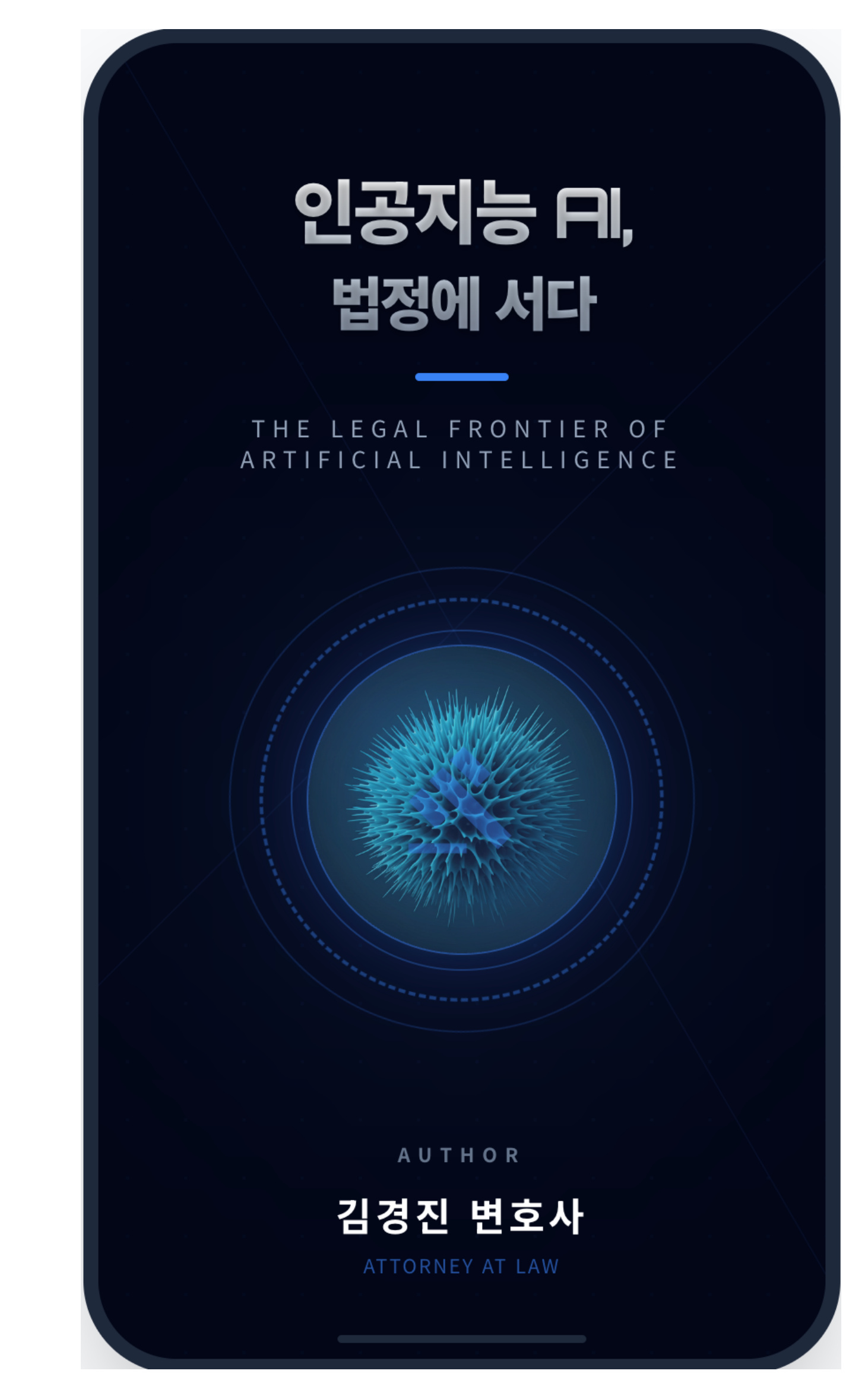
AI Scientists and Self-Driving Labs
This book follows how AI scientists and self-driving labs are changing the way science generates and verifies claims. It covers literature-based discovery, natural-language protocols translated into robot commands, multi-agent research systems, closed-loop laboratories, materials search, the verification gap, chains of evidence, research harnesses, journal ethics, and legal responsibility.
AI Library
A New Era of Life Sciences Opened by Artificial Intelligence
Structural Proteomics, Genomic Foundation Models, Autonomous Laboratories, and Global Governance
Kim Kyung-jin, Attorney at Law
This book is a research volume compiled with artificial intelligence. A human selected the materials and structured the work, while AI models drafted the sentences and cross-checked the facts.
AI Library
The Double Structure of Digital Sovereignty
Europe’s Departure from Palantir and the Chains of American Big Tech
Kim Kyung-jin, Attorney at Law
This is a record of 2026, when European intelligence agencies and defense ministries began removing analytics tools from America’s Palantir. It covers the replacement decisions made by France’s General Directorate for Internal Security (DGSI), Germany’s Federal Office for the Protection of the Constitution (BfV), and the Netherlands Ministry of Defense; the incident in which US export controls severed an ally’s ac…
New English Edition
Artificial Intelligence in Horticulture
Kim Kyung-jin, Attorney at Law
Across five chapters and ten sections, this book examines computer vision for crop diagnosis, harvesting robots and autonomous field systems, smart greenhouses and digital twins, precision irrigation and supply-chain quality control, high-throughput phenotyping, and predictive breeding.
New English Edition
Artificial Intelligence in Food Crop Agriculture
Kim Kyung-jin, Attorney at Law
Across six chapters and eighteen sections, the book examines digital agricultural infrastructure, remote sensing, crop diagnosis, yield forecasting, precision irrigation, genomics, molecular breeding, agricultural robotics, climate-smart agriculture, and global food security.
New English Edition
The Future of Forestry and Agroforestry
Kim Kyung-jin, Attorney at Law
Driven by Artificial Intelligence and Digital Innovation
Across five chapters and fifteen sections, the book follows satellites, drones, LiDAR, digital twins, forest-specific language models, wildfire and pest forecasting, forestry robotics, agroforestry, timber traceability, and forest carbon markets.
New English Edition
Smart Livestock Farming: AI Enters the Barn
Kim Kyung-jin, Attorney at Law
Sensors listen, cameras watch, and artificial intelligence helps farmers decide.
Across five chapters and fifteen sections, the book follows precision livestock farming from animal health and reproduction to robotic milking, virtual fencing, digital twins, methane reduction, welfare, and data ownership.
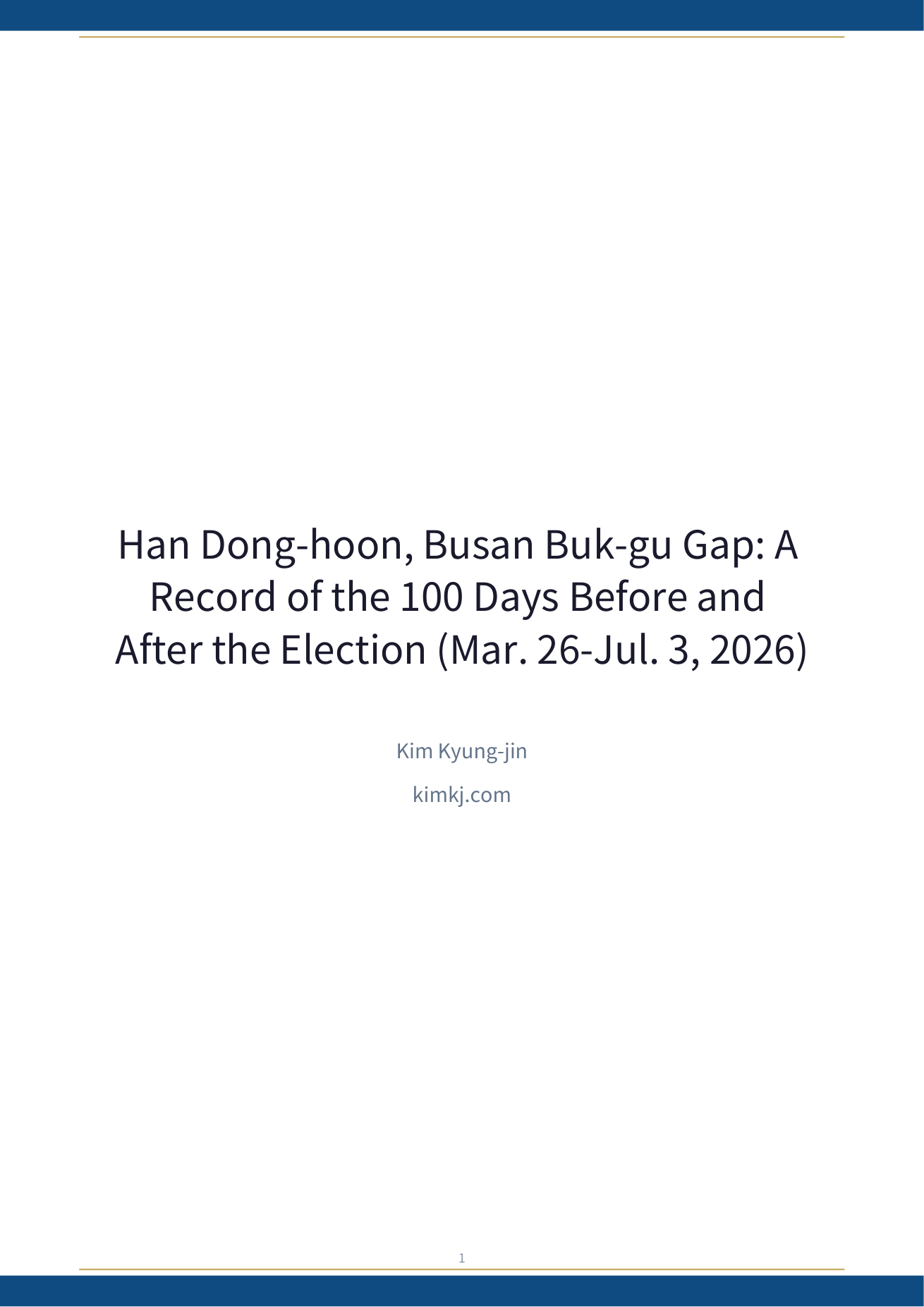
Table of Contents
Han Dong-hoon, Busan Buk-gu Gap: A Record of the 100 Days Before and After the Election (Mar. 26-Jul. 3, 2026)
Kim Kyung-jin
Table of Contents and 13 sections
From March 26 to July 3, 2026, this record follows the spring after expulsion, the Busan Buk-gu Gap by-election, victory as an independent, and the first bill submitted in the National Assembly.
Table of Contents
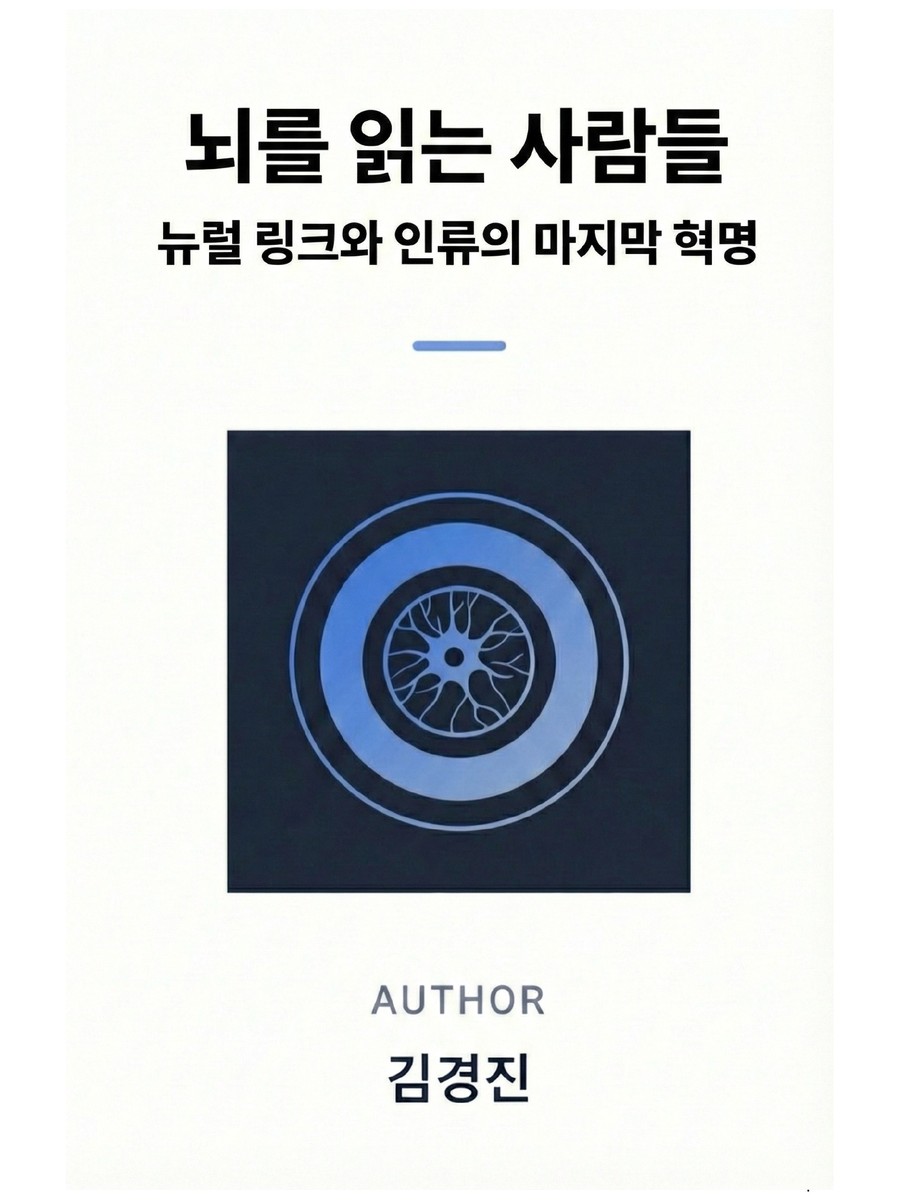
Artificial Intelligence and Medicine
Kim Kyung-jin, Attorney at Law
AI in clinical care, hospitals, education, and research
AI in medical imaging, risk prediction, treatment planning, hospital operations, education, and research, with patient safety, privacy, and accountability.























[AI Library] 12 AI's Holy Grail, Go
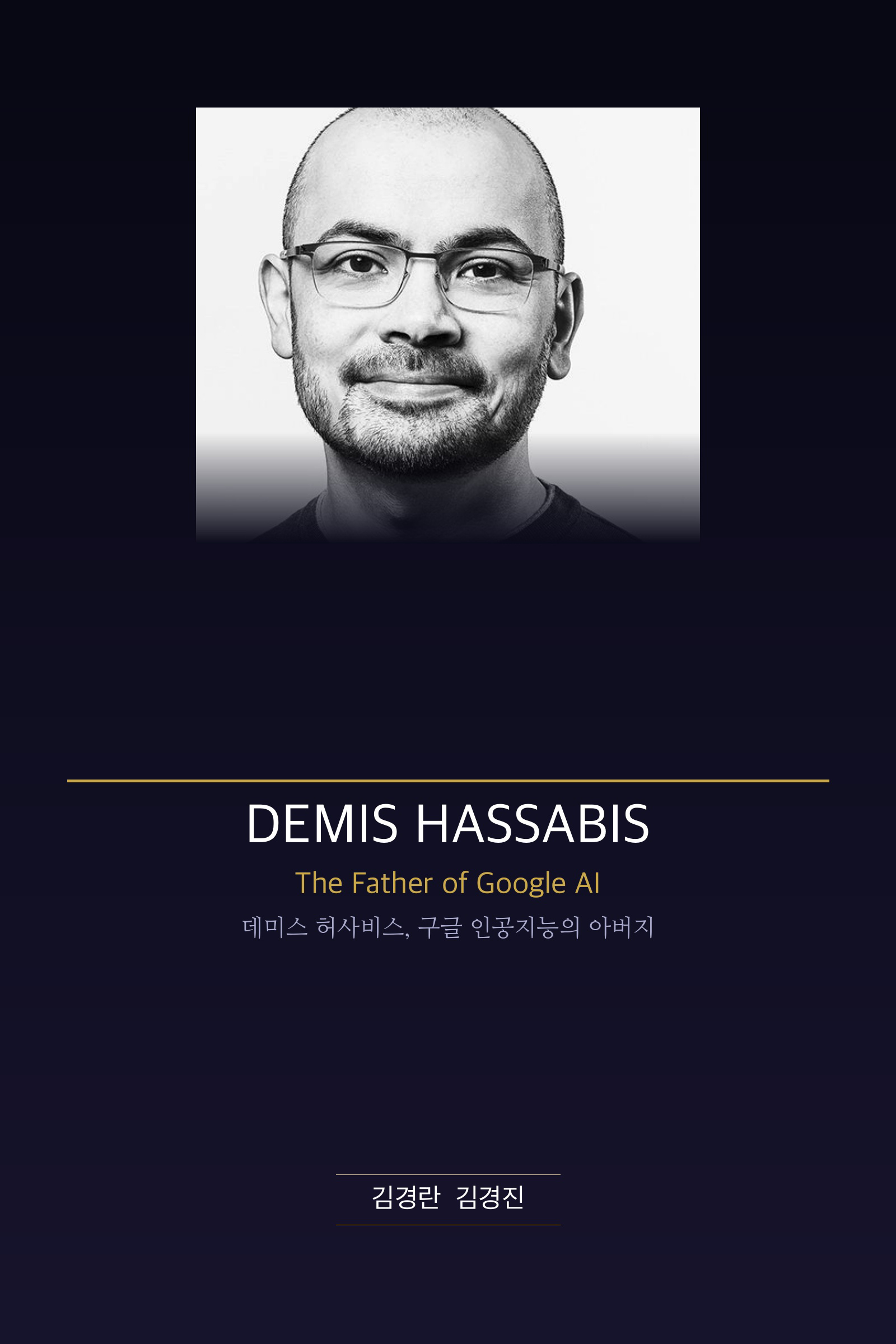
Demis Hassabis, Father of Google's Artificial Intelligence
Part 5. The Match of the Century, AlphaGo and Humanity
12 AI's Holy Grail, Go
Kim Kyung-ran, Kim Kyung-jin
In May 1997, in a building in New York, chess world champion Garry Kasparov clutched his head and conceded defeat. It was a historic moment when IBM's supercomputer Deep Blue shattered the pride of human intellect. Demis Hassabis, then a young man in his early twenties, watched this scene with mixed emotions.
He was already a prodigy who had reached chess master ranking at age thirteen, and he understood better than anyone how difficult it was for a computer to beat a human. But in Hassabis's eyes, Deep Blue's victory was not a true victory of 'intelligence.' It was the victory of a massive, brute-force calculator that had overwhelmed its opponent through sheer computational speed, crunching through every possible combination.
'Chess is now solved. But intelligence is not.' For Hassabis, chess was a 'closed system.' The rules were clear, all information was open, and given sufficient computing power, the correct answer could eventually be found.
To build the artificial general intelligence (AGI) he dreamed of, one that possesses intuition like a human and makes judgments under uncertainty, he needed a challenge far larger, more chaotic, and more profound than chess. The answer was an ancient game from the East: Go. Among Western computer scientists, Go had long been called an 'insurmountable wall' and the 'Holy Grail' of artificial intelligence research.
The reason was a complexity that was simple to state yet overwhelming in scale. A chessboard has 8x8, a total of 64 squares, but a Go board has 19x19, a total of 361 intersections. The number of possible move combinations in Go reaches 10 to the power of 170. This is a number far greater than the total number of atoms in the entire universe, which is roughly 10 to the power of 80. The 'brute force' method Deep Blue had used, calculating every move one by one to find the answer, simply could not work in Go. Human Go players
do not calculate every possible move. They see 'shapes,' read 'flows,' and use 'intuition.' When a professional player says 'I played there because it looked good,' that is not a vague feeling but the product of highly refined pattern recognition, compressed from tens of thousands of games stored in the brain.
This was precisely why Hassabis chose Go. To conquer Go, you had to teach a computer not computational power but 'intuition.' If an AI could defeat the best human player at Go, it would prove that a machine had entered the stage of mimicking intuition and creativity, domains previously believed to belong exclusively to humans.
For the DeepMind team, Go was a microcosm of the real world. The real world has no predetermined answers. There are countless choices, the consequences of those choices do not appear immediately, and uncertainty fills every corner.
Hassabis wanted to use Go to test how an AI could efficiently navigate this 'infinite search space.' In 2014, even the best Go AI remained at the level of an amateur 5-dan. It could not beat a professional player even with a four or five stone handicap.
Many experts predicted that 'it will take at least ten more years before AI can beat a Go champion.' But Hassabis was ready to compress that ten-year timeline. Drawing on inspiration from neuroscience, he abandoned traditional rule-based programming and began building a system that could learn on its own.
At DeepMind's London headquarters, preparations were underway, quiet but intense, to alter the course of human intellectual history. The combination of reinforcement learning, Monte Carlo Tree Search (MCTS), and deep neural networks: the architecture of AlphaGo, designed by Hassabis and DeepMind's lead researcher David Silver, was like implementing the way the human brain works in software. They combined three powerful techniques with precision to tackle the vast universe of Go.
Those three techniques were deep neural networks, reinforcement learning, and Monte Carlo Tree Search (MCTS).
The first key was 'deep neural networks.' These served as AlphaGo's 'eyes' and 'brain.' The DeepMind team divided this into two separate networks.
One was the 'policy network,' and the other was the 'value network.' The policy network decides 'where should I place the next stone?' On a Go board, there are hundreds of possible positions to play at any given moment.
Human experts can glance at the board and narrow 'playable spots' down to two or three. The policy network performs exactly this role. AlphaGo learned from 160,000 game records obtained from the online Go server KGS, totaling 30 million moves. Through this, AlphaGo learned the patterns of moves humans typically play and acquired the ability to probabilistically narrow down the best positions on an empty board.
It was like shining a flashlight on only the most important objects in a dark room, rather than groping around blindly. The value network judges 'is the current position favorable for me?' Go is a game where the side with more territory wins.
But until the middle of a match, it is nearly impossible to calculate exactly who is ahead and by how much. The value network looks at the current board position and predicts the probability of winning. It delivers a numerical judgment such as 'black has a 51% chance of winning.'
This allowed AlphaGo to choose the path that maximized its probability of winning, rather than overreaching or playing too passively. The second key was 'reinforcement learning.' This was the core engine that elevated AlphaGo to superhuman levels.
Simply imitating human game records is not enough to surpass humans. To go beyond your teacher, you must learn what the teacher never taught. For this, Hassabis had AlphaGo play Go against itself. This is called 'self-play.'
AlphaGo played tens of thousands of games against itself every day. Version A of AlphaGo fought Version B; the winner's strategy was adopted, and the loser's strategy was revised. Through this process, AlphaGo re-examined established sequences that humans had developed over thousands of years, and sometimes discovered on its own that unconventional moves humans had never attempted were actually effective.
Hassabis described this process: 'We are not giving AlphaGo a fish. We taught it how to fish. And now it is improving its own fishing method.'
The third key was 'Monte Carlo Tree Search (MCTS).' This was AlphaGo's ability to 'read ahead.' When the policy network recommends a few promising candidate positions, MCTS simulates what would happen after placing a stone there.
But it is impossible to play out every scenario to the end. MCTS works like a poll: it quickly plays out a few random paths to completion and then selects the move with the highest win rate based on those results. When previous Go AIs relied on this technique alone, they remained at amateur level. But DeepMind combined it with the intuition of deep neural networks, dramatically increasing computational efficiency.
The combination of these three techniques was revolutionary. The policy network narrowed down candidates like human intuition (reducing search width), the value network judged positions without needing to play to the end (reducing search depth), and MCTS prevented mistakes through precise reading. It was a perfect harmony of intuition and logic.
As Hassabis built this system, he was convinced he was uncovering the operating principles of the human brain: the mechanism of 'judging, learning, and planning.' AlphaGo was one of the most elegant creations humanity had ever produced, an abstract concept called 'intelligence' forged into mathematics and code. The secret match against Fan Hui 2-dan in 2015: a closed-door contest that defeated the European champion 5-0. In October 2015, a peculiar tension hung in the air at DeepMind's headquarters near King's Cross, London.
In a small windowless meeting room sat a single computer monitor and one physical Go board. The person invited into this room was Fan Hui, a Chinese-born professional player and the reigning European Go champion at 2-dan. He had arrived in London after receiving a polite invitation from DeepMind to 'help test a new Go program.'
When Fan Hui accepted the invitation, he did not have high expectations. Even the best Go programs at the time were no match for a professional player without a handicap. He assumed he would serve as a 'consultant' of sorts, finding errors in the machine and offering advice. Before the match, the DeepMind team asked him to sign a non-disclosure agreement (NDA).
Hassabis sensed that this match was not a mere test but a turning point in the history of AI.
The match began. Fan Hui casually placed his first stone. AlphaGo's moves appeared on the board through the hands of DeepMind's lead programmer, Dr. Aja Huang.
As the opening progressed, Fan Hui's expression gradually hardened. AlphaGo's moves were not mechanical. This was an entirely different dimension from previous AIs that placed stones in bizarre locations or self-destructed with meaningless moves.
AlphaGo was flexible like a human, and at times even calmer than one. The first game ended in Fan Hui's defeat. He was stunned.
'It must be jet lag. I let my guard down,' he told himself. But the second and third games produced the same result. When Fan Hui attacked, AlphaGo defended solidly. When Fan Hui retreated, AlphaGo cut in sharply.
It felt like playing Go against an invisible, enormous wall. During the matches, Fan Hui stepped outside briefly to splash water on his face and collect himself, but the moment he sat down in front of the monitor again, the suffocating pressure returned. The final score was 5 to 0. European champion Fan Hui had been completely defeated. For the first time in history, a computer had beaten a professional player in an even game without any handicap.
When the final game ended and the defeat was confirmed, Fan Hui stared blankly at the board. The shock soon turned to awe. He realized he had just witnessed one of the greatest technological leaps in human history. After the result was decided, Fan Hui was met with cheers from the DeepMind team.
Hassabis thanked him graciously. Although he had lost, Fan Hui went on to collaborate with the DeepMind team over the following five months, playing a crucial role in identifying and fixing AlphaGo's weaknesses. He interpreted the meaning behind AlphaGo's moves and helped it develop a more 'human-like playing style.'
Fan Hui later reflected: 'Playing Go against AlphaGo was like looking into a mirror that reflected myself. AlphaGo showed me my inner self, my fears.' This secret victory gave the DeepMind team the conviction that 'we were right,' but the world had not yet sensed this enormous wave approaching. The Nature cover paper and the shock it sent through the world: On January 27, 2016, the cover of the prestigious scientific journal Nature was adorned with an image depicting a Go board.
The paper's title was 'Mastering the game of Go
with deep neural networks and tree search.' The authors were David Silver, Aja Huang, Demis Hassabis, and others. The publication of this paper sent shockwaves through the global scientific community and the Go world alike. The paper contained a detailed explanation of AlphaGo's architecture alongside the results of the secret match against Fan Hui in October (a clean sweep of all five games).
AI researchers were stunned. Most experts had predicted that conquering Go would not be possible for ten, perhaps twenty years. A technology that had been dismissed as 'still far off' just months earlier had suddenly leapt to a level capable of defeating a human professional.
Media outlets raced to report the news. Headlines poured out: 'Artificial intelligence has invaded humanity's last sanctuary,' 'A machine has surpassed human intuition.' Hassabis announced the achievement at a press conference, emphasizing that this was not merely winning a game but 'confirming the possibility of a general-purpose artificial intelligence algorithm.'
He highlighted that AlphaGo had not been fed specific Go rules but had learned on its own through vast amounts of data. It was a declaration that AlphaGo's technology could be applied not just to Go but to solving complex problems such as disease diagnosis and climate prediction. The Go world's reaction was markedly different.
The result was shocking, but skepticism still dominated. The reason was Fan Hui's level. He was the European champion, but by the standards of Korea and China, where the world's top players were concentrated, he was considered a tier below. The consensus in the Go community was that he simply could not be compared to 'elite' players like Lee Sedol 9-dan or Ke Jie 9-dan.
In an interview, Korea's Lee Sedol 9-dan said: 'It is a remarkable achievement, but it is not yet at a level that can beat me. I think I will win 5-0, or perhaps 4-1.' After analyzing Fan Hui's game records, he judged that AlphaGo had not reached the level of a top professional. This reaction was actually an opportunity for DeepMind and Hassabis.
They had already upgraded AlphaGo dramatically in the months following the match against Fan Hui. Alongside the Nature publication, Hassabis issued a bold challenge to the world: 'We challenge the legendary player, Lee Sedol 9-dan.'
It was the opening act of the most dramatic show in twenty-first century scientific history: a head-on collision between human intuition and machine computation, natural intelligence and artificial intelligence. The world's attention began to focus on Seoul, and Hassabis was preparing for everything calmly yet meticulously. He knew.
The match against Fan Hui had been nothing more than a trailer. The real contest was just beginning. The black and white stones on the Go board
Kim Kyung-jin
Attorney · Former Member of the National Assembly · AI Policy Researcher
© 2026 Kim Kyung-jin. All rights reserved.