AI Library

AI Library

Books for Reading AI

Choose a book, then read it in order from the table of contents.

Uzbekistan Beyond the Blue Domes cover

Table of Contents

Uzbekistan Beyond the Blue Domes

Kim Kyung-jin, Attorney at Law

From Memories of the Silk Road to 2026 Changes and Practical Travel Logistics

An 18-chapter non-fiction book that explains Uzbekistan's history, society, economy, environment, and 2026 travel logistics, linking them to 142 official sources.

The People Who Changed Science with Artificial Intelligence cover

Table of Contents

The People Who Changed Science with Artificial Intelligence

Kim Kyung-jin, Attorney at Law

The Journey from Data to Nobel Prizes

This book follows eleven scientists who moved artificial intelligence into the heart of scientific discovery, from protein folding and new drug discovery to self-driving laboratories, machine scientists, automated paper reading, and the legal question of who owns a discovery made by a machine.

The Age of Autonomous Scientific Discovery cover

AI Library

The Age of Autonomous Scientific Discovery

Kim Kyung-jin, Attorney at Law

AI Scientists and Self-Driving Labs

This book follows how AI scientists and self-driving labs are changing the way science generates and verifies claims. It covers literature-based discovery, natural-language protocols translated into robot commands, multi-agent research systems, closed-loop laboratories, materials search, the verification gap, chains of evidence, research harnesses, journal ethics, and legal responsibility.
A New Era of Life Sciences Opened by Artificial Intelligence cover

AI Library

A New Era of Life Sciences Opened by Artificial Intelligence

Structural Proteomics, Genomic Foundation Models, Autonomous Laboratories, and Global Governance

Kim Kyung-jin, Attorney at Law

This book is a research volume compiled with artificial intelligence. A human selected the materials and structured the work, while AI models drafted the sentences and cross-checked the facts.

Get 1,000% More from Your Computer with AI Agents cover

Table of Contents

Get 1,000% More from Your Computer with AI Agents

Kim Kyung-jin

Twenty-four practical ways to change daily life and work with AI agents

This book shows how to get past the moments when a computer becomes difficult by working with an AI agent. It guides readers through installation and a first conversation, safe delegation, file organization and automatic backup, photo, PDF and video work, shortcuts and monitoring tools, diagnosing a slow computer, reviving an older PC, reading error messages, and putting a work environment in order.

The Double Structure of Digital Sovereignty cover

AI Library

The Double Structure of Digital Sovereignty

Europe’s Departure from Palantir and the Chains of American Big Tech

Kim Kyung-jin, Attorney at Law

This is a record of 2026, when European intelligence agencies and defense ministries began removing analytics tools from America’s Palantir. It covers the replacement decisions made by France’s General Directorate for Internal Security (DGSI), Germany’s Federal Office for the Protection of the Constitution (BfV), and the Netherlands Ministry of Defense; the incident in which US export controls severed an ally’s ac…
Artificial Intelligence in Horticulture cover

New English Edition

Artificial Intelligence in Horticulture

Kim Kyung-jin, Attorney at Law

Across five chapters and ten sections, this book examines computer vision for crop diagnosis, harvesting robots and autonomous field systems, smart greenhouses and digital twins, precision irrigation and supply-chain quality control, high-throughput phenotyping, and predictive breeding.

Artificial Intelligence in Food Crop Agriculture cover

New English Edition

Artificial Intelligence in Food Crop Agriculture

Kim Kyung-jin, Attorney at Law

Across six chapters and eighteen sections, the book examines digital agricultural infrastructure, remote sensing, crop diagnosis, yield forecasting, precision irrigation, genomics, molecular breeding, agricultural robotics, climate-smart agriculture, and global food security.
The Future of Forestry and Agroforestry cover

New English Edition

The Future of Forestry and Agroforestry

Kim Kyung-jin, Attorney at Law

Driven by Artificial Intelligence and Digital Innovation

Across five chapters and fifteen sections, the book follows satellites, drones, LiDAR, digital twins, forest-specific language models, wildfire and pest forecasting, forestry robotics, agroforestry, timber traceability, and forest carbon markets.
Smart Livestock Farming cover

New English Edition

Smart Livestock Farming: AI Enters the Barn

Kim Kyung-jin, Attorney at Law

Sensors listen, cameras watch, and artificial intelligence helps farmers decide.

Across five chapters and fifteen sections, the book follows precision livestock farming from animal health and reproduction to robotic milking, virtual fencing, digital twins, methane reduction, welfare, and data ownership.

The Paradigm Shift in AI Drug Discovery cover

Table of Contents

The Paradigm Shift in AI Drug Discovery and the Future Convergence Ecosystem

Kim Kyung-jin

From data-driven target discovery to self-driving laboratories

From finding the protein behind a disease and drawing the molecule, to screening out toxicity, replacing animal testing with organ chips, running trials on virtual patients, and settling who is liable when an AI-designed drug goes wrong. Fifteen sections across five parts, written so that no background in biology or chemistry is needed.

The Shaking Archipelago, The People Who Remember cover

Table of Contents

The Shaking Archipelago, The People Who Remember

Kim Kyung-jin

Japan's Earthquakes, Tsunamis, and Disaster Preparedness

This book follows the Nankai Trough, the 2011 Tohoku earthquake and tsunami, Mount Fuji's eruption risk, seismic observation networks, historical documents, tsunami deposits, the lesson of Onagawa Nuclear Power Station, and evacuation challenges in an aging society.

Han Dong-hoon, Busan Buk-gu Gap: A Record of the 100 Days Before and After the Election (Mar. 26-Jul. 3, 2026) cover

Table of Contents

Han Dong-hoon, Busan Buk-gu Gap: A Record of the 100 Days Before and After the Election (Mar. 26-Jul. 3, 2026)

Kim Kyung-jin

Table of Contents and 13 sections

From March 26 to July 3, 2026, this record follows the spring after expulsion, the Busan Buk-gu Gap by-election, victory as an independent, and the first bill submitted in the National Assembly.
Artificial Intelligence and Medicine cover

Table of Contents

Artificial Intelligence and Medicine

Kim Kyung-jin, Attorney at Law

AI in clinical care, hospitals, education, and research

AI in medical imaging, risk prediction, treatment planning, hospital operations, education, and research, with patient safety, privacy, and accountability.
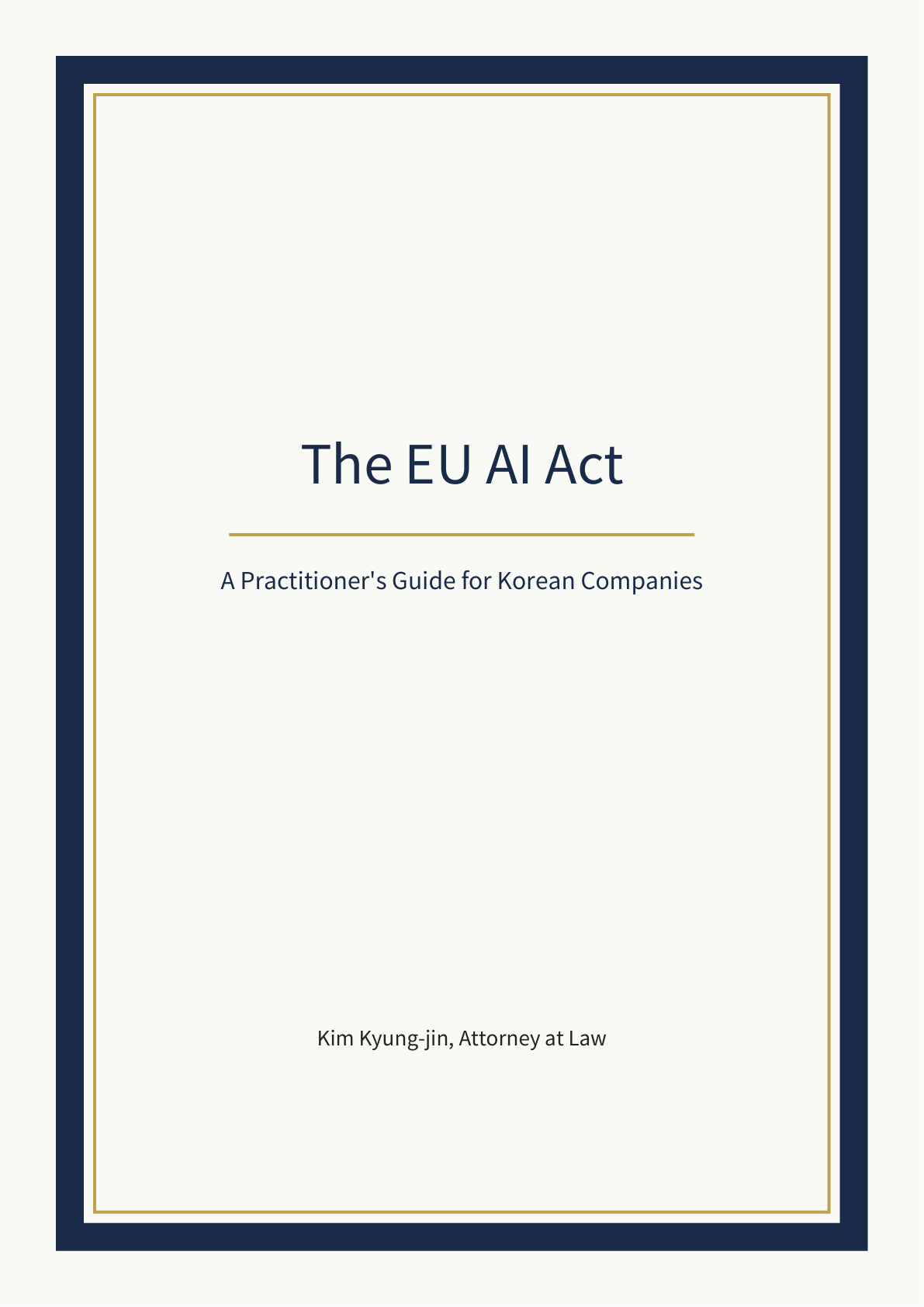

The EU AI Act cover

Table of Contents

The EU AI Act

Kim Kyung-jin, Attorney at Law

A Practitioner’s Guide for Korean Companies

From August 2, 2026, a game company’s chatbot in Pangyo and a medical-device reading software in Busan fall under Article 50 of the EU AI Act, even without a single office in Europe. Rather than summarizing the provisions, this book reads them from the enforcement authority’s point of view: extraterritorial reach, transparency duties, general-purpose AI models, high-risk systems, and the double regulation that overlaps with Korea’s AI Framework Act. It is a field guide to what a Seoul-headquartered company must prepare, when, and how.

South Korea's AI Basic Act: A Practical Guide for Business Operators cover

Contents

South Korea’s AI Basic Act: A Practical Guide for Business Operators

Kim Kyung-jin, Attorney at Law

Compliance, Obligations, and Opportunities under Korea’s AI Regulation

On January 22, 2026, the AI Basic Act came into effect in the Republic of Korea. This book was written by an attorney for business operators. It answers questions such as “Is our service high-impact AI?”, “How should prior notification be conducted?”, and “What preparations are needed when expanding into the EU?”

Chinese Government AI Regulations cover

Contents

Chinese Government AI Regulations

Kim Kyung-jin, Attorney at Law

Chinese originals, translations, terms, issuing bodies, effective dates, administrative interpretations, and judicial materials

This edition orders Chinese AI-related laws, administrative regulations, military regulations, departmental rules, policy documents, and national standards by legal force. Each entry keeps the Chinese original text and adds an English translation or explanation, legal terms, issuing body, effective date, administrative interpretations, and judicial materials where available.

Fathers of Chinese AI cover

Table of Contents

Fathers of Chinese AI

Kim Kyung-jin, Attorney at Law

Ten lives behind China's AI ascent

This book follows Kai-Fu Lee, Robin Li, Jie Tang, Liang Wenfeng, Yang Zhilin, Yan Junjie, Wang Xiaochuan, Jingren Zhou, Shunyu Yao, and Yonghui Wu through the laboratories, companies, models, and policy environment that shaped Chinese AI.

How Far Has AI Entered Chinese Hospitals? cover

Table of Contents

How Far Has AI Entered Chinese Hospitals?

Kim Kyung-jin, Attorney at Law

A quiet shift in clinics, imaging rooms, and hospital administration

This book follows how artificial intelligence has entered Chinese hospitals, using Chinese and English materials together with original Chinese policy texts. It covers national policy, medical foundation models, clinical decision support, image reading, hospital information departments, traditional Chinese medicine, AI-native hospitals, the patient experience, hallucination and responsibility, regulation, and money. The final chapters collect major Chinese guidelines and the 84 health-sector AI application scenarios, with translated text and summaries.

Andrew Ng Biography cover

Table of Contents

Andrew Ng Biography

Kim Kyung-jin, Attorney at Law

A central figure in AI education and public learning

This book follows Andrew Ng from London, Hong Kong, Singapore, Carnegie Mellon, MIT, Berkeley, and Stanford to Google Brain, Coursera, Baidu, DeepLearning.AI, Landing AI, AI Fund, and Amazon. It reads his career through research, teaching, company building, and his practical view of AI.

Mykhailo Fedorov, Leading Figure of Ukraine's Drone War cover

Table of Contents

Mykhailo Fedorov, Leading Figure of Ukraine's Drone War

Kim Kyung-jin

From the State in a Smartphone to the Defense Ministry of the Drone War

This book follows Diia, IT Army, Starlink, UNITED24, Brave1, the Unmanned Systems Forces, drone procurement, and battlefield data to explain how Mykhailo Fedorov tied technology to state power in wartime Ukraine.

China’s Leading AI Firms and Government Agencies cover

Table of Contents

China’s Leading AI Firms and Government Agencies

Kim Kyung-jin

Policy, Companies, Data, and Hardware in China’s Intelligent Economy

This book follows China’s AI policy arc from the 2017 next-generation AI plan to AI+ and the 15th Five-Year Plan. It maps the roles of the State Council, NDRC, CAC, MIIT, and SAC, then reads DeepSeek, the AI Tigers, Alibaba, Tencent, Baidu, ByteDance, iFLYTEK, Huawei Ascend, East Data West Computing, manufacturing, education, consumption, and humanoid robotics as one connected system.

U.S. Department of War CDAO (Chief Digital and AI Officer) cover

Table of Contents

U.S. Department of War CDAO (Chief Digital and AI Officer)

Kim Kyung-jin, Attorney at Law

How the Military’s Brain Is Being Redesigned

From the moment in January 2026 when the U.S. Department of War declared data hoarding a national security threat, this book follows the birth of the CDAO (Chief Digital and Artificial Intelligence Office) and the five organizations it absorbed, Advana and the War Department Data Platform, the Open DAGIR procurement experiment, Project Maven and CJADC2 on the battlefield, and Responsible AI, allies, and critics — the story of how America is redesigning its military’s brain.

Science and Technology Commission of the CMC of the Communist Party of China cover

Table of Contents

Science and Technology Commission of the CMC of the Communist Party of China

Kim Kyung-jin

STC, Military-Civil Fusion, and China’s Military Technology Innovation

This English AI Library edition follows the CMC Science and Technology Commission, the Equipment Development Department, military-civil fusion, intelligentized warfare, emerging technology competition, and the institutional limits of China’s military innovation system.

The Chinese Communist Party School cover

Table of Contents

The Chinese Communist Party School

Kim Kyung-jin

Where Power Is Trained

This book follows the Chinese Communist Party school system from Ruijin and Yan'an to the Central Party School, the National Academy of Governance, provincial and county schools, young-official training classes, Cai Qi's leadership, and the Mwalimu Julius Nyerere Leadership School.

DARPA, America’s Defense Research Lab cover

Table of Contents

DARPA, America’s Defense Research Lab

Kim Kyung-jin

This book follows DARPA through its 2026 office reorganization, budget signals, AIxCC, AI Forge, RACER, LongShot, quantum computing, space robotics, battlefield medicine, and strategic-material programs, using official sources as the main trail.

AI and the Classroom cover

Table of Contents

AI and the Classroom

Kim Kyung-jin

The AI Teacher That Does Not Give Answers

From Estonia's AI Leap and Khanmigo to answer leakage, Korean AI digital textbooks, and teacher-in-the-loop classrooms, this book asks how AI can protect thinking instead of replacing it.

Spiderweb cover

Table of Contents

Spiderweb

Kim Kyung-jin

Ukraine's drone revolution that changed the map of war

A narrative account of Operation Spiderweb on June 1, 2025, and how Ukraine's drones reached deep inside Russia and changed military planning, intelligence work, and security assumptions.

A Map of the 2026 U.S.-China Collision cover

Table of Contents

A Map of the 2026 U.S.-China Collision

Kim Kyung-jin

The year tied in Busan and left unsolved in Beijing

A one-year map of tariffs, chips, rare earths, Taiwan, sea lanes, and Korea's choices between Washington and Beijing.

China's 2026 Power Map cover

Table of Contents

China's 2026 Power Map

Kim Kyung-jin

The completion of one-man rule, and the empty seat that follows

A map of Xi Jinping's power system, the military purge, the blocked succession path, and the economic-security dilemma.

The Architect of Contradictions cover

Table of Contents

The Architect of Contradictions

Kim Kyung-jin

Peter Thiel and the empire built by a man who hated competition

Peter Thiel, from a South African childhood to PayPal, Facebook, Palantir, politics, and the dream of defeating death.

Claude, GPT, Palantir, and the 2026 World War cover

8 readings

Claude, GPT, Palantir, and the 2026 World War

Kim Kyung-jin

How Artificial Intelligence Came to Pull the Trigger of War. Prologue, 3 Parts / 6 Chapters, Epilogue

A single name sits on the screen. An intelligence officer looks at it for twenty seconds, confirms only that it is a man, and moves on. Inside those twenty seconds a person dies, and the responsibility for deciding to kill him disappears. From Lavender over Gaza to Maven in Ukraine, Epic Furies over Iran, and target selection in the skies of Venezuela, this book follows the hand that chooses targets as it passes from human to machine in the wars of 2026.

China's Robotics Industry 2026: The Age of Mass Production and Real-World Deployment cover

25 readings

China's Robotics Industry 2026: The Age of Mass Production and Real-World Deployment

Kim Kyung-jin

From the humanoid mass-production race to U.S.-China hegemony: the state of China's robotics industry in 2026. Table of Contents, Preface, 7 Parts / 23 Chapters, Epilogue

In a factory in Shenzhen, hundreds of humanoid robots repeat the same motion. This book traces the mass-production race between Unitree and UBTECH, the Optimus supply chain, real-world deployment sites, and where Korea stands amid the U.S.-China tech hegemony.

Crossing the Adolescence of Technology Cover

15 Parts in Total

Crossing the Adolescence of Technology

Kim Kyung-jin

Dario Amodei, Anthropic, and the Struggle Toward Controllable Intelligence. Table of Contents, Preface, Prologue, 12 Chapters, Epilogue

The struggle of a physicist who lost his father to create controllable artificial intelligence. The story of Dario Amodei and Anthropic clashing with the Pentagon and the White House, shaking the era with the scaling law and Constitutional AI.

Boss, Give Yourself an AI Employee Now

Table of Contents, 43 Chapters, 11 Appendices, Epilogue

Boss, Give Yourself an AI Employee Now

Written by Kim Kyung-jin

Building an AI Automation System for Small Business Owners

37 Concrete Codex Use Cases cover

Book-style reading

37 Concrete Codex Use Cases

Kim Kyung-jin

From morning briefings to agent swarms: 37 real-world workflow automations

This guide gathers 37 ways to connect Codex and AI agents to real work: personal routines, data processing, marketing, sales, documents, development, and browser control.

2026 Beijing: The Dangerous Dance of Two Giants book cover

16 posts available

2026 Beijing: The Dangerous Dance of Two Giants

Kim Kyung-jin

Table of Contents, Introduction, 13 Chapters, Epilogue

This book reads the Beijing summit through Hormuz, rare earths, Taiwan, Boeing, soybeans, AI chips, and Korea’s exposure to the U.S.-China bargain.

Leaving It to AI and Stepping Away cover

27 posts

Leaving It to AI and Stepping Away

Kim Kyung-jin

A Complete Beginner’s Guide to YOLO Mode. Table of contents and 26 chapters

A beginner-friendly online book on YOLO mode in Claude Code and Codex. It explains how to let AI read files, write code, run commands, and finish work while keeping rollback, Docker sandboxing, and safety checks close at hand.

Artificial Intelligence Fighter, Artificial Intelligence Air Force book cover

43 posts available

Artificial Intelligence Fighter, Artificial Intelligence Air Force

Kim Kyung-jin

Table of Contents, Preface, 40 Chapters, Epilogue

Artificial Intelligence Fighter, Artificial Intelligence Air Force is an online AI Library book by Kim Kyung-jin. It covers AI fighters, autonomous air power, unmanned combat aircraft, CCA, MUM-T, sixth-generation fighters and is organized as Table of Contents, Preface, 40 Chapters, Epilogue.

Artificial Intelligence on Trial book cover

26 posts available

Artificial Intelligence on Trial

Attorney Kyungjin Kim

Table of Contents, Preface, 21 Chapters, 3 Appendices

Artificial Intelligence on Trial is an online AI Library book by Attorney Kyungjin Kim. It covers artificial intelligence and law, AI liability, algorithmic judgment, courts and technology and is organized as Table of Contents, Preface, 21 Chapters, 3 Appendices.

PALANTIR book cover

16 posts available

PALANTIR: War, Surveillance, Artificial Intelligence

Attorney Kyungjin Kim

Table of Contents, Preface, 14 Chapters

PALANTIR: War, Surveillance, Artificial Intelligence is an online AI Library book by Attorney Kyungjin Kim. It covers Palantir, war, surveillance, artificial intelligence, data analytics, national security and is organized as Table of Contents, Preface, 14 Chapters.

Brain Readers: Neuralink and the Final Human Revolution book cover

21 posts available

Brain Readers: Neuralink and the Final Human Revolution

Kim Kyung-jin

Table of Contents, Prologue, 18 Chapters, Epilogue

Brain Readers: Neuralink and the Final Human Revolution is an online AI Library book by Kim Kyung-jin. It follows Neuralink, brain-computer interfaces, brain data, medicine, neurorights, and the future of human enhancement.

Artificial Intelligence and the Reshaping of Society book cover

16 posts available

Artificial Intelligence and the Reshaping of Society

Kim Kyung-jin

Table of Contents, Preface, 13 Chapters, Epilogue

Artificial Intelligence and the Reshaping of Society is an online AI Library book by Kim Kyung-jin. It follows how artificial intelligence changes work, education, inequality, cities, democracy, and human relationships.

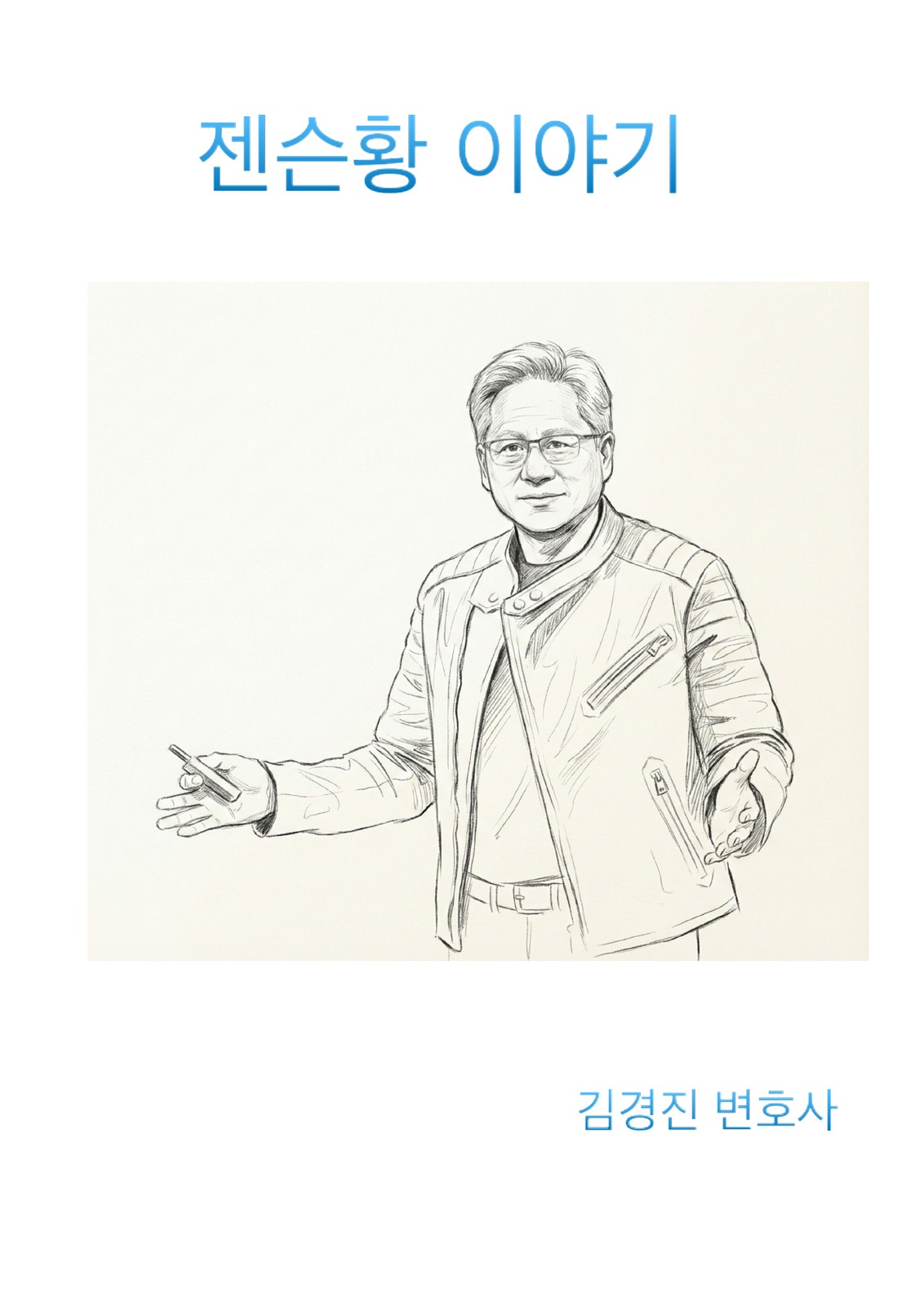
The Jensen Huang Story book cover

16 posts available

The Jensen Huang Story

Kim Kyung-jin

Table of Contents, Preface, 13 Chapters, Epilogue

The Jensen Huang Story is an online AI Library book by Kim Kyung-jin. It covers Jensen Huang, NVIDIA, GPUs, AI chips, and the AI industry.

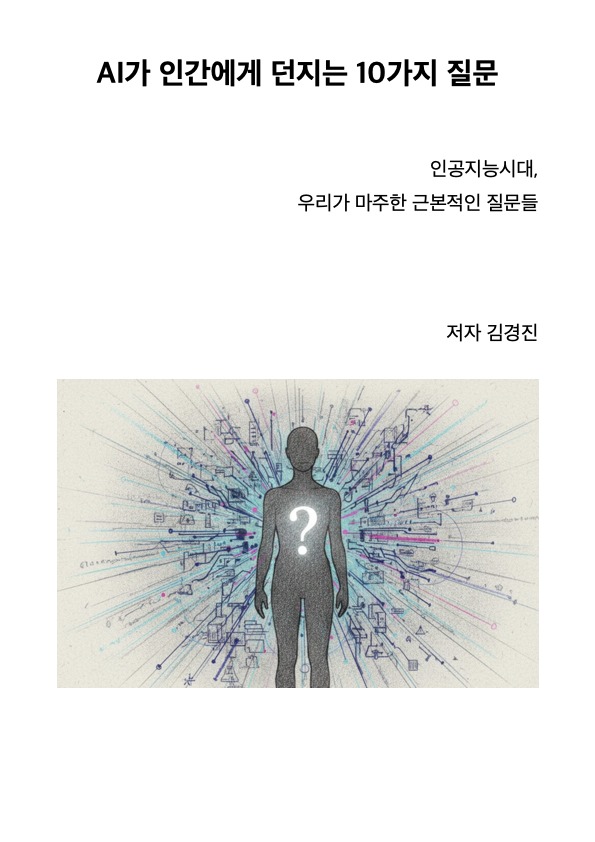
Ten Questions AI Poses to Humanity book cover

12 posts available

Ten Questions AI Poses to Humanity

Kim Kyung-jin

Table of Contents, Preface, 10 Chapters

Ten Questions AI Poses to Humanity is an online AI Library book by Kim Kyung-jin. It asks how artificial intelligence changes truth, weapons, work, data, identity, and human control.

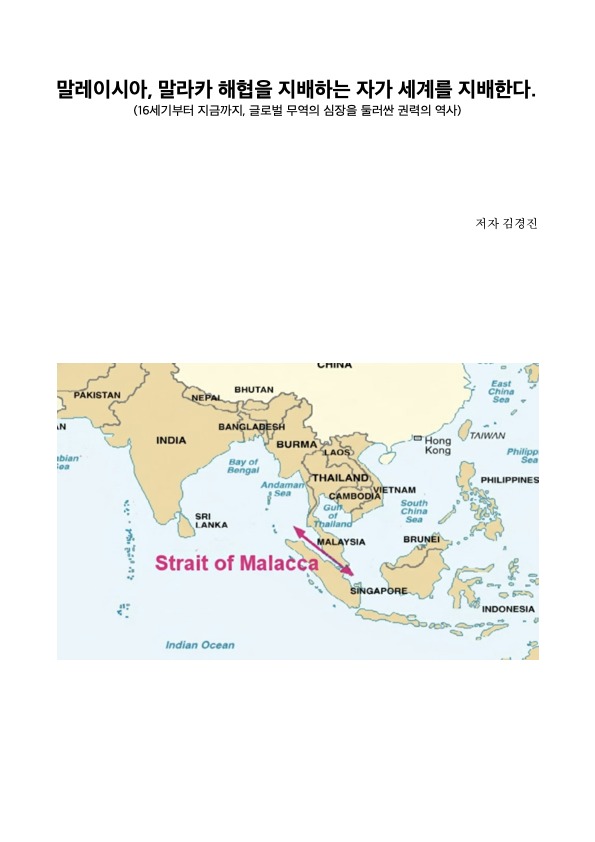
Malaysia and the Malacca Strait book cover

23 posts available

Malaysia and the Malacca Strait: Whoever Controls It Controls the World

Kim Kyung-jin

Table of Contents, Preface, 20 Chapters, Epilogue

Malaysia and the Malacca Strait is an online AI Library book by Kim Kyung-jin. It covers Malaysia, the Malacca Strait, maritime logistics, geopolitics, global trade, and Southeast Asia’s strategic future.

Georgia history and culture travel book cover

24 posts available

A Journey Through Georgia’s History and Culture

Kim Kyung-jin

Table of Contents, Preface, 17 Chapters, 4 Appendices, Epilogue

A Journey Through Georgia’s History and Culture is an online AI Library book by Kim Kyung-jin. It covers Georgia’s history, culture, religion, politics, travel, and the Caucasus crossroads between Europe and Asia.

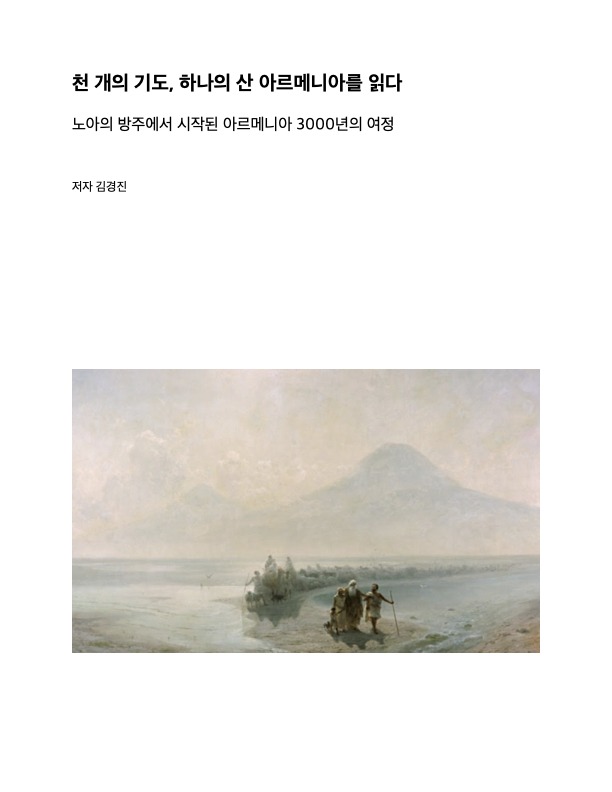
Reading Armenia book cover

13 posts available

Reading Armenia: A Thousand Prayers, One Mountain

Kim Kyung-jin

Table of Contents, Preface, 10 Chapters, Epilogue

Reading Armenia: A Thousand Prayers, One Mountain is an online AI Library book by Kim Kyung-jin. It covers Armenian history, faith, Mount Ararat, cultural memory, travel, and the endurance of a small nation.

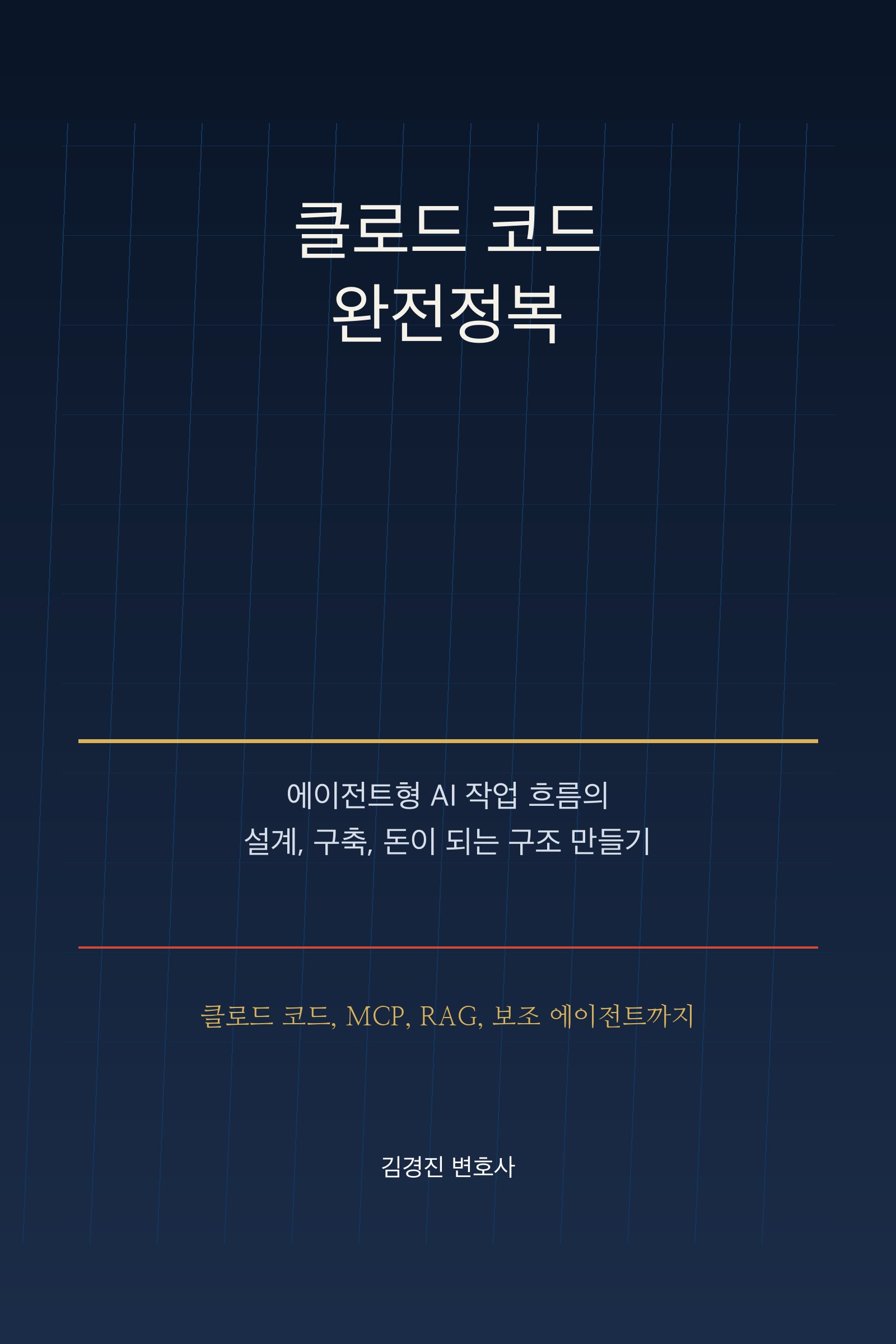
Mastering Claude Code book cover

41 posts available

Mastering Claude Code

Kim Kyung-jin

Table of Contents, Preface, Chapters, Appendices

Mastering Claude Code is an online AI Library book by Kim Kyung-jin. It covers Claude Code setup, commands, workflows, automation, agents, and practical methods for using Claude Code in real work.

Claude Cowork and Agent manual book cover

11 posts available

Claude Cowork and Agent Utilization Manual

Kim Kyung-jin

Table of Contents, Preface, 8 Chapters, Closing Note

Claude Cowork and Agent Utilization Manual is an online AI Library book by Kim Kyung-jin. It covers Claude Code, AI agents, coding automation, work automation, and practical agent-based collaboration.

2026 U.S.-Iran War and the Global Energy Crisis book cover

39 posts available

The 2026 U.S.-Iran War and the Global Energy Crisis

Kim Kyung-jin

Table of Contents, Preface, Chapters and Appendices

The 2026 U.S.-Iran War and the Global Energy Crisis is an online AI Library book by Kim Kyung-jin. It covers war, oil, the Strait of Hormuz, maritime security, energy markets, and the global consequences of conflict.

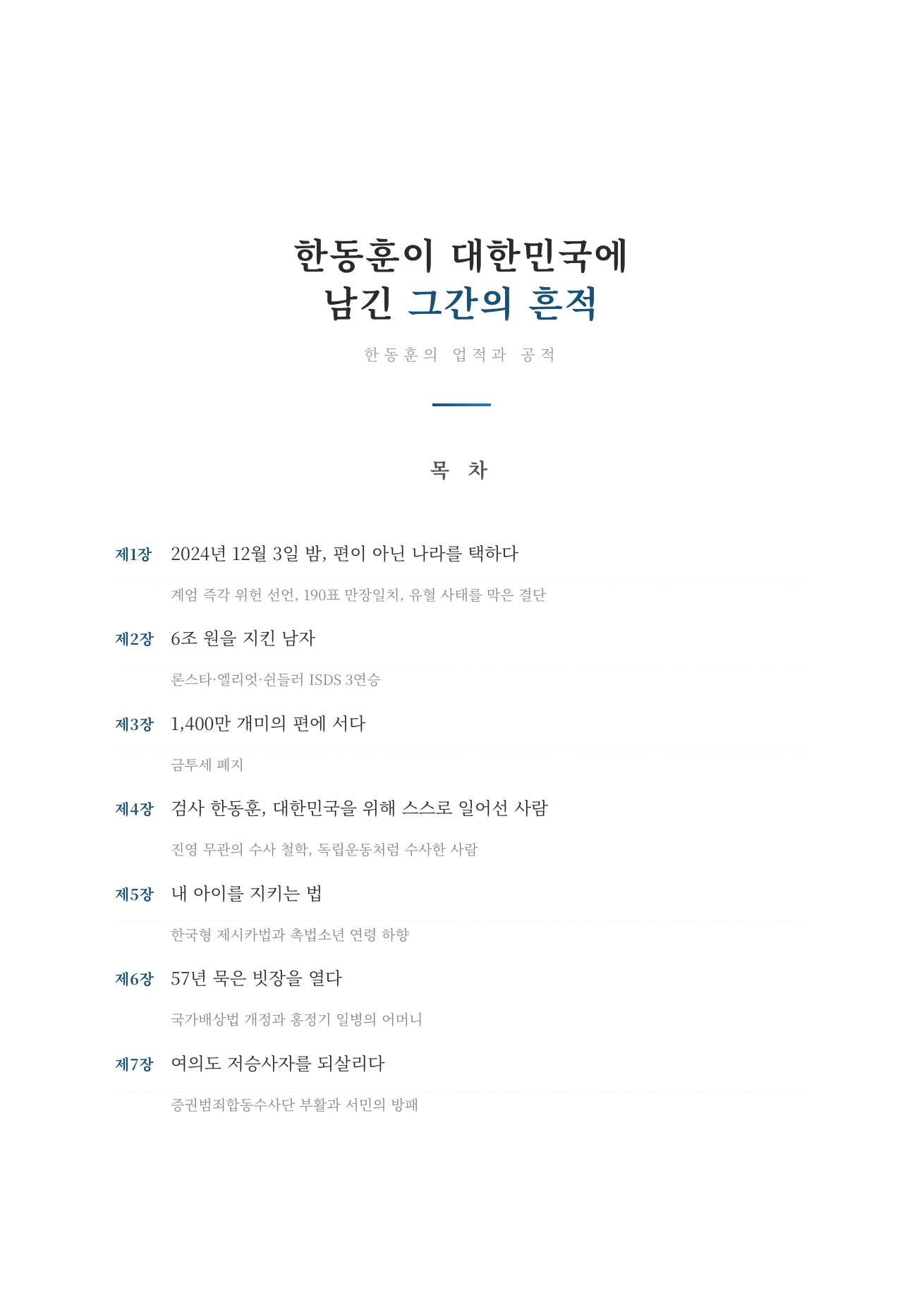
The Traces Han Dong-hoon Left on South Korea book cover

13 posts available

The Traces Han Dong-hoon Left on South Korea

Kim Kyung-jin

Table of Contents, Prologue, Chapters, Epilogue

The Traces Han Dong-hoon Left on South Korea is an online AI Library book by Kim Kyung-jin. It examines his record in justice policy, immigration reform, public institutions, and the structural questions facing South Korea.

The Han Dong-hoon Story book cover

39 posts available

The Han Dong-hoon Story

Kim Kyung-jin

Table of Contents, Prologue, Chapters, Epilogue

The Han Dong-hoon Story is an online AI Library book by Kim Kyung-jin. It traces Han Dong-hoon’s life, public career, political choices, and the changing landscape of South Korean conservative politics.

Beyond the Glass Ceiling cover

39 entries

Beyond the Glass Ceiling

Kim Kyung-jin

Table of contents, prologue, 31 chapters, epilogue, 5 appendices

A political biography tracing Sanae Takaichi’s rise from Nara to Japan’s premiership, through party struggles, security policy, diplomacy, and the meaning of Japan’s first female prime minister.

AI Hegemony War book cover

8 posts available

AI Hegemony War

Kim Kyung-jin

Table of Contents, 7 Chapters

An online AI Library book by Kim Kyung-jin on AI superintelligence, the U.S.-China technology race, Europe and Korea’s AI laws, and international AI governance.

Sam Altman Biography: Pioneer of the AI Revolution cover

22 posts

Sam Altman Biography: Pioneer of the AI Revolution

Kim Kyung-jin, Kim Kyung-ran

Table of contents, preface, 7 parts, 20 chapters

An online biography following Sam Altman’s childhood, startups, Y Combinator, OpenAI, ChatGPT, the 2023 board crisis, and his sense of responsibility in the AI era.

From Chaiwala to Prime Minister cover

13 entries

From Chaiwala to Prime Minister

Kim Kyung-jin

Table of contents, preface, 10 chapters, epilogue

A political biography tracing Narendra Modi from a chai-selling boy in Vadnagar to RSS organizer, Gujarat chief minister, and three-term prime minister, while reading modern India, Korea-India relations, and the risks of a rising power.

AI Classroom: Your Grades Will Change book cover

26 posts available

AI Classroom: Your Grades Will Change

Kim Kyung-jin

Table of Contents, Preface, 24 Sections

An online AI Library book by Kim Kyung-jin on how AI can support elementary, middle, and high school learning, teaching, assessment, and educational equity.
Military Artificial Intelligence cover

17 entries

Military Artificial Intelligence

Kim Kyung-jin and Kim Won-tae

Table of contents, preface, 14 chapters, epilogue

A full-length study of military artificial intelligence, from autonomous weapons, drones, command systems, logistics, and cyber defense to the strategies of the United States, China, Israel, Korea, and global defense AI companies.

Global Case Studies in Introducing AI into Public Administration book cover

25 posts available

Global Case Studies in Introducing AI into Public Administration

Kim Kyung-jin

Table of Contents, 23 Chapters, Epilogue

An online AI Library book by Kim Kyung-jin on public-sector AI adoption, national strategies, administrative services, governance, and future policy tasks.

Seven Misunderstandings About the Arctic Route book cover

10 posts available

Seven Misunderstandings About the Arctic Route

Kim Kyung-jin

Table of Contents, Preface, 7 Chapters, Epilogue

An online AI Library book by Kim Kyung-jin on seven common misunderstandings about the Arctic Route, including speed, liner service, insurance, safety rules, year-round access, carbon impact, and infrastructure.

Artificial Intelligence Election cover

14 posts

Artificial Intelligence Election

Kim Kyung-jin

Table of contents, author preface, 11 chapters, closing essay

An online book on campaign messaging, publicity materials, digital campaigning, data analysis, campaign operations, disinformation defense, legal risk, and ready-to-use prompts.

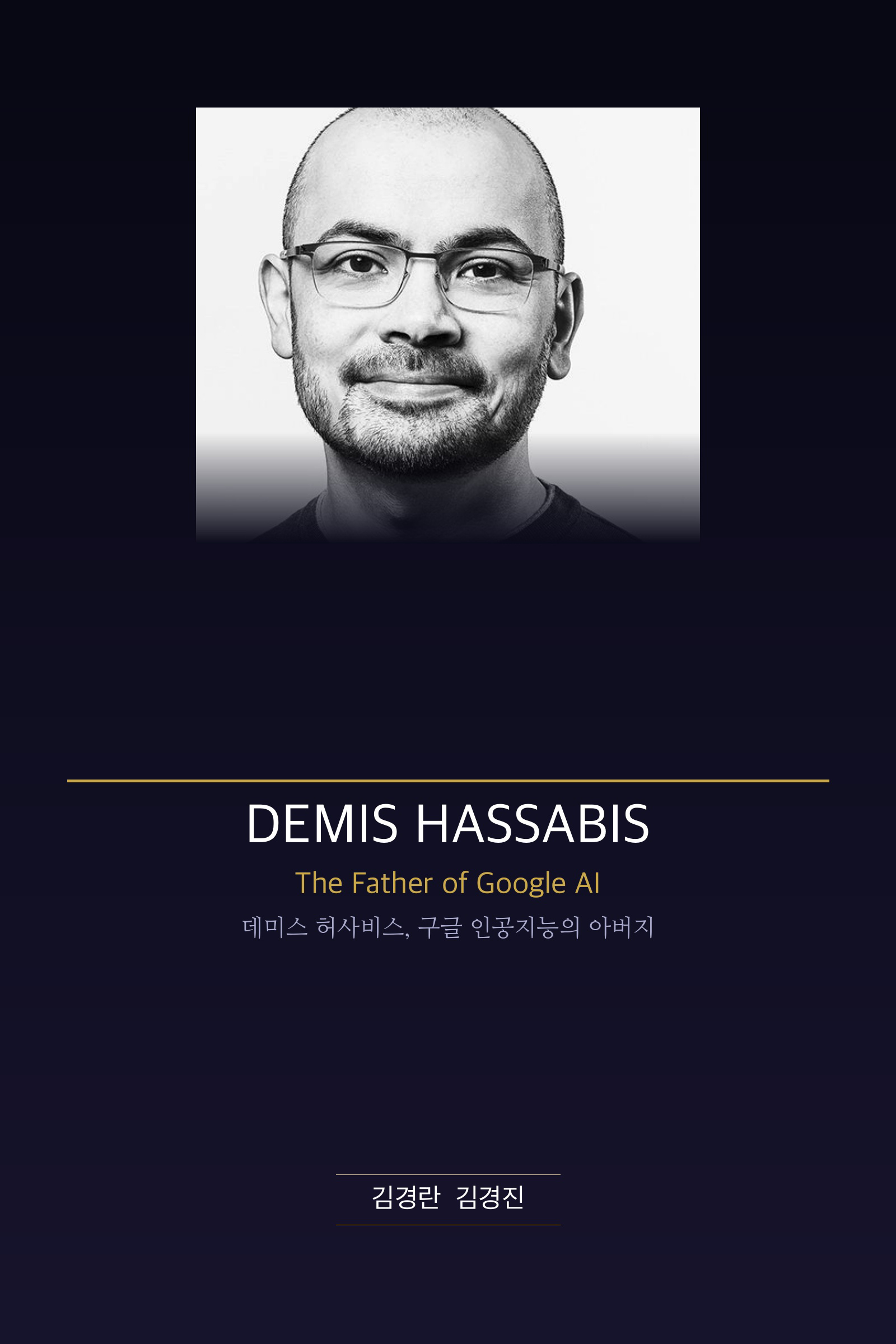
Demis Hassabis book cover

34 posts available

Demis Hassabis, Father of Google’s Artificial Intelligence

Kim Kyung-ran, Kim Kyung-jin

Table of Contents, Author’s Preface, 31 Chapters, Epilogue

Demis Hassabis, Father of Google’s Artificial Intelligence is an online AI Library book by Kim Kyung-ran, Kim Kyung-jin. It covers Demis Hassabis, Google DeepMind, artificial intelligence, AlphaGo, AI research and is organized as Table of Contents, Author’s Preface, 31 Chapters, Epilogue.

The Dhammapada 423 Verses book cover

28 posts available

The Dhammapada: 423 Verses

Kim Kyung-jin

Table of Contents, Editor’s Note, 26 Chapters, 423 Verses

An online AI Library book by Kim Kyung-jin. This edition arranges all 423 verses of the Dhammapada into 26 chapters for slow, poetic reading.

Nano Banana Pro Practical Prompt Book cover

24 posts

Nano Banana Pro Practical Prompt Book

Kim Kyung-jin

6 parts, 22 chapters, classroom prompt appendix

An online book for using Nano Banana Pro in classes and real work, covering image generation, editing, text rendering, character consistency, business use cases, and monetization.

Liberal Arts AI for College Students book cover

16 posts available

Liberal Arts AI for College Students

Kim Kyung-jin

Table of Contents, Preface, 13 Chapters, Closing Essay

An online AI Library textbook for college students. It introduces AI history, daily use, document work, research, images, presentations, video, productivity, learning, careers, copyright, and governance.

Legal Practice and Artificial Intelligence book cover

16 posts available

Legal Practice and Artificial Intelligence

Kim Kyung-jin

Table of Contents, Preface, 14 Parts

An online AI Library book by Kim Kyung-jin on legal research, drafting, evidence analysis, contract review, NotebookLM, and practical generative AI workflows for legal practice.

Hello, I Am Kim Kyung-jin book cover

10 posts available

Hello, I Am Kim Kyung-jin

Kim Kyung-jin

Table of Contents, Preface, Recommendations, 6 Chapters, Closing

An online AI Library book on Kim Kyung-jin’s life, science and technology policy, parliamentary diplomacy, legislative battles, Dongdaemun vision, and proposals for Korea’s demographic future.

Politics and People book cover

25 posts available

Politics and People

Kim Kyung-jin

Table of Contents, Prologue, 22 Chapters, Epilogue

An online AI Library book by Kim Kyung-jin on how politics begins with reading people, winning trust, keeping relationships, and enduring seasons of crisis.

When the Algorithm Gets It Wrong: AI Harms and Ethical Questions from the AIAAIC Record cover

Table of Contents

When the Algorithm Gets It Wrong: AI Harms and Ethical Questions from the AIAAIC Record

Kim Kyung-jin

What happened in hiring and welfare, courts and roads, classrooms and workplaces

AIAAIC is an international database that collects AI and algorithmic incidents from around the world. This book picks eighteen subjects from that record and follows what actually happened and why. Rejection emails that arrive at three in the morning. Debt notices for money never owed. Handcuffs in front of two small daughters. A summer reading list of books that do not exist. A driverless car that hit a child near a school. A robot arm that read a man as a box. Technical terms are explained in plain words the moment they appear, so no computing background is needed. The incidents in this book took place between 2020 and 2025. Artificial intelligence has been moving faster every day, so by today’s standards some of these cases will feel dated and even a little jarring. Nothing here is inaccurate, but please read it with that time gap in mind.

[AI Library] Chapter 2. Who Owns Style and Voice?

Artificial Intelligence on Trial
Author
Attorney Kyungjin Kim
Date
2026-05-05 09:53
Views
1191

Artificial Intelligence on Trial

Part 1. AI and the Collision with Intellectual Property

Chapter 2. Who Owns Style and Voice?

Attorney Kyungjin Kim

A. My Paintings That I Never Painted

(1) Getty Images v. Stability AI: Watermark Reproduction and Trademark Infringement

On November 4, 2025, Justice Joanna Smith of the England and Wales High Court delivered a 205-page judgment. The world was watching. It was the first head-on collision between image-generating AI and copyright law. The outcome surprised many.

Getty Images did not win.

The case began in January 2023. Getty Images filed suit against Stability AI in a British court. The claim was straightforward.

Stability AI scraped 12 million of our images without permission and used them to train Stable Diffusion. This is copyright infringement.

But as the trial progressed, a problem emerged. Getty's lawyers could not find evidence that Stable Diffusion's training had taken place within the United Kingdom. The training happened in the United States. UK copyright law applies only to acts committed within the UK. Getty had to withdraw its primary copyright claims.

Two issues remained. First, whether the AI model itself constituted an 'infringing copy.' Second, whether trademark infringement had occurred.

Justice Smith answered 'no' to the first question. The key passage in the judgment read: "AI model weights are not 'copies' of images. The model does not store visual information. It contains statistically trained parameters, nothing more." This was a significant ruling.

Had the AI model itself been recognized as a 'copy' of the training data, every generative AI company would have instantly become a copyright infringer.

Getty did, however, secure a small victory. On trademark grounds. Justice Smith acknowledged that early versions of Stable Diffusion had produced images reproducing Getty's watermark.

Some user-generated images came out stamped with the words "GETTY IMAGES." The same watermark that had been embedded in the original photographs.

The judge ruled this constituted trademark infringement, though only "within an extremely limited scope." After Stability AI improved its filtering technology, the watermark no longer appeared in outputs.

The message left by this ruling is complicated. For AI companies, it was a sigh of relief. Model weights are not copies. But it was also a warning. If identifiable marks like watermarks appear in outputs, that can constitute trademark infringement.

The fight in the UK reached a stopping point here. But a separate lawsuit is pending in a US court in Delaware. Same parties, same issues, different legal system. What the American court will decide remains unknown.

(2) Andersen v. Stability AI/Midjourney/DeviantArt: Proving Copyright Infringement Through Style Imitation

Sarah Andersen was a webcomic artist. Under the name "Sarah's Scribbles," she had millions of followers and was one of the most beloved illustrators on the internet. In January 2023, she filed a class action lawsuit alongside other artists.

The defendants were Stability AI, Midjourney, and DeviantArt. The claim: her artwork had been used without authorization to train AI models.

As of 2025, this lawsuit is in the discovery phase. Trial is scheduled for September 8, 2026. But an important ruling has already been issued.

On August 12, 2024, Judge William Orrick denied most of the defendants' motions to dismiss. He recognized that the plaintiffs' copyright infringement claims deserved to be argued in court.

What caught Judge Orrick's attention was a statement by Stability AI CEO Emad Mostaque. In an interview, Mostaque had said: "We compressed 100,000 gigabytes of images into a 2-gigabyte file. This file can 'reproduce' any of those images."

The judge took this statement seriously. If the AI model truly is a 'compressed copy' of the training images, that could qualify as reproduction under copyright law.

The judge wrote: "At this stage, it is plausible to infer that Stable Diffusion was built substantially on copyrighted works and that its operation necessarily invokes copies or protected elements of those works."

As of January 2026, the lawsuit remains in discovery. Trial is set for September 8, 2026, but an unexpected battle has erupted along the way. A battle over expert witnesses. The plaintiffs put forward Professor Ben Yanbin Zhao as their expert witness. A distinguished professor of computer science at the University of Chicago. This individual, however, had one unusual credential. He was the creator of tools called 'Nightshade' and 'Glaze.'

Nightshade was a kind of 'poison.' When artists applied this tool to their artwork, the images appeared unchanged to the human eye, but AI models would see something entirely different. A person sees a cow in a meadow; the AI sees a leather handbag lying in grass. AI models trained on these 'contaminated' images would gradually produce bizarre outputs.

The defense lawyers reacted immediately. We cannot show our source code and training data to someone who built a tool designed to sabotage our models.

In June 2025, Magistrate Judge Lisa Cisneros held a hearing on the matter. She called it "a difficult question." Professor Zhao is an academic researcher, not an employee of a competing company. But his research was adversarial to the defendants' products.

On July 14, 2025, Judge Cisneros issued her ruling. She prohibited Professor Zhao from accessing the defendants' highly confidential materials. The plaintiffs objected.

On August 29, 2025, Judge William Orrick upheld Judge Cisneros's decision. "Dr. Zhao's research places him in an 'adversarial posture' with respect to the defendants. There is a risk of inadvertent use of the defendants' highly confidential information, as well as competitive harm."

Judge Orrick did clarify one point: "Judge Cisneros's order does not mean that Dr. Zhao cannot testify or assist the plaintiffs as an expert. It means only that he cannot view information the defendants have designated as highly confidential under this case's protective order."

For the plaintiffs, this was a blow. They argued that Professor Zhao possessed "irreplaceable expertise." But the court found that alternative experts existed. The defense cited Dr. Emily Wenger, who had been disclosed as an expert in Google's generative AI copyright litigation.

According to the Joint Status Report filed October 16, 2025, discovery negotiations between the parties continue. Stability AI agreed to 10 search term strings across 7 custodians. Midjourney agreed to 13 search terms across 6 custodians. DeviantArt allowed 8 search terms for 4 custodians.

Midjourney's production of training data became a separate point of contention. In July 2025, Midjourney requested an extension of its deadline to produce training data, and the court granted it.

Roughly eight months remain until trial. Both sides are still gathering evidence and preparing experts. But one thing has already become clear. This lawsuit is not about copyright infringement alone. It is also a question about what 'secrecy' means in the age of AI, and what 'competition' means.

Meanwhile, during the same period, Midjourney, a principal defendant in this case, faced another front. In June 2025, Disney and Universal sued Midjourney for copyright infringement. In September 2025, Warner Bros. joined them. Three of Hollywood's five major studios are now litigating against Midjourney.

It has been roughly four years since Sarah Andersen discovered strange drawings in her own style on Twitter. The lawsuit she started has become the epicenter of an earthquake shaking the entire AI image generation industry.

The next section examines one of this lawsuit's central issues: the 'Compressed Copy' theory. Do AI models truly 'compress' and store billions of images inside themselves?

Internal documents revealing how AI companies collected training data, which images were included, and how they bypassed copyright protections in the process. The outcome of this lawsuit will affect the entire US AI industry. If the plaintiffs prevail, the current practice of training AI on data scraped from the internet could be fundamentally destabilized.

(3) The Compressed Copy Theory: Technical and Legal Issues

In the spring of 2024, Judge William Orrick of the US District Court for the Northern District of California was wrestling with a strange question.

An AI model called Stable Diffusion had 'learned' from billions of images. The resulting model file was approximately 4 gigabytes. The total size of the original images was measured in petabytes. Information millions of times larger had been reduced to a fraction of a fraction. The question was this: Is that 4-gigabyte file a 'copy' of the original images?

Answering this question requires first understanding how AI works.

Think of a photo stored on your phone. It is a JPEG file. That file is a sequence of binary digits, zeros and ones. When you open the photo, software decodes those binary digits and displays an image on your screen. The key point is this: opening the same file always produces the same image. One photo, one file. A one-to-one correspondence.

AI models are different. Inside a generative AI model are billions of numbers called 'weights.' These weights contain statistical patterns extracted from millions of training images. Patterns like: "Cat ears generally follow this kind of curve," "Eyes are generally positioned here." When you type "cat," the model combines these patterns to generate an image that looks like a cat.

But no specific cat photo is 'stored' inside those weights. It is not a structure where decompression produces the original, the way JPEG works. Enter the same prompt and a different cat image is generated each time. Millions of images into a single model. A many-to-many relationship. This is the AI companies' argument so far. They say: Our model is not a copy. We did not 'store' images; we 'learned' from them. It is the same as a human painter viewing thousands of paintings and developing a personal style.

But there is an uncomfortable truth.

In 2023, researchers fed specific prompts to Stable Diffusion. The model generated images with Getty Images watermarks clearly visible. It had reproduced images from its training data almost exactly. In other experiments, famous photographers' works were restored pixel by pixel. The model had 'memorized' the originals.

This is where copyright holders struck back. They ask: if a model can spit out training images verbatim, aren't those images 'contained' somewhere inside it? Different in form, perhaps, but copies in substance?

Technical experts call this phenomenon 'overfitting' or 'memorization.' The more frequently an image appears in training data, or the more distinctive its features, the higher the probability that the model will reproduce it exactly. Models don't just learn patterns. Sometimes they remember the originals themselves.

The legal debate splits here.

Justice Michael Green of the England and Wales High Court ruled in the 2024 Getty Images case: "Model weights themselves are not copies of training images. The weights carry the potential to reproduce images, but they do not contain the images themselves." He drew a line between the potential for copying and actual copying. U.S. courts have not yet reached a conclusion. Judge Orrick asked in Andersen v. Stability AI: "If, as defendants claim, the model is 'merely a tool,' why can that tool reproduce plaintiffs' works with such precision?" He did not dismiss the plaintiffs' claims outright. He demanded more evidence.

The central issue is the definition of 'copying.' When the U.S. Copyright Act was enacted in 1976, the legislators imagined copying through photocopiers and printing presses. Physical reproduction. A world where originals and copies were clearly distinct. What now sits before the courts is an entirely different technology: a system that can 'reproduce' originals without 'storing' them.

Scholars call this the 'compressed copy' theory. The argument is that an AI model is an extremely compressed replica of its training data. Unlike a ZIP file, perfect restoration is impossible, but partial restoration is. And copyright law recognizes partial copying as infringement.

As of 2025, three federal judges in the United States have weighed in on the relationship between AI training and copyright. Two leaned in favor of AI companies. One left the door open for copyright holders. But all of these rulings came at early stages of litigation. None are final verdicts. Appeals are underway, and discovery is ongoing.

One thing is certain. The answer to the question 'what is copying?' will determine the future of the AI industry. And the people who will provide that answer are not engineers. They are judges.

B. The Collision Between the Music Industry and AI

(1) RIAA v. Suno: Unauthorized Training on Sound Recordings by an AI Music Generation Service

On June 24, 2024, the Recording Industry Association of America (RIAA) filed two lawsuits simultaneously. One against Suno, one against Udio. The plaintiffs were Universal Music Group, Sony Music, and Warner Music Group. All three of the world's major record labels.

Suno is an AI music generation service. A user types '1980s-style upbeat pop song,' and the AI produces music to match. Lyrics, melody, arrangement, everything.

The record labels' argument was blunt.

Suno trained on our recordings without permission. And the output sounds far too much like our music.

The complaint included striking evidence. When the plaintiffs' investigators entered specific prompts into Suno, the output bore a remarkable resemblance to Chuck Berry's "Johnny B. Goode" and Jerry Lee Lewis's "Great Balls of Fire." The distinctive rhythms and melodies were reproduced intact.

Suno's defense was predictable.

Fair use. Our AI learned the 'style' of music, not specific songs. This is no different from "a child who grew up listening to rock music learning to play rock."

In September 2025, the RIAA amended its complaint with new allegations.

Suno had 'illegally scraped' recordings from YouTube. Specifically, the claim was that Suno had circumvented YouTube's rolling cipher system to download audio. If true, this would add a violation of Section 1201 of the Digital Millennium Copyright Act (DMCA) on top of the copyright infringement claims. But in November 2025, something unexpected happened.

Warner Music Group settled with Suno. It was the first defection among the three labels.

The terms of the settlement were as follows.

Suno would phase out its current model. It would launch a new platform in 2026. That platform would be trained exclusively on licensed music. Warner's artists could 'opt in' to having their music used for training and receive compensation for it.

The financial terms were not disclosed.

But the message was clear. From war to peace. From litigation to partnership.

Universal and Sony's lawsuits continue. But Warner's settlement sent a signal to other labels: sitting at the negotiating table might be better than fighting in court.

(2) RIAA v. Udio: The Direct Infringement Liability Debate

Udio was Suno's twin. An AI music generation service built by former Google DeepMind researchers. It launched in April 2024 and grew rapidly. It received investment from the venture capital firm Andreessen Horowitz (a16z), and the musician will.i.am was among its investors.

On the same day the RIAA sued Suno, it sued Udio with the same legal arguments. The complaint filed in the Southern District of New York was nearly identical. Unauthorized training, copyright infringement, market displacement.

But the Udio lawsuit took a different path.

On October 29, 2025, Universal Music Group announced a settlement with Udio. The press release was titled "Industry-First Strategic Settlement."

The terms were more detailed than the Warner-Suno deal.

First, there was a financial settlement. The amount was not disclosed.

Second, a licensing agreement was signed. Udio obtained the right to use Universal's recorded music catalog and publishing catalog.

Third, a new service would launch in 2026. It would operate in a "licensed and protected environment."

Universal's CEO Lucian Grainge said: "This settlement demonstrates our commitment to doing right by our artists and songwriters."

Udio's CEO Andrew Sanchez was more optimistic: "This moment realizes everything we have been building toward. Bringing AI and the music industry together in a way that truly champions artists."

What this settlement means is clear. AI music companies face a fork in the road. Train without permission and get dragged into court, or pay for licenses and build a legitimate business model. Sony Music's lawsuit is still pending. But with Universal and Warner off the front lines, the nature of the fight will inevitably change.

(3) Concord Music v. Anthropic: Song Lyric Output and the Licensing Question

In October 2023, music publishers sued Anthropic. Universal Music Publishing, Concord Music Group, and ABKCO. Their claim was this.

Anthropic's Claude outputs copyrighted song lyrics. Katy Perry, the Rolling Stones, Beyonce.

The complaint included test results. When a user entered the prompt "Tell me the lyrics to Katy Perry's 'Roar,'" Claude produced a near-perfect reproduction of the lyrics.

But this lawsuit unfolded in a different direction from other AI copyright cases.

In January 2025, the two sides reached a settlement.

This was not a settlement ending the lawsuit itself, but a settlement on the output issue. Anthropic promised to maintain guardrails preventing Claude from outputting the plaintiffs' song lyrics. It also agreed to block the generation of new lyrics.

With that, the infringement issue at the 'output stage' was provisionally resolved. What remained was the 'input stage,' the question of whether the mere inclusion of lyrics in training data constitutes infringement.

In March 2025, Judge Eumi Lee denied the plaintiffs' motion for a preliminary injunction. She gave two reasons. First, the scope of the injunction was too broad. The plaintiffs sought an injunction covering hundreds of thousands of song lyrics, but it was unclear how Anthropic could comply. Second, irreparable harm was not demonstrated. There was no evidence that the existing licensing market had shrunk because of Anthropic.

The next day, the judge also dismissed the contributory infringement and vicarious infringement claims. The reason was that the plaintiffs failed to prove 'direct infringement by third parties.' Many of the lyric output examples cited in the complaint were tests conducted by the plaintiffs' own investigators, not actual users.

The direct infringement claim, however, survived. Trial was scheduled for November 18, 2025.

In October 2025, the plaintiffs filed a motion to amend their complaint. They sought to add allegations that Anthropic downloaded lyrics from piracy sites ('shadow libraries'). This fact had emerged in the separate Bartz v. Anthropic lawsuit.

Judge Lee denied the motion. Her reasoning was that the plaintiffs had not diligently investigated the issue before the discovery deadline. Anthropic won a small victory. But the direct infringement trial still lies ahead.

C. Character and Content Copyright

(1) Disney/Universal v. Midjourney: Reproduction of Famous Characters and Derivative Work Infringement

On June 11, 2025, Hollywood declared war on AI.

Disney and Universal jointly sued Midjourney. A 110-page complaint. The world's largest entertainment companies dragged the world's largest image-generation AI company into court.

The complaint pulled no punches. Midjourney was 'a bottomless pit of plagiarism' and a 'virtual vending machine' that copied and sold Disney's and Universal's works without authorization.

The complaint included side-by-side evidence photos.

On the left, images generated by Midjourney. On the right, the original characters. Darth Vader. Elsa. Buzz Lightyear. Shrek. The Minions. The Simpsons.

A simple prompt like 'animated toys' produced Woody and Buzz from Toy Story. A prompt like 'popular movie screencap' reproduced specific Disney film scenes. Entering a character's name predictably produced that character.

Disney's chief legal officer Horacio Gutierrez issued a statement: 'We are optimistic about the potential of AI technology. But piracy is piracy. It is no less infringing just because an AI company does it.'

According to the complaint, Midjourney had 21 million users and annual revenue of $300 million. Disney and Universal demanded up to $150,000 in statutory damages per infringed work. The complaint listed more than 150 works. The potential damages exceed $20 million. On August 6, 2025, Midjourney filed its answer, denying all claims.

The defense logic went like this.

First, fair use.

Second, neural networks do not 'store' works. They only learn statistical patterns.

Third, Midjourney is not liable for content generated by users.

The plaintiffs countered. Midjourney already has the technology to filter violent and nude images. It could filter copyrighted characters too. It chose not to.

This lawsuit is in its early stages. Discovery has not yet begun. But other lawsuits are already following. In September 2025, Warner Bros. filed a similar suit against Midjourney.

Character copyright is visually clearer than text or image copyright. Asking a jury 'Is this Darth Vader or not?' is far more intuitive than asking 'Is this text similar to a New York Times article?'

That is why this lawsuit may be more dangerous for the AI industry.

(2) Google AI MDL Consolidated Litigation

Google is not free from the copyright war either.

Authors and photographers sued Google's Bard (now Gemini) and Imagen.

In October 2024, several lawsuits were consolidated. The claims are similar to other AI lawsuits. Google scraped data from the entire internet without permission to train its AI. Copyrighted content was included in the process.

In September 2025, the court dismissed claims related to earlier AI models but allowed claims against Gemini and Imagen to proceed.

In October 2025, the plaintiffs filed for class certification. The hearing is scheduled for February 4, 2026, before Judge Eumi Lee.

The key question is this: Can publicly posted content be freely used for AI training, or is permission required?

If Google loses, the damages would be astronomical. The entire internet was training data. Data deletion or the construction of a licensing framework could be required.

Lawsuits against OpenAI are also being consolidated in the Southern District of New York. On April 3, 2025, the U.S. Judicial Panel on Multidistrict Litigation grouped more than 12 lawsuits into a single MDL. The plaintiffs include the New York Times, the Authors Guild, Raw Story, The Intercept, and the Chicago Tribune. Judge Sidney Stein presides. On October 8, 2025, Judge Stein held a four-hour oral hearing on OpenAI's motion to dismiss. No decision has been issued yet.

A new summary judgment ruling on fair use is unlikely before the summer of 2026. Until then, AI companies and content creators must craft their strategies amid uncertainty.

One thing is certain. As of 2025, more than 50 AI copyright lawsuits are pending in U.S. federal courts. And the number keeps growing.
Kim Kyung-jin

Attorney · Former Member of the National Assembly · AI Policy Researcher

kimkj.com

© 2026 Kim Kyung-jin. All rights reserved.

#KimKyungjin #AttorneyKyungjinKim #AILibrary #ArtificialIntelligence #AIOnTrial #AILitigation #Copyright #AIRegulation #GenerativeAI #AILaw
kimkj.com Home
Scroll to Top
kimkj.com Home kimkj.com Home