AI Library
The Age of Autonomous Scientific Discovery
Kim Kyung-jin, Attorney at Law
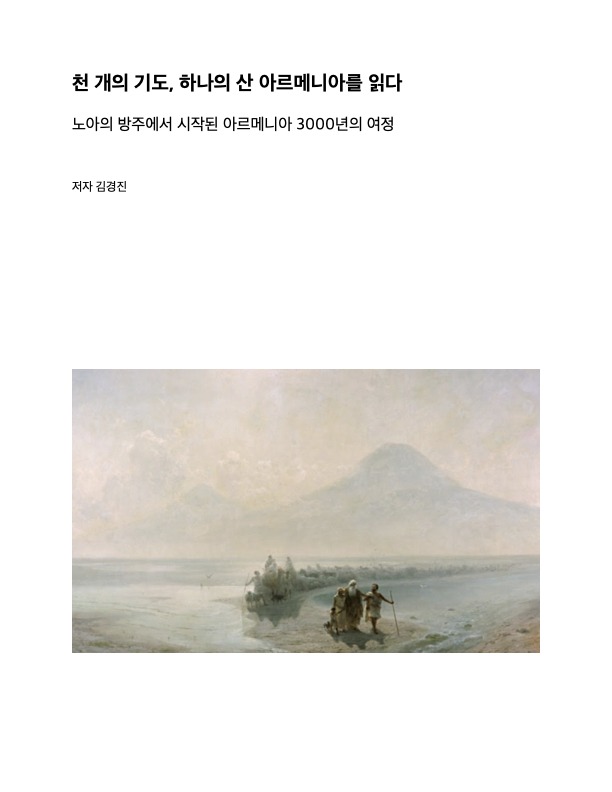
AI Scientists and Self-Driving Labs
This book follows how AI scientists and self-driving labs are changing the way science generates and verifies claims. It covers literature-based discovery, natural-language protocols translated into robot commands, multi-agent research systems, closed-loop laboratories, materials search, the verification gap, chains of evidence, research harnesses, journal ethics, and legal responsibility.
AI Library
A New Era of Life Sciences Opened by Artificial Intelligence
Structural Proteomics, Genomic Foundation Models, Autonomous Laboratories, and Global Governance
Kim Kyung-jin, Attorney at Law
This book is a research volume compiled with artificial intelligence. A human selected the materials and structured the work, while AI models drafted the sentences and cross-checked the facts.
AI Library
The Double Structure of Digital Sovereignty
Europe’s Departure from Palantir and the Chains of American Big Tech
Kim Kyung-jin, Attorney at Law
This is a record of 2026, when European intelligence agencies and defense ministries began removing analytics tools from America’s Palantir. It covers the replacement decisions made by France’s General Directorate for Internal Security (DGSI), Germany’s Federal Office for the Protection of the Constitution (BfV), and the Netherlands Ministry of Defense; the incident in which US export controls severed an ally’s ac…
New English Edition
Artificial Intelligence in Horticulture
Kim Kyung-jin, Attorney at Law
Across five chapters and ten sections, this book examines computer vision for crop diagnosis, harvesting robots and autonomous field systems, smart greenhouses and digital twins, precision irrigation and supply-chain quality control, high-throughput phenotyping, and predictive breeding.
New English Edition
Artificial Intelligence in Food Crop Agriculture
Kim Kyung-jin, Attorney at Law
Across six chapters and eighteen sections, the book examines digital agricultural infrastructure, remote sensing, crop diagnosis, yield forecasting, precision irrigation, genomics, molecular breeding, agricultural robotics, climate-smart agriculture, and global food security.
New English Edition
The Future of Forestry and Agroforestry
Kim Kyung-jin, Attorney at Law
Driven by Artificial Intelligence and Digital Innovation
Across five chapters and fifteen sections, the book follows satellites, drones, LiDAR, digital twins, forest-specific language models, wildfire and pest forecasting, forestry robotics, agroforestry, timber traceability, and forest carbon markets.
New English Edition
Smart Livestock Farming: AI Enters the Barn
Kim Kyung-jin, Attorney at Law
Sensors listen, cameras watch, and artificial intelligence helps farmers decide.
Across five chapters and fifteen sections, the book follows precision livestock farming from animal health and reproduction to robotic milking, virtual fencing, digital twins, methane reduction, welfare, and data ownership.
Table of Contents
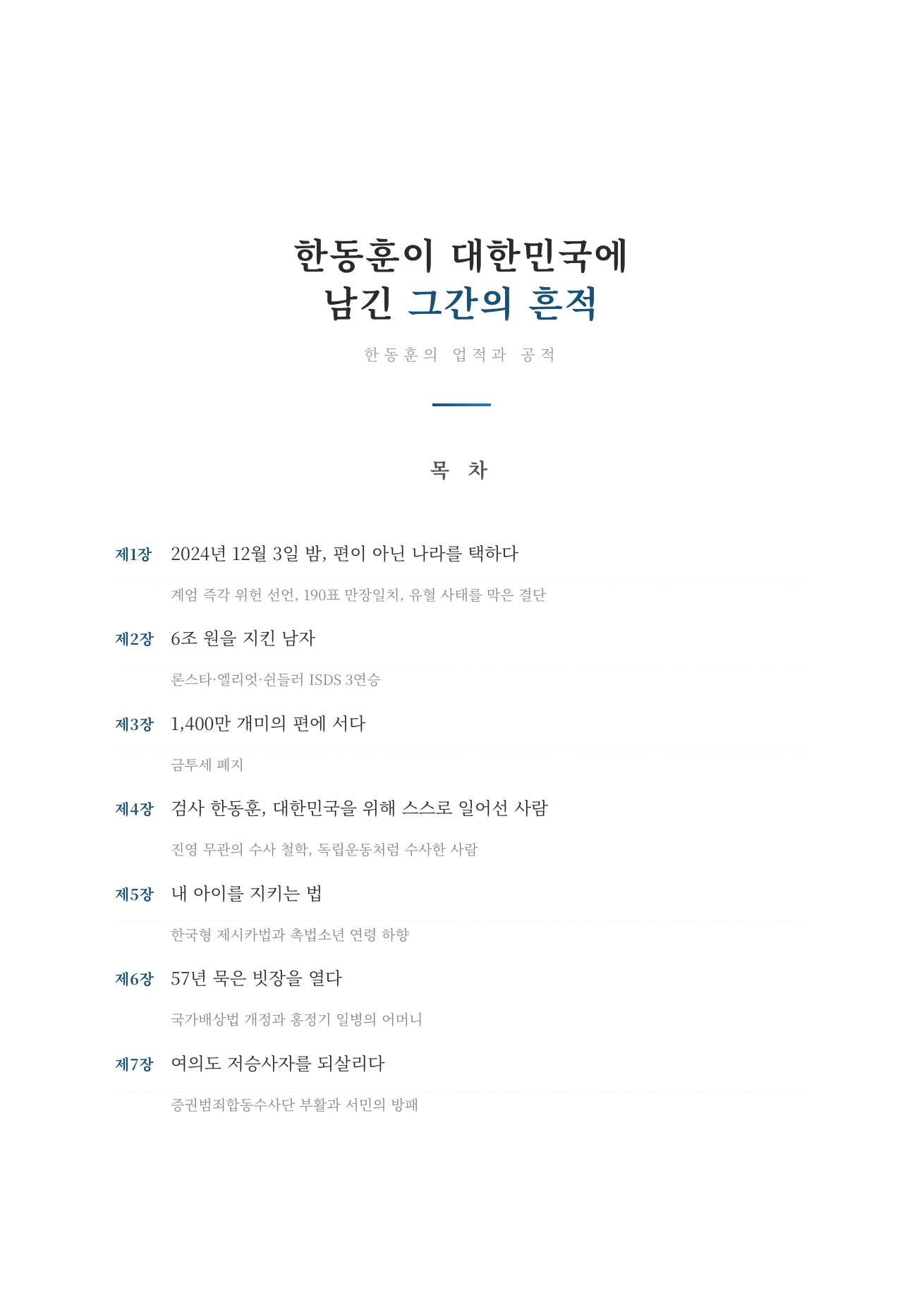
Han Dong-hoon, Busan Buk-gu Gap: A Record of the 100 Days Before and After the Election (Mar. 26-Jul. 3, 2026)
Kim Kyung-jin
Table of Contents and 13 sections
From March 26 to July 3, 2026, this record follows the spring after expulsion, the Busan Buk-gu Gap by-election, victory as an independent, and the first bill submitted in the National Assembly.
Table of Contents
Artificial Intelligence and Medicine
Kim Kyung-jin, Attorney at Law
AI in clinical care, hospitals, education, and research
AI in medical imaging, risk prediction, treatment planning, hospital operations, education, and research, with patient safety, privacy, and accountability.



[AI Library] Chapter 3. Who Owns AI-Generated Works?
Artificial Intelligence on Trial
Part 1. AI and the Collision with Intellectual Property
Chapter 3. Who Owns AI-Generated Works?
Attorney Kyungjin Kim
A. The Human Authorship Principle
(1) Thaler v. Perlmutter: Can AI Be a Copyright Holder?
One day in 2018, Stephen Thaler, a computer scientist living in Missouri, mailed a single document to the U.S. Copyright Office reception desk in Washington, D.C.
Attached to the document was a peculiar image. A dreamlike painting resembling a railroad tunnel. The title was "A Recent Entrance to Paradise." But the truly peculiar part was not the painting itself.
It was the author field. Thaler had written "Creativity Machine" there. His own name was nowhere to be found.
The Copyright Office examiners must have paused when they received this document. In nearly 150 years of U.S. copyright administration, a "machine" had never been listed as an author. Thaler's logic was provocative. He claimed that his AI system, "DABUS" and "Creativity Machine," had produced this image entirely on its own, without human intervention. Then he pushed further. As the AI's owner, he argued, he should inherit the copyright under the work-for-hire doctrine.
The Copyright Office refused. The reasoning was straightforward. "This is a work not created by a human."
Thaler did not back down. He filed a lawsuit. In August 2023, Judge Beryl A. Howell of the U.S. District Court for the District of Columbia ruled in favor of the Copyright Office.
In her opinion, Judge Howell drew a clear line. "Human authorship is an essential prerequisite for copyright protection." Then on March 18, 2025, the D.C. Circuit Court of Appeals unanimously affirmed the ruling. Judge Patricia A. Millett wrote: "The Creativity Machine cannot be an author recognized under copyright law. The Copyright Act of 1976 requires that all registrable works be authored by a human being from the outset."
To understand the court's reasoning, we need to return to the origins of copyright as an institution. Article I, Section 8 of the U.S. Constitution grants Congress the power "to promote the Progress of Science and useful Arts, by securing for limited Times to Authors and Inventors the exclusive Right to their respective Writings and Discoveries." The key word here is "Authors." The court determined that this word has always meant "human beings," historically, contextually, and throughout the entire legal framework.
Thaler pushed back. He opened dictionaries. He found definitions suggesting that "author" does not necessarily refer only to humans. The court dismissed this. "Statutory interpretation requires more than finding one favorable dictionary definition." Thaler played another card. The Copyright Act contains a work-for-hire provision under which an employer can be "deemed" the author. If a corporation can be an author, why not a machine? The court rejected this too. The word "deemed" in the work-for-hire provision, the court explained, means that only the rights transfer while the underlying assumption remains that the original creator is human.
Thaler's final argument was a policy one. He warned that insisting on the human authorship requirement would chill AI-assisted creation. The court was unmoved. The judge wrote: "Machines do not respond to economic incentives. The Creativity Machine will keep generating images whether or not copyright exists. But for human creators, copyright still functions as a motivation to create." The court added: "If in the future AI becomes responsive to economic incentives, or if the human authorship requirement substantially impedes the creation of original works, Congress and the Copyright Office can address that issue then."
On October 9, 2025, Thaler knocked on the Supreme Court's door as expected. Case No. 25-449. His legal team argued in their petition for writ of certiorari that the Copyright Office's decision "has created a chilling effect on everyone seeking to use AI creatively." They contended this decision "contradicts the very purpose for which the Constitution grants Congress copyright authority." The U.S. Supreme Court operates differently from Korea's Supreme Court. Appeals are not automatically heard. When a party files a petition for certiorari, the Court first decides whether the case merits review. At least four of the nine justices must agree before certiorari is granted.
The legal community calls this the "Rule of Four." Each year, roughly 7,000 to 8,000 petitions for certiorari are filed, but the Court actually hears only 100 to 150 cases. The denial rate exceeds 98 percent.
If certiorari is granted, merits briefing begins. Oral arguments are held, and the justices draft their opinions. If denied, the lower court's ruling stands as final. The Court does not explain its reasons for denial. It simply issues a single sentence: "Certiorari denied."
As of January 2026, Thaler's petition remains pending. The Court typically takes several weeks to several months to review certiorari petitions. Justices review petitions during their private conferences held every Thursday, then announce their decisions afterward.
This is Thaler's second attempt at the Supreme Court. In 2023, he brought the patent case Thaler v. Vidal, asking whether the term "inventor" under patent law refers only to humans. The Court denied certiorari. No reason was given.
Legal experts predict the same outcome this time. One law firm's analysis put it this way: "The rule today is clear. AI is a powerful assistant, not a legal author. Until the Supreme Court takes a different position, companies must design processes that keep human creativity at the center, make accurate disclosures, and maintain realistic enforcement expectations."
If the Supreme Court denies certiorari, the D.C. Circuit's ruling becomes final, and Thaler's seven-year legal battle concludes. If certiorari is granted, a historic Supreme Court decision on copyright ownership of AI-generated works would follow. But Court intervention remains unlikely.
What did the Thaler case leave behind? It was a line drawn in the sand. The U.S. judiciary declared that no matter how sophisticated or beautiful an AI's output may be, it does not deserve copyright protection unless it originates from a "human mental conception." This line is sharper than it appears. If AI-generated works have no copyright, a competitor can copy them wholesale with no legal recourse. They remain in the public domain.
This sends a paradoxical message to Silicon Valley. Big tech companies are investing hundreds of billions of dollars to build AI smarter than humans. Yet the moment that AI becomes "too" smart and produces masterpieces without any human touch, the economic value of those masterpieces could legally become zero. Because no one can claim exclusivity over them.
The question Thaler raised has not disappeared. Is the belief that only humans can create a sacred principle that will endure through the AI era, or is it an outdated convention from the nineteenth century?
(2) U.S. Copyright Office (USCO) Guidance: The Requirement of Human Creative Contribution
On March 16, 2023, the U.S. Copyright Office quietly released a document. Its title was "Copyright Registration Guidance: Works Containing Material Generated by Artificial Intelligence." This was five months before the Thaler ruling. The Copyright Office had moved ahead of the courts.
The core of this guidance can be summarized in two words.
"Separation" and "Disclosure."
Separation means this: if you used AI to create a work, the Copyright Office will not treat the entire work as a single unit. It separates the AI-generated portions from the human-created portions. The AI-generated portions are excluded from copyright protection. Only the human-created portions can receive protection. It is similar to building a house: you cannot claim rights over the bricks a contractor laid, but you can claim rights over the paint you applied and the door handles you installed yourself.
Disclosure means this obligation: when filing for copyright registration, you must state whether your work contains AI-generated material. You cannot hide it. If you have already submitted applications that failed to disclose AI use, you must amend them.
On January 29, 2025, the Copyright Office released a more detailed report titled "Copyright and Artificial Intelligence, Part 2: Copyrightability." This report was the Office's official response to the flood of questions that followed the Thaler ruling.
The report's conclusion was unambiguous.
"Existing law is sufficient. New legislation is not necessary."
The Copyright Office classified human use of AI into four categories.
First, using AI as a tool to assist the creative process. Second, inputting prompts to generate output.
Third, feeding human-created expressive material (photographs, drawings, etc.) into AI for transformation.
Fourth, humans modifying or arranging AI-generated output.
The critical category here is the second one: prompts. The Copyright Office's conclusion was firm. "Based on currently generally available technology, prompts alone are insufficient to render the output as human-authored."
This was a judgment that deflated many people's expectations. Many users of Midjourney or DALL-E believed that because they spent time and effort crafting sophisticated prompts, they had rights over the resulting output. The Copyright Office disagreed.
An analogy helps explain the Copyright Office's logic. Suppose you commissioned a famous painter: "Paint a moon floating over the sea. The moonlight should be silver, and the waves should be calm." The painter completes a masterpiece. Who is the author of this painting? The painter. Because you provided the "idea," but you did not create the "expression." The Copyright Office views entering a prompt into AI as essentially the same as commissioning a painting from an artist.
AI-generated output has one decisive characteristic on top of this: unpredictability. Even when you enter the exact same prompt, AI produces different results each time. The Copyright Office noted this point. "The user who inputs a prompt does not control the specific expressive elements of the output. The AI system itself determines the expression."
The difference becomes clear when compared to a camera. When a photographer presses the shutter, she chooses composition, lighting, and the precise moment. She can predict what the result will look like. It comes out as intended. But when a Midjourney user types "draw me a picture of a cat," they cannot predict exactly which cat, in which pose, against which background will appear. The AI decides. The Copyright Office did not close every door, however. The report left open several possibilities. "AI-generated material with clearly perceivable human input may, at least with respect to those elements, be considered sufficiently authored by a human." What does this mean? If you generate an image with AI and then substantially modify it in Photoshop, you may receive copyright protection for the modified portions. If you creatively select and arrange AI-generated outputs, the "selection and arrangement" itself may also qualify for copyright.
The Copyright Office's message is clear. If you want to secure copyright in the AI era, you must move your hands. Typing prompts on a keyboard is not enough. You must leave deep human fingerprints on what the AI produces. Those fingerprints become evidence of "creative control."
And one more thing. Keep records.
The Copyright Office implied that proving "human contribution" will be the crux of future disputes. It is wise to maintain timelines and logs showing which parts you modified, when, how, and why you made those choices. Copyright in the AI era will be a battle of proving "how you made it" rather than "what you made."
B. Cases Where Copyright Was Recognized and the Standards Applied (The Cheese Photo Revised 35 Times)
(1) The "A Single Piece of American Cheese" Case: Copyright Registration Through Over 35 Revisions
On January 30, 2025, examiners at the U.S. Copyright Office made an unusual decision. They approved copyright registration for a single image.
The title was 'A Single Piece of American Cheese.' The image depicted a woman with spaghetti-like hair, a third eye on her forehead, and a melting slice of cheese stuck to her face. It was a surreal digital composite.
The reason this image is historic lies elsewhere. Every component was generated by AI. Not a single line was drawn by a human hand. Yet copyright was granted. How was that possible.
The story goes back to August 2024. There was a man named Kent Keirsey. He was the founder and CEO of Invoke AI, a generative AI platform. A serial entrepreneur and U.S. Navy veteran. He created this image using his own platform and filed for copyright registration.
His first attempt failed. The Copyright Office sent a refusal notice. "The claim lacks the human authorship necessary to support a copyright claim."
Keirsey didn't give up. Instead of a lawyer, he came back with something else. A timelapse video.
That video captured the entire process of creating the image.
Keirsey first entered a text prompt to generate a base image. But if he had stopped there, copyright would not have been recognized. What came next mattered. He used a technique called 'inpainting.' Inpainting is a method where you select a portion of an image and instruct the AI to regenerate only that section.
Keirsey repeated this process. If the color didn't look right, he selected that area and directed a correction. If the shape of the hair was wrong, he had it redrawn. If the texture of the cheese looked off, he fixed it. If the shadows in the background seemed unnatural, he changed them. This process was repeated more than 35 times.
The Copyright Office examiners watched this video. What they saw was not simply AI spitting out an image. It was a human continuously choosing, judging, revising, and judging again. Which parts to keep, which parts to discard, which direction to take. All of these decisions came from Keirsey's mind.
On January 30, 2025, the Copyright Office reversed its position. The approval letter stated: "This work contains a sufficient amount of original human authorship in the selection, arrangement, and coordination of AI-generated material to warrant registration."
But the Copyright Office made one thing clear. The scope of the registration. According to the Copyright Office records, the protected subject matter is specified as "the selection, coordination, and arrangement of material generated by artificial intelligence." The individual AI-generated image elements themselves were explicitly excluded from protection.
This is an important distinction. An analogy helps. Suppose you collected various photographs and assembled them into a collage.
The copyright in the individual photos belongs to the original photographers. But the creative way you selected and arranged those photos, that 'editing,' can be recognized as your copyright. The same applies to 'A Single Piece of American Cheese.' The melting cheese image itself has no copyright because AI created it. But where on the woman's face to place that cheese, what direction to reshape the hair, how to adjust the overall composition, these 'selections and arrangements' involved human creative judgment, so copyright was recognized.
The practical lesson this case leaves is clear. To secure copyright in the AI era, two things are needed. First, density of process. It's not enough to enter a prompt and pick a result you like. You must layer human judgment repeatedly on top of the output. A process of revising, reviewing, and revising again is required.
Second, completeness of evidence. Keirsey obtained his copyright thanks to the timelapse video. Without that video, the Copyright Office would have had no way to know how many decisions he made. People who create works using AI must now systematically preserve their work logs and revision histories. That will be the only way to prove their rights in future disputes.
(2) Standards for Recognizing Human Creative Control
The heart of copyright recognition is the word 'control.' A car analogy helps explain this. If you're holding the steering wheel, you're 'controlling' the car. You decide where it goes. But if you're sitting in the passenger seat and only said "turn left," while someone else did the driving, you didn't control the car.
The relationship between AI and creation works the same way. The question the U.S. Copyright Office asks is this: "Who determined the expressive elements of the final output?"
Think about a camera. When a photographer presses the shutter, they decide the composition. They choose the lighting. They set the focus. They capture the moment. They can predict what the result will look like. It comes out as intended. That is 'control.'
Now think about Midjourney. A user enters the prompt "a moon floating over the sea." A result appears. But whether that moon is full or crescent, whether the sea is calm or rough, whether the tones are warm or cool, all of that is decided by the AI. The user cannot predict it. Enter the same prompt again and a completely different image appears. That is not 'control.'
The U.S. Copyright Office's January 2025 report made this point clear. "Based on currently generally available technology, prompts alone are insufficient to establish that a human has exercised sufficient control over the expressive elements of the output." A prompt is an 'idea.' Not an 'expression.' Copyright law does not protect ideas. It protects only expression.
So when is 'control' recognized. The Copyright Office and courts have offered several criteria.
First, predictability of the output. When you used the tool, could you predict what the result would look like. If you could, you controlled the tool. If you couldn't, the tool made decisions on your behalf.
Second, degree of intervention. Did you use the AI's initial output as-is, or did you make substantial modifications. In the 'A Single Piece of American Cheese' case, Keirsey modified the image more than 35 times. In each modification, he made choices. These accumulated choices were recognized as 'human creative contribution.'
Third, selection and arrangement. If AI generated thousands of images and you picked a few and arranged them in a specific order, your creative judgment went into that 'selection and arrangement.' It's similar to a film editor choosing specific cuts from thousands to build a story.
Fourth, expressive inputs. If you fed your own photographs or sketches into the AI, and the AI produced new output based on them, what matters is whether your original expression survives in the final result. If your original expression is "clearly recognizable" in the final output and "separable from the AI-generated elements," copyright may be recognized for that portion.
These criteria are not yet settled. As the Copyright Office itself acknowledged, "whether a human contribution meets the authorship requirement must be analyzed on a case-by-case basis." Courts will provide more specific guidance in the future.
What this means in practice is clear. Contract language must change. A declaration that "rights to output created using AI as a tool belong to the user" is not enough. You must document what work logs exist, what revision records exist, what human judgment was combined. Only then can you delineate the scope of 'human authorship' when a dispute arises.
What happens if control is insufficient. Copyright protection is denied. The output remains in the public domain. Anyone can copy and use it. In that case, you must look outside copyright law for protection. You must turn to other legal mechanisms such as trade secret law, trademark law, contractual use restrictions, and database protection laws.
This is precisely where the question of copyright ownership transforms from a doctrinal debate into an industrial strategy problem.
C. Different Answers from the United States, Europe, and Germany
(1) The U.S. Approach Centered on Transformativeness
U.S. copyright law contains a mechanism called 'fair use.' It's a concept that doesn't exist, or exists only in limited form, in other countries. Put simply, it means there are situations where using someone else's copyrighted work without permission is acceptable. A student quoting a book in a report. A critic analyzing a film scene. A parody singer twisting an original song. These may qualify as fair use.
One of the factors U.S. courts weigh most heavily when judging fair use is 'transformativeness.' You used someone else's work, but did your use replicate the original's purpose, or was it transformed into something with an entirely new function and purpose. If the latter, the likelihood of fair use recognition increases.
The Google search engine case is a good example. Google indexes website content and provides thumbnail preview images. The original websites' purpose was to display content. Google's purpose was to help users find information. The court found Google's use 'transformative.' The same content was being used for a completely different function.
This logic applies in AI training data disputes as well. Companies like OpenAI argue: we didn't 'consume' New York Times articles, we 'learned' from them. We extracted patterns of language. This is transformative use. It qualifies as fair use.
But the recent trend in case law is not friendly to this argument. In the 2024 Thomson Reuters v. ROSS Intelligence case, a Delaware federal court rejected the AI company's fair use defense. ROSS Intelligence used Thomson Reuters' legal database content as training data to build a competing product. The court found this was commercial use that substituted for the original work's market. The transformativeness argument was not accepted.
The U.S. approach can be summarized this way. It is relatively lenient at the input stage (training) but strict at the output stage (generated content). AI learning from copyrighted works may qualify as fair use, but if no human creative contribution exists in the resulting output, it cannot receive copyright protection. The Thaler decision drew that line. Paradoxically, this can create an environment favorable to Big Tech companies. If content users create with AI has no copyright, that content remains in the public domain. Companies can use that data again for training. The U.S. appears to be securing data fluidity through 'no copyright.'
(2) Europe's Copyright-Protection-Centered Approach
Cross the Atlantic and the landscape changes. The European Union has no American-style 'fair use' concept. Instead, it has only 'specific exceptions and limitations' to copyright. If something isn't on the exceptions list, it's infringement. Flexibility is low.
Europe has traditionally emphasized the rights of authors, particularly 'moral rights (droit d'auteur).' The underlying philosophy is that a work is an extension of the author's personality. From this perspective, AI is a troublesome entity. It has no personality.
The EU's Digital Single Market (DSM) Copyright Directive contains a text and data mining (TDM) exception provision.
This provision allows the mechanical analysis of copyrighted works for research purposes or under certain conditions. AI companies try to justify their use of training data based on this provision. But a decisive condition is attached. The 'opt-out' right. Copyright holders can explicitly refuse to let their works be used for AI training.
Once a refusal is expressed, the AI company cannot use that work for training.
The EU AI Act, which took effect in 2024, reinforces this principle. Providers of general-purpose AI (GPAI) models must publish a summary of the datasets used for training. They must demonstrate compliance with copyright law. This is a transparency obligation.
This gives rights holders a foothold to trace whether their works have been used and, if necessary, to take legal action.
Europe's approach can be summarized as follows.
Rather than readily granting copyright to AI-generated outputs, the emphasis falls on protecting the rights of original authors. Industrial development must be designed on that condition as a premise.
If the United States tries to draw boundaries through after-the-fact litigation, Europe enforces the rules through ex ante regulation.
(3) The German GEMA v. OpenAI Ruling: Reproduction Right Infringement Recognized at the Training Stage
On November 11, 2025, the 42nd Civil Chamber of the Munich Regional Court handed down a historic ruling. Case number 42 O 14139/24.
The plaintiff was GEMA, Germany's largest music copyright collecting society. The defendant was OpenAI, the American company behind ChatGPT.
GEMA's claim was this: OpenAI used the lyrics of well-known German songs to train ChatGPT without permission. When users entered simple prompts, ChatGPT reproduced those lyrics almost verbatim. This constituted copyright infringement.
The songs at issue were household names in Germany.
Helene Fischer's 'Atemlos (Breathless).' Herbert Groenemeyer's 'Manner (Men).' Reinhard Mey's 'Uber den Wolken (Above the Clouds).' Rolf Zuckowski's 'Wie schon, dass du geboren bist (How Wonderful That You Were Born).' In Korean terms, these are national anthems on the level of 'Apartment,' 'Hymn of Love,' or 'Thorn Tree.'
OpenAI's defense was technical.
Our model does not store or copy specific training data. It only learns statistical correlations across the entire dataset. When lyrics appear in the output, that is the result of user prompts, not our responsibility. And even if copyrighted works were used, the TDM exception applies.
The Munich court rejected every one of these arguments.
Presiding Judge Elke Schwager and her colleagues first established the technical facts.
When a user types 'What are the lyrics to Atemlos?' into ChatGPT, the model outputs the original lyrics almost word for word. Some 'hallucination' causes a few words to differ, but the distinctive character of the song remains clearly recognizable.
The court called this 'memorisation.' It means training data has been embedded within the model's parameters and can be extracted.
The court held that this constitutes 'reproduction' under Section 16 of the German Copyright Act. Because the lyrics are 'fixed' within the model parameters, reproduction has occurred. The court also found it constitutes 'communication to the public' under Section 19a. ChatGPT outputting lyrics in response to user prompts amounts to making a copyrighted work available to the public.
OpenAI's TDM exception argument was also rejected. The court interpreted the TDM exception as permitting only temporary reproduction for 'analytical purposes.' Permanently memorizing entire works within a model and reproducing them nearly verbatim falls outside the scope of the TDM exception.
The court stated: 'The TDM exception was not intended to permit uses that harm the economic interests of rights holders.'
The court ordered OpenAI to cease using GEMA's repertoire, to disclose the scope of use and related revenues, and to pay damages. The judgment was to be published in a local newspaper. A symbolic but powerful remedy.
The implications of this ruling are significant.
While the argument that 'training is fair use' remains contested in the United States, the German court drew a clear line. If an AI model can 'remember' and 'reproduce' a copyrighted work, that is copyright infringement. Without a license, it is not permissible.
OpenAI announced its intention to appeal. The case may be referred to the Court of Justice of the European Union (CJEU). But the first-instance judgment stands. The signal is now unmistakable: in Europe, AI companies must secure license agreements to obtain training data.
GEMA's General Counsel Kai Welp said after the ruling: 'Today's decision clarifies, for the first time, key legal questions about how new technologies interact with European copyright law. This is a milestone in the journey to obtain fair compensation for authors and creators across Europe.' Courts on three continents are arriving at three different answers. The United States adheres to the 'human authorship principle' while narrowing the scope of fair use. Europe strongly protects the rights of copyright holders starting at the training stage. China (discussed in Part 5) moves toward actively recognizing copyright in AI-generated outputs to foster industrial growth.
Which of these three paths is the correct one remains unknown. But one thing is certain: AI technology knows no borders, yet the legal status of content created by that technology is determined entirely by the law within each nation's borders. What counts as my right in Beijing becomes public domain in New York and an illegal copy in Munich. The global AI contest has moved beyond a competition of technical capability; it is becoming a fight over who gets to write the most favorable rules of the game.
Kim Kyung-jin
Attorney · Former Member of the National Assembly · AI Policy Researcher
© 2026 Kim Kyung-jin. All rights reserved.