AI Library
The Age of Autonomous Scientific Discovery
Kim Kyung-jin, Attorney at Law
AI Scientists and Self-Driving Labs
This book follows how AI scientists and self-driving labs are changing the way science generates and verifies claims. It covers literature-based discovery, natural-language protocols translated into robot commands, multi-agent research systems, closed-loop laboratories, materials search, the verification gap, chains of evidence, research harnesses, journal ethics, and legal responsibility.
AI Library
A New Era of Life Sciences Opened by Artificial Intelligence
Structural Proteomics, Genomic Foundation Models, Autonomous Laboratories, and Global Governance
Kim Kyung-jin, Attorney at Law
This book is a research volume compiled with artificial intelligence. A human selected the materials and structured the work, while AI models drafted the sentences and cross-checked the facts.

AI Library
The Double Structure of Digital Sovereignty
Europe’s Departure from Palantir and the Chains of American Big Tech
Kim Kyung-jin, Attorney at Law
This is a record of 2026, when European intelligence agencies and defense ministries began removing analytics tools from America’s Palantir. It covers the replacement decisions made by France’s General Directorate for Internal Security (DGSI), Germany’s Federal Office for the Protection of the Constitution (BfV), and the Netherlands Ministry of Defense; the incident in which US export controls severed an ally’s ac…
New English Edition
Artificial Intelligence in Horticulture
Kim Kyung-jin, Attorney at Law
Across five chapters and ten sections, this book examines computer vision for crop diagnosis, harvesting robots and autonomous field systems, smart greenhouses and digital twins, precision irrigation and supply-chain quality control, high-throughput phenotyping, and predictive breeding.
New English Edition
Artificial Intelligence in Food Crop Agriculture
Kim Kyung-jin, Attorney at Law
Across six chapters and eighteen sections, the book examines digital agricultural infrastructure, remote sensing, crop diagnosis, yield forecasting, precision irrigation, genomics, molecular breeding, agricultural robotics, climate-smart agriculture, and global food security.
New English Edition
The Future of Forestry and Agroforestry
Kim Kyung-jin, Attorney at Law
Driven by Artificial Intelligence and Digital Innovation
Across five chapters and fifteen sections, the book follows satellites, drones, LiDAR, digital twins, forest-specific language models, wildfire and pest forecasting, forestry robotics, agroforestry, timber traceability, and forest carbon markets.
New English Edition
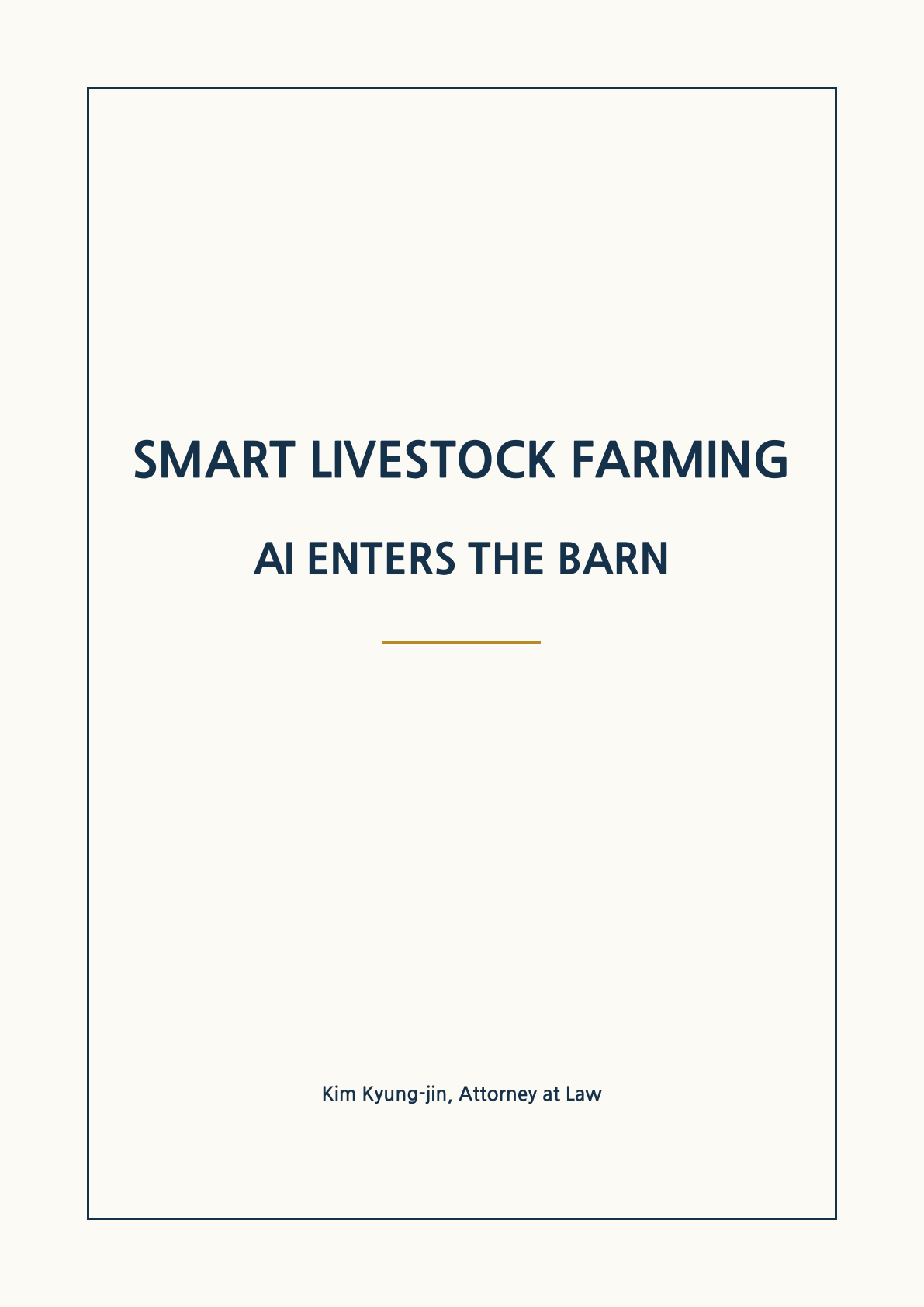
Smart Livestock Farming: AI Enters the Barn
Kim Kyung-jin, Attorney at Law
Sensors listen, cameras watch, and artificial intelligence helps farmers decide.
Across five chapters and fifteen sections, the book follows precision livestock farming from animal health and reproduction to robotic milking, virtual fencing, digital twins, methane reduction, welfare, and data ownership.
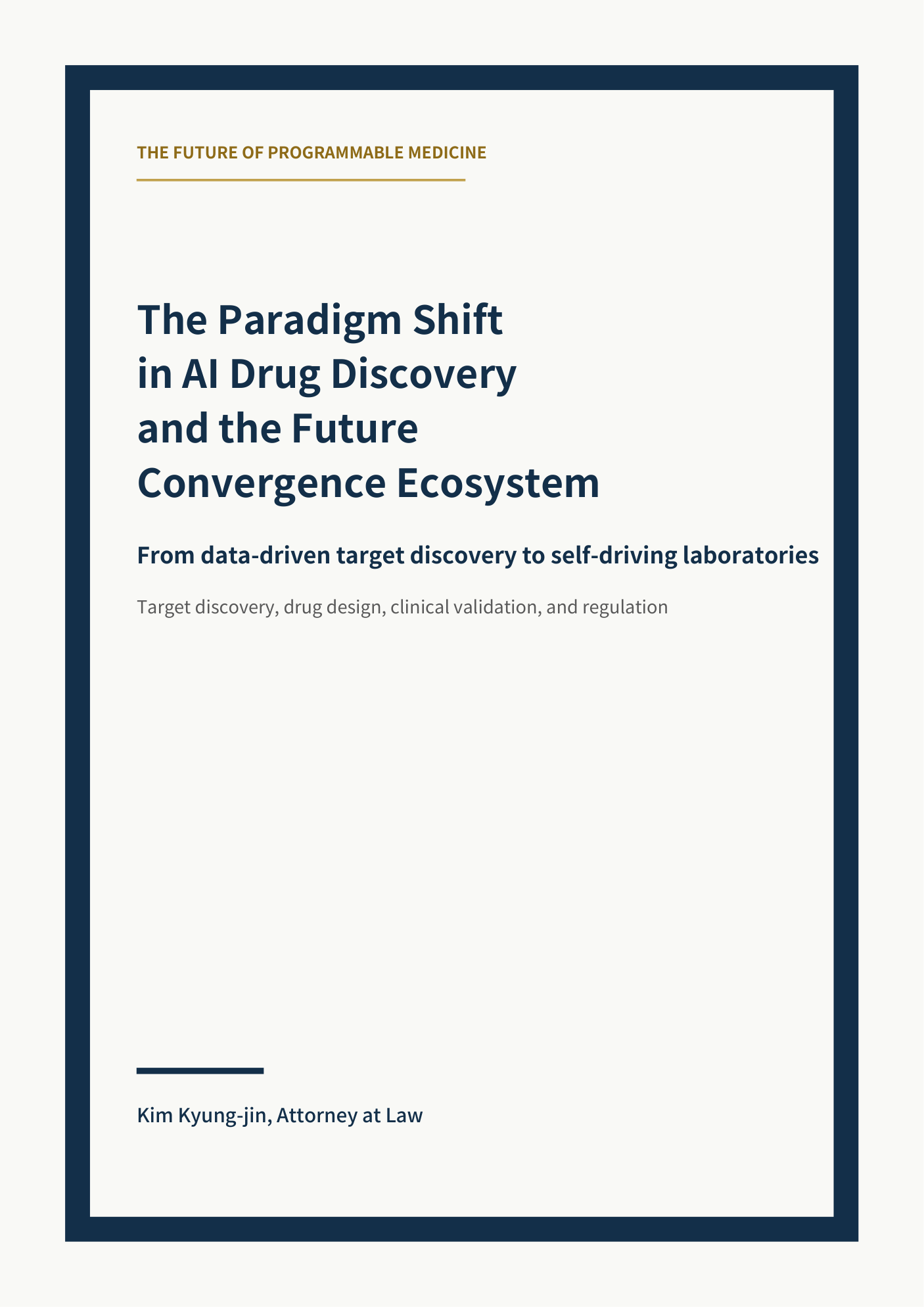

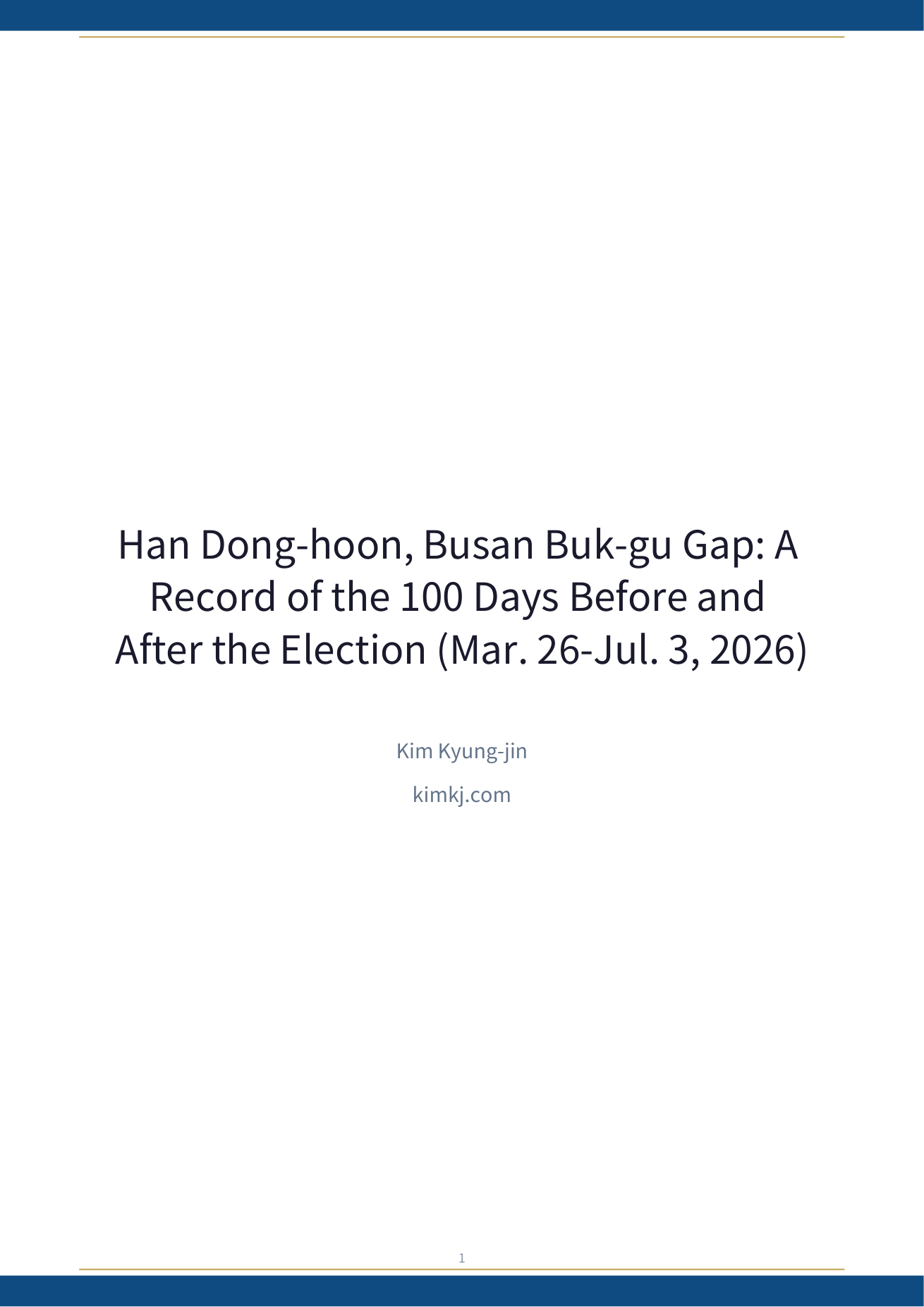
Table of Contents
Han Dong-hoon, Busan Buk-gu Gap: A Record of the 100 Days Before and After the Election (Mar. 26-Jul. 3, 2026)
Kim Kyung-jin
Table of Contents and 13 sections
From March 26 to July 3, 2026, this record follows the spring after expulsion, the Busan Buk-gu Gap by-election, victory as an independent, and the first bill submitted in the National Assembly.
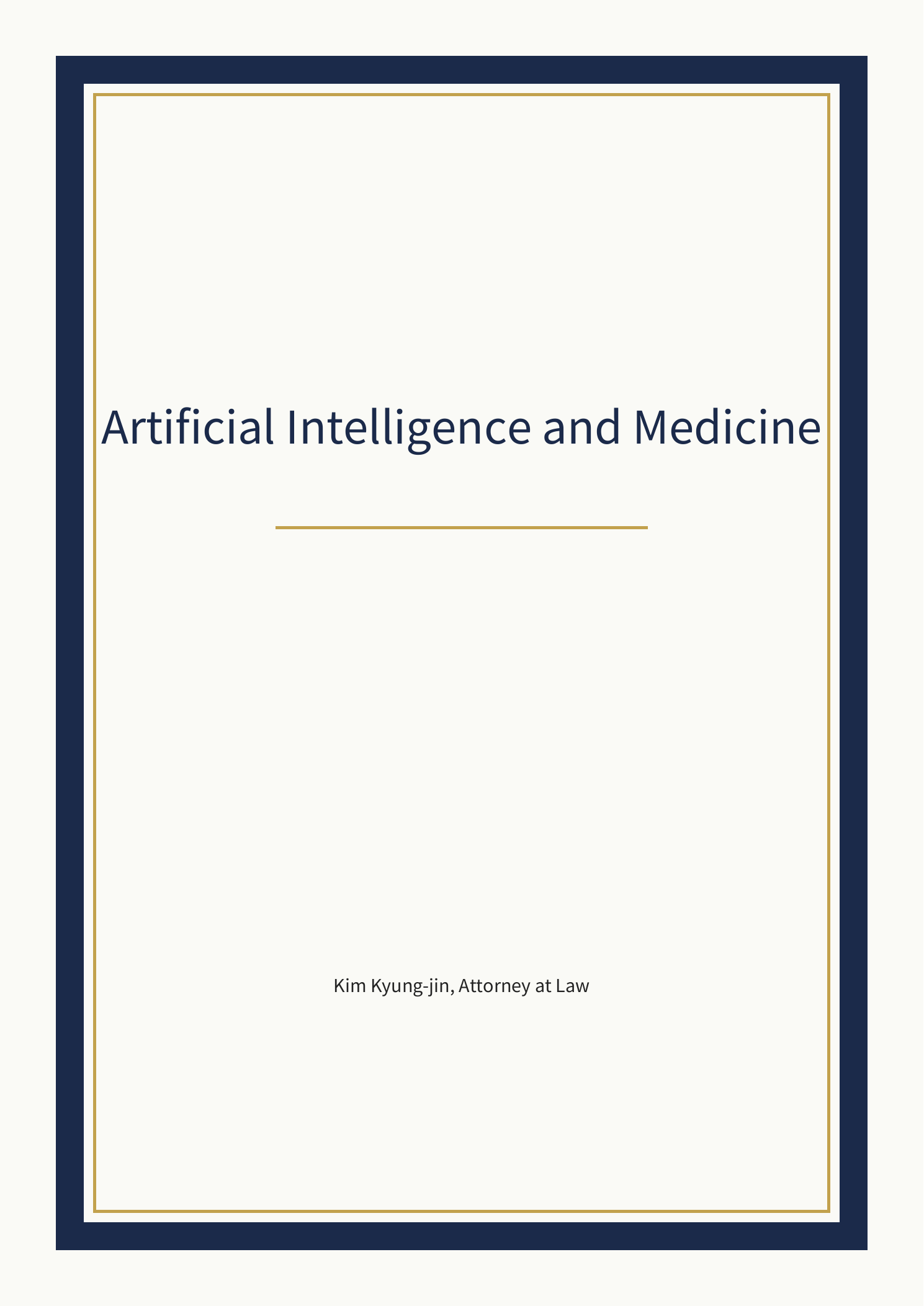
Table of Contents
Artificial Intelligence and Medicine
Kim Kyung-jin, Attorney at Law
AI in clinical care, hospitals, education, and research
AI in medical imaging, risk prediction, treatment planning, hospital operations, education, and research, with patient safety, privacy, and accountability.





































[AI Library] Chapter 2. Predator and Reaper: Drones Evolved into Assassins in the Sky
Chapter 2. Predator and Reaper: Drones Evolved into Assassins in the Sky
Predator and Reaper: Drones evolved into sky assassins 3 a.m., Creech Air Force Base, Nevada. Inside the air-conditioned container, the pilot clutches his joystick. Several monitors are lined up in front of him, and the screen shows an infrared image of a village in Afghanistan on the other side of the world. People appear as white dots. One of them moves. It's a goal. The pilot's finger hovers over the button. “Fire.” After 3 seconds, the dot on the screen disappears. The pilot gets off work six hours later and has dinner with his children. This is the new landscape of war created by the MQ-1 Predator.
A war where the distance between seeing and shooting has disappeared. A war in which pilots do not need to be on the battlefield. The Predator was more than just a drone. It was a machine that rewrote the very grammar of war. The Predator's roots begin in the garage of Israeli engineer Abraham Karem. He came to the United States in the 1980s and spent his own money to design a long-endurance UAV called 'Amber'. His philosophy was clear. Drones must stay afloat for a long time and be reliable. Amber's design evolved into the GNAT-750 and the RQ-1 Predator in the mid-1990s. Initially, the Predator was a reconnaissance aircraft.
It served as an eye to monitor the enemy's movements in the Balkan Peninsula conflict. But there was a problem. When a Predator spotted a target, it had to radio in a manned fighter plane, and by the time the fighters arrived, the target was often gone. As long as there was a gap between reconnaissance and strike, the enemy had a chance to escape. On September 11, 2001, the world changed. As the War on Terror began, the need to track down and immediately eliminate Al Qaeda's leadership increased. The U.S. Air Force and CIA experimented with equipping the Predator with Hellfire anti-tank missiles.
It was a surgery to add claws to a reconnaissance plane. A road in Yemen, November 2002. The Predator was tracking a vehicle carrying a high-ranking Al Qaeda official. A button was pressed at CIA headquarters in Langley, Virginia. A signal that traveled thousands of kilometers reached the Predator over Yemen via satellite, and a Hellfire missile was launched from under the wing of the aircraft. The vehicle burst into flames. It was the first ‘drone attack’ in human history.
The Predator's designation changed from RQ-1 to MQ-1. 'R' stands for Reconnaissance, and 'M' stands for Multi-role. The change in this single letter became the dividing line in the history of war. Drones were no longer passive observers. It has become a predator that hunts itself. The Predator's success spawned a more powerful successor. MQ-9 Reaper. The name itself is ‘God of Death’. The Reaper was not simply an improved version of the Predator. Equipped with a turboprop engine, the speed was doubled and the weapon payload increased by 15 times.
It was capable of carrying eight Hellfire missiles, as well as the GBU-12 laser-guided bomb or the GBU-38 Joint Direct Attack Munition (JDAM). It had firepower comparable to that of a fighter jet. The real fear of the Reaper lies in its endurance. Even with a fully loaded weapon, you can stay in the sky for more than 14 hours. It can last up to 27 hours just by filling up the fuel tank. This means giving the enemy no time to rest. Reapers hover over target areas all day, observing the 'Pattern of Life'. Who goes where, who they meet, and when they sleep. Everything is recorded.
And at some point, when the opportunity arises, the missile will fly. The Reaper's eye is the MTS-B (Multi-Spectral Targeting System). Targets are tracked using high-resolution cameras during the day and infrared sensors at night. Synthetic aperture radar (SAR) looks through clouds and smoke to the ground. It can read vehicle license plates and identify human faces. But even the Sky Assassin has his weaknesses. Reaper is slow. The maximum speed is 480 kilometers per hour, but the normal operating speed is 370 kilometers per hour. It's a quarter of the size of a jet fighter. Its wingspan can reach 20 meters, making it easily visible to radar.
They can reign like gods in areas where enemy air defenses are weak, such as Afghanistan, but they are easily shot down against opponents with modern anti-aircraft missiles, such as Russia or China. By 2024, there will be more than 20 MQ-9 Reapers shot down by Houthi rebels in Yemen. A situation where an aircraft costing well over $30 million per unit falls on an old missile costing hundreds of thousands of dollars. This is the trap of cost asymmetry. It would be difficult for the Reapers to survive in an all-out war between great powers. So the U.S. Air Force is preparing for the next generation.
A new drone that has stealth performance, AI that flies on its own, and can complete missions even when communication is lost. Predator and Reaper built the bridge
These are machines. A stepping stone from the era of remote control to the era of autonomous flight. It may have been the last drone piloted by humans.
Kim Kyung-jin
Attorney · Former Member of the National Assembly · AI Policy Researcher
© 2026 Kim Kyung-jin. All rights reserved.