AI Library
The Age of Autonomous Scientific Discovery
Kim Kyung-jin, Attorney at Law
AI Scientists and Self-Driving Labs
This book follows how AI scientists and self-driving labs are changing the way science generates and verifies claims. It covers literature-based discovery, natural-language protocols translated into robot commands, multi-agent research systems, closed-loop laboratories, materials search, the verification gap, chains of evidence, research harnesses, journal ethics, and legal responsibility.
AI Library
A New Era of Life Sciences Opened by Artificial Intelligence
Structural Proteomics, Genomic Foundation Models, Autonomous Laboratories, and Global Governance
Kim Kyung-jin, Attorney at Law
This book is a research volume compiled with artificial intelligence. A human selected the materials and structured the work, while AI models drafted the sentences and cross-checked the facts.
AI Library
The Double Structure of Digital Sovereignty
Europe’s Departure from Palantir and the Chains of American Big Tech
Kim Kyung-jin, Attorney at Law
This is a record of 2026, when European intelligence agencies and defense ministries began removing analytics tools from America’s Palantir. It covers the replacement decisions made by France’s General Directorate for Internal Security (DGSI), Germany’s Federal Office for the Protection of the Constitution (BfV), and the Netherlands Ministry of Defense; the incident in which US export controls severed an ally’s ac…
New English Edition
Artificial Intelligence in Horticulture
Kim Kyung-jin, Attorney at Law
Across five chapters and ten sections, this book examines computer vision for crop diagnosis, harvesting robots and autonomous field systems, smart greenhouses and digital twins, precision irrigation and supply-chain quality control, high-throughput phenotyping, and predictive breeding.
New English Edition
Artificial Intelligence in Food Crop Agriculture
Kim Kyung-jin, Attorney at Law
Across six chapters and eighteen sections, the book examines digital agricultural infrastructure, remote sensing, crop diagnosis, yield forecasting, precision irrigation, genomics, molecular breeding, agricultural robotics, climate-smart agriculture, and global food security.
New English Edition
The Future of Forestry and Agroforestry
Kim Kyung-jin, Attorney at Law
Driven by Artificial Intelligence and Digital Innovation
Across five chapters and fifteen sections, the book follows satellites, drones, LiDAR, digital twins, forest-specific language models, wildfire and pest forecasting, forestry robotics, agroforestry, timber traceability, and forest carbon markets.
New English Edition
Smart Livestock Farming: AI Enters the Barn
Kim Kyung-jin, Attorney at Law
Sensors listen, cameras watch, and artificial intelligence helps farmers decide.
Across five chapters and fifteen sections, the book follows precision livestock farming from animal health and reproduction to robotic milking, virtual fencing, digital twins, methane reduction, welfare, and data ownership.
Table of Contents
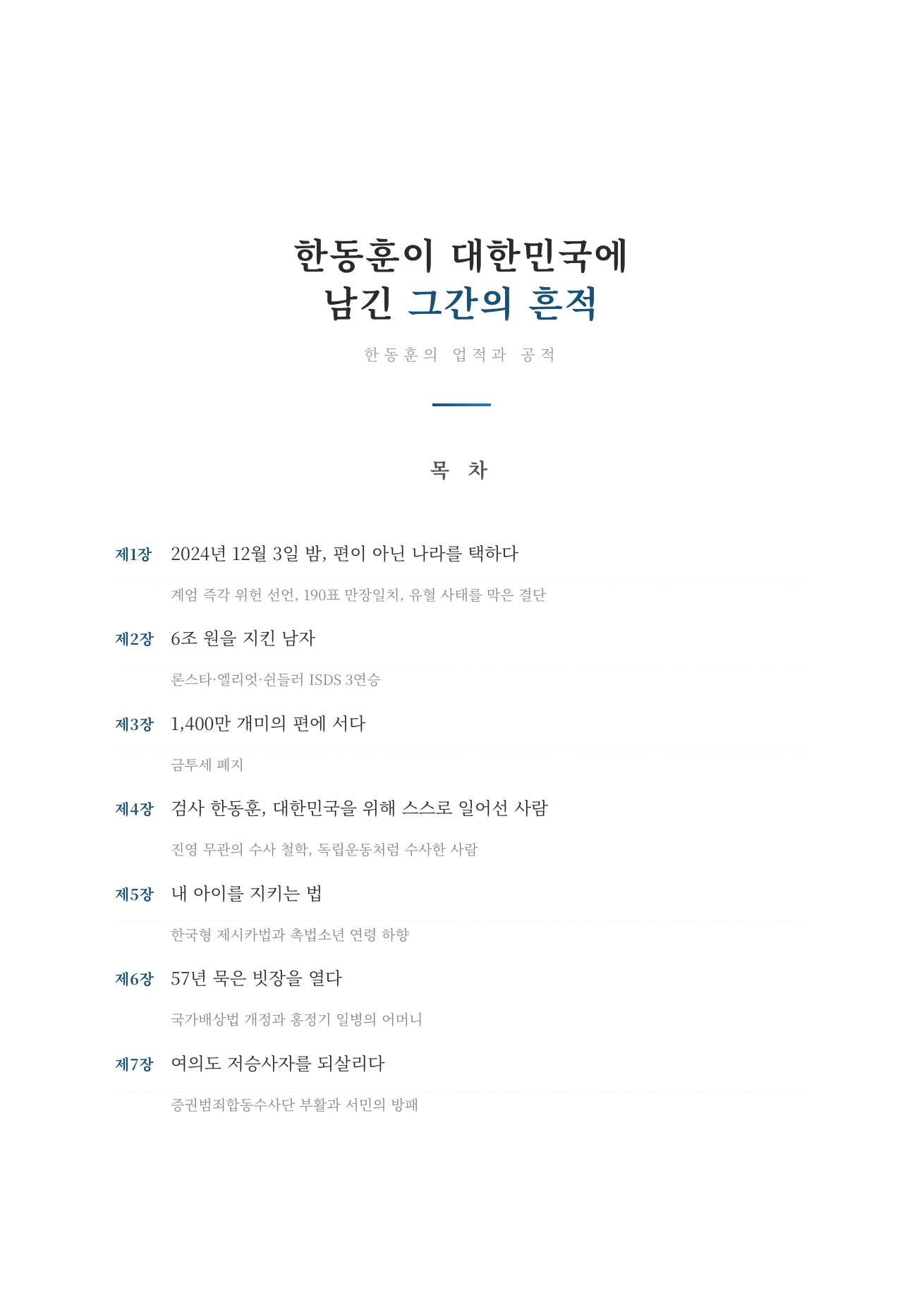
Han Dong-hoon, Busan Buk-gu Gap: A Record of the 100 Days Before and After the Election (Mar. 26-Jul. 3, 2026)
Kim Kyung-jin
Table of Contents and 13 sections
From March 26 to July 3, 2026, this record follows the spring after expulsion, the Busan Buk-gu Gap by-election, victory as an independent, and the first bill submitted in the National Assembly.
Table of Contents
Artificial Intelligence and Medicine
Kim Kyung-jin, Attorney at Law
AI in clinical care, hospitals, education, and research
AI in medical imaging, risk prediction, treatment planning, hospital operations, education, and research, with patient safety, privacy, and accountability.






[AI Library] Preface
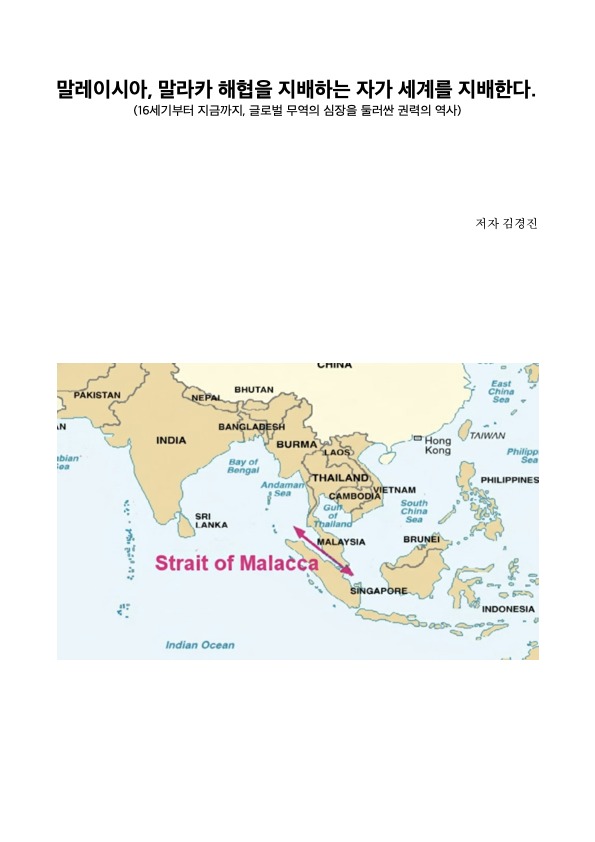
Malaysia and the Malacca Strait: Whoever Controls It Controls the World
Preface
Kim Kyung-jin
When the world changes rapidly, where should we go?
When I set foot in Malaysia, I was exhausted from my busy life back in Korea. Accumulated fatigue, vague anxiety about a rapidly changing world. To me, the morning air of Kuala Lumpur felt unfamiliar yet comforting.
Looking at the Malacca Strait, I suddenly realized something. This sea was connecting the world 500 years ago, continues to do so today, and will probably still be doing so 100 years from now. While we go through our days worrying and struggling, certain things have been quietly fulfilling their role for centuries.
Malaysia is a truly fascinating country. It is divided into the Malay Peninsula and the island of Borneo, and nine kings take turns governing the nation. Malays, Chinese, and Indians live together while preserving their own languages and religions. How is it possible for such different people to live together in one nation?
To find the answer to this question, I walked through the streets of Malacca. There were traces of numerous countries trying to occupy this place: Portugal, the Netherlands, England, even Japan. Those traces were not scars of conflict, but had become landscapes where different cultures coexist today.
These days, we worry a lot. Will artificial intelligence take away my job? What will become of the Earth because of climate change? What kind of world will our children live in? Such worries keep us awake at night.
But as I studied Malaysia, I began to think differently. This country has faced countless crises over 700 years. Invasions by great powers, ethnic conflicts, economic crises. Yet each time, it found new ways. By acknowledging differences, connecting to the world through the sea, and embracing change.
This book is not an academic work. Nor is it a light travel guide. I, as simply a traveler and someone curious about how the world works, have recorded Malaysia. I tried not to write it stiffly like a history book. I wanted to write it so you could read comfortably while having a cup of coffee.
Starting from the tip of the Malay Peninsula to the deep forests of Borneo, from the old streets of Malacca to the modern Petronas Towers. I hope you walk slowly with this book. You don't have to read in a hurry. Sometimes it is fine to close the book and look out the window.
When the future feels uncertain, we find comfort in history. We learn wisdom from stories of people living in other lands. Malaysia tells us such stories. "Different things can live together," and "a crisis can become a new beginning."
I hope the time you spend reading this book becomes a small respite for you. And by the time you close the book, I hope your worries about the future become a little lighter.
Shall we depart together?
November 25, 2025. Kim Kyeong-jin
Kim Kyung-jin
Attorney · Former Member of the National Assembly · AI Policy Researcher
© 2026 Kim Kyung-jin. All rights reserved.