
AI Library
The Age of Autonomous Scientific Discovery
Kim Kyung-jin, Attorney at Law
AI Scientists and Self-Driving Labs
This book follows how AI scientists and self-driving labs are changing the way science generates and verifies claims. It covers literature-based discovery, natural-language protocols translated into robot commands, multi-agent research systems, closed-loop laboratories, materials search, the verification gap, chains of evidence, research harnesses, journal ethics, and legal responsibility.

AI Library
A New Era of Life Sciences Opened by Artificial Intelligence
Structural Proteomics, Genomic Foundation Models, Autonomous Laboratories, and Global Governance
Kim Kyung-jin, Attorney at Law
This book is a research volume compiled with artificial intelligence. A human selected the materials and structured the work, while AI models drafted the sentences and cross-checked the facts.

AI Library
The Double Structure of Digital Sovereignty
Europe’s Departure from Palantir and the Chains of American Big Tech
Kim Kyung-jin, Attorney at Law
This is a record of 2026, when European intelligence agencies and defense ministries began removing analytics tools from America’s Palantir. It covers the replacement decisions made by France’s General Directorate for Internal Security (DGSI), Germany’s Federal Office for the Protection of the Constitution (BfV), and the Netherlands Ministry of Defense; the incident in which US export controls severed an ally’s ac…
New English Edition
Artificial Intelligence in Horticulture
Kim Kyung-jin, Attorney at Law
Across five chapters and ten sections, this book examines computer vision for crop diagnosis, harvesting robots and autonomous field systems, smart greenhouses and digital twins, precision irrigation and supply-chain quality control, high-throughput phenotyping, and predictive breeding.

New English Edition
Artificial Intelligence in Food Crop Agriculture
Kim Kyung-jin, Attorney at Law
Across six chapters and eighteen sections, the book examines digital agricultural infrastructure, remote sensing, crop diagnosis, yield forecasting, precision irrigation, genomics, molecular breeding, agricultural robotics, climate-smart agriculture, and global food security.

New English Edition
The Future of Forestry and Agroforestry
Kim Kyung-jin, Attorney at Law
Driven by Artificial Intelligence and Digital Innovation
Across five chapters and fifteen sections, the book follows satellites, drones, LiDAR, digital twins, forest-specific language models, wildfire and pest forecasting, forestry robotics, agroforestry, timber traceability, and forest carbon markets.

New English Edition
Smart Livestock Farming: AI Enters the Barn
Kim Kyung-jin, Attorney at Law
Sensors listen, cameras watch, and artificial intelligence helps farmers decide.
Across five chapters and fifteen sections, the book follows precision livestock farming from animal health and reproduction to robotic milking, virtual fencing, digital twins, methane reduction, welfare, and data ownership.

Table of Contents
Han Dong-hoon, Busan Buk-gu Gap: A Record of the 100 Days Before and After the Election (Mar. 26-Jul. 3, 2026)
Kim Kyung-jin
Table of Contents and 13 sections
From March 26 to July 3, 2026, this record follows the spring after expulsion, the Busan Buk-gu Gap by-election, victory as an independent, and the first bill submitted in the National Assembly.

Table of Contents
Artificial Intelligence and Medicine
Kim Kyung-jin, Attorney at Law
AI in clinical care, hospitals, education, and research
AI in medical imaging, risk prediction, treatment planning, hospital operations, education, and research, with patient safety, privacy, and accountability.











































[AI Library] Chapter 6: Practical Travel Notes
A Journey Through Georgia's History and Culture
Chapter 6: Practical Travel Notes
Kim Kyung-jin
A. Recommended Itineraries for One Week and Two Weeks
Georgia is only about 70 percent the size of South Korea. Yet once you begin traveling, you discover how vast this small land can feel. Winding mountain roads stretch endlessly, and at every village, landscapes worth lingering for unfold before you. A guesthouse owner in Tbilisi once told me: "On a map, Georgia looks like you could see it all in a day. In reality, even a month is not enough. Our land has a gift for consuming time."
Travelers quickly learn he spoke no exaggeration. Moving about Georgia is not simply going from point A to point B. Everything you encounter becomes part of your journey. You exchange glances with shepherds driving flocks along the roadside, stop the car before an emerald-blue reservoir that suddenly appears, and find yourself drawn into a village bakery by the aroma of freshly baked Shotis Puri bread.
(1) One-Week Itinerary: Passing Through the Heart of Georgia
One week is enough time to taste the essence of Georgia. The "Golden Triangle" route, which connects the capital Tbilisi with the vast mountain range to the north and the wine region to the east, proves most practical. This course represents a classic of Georgia travel and is an essential path any first-time visitor must follow.
Days One and Two: Tbilisi, Embraced by an Ancient City
Upon landing at Tbilisi International Airport, the first rule is to avoid hurrying. The journey from airport to city center takes about 40 minutes by bus number 37. Using the taxi app Bolt offers a somewhat more convenient option. Once you settle into your accommodation, head toward the Old Town.
Narikala Fortress, built in the fourth century, opens the entire city of Tbilisi beneath your feet when reached by cable car. The Kura River cuts across the city, and houses with red roofs cling tightly along the hillsides. Just beside the fortress stands the "Mother of Georgia" statue, Kartlis Deda. One hand holds a sword to strike down enemies; the other holds a wine cup to welcome guests. This statue captures the essence of the Georgian character: endlessly warm to friends, never yielding before enemies.
Walking through the narrow lanes of the Old Town, you arrive at Abanotubani, the sulfur bath district. Round brick domes rise from the ground in a row, and beneath them, hot sulfur spring water flows forth. According to legend, in the fifth century, King Vakhtang Gorgasali saw a hawk chasing a pheasant fall into these springs and emerge healed. Witnessing this miracle, he built the capital here.
The name Tbilisi itself comes from the Georgian word "Tbili," which means "warm."
On day two, visit Mtskheta, a 20-minute drive from Tbilisi. This ancient capital of Georgia stands as the center of Christian history. From the Jvari Monastery perched on a hilltop, you witness the magnificent confluence of the Kura River and the Aragvi River. The waters flow in different colors, creating a distinct boundary line at their meeting point. Svetitskhoveli Cathedral, believed to hold the robe of Jesus Christ, stands as the holiest shrine for Georgian Orthodox believers.
Days Three and Four: Kazbegi, the Path to the Mountain of Gods
On the morning of day three, head north. The Georgian Military Highway was a strategic road built by the Russian Empire in the nineteenth century. This route, running from Tbilisi to the Russian border, passes through the most beautiful section of the Caucasus mountain range.
About an hour after departure, Ananuri Fortress appears. This fortress standing beside the emerald-colored Zhinvali Reservoir was the site of power struggles among feudal lords in the seventeenth century. Within its walls, two churches contain delicate carved ornaments.
Climbing higher, you reach Gudauri. In winter, the ski resort bustles with visitors, but during other seasons, it remains a quiet mountain village. The Russia-Georgia Friendship Monument here stands on a peak at 2,170 meters elevation, a massive circular tile mural built during the Soviet era. Ironically, the two nations fought a war in 2008. The valley view from the overlook takes your breath away.
Arriving at your destination, Stepantsminda, formerly called Kazbegi, you see the perpetual snows of Mount Kazbek rising behind the village. This 5,047-meter peak is believed in Greek mythology to be where Prometheus was chained. It is the very mountain where, for bringing fire to humankind, he was condemned to have an eagle devour his liver.
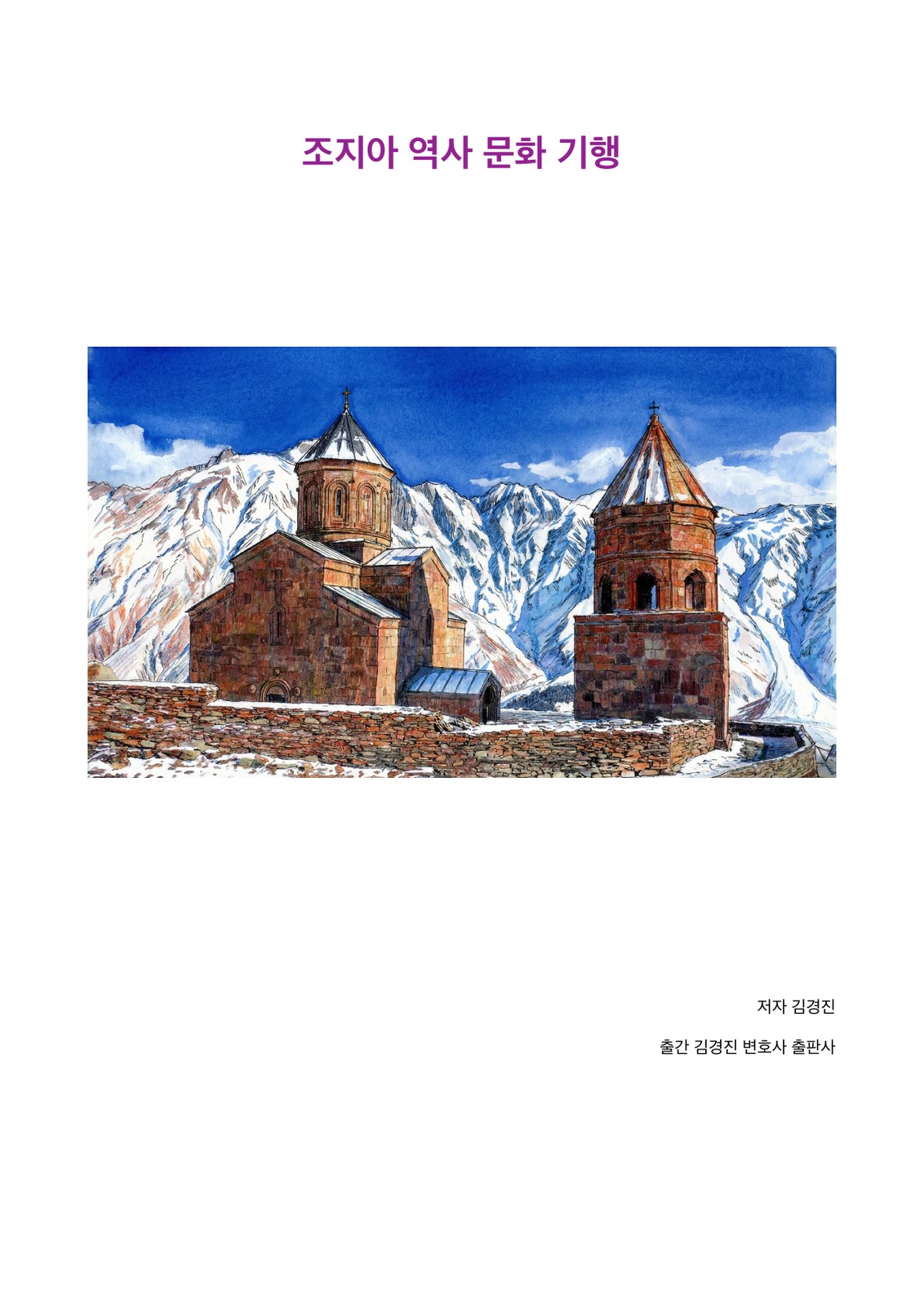
On the morning of day four, head toward Gergeti Trinity Church. You can trek for about two hours from the village or drive up in a four-wheel-drive vehicle. This fourteenth-century church standing alone at 2,170 meters is among Georgia's most iconic images. On clear days, Mount Kazbek's glacier shines behind the church.
If you have the stamina, it is worth venturing toward Juta Valley. Called "Georgia's Dolomites," the Chaukhi Massif spreads like a folding screen across the landscape. The trekking course here is relatively gentle, accessible even to beginners.
Days Five and Six: Kakheti, the Birthplace of Wine
On day five, turn east and move into the Kakheti region. This is the birthplace of 8,000 years of wine history. Vineyards stretch endlessly along the Alazani Valley, where large and small wineries await visitors.
Sighnaghi is a small town with the nickname "City of Love." A marriage registration office that operates 24 hours draws couples from around the world. Walking along the town walls, you see the snow peaks of the Caucasus range in the distance. Below the walls, the Alazani Valley's vineyards spread like a checkerboard.
Not far from Sighnaghi, Bodbe Monastery holds the tomb of Saint Nino, who brought Christianity to Georgia. The valley view from the monastery gardens offers peaceful tranquility. Descending below the monastery, you find a spring where holy water, believed to bring miraculous healing, flows forth.
On day six, take a winery tour. You can witness firsthand the traditional winemaking method of fermenting in large vessels called qvevri. The practice of burying massive terracotta jars in the ground and fermenting grapes with skin, seeds, and stems intact is inscribed as UNESCO Intangible Cultural Heritage. The amber wine produced this way differs from ordinary white wine, displaying a honey color and bearing a distinctive tannic flavor.
Day Seven: Return to Tbilisi
Spend the final day back in Tbilisi at a leisurely pace. Dry Bridge Market is a flea market selling antiques and handicrafts from the Soviet era. Wandering among old cameras, military medals, silver ornaments, and embroidered tablecloths, you feel Georgia's complex history in your hands.
(2) Two-Week Itinerary: Meeting Every Face of the Caucasus
With two weeks, you can add western Georgia to the one-week course. This itinerary, spanning from the medieval tower villages of Svaneti to Batumi on the Black Sea coast, allows you to experience Georgia's full diversity.
Days One Through Seven: Same as the One-Week Itinerary
Follow the Tbilisi, Kazbegi, and Kakheti itinerary described above.
Days Eight and Nine: Gori and Kutaisi
On day eight, move westward and stop in Gori, the birthplace of Joseph Stalin, the Soviet Union's dictator. The Stalin Museum displays the small cottage where he spent his childhood and his personal railway carriage. How Georgians remember Stalin remains a complicated question. Some take pride in him as "a world-renowned figure of Georgian origin," while others condemn him as a dictator who murdered millions.
Not far from Gori, Uplistsikhe is a cave city where people have lived since around 1000 BCE. Traces of streets carved from rock, a theater, and temples remain. This ancient center of pagan belief before Christianity arrived allows you to imagine the lives of ancient Georgians.
Kutaisi is Georgia's second-largest city and the gateway to the west. It is said to have been the capital of the Colchis kingdom in Greek mythology, Jason's destination in his quest for the Golden Fleece. Gelati Monastery, founded by King David IV in the twelfth century, showcases the pinnacle of medieval Georgian culture. Do not miss Bagrati Cathedral and Prometheus Cave.
Days Ten Through Twelve: Svaneti, the Land Where Time Stands Still
The road to Svaneti is rugged but worth the effort. From Kutaisi to Mestia takes about five hours by car. A small charter plane can get you there in 45 minutes, but flights are frequently canceled due to weather.
Upon arriving in Mestia, medieval defensive towers called koshki rise across the town like a forest. These towers served as shelters during invasions or blood feuds between families. The Svaneti people, having lived in Georgia's most isolated environment, have preserved their own language and customs.
On day eleven, drive a four-wheel-drive vehicle toward Ushguli. Located at 2,200 meters elevation, this village ranks among Europe's highest permanently inhabited settlements. Thousand-year-old towers line the landscape against the snow-covered Mount Shkhara (5,193m), a surreal sight. During winter, when snow isolates residents for months from the outside world, the people of Ushguli have maintained a self-sufficient existence.
Days Thirteen and Fourteen: Batumi, Black Sea Resort
Descending from Svaneti, head toward Batumi on the Black Sea coast. Batumi is Georgia's most modern city. Azerbaijani oil capital has flowed in, with high-rise buildings and casinos lining the beaches. The "Ali and Nino Statue" takes its form from a novel depicting the tragic love between an Azerbaijani Muslim man and a Georgian Christian woman. Each evening, the metal sculptures of the two figures approach each other, then pass by one another.
Batumi Botanical Garden, nurtured by subtropical climate, grows plants from across the world. It is an ideal place to conclude your journey watching the sunset over the Black Sea. You can depart directly from Batumi International Airport or return to Tbilisi by overnight train.
(3) Points to Consider When Planning Your Itinerary
Travel time in Georgia typically stretches longer than expected. Actual travel duration far exceeds map distances. Mountain roads wind endlessly, and road conditions vary widely. Encountering herds of livestock blocking the road is common.
The regions accessible to travelers vary by season. Ushguli in Svaneti becomes unreachable in winter when snow blocks the roads. High-altitude trekking courses in Kazbegi remain dangerous due to snow until May. By contrast, Tbilisi in July and August suffers oppressive heat approaching 40 degrees Celsius, making walking tours uncomfortable.
The best time to visit is mid-May through June, and from September through early October. During these periods, the weather is mild, and in September during the grape harvest, you can participate in the 'Rtveli' festival at wineries, where grapes are crushed to make juice.
B. Supra Feast, Tamada Culture, and Guest Etiquette
To truly understand Georgia, you must attend a Supra. Supra is not a simple meal. It is a ritual in which the identity of the Georgian people is concentrated, a sacred time to confirm the bonds of community that they have maintained for thousands of years. An elderly man I met at a winery in the Kakheti region told me this: "Without Supra, you cannot understand Georgia. We are born at this table, we love at this table, and we leave the world at this table."
(1) Supra: A Universe Spread Across the Tablecloth
The word Supra literally means 'tablecloth'. In Georgia, however, the meaning of this word is far deeper. Supra is held at family celebrations, visits from friends, village festivals, and even funerals. At a child's baptism, at a wedding, when someone moves into a new home, when someone returns to their hometown after a long absence, Georgians gather around the table, share food, drink wine, and sing together.
The scale of Supra varies. It ranges from small gatherings of family members to large feasts attended by hundreds of people. Yet there is something that never changes, regardless of scale. Food is served abundantly enough to bend the table legs, and guests are treated like family members.
There is a Georgian proverb that says, "The guest is a gift sent by God." For Georgians, hospitality is not a simple virtue but a sacred duty. It is common for a foreign traveler, even a stranger, to be suddenly invited to dinner after making eye contact with a local or asking for directions. While this may be startling at first, it is the most natural thing in Georgia.
Once Supra begins, food appears in unending succession. Khachapuri is Georgia's signature dish, boat-shaped bread with melted cheese, egg, and butter inside. Khinkali are dumplings the size of a fist, filled with meat juices. Pkhali is an appetizer made from pureed vegetables like spinach or beets mixed with walnuts. Mtsvadi is skewered meat grilled over grapevine branches. Dozens of other dishes follow to fill the table.
Wine is as important as the food. Georgians do not view wine as mere alcohol but as a medium connecting the divine and human worlds. At Supra, wine is both a tool of prayer and a symbol of blessing. Traditionally, wine is served in kantsi, a cup made from a bull's horn. Since a horn cup has no flat bottom, once you lift it, you must drink it completely.
(2) Tamada: The Master of Ceremonies
Every Supra has a Tamada. The Tamada proposes toasts and guides the flow of the feast. In English, this is often translated as "Toastmaster," but this word hardly captures what a Tamada is.
A Tamada serves simultaneously as a master of ceremonies, poet, philosopher, and priest.
The Tamada is usually the most respected person in the gathering. Simply being elderly does not automatically make one a Tamada. One must be eloquent, well-versed in history and literature, possess a sense of humor, and most importantly, be able to unite people's hearts. A feast led by a skilled Tamada passes in a flash, while one led by an inexperienced Tamada can drag on endlessly.
The Tamada's most important role is to propose toasts. A Georgian toast is not a simple phrase like "To your health" or "To happiness." The Tamada delivers poetic and philosophical speeches lasting five minutes, ten minutes, or longer. He quotes historical anecdotes, expounds on proverbs, and sometimes recites improvised poetry.
The themes of the toasts follow a prescribed order. The first toast is usually dedicated to God or peace. Next comes the homeland Georgia, then the departed ancestors, then parents, family, children, friendship, love, and finally the guests gathered at the table. Between each toast, there is time to eat and converse. A full Supra typically lasts from four to eight hours, with the number of toasts sometimes exceeding twenty.
After the Tamada finishes his toast, the floor opens to others. This is called Alaverdi. The person given the Alaverdi adds their own thoughts to the Tamada's theme. When they finish speaking, authority returns to the Tamada, who moves on to the next toast.
While the Tamada speaks, it is proper not to chat, eat, or drink. All attention should be focused on the Tamada. When the toast concludes and the Tamada cries out "Gaumarjos!", everyone raises their glass, responds, and drinks the wine. Gaumarjos means "To victory!"
(3) Etiquette for Guests
If invited to a Georgian Supra, it is good to know a few rules of conduct. Even if you cannot follow them perfectly, your effort to do so will deeply move your host.
How to Accept an Invitation
When a Georgian invites you to a meal, it is proper to accept if possible. Refusing may hurt their feelings. When accepting an invitation, never arrive empty-handed. Bring a bottle of wine, chocolates, or
a basket of fruit. If bringing flowers, avoid even-numbered bouquets, which are used for funerals. Always choose an odd number of flowers.
When taking your seat, wait for the elder or guest of honor to sit first. It is customary to sit where the Tamada directs. Guests are typically placed next to the host or near the Tamada.
Toast Etiquette
It is rude to sip wine before the Tamada begins his toast. Wine should be drunk only when the Tamada proposes the toast and everyone has raised their glass. In Georgia, wine is not merely a beverage but a tool of ritual.
When toasting, clink glasses while meeting the other person's eyes. Avoiding eye contact can appear insincere. If a horn cup appears at a traditional Supra, you must drink all the wine in it. Since a horn cup cannot stand on its own, keeping it in your hand looks awkward.
If you cannot drink or wish to moderate your consumption, politely ask for understanding. If you say you have a health issue or need to wake up early tomorrow, the host will understand. However, rather than outright refusing the toast, it is better to at least touch your glass to your lips and go along with the spirit of the occasion. It is traditional to avoid toasting with beer. This is because of an old belief that in the past, beer was drunk when wishing defeat upon enemies.
How to Eat the Food
Khinkali must be eaten with your hands. Cutting it with fork and knife releases all the meat juices, diminishing the flavor. Hold the khinkali by its knob (the bundle of dough at the top) between your thumb and forefinger, flip it upside down, bite into one side to prevent hot broth from spilling out, and first drink the meat juices. Then eat the rest. The knob is usually not eaten and is left at the edge of the plate. Some say this is to count how many you have eaten, others say it is because the dough there is thick and tasteless.
Adjarian Khachapuri is boat-shaped bread with cheese, egg, and butter in the center. Break off the pointed ends of the bread with your hands, mix the cheese and egg in the center, and dip the bread into it. As you gradually work inward, tearing the bread piece by piece, you naturally finish it all.
Georgians consider it a virtue to serve food so abundantly that some is left over. If food seems scarce, it reflects poorly on the host. Therefore, you need not feel burdened to eat everything. If you are full, take smaller portions instead. But do not hesitate to praise the food. "Gemrielia!" means "It's delicious!"
Conversation and Participation
At Supra, conversation is as important as food and drink. Your host will take interest in you and ask many questions. Where are you from? What have you seen in Georgia? How do you like Georgian food? Answering these questions thoughtfully and expressing interest in Georgia's history and culture will earn you even warmer hospitality.
As Supra reaches its height, someone begins to sing. Georgian traditional polyphony is a unique form in which multiple people sing different melodies simultaneously. Listed as a UNESCO Intangible Cultural Heritage of Humanity, this music sounds dreamy and mysterious on first hearing. If invited to join in the singing, it is good to hum along and match the mood, even if you do not know the words. When dancing begins, joining in and enjoying it together is the finest response.
(4) How to Experience Supra
The best way for travelers to experience a traditional Supra is to stay at a guesthouse. At small family-run guesthouses, Supra naturally unfolds at dinner time. Such opportunities are common at wineries in the Kakheti region and in mountain villages of Svaneti.
In Tbilisi, there are restaurants and tour companies that offer Supra experience programs. Though designed for tourists and different in atmosphere from traditional Supra, they provide a good introduction to toast culture and Georgian food.
The most unforgettable experiences arrive by chance. You might receive an invitation while asking directions, visiting a winery, or chatting with someone next to you on a train. Trust Georgian hospitality and keep your heart open.
C. Cautions and Safety Rules for Accessing Conflict Areas
Overall, Georgia is a safe country with good public order and is safe to travel in. Several European surveys rank it among the top countries where it is safe to walk alone at night. You can wander through Tbilisi's Old Town past midnight with virtually no sense of danger. However, Georgia has a geopolitical specificity you must understand. Approximately 20 percent of its territory lies outside the control of the Georgian government.
(1) Historical Background of Conflict Areas
When the Soviet Union collapsed in 1991, Georgia declared independence. However, immediately after independence, separatist conflicts broke out in two regions inhabited by ethnic minorities. These were Abkhazia on the northwestern coast of the Black Sea and South Ossetia in the northern mountainous region.
Wars in the early 1990s displaced hundreds of thousands of Georgians from their homes. The conflict, frozen in a ceasefire state, reignited in August 2008 when Russia intervened. After a five-day war, Russia recognized the independence of both regions and stationed military forces there. Most of the international community does not recognize this, and the Georgian government regards both regions as territories occupied by Russia.
Currently, Russian military forces are stationed in Abkhazia and South Ossetia, beyond the reach of Georgian government administration. A de facto border line called the Administrative Boundary Line (ABL) separates these regions from mainland Georgia.
(2) Regions Travelers Must Avoid
Abkhazia
Abkhazia is a beautiful subtropical region on the Black Sea coast. During the Soviet era, it was famous as a vacation destination, and its capital, Sukhumi, flourished as a beach city. However, wars in the 1990s expelled most Georgians, and it now remains under Russian de facto control.
Entering Abkhazia is problematic in several ways. If travelers enter Abkhazia via Russia, it is considered illegal entry under Georgian law, and they may be arrested or denied entry when later entering mainland Georgia. Conversely, if travelers attempt to enter Abkhazia from Georgia, Russia will not permit it, and they may be turned away or detained at the border.
South Ossetia
South Ossetia is a mountainous region in central-northern Georgia. About 50,000 people live there, centered on its capital, Tskhinvali. It was the direct flashpoint of the 2008 war and remains under firm Russian military control.
Entry to South Ossetia is forbidden from either direction. Travelers entering via Russia face punishment by Georgia, and if they attempt to enter via Georgia, they will be stopped at checkpoints. Barbed wire and observation posts are installed near the administrative boundary line.
(3) Creeping Border: The Moving Border Line
The administrative boundary line of South Ossetia is called by the unsettling name "Creeping Border",literally, a moving border line. This is because Russia and South Ossetia are gradually pushing the boundary line toward Georgian territory. Overnight, barbed wire may be erected in the middle of a village, or farmland a farmer thought was his own may become occupied territory by morning.
Near Gori, in the Shida Kartli region, there are villages close to the administrative boundary line. Travel in this area requires special caution. Travelers should verify the location of the boundary line using maps and move according to local advice. Photography or loitering near the boundary line without permission may result in detention.
(4) Legal Considerations
Georgia has a law concerning occupied territories. According to this law, entering Abkhazia or South Ossetia without Georgian government permission is illegal. Violations may result in fines of 500 lari or more, or detention.
Specific situations travelers should be aware of are as follows. First, if there is a record of entering Abkhazia or South Ossetia via Russia (passport stamps, visas, etc.), subsequent entry to Georgia may be denied. Second, attempting illegal entry from mainland Georgia to occupied territories may result in arrest by Georgian police or Russian military. Third, even if problems arise within occupied territories, obtaining consular assistance from the embassy is practically impossible.
The South Korean Ministry of Foreign Affairs and most countries recommend travelers "avoid" or "do not travel to" these two regions.
(5) General Safety Guidelines
Excluding conflict zones, Georgia is a very safe travel destination. However, there are a few precautions to take.
Traffic Safety
The biggest hazard in Georgia travel is the roads. Drivers often ignore traffic regulations, and overtaking and lane changes happen recklessly. Mountain roads are narrow and winding, with many sections lacking guardrails. Animals such as cattle, horses, pigs, and sheep casually walking across roads are also common sights.
When traveling by rental car, defensive driving is essential. Nighttime driving should be avoided. If uncertain about driving, it is safer to use a marshrutka (minibus), taxi apps, or hire a private driver.
Mountain Trekking
The weather in the Caucasus Mountains is notoriously unpredictable. Clear skies in the morning can suddenly darken with clouds by midday, with rain or snow that may clear just as quickly. At high elevations, temperatures can drop sharply even in summer.
When trekking, warm clothing, rain gear, sufficient water, and snacks are essential. Make it a principle to descend before sunset, and hire a local guide when taking unfamiliar routes. In remote areas like Svaneti and Kazbegi, cellular signal is often unavailable, so solo trekking should be avoided.
Stray Dogs
Georgia's cities, including Tbilisi, have many stray dogs. Most wear yellow ear tags indicating they have been vaccinated and are generally docile. However, for those afraid of dogs, the sight of large dogs roaming in packs can feel threatening. Even if dogs bark or approach, it is best to avoid provoking them and pass quietly.
Pickpocketing and Theft
Serious crime is rare, but pickpocketing can occur in crowded tourist areas like the Old Town, subway, and flea markets. Valuables should be kept in hotel safes, and bags should be worn in front for security.
Emergency Response
Georgia's emergency number is 112. Police, fire, and ambulance services can all be reached at this number, with English-language service available. Tbilisi also has tourist police to assist foreign travelers.
Beginning January 1, 2026, all tourists visiting Georgia will be required to have health and accident insurance. It is advisable to prepare an English-language insurance certificate in advance, as it may be required upon entry.
(6) Safe Alternative Routes
Georgia's beauty can be fully experienced without visiting conflict zones. Safe regions abound with sights: the vineyards of Kakheti, the eternal snows of Kazbegi, the medieval towers of Svaneti, and the Black Sea beaches of Batumi.
However, some popular trekking routes pass near the administrative boundary line and require caution. Truso Valley near Kazbegi extends close to the South Ossetian border, so travelers must stay on designated trails and follow the instructions of border guards.
I remember words spoken to me by a guesthouse owner in Tbilisi: "It is a sad thing that our country remains divided. But it brings us joy to see travelers safely enjoy Georgia. We hope that one day we will be able to show you both the beaches of Abkhazia and the mountains of Tskhinvali together."
D. Essential Georgian Phrases and Reading the Alphabet
Georgian is one of the most unique languages on Earth. It resembles no other language. It is neither European nor Turkic, and has no relation to Persian or Arabic. Georgian belongs to the Kartvelian language family, a small linguistic group whose languages are used only in Georgia and surrounding regions. It is a language created and preserved by people who have lived south of the Caucasus Mountains for the past 5,000 years.
(1) Thirty-Three Alphabetic Characters: A UNESCO-Recognized Script
Georgian uses its own unique alphabet. This writing system, called Mkhedruli, consists of 33 characters and is inscribed in UNESCO's Intangible Cultural Heritage of Humanity. It is one of only 14 independent writing systems in the world.
Georgian letters, when first seen, resemble twisting noodles or dancing figures. The abundant curved, flowing lines create an impression entirely different from Roman or Cyrillic scripts. An interesting feature is the absence of uppercase and lowercase distinctions. All letters, whether at the beginning or middle of a sentence, are written in the same form.
The origins of Georgian script are debated among scholars. Traditional belief attributes its creation to King Pharnavaz in the 3rd century BCE. Scholars generally believe it was developed around the 5th century under the influence of Greek letters alongside the spread of Christianity. Regardless of its origins, Georgians regard their script as a cornerstone of national identity and take great pride in it.
(2) How to Read the Alphabet
The Georgian alphabet has nearly one-to-one correspondence between pronunciation and written letters. Unlike English, there are fewer irregularities where the same spelling is pronounced differently. Once you learn the letters, reading itself is relatively straightforward. The challenge is not knowing what the words mean, but you can read signs and signboards.
Here are some basic letters that would be useful for travelers to know.
Vowels (5)
ა (a): The 'ah' sound. This is the most commonly used vowel.
ე (e): The 'eh' sound.
ი (i): The 'ee' sound.
ო (o): The 'oh' sound.
უ (u): The 'oo' sound.
Frequently seen consonants
გ (g): The 'g' sound. This is the first letter of Sakartvelo (საქართველო), meaning Georgia.
დ (d): The 'd' sound.
თ (t): The 't' sound. This is the first letter of Tbilisi (თბილისი).
მ (m): The 'm' sound.
ნ (n): The 'n' sound.
რ (r): The 'r' sound. This is a rolled 'r'.
ს (s): The 's' sound.
ბ (b): The 'b' sound.
ლ (l): The 'l' sound.
ვ (v): Similar to the 'v' sound.
ქ (k): The 'k' sound.
One characteristic of Georgian is that multiple consonants often appear in succession. Words like mtsavane (მწვანე, meaning 'green') have four consonants in a row. Tbilisi (თბილისი) also begins with 't-b', which can be difficult for Korean speakers to pronounce. It's fine if you cannot pronounce it perfectly. Georgian people will be delighted simply by your effort.
(3) Essential Conversation for Travelers
In Georgia's tourist areas and major cities, English is widely spoken, especially among younger generations. In rural areas or among older people, Russian may be more common. However, if you greet someone in Georgian even once, the response transforms completely. A stiffened expression becomes bright, and suddenly they treat you warmly as though you were an old friend.
Basic greetings
Gamarjoba (გამარჯობა) - "Hello"
This is the most fundamental and important greeting. Literally translated, 'Gamarjoba' means 'I wish you victory.' Georgia's long history of resisting invasion from outside forces is embedded in this greeting. You can use it anytime, whether morning or evening. When meeting someone for the first time, entering a shop, or sitting down at a table in a restaurant, simply say 'Gamarjoba.'
Nakhvamdis (ნახვამდის) - "Goodbye"
This is a farewell greeting. It carries the meaning of 'See you again soon.'
Madloba (მადლობა) - "Thank you"
Use this when expressing gratitude. If you want to emphasize it, you can say 'Didi Madloba.' 'Didi' means 'great,' so it becomes 'Thank you very much.'
Ara gmadlobt (არა გმადლობთ) - "You're welcome"
This is the response when someone thanks you.
Bodishi (ბოდიში) - "I'm sorry/Excuse me"
Use this when apologizing or asking for permission.
Rogor khar? (როგორ ხარ?) - "How are you?"
This is an expression used when asking how someone is doing. It is often used among close friends.
Basic conversation
Ki (კი) / Ara (არა) - "Yes / No"
These are affirmative and negative responses. 'Ho' is also used to mean 'yes.'
Sakartvelo (საქართველო) - "Georgia"
This is what Georgian people call their own country. 'Georgia' is an external name, while they themselves call it 'Sakartvelo.' 'Kartveli' means 'a Georgian person.'
Sad aris ____? (Sad aris ____?, სად არის ____?) - "Where is ____?"
Use this when asking for directions. Insert the location you're looking for in the blank.
Ra ghirs es? (Ra ghirs es?, რა ღირს ეს?) - "How much is this?"
Use this when asking the price at a market or store.
Menu gtxovt (Menu gtxovt, მენიუ გთხოვთ) - "Please give me a menu"
Use this at a restaurant.
Angarishi gtxovt (Angarishi gtxovt, ანგარიში გთხოვთ) - "Please give me the bill"
Use this when paying after a meal.
Food-related expressions
Gemrielia! (Gemrielia!, გემრიელია!) - "It's delicious!"
Use this when you've been served food. It's a great compliment to the host.
Gaumarjos! (Gaumarjos!, გაუმარჯოს!) - "Cheers! / To victory!"
This is what you shout when clinking glasses at a drinking gathering. It's the expression you'll hear most often at a supra.
Gvino (Gvino, ღვინო) - "Wine"
This is one of the most important words in Georgia.
Supra (Supra, სუფრა) - "Feast / Dining table"
Tamada (Tamada, თამადა) - "Toast master"
Emergency situations
Dakhmareba! (Dakhmareba!, დახმარება!) - "Help me!"
Politsia (Politsia, პოლიცია) - "Police"
Ekimi (Ekimi, ექიმი) - "Doctor"
Saapoteka sad aris? (Saapoteka sad aris?, საპოთეკა სად არის?) - "Where is the pharmacy?"
(4) Reading numbers
It's useful to know basic numbers as well.
1: Erti (Erti, ერთი)
2: Ori (Ori, ორი)
3: Sami (Sami, სამი)
4: Otkhi (Otkhi, ოთხი)
5: Khuti (Khuti, ხუთი)
10: Ati (Ati, ათი)
100: Asi (Asi, ასი)
Georgia's currency unit is the lari (Lari, ლარი). One lari is 100 tetri (Tetri, თეთრი).
(5) Pronunciation challenges and how to overcome them
The most difficult aspect of Georgian pronunciation is consecutive consonants. There are many consonant combinations unfamiliar to English or Korean speakers. For example, the first sound of Tbilisi (თბილისი) has 't' and 'b' following directly without a vowel between them.
It's more important to try, even roughly, than to pursue perfect pronunciation. Georgians greatly appreciate the effort foreigners make to learn their language. If you greet them with clumsy pronunciation of "gamarjoba," they will kindly correct you while smiling warmly.
A cafe owner in Tbilisi told me: "When a foreigner speaks English, they're just a customer. But when they greet us in Georgian, they become a friend. A single word opens our hearts."
Duolingo is a helpful app for learning Georgian, and Google Translate also supports Georgian. Practicing basic expressions before your trip will greatly enrich your experience on the ground.
I hope the information in this practical travel guide becomes a reliable compass in the unfamiliar land of Georgia. Maps and itineraries provide the framework for a journey, but true travel arrives in unplanned moments. You'll discover Georgia's true face in a neighborhood bakery you stumbled upon while lost, at a supra table where you were invited by chance, in the bright smile that returned to a clumsy greeting in Georgian.
Kim Kyung-jin
Attorney · Former Member of the National Assembly · AI Policy Researcher
© 2026 Kim Kyung-jin. All rights reserved.