


AI Library
The Age of Autonomous Scientific Discovery
Kim Kyung-jin, Attorney at Law
AI Scientists and Self-Driving Labs
This book follows how AI scientists and self-driving labs are changing the way science generates and verifies claims. It covers literature-based discovery, natural-language protocols translated into robot commands, multi-agent research systems, closed-loop laboratories, materials search, the verification gap, chains of evidence, research harnesses, journal ethics, and legal responsibility.

AI Library
A New Era of Life Sciences Opened by Artificial Intelligence
Structural Proteomics, Genomic Foundation Models, Autonomous Laboratories, and Global Governance
Kim Kyung-jin, Attorney at Law
This book is a research volume compiled with artificial intelligence. A human selected the materials and structured the work, while AI models drafted the sentences and cross-checked the facts.

AI Library
The Double Structure of Digital Sovereignty
Europe’s Departure from Palantir and the Chains of American Big Tech
Kim Kyung-jin, Attorney at Law
This is a record of 2026, when European intelligence agencies and defense ministries began removing analytics tools from America’s Palantir. It covers the replacement decisions made by France’s General Directorate for Internal Security (DGSI), Germany’s Federal Office for the Protection of the Constitution (BfV), and the Netherlands Ministry of Defense; the incident in which US export controls severed an ally’s ac…

New English Edition
Artificial Intelligence in Horticulture
Kim Kyung-jin, Attorney at Law
Across five chapters and ten sections, this book examines computer vision for crop diagnosis, harvesting robots and autonomous field systems, smart greenhouses and digital twins, precision irrigation and supply-chain quality control, high-throughput phenotyping, and predictive breeding.

New English Edition
Artificial Intelligence in Food Crop Agriculture
Kim Kyung-jin, Attorney at Law
Across six chapters and eighteen sections, the book examines digital agricultural infrastructure, remote sensing, crop diagnosis, yield forecasting, precision irrigation, genomics, molecular breeding, agricultural robotics, climate-smart agriculture, and global food security.

New English Edition
The Future of Forestry and Agroforestry
Kim Kyung-jin, Attorney at Law
Driven by Artificial Intelligence and Digital Innovation
Across five chapters and fifteen sections, the book follows satellites, drones, LiDAR, digital twins, forest-specific language models, wildfire and pest forecasting, forestry robotics, agroforestry, timber traceability, and forest carbon markets.

New English Edition
Smart Livestock Farming: AI Enters the Barn
Kim Kyung-jin, Attorney at Law
Sensors listen, cameras watch, and artificial intelligence helps farmers decide.
Across five chapters and fifteen sections, the book follows precision livestock farming from animal health and reproduction to robotic milking, virtual fencing, digital twins, methane reduction, welfare, and data ownership.



Table of Contents
Han Dong-hoon, Busan Buk-gu Gap: A Record of the 100 Days Before and After the Election (Mar. 26-Jul. 3, 2026)
Kim Kyung-jin
Table of Contents and 13 sections
From March 26 to July 3, 2026, this record follows the spring after expulsion, the Busan Buk-gu Gap by-election, victory as an independent, and the first bill submitted in the National Assembly.

Table of Contents
Artificial Intelligence and Medicine
Kim Kyung-jin, Attorney at Law
AI in clinical care, hospitals, education, and research
AI in medical imaging, risk prediction, treatment planning, hospital operations, education, and research, with patient safety, privacy, and accountability.




















































[AI Library] Chapter 2: The Rise and Fall of the Ancient Armenian Kingdom
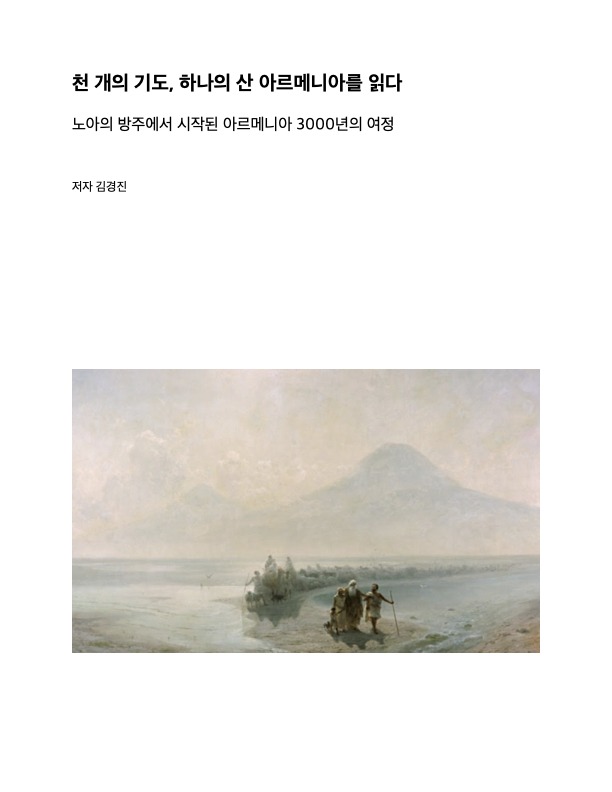
Reading Armenia: A Thousand Prayers, One Mountain
Chapter 2: The Rise and Fall of the Ancient Armenian Kingdom
Kim Kyung-jin
1. King Tigran the Great, the Golden Age of the Great Armenian Empire
Tigran II (Tigran II, Տիգրան Բ Մեծ) is regarded as the greatest king in Armenian history. One of the few rulers given the title 'the Great,' he ruled Armenia for approximately 40 years from 95 BCE to 55 BCE. During his reign, Armenia acquired its largest territory in history and rose to become a powerful empire in the East.
Before Tigran ascended the throne, Armenia was going through difficult times. During his father Artavasdes I's reign, Armenia was subordinate to the Parthian (Parthia, Պարթևական կայսրություն) Empire in the east. In his youth, Tigran was held hostage in Parthia. This humiliating experience gave him strong motivation and became the foundation for his later rise as a great conqueror.
In 95 BCE, Tigran obtained his freedom through negotiations with Parthian King Mithridates II. The price was high. He had to surrender 70 Armenian valleys to Parthia. Tigran viewed this not as humiliation but as an opportunity. With his freedom secured, he returned to Armenia, ascended the throne, and began to develop grand plans to reclaim the lost lands.
Tigran's goal was to unify and strengthen Armenia. At that time, Armenia was divided into Greater Armenia (Greater Armenia, Մեծ Հայք) and Lesser Armenia (Lesser Armenia, Փոքր Հայք), and various local nobles maintained semi-independent power. Tigran established a powerful centralized system and dissolved the nobles' private armies to create a strong royal military.
The army was supreme. The Cataphracts (Cataphracts, Կատափրակտներ), heavily armed cavalry, were its core force. Warriors and horses, fully armored from head to toe, became one as they charged, a terror to enemies. Tigran effectively combined archer units and infantry units to employ diverse tactics.
Armed with military strength, Tigran embarked on territorial expansion. His first conquests were several small kingdoms to the east and north. Many lands in what are now Georgia and Azerbaijan came under his rule. Tigran's armies, advancing to the Caspian coast, conquered the prosperous cities there.
Tigran's successes were achieved in the south. In 83 BCE, he attacked the weakened Seleucid Empire. The Seleucid Empire was founded by one of Alexander the Great's successors and had once ruled the entire Middle East as a great power. By this time it was weakened by internal strife and external invasions.
Tigran's armies advanced southward with unstoppable momentum. The Syrian capital Antioch (Antioch, Անտիոք) fell, and Lebanon and part of Palestine became his territories. With expansion to the Mediterranean coast, Armenia was no longer a landlocked nation but a maritime power. The Phoenician (Phoenicia) port cities also paid tribute to Tigran.
During this period, Tigran's empire included present-day Armenia, Georgia, Azerbaijan, eastern Turkey, northwestern Iran, Syria, Lebanon, northern Iraq, and parts of Israel. Spanning approximately 1,500 kilometers from east to west and 1,000 kilometers from north to south, this empire was one of the most powerful nations in the Middle East at the time.
Tigran was not merely a conqueror. He was also an outstanding administrator. To govern his conquered lands effectively, he decided to build a new capital. The city that was born this way was Tigranocerta (Tigranocerta, Տիգրանակերտ). This city was likely located in what is now southeastern Turkey.
Tigranocerta was a marvel of the ancient world. Tigran relocated the finest craftsmen, scholars, and artists from the various cities he had conquered to this place. This city, with its Greek theater, library, and gymnasium, became a center of Hellenistic culture. Tigran respected Greek culture and invited many Greek philosophers and poets to his court.
At the city's center stood the royal palace, and around it were arranged the mansions of nobles. There were spacious squares, gardens, and fountains, with shops lining the streets. Silk and spices from the east, wine and olive oil from the west, and perfumes and jewels from the south were traded. Tigranocerta was an international trade center.
Tigran was also a patron of culture and the arts. Historians, poets, and philosophers gathered at his court. Among them was the famous Greek playwright Amphicrates. Several works written for Tigran were reportedly performed even in the Greek world of that time.
Tigran's success created a new enemy. A new superpower rising in the west, Rome (Rome, Հռոմ), began to watch him closely. Tigran formed an alliance with the Pontic (Pontus) Kingdom's King Mithridates VI (Mithridates VI, Միհրդատ ՎԻ). Mithridates was also Tigran's father-in-law; his daughter Cleopatra was Tigran's queen.
Mithridates VI was a powerful adversary of Rome. He fought Rome in three separate wars, known as the Mithridatic Wars. Initially, Tigran did not directly intervene in this war. In 73 BCE, when Mithridates, pursued by Roman forces, fled to Armenia, the situation changed.
Rome demanded that Mithridates be handed over, but Tigran refused. Protecting his father-in-law was a matter of honor, and submitting to Rome's threats would damage his own authority. This decision led to war between Tigran and Rome.
In 69 BCE, an army led by the renowned Roman general Lucullus (Lucullus, Լուկուլլոս) invaded Armenia. Initially, Tigran underestimated the Roman forces. He led a great army of about 100,000 men to face the Romans near Tigranocerta. The Roman forces numbered only about 10,000.
The Battle of Tigranocerta (Battle of Tigranocerta) was a shocking defeat for Tigran. Faced with superior Roman tactics and discipline, the Armenian great army collapsed. Lucullus's army pierced through Tigran's main force and routed the Armenian army in chaos. Tens of thousands of Armenian soldiers were killed, and Tigran barely escaped.
Tigranocerta was captured by the Roman forces and plundered. Many Greeks and other peoples who had been forcibly relocated there returned to their homelands. Tigran's treasure vaults fell into Roman hands. This battle was a turning point for the Tigran Empire.
Tigran did not give up. He reorganized his army and adopted a more cautious strategy. The following year, in 68 BCE, he engaged the Roman forces again near Artaxata (Artaxata, Արտաշատ). This time he conducted a defensive battle using the terrain and inflicted considerable losses on the Romans. Though not a decisive victory, he succeeded in slowing the Roman advance.
More important was the situation within Rome itself. Lucullus faced a mutiny of soldiers exhausted by the long campaign and was eventually recalled to Rome. The general who succeeded him also failed to achieve major results. The war reached a stalemate.
In 66 BCE, a new Roman commander arrived. It was Pompey (Pompey, Պոմպեյոս). One of the greatest generals in Roman history, Pompey conducted the war swiftly and efficiently. He first defeated Mithridates VI and then marched into Armenia.
This time, Tigran made a different choice. With national strength depleted by prolonged war, it was difficult to stop Pompey's great army. Moreover, his son Tigran III rebelled and sided with Rome. Facing threats both from within and without, Tigran chose negotiation.
In 66 BCE, Tigran met Pompey and surrendered. According to historical records, the elderly Tigran removed his crown and laid it before Pompey. Pompey recognized Tigran's courage and achievements and treated him with respect. He replaced the crown on his head and recognized him as the King of Armenia.
In return, Tigran had to abandon all the territories he had conquered. All lands in Syria, Lebanon, and northern Mesopotamia passed to Rome. Armenia was reduced once again to a kingdom on the highland. In addition, he had to pay 6,000 talents (approximately 155 tons) of silver as reparations and accept the status of a Roman allied state.
It was not a complete defeat. Tigran retained his throne and Armenia's independence was guaranteed. Pompey recognized Tigran as a 'Friend and Ally of Rome.' This meant Armenia was an independent allied state, not a Roman vassal.
Tigran ruled for ten more years until 55 BCE. During this period, he devoted himself to rebuilding the country devastated by war. The former glory had vanished, but Armenia remained an important nation in the region. Tigran passed away peacefully at the age of 85.
The legacy of King Tigran the Great is deeply inscribed in Armenian history. It proved that Armenia could become a great empire. Though the glory was short-lived, Tigran's era became a source of pride for the Armenian people. Today, statues and monuments honoring King Tigran can be easily found throughout Armenia.
(King Tigran surrenders to General Pompey of Rome)
2. Rome and Persia: Survival Strategy of Walking the Tightrope Between Superpowers
After King Tigran the Great, Armenia faced a new reality. To the west stood the powerful Roman Empire, and to the east stood the resurrected Sasanian Dynasty (Sasanian Empire, Սասանյան կայսրություն) of Persia. Armenia became a buffer zone caught between these two superpowers. For the next approximately 600 years, Armenian history was a continuous struggle for survival between these two empires.
Why did Rome and Persia regard Armenia with such importance?
Armenia was a strategically vital location. Controlling the Armenian highlands could threaten the heart of the opposing power. From Rome's perspective, Armenia was a shield guarding the eastern frontier, and from Persia's perspective, it was a platform for westward expansion.
Armenia was a country rich in resources. It was abundant in mineral resources such as copper, gold, and silver, and agriculture and pastoralism were well developed. Both empires desired these economic benefits.
Armenia was at the center of trade routes. The trade routes connecting east and west passed through Armenia. Controlling these trade routes meant enormous economic gain.
The dilemma intensified during the time of Tigran the Great's grandson, Artavasdes II (Artavasdes II, Արտավազդ Բ). In 53 BCE, a great army led by Rome's Crassus invaded Parthia. Crassus was one of the three rulers of the Roman triumvirate, governing Rome alongside Pompey and Caesar. He dreamed of military glory in the East.
Artavasdes faced a difficult choice. Rome was an ally, but he also maintained good relations with Parthia. He advised Crassus to march through Armenia. It was a rugged but safe route. Crassus ignored this and advanced directly through the Mesopotamian plain.
At the Battle of Carrhae (Carrhae, present-day Harran in Turkey), Crassus's army was completely surrounded and annihilated by Parthian cavalry. Crassus himself was killed in battle. This defeat was one of the worst disasters in Roman history. Seven legions, approximately 40,000 Roman soldiers, were killed or taken prisoner.
After that, Artavasdes leaned toward Parthia. This angered Rome. In 34 BCE, Marcus Antonius (Marcus Antonius, Մարկոս Անտոնիոս) of Rome invaded Armenia. Antonius was a figure who dreamed of ruling the East through alliance with Egypt's Cleopatra.
Artavasdes was captured through Antonius's deception. Antonius proposed peace talks, and the unsuspecting Artavasdes went out and was simply captured. Bound in chains, he was dragged to Alexandria and displayed in the victory procession of Antonius and Cleopatra. He was executed shortly after.
The Armenian people did not submit. Artaxias II (Artaxias II, Արտաշես Բ), the son of Artavasdes, ascended to the throne with the help of Parthia. He successively expelled the puppet kings installed by Rome and recovered Armenia's independence.
From the first to the third century, Armenia's throne changed hands without rest. When a pro-Roman king came to power, Persia intervened; when a pro-Persian king took the throne, Rome intervened. At times, both empires sent armies directly and fought wars. Armenian lands became their battlefield.
In 63 CE, Rome and Parthia signed the Treaty of Rhandeia. Under this treaty, Armenia's throne would be filled by a member of Parthia's Arsacid dynasty, but only with the formal approval of the Roman emperor. This was how two superpowers resolved their long conflict over Armenia through compromise.
Tiridates I ascended to the throne under this treaty. Though born into the Parthian royal house, he traveled to Rome in 66 CE and received his crown directly from Emperor Nero. The coronation held in Rome became a grand celebration. Nero treated Tiridates with great honor and bestowed lavish gifts upon him.
This treaty meant Armenia became a buffer state positioned between the two empires. Armenia maintained its formal status as a kingdom, but in reality it lay under the influence of both Rome and Parthia. The king descended from Parthian blood but could not claim legitimacy without Rome's approval. This dual structure of dependence became the framework that determined Armenia's fate for centuries to come.
On his return from Rome, Tiridates brought many Roman engineers and architects with him. With their help, Roman-style buildings rose across Armenia. The temple at Garni was built during this period. With its Ionic columns, this temple stands as the only Hellenistic-Roman structure surviving in Armenia.
(Tiridates I ascended to the throne through the Rome-Parthia Treaty of Rhandeia)
Peace did not endure. In the second century, war broke out again between Rome and Parthia. Emperor Trajan conquered Armenia in 114 CE and made it a Roman province. Armenia's independence vanished, at least temporarily.
After Trajan's death, his successor Hadrian changed Eastern policy. He judged it better to maintain Armenia as a friendly client state rather than rule it directly. Armenia regained its independence.
In the early third century, a new factor emerged. Parthia collapsed and Sasanid Persia rose in its place. The Sasanid dynasty was far more powerful and centralized than Parthia. They sought to revive the glory of the ancient Achaemenid Empire and pursued a more aggressive foreign policy.
Ardashir I, founder of the Sasanid dynasty, sought to bring Armenia within Persia's sphere of influence. He assassinated King Khosrov I and attempted to place a pro-Persian ruler on Armenia's throne. Armenian nobles resisted and spirited away the young Tiridates, son of Khosrov, to Rome.
That Tiridates would later become Tiridates III, one of the most important kings in Armenian history. With aid from Roman Emperor Diocletian, he reclaimed Armenia's throne in 287 CE. About fifteen years later, in 301, he made a decision that would change world history.
Moved by the preaching of Saint Gregory the Illuminator, Tiridates III proclaimed Christianity as Armenia's state religion.
This was the first time in world history that a nation officially adopted Christianity. Since Rome did not recognize Christianity until 313, Armenia had moved twelve years ahead.
This decision transformed Armenia's identity completely. Christianity became not merely a religion but the core of Armenian nationhood. Though Persia followed Zoroastrianism and Rome first practiced polytheism before adopting Christianity, Armenia took pride in being the first Christian nation.
(In 405, Mesrop Mashtots created the Armenian alphabet)
Armenia achieved another crucial development. In 405, Mesrop Mashtots created the Armenian script. Composed of thirty-six letters, the Armenian alphabet was designed to represent every sound of the Armenian language with precision.
The creation of the script opened a golden age for Armenian culture. The Bible was translated into Armenian, and numerous religious texts were composed. Histories, philosophical works, and scientific treatises were written in Armenian. A people with their own script could guard their culture and identity more firmly.
The fifth century was also a time of great hardship. In 387, Rome and Persia signed a treaty dividing Armenia. Most of Armenia, roughly four-fifths, came under Persian influence, while the remainder, about one-fifth, fell under Roman control. A unified, independent Armenian kingdom ceased to exist.
Armenia under Persian rule faced greater oppression. Shapur II and his successors sought to make Armenia entirely Persian. Religious pressure intensified. Persia forced Zoroastrianism upon the land and persecuted Christianity.
Against oppression, the Armenian people rose up. In 451, Armenian forces led by General Vardan Mamikonian clashed with a massive Persian army on the Avarayr plain. This battle is remembered as one of the most important in Armenian history.
Outnumbered, the Armenian forces fought with courage. Vardan and his soldiers went into battle under the cry "Death to the unaware is death, but conscious death is immortality." They meant that for the sake of faith, death itself held no terror.
The battle raged all day. Armenian cavalry charged at the center of the Persian forces, and hand-to-hand combat erupted. The numerical disadvantage proved insurmountable. As dusk fell, Vardan and more than a thousand Armenian soldiers lay dead. Though the Persians suffered enormous losses, the field belonged to them.
The military defeat brought an unexpected result. Witnessing the Armenians' desperate resistance, Persia abandoned religious coercion and made concessions. In 484, Persia signed a treaty granting religious freedom to the Armenians. Vardan and his soldiers' sacrifice was not in vain.
Today Vardan Mamikonian is venerated as an Armenian hero. A statue of him stands in Yerevan, and a commemorative day marks the Avarayr battle. For Armenians, this struggle became the symbol of the spirit that fights for faith and freedom.
(Through the desperate resistance of General Vardan Mamikonian and others, religious freedom was preserved)
In the sixth and seventh centuries, Armenia continued to suffer between Rome, now called the Byzantine Empire, and Persia. The two powers waged war across Armenian lands dozens of times. The Armenian people sometimes aided one side, sometimes sought their own path.
That Armenia did not vanish utterly during this long ordeal approaches the miraculous. Christian faith, a distinct script and culture, and unbreakable spirit sustained it. To survive between two superpowers was not easy, but Armenia did not lose its identity.
3. Crossroads of the Silk Road: A Eurasian Hub Where Trade and Culture Meet
Armenia's geography was both curse and blessing. Caught between mighty empires, it suffered the ravages of war repeatedly. Yet it also stood at the center of the trade routes linking East and West, reaping periods of prosperity. The Silk Road was far more than a path for carrying silk. It was the great artery through which culture, religion, technology, and ideas flowed.
The term "Silk Road" was first used in the nineteenth century by German geographer Ferdinand von Richthofen. Whether the name existed or not, the trade route itself had been in place since the second century BCE. It truly flourished when China's Han dynasty expanded westward and the Roman Empire craved Eastern luxuries.
The Silk Road was not a single path but a complex network of many intertwining routes. Merchants departing from Chang'an in China, known today as Xi'an, traveled westward through Central Asian deserts and oasis cities. The roads branched in multiple directions, and one such branch passed through Armenia.
Two major routes of the Silk Road passed through Armenia. The northern path skirted the south of the Caspian Sea, crossed northern Armenia, and proceeded to the Black Sea. The southern route went through Persia, crossed southern Armenia and Mesopotamia, and reached the Mediterranean coast. Both paths either traversed the Armenian plateau or ran along its edges.
Why did merchants brave the rugged Armenian plateau?
First, the Armenian route was among the shortest paths linking China and the Mediterranean.
Second, it was relatively safer. Passage through mountains was less dangerous than crossing deserts haunted by bandits and nomadic raiders.
Third, Armenia itself was a major market. Goods could be bought and sold there.
Armenian cities developed along these trade routes.
Artaxata, situated near the Araxes River, was an important trade hub. Founded in the second century BCE, this city once served as Armenia's capital and flourished so greatly it earned the name "Carthage of Armenia." Greek historian Plutarch described it as "a beautiful and magnificent city."
Another major city was Dvin, which served as Armenia's capital and chief commercial center from the fifth to the thirteenth century. Merchants from around the world converged there: Persians, Arabs, Greeks, and traders from as far as India and China. Exotic goods of every description were traded in Dvin's markets.
From the East came silk. Chinese silk was among the most precious goods of the time. Roman nobility spared no gold to obtain this soft and resplendent fabric. Along with silk came porcelain, tea, paper, and materials for gunpowder.
Spices arrived from India and Southeast Asia. Black pepper, cinnamon, cloves, and nutmeg were essential for flavoring food and preserving meat. These spices offered exceptional value for their weight, making them favored goods for merchants.
From the West came glassware, wine, olive oil, and metal goods. Roman and Byzantine glasswork found great favor in the East. Roman gold and silver coins, too, flowed eastward along the Silk Road.
Armenia itself produced important trade goods. Armenian copper was famous from ancient times. This metal, essential for making bronze, was a major export of Armenia. Armenian horses were renowned for their quality. Sturdy and enduring Armenian horses were used in the cavalry units of several nations.
Armenian wine and brandy spread through the Silk Road. Armenia is one of the world's oldest wine-producing regions. References to Armenian wine appear in ancient Greek and Roman texts. Wine produced in the vineyards of the Ararat Plain was sweet and aromatic, making it popular.
Leather goods and carpets were also specialties of Armenia. Armenian craftsmen made intricately patterned leather products and wove carpets of beautiful colors. These products were exported far and wide along the Silk Road.
What traveled along the Silk Road was not merely merchandise. It was the exchange of culture, thought, and religion. Buddhism spread to China along the Silk Road, and Islam radiated through Central Asia. The Nestorian branch of Christianity also reached Persia and China by this route.
Armenia stood at the heart of such cultural exchange. Greco-Roman culture, Persian culture, and later Arab-Islamic culture converged here. The Armenian people accepted this diverse array of cultures while maintaining their own distinctive identity.
Cultural fusion is visible in Armenian architecture. Armenian church architecture was influenced by Byzantine style but developed a distinctive Armenian character. Conical roofs, cruciform plans, and intricate stone carvings are features unique to Armenian churches. Persian influence is also evident. Some decorative patterns and architectural techniques came from Persia.
Armenian literature too was shaped by diverse influences. From the fifth century onward, numerous works written in Armenian appeared. Biblical commentaries, histories, philosophical treatises, and poetry collections were created. Many of these works were influenced by Greek, Syriac, and Persian texts, yet they offered perspectives distinctly Armenian.
In the seventh century, the great Armenian historian Movses Khorenatsi wrote the "History of Armenia." This work, covering Armenian history from its origins to the fifth century, played a significant role in establishing Armenian national identity by weaving together legend and history. While following the historical narrative methods of Greece and Rome, the work maintained a distinctly Armenian perspective.
The transmission of technology through the Silk Road was also important. Chinese papermaking traveled westward and reached Armenia around the eighth century. Previously, writing was done on parchment, but the introduction of paper made book production far easier. This had a profound impact on the dissemination of knowledge.
Armenian merchants played a crucial role in Silk Road trade. They spoke multiple languages and understood diverse cultures. Many Armenian merchants knew not only Armenian but also Greek, Persian, Arabic, and later Turkish. Such linguistic skill and cultural understanding made them excellent intermediaries.
Armenian merchant communities formed in several cities along the Silk Road. In Isfahan, Persia, there was a large Armenian residential quarter called New Julfa. This city, founded in the seventeenth century when Shah Abbas I of Persia forcibly relocated Armenian merchants, became a center of international trade.
Armenian merchants also ventured into India, China, and Southeast Asia. Armenian churches were built in Kolkata and Madras (present-day Chennai) in India. There are records of Armenian merchants in Guangzhou, China. They did more than trade; they served as cultural transmitters.
Armenian merchants were purveyors of information. They carried news from distant lands and introduced new ideas and technologies. Medieval Europe's knowledge of the East came in no small measure from Armenian merchants.
The Silk Road also facilitated the exchange of art and music. Chinese instruments traveled westward, and Persian and Arab music spread eastward. Armenian music developed within this flow of exchange. The duduk, a traditional Armenian instrument, is a wind instrument made from apricot wood that produces a poignant and deep sound. The instrument's timbre is said to express the sorrows and longings of the Armenian people.
Culinary traditions also spread through the Silk Road. Eastern spices entered Western cooking, and Western cooking methods traveled eastward. Armenian cuisine is a product of such exchange. Foods bearing the influence of the Middle East, such as kebab, foods shaped by Persian tradition like pilaf, and dishes influenced by Greek cooking like dolma, appeared on Armenian tables.
The Silk Road did not transmit only good things. Disease traveled as well. In the sixth century, the Justinian Plague spread along the Silk Road. The epidemic inflicted grave damage on the Byzantine Empire, Persia, and Armenia. Millions perished, and economies suffered tremendous harm.
With the rise of Islam in the seventh century, the Silk Road entered a new phase. The swift expansion of the Arab Empire brought Persia to ruin, and the entire Middle East fell under Islamic rule. Armenia too faced Arab invasion. Yet Armenia preserved its Christian faith and maintained considerable autonomy under Arab rule.
Trade continued even during the Arab period. The unification of the Islamic world actually made trade more vigorous in some respects. Great cities such as Baghdad, Damascus, and Cairo became new centers of trade, and Armenian merchants engaged in brisk commerce with these cities.
The period from the ninth to the eleventh century is called the second golden age in Armenian history. The Bagratuni and Artsruni dynasties ruled parts of Armenia and enjoyed relative independence. During this era, Armenian culture and the arts flourished, and commerce prospered.
The city of Ani, the capital of Armenia during this period, was so magnificent it was called "the city of a thousand churches." As a strategic point on the Silk Road, merchants from around the world converged on Ani. Records indicate its population exceeded 100,000, making it a vast city for its time.
Toward the end of the eleventh century, a new power emerged. The Seljuk Turks from Central Asia invaded Armenia. With the Byzantine Empire's decisive defeat at the Battle of Manzikert in 1071, Armenia fell under Turkish rule.
Many Armenians left their homeland and emigrated southward to the region of Cilicia. There they established a new Armenian kingdom, the Armenian Kingdom of Cilicia (1198-1375). Located on the Mediterranean coast, this kingdom played a significant role during the Crusading era and became a trading hub between Europe and the East.
The golden age of the Silk Road came with the rise of the Mongol Empire in the thirteenth century. The Mongols conquered much of the Eurasian continent and built a vast empire. During this period, known as the "Pax Mongolica," the Silk Road experienced its most secure and vigorous era in history.
It was during this period that European adventurers, typified by Marco Polo, were able to travel to the East. Armenian merchants also flourished during this time. Armenian-born officials served in the Mongol court, and among the wives of Mongol khans were women of Armenian descent.
In the late fourteenth century, as the Mongol Empire fractured and collapsed, the Silk Road began to decline. The invasions of Tamerlane, the spread of the Black Death, and the rise of the Ottoman Empire combined to make the overland Silk Road gradually lose its importance.
In the late fifteenth century, as Europeans opened maritime routes, the age of the Silk Road effectively came to an end. When Vasco da Gama discovered the sea route to India and Columbus reached the Americas, the center of world trade shifted from land to sea.
The legacy of the Silk Road did not disappear. The tradition of cultural exchange formed through this path over thousands of years continues to this day. Armenia's experience as a bridge between East and West is inscribed in the DNA of the Armenian people. Today, Armenians form diaspora communities worldwide, continuing to serve as connectors between different cultures.
Kim Kyung-jin
Attorney · Former Member of the National Assembly · AI Policy Researcher
© 2026 Kim Kyung-jin. All rights reserved.